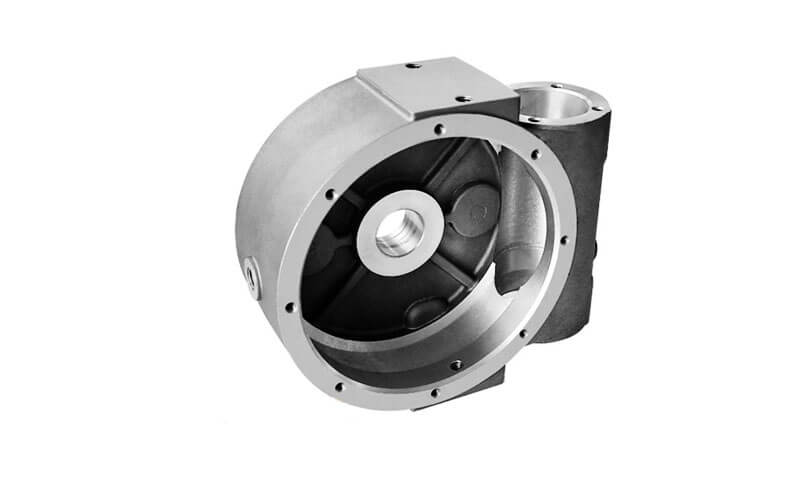
ZAMAK 5 Alloy
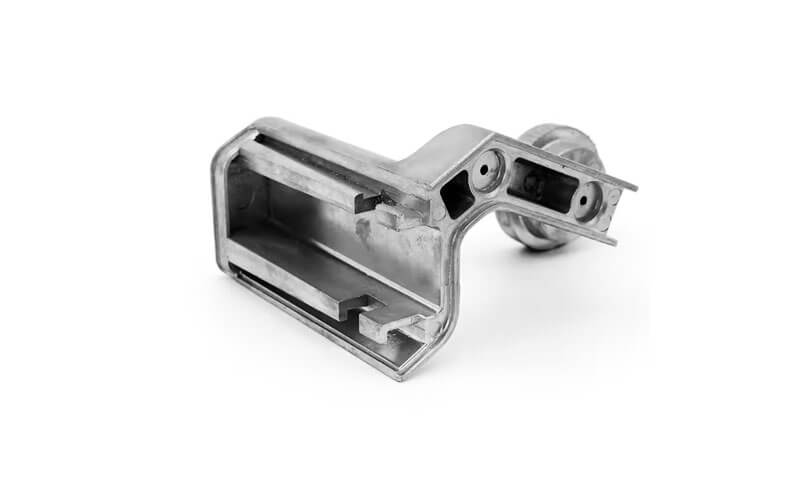
1. Introduction ZAMAK 5 is one of the most established zinc die-casting alloys in modern industry. It belongs to the conventional zinc alloy family rather than the higher-aluminum ZA group,
Welcome to our blog for insights into different manufacturing processes.

1. Introduction ZAMAK 5 is one of the most established zinc die-casting alloys in modern industry. It belongs to the conventional zinc alloy family rather than the higher-aluminum ZA group,

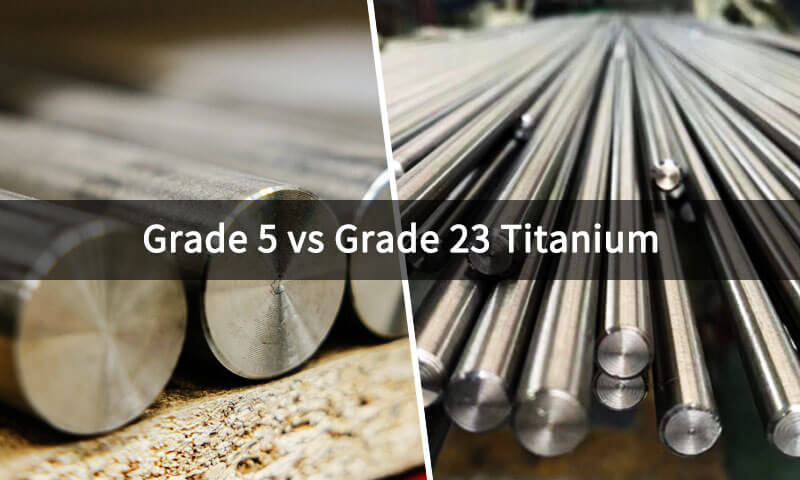
1. Introduction Grade 5 and Grade 23 are the two best-known members of the Ti-6Al-4V family, but they are not interchangeable by default. Titanium Grade 5, commonly identified as Ti-6Al-4V

1. Introduction Titanium, a transition metal with atomic number 22 and symbol Ti, stands out in the material science landscape for its unique combination of low density, exceptional corrosion resistance,

1. Introduction Material selection is rarely about “the best metal” in the abstract. It is about the best compromise among corrosion resistance, mechanical strength, temperature capability, weldability, fabrication complexity, availability,

1. Introduction 316 stainless steel vs Grade 5 titanium (Ti-6Al-4V) are both high-value engineering metals, but they solve different problems. Stainless steel 316 is a molybdenum-bearing austenitic stainless steel, widely

1. Introduction AISI 310 stainless steel and Inconel 617 both belong to the class of high-temperature metallic materials, but they solve different engineering problems. AISI 310 is an austenitic chromium-nickel

1. Introduction 6061 aluminum and Grade 5 titanium are both high-value engineering materials, but they occupy very different positions in the design space. 6061 is a heat-treatable 6xxx-series aluminum alloy

1. Introduction Titanium Grade 2 is the most widely used commercially pure titanium grade in general engineering service. It is unalloyed titanium, identified in common specifications as UNS R50400, and

Introduction Metal surface treatment is one of the most important disciplines in materials engineering, manufacturing, and industrial design. A metal component is rarely judged by its base alloy alone. Its

1. Introduction Alloy 617 is a premium nickel-based superalloy developed for severe high-temperature service. It is widely recognized for its ability to maintain strength, resist oxidation, and retain structural integrity

1. Introduction Refractory metals occupy a unique position in materials engineering. They are not chosen because they are easy to process or inexpensive to buy. They are chosen because they

Introduction In precision investment casting, ceramic shell slurry density is a fundamental process variable that influences shell build-up, coating stability, drying behavior, permeability, and ultimately casting quality. Defined as mass

Introduction Viscosity represents one of the most critical rheological parameters governing the behavior of ceramic shell slurries in investment casting. It directly influences slurry flow characteristics, coating uniformity, and structural

Executive summary UNS C95800 is a nickel aluminum bronze casting alloy designed for demanding environments where strength, seawater corrosion resistance, wear resistance, and galling resistance all matter at the same

1. Executive Summary Aluminum die casting has become a core manufacturing solution for robotics parts because it addresses three of the most important requirements in modern robot design: lightweight construction,

1. Executive summary UNS C95400 is one of the most widely used cast aluminum bronzes because it combines high strength, good wear resistance, and strong corrosion performance, especially in marine

1. Introduction UNS C90300 is a widely used tin-bronze casting alloy that delivers a practical combination of good castability, corrosion resistance (especially in marine environments), bearing/wear behavior and satisfactory mechanical

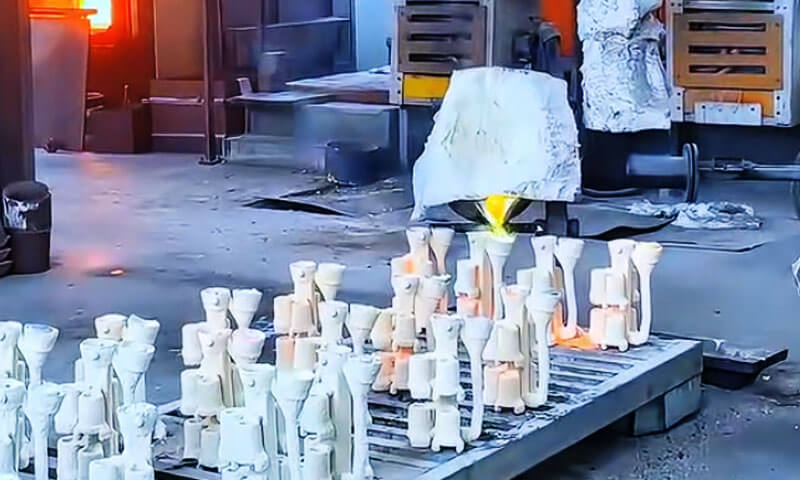
1. Executive summary Wax model assembly is the step that converts individually molded wax patterns into an engineered cluster (the “tree”) ready for shell building. It is deceptively simple yet

1. Executive summary CF8M stainless steel is the cast equivalent of wrought 316 stainless steel and is widely specified for corrosion-resistant, pressure-containing parts produced by investment casting. Its molybdenum-bearing austenitic

The wax pattern, as the core template of the entire investment casting process, directly determines the dimensional accuracy, surface quality, and internal performance of the final casting. Wax pattern cleaning,

Corrosion is the progressive degradation of metals through chemical or electrochemical interactions with their environment. In industry, corrosion reduces asset life, raises maintenance cost, and—most critically—can precipitate catastrophic failures. This
Copyright © 2024 LangHe Industry Co., Ltd.2026
Powered by LangHe Industry Co., Ltd.2026
Please fill in your information and we will contact you promptly.