
What Is Lost-Foam Casting?
1. Introduction Lost-Foam Casting (LFC) stands out as a transformative metal-casting technology that leverages evaporative foam patterns to create complex, near-net-shape components in a single pour. Rather than relying on


1. Introduction Lost-Foam Casting (LFC) stands out as a transformative metal-casting technology that leverages evaporative foam patterns to create complex, near-net-shape components in a single pour. Rather than relying on

1. Introduction Die casting produces complex metal parts with exceptional speed and repeatability. Broadly defined, die casting injects molten metal under high pressure into precision-engineered steel molds—known as dies—to yield

1. Introduction Investment casting, also known as lost-wax casting or precision casting, is a precision manufacturing process that has evolved over millennia to become a cornerstone of modern industry. Its

1. Introduction Lost Foam Casting (LFC) vs Lost Wax Casting (also known as Investment Casting, or IC) stand out for their precision, versatility, and adaptability to different design and material

1. Introduction CF3 stainless steel, a member of the austenitic cast stainless steel family, is the low-carbon cast equivalent of the popular wrought grade 304L (UNS S30403). It is defined

1. Introduction CF8 stainless steel, often referred to as cast CF8, represents the cast equivalent of wrought 304 stainless steel. With a balanced chemistry—up to 0.08 % carbon, 18–20 %

1. Introduction CF8M stainless steel is a cast austenitic stainless steel alloy, standardized under ASTM A351, A743, and A744, with UNS designation J92900. It is essentially the cast equivalent of

Stainless Steel CF3M—also known by its EN designation EN-JS 316LM (1.4408) and ASTM equivalent A351 CF3M—stands as a cornerstone material in corrosion-resistant castings. Engineered for demanding environments, CF3M combines austenitic

1. Introduction Spheroidal graphite cast iron 600/3(BS EN 1563:1997), also known as ductile cast iron, has significantly altered the landscape of cast metals by offering an ideal balance between strength,

Achieving tight dimensional tolerances remains a foremost concern in casting production. As molten metal cools and solidifies, it inevitably contracts—sometimes predictably, other times unpredictably—depending on alloy chemistry, geometry, and process

Heat treatment transforms raw castings—often brittle and non-uniform—into high-performance components with tailored mechanical and physical properties. By precisely controlling temperature profiles, soak times, and cooling rates, foundries manipulate an alloy’s
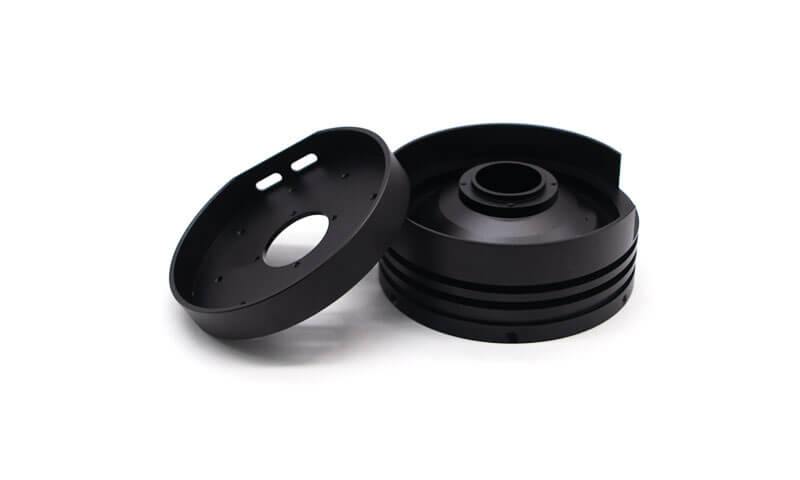
Black-anodized aluminum parts (such as this decorative sheet-metal bracket) show a uniform, matte black finish that is integral to the metal. Anodizing is an electrolytic passivation process that thickens aluminum’s

Stainless steels in the 316 family deliver outstanding corrosion resistance, mechanical performance, and fabrication versatility. However, subtle alloying changes—carbon reduction in 316L(1.4404/1.4432)or titanium addition in 316Ti(1.4571)—can dramatically affect behavior in

Investment casting—also known as lost-wax casting—remains one of the most versatile metal-forming techniques. Within this realm, water glass (sodium silicate) investment casting stands out for its cost efficiency and capacity

1. Introduction: Rooted in the craftsmanship of ancient civilizations, lost-wax casting has evolved significantly, from bronze statues of antiquity to the aerospace-grade components of today. While the foundational principles of

1. Introduction “Stainless steel sand casting” merges the superior strength, corrosion resistance, and visual appeal of stainless steel with the flexibility and low tooling costs of sand casting. It enables
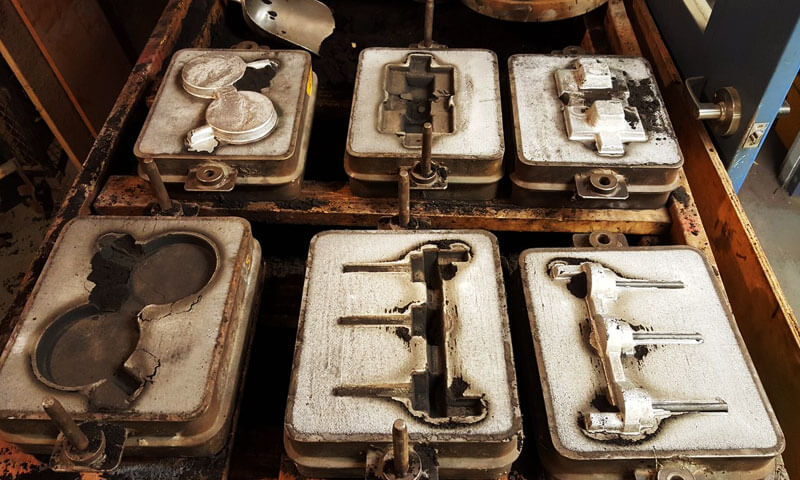
1. Introduction Aluminum sand casting plays a crucial role in modern manufacturing, offering a flexible and cost-effective solution for producing complex, large, and lightweight components. With aluminum’s low density (≈2.7

In the context of VDG P690 and ISO 8062-3, understanding how to interpret Dimensional Casting Tolerance Grades (DCTG) and Geometrical Casting Tolerance Grades (GCTG) together is crucial for ensuring comprehensive

Austempered Ductile Iron (ADI) combines cast iron’s cost-effectiveness with mechanical performance rivaling quenched-and-tempered steels. Thanks to its unique ausferritic microstructure, ADI finds use in millions of components worldwide, especially where

1. What Is Ductile Cast Iron? Ductile cast iron—often called nodular or spheroidal graphite iron—belongs to the family of cast irons but distinguishes itself by its spheroidal graphite inclusions. Unlike
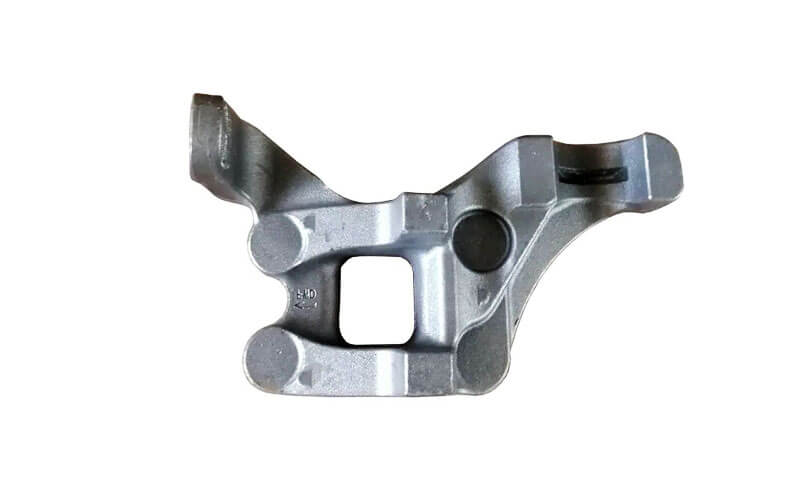
Shell mold casting occupies a unique niche between conventional sand casting and high‑precision investment or die casting. By forming a thin, resin‑bonded sand “shell” around a heated pattern, this process