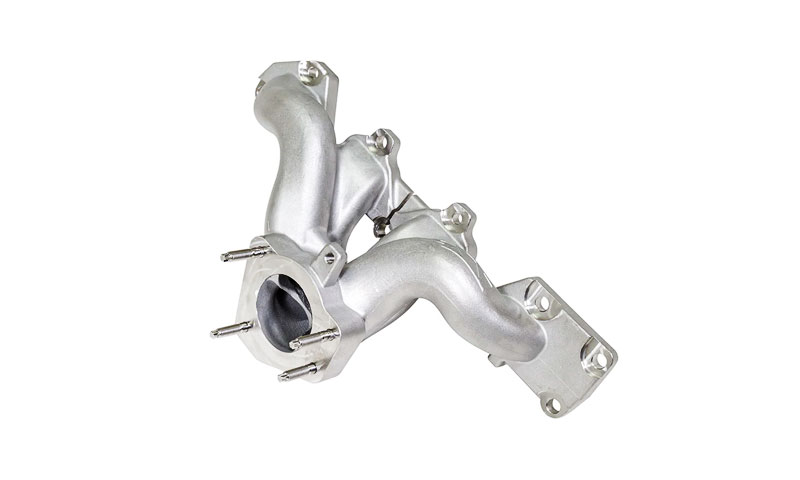
What Is Gravity Die Casting?
1. Introduction Gravity die casting, also known as permanent mold casting, uses gravity—not external pressure—to fill a reusable metal mold with molten alloy. Although craftsmen experimented with metal molds as
Welcome to our blog for insights into different manufacturing processes.

1. Introduction Gravity die casting, also known as permanent mold casting, uses gravity—not external pressure—to fill a reusable metal mold with molten alloy. Although craftsmen experimented with metal molds as

1. Introduction Centrifugal casting stands out as a specialized metal-casting process in which molten metal solidifies under intense centrifugal force. Enabling manufacturers to produce high‑integrity, axisymmetric components with superior mechanical

1. Introduction AISI 314 austenitic stainless steel, also standardized as EN 1.4841 and X15CrNiSi25‑21, offers an exceptional balance of high‑temperature strength and oxidation resistance. Developed in the 1950s to serve the burgeoning

Achieving the unique combination of high strength, excellent ductility and superior wear resistance in austempered ductile iron (ADI) hinges on a precisely controlled heat‑treatment cycle. In this article, we present

1 Introduction Expendable mold casting encompasses a family of metalcasting techniques in which the mold is consumed or broken away to retrieve the finished part. This one‑time‑use nature enables flexibility

Easy to understand how solution aging & precipitation hardening transform metals—learn process steps, microstructural mechanisms. In the world of metal heat treatment, two terms often appear together—solution aging & precipitation

1. Introduction Thermal annealing refers to a controlled heat‑treatment process that alters a material’s microstructure to improve its physical and mechanical properties. Originating in the early 19th century with rudimentary

1. Introduction Stainless steels in the 300-series austenitic family dominate industries requiring corrosion resistance, formability, and hygienic performance. Among these, Type 304 and 316 appear in both cast and wrought

1. Introduction Permanent mould casting—often called gravity die casting—stands apart as a versatile, reliable method for producing medium-to-high-volume metal components. In this process, manufacturers pour molten metal into reusable metal

1. Introduction Austenitic stainless steels in the 300-series rank among the most versatile alloys in modern industry. In particular, Type 304 serves as a workhorse, balancing corrosion resistance, formability, and

1. Introduction Lost-Foam Casting (LFC) stands out as a transformative metal-casting technology that leverages evaporative foam patterns to create complex, near-net-shape components in a single pour. Rather than relying on

1. Introduction Die casting produces complex metal parts with exceptional speed and repeatability. Broadly defined, die casting injects molten metal under high pressure into precision-engineered steel molds—known as dies—to yield

1. Introduction Investment casting, also known as lost-wax casting or precision casting, is a precision manufacturing process that has evolved over millennia to become a cornerstone of modern industry. Its

1. Introduction Lost Foam Casting (LFC) vs Lost Wax Casting (also known as Investment Casting, or IC) stand out for their precision, versatility, and adaptability to different design and material

1. Introduction CF3 stainless steel, a member of the austenitic cast stainless steel family, is the low-carbon cast equivalent of the popular wrought grade 304L (UNS S30403). It is defined

1. Introduction CF8 stainless steel, often referred to as cast CF8, represents the cast equivalent of wrought 304 stainless steel. With a balanced chemistry—up to 0.08 % carbon, 18–20 %

1. Introduction CF8M stainless steel is a cast austenitic stainless steel alloy, standardized under ASTM A351, A743, and A744, with UNS designation J92900. It is essentially the cast equivalent of

Stainless Steel CF3M—also known by its EN designation EN-JS 316LM (1.4408) and ASTM equivalent A351 CF3M—stands as a cornerstone material in corrosion-resistant castings. Engineered for demanding environments, CF3M combines austenitic

1. Introduction Spheroidal graphite cast iron 600/3(BS EN 1563:1997), also known as ductile cast iron, has significantly altered the landscape of cast metals by offering an ideal balance between strength,

Achieving tight dimensional tolerances remains a foremost concern in casting production. As molten metal cools and solidifies, it inevitably contracts—sometimes predictably, other times unpredictably—depending on alloy chemistry, geometry, and process

Heat treatment transforms raw castings—often brittle and non-uniform—into high-performance components with tailored mechanical and physical properties. By precisely controlling temperature profiles, soak times, and cooling rates, foundries manipulate an alloy’s
Copyright © 2024 LangHe Industry Co., Ltd.2026
Powered by LangHe Industry Co., Ltd.2026
Please fill in your information and we will contact you promptly.