1. Introduction
Brass investment casting occupies a unique position in the metalforming landscape.
It combines the geometric freedom of investment casting with the attractive appearance, machinability, and functional balance of brass alloys.
For components that require fine detail, decorative quality, moderate corrosion resistance, and near-net-shape efficiency, brass casting remains one of the most practical solutions available.
Although brass is often associated with decorative fittings, musical instruments, and hardware hardware, its industrial role is broader than appearance alone.
In investment casting, brass can be used to produce components with intricate geometry, precise detail, and stable repeatability.
That makes it suitable not only for consumer-facing products, but also for plumbing hardware, marine accessories, valve parts, electrical connectors, and precision mechanical components.
2. What is Brass Investment Casting
Brass investment casting is the use of the lost-wax process to manufacture brass components with detailed geometry and controlled dimensional accuracy.
A wax or polymer pattern is built to the desired shape, coated repeatedly with ceramic slurry and refractory material to form a shell, and then melted out.
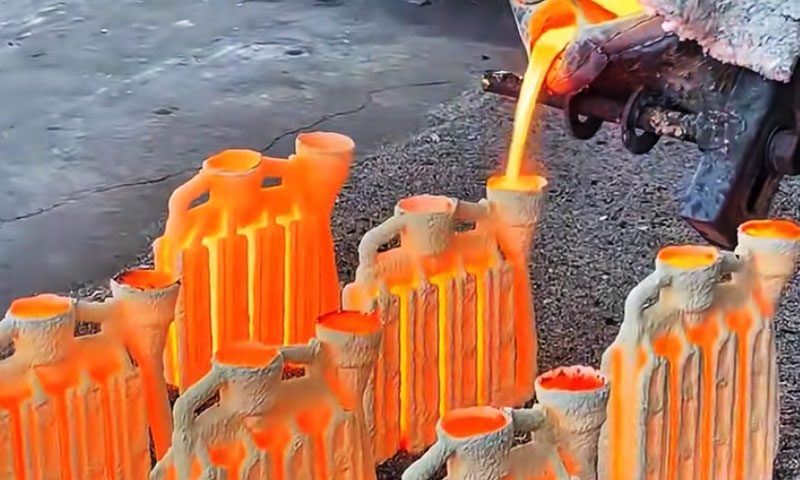
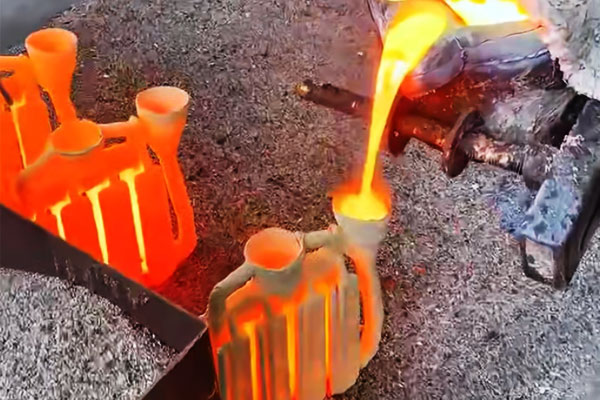
Molten brass is poured into the cavity, solidifies, and is later cleaned, finished, and inspected.
The process is especially valuable when the part would be difficult or expensive to produce by machining alone.
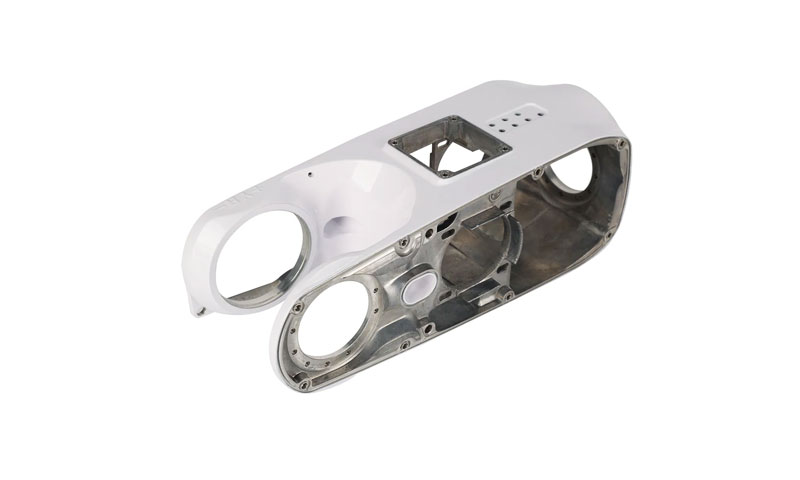
Brass investment casting allows designers to integrate complex contours, internal passages, decorative surfaces, mounting features, and small details into one net-shape or near-net-shape component.
In practical terms, the process is chosen when a part must satisfy several of the following conditions at once:
- detailed geometry
- good surface appearance
- moderate mechanical performance
- moderate corrosion resistance
- efficient production of small to medium-sized parts
- reduced machining and assembly cost
This is where investment casting becomes more than a manufacturing method. It becomes a design enabler.
3. Why Brass Is Different as a Casting Alloy
Brass is not a single alloy but a family of copper-zinc alloys, sometimes with small additions of lead, tin, aluminum, manganese, or silicon depending on the target performance.
Its behavior during casting is therefore influenced not only by zinc content, but also by the specific alloy balance and the intended service condition.
Core metallurgical characteristics
| Property | Brass Behavior | Engineering Significance |
| Base system | Copper-zinc alloy family | Offers a balance of appearance, machinability, and corrosion resistance |
| Melting behavior | Lower melting range than copper | Supports relatively accessible casting conditions |
| Fluidity | Good to very good | Helps reproduce fine features and thin sections |
| Surface appearance | Attractive, warm metallic finish | Valuable in decorative and visible components |
Corrosion resistance |
Good in many non-severe environments | Suitable for plumbing, marine trim, and general hardware |
| Machinability | Good to excellent, alloy-dependent | Supports post-cast finishing and precision interfaces |
| Density | Relatively high | Gives a premium feel but increases part weight |
| Zinc behavior | Sensitive to volatilization at high temperature | Requires careful melt control |
Copper-zinc system behavior
The copper-zinc system gives brass its distinctive balance of properties.
Copper contributes corrosion resistance and conductivity, while zinc improves fluidity, strength, and castability.
The ratio between the two determines whether the alloy behaves more like a ductile decorative brass, a free-machining brass, or a stronger structural brass variant.
For casting, the most important point is that brass can flow well into detailed cavities.
That makes it suitable for fine ornamentation, threaded features, and compact component geometry. However, this same system is more sensitive than many people assume.
If the melt is overheated or held too long, zinc can volatilize, altering composition and increasing defect risk.
Melting, fluidity, and zinc volatilization
Brass generally melts at a lower temperature than pure copper, which helps reduce furnace demands.
It also tends to flow well into molds, which is one reason it performs well in intricate castings.
But that advantage comes with a caution: zinc is more volatile than copper, and excessive thermal exposure can change the final alloy chemistry.
If zinc loss is not controlled, the cast part may become compositionally inconsistent, with consequences for strength, color, corrosion behavior, and shrinkage.
This is why brass casting requires a careful balance between fluidity and thermal restraint.
Corrosion resistance and surface quality
Brass offers respectable corrosion resistance in many indoor, plumbing, and moderate outdoor environments.
It is not as corrosion-resistant as some stainless steels or nickel alloys, but it performs very well where aesthetic appearance and moderate durability matter.
It also has a natural visual advantage. Brass has a warm, premium appearance that can be further enhanced by polishing, plating, lacquer coating, or patination.
For this reason, brass investment casting is often chosen where the part must function and look refined at the same time.
4. Common Brass Grades Used in Investment Casting
| Brass Type | Typical Characteristics | Common Grades | Typical Investment-Casting / Precision-Casting Uses |
| Red Brass | High copper content, good corrosion resistance, stable castability | C83600, C83300 | Valve bodies, fittings, plumbing hardware, decorative-functional cast parts |
| Semi-Red Brass | Balanced strength, corrosion resistance, and machinability | C84400, C84800 | Low-pressure valves, pipe fittings, pump fixtures, marine hardware |
| Yellow Brass | Good fluidity, moderate strength, economical and versatile | C85800, C85900 | Plumbing components, general hardware, light-duty fittings, ornamental castings |
Leaded Brass / Free-Machining Brass |
Excellent machinability, good casting behavior | C84500, C85700 | Precision fittings, threaded components, valve seats, machined cast parts |
| Lead-Free / Low-Lead Brass | Improved environmental compliance, good corrosion resistance | C89510, C89833 | Water-system components, sanitary fittings, modern plumbing hardware |
5. Process Flow of Brass Investment Casting
Brass investment casting follows the classic lost-wax principle, but the process window must be tailored to the specific behavior of copper-zinc alloys.
Compared with steel or nickel-based investment casting, brass requires tighter attention to zinc volatilization, oxidation control, shell chemistry, and shrinkage management.
Pattern Design and Wax Injection
The process begins with component-level design optimization. At this stage, the geometry is not only defined by function, but also by castability.
Fillet radii, wall transitions, and gating locations must be arranged to reduce stress concentration and avoid hot tearing during solidification.
Brass castings are especially sensitive to thermal imbalance, so abrupt section changes should be minimized wherever possible.
Once the geometry is finalized, low-shrinkage casting wax is injected to produce high-precision wax patterns.
Because brass investment casting is a near-net-shape process, the accuracy of the wax pattern directly affects the final part.
Shrinkage allowance must be carefully reserved according to the alloy composition and expected solidification behavior.
Qualified single patterns are then assembled into wax trees to improve batch consistency and production efficiency.
Targeted Ceramic Shell Fabrication
The ceramic shell for brass casting must be engineered differently from shells used for steel or superalloy casting.
Brass requires a neutral or low-alkali refractory system to reduce chemical interaction between the molten alloy and the mold surface.
If the shell chemistry is poorly matched, interfacial reactions can degrade surface finish, increase oxide contamination, and reduce dimensional stability.
The face coat is typically built with fine-grained refractory materials such as fused mullite or zircon powder to ensure a smooth cavity surface and better replication of fine details.
The backup layers use coarser refractory aggregates to enhance permeability, mechanical strength, and thermal stability.
Multiple dipping, stuccoing, and controlled air-drying cycles are used to eliminate micro-porosity within the shell and improve its resistance to thermal shock during pouring.
Dewaxing and High-Temperature Shell Sintering
Dewaxing is usually performed by steam or pressure-assisted methods to remove the wax pattern rapidly and cleanly.
This is important because residual wax that carbonizes during heating can form carbon inclusions and compromise internal soundness.
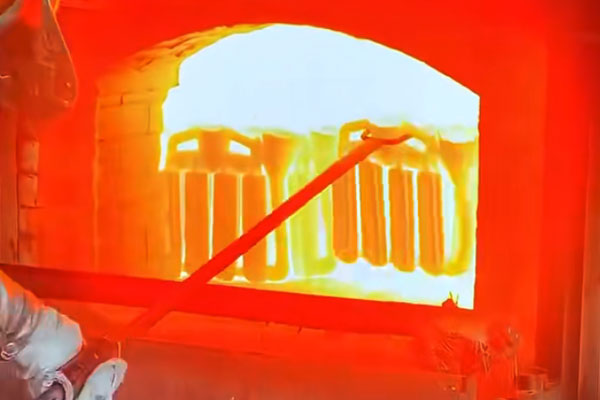
After dewaxing, the ceramic shell is sintered at approximately 950°C to 1050°C to remove residual moisture and burn out organic residues.
This sintering stage strengthens the shell and stabilizes the mold before pouring. Immediately before casting, the shell is preheated to about 550°C to 650°C.
This preheating range helps reduce the thermal gap between the molten brass and the mold cavity, which in turn minimizes cold shuts, misruns, and premature freezing in thin sections.
Melting and Controlled Pouring
Melting practice is one of the most critical stages in brass casting.
The charge composition must be matched carefully to the target alloy formula, and anti-oxidation covering agents are often used during melting to suppress surface oxidation and limit zinc loss.
Since zinc is more volatile than copper, excessive overheating or prolonged holding can alter the final composition and affect both mechanical and cosmetic performance.
Brass casting may be performed by several pouring routes:
- Gravity pouring, suitable for conventional structural or decorative parts where cost efficiency is important.
- Low-pressure auxiliary pouring, used when better cavity filling and more stable metal flow are needed.
- Vacuum-assisted pouring, preferred for high-precision or thin-walled parts where oxide inclusion and air entrapment must be minimized.
Pouring temperature must be tightly controlled within a relatively narrow window, typically around 50°C, because brass demands a balance between fluidity and zinc retention.
If the temperature is too low, flowability drops and misruns become more likely. If it is too high, zinc burning loss and oxidation risk increase sharply.
Graded Solidification and Controlled Cooling
Solidification behavior in brass castings must be directed carefully through gating and riser design.
The goal is to promote sequential solidification, with feeding directed from the riser toward the last-freezing zones.
Because brass does exhibit shrinkage, though generally modest, hot spots still need auxiliary risers or feeding support to prevent internal voids.
Thick-walled zones should be managed so they solidify in a controlled and directional manner.
Thin-walled sections, by contrast, must cool slowly enough to avoid residual thermal stress and hot tearing.
This graded cooling strategy is especially important in castings with mixed wall thickness, where thermal imbalance can otherwise produce localized defects or distortion.
Post-Casting Finishing and Heat Treatment
After solidification and shakeout, sprues, risers, and residual shell materials are removed. Surface finishing is then selected according to the application.
Common finishing methods include sandblasting, precision grinding, polishing, and mirror finishing for decorative or premium parts.
For certain brass castings, especially those with more complex phase structures or higher residual stress potential, stress-relief annealing at 250°C to 350°C is recommended.
This step helps reduce internal stress and improves long-term stability.
In pressure-bearing or service-critical parts, heat treatment is not just a finishing step; it is part of the reliability strategy.
It helps prevent delayed stress corrosion cracking and improves service consistency over time.
Final Quality Inspection
The final stage is quality verification.
Brass investment castings should undergo dimensional inspection, visual surface examination, and metallographic analysis to confirm that the casting meets design and process requirements.
For pressure-bearing components such as valve bodies, hydraulic tightness testing is often required.
For marine or outdoor service parts, salt spray corrosion testing may also be necessary to verify environmental durability.
A well-controlled brass investment casting process should demonstrate:
- accurate dimensions,
- clean and smooth surface quality,
- low porosity,
- stable composition,
- and reliable service behavior under the intended operating conditions.
6. Key Technical Challenges: Brass Investment Casting
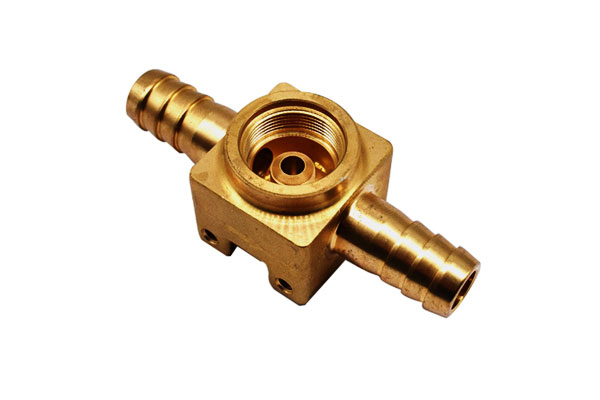
Brass investment casting appears straightforward at first glance because brass has good fluidity and reproduces detail well. In practice, however, it is a technically sensitive process.
The main difficulty is that brass is not only a copper-based alloy; it is a zinc-bearing alloy whose performance during melting, pouring, and solidification can shift quickly if temperature, atmosphere, or shell compatibility are not carefully controlled.
Zinc Volatilization and Composition Drift
The most distinctive challenge in brass casting is zinc loss.
Zinc evaporates more readily than copper at elevated temperature, so prolonged overheating or excessive holding time can change the alloy composition before pouring even begins. This is not a minor issue.
A shift in zinc content can affect fluidity, shrinkage behavior, color, corrosion resistance, and mechanical response.
In practical terms, composition drift can cause:
- reduced casting fluidity,
- color inconsistency after finishing,
- altered mechanical properties,
- increased oxidation and dross formation,
- instability across batches.
Because of this, brass casting must balance melt fluidity against thermal restraint. Overheating may improve flow temporarily, but it often creates more problems than it solves.
Oxidation and Dross Formation
Brass is highly sensitive to oxidation during melting and pouring.
Both copper and zinc can form oxides, but zinc oxide formation is especially problematic because it can increase slag volume, reduce metal cleanliness, and interfere with surface quality.
Oxide films and dross may become trapped in the casting if melt cleaning is inadequate or if pouring turbulence is too high.
Oxidation-related defects often show up as:
- surface blemishes,
- internal inclusions,
- rough or patchy finish,
- poor response to polishing or plating,
- localized porosity.
This makes atmosphere control and melt cleanliness central to process success.
Porosity and Shrinkage Defects
Even though brass has good fluidity, it is still vulnerable to gas porosity and shrinkage porosity if feeding and solidification are not properly managed.
Since brass castings often involve fine details, thin walls, or compact geometry, the risk of localized feeding deficiency is real.
Common porosity-related mechanisms include:
- gas trapped during pouring,
- dissolved gas released during solidification,
- insufficient risering in thick sections,
- poor directional solidification,
- shell-related gas release into the cavity.
In visually important parts, porosity may be rejected even when it does not immediately affect function, because surface perfection is often part of the product requirement.
Hot Cracking and Solidification Sensitivity
Certain brass compositions are more susceptible to hot cracking or thermal tearing during final solidification.
This is especially true where geometry creates severe section transitions, restrained contraction, or locally high thermal stress.
Brass generally fills details well, but it still needs a well-designed feeding path and section balance.
Risk is increased by:
- abrupt changes in wall thickness,
- sharp internal corners,
- constrained solidification zones,
- poor shell preheat,
- insufficient fillet design.
This is why casting design is not a decorative exercise. It is part of the metallurgical control strategy.
Shell Compatibility and Surface Reaction
The ceramic shell must remain stable in contact with molten brass.
If the shell chemistry is too alkaline, too reactive, or insufficiently sintered, interfacial reaction can degrade the casting surface and complicate cleaning or finishing.
Brass is especially sensitive to shell surface quality because many of its applications are appearance-driven.
A poor shell may cause:
- surface roughness,
- staining or discoloration,
- penetration defects,
- reduced dimensional fidelity,
- finishing inconsistency.
For brass investment casting, shell quality is therefore a direct determinant of product value.
Dimensional Accuracy and Surface Reproduction
Brass investment casting is often selected because it can reproduce fine geometry. That benefit only exists if the process is tightly controlled.
Shrinkage allowance, mold temperature, gating balance, and metal flow all influence the final dimensions.
Even small deviations can show up in threaded regions, sealing surfaces, decorative features, or fitting interfaces.
This is particularly important in parts where:
- appearance and fit matter equally,
- post-cast machining must be minimized,
- surface detail is part of the product identity.
Post-Cast Stress and Service Stability
Some brass castings may retain residual stress from uneven cooling or constrained geometry.
If those stresses are not managed, the component may distort during machining or develop long-term stability issues during service.
In demanding applications, stress can also contribute to delayed cracking or stress-related corrosion behavior.
This is why stress relief may be needed for selected brass grades or service conditions, particularly when the part is more than just decorative hardware.
7. Critical Process Control Factors: Brass Investment Casting
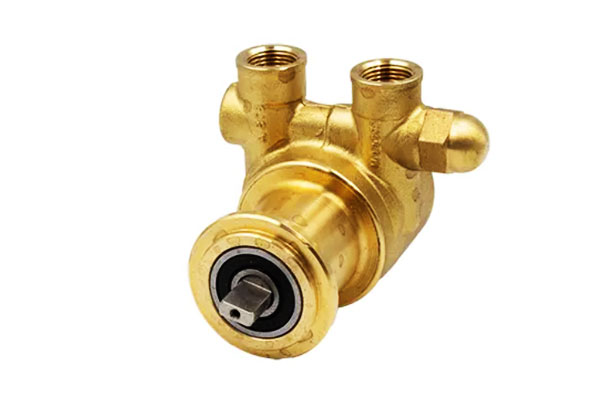
Brass investment casting quality is determined by a limited number of high-impact control factors.
These variables must be managed not as isolated shop-floor actions but as an integrated process window.
Melt Temperature Control
Temperature control is the single most important factor in brass casting.
The melt must be hot enough to fill fine features, but not so hot that zinc volatilization and oxidation become excessive.
Because brass is composition-sensitive, the acceptable pouring range is relatively narrow compared with many generic casting alloys.
A well-controlled temperature regime helps:
- preserve alloy composition,
- reduce zinc loss,
- improve flow consistency,
- limit oxide formation,
- stabilize batch-to-batch quality.
Melt Holding Time
Even if the melt temperature is correct, excessive holding time can still degrade quality.
The longer brass stays at high temperature, the more likely it is to lose zinc and pick up oxides.
For this reason, the melt should be prepared efficiently and poured without unnecessary delay.
Short, controlled thermal exposure is generally better than prolonged high-temperature soaking.
Atmosphere and Oxidation Management
Brass should be handled under conditions that minimize oxidation.
Anti-oxidation covering agents may be used during melting, and the melt should be protected from excessive exposure to air whenever possible.
Clean melt practice reduces dross, inclusion risk, and finishing problems.
Atmosphere control is especially important for:
- decorative parts,
- thin-wall castings,
- precision fittings,
- premium surface finishes.
Shell Chemistry and Thermal Preparation
The ceramic shell must be chemically compatible with brass and thermally stable at pouring temperature.
Low-alkali, neutral refractory systems are preferred to prevent surface reaction.
Proper shell sintering and preheating are equally important because they reduce residual moisture and limit thermal shock during pouring.
Shell preparation directly affects:
- surface quality,
- cavity fidelity,
- gas evolution,
- misrun risk,
- and defect rate.
Mold Preheat Temperature
Preheating the mold to an appropriate temperature helps brass flow into fine details and reduces premature solidification.
If the shell is too cold, misruns and cold shuts become more likely. If it is too hot or poorly controlled, surface reaction risk may increase.
The preheat window must be matched to:
- section thickness,
- part complexity,
- alloy composition,
- pouring method.
Pouring Method and Metal Flow
The choice between gravity pouring, low-pressure pouring, and vacuum-assisted pouring depends on part complexity and quality requirements.
- Gravity pouring works well for standard parts and cost-sensitive production.
- Low-pressure pouring improves filling stability and can reduce turbulence.
- Vacuum-assisted pouring is useful when oxide inclusion and trapped gas must be minimized.
Good pouring practice should promote smooth cavity filling without splash, turbulence, or premature freezing.
Gating, Riser, and Solidification Design
Brass shrinks on solidification, so the gating and risering system must support directional freezing and compensate for final shrinkage.
This is particularly important in thick sections and junction areas, where hot spots can otherwise produce internal voids.
Effective gating design should:
- feed hot spots progressively,
- reduce turbulence,
- avoid isolated shrinkage zones,
- support clean metal flow,
- maintain sequence solidification.
Alloy Composition Control
Because brass performance depends strongly on copper-zinc ratio and trace additions, the alloy formulation must be controlled tightly.
Even small deviations can change color, strength, corrosion resistance, and casting behavior.
This is especially relevant in lead-free or compliant brass grades, where regulatory requirements may limit compositional flexibility.
Post-Cast Finishing and Stress Relief
The finishing strategy should be matched to the part’s functional and visual requirements. Sandblasting, grinding, polishing, and coating all affect final value.
Where residual stress is a concern, stress-relief annealing in the 250°C–350°C range may be used to improve dimensional stability and reduce long-term risk.
Inspection and Verification
Final inspection is not a formality. It confirms whether the process control system worked. Brass castings should be checked for:
- dimensions,
- surface appearance,
- porosity,
- composition consistency,
- tightness or leak integrity where applicable,
- corrosion performance when the service environment requires it.
8. Advantages and Limitations of Brass Investment Casting
Advantages
- excellent detail reproduction
- attractive appearance
- good fluidity for complex geometry
- moderate corrosion resistance
- strong machinability in many grades
- near-net-shape efficiency
- suitable for decorative and functional components
Limitations
- zinc loss risk at high temperature
- size limitation
- relatively high unit cost
- more sensitive than many assume to oxidation and composition drift
- not ideal for high-temperature structural service
- mechanical performance is moderate compared with high-strength alloys
- may require careful finishing to preserve appearance
9. Typical Applications of Brass Investment Castings
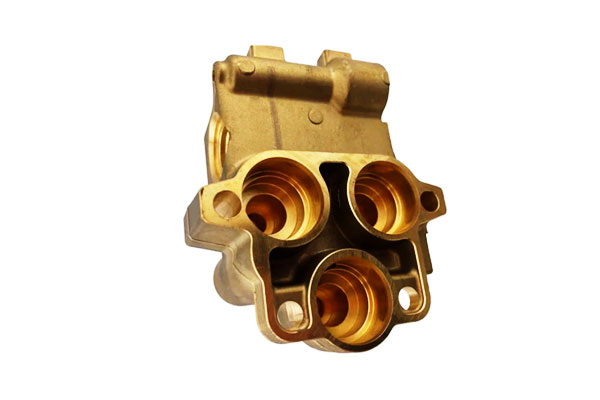
Brass investment castings are used across multiple industries.
Decorative and architectural hardware
- handles
- hinges
- ornamental fittings
- fixtures
- trim components
Plumbing and sanitary components
- valves
- fittings
- couplings
- connectors
- water-related hardware
Marine and coastal accessories
- corrosion-resistant trim
- fittings
- housings
- hardware exposed to humid or saline environments
Electrical and instrumentation parts
- connectors
- terminal bodies
- sensor housings
- contact-related components
Mechanical and industrial components
- small gears
- levers
- brackets
- precision housings
- threaded bodies
10. Comparison with Other Manufacturing Routes
When selecting a manufacturing route for brass components, the decision is rarely based on a single factor.
The real choice depends on the required geometry, tolerance control, surface finish, production volume, material efficiency, and total finishing cost.
| Evaluation Item | Investment Casting | Machining from Bar Stock | Forging | Sand Casting |
| Best suited for | Complex near-net-shape parts with fine detail | High-precision parts with simple to moderate geometry | Stronger parts with simpler geometry | Large or less detail-sensitive parts |
| Geometry complexity | High | Moderate | Low to moderate | Moderate |
| Surface finish | Good to very good | Excellent | Moderate | Fair to poor |
| Linear tolerances | Good; typically better than sand casting, weaker than precision machining | Excellent | Good | Fair |
| Geometric tolerances | Good; suitable for intricate contours and thin features | Very good on simple shapes, limited by machining setup | Good on robust shapes, less favorable for intricate geometry | Fair |
| Dimensional consistency in batch production | Good | Excellent for low-to-medium volume | Good | Moderate |
| Material utilization | High | Low | Moderate | Moderate |
| Secondary machining requirement | Low to moderate | Moderate to high | Moderate | High |
| Tooling cost | Moderate | Low to moderate | High | Low |
| Per-part cost at medium volume | Competitive | Often higher due to machining time | Often higher due to tooling | Lower for simple parts, higher for finishing-heavy parts |
| Suitability for decorative parts | Excellent | Very good | Moderate | Poor to fair |
| Suitability for pressure-bearing parts | Good, alloy- and design-dependent | Good | Very good | Moderate |
| Suitability for thin-wall detail | Excellent | Limited | Poor | Limited |
How to interpret linear and geometric tolerances
In brass component manufacturing, tolerance performance should be evaluated in two separate dimensions:
Linear tolerances refer to dimensional accuracy along length, width, thickness, diameter, or hole position.
Geometric tolerances refer to the control of shape and positional relationships such as flatness, roundness, parallelism, concentricity, symmetry, twist, and profile accuracy.
11. LangHe Foundry Is Your Full-Service Brass Casting Service Provider
LangHe Foundry provides end-to-end brass casting solutions designed to support projects from concept development through final delivery.
With integrated capabilities in pattern engineering, investment casting, machining, surface finishing, and quality inspection, LangHe Foundry helps customers convert complex brass component requirements into reliable, production-ready parts.
Whether the project involves prototype validation, small-batch manufacturing, or stable long-term supply,
LangHe Foundry supports tailored brass casting programs with attention to dimensional accuracy, surface quality, process consistency, and application-specific performance.
By combining technical know-how with responsive production support, LangHe Foundry serves as a dependable partner for decorative, functional, and precision brass casting applications.
11. Conclusion
Brass investment casting is a mature, cost-effective and aesthetically versatile precision lost-wax manufacturing technology tailored for copper-zinc alloy characteristics.
Its core competitiveness originates from brass’s low melting point, excellent fluidity and low solidification shrinkage,
which endow the process with unparalleled advantages in complex thin-wall structure forming and high-quality surface replication compared with other brass manufacturing methods.
Despite the limitations of size constraints and relatively high unit cost, brass investment casting still maintains strong market vitality
in plumbing engineering, marine hardware and high-end decoration fields by virtue of its dual attributes of functional reliability and artistic aesthetics.
In the future, with the popularization of lead-free environmental alloys and intelligent simulation process technology,
brass investment casting will further break cost bottlenecks and expand application boundaries, becoming an indispensable core supporting process for global high-end customized precision copper alloy components.
FAQs
What is the biggest technical difficulty in brass investment casting?
Suppressing zinc high-temperature volatilization and surface dezincification corrosion, which directly determines component composition uniformity and long-term corrosion resistance.
What is the difference between brass investment casting and die casting?
Investment casting supports complex hollow undercut structures with denser internal microstructure;
die casting features higher efficiency but is limited to simple solid parts with inherent gas porosity defects.
Which brass alloy is most suitable for drinking water accessories?
Lead-free alpha-beta brass, which complies with international drinking water safety standards and integrates antibacterial performance and moderate mechanical strength.
Why use neutral shells instead of alkaline shells for brass casting?
Alkaline refractory materials will react with molten brass to accelerate dezincification corrosion and reduce the service life of pressure-bearing components.
Is post-casting heat treatment necessary for brass castings?
Stress relief annealing is required for dual-phase brass parts to eliminate thermal stress and prevent delayed stress corrosion cracking;
single-phase decorative brass can omit heat treatment according to actual demands.