I modern tillverkning, delar av ett material uppfyller sällan de fulla kraven på prestanda, estetik, och funktionalitet.
Dagens produkter måste vara hållbara men ändå bekväma, vattentät men ändå andas, och komplex men ändå lätt att montera.
Detta har drivit på den utbredda användningen av tillverkningsprocesser för flera material. Bland dessa, övergjutning och insatsgjutning är två av de viktigaste och ofta jämförda teknikerna.
Även om de två termerna ibland används omväxlande, de beskriver olika tillverkningsmetoder och löser olika tekniska problem.
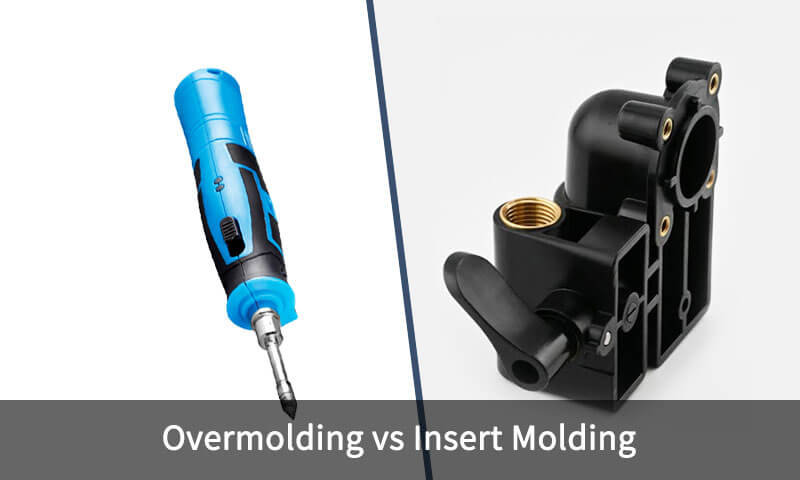
Övergjutning involverar i allmänhet gjutning av ett andra material över ett befintligt substrat för att skapa en multimaterialkomponent.
Inspelning, däremot, placerar en förformad insats - ofta metall - inuti en formspruta och kapslar in eller delvis omger den med plast.
Den här artikeln ger en omfattande, sida vid sida jämförelse av övergjutning och insatsgjutning.
1. Vad är Overmolding?
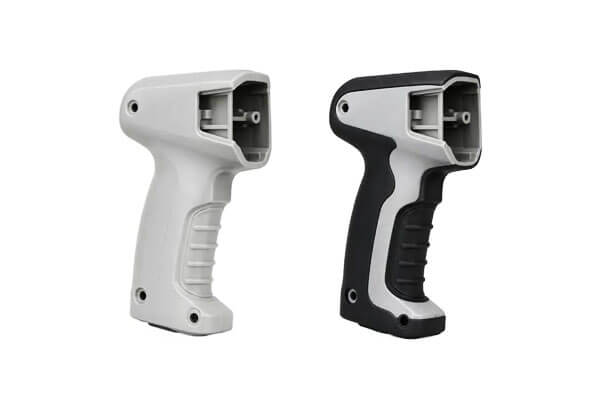
Övergrävning är en formsprutningsprocess där ett material gjuts över ett befintligt substrat eller tidigare gjuten komponent för att skapa en integrerad del av flera material.
Den första komponenten kallas vanligtvis substrat, medan materialet som appliceras under den sekundära formningsoperationen är övergjutningsmaterial.
Beroende på produktdesign, substratet kan vara en styv termoplast, elastomer, metallkomponent, eller annan lämplig förformad del.
En typisk övergjuten komponent kan kombinera ett styvt konstruktionsmaterial med ett mjukare material.
Till exempel, ett styvt ABS-hus kan ta emot en TPE-överform för att ge ett bekvämt grepp, förbättra tätningen, eller skapa en skyddande yttre yta.
Målet är inte bara att placera ett material ovanpå ett annat. Gränssnittet mellan de två materialen måste ge tillräcklig vidhäftning, mekanisk retention, eller en kombination av båda för att motstå produktens förväntade mekaniska, termisk, kemisk, och miljöförhållanden.
Hur övergjutning fungerar
Övergjutningsprocessen börjar i allmänhet med framställning av substratet.
Detta kan innebära en separat formsprutningsoperation, bearbetningsprocess, stämplingsoperation, gjutningsprocess, eller annan tillverkningsmetod.
Efter att underlaget har inspekterats, den är placerad inuti en andra form. Formen är utformad för att exponera de områden som behöver ta emot överformningsmaterialet samtidigt som den exakt lokaliserar och stödjer substratet.
Det sekundära materialet värms sedan upp till lämplig bearbetningstemperatur och sprutas in i formhåligheten.
Den flyter runt de avsedda substratytorna och bildar den erforderliga yttre geometrin.
Efter fyllning och packning, materialet svalnar och stelnar innan den färdiga komponenten kastas ut.
Ett typiskt arbetsflöde är:
Substratproduktion → substratinspektion → formladdning → positionering → sekundär materialinjektion → packning → kylning → utkastning → inspektion
Kvaliteten på den slutliga produkten beror mycket på gränssnittsdesign. Om kemisk vidhäftning krävs, substratet och överformningsmaterialet måste ha tillräcklig kompatibilitet.
Om mekanisk retention är den primära mekanismen, underlaget kan kräva spår, rev, hål, underskott, eller andra egenskaper som gör att det andra materialet kan låsas i läge.
Ytföroreningar är en annan viktig faktor. Olja, damm, släppmedel, oxidation, fukt, eller andra föroreningar kan störa vidhäftningen och leda till delaminering eller för tidig separation.
Vanliga övergjutningsmaterial
Övergjutning kan använda ett brett utbud av termoplaster och elastomeriska material, men inte alla materialkombinationer är i sig kompatibla.
Materialvalet bör beakta smälttemperaturen, kemisk kompatibilitet, krympning, termisk expansionskoe, hårdhet, flexibilitet, ytegenskaper, och förväntade servicevillkor.
Vanliga kombinationer inkluderar:
| Underlagsmaterial | Överformningsmaterial | Typiskt syfte |
| ABS | TPE | Mjuka höljen och grepp |
| PC | TPE | Slagtåliga produkter med ergonomiska ytor |
| Nylon | TPE/TPU | Industriella grepp och flexibla gränssnitt |
| Pp | TPE | Konsumentprodukter och tätningar |
| PC/ABS | Tpu | Skyddande och ergonomiska ytor |
| Styv termoplast | Lsr | Tätning och specialiserade flexibla komponenter |
Typiska övergjutningsapplikationer
Övergjutning är särskilt användbart när produkten måste kombinera strukturell prestanda med mjukhet, flexibilitet, tätning, isolering, eller förbättrad ergonomi.
Övergjutning används ofta för:
- Hand-verktygsgrepp
- Automotive switchar och reglage
- Hus för konsumentelektronik
- Komponenter för medicinsk utrustning
- Bärbara enheter
- Kabel- och trådskydd
- Tätning av komponenter
- Handtag och ergonomiska gränssnitt
- Skyddsöverdrag
- Kontroller av industriell utrustning
2. Vad är Insert Molding?
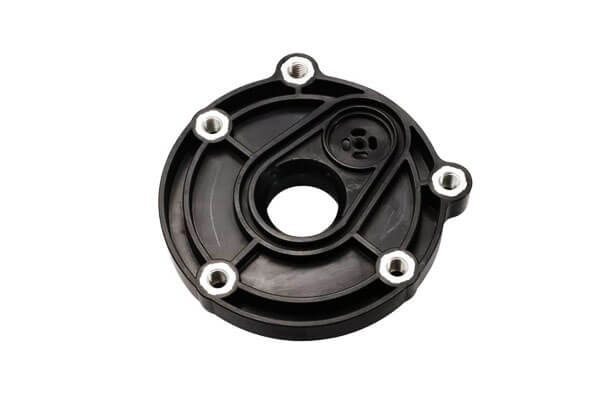
Inspelning är en formsprutningsprocess där en förformad komponent, känd som en infoga, placeras inuti en sprutform och sedan delvis eller helt inkapslad av smält plast.
Insatsen är ofta gjord av metall, fast plast, keramisk, elektronisk, och andra förformade komponenter kan också användas.
Till skillnad från konventionell formsprutning av ett material, insatsgjutning kombinerar en självständigt tillverkad komponent med insprutad plast under en formningsoperation.
Plasten stelnar runt insatsen, producera en integrerad del som kan eliminera efterföljande monteringsoperationer.
Till exempel, en mässingsgängad insats kan placeras inuti en form och omges av nylon.
Efter formning, den resulterande komponenten innehåller ett permanent gängat metallgränssnitt utan att den gängade insatsen behöver installeras efteråt.
Hur insatsgjutning fungerar
Insatsgjutning börjar med tillverkning och inspektion av insatsen. Måttnoggrannhet är särskilt viktig eftersom insatsen måste passa korrekt i formen och behålla sin specificerade position under hela injektionen.
Insatsen placeras sedan i formen manuellt, halvautomatiskt, eller genom ett automatiserat lastningssystem.
Dedikerade armaturer, stift, hålrum, eller retentionsfunktioner kan användas för att förhindra rörelse.
När formen stängs, smält plast injiceras runt insatsen. Insprutningstrycket kan vara betydande, så formen måste ge tillräckligt stöd för att förhindra att insatsen förskjuts, deformerande, eller blir felinriktad.
Plasten svalnar sedan och stelnar runt insatsen. Efter utkastning, den färdiga komponenten inspekteras för dimensionell noggrannhet, infogningsposition, flash, tomrum, sprickor, och andra defekter.
Grundsekvensen är:
Insatstillverkning → skärinspektion → skärladdning → positionering och kvarhållning → formstängning → plastinsprutning → kylning → utkastning → inspektion
För tillverkning av stora volymer, automatiserad skärladdning kan integreras i formcellen. Detta kan förbättra cykelkonsistensen samtidigt som den manuella hanteringen minskar.
Vanliga insatsmaterial
Metall är det mest kända insatsmaterialet eftersom det ger egenskaper som plast i allmänhet inte kan återskapa, som hög elektrisk ledningsförmåga, trådens hållbarhet, styvhet, slitbidrag, eller lokal mekanisk styrka.
Vanliga insatsmaterial inkluderar:
- Mässing
- Rostfritt stål
- Kolstål
- Aluminium
- Koppar och kopparlegeringar
- Teknisk plast
- Keramik
- Elektroniska komponenter
Typiska applikationer för insatsgjutning
Insatsgjutning används vanligtvis när en produkt kräver att en metall eller annan förformad komponent permanent integreras i en plastkropp.
Typiska applikationer inkluderar:
- Gängade bossar
- Elektriska kontakter
- Bilterminaler
- Sensorhus
- Byt komponenter
- Medicinska instrument
- Strukturella förstärkningskomponenter
- Kabelkontakter
- Elektroniska sammansättningar
- Precisionsmekaniska komponenter
3. Övergjutning vs insatsgjutning: Vad är skillnaden?
Även om båda teknologierna integrerar flera material eller komponenter, deras tillverkningslogik är annorlunda.
Den enklaste skillnaden är:
Övergjutning lägger till ett nytt material över ett befintligt underlag, medan insatsgjutning kapslar in eller omger en förformad insats med formsprutad plast.
Dock, terminologin kan överlappa varandra. I vissa tillverkningssammanhang, insatsgjutning kan diskuteras som en bredare form av övergjutning eftersom båda involverar gjutning av material runt en redan existerande komponent.
För ingenjörskommunikation, dock, det är användbart att särskilja dem baserat på rollen för den redan existerande komponenten.
Jämförelse av övergjutning och insatsgjutning
| Faktor | Övergrävning | Sätt in gjutning |
| Primärt syfte | Kombinera olika materialegenskaper | Integrera en förformad insats i plast |
| Redan existerande komponent | Substrat | Infoga |
| Gemensamt underlag/insats | Plast, elastomer, metall | Metall, plast, keramisk, elektronisk komponent |
| Typisk kombination | Styv plast + elastomer | Plast + metall |
| Huvudgränssnittsmekanism | Adhesion, mekanisk förregling, eller båda | Inkapsling, mekanisk retention, vidhäftning i vissa fall |
| Viktigt designproblem | Materiell kompatibilitet | Sätt positionering och retention |
| Typisk tillämpning | Mjukt grepp | Gängad metallinsats |
| Ytfunktion | Grepp, täta, dämpa, skydd | Elektrisk, mekanisk, strukturell, fastsättning |
| Automatisering | Mycket automatiserbar | Mycket automatiserbar, men skärbelastningen är kritisk |
| Stor risk | Delaminering eller dålig vidhäftning | Infoga rörelse eller felinställning |
4. Övergjutning vs insatsgjutning: Designöverväganden
Designkraven för övergjutning och insatsgjutning skiljer sig främst eftersom de två processerna hanterar olika gränssnitt.
Overmolding fokuserar på att skapa ett pålitligt gränssnitt mellan substratet och det övergjutna materialet, medan insatsgjutning fokuserar på exakt positionering och säker inkapsling av en förformad insats.
| Designhänsyn | Övergrävning | Sätt in gjutning |
| Materiell kompatibilitet | Välj kompatibla substrat och övergjutningsmaterial baserat på vidhäftning, smälttemperatur, krympning, hårdhet, och termisk expansion. | Se till att insatsen tål formningstemperatur och tryck utan deformation eller dimensionsinstabilitet. |
| Geometri & Väggtjocklek | Bibehåll en jämn tjocklek på överformen och ge tillräckligt med limyta. Undvik plötsliga tjockleksförändringar som kan orsaka krympning, varning, eller svag bindning. | Sörj för tillräcklig plasttjocklek runt skäret för styrka och använd spår, grymtar, hål, eller axlar när ytterligare retention krävs. |
| Bindning & Retention | Designa gränssnittet för kemisk vidhäftning, mekanisk förregling, eller båda, beroende på materialkompatibilitet. | Designa mekaniska kvarhållnings- och inkapslingsfunktioner för att motstå utdragning och rotation. |
| Gate & Materialflöde | Placera grindar för att uppnå balanserad fyllning och minimera svetslinjer, luftinneslutning, och överdriven stress vid gränssnittet. | Kontrollera materialflödet noggrant för att förhindra skärets förskjutning, ofullständig inkapsling, eller överdrivet tryck på insatsen. |
Infoga / Substratpositionering |
Substratet måste placeras korrekt och säkert hållas under injektionen. | Exakt skärpositionering är avgörande; lokaliseringsstift, fickor, fixturer, eller automatisk placering kan krävas. |
| Krympning & Termisk expansion | Tänk på skillnader i krympning och termisk expansion mellan substrat och övermögel för att förhindra skevhet, restspänning, och delaminering. | Tänk på skillnader i termisk expansion mellan insatsen och polymeren, speciellt i metall-till-plastapplikationer, för att förhindra dimensionsvariationer och inre spänningar. |
| Förslag & Vräkning | Ge tillräckligt drag och korrekt placerade utkastare för att frigöra delen utan att skada överformen eller gränssnittet. | Designa drag och utkast noggrant för att förhindra skärrörelser, deformation, eller lossnar under urformningen. |
Toleranser |
Ta hänsyn till substratdimensioner, överformens tjocklek, Materialkrympning, och möjlig gränssnittsrörelse. | Redogör för insatsmått, positioneringsnoggrannhet, polymer krympning, och slutlig insättningsplats. |
| Dfm & Mögelflöde | Utvärdera bindningsområdet, materialflöde, väggtjocklek, portens läge, och differentiell krympning före bearbetning. | Utvärdera skärhållningen, positionering, polymerflöde, termisk beteende, och potentiell skärförskjutning innan verktyg. |
| Kvalitetskontroll | Fokusera på bindningsstyrka, överformens tjocklek, flash, delaminering, varning, och dimensionell noggrannhet. | Fokusera på skärets position, retentionsstyrka, inkapsling, flash, tomrum, och dimensionell noggrannhet. |
5. Anpassade övergjutnings- och insatsgjutningstjänster från LangHe Industry
Langhe Industry tillhandahåller skräddarsydda formsprutningslösningar för applikationer som kräver övergjutning, insatslist, och andra integrerade formningsteknologier.
Vårt tillverkningssätt kan stödja projekt från inledande produktutveckling och verktyg till produktion och kvalitetskontroll.
| Förmåga | Information |
| Övergjutningstyper | Tvåskott (2K) övergrävning, plocka-och-placera övergjutning. |
| Sätt in gjutning | Metallinsatser (mässing, stål, koppar), keramiska insatser, elektroniska insatser (Kretskort, sensorer). |
| Materiel (Substrat) | ABS, PC, Nylon (Pa6, Pa66), Pp, Pbt. |
| Materiel (Övermögel) | TPE, Tpu, Lsr, MOMS, silikon. |
| Verktyg | Intern verktygsdesign och tillverkning. |
| Kvalitet | Iso 9001:2015 auktoriserad; 100% inspektion. |
| Ledtid | 2–4 veckor för prototyper; 4–8 veckor för produktionsverktyg. |
6. Slutsats
Övergjutning vs insatsgjutning handlar inte om att avgöra vilken process som är allmänt sett bättre. Båda är mycket effektiva formsprutningstekniker, men de hanterar olika produktutvecklingskrav.
Overmolding lämpar sig främst för produkter som behöver kombinera olika materialegenskaper inom en integrerad komponent.
Det är särskilt värdefullt för mjuka ytor, ergonomiska grepp, flexibla tätningar, dämpande, isolering, och skyddande lager.
Dess framgång beror mycket på materialkompatibilitet, gränssnittsdesign, adhesion, mekanisk förregling, och differentiell krympkontroll.
Inspelning, däremot, är särskilt effektivt när en förformad komponent - ofta en metallinsats - måste integreras permanent i en plaststruktur.
Den är allmänt lämpad för gängade gränssnitt, elektriska terminaler, förstärkningskomponenter, sensorer, anslutningar, och andra applikationer där plast och annat material fyller kompletterande funktioner.
I sista hand, processval bör baseras på hela tillverkningssystemet, inklusive materiellt beteende, produktens geometri, verktyg, bindnings- eller retentionsstrategi, produktionsvolym, automatisering, inspektion, och livscykelkostnad.
Vanliga frågor
Vad är skillnaden mellan insatsgjutning och tvåskottsgjutning?
Insatslist använder en förformad insats som placeras i formen före plastinjektion.
Tvåskottsgjutning producerar vanligtvis två material sekventiellt med hjälp av specialiserade verktyg och flera injektionssteg, ofta utan att manuellt ladda ett separat tillverkat substrat mellan skotten.
Vilken process är snabbare: övergjutning eller insatsgjutning?
Insatsgjutning är i allmänhet snabbare eftersom den använder ett enda injektionsskott. Övergjutning kräver två skott eller en process i flera steg.
Vilken process har lägre verktygskostnader?
Insatsgjutning har lägre verktygskostnader eftersom det bara kräver ett enda formhålrum. Övergjutning kräver två separata formar eller en komplex tvåskottsform.
När ska jag använda övergjutning?
Använd övergjutning när du behöver mjuka grepp, vattentät tätning, dämpning, eller förbättrad estetik.
När ska jag använda insatslist?
Använd insatsform när du behöver höghållfasta gänganslutningar, elektrisk konduktivitet, eller strukturell förstärkning i plastdelar.
Kan övergjutning och insatslist användas tillsammans?
Ja. Vissa komplexa delar kombinerar båda processerna, till exempel, en insatsgjuten metalltråd med ett övergjutet mjukt grepp på samma komponent.
Är insatsgjutning en typ av övergjutning?
Terminologin kan överlappa varandra eftersom båda bearbetar gjutmaterial runt en redan existerande komponent.
Dock, i praktisk tillverkningsterminologi, övergrävning brukar betona att lägga till ytterligare ett materiallager eller materialsystem, medan insatslist betonar specifikt att bädda in en förformad insats i den formade komponenten.
Kan metall användas i övergjutning?
Ja. Metallsubstrat kan övergjutas med lämpliga plaster eller elastomerer.
Dock, processen måste ta hänsyn till ytbehandlingen, termisk expansion, adhesion, mekanisk retention, och differentiell krympning.