

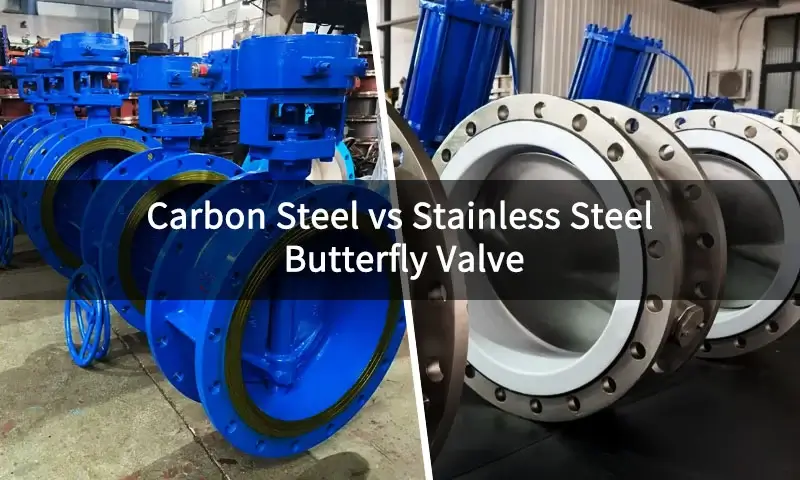
Vridspjällsventiler är bland de mest använda flödeskontrollanordningarna i industriella rörsystem, värderade för sin kompakta design, lättvikt, snabb kvartsvändning, och kostnadseffektivitet.
Dock, föreställningen, pålitlighet, och livslängden för en vridspjällsventil beror kritiskt på ett grundläggande beslut: valet av kropp och skivmaterial.
De två dominerande materialfamiljerna för fjärilsventiler är kolstål och rostfritt stål.
Kolstål erbjuder exceptionell styrka och kostnadseffektivitet, vilket gör det till standardvalet för allmänna industriella applikationer som vatten, luft, ånga, och oljetjänster.
Rostfritt stål, med sin överlägsna korrosionsbeständighet, hygieniska egenskaper, och kapacitet för hög temperatur, är det bästa materialet för aggressiva medier, marinmiljöer, matbearbetning, och farmaceutiska applikationer.
Att välja mellan fjärilsventiler i kolstål och rostfritt stål är inte bara en kostnadsfråga – det är ett strategiskt beslut som påverkar utrustningens livslängd, underhållskrav, regelverk, och total ägandekostnad.
1. Vad är en fjärilsventil?
En fjärilsventil är en kvartsvarvs roterande rörelseventil som styr vätskeflödet genom att rotera en cirkulär skiva monterad på en central axel.
När handtaget, växellåda, pneumatiskt ställdon, eller elektriskt manöverdon vrider spindeln förbi 90 grader, skivan vrids samtidigt:
- Helt öppen (0°): Skivan är parallell med flödesriktningen, tillåter maximalt flöde med relativt låga tryckförluster.
- Delvis öppen: Skivan blockerar delvis rörledningen, reglera flödet.
- Helt stängd (90°): Skivan är vinkelrät mot flödet, tätning mot ventilsätet för att stoppa vätskepassage.
Till skillnad från grindventiler som kräver flera varv för att fungera, fjärilsventiler ger extremt snabb öppning och stängning, vilket gör dem idealiska för automatiserad processkontroll och nödavstängningstillämpningar.
En fjärilsventils prestanda beror inte bara på dess strukturella design utan också på valet av kroppsmaterial, skivmaterial, stammaterial, tätningskomponenter, och tillverkningsprecision.
Bland dessa faktorer, kroppsmaterialet - särskilt kolstål kontra rostfritt stål - är ofta den primära bestämningsfaktorn för hållbarhet, korrosionsmotstånd, livslängd, och total livscykelkostnad.
Vanliga typer av fjärilsventiler
| Typ av fjärilsventil | Strukturella egenskaper | Typiska applikationer |
| Skivfjärilsventil | Installeras mellan två rörflänsar och säkras med flänsbultar som går genom rörledningen. Kompakt, lättvikt, och ekonomiskt. | Vattenförsörjning, HVAC -system, bevattning, tryckluft, brandskydd, och allmänna industritjänster. |
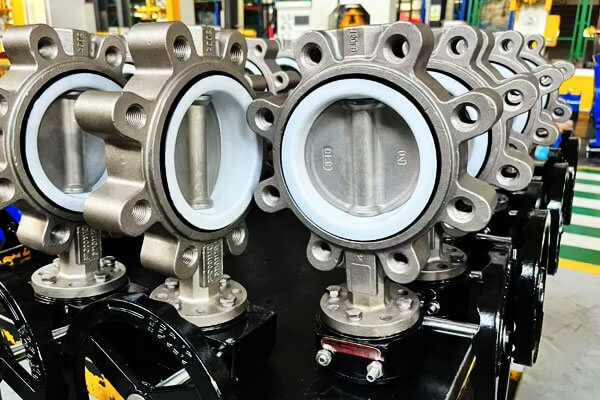
| Luggfjärilventil | Utrustad med gängade klackar på båda sidor av ventilhuset, så att varje fläns kan bultas separat. | Processindustri, kemiska växter, matbearbetning, läkemedelssystem, och rörledningar som kräver frekvent underhåll. |
| Dubbelflänsad vridspjällsventil | Har integrerade flänsar på båda sidor av ventilhuset för direkt skruvad anslutning till matchande flänsar. Ger utmärkt strukturell styvhet och inriktning. | Kommunal vattenöverföring, kraftverk, marinteknik, brytning, olja & gasledningar, och andra tunga industrisystem. |
Koncentrisk (Mittlinje) Fjärilsventil |
Skivan och skaftet är placerade på samma mittlinje, med ett fjädrande elastomersäte som ger tätning under hela rotationen. | Vattenbehandling, Hvac, kylvatten, avloppssystem, och allmänna industriella tillämpningar. |
| Dubbel offset vridspjällsventil | Skaftet är förskjutet från både skivans centrum och ventilhusets mittlinje, minskar friktionen mellan skivan och sätet under drift. | Petrokemiska anläggningar, ångsystem, kraftproduktion, offshore -plattformar, och processrörledningar för medelhögt till högt tryck. |
| Trippel-offset vridspjällsventil | Innehåller en tredje geometrisk offset, skapar en konisk metall-mot-metall-tätningsmekanism som praktiskt taget eliminerar skavning under drift. | Oljeraffinaderier, LNG-anläggningar, kemisk bearbetning, ångsystem med hög temperatur, offshore-teknik, och andra applikationer för allvarliga tjänster. |
Varför kroppsmaterial är kritiskt
Kroppsmaterialet i en fjärilsventil avgör:
- Korrosionsmotstånd: Förmågan att motstå servicevätskan och miljöförhållandena.
- Temperaturförmåga: De högsta och lägsta driftstemperaturerna.
- Tryckbetyg: Det högsta tillåtna arbetstrycket.
- Mekanisk styrka: Förmågan att stå emot linjespänningar, termisk cykling, och vibrationer.
- Kosta: Materialkostnaden påverkar avsevärt det totala ventilpriset.
- Efterlevnad: Om ventilen uppfyller myndighetskrav (mat, farmaceutisk, nukleär, etc.).
2. Fjärilsventil i kolstål
Vad är kolstål?
Kolstål är en järn-kol-legering som innehåller relativt små mängder legeringselement.
Dess styrka uppnås främst genom kolhalt och värmebehandling snarare än krom- eller nickeltillsatser.
Eftersom den saknar den passiva kromoxidfilmen som finns i rostfritt stål, Kolstål har begränsad inneboende korrosionsbeständighet men erbjuder utmärkt mekanisk hållfasthet, bearbetbarhet, och kostnadseffektivitet.
För vridspjällsventiler, kolstål är fortfarande ett av de mest använda karossmaterialen i industrier där korrosion är måttlig och mekanisk prestanda är det primära kravet.
Skyddsbeläggningar, foder, eller målningssystem används ofta för att förbättra miljöhållbarheten.
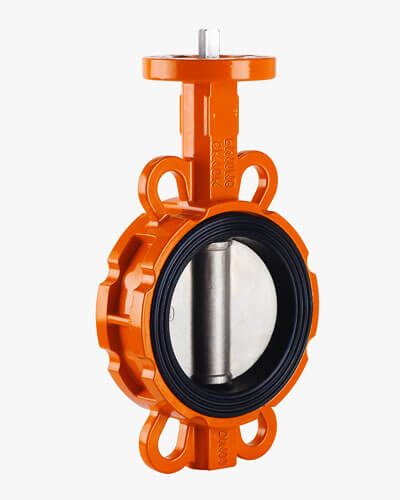
Vanliga kolstålsorter för vridspjällsventiler
Följande kvaliteter specificeras vanligtvis i internationella ventilstandarder:
| Kvalitet | Standard | Typisk applikation | Egenskaper |
| ASTM A216 WCB | Gjutet kolstål | Allmänna industriella ventiler | Utmärkt styrka och svetsbarhet |
| ASTM A216 WCC | Gjutet kolstål | Tryckhaltig utrustning | Förbättrad slaghållfasthet |
| ASTM A352 LCB | Lågtemperatur gjutstål | Kryogen och lågtemperaturservice | Hög seghet |
| ASTM A105 | Smidet kolstål | Högtryckssmidda ventiler | Överlägsen mekanisk styrka |
| ASTM A350 LF2 | Smidd lågtemperaturstål | Lågtemperaturrörledningar | Utmärkt seghet vid låg temperatur |
Bland dessa, ASTM A216 WCB är industristandarden för generella fjärilsventiler i kolstål eftersom det ger en balanserad kombination av mekaniska egenskaper, tillgänglighet, och tillverkningsekonomi.
Egenskaper för kolstål-fjärilsventiler
Hög hållfasthet och tryckbeständighet
Fjärilsventiler i kolstål erbjuder utmärkt mekanisk styrka och styvhet, vilket gör dem lämpliga för högtrycksrörsystem och ventiler med stor diameter.
Vanliga material som t.ex ASTM A216 WCB, A352LCB, och A105 ger tillförlitlig strukturell prestanda under krävande driftsförhållanden.
Bred temperaturanpassningsförmåga
Beroende på materialkvalitet, Kolstålventiler kan arbeta över ett brett temperaturområde.
Standard WCB används ofta för allmän industriservice, medan LCB är designad för lågtemperaturapplikationer, gör kolstål lämpligt för ånga, olja, gas, och verktygssystem.
Utmärkt tillverkningsbarhet
Kolstål har god gjutbarhet, bearbetbarhet, och svetsbarhet, möjliggör effektiv produktion genom gjutning, smidning, CNC-bearbetning, och svetsning. Dess mogna tillverkningsprocess bidrar också till att minska produktionskostnaderna.
Kostnadseffektiv lösning
Jämfört med rostfritt stål, Kolstål är mer ekonomiskt samtidigt som det ger utmärkt mekanisk prestanda.
Det är ofta det föredragna valet för icke-korrosiva eller milt korrosiva media där hög korrosionsbeständighet är onödig.
Begränsad korrosionsmotstånd
Kolstål motstår inte naturligt korrosion och kräver vanligtvis skyddande beläggningar som epoxi, Fbe, eller zinkrika beläggningar.
I aggressiva miljöer, extra korrosionsskydd är viktigt för att säkerställa lång livslängd.
3. Rostfritt stålfjärilsventil
Vad är rostfritt stål?
Rostfritt stål är en järnbaserad legering som innehåller minst ca 10.5% krom, som bildar en stabil passiv kromoxidfilm på ytan.
Detta passiva skikt regenereras kontinuerligt när det skadas, ger enastående motståndskraft mot oxidation och korrosion utan behov av ytterligare skyddande beläggningar.
Beroende på legeringens sammansättning, rostfria stål kan också innehålla nickel, molybden, kväve, mangan, titan, niob, eller koppar för att förbättra korrosionsbeständigheten, mekanisk styrka, seghet, svetbarhet, eller prestanda vid hög temperatur.
För vridspjällsventiler, rostfritt stål är det föredragna materialet vid lång livslängd, korrosionsmotstånd, produktens renhet, eller hygienisk prestanda krävs.
Det används flitigt i kemisk bearbetning, läkemedel, mat och dryck produktion, offshore-teknik, avsaltningsanläggningar, och vätskesystem med hög renhet.
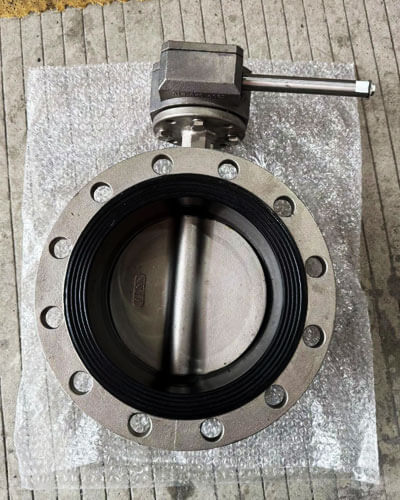
Vanliga rostfria stålsorter för fjärilsventiler
Olika rostfria stålkvaliteter väljs efter korrosionsbeständighet, mekanisk styrka, temperaturförmåga, och servicemiljö.
| Rostfritt stål | Motsvarande material | Nyckelegenskaper | Typiska applikationer |
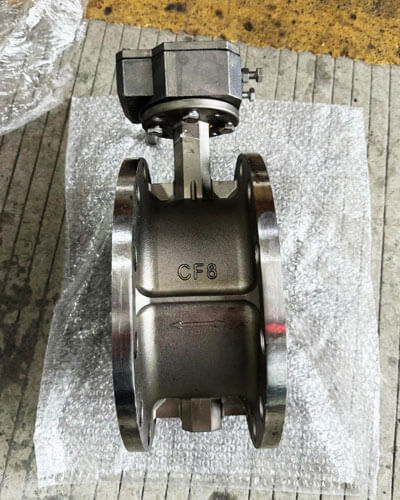
| Cf8 | Kasta 304 Rostfritt stål (I 1.4308) | Utmärkt allmän korrosionsmotstånd, bra seghet, bra svetsbarhet, ekonomisk | Vattenbehandling, Hvac, matbearbetning, allmänna kemiska tjänster |
| CF8M | Kasta 316 Rostfritt stål (I 1.4408) | Molybdenförstärkt korrosionsbeständighet, utmärkt motståndskraft mot klorider och havsvatten | Kemisk bearbetning, marinteknik, offshore -plattformar, avsaltning |
| Cf3 | Gjutet 304L rostfritt stål (I 1.4306) | Lågt kolinnehåll minimerar karbidutfällning och förbättrar svetsbarheten | Svetsade rörsystem, läkemedelsutrustning, livsmedels- och dryckesindustrin |
Cf3m |
Gjutet 316L rostfritt stål (I 1.4404) | Lågkolhaltig version av CF8M med överlägsen svetskorrosionsbeständighet | Processsystem med hög renhet, bioteknik, läkemedels- och kemiska anläggningar |
| Duplex rostfritt stål | ASTM A890 GRADE 4A (2205) | Högstyrka, Utmärkt motstånd mot grop, sprickorrosion, och stresskorrosionsprickor | Offshore olja & gas, havsvattenledningar, massa & papper, trycksystem |
| Super duplex rostfritt stål | ASTM A890 Grade 5A/6A (2507) | Enastående korrosionsmotstånd, mycket hög mekanisk hållfasthet, exceptionell havsvattenprestanda | Offshore -plattformar, undervattensutrustning, avsaltningsanläggningar, aggressiv kemisk bearbetning |
Egenskaper hos vridspjällsventiler i rostfritt stål
Utmärkt korrosionsmotstånd
Den främsta fördelen med vridspjällsventiler i rostfritt stål är deras enastående motståndskraft mot korrosion.
Den kromrika passiva filmen skyddar ventilen mot rost, oxidation, och många kemikalier, vilket gör rostfritt stål lämpligt för tuffa och korrosiva miljöer.
Överlägsen kemisk och hygienisk prestanda
Betyg som CF8M (316), duplex-, och superduplex rostfritt stål ger ökad motståndskraft mot klorider, syror, och havsvatten.
Deras smidiga, icke-porös yta gör dem också idealiska för livsmedelsbearbetning, läkemedel, och andra sanitära applikationer.
Pålitlig prestanda vid höga temperaturer
Austenitiska rostfria stål bibehåller god hållfasthet och oxidationsbeständighet vid förhöjda temperaturer, möjliggör stabil drift i ångsystem, kemiska växter, och andra högtemperaturtjänster.
Långt livslängd
Eftersom rostfritt stål motstår korrosion, bära, och oxidation, det kräver i allmänhet mindre underhåll och ger längre livslängd än kolstål, särskilt i krävande driftsmiljöer.
Högre initialkostnad
Även om fjärilsventiler i rostfritt stål har ett högre inköpspris än kolstålventiler, deras lägre underhållskrav och längre livslängd resulterar ofta i en lägre total livscykelkostnad för korrosiva applikationer.
4. Tillverkning och bearbetning av vridspjällsventiler
En vridspjällsventils prestanda och livslängd beror inte bara på materialval utan också på tillverkningskvalitet.
Från gjutning eller smide av ventilkroppen till precisionsbearbetning och slutprovning, varje produktionssteg påverkar direkt dimensionell noggrannhet, tätning, tryckmotstånd, och operationell tillförlitlighet.
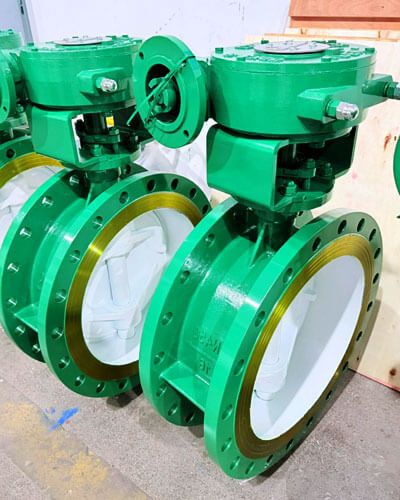
Precision
Fjärilsventiler i kolstål
Medium- och stor storlek fjärilsventil i kolstål kroppar tillverkas vanligtvis med hjälp av sandgjutning, inklusive grönsand och hartsbundna sandprocesser.
Dessa teknologier är väletablerade för att producera relativt stora tryckhaltiga komponenter och erbjuder en gynnsam balans mellan produktionseffektivitet, gjutningsutbytet, verktygskostnad, och dimensionskrav.
Kolstål är i allmänhet lättare att gjuta än höglegerade rostfria stål eftersom kraven på smältning och gjutning är mindre krävande.
Den relativt mogna processen gör också kolstål attraktivt för industriell ventilproduktion i stora volymer.
För mindre eller geometriskt komplexa komponenter, investeringsgjutning kan användas där förbättrad dimensionsnoggrannhet, ytkvalitet, och reducerat bearbetningstillägg krävs.
Vridspjällsventiler i rostfritt stål
Fjärilsventil i rostfritt stål komponenter tillverkas med båda investeringsgjutning och sandgjutning, med lämplig metod som i första hand bestäms av komponentstorlek och geometri.
Investeringsgjutning, även känd som förlorad WAX-process, är särskilt lämplig för små- till medelstora komponenter med komplexa geometrier.
Det kan ge relativt exakta mått och släta ytor, minska efterföljande bearbetningskrav.
Ventilkroppar i rostfritt stål med stor borrning tillverkas oftare genom sandgjutning på grund av de praktiska begränsningarna av investeringsgjutning för mycket stora komponenter.
Precision CNC bearbetning
När rågjutgodset eller smidet har tillverkats, CNC-bearbetning skapar de precisionsegenskaper som krävs för montering och tätningsprestanda.
Kritiska bearbetningsoperationer inkluderar:
- Bearbetningsflänsar motsvarar internationella standarder (Asme, I, Iso)
- Borra den inre flödespassagen
- Precisionsbearbetning av skafthål
- Bearbetning av skivtätningsytor
- Bearbetning av lagersäten och bussningsplatser
- Gängbearbetning för ventiler av klacktyp
- Ytbehandling av tätningsgränssnitt
Moderna CNC-bearbetningscentra uppnår rutinmässigt toleranser inom ±0,02–0,05 mm, säkerställer utmärkt koncentricitet mellan ventilkroppen, stam, och skiva.
Hög bearbetningsprecision minskar arbetsmomentet, förbättrar tätningens tillförlitlighet, och förlänger livslängden.
5. Jämförelse av mekaniska egenskaper: Kolstål vs fjärilsventil i rostfritt stål
Mekaniska egenskaper avgör hur en ventilkropp och skiva reagerar på inre tryck, externa belastningar, temperaturförändringar, och upprepade driftscykler.
Dock, Enbart materialegenskaper fastställer inte tryckklassificeringen för en vridspjällsventil.
Faktisk tryckförmåga beror också på väggtjocklek, ventilgeometri, diameter, designstandard, temperatur, tryckklass, skivkonfiguration, och tillverkningskvalitet.
Följande tabell ger representativa minimivärden eller specificerade värden för vanliga gjutna ventilmaterial.
Exakta krav ska alltid verifieras mot gällande materialstandard och utgåva.
| Egendom | Kolstål A216 WCB | Rostfri CF8 (304-typ) | Rostfri CF8M (316-typ) | Duplex CD3MN (2205-typ) |
| 0.2% Avkastningsstyrka, min. | ≥ 250 MPA | ≥ 205 MPA | ≥ 205 MPA | ≥ 450 MPA |
| Dragstyrka | 485–655 MPa | ≥ 485 MPA | ≥ 485 MPA | ≥ 655 MPA |
| Förlängning vid pausen, min. | ≥ 24% | ≥ 35% | ≥ 30% | ≥ 25% |
| Typiskt hårdhetsintervall* | ~130–180 HB | ~140–190 HB | ~150–200 HB | ~220–280 HB |
| Elasticitetsmodul | ~206 GPa | ~ 193 GPA | ~ 193 GPA | ~ 200 GPA |
*Hårdhetsvärden är vägledande snarare än universella acceptansintervall och kan variera beroende på värmebehandling, produktspecifikation, och testtillstånd.
6. Jämförelse av korrosionsbeständighet
Korrosionsbeständighet är utan tvekan Den viktigaste skillnaden mellan kolstål och rostfritt stål fjärilsventiler.
En ventil kan behålla tillräcklig mekanisk styrka när den är ny men gradvis förlora tryckgränsintegriteten om korrosion minskar dess effektiva väggtjocklek.
Följaktligen, korrosionsbeständighet kan ha en direkt inverkan på ventilens tillförlitlighet på lång sikt.
| Servicemiljö | Kolstål WCB | Cf8 / 304 Rostfri | CF8M / 316 Rostfri |
| Torr luft / inert gas | Godtagbar | Excellent | Excellent |
| Rent färskvatten | Kräver korrosionskontroll | Excellent | Excellent |
| Varmt cirkulerande vatten | Dålig utan skydd | Bra – Mycket bra | Mycket bra - utmärkt |
| Havsvatten / koncentrerad saltlösning | Dålig | Hög risk för gropbildning | Bättre, men fortfarande applikationsberoende |
| Svaga organiska syror | Generellt dålig | Bra för utvalda medier | Bättre för många tjänster |
| Starka mineralsyror | Generellt olämplig utan specialskydd | Mycket applikationsberoende | Mycket applikationsberoende |
| Kustatmosfär utomhus | Kräver beläggning och underhåll | Mycket bra | Excellent |
| Kloridhaltiga processvätskor | Fattig- | Måttlig–Hög risk beroende på förhållandena | Generellt bättre än 304 |
7. Temperaturprestanda: Kolstål vs fjärilsventil i rostfritt stål
Temperaturen är en kritisk faktor vid val av fjärilsventilmaterial eftersom den direkt påverkar avkastningsstyrka, dragstyrka, påverka seghet, krypmotstånd, termisk expansion, oxidationsbeteende, tätning, och tryck-temperaturklassning.
Ett material som fungerar bra vid omgivningstemperatur kan uppleva betydande förändringar i mekaniska egenskaper när driftstemperaturen stiger eller sjunker.
Typiska temperaturegenskaper
| Material | Typisk maximal kontinuerlig drifttemperatur* | Typisk lägsta drifttemperatur* | Termisk chockmotstånd | Huvudsaklig temperaturbegränsning |
| Kolstål WCB | ~425°C | ~−29°C | Måttlig | Styrka reduktion och oxidation vid förhöjd temperatur; begränsad seghet vid låg temperatur |
| Lågtemperatur kolstål LCB | ~425°C | ~−46°C | Måttlig | Bättre seghet vid låg temperatur än WCB, men fortfarande föremål för begränsningar av hög temperaturstyrka |
| Austenitisk rostfritt stål 304 / 316 | ~800–850°C i utvalda högtemperaturapplikationer | Ned till ~−196°C när det är korrekt kvalificerat | Excellent | Krypa, oxidation, och metallurgiska förändringar blir viktiga vid förhöjda temperaturer |
Duplex rostfritt stål 2205 |
~300°C | ~-40°C, applikationsberoende | Bra | Sprödhet och oönskad fasutfällning efter långvarig exponering för förhöjda temperaturer |
| Super duplex rostfritt stål 2507 | ~300°C | ~-40°C, applikationsberoende | Bra | Liknande högtemperaturmetallurgiska begränsningar som duplexkvaliteter |
*Dessa värden är vägledande materialserviceintervall, inte universella driftgränser för fjärilsventiler.
Faktiska tillåtna temperaturer måste fastställas från tillämplig materialspecifikation, ventilens tryck-temperaturvärde, sittmaterial, tätningssystem, designstandard, och tillverkarens data.
8. Tryckprestanda: Kolstål vs fjärilsventil i rostfritt stål
Tryckprestanda styrs av interaktionen mellan materialstyrka, komponentgeometri, väggtjocklek, temperatur, tryckklass, och designstandard.
För industriventiler, ASME B16.34 är en av nyckelstandarderna som används för tryck-temperaturklassificeringar, mått, materiel, testning, och relaterade krav för täckta ventilkonstruktioner.
Tryckprestanda: Praktisk jämförelse
| Faktor | Kolstål | Cf8 / CF8M austenitisk rostfri | Duplex rostfritt stål |
| Rumstemperatur sträckgräns | Hög | Måttlig | Mycket hög |
| Tryckbegränsning | Excellent | Excellent | Excellent |
| Styrka-till-kostnad-förhållande | Excellent | Måttlig | Bra |
| Potential för lätt design | Bra | Måttlig | Excellent |
| Hållfasthet vid hög temperatur | Måttlig | Bra | Temperaturbegränsad |
| Korrosionsrelaterad tryckförlust | Högre risk | Lägre risk | Mycket låg i lämpliga miljöer |
| Lämplighet för högt tryck | Utmärkt med lämplig design | Bra -excellent | Excellent |
| Typisk ingenjörsfördel | Ekonomisk strukturell styrka | Korrosionsmotstånd + seghet | Högstyrka + korrosionsmotstånd |
Den viktigaste ingenjörsprincipen
Den korrekta jämförelsen är inte det:
Vilket material har högst tryckklassificering?
I stället, det borde vara:
Vilket material och ventilkonstruktion kan hålla den erforderliga tryckgränsen säkert och ekonomiskt under hela den avsedda livslängden?
Den distinktionen är avgörande i industriell ventilteknik.
En fjärilsventil i kolstål kan ge den mest ekonomiska tryckgränsen i en städning, icke-frätande tjänst, medan en ventil i rostfritt stål eller duplex kan ge överlägsen långtidstryckintegritet när korrosion är den dominerande nedbrytningsmekanismen.
9. Slitstyrka och livslängd
Slitstyrka är en viktig faktor när man väljer mellan kolstål och rostfritt stål fjärilsventiler, särskilt i tillämpningar som involverar frekvent cykling, slippartiklar, hög flödeshastighet, eller upprepad strypning.
Dock, slitageprestanda bör inte bedömas enbart av kroppsmaterialet.
I en fjärilsventil, de skiva, stam, plats, lagerytor, tätningskanter, och invändiga beläggningar kan uppleva mycket olika slitagemekanismer.
Den faktiska livslängden bestäms därför av samspelet mellan material, vätska, ventildesign, arbetsfrekvens, tryckskillnad, flödeshastighet, och underhållsförhållanden.
| Faktor | Kolstål | Rostfritt stål (Austenitisk) | Duplex rostfritt stål |
| Nötningsbeständighet | Bra (hårdare betyg) | Måttlig | Bra - Utmärkt |
| Korrosion-erosion | Dålig (beläggningsberoende) | Bra | Excellent |
| Hårt motstånd | Bra | Dålig (gnistrande tendens) | Excellent |
| Förväntad livslängd (frätande) | 5– 20 år (med beläggning) | 30– 60+ år | 30– 60+ år |
| Underhållsfrekvens | Hög (beläggningsinspektion) | Låg | Låg |
10. Vätskekompatibilitet och hygienisk lämplighet
Vätskekompatibilitet
- Kolstålventiler är kompatibla med torra kolväten, eldningsoljor, smörjmedel, tryckluft och inerta gaser.
De är i allmänhet olämpliga för vattenlösningar, syror, alkalier och saltlösningar utan inre foder. - Rostfria ventiler är kompatibla med ett mycket brett spektrum av kemikalier, vattenbaserade vätskor, livsmedelsprodukter och farmaceutiska processströmmar. Betygsvalet baseras på kloridhalten, pH och temperatur.
Hygienisk och sanitär prestanda
Detta är ett område av absolut fördel för rostfritt stål:
- Kolstål kan inte användas för direkt mat, kontakt med drycker eller läkemedel.
Korrosionsprodukter och järnjoner förorenar processströmmar, och även belagda ytor misslyckas när beläggningen är skadad. - Rostfritt stål har en icke-porös, kemiskt inert yta som motstår biofilmbildning och motstår upprepad CIP (ren) och SIP (sterilisera på plats) cykler.
Vridspjällsventiler i sanitärt rostfritt stål med polerad insida möter 3-A, EHEDG och FDA standarder för kontakt med livsmedel.
11. Kostnadsjämförelse: Kolstål vs fjärilsventil i rostfritt stål
Kostnaden är ofta den avgörande faktorn när de tekniska kraven för en applikation kan tillgodoses av mer än ett material.
Dock, att endast jämföra köpeskillingen kan leda till ett felaktigt beslut.
Den ekonomiskt korrekta jämförelsen bygger på Totala ägandekostnader (Tco).
Totala ägandekostnader
TCO = Inköpskostnad + Installationskostnad + Underhållskostnad + Korrosionsskydd + Driftstopp + Ersättningskostnad
Jämförelse av livscykelkostnader
| Kostnadsfaktor | Kolstål | 304 / Cf8 | 316 / CF8M | Duplex / Super duplex |
| Initial materialkostnad | Låg | Medium | Medelhög | Hög – Mycket hög |
| Tillverkningskostnad | Låg | Medium | Medelhög | Hög |
| Bearbetningskostnad | Låg | Högre | Högre | Högre |
| Korrosionsskydd | Vanligtvis krävs | Vanligtvis minimalt | Vanligtvis minimalt | Vanligtvis minimalt |
| Underhåll av beläggning | Potentiellt betydande | Låg | Låg | Låg |
| Korrosionsrelaterad ersättningsrisk | Högre | Måttlig | Lågmåttlig | Låg i lämpliga miljöer |
| Långsiktig kostnad vid frätande service | Potentiellt hög | Måttlig | Ofta gynnsamt | Kan vara fördelaktigt |
| Bästa ekonomiska fallet | Icke-frätande / kontrollerade miljöer | Allmän korrosionsbeständig service | Klorid / kemiska miljöer | Kraftig korrosion + höga mekaniska krav |
12. Guide för val av applikationer: Kolstål vs fjärilsventil i rostfritt stål
Det finns inget universellt överlägset material. Rätt val beror på interaktionen mellan flytande kemi, temperatur, tryck, korrosionsrisk, mekanisk belastning, krav på renlighet, och projektekonomi.
När kolstål är det bättre valet
Kolstål fjärilsventiler är ofta den föredragna lösningen när:
- Vätskan är relativt icke-frätande
- Drifttemperaturen ligger inom materialets kvalificerade intervall
- Systemet är inomhus eller tillräckligt skyddat
- Skyddsbeläggningar kan bibehållas
- Initial kapitalkostnad är en viktig faktor
- Stora ventilstorlekar gör rostfritt stål oproportionerligt dyrt
- Hög mekanisk hållfasthet krävs vid måttliga temperaturer
Typiska applikationer inkluderar:
- HVAC -system
- Brandvattensystem
- Allmän vattendistribution
- Industriella kylsystem
- Tryckluftssystem
- Olje- och gasverk
- Allmän processrörledning
När 304 / CF8 rostfritt stål är lämpligt
304-typ rostfritt stål väljs vanligtvis när måttlig till hög korrosionsbeständighet krävs men miljön inte är särskilt kloridrik.
Lämpliga applikationer kan inkludera:
- Utrustning för livsmedelsförädling
- Allmänna kemiska system
- Vattenbehandling
- Rengör industrivätskor
- Arkitekt- och utomhusutrustning
- Allmänna hygieniska tillämpningar
Den bör användas med försiktighet i heta kloridmiljöer eftersom lokal gropbildning och spaltkorrosion kan bli betydande.
När 316 / CF8M rostfritt stål är att föredra
316-typ rostfritt stål är ofta ett bättre val där kloridexponering, kemisk förorening, eller kustmiljöer är viktiga.
Typiska applikationer inkluderar:
- Marina system
- Kustnära processanläggningar
- Kemisk bearbetning
- Livsmedels- och läkemedelsbearbetning
- Vatten med hög renhet
- Farmaceutiska verktyg
- Vissa köldbärarsystem
Närvaron av molybden ger förbättrat motstånd mot lokal korrosion jämfört med 304-typ rostfritt stål.
När duplext rostfritt stål är det bättre alternativet
Duplext rostfritt stål är särskilt attraktivt när både mekanisk styrka och korrosionsbeständighet är viktiga.
Det anses vanligtvis för:
- Offshore-system
- Avsaltning
- Havsvatten
- Högtrycksvattensystem
- Olje- och gasproduktion
- Kloridrika processvätskor
- Kemisk bearbetning
Dess högre sträckgräns kan ge strukturella fördelar, medan dess korrosionsbeständighet avsevärt kan förbättra livslängden i aggressiva miljöer.
När Super Duplex Rostfritt Stål är motiverat
Super duplex övervägs normalt när driftsmiljön är för aggressiv för konventionellt austenitiskt rostfritt stål eller när hög hållfasthet samtidigt krävs.
Potentiella applikationer inkluderar:
- Allvarlig havsvattenservice
- Offshore olja och gas
- saltlösning med hög kloridhalt
- Avsaltning
- Subsea system
- Korrosiva högtrycksvätskor
Den högre material- och tillverkningskostnaden bör motiveras av den erforderliga livslängden och konsekvenserna av fel.
13. Kolstål vs fjärilsventil i rostfritt stål: Omfattande jämförelsestabell
Följande tabell sammanfattar de stora tekniska skillnaderna mellan kolstål och fjärilsventiler av rostfritt stål, inklusive duplexkvaliteter där det är relevant.
| Urvalsfaktor | Kolstål WCB | 304 / CF8 Rostfri | 316 / CF8M Rostfritt | Duplex 2205 | Super duplex 2507 |
| Materialfamilj | Kolstål | Austenitisk rostfritt | Austenitisk rostfritt | Duplex rostfritt | Super duplex rostfri |
| Typisk sträckgräns | ≥250 MPa | ≥205 MPa | ≥205 MPa | ~450 MPa lägsta klass | Generellt mycket hög |
| Dragstyrka | 485–655 MPa | ≥485 MPa | ≥485 MPa | ≥655 MPa | Typiskt mycket hög |
| Duktilitet | Bra | Excellent | Excellent | Bra | Bra |
| Låg temperatur seghet | Begränsad för WCB | Excellent | Excellent | Betygsberoende | Betygsberoende |
| Typisk lågtemperaturriktning | WCB ~−29°C; LCB ~−46°C | Kan kvalificeras för kryogen service | Kan kvalificeras för kryogen service | Ofta begränsad till cirka −40°C beroende på kvalitet | Ofta begränsad till cirka −40°C beroende på kvalitet |
| Kapacitet för hög temperatur | Måttlig | Hög | Hög | Mer begränsad | Mer begränsad |
| Metallurgisk oro för hög temperatur | Styrka förlust, oxidation, krypa | Krypa, oxidation, fasrelaterade effekter | Krypa, oxidation, fasrelaterade effekter | Intermetallisk fasutfällning | Intermetallisk fasutfällning |
Allmän korrosionsmotstånd |
Låg utan skydd | Hög | Mycket hög | Mycket hög | Excellent |
| Kloridresistens | Dålig | Måttlig | Bra | Mycket bra | Excellent |
| Havsvatten lämplighet | Dålig utan robust skydd | Begränsad | Bättre men applikationsberoende | Mycket bra | Excellent |
| Kemisk motstånd | Begränsad | Bra för utvalda kemikalier | Mycket bra för många applikationer | Mycket bra | Utmärkt för utvalda svåra miljöer |
| Slitbidrag | Bra; kan hårdnas | Måttlig | Måttlig | Bra | Bra |
| Bearbetbarhet | Excellent | Måttlig - svårodling | Måttlig - svårodling | Svår | Svår |
| Gjutkostnad | Lågmåttlig | Måttlig - hög | Hög | Hög | Mycket hög |
| Bearbetningskostnad | Låg | Högre | Högre | Hög | Hög |
Ytskydd |
Vanligtvis krävs beläggning | Vanligtvis ingen beläggning | Vanligtvis ingen beläggning | Vanligtvis ingen beläggning | Vanligtvis ingen beläggning |
| Passiveringskrav | Inga | Ofta fördelaktigt efter tillverkning | Ofta fördelaktigt efter tillverkning | Viktigt för korrosionsprestanda | Viktigt för korrosionsprestanda |
| Hygienisk lämplighet | Generellt begränsad | Utmärkt när den är rätt tillverkad | Excellent | Applikationsberoende | Applikationsberoende |
| Initial inköpskostnad | Lägst | Måttlig | Måttlig - hög | Hög | Högsta |
| Underhållskostnad vid frätande service | Potentiellt hög | Lågmåttlig | Låg | Låg | Låg |
| Livscykelekonomi | Utmärkt i icke-frätande service | Bra vid måttlig korrosion | Utmärkt i klorid/kemisk miljö | Utmärkt vid kraftig korrosion + högstyrka | Berättigat för svåra miljöer |
Typiska applikationer |
Vatten, Hvac, eldvatten, verktyg, olja & gas | Mat, vatten, allmän kemisk service | Marin, mat, farma, kemisk | Havs, havsvatten, avsaltning, olja & gas | Svårt havsvatten, havs-, undervattens, saltvatten |
| Primär fördel | Låg kostnad + bra styrka | Korrosionsmotstånd + seghet | Förbättrad kloridresistens | Styrka + korrosionsmotstånd | Maximal korrosionsbeständighet bland dessa alternativ |
| Primär begränsning | Korrosion | Risk för kloridgropar | Högre kostnad än 304 | Temperaturkänslighet + kosta | Hög kostnad + temperaturkänslighet |
14. Hur man väljer mellan kolstål och rostfritt stål vridspjällsventiler
Följ denna strukturerade beslutsram för att välja det optimala materialet för varje applikation:
- Definiera fullständiga driftsförhållanden Dokumentera flytande sammansättning, pH, kloridhalt, temperatur, tryck, belastning av fasta ämnen och cyklisk drift. Lita inte på allmänna tjänstebeskrivningar.
- Fastställ nödvändig designlivslängd Definiera mållivslängden för installationen. För tillfälliga anläggningar med kort livslängd, kolstål är vanligtvis mer ekonomiskt.
För permanent 20+ års installationer, rostfritt stål är nästan alltid lägre kostnad över tiden. - Beräkna total livscykelkostnad Inkludera köp, installation, underhåll, utbyte och förväntad stilleståndskostnad under hela designperioden. Undvik beslut som enbart baseras på förhandspris.
- Utvärdera efterlevnad och säkerhetskrav För mat, farmaceutisk, dricksvatten och kryogena tjänster, rostfritt stål är ofta obligatoriskt enligt förordning eller industristandard.
- Bedöm underhållstillgänglighet För begravd, fjärranslutna eller svåråtkomliga installationer, prioritera rostfritt stål med lång livslängd för att minimera kostsamma underhållsingrepp.
- Överväg mellanlösningar för gränsfall För applikationer där helt rostfritt stål är kostnadsöverkomligt, överväg kolstålventiler med rostfritt stål (skiva och skaft), eller invändigt fodrade kroppar av kolstål.
15. Varför välja LangHe för fjärilsventilkomponenter?
LangHe Foundry specialiserar sig på högkvalitativa precisionsgjutgods för fjärilsventilkomponenter, erbjuder heltäckande lösningar från materialval till färdiga komponenter.
Kontakta oss för anpassade fjärilsventiler.
| Förmåga | Information |
| Materiel | Kolstål (Wcb, Wcc, Lcb), Rostfritt stål (CF‑8, CF-8M, CF‑3, CF‑3M), Duplex (CD-3MN, CE‑8MN). |
| Gjutmetod | Investeringsgjutning, sandgjutning. |
| Delvikt | 0.05 kg till 100 kg. |
| Toleranser | ±0,1–0,3 mm (CT5-CT7 enligt ISO 8062). |
| Ytfin | Ra 1,6-6,3 µm som gjuten; elektropolering tillgänglig. |
| Värmebehandling | Lösning glödgning, normalisera, stressavlastning. |
| Kvalitet | Iso 9001:2015 auktoriserad; 100% NDT och tryckprovning. |
| Ledtid | 8‑12 veckor för verktyg; 2– 4 veckor för återkommande beställningar. |
Varför samarbeta med LangHe?
- Internt verktyg: Vaxformar och mönster designade och tillverkade internt.
- Processimulering: Stelningssimulering för defektfria gjutgods.
- Automatiserad skalbyggnad: Konsekvent skalkvalitet och permeabilitet.
- Vakuumsmältning: Tillgänglig för höglegerade kvaliteter.
- Full spårbarhet: Material- och processdokumentation för varje batch.
- Ingenjörsstöd: Materialval och designoptimeringshjälp.
16. Slutsats
Kolstål och rostfritt stål fjärilsventiler tjänar var och en distinkt, väldefinierade roller i industriell vätskekontroll, och ingen är universellt överlägsen den andra.
Kolstålventiler ger exceptionell strukturell prestanda till låg initial kostnad, vilket gör dem till den ekonomiska arbetshästen för torra, icke-korrosiva allmännyttiga tjänster där korrosion inte är en begränsande faktor.
Rostfria ventiler erbjuder oöverträffad korrosionsbeständighet, hygienisk prestanda och lång livslängd, motiverar deras högre förskottskostnad i frätande, sanitära och underhållskritiska tillämpningar.
Det mest kostnadseffektiva urvalet bestäms aldrig enbart av inköpspriset.
En systematisk utvärdering av vätskekemi, driftsförhållanden, designlivslängd och total livscykelkostnad kommer konsekvent att ge det optimala materialvalet.
Eftersom industriella processer fortsätter att kräva högre tillförlitlighet, längre serviceintervall och striktare regelefterlevnad, fjärilsventiler i rostfritt stål kommer att fortsätta att växa i marknadsandel, medan kolstålventiler förblir den oumbärliga baslinjen för allmännyttiga tjänster och kolvätetjänster.
Vanliga frågor
Vilket material är bättre för en fjärilsventil, kolstål eller rostfritt stål?
Det beror på applikationen. Kolstål är bättre för icke-korrosiva tjänster där kostnaden är den primära drivkraften.
Rostfritt stål är bättre för korrosiva miljöer, hygienkritiska tillämpningar, och högtemperaturtjänster.
Det finns inget universellt bättre material – bara rätt material för den specifika applikationen.
Är fjärilsventiler i rostfritt stål dyrare än kolstål?
Ja. Ventiler i rostfritt stål kostar vanligtvis 3–5 gånger mer än ventiler av kolstål.
Dock, den längre livslängden och lägre underhållskostnaderna gör ofta rostfritt stål mer kostnadseffektivt över hela livscykeln.
Vad är skillnaden mellan CF‑8 och CF‑8M rostfritt stål?
CF-8 motsvarar 304 rostfritt stål (inget molybden).
CF-8M motsvarar 316 rostfritt stål, innehållande 2-3 % molybden för förbättrad kloridfrätningsbeständighet. CF-8M är att föredra för marina och kemiska tjänster.
Är fjärilsventil i rostfritt stål starkare än kolstål?
Inte nödvändigtvis.
Standard austenitiska rostfria stål som CF8 och CF8M kan ha lägre sträckgräns än A216 WCB kolstål, även om de i allmänhet erbjuder större duktilitet och utmärkt seghet.
Duplex rostfritt stål, däremot, kan ha betydligt högre sträckgräns än både WCB och konventionella austenitiska rostfria stål.
Därför, rostfritt stål ska inte behandlas som en enda mekanisk kategori.

