

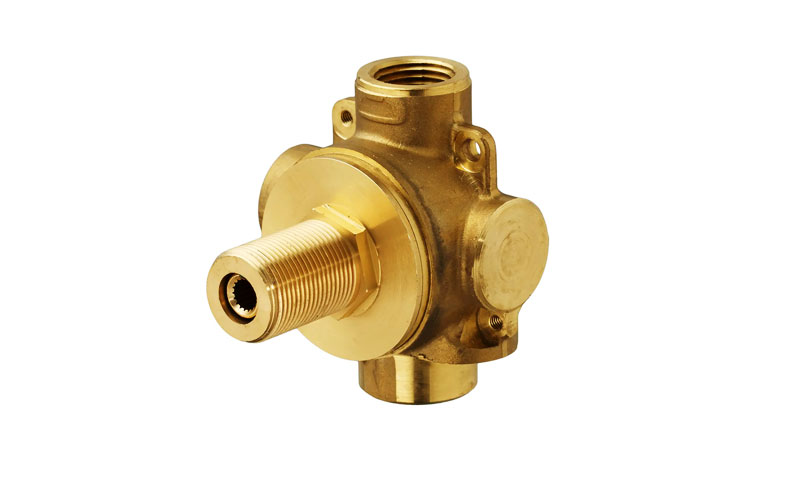
Avledningsventiler är viktiga komponenter i vätskehanteringssystem, möjliggör omdirigering av flödet från en väg till en annan.
Dessa ventiler används ofta inom VVS, uppvärmning, ventilation, luftkonditionering (Hvac), vattenbehandling, och industriell bearbetning.
Bland de olika material som används för avledningsventiler, mässing utmärker sig som det föredragna valet på grund av sin utmärkta bearbetbarhet, korrosionsmotstånd, antimikrobiella egenskaper, och estetisk överklagande.
Tillverkningen av högkvalitativa avledningsventiler i mässing kräver en kombination av precisionsgjutning och avancerad CNC-bearbetning.
Lost Wax Casting (investeringsgjutning) är den idealiska metoden för att producera de komplexa interna passagerna och komplicerade geometrierna hos avledningsventilkroppar.
I kombination med precisions CNC-bearbetning, denna process ger ventiler med exceptionell dimensionsnoggrannhet, Släta ytbehandlingar, och pålitlig prestanda.
1. Vad är en avledningsventil i mässing?
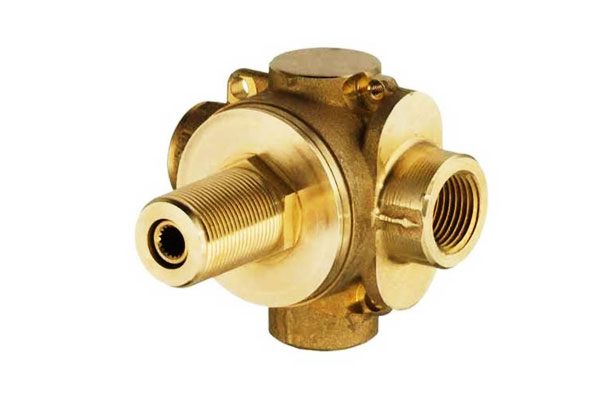
En avledningsventil i mässing är en vätskekontrollanordning med flera portar utformad för att omdirigera, välja, eller fördela vätskeflödet mellan olika flödesvägar.
Till skillnad från en konventionell tvåports avstängningsventil, en avledningsventil använder flera portar och ett internt rörligt element för att avgöra vilka passager som är anslutna vid en given arbetsposition.
Ventilkroppen är normalt den tryckinnehållande komponenten. Den innehåller inlopps- och utloppsportar, inre flödespassager, ventilkammare, tätande gränssnitt, och anslutningsfunktioner.
Ett inre element - vanligtvis en boll, plugg, patron, eller spindelmanövrerad mekanism – ändrar flödesvägen när ventilen roteras eller aktiveras.
En typisk växelventil med tre portar, till exempel, kan fungera i två grundläggande positioner:
Position A: Inlopp → Utlopp A
Position B: Inlopp → Utlopp B
Mer sofistikerade konfigurationer kan kombinera eller isolera flödesvägar beroende på processkraven.
Prestandan hos en avledningsventil i mässing beror på mer än dess förmåga att växla flöde.
Ventilen måste bibehålla tryckintegriteten, kontrollerat flödesmotstånd, pålitlig avstängning, dimensionell stabilitet, och repeterbar tätning under hela dess avsedda livslängd.
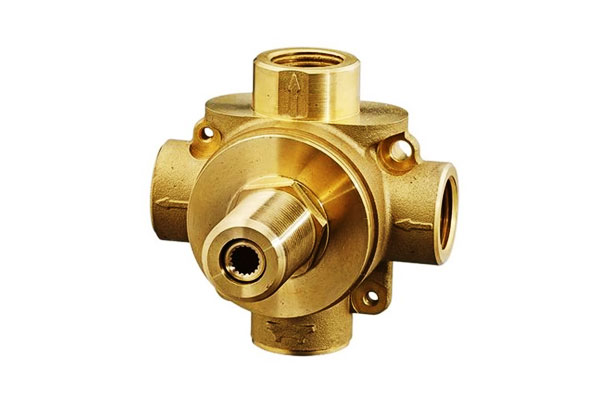
Typer av avledningsventiler
| Typ | Beskrivning | Typiska applikationer |
| 3-Vägavledningsventil | Ett inlopp, två uttag (eller vice versa). | Duschsystem, blandningsventiler, Hvac, processkontroll. |
| 4-Vägavledningsventil | Två inlopp, två uttag. | Värmesystem, värmepumpar, omvända flödestillämpningar. |
| Roterande avledningsventil | Ett roterande element avleder flödet mellan portarna. | Pneumatisk transport, pulverhantering, industribehandling. |
| Skjut avledningsventil | En glidplatta omdirigerar flödet. | Bulk materialhantering, dammuppsamling. |
| Kulavledningsventil | En boll med flera passager roterar för att rikta flödet. | Rörledare, kemisk bearbetning, gasdistribution. |
2. Vanliga mässingslegeringar för avledningsventilgjutning
Att välja rätt mässing legering är grundläggande för tryckintegriteten, korrosionsmotstånd, bearbetbarhet, dimensionell stabilitet, och livslängd för en avledningsventil.
Mässing är inte ett enda material utan en bred familj av kopparbaserade legeringar med väsentligt olika sammansättningar och prestandaegenskaper.
För en precisionsgjuten växelventil, val av legering bör ta hänsyn till mer än mekanisk hållfasthet.
Tillverkaren måste också utvärdera gjutningsbeteendet, krav på inre tryck, flytande kemi, avzinkningsbeständighet, krav på bearbetning, temperatur, miljöexponering, och regulatoriska begränsningar för legeringsbeståndsdelar.
Särskilt, ventiler avsedda för dricksvatten eller andra reglerade vätskekontaktapplikationer kan kräva låga bly- eller blyfria legeringar som är specifikt kvalificerade för den tjänsten.
Därför, den "bästa" mässingslegeringen är tillämpningsberoende snarare än universell.
Vanligt använda mässingslegeringar för avledningsventilgjutning
| Legering (Oss) | Nyckelegenskaper | Typiska ventilapplikationer |
| C84400 | God gjutbarhet och bearbetbarhet; traditionell blyad halvröd mässing | Gjutna ventilkroppar, VVS -beslag, allmänna vätskekontrollkomponenter |
| C85700 | Blyad marin mässing; god skärbarhet och korrosionsbeständighet | Gjutna tryckhaltiga komponenter, marinorienterade beslag |
| C87610 | Koppar-kisellegering med god hållfasthet och korrosionsbeständighet; lågt bly | Vattenservicekomponenter och korrosionsbeständiga gjutgods där detta anges |
| C87800 | Silikon mässing; bra kastbarhet, styrka, korrosionsmotstånd, och låga blyegenskaper | Vattenserviceventilhus, VVS -beslag, industrikomponenter |
C87850 |
Silikonmässing med god bearbetbarhet, trycktäthet, och korrosionsmotstånd | Ventilkroppar, kran, vattenmätare, VVS och marina komponenter |
| C89833 | Blyfri vismuthaltig legering; god skärbarhet och korrosionsbeständighet | Blyfria tryckhaltiga komponenter, dricksvattenorienterade ventiler och VVS-applikationer där så anges |
| C36000 | Utmärkta fribearbetningsegenskaper | Maskinbearbetade ventilkomponenter, stjälkar, beslag, adaptrar, små precisionsdelar |
3. Mässing avledningsventil förlorad vaxgjutning
De förlorad vaxgjutningsprocess för mässingsavledningsventiler är utformade för att omvandla en komplex ventilkroppsgeometri till ett metallgjutgods i nästan nätform med kontrollerad dimensionskonsistens och sund strukturell integritet.
CAD granskning och verktyg
Processen börjar med ventilritningen eller 3D CAD-modellen. Innan verktyg tillverkas, geometrin ses över för gjutbarhet och produktionsstabilitet.
Tillverkaren fastställer erforderlig krympningsmån, bearbetningsersättning, väggövergångar, filéer, portplatser, och gjutningsorientering.
För en avledningsventil, särskild uppmärksamhet ägnas åt de områden som omger korsande flödespassager eftersom plötsliga förändringar i snitttjocklek kan påverka metallmatning och stelning.
Verktyget tillverkas sedan för att reproducera den erforderliga vaxmönstergeometrin.
Produktion av vaxmönster
Smält vax injiceras i precisionsformen för att skapa offermönstret för ventilkroppen.
Mönsterkvaliteten avgör gjutningens dimensionella fundament. Injektionstemperatur, tryck, hålltid, kyl-, och formens tillstånd måste kontrolleras för att minimera blixten, distorsion, ofullständig fyllning, och dimensionsvariation.
Det färdiga vaxmönstret inspekteras innan det fortsätter till montering.
Vaxmontering och grind
Individuella vaxmönster är kopplade till ett centralt inloppssystem för att bilda ett gjutträd.
I detta skede, grindsystemet är etablerat så att smält mässing kan fylla ventilkaviteten på ett kontrollerat sätt.
Portposition och löpardimensioner påverkar fyllningstiden, turbulens, termisk lutning, och matningsbeteende.
För komplexa växelventiler, grind är utformad runt hela kroppens geometri, snarare än att bara maximera fyllningshastigheten.
Keramisk skalbyggnad
Vaxträdet doppas upprepade gånger i keramisk slurry och beläggs med eldfast stuckatur. På varandra följande lager bygger ett styvt keramiskt skal runt mönstret.
Skalet måste ge tillräcklig styrka för avvaxning och metallgjutning samtidigt som den återskapar den erforderliga ytdetaljen.
De primära processkontrollerna är:
Uppslamningsviskositet + eldfast partikelstorlek + lagertjocklek + torkningsförhållanden + skalstyrka
Inkonsekvent skalberedning kan leda till sprickbildning, dimensionell variation, dålig ytkvalitet, eller skalfel under hällning.
Dewaxing och skalbränning
Det keramiska skalet värms upp för att ta bort vaxmönstret och skapa den negativa håligheten i ventilkroppen.
Efter avmattning, skalet bränns för att avlägsna resterande organiskt material och utveckla den erforderliga eldfasta styrkan och termisk stabilitet.
Den resulterande keramiska formen måste vara ren, torka, och strukturellt sund innan smält mässing introduceras.
Mässingssmältning och legeringskontroll
Den valda mässingslegeringen smälts under kontrollerade förhållanden.
Huvudmålet är att säkerställa att den smälta metallen uppfyller de specificerade krav på kemisk sammansättning och renlighet innan du hällde.
Detta är särskilt viktigt för anpassade ventiler där materialegenskaper och myndighetskrav kan bero på en specifik legeringskvalitet.
Processkontroll inkluderar vanligtvis:
- Verifierat laddningsmaterial
- Övervakning av smälttemperatur
- Kemisk analys
- Slagg- och oxidkontroll
- Värmeidentifiering och spårbarhet
Kontrollerad hällning
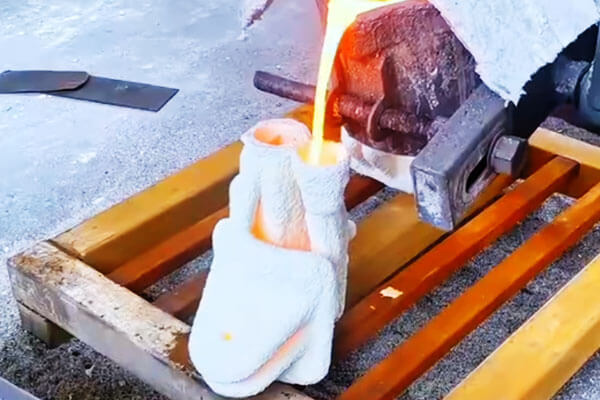
Det förvärmda keramiska skalet är fyllt med smält mässing genom det designade grindsystemet.
Hälltemperatur och fyllnadshastighet måste anpassas till legeringen och ventilens geometri.
Metallen måste förbli tillräckligt flytande för att fylla tunna sektioner och komplexa passager utan överdriven turbulens eller för tidig stelning.
En välkontrollerad hälloperation strävar efter att uppnå:
Komplett fyllning + stabilt flöde + minsta indragning + kontrollerade termiska förhållanden
Solidifiering och utfodring
Efter fyllning, mässingen börjar stelna. Eftersom ventilkroppen kan innehålla olika väggtjocklekar, chefer, och passagekorsningar, olika områden kan svalna med olika hastighet.
Gjutkonstruktionen måste därför stödja kontrollerad stelning och adekvat matning av krympande metall.
Dålig stelningskontroll kan ge defekter som t.ex:
- Krympporositet
- Krymphåligheter
- Gasrelaterade diskontinuiteter
- Hett sprickbildning
För komplexa ventilkroppar, gjutningssimulering kan användas för att förutsäga fyllnings- och stelningsbeteende och optimera grind- och matningssystemet före produktion.
Knockout
När gjutgodset har svalnat tillräckligt, det keramiska skalet avlägsnas mekaniskt.
Vibration, mekanisk separation, eller andra lämpliga metoder kan användas beroende på komponent och produktionssystem.
Försiktighet måste iakttas under knockout eftersom överdriven mekanisk kraft kan skada tunna sektioner, portfunktioner, eller gjutna ytor.
Borttagning av grind och stigrör
Spruten, löpare, granar, och stigrör skärs från ventilgjutningen.
Skärplatserna väljs så att borttagning inte skadar funktionsområden eller lämnar överflödigt material som skulle komplicera efterföljande bearbetning.
Detta steg omvandlar det investeringsgjutna trädet till en individuell ventilkroppsgjutning.
Efterbehandling av gjutning
Det rengjorda gjutgodset utsätts för slipning, blästring, eller andra lämpliga efterbehandlingsoperationer för att avlägsna rester av keramik, fenor, flash, och portrester.
Målet är att producera en ren och stabil gjutning som är lämplig för inspektion och efterföljande bearbetning.
Viktigt, efterbehandling bör inte användas för att dölja oacceptabla gjutavbrott. Områden som kommer att bli tryckgränser, tätningsytor, eller kritiska bearbetningsdatum kräver särskild uppmärksamhet.
4. CNC-bearbetning av avledningsventilgjutgods i mässing
Förlorat vaxgjutning etablerar huvudgeometrin hos en avledningsventil i mässing, men det ger normalt inte den slutliga noggrannheten som krävs för kritiska gränssnitt.
CNC-bearbetning är därför bryggan mellan en nästan nätformad gjutning och en funktionell precisionsventil.
Bearbetningsprocessen får inte bara uppnå individuella dimensioner; den måste upprätthålla det geometriska förhållandet mellan portarna, flödespassager, ventilsäten, tätningsytor, stjälkar, och manöverdonsgränssnitt.
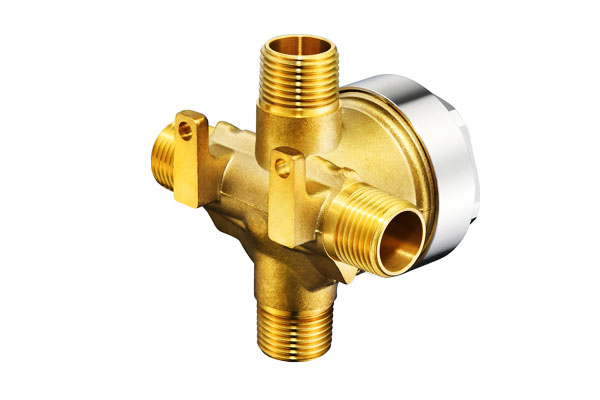
En typisk produktionssekvens är:
Gjutningsinspektion → Datum upprättande → Grov bearbetning → Borrning/portbearbetning → Gängbearbetning → Säte och tätningsspår → Bearbetning av ställdonets gränssnitt → Gradning → Dimensionsinspektion
Den exakta sekvensen beror på ventilarkitekturen.
Bearbetning av ventilportar och inre hål
Inlopps- och utloppsportarna upprättar ventilens anslutning till det externa vätskesystemet. Beroende på ventildesign, dessa gränssnitt kan använda:
- NPT eller andra koniska rörgängor
- BSP eller BSPP/BSPT gängor
- Metriska eller anpassade trådar
- Kompressionsgränssnitt
- Flänsade anslutningar
- Lödning eller specialiserade anslutningsgeometrier
Portbearbetningen måste styra både dimension och position.
En korrekt bearbetad gänga kan fortfarande skapa monteringsproblem om portaxeln är felaktigt placerad i förhållande till ventilkroppen eller intilliggande portar.
För korsande inre passager, bearbetning kan innebära borrning, tråkig, tvärborrning, eller en kombination av gjutna och bearbetade funktioner.
Övergången mellan dessa passager bör undersökas noggrant eftersom överdriven abrupthet kan öka tryckförlust och turbulens.
I specialdesignade, gjutning kan producera större delen av flödesarkitekturen medan CNC-bearbetning avslutar öppningarna och funktionella gränssnitt.
Precisionsbearbetning av ventilsäten
Ventilsätet är bland de mest kritiska egenskaperna hos en avledningsventil eftersom det bildar gränssnittet som begränsar oönskat vätskeläckage.
Sätets prestanda beror på att flera egenskaper samverkar:
Koncentrisitet + Kontaktgeometri + Ytfin + Planhet/Rundhet + Materiell kompatibilitet
Ett ventilsäte som uppfyller sin nominella diameter men inte är koncentriskt med ventilelementet kan ge ojämn kontakt.
Liknande, en alltför grov yta kan störa tätningen, medan en felaktig ytgeometri kan öka arbetsmomentet.
Lämplig stolstolerans och ytfinish bör därför specificeras enligt den speciella ventildesignen, tätningselement, tryckbetyg, och läckagekrav.
Trådbearbetning
Gängor är vanliga på omkastarventiler i mässing eftersom de ger kompakta och ekonomiska anslutningar.
CNC-bearbetning kan användas för både invändiga och utvändiga gängor. Kritiska parametrar inkluderar:
- Stor diameter
- Mindre diameter
- Tonhöjd
- Trådprofil
- Effektiv diameter
- Tråddjup
- Koncentrisitet
- Ytfin
Gängmätare används ofta för tillverkningsverifiering, medan dimensionell inspektion kan bekräfta den underliggande geometrin.
Eftersom mässing är relativt bearbetbart, den stöder effektiv trådproduktion, men skärstrategin måste fortfarande anpassas till den speciella legeringen.
Vissa blyfria mässingslegeringar kan bete sig annorlunda än traditionella fribearbetningskvaliteter och kan kräva optimerade skärverktyg och parametrar.
O-ring och tätningsspårbearbetning
Där elastomera tätningar används, O-ringsspåret är en precisionsfunktion snarare än ett enkelt urtag.
Dess dimensioner bestämmer tätningens kompression och påverkar därför läckageprestanda. Felaktig spårbredd, djup, hörngeometri, eller yttillstånd kan orsaka:
- Otillräcklig tätning
- Överdriven kompression
- Tätningsextrudering
- Monteringssvårigheter
- För tidig tätningsslitage
Bearbetningsprocessen måste följaktligen bibehålla den specificerade spårgeometrin samtidigt som den omgivande tätningsytan skyddas.
5. Ytbehandlingsalternativ för avledningsventiler i mässing
För anpassade ventilkomponenter, ytbehandling bör väljas tillsammans med legeringen, bearbetningsprocess, dimensionstoleranser, och driftsmiljö.
Inte varje efterbehandlingsprocess är lämplig för varje yta.
Särskilt, ventilsäten, trådar, tätande gränssnitt, och fuktade passager kan kräva noggrant kontrollerade ytbehandlingsförhållanden för att undvika att deras funktionella dimensioner ändras.
Mekanisk polering
Mekanisk polering använder gradvis finare slipmedel för att ta bort bearbetningsmärken, mindre ytojämnheter, och gjutningsrelaterade ytdefekter från mässingsytan.
Beroende på önskat utseende, processen kan sträcka sig från grundläggande slipfinish till högblank polering.
Fördelar:
- Ger en slät och snygg mässingsyta
- Förbättrar det visuella utseendet
- Minskar synliga bearbetnings- och gjutmärken
- Ger ett effektivt substrat för efterföljande plätering
- Kan förbättra ytjämnheten på externa ventilytor
Nickelplätning
Nickelplätering avsätter ett kontrollerat nickelskikt på den förberedda mässingsytan, typiskt genom en galvaniseringsprocess.
Korrekt förbehandling är avgörande för att säkerställa god vidhäftning mellan mässingssubstratet och beläggningen.
Fördelar:
- Förbättrar korrosionsmotståndet
- Ger större ythårdhet än obehandlad mässing
- Förbättrar slitstöd
- Ger ett enhetligt metalliskt utseende
- Lämplig för komponenter som utsätts för fukt och hantering
- Kan ge ett baslager för dekorativa eller funktionella efterbehandlingssystem
Kromplätering
Kromplätering applicerar ett krombaserat ytskikt över ett lämpligt förberett underlag, ofta över nickelplätering.
Processen ger en hård, ljus yta med bra motståndskraft mot slitage och smuts.
Fördelar:
- Utmärkt dekorativt utseende
- Hög ythårdhet
- Bra slitmotstånd
- God motståndskraft mot nedsmutsning och atmosfärisk exponering
- Lämplig för utsatta ventilkomponenter och dekorativa VVS-beslag
Elektroless nickelplätning
Elektrofri nickelplätering avsätter en nickel-fosfor eller relaterad nickellegeringsbeläggning genom en autokatalytisk kemisk reaktion snarare än att förlita sig på extern likström.
Detta möjliggör relativt jämn beläggningstjocklek över komplexa geometrier.
Fördelar:
- Mer enhetlig beläggningstjocklek på komplexa ytor
- Bra korrosionsmotstånd
- Bra slitage- och nötningsbeständighet
- Lämplig för infällda och oregelbundna geometrier
- Ger kontrollerat ytskydd med relativt förutsägbar dimensionell uppbyggnad
- Användbar för industriella ventilkomponenter som kräver både skydd och dimensionell konsistens
Precisionsbearbetad ytfinish
För funktionella ytor som ventilsäten, hål, trådar, och tätande gränssnitt, den önskade finishen produceras ofta direkt genom kontrollerad CNC-bearbetning, finsvarvning, tråkig, slipning, eller andra precisionsoperationer snarare än genom en dekorativ beläggning.
Fördelar:
- Upprätthåller exakt dimensionskontroll
- Möjliggör exakt tätningsgeometri
- Stöder kontrollerad ytjämnhet
- Undviker onödig beläggning på kritiska gränssnitt
- Ger förutsägbar montering och funktionell prestanda
- Särskilt lämplig för ventilsäten, hål, trådar, och tätningskontaktytor
6. Fördelar med Lost Wax Casting för avledningsventiler i mässing
Förlorat vaxgjutning ger unika fördelar för tillverkning av avledningsventiler som inte kan matchas med alternativa gjutnings- eller formningsmetoder.
Oöverträffad dimensionsnoggrannhet & Repeterbarhet
Investeringsgjutning uppnår ±0,05–0,1 mm per 25 mm gjuten tolerans, med konsekvent repeterbarhet över höga produktionsvolymer.
Detta minskar bearbetningslager, minimerar toleransstapling, och säkerställer utbytbar montering.
Komplex intern geometri & Flödesoptimering
Förlorat vax kan ge intrikata inre portgeometrier, mjuka flödesövergångar, och konturformade passager som skulle vara omöjliga med sandgjutning eller oekonomiska att bearbeta.
Optimerade interna flödesvägar minskar turbulens, tryckfall, och flödesljud.
Överlägsen gjuten ytfinish
Den fina keramiska ansiktsbeläggningen ger Ra 1,6–3,2 μm som gjuten ytfinish, minskar bearbetningstiden och förbättrar tätningsytans prestanda.
Släta gjutna ytor minskar också flödesinducerad erosion inuti vätskepassager.
Minimalt bearbetningslager & Materiell effektivitet
Nästan nätformig gjutning kräver endast 0,8–1,5 mm bearbetningsmaterial per sida, jämfört med 3–6 mm för sandgjutning.
Detta minskar materialspillet med 40–60 % och minskar bearbetningstiden avsevärt.
Legeringsflexibilitet & Anpassad formulering
Lost wax-gjutning fungerar med praktiskt taget vilken mässingslegering som helst, tillåter anpassad legeringsformulering att matcha specifik korrosion, styrka, eller myndighetskrav utan större verktygsförändringar.
Konsekvent tryckintegritet & Läckresistens
Gjutkroppar i ett stycke eliminerar sammansatta läckagevägar för fogar. Kontrollerad stelning minimerar inre porositet, säkerställer trycktät prestanda som klarar 1,5x arbetstrycksläckagetestning.
7. Lost Wax Casting vs. Omledningsventiler i smidd mässing
Både gjutning och smide producerar ventilkomponenter i mässing, men de tjänar distinkta design- och prestandascenarier.
| Prestandadimension | Lost Wax Cast mässingsventiler | Smidda mässingsventiler |
| Dimensionell noggrannhet | ±0,05 – ±0,1 mm/25 mm i gjutning; tätare efter bearbetning | ±0,02 – ±0,05 mm; mycket konsekvent |
| Intern geometri komplexitet | Mycket hög — komplexa portar, konturerade passager, design med flera portar | Begränsad — endast enkla axiella former; djupa interna funktioner är inte genomförbara |
| Tryck & Trötthetsmotstånd | Bra för standardtryck; porositetsberoende | Excellent; högre utmattningsmotstånd och sprängtryck |
| Produktionsvolymfasthet | 500 - 50,000 datorer/år | 10,000 - 500,000+ datorer/år |
| Verktygskostnad & Ledtid | Måttlig verktygskostnad; 4–6 veckors ledtid | Hög verktygskostnad; 6–10 veckors ledtid |
| Total enhetskostnad | Medium-hög för låg volym; konkurrenskraftig till medelvolym | Hög vid låg volym; lägst vid mycket hög volym |
| Idealiska tillämpningsscenarier | Komplexa flerportskroppar, konturerade flödesvägar, medium volym | Enkla axiella konstruktioner, högtryck, hög cykel trötthet, mycket hög volym |
8. Tillämpningar av avledningsventiler i mässing
VVS och vattendistribution
Mässingsavledningsventiler används ofta i VVS-system för att omdirigera vatten mellan olika utlopp, krets, eller fixturer.
Deras kompakta design, korrosionsmotstånd, och god bearbetbarhet gör dem lämpliga för både bostäder och kommersiell vattenkontrollutrustning.
Typiska applikationer inkluderar:
- Duschsystem
- Kranar sammansättningar
- Vattendistributionsutrustning
- Mix- och routingsystem
- Hushållens VVS-utrustning
VVS och värmesystem
Mässingsavledningsventiler används vanligtvis i HVAC och hydroniska värmesystem för att styra riktningen för cirkulerande vatten och andra kompatibla vätskor.
Ventilen kan växla flöde mellan värmekretsar, förbi linjer, eller sekundära slingor.
Typiska applikationer inkluderar:
- Radiatorvärmesystem
- Golvvärmesystem
- VVS-cirkulationskretsar
- Värmepumpsystem
- Panna och värmeutrustning
Bevattningssystem
I bevattningsutrustning, avledningsventiler i mässing kan användas för att rikta vatten mellan olika grenar eller zoner.
Deras korrosionsbeständighet och robusta konstruktion gör dem lämpliga för upprepad flödesväxling i utomhusmiljöer.
Typiska applikationer inkluderar:
- Jordbruksbevattningssystem
- Trädgårdsbevattningsutrustning
- Sprinklersystem
- Växthusbevattning
- Vattendistributionsgrenrör
Utrustning för vattenrening
Mässingsavledningsventiler kan integreras i kompakta vattenbehandlingssystem där olika flödesvägar måste väljas eller isoleras.
Precisionsgjutning är särskilt användbart när ventilkroppen kräver skräddarsydda inre passager.
Typiska applikationer inkluderar:
- Vattenfiltreringssystem
- Vattenreningsutrustning
- Mjukgörande system
- Pump- och filtreringsenheter
- Kontrollenheter för vattenrening
Vitvaror och bostäder
Kompakta avledningsventiler i mässing används också i apparater där vatten eller annan kompatibel vätska måste omdirigeras mellan olika interna kretsar.
Typiska applikationer inkluderar:
- Kaffe- och dryckesutrustning
- Tvättmaskiner
- Varmvattenberedare
- Rengöringsutrustning
- Vattenkontrollanordningar för bostäder
Industriell vätskekontrollutrustning
Industriell utrustning kan använda avledningsventiler i mässing för att leda vatten, olja, luft, eller andra kompatibla vätskor där trycket, temperatur, och kemisk miljö ligger inom material- och ventildesigngränserna.
Typiska applikationer inkluderar:
- Pumpsystem
- Kompressorer och extrautrustning
- Maskiner för bearbetning av vätskor
- Industriella kylsystem
- Skräddarsydda utrustningssammansättningar
Kommersiella och specialiserade system
Anpassade avledningsventiler i mässing är också lämpliga för utrustningstillverkare som kräver en kompakt flerports flödeskontrollkomponent designad kring en specifik enhet eller vätskekrets.
Typiska applikationer inkluderar:
- Kommersiell VVS-utrustning
- Vattencirkulationssystem
- Utrustningsgrenrör
- OEM vätskekontrollaggregat
- Anpassade maskiner och processutrustning
9. Varför välja LangHe Industry för avledningsventil i mässing för förlorad vaxgjutning & Bearbetning?
För anpassade växlingsventiler i mässing, Att välja tillverkare handlar inte bara om att hitta en leverantör som kan gjuta mässing.
Den sista komponenten beror på samordningen av gjutningstekniken, val av legering, CNC-bearbetning, ytbehandling, dimensionell kontroll, och funktionstestning.
Langhe Industry närmar sig anpassad mässingsavledningsventilproduktion som ett integrerat tillverkningsprojekt, gör att gjutnings- och bearbetningsstegen kan utvecklas tillsammans kring kundens funktionskrav.
| Förmåga | Information |
| Materiel | C84400, C85700, C87610, C87800, C87850, C89833, C36000. |
| Gjutprocess | Lost Wax Casting (investeringsgjutning). |
| Toleranser | ± 0,1–0,3 mm (CT5-CT7 enligt ISO 8062). |
| CNC -bearbetning | CNC Turning, fräsning, borrning, tappning, tråkig, skurande, gänglig. |
| Kvalitet | Iso 9001:2015 auktoriserad; 100% inspektion; Cmm. |
| Ledtid | 6–12 veckor för verktyg; 2–4 veckor för återkommande beställningar. |
10. Slutsats
En avledningsventil i mässing är en kompakt komponent, men dess tillverkningskrav är starkt sammankopplade.
Ventilhuset måste innehålla tryck, ge exakta flödesvägar, rymmer det interna ventilelementet, upprätthålla tätningsgränssnitt, och ansluta tillförlitligt med externa rörledningar eller utrustning.
För komplexa anpassade mönster, förlorad vaxgjutning ger ett effektivt sätt att fastställa huvudventilkroppens geometri, inklusive anpassade portar, chefer, övergångar, och lämplig intern arkitektur.
CNC-bearbetning ger då gängor, hål, ventilsäten, täta spår, och ställdonets gränssnitt till erforderlig precision.
Materialvalet är lika viktigt. Olika mässingslegeringar erbjuder olika kombinationer av gjutbarhet, bearbetbarhet, mekanisk styrka, korrosionsmotstånd, och regleringslämplighet.
Rätt val måste därför baseras på den faktiska vätskan och driftsmiljön.
LangHe Industry kombinerar precisionsgjutning av mässing och CNC-bearbetning för att stödja skräddarsydd produktion av avledningsventiler från första designgenomgång till inspektion av färdiga komponenter, hjälpa OEM-kunder att omvandla komplexa ventilkoncept till tillverkningsbara och repeterbara produkter.
FAQ
Vad är en avledningsventil i mässing?
En avledningsventil i mässing är en vätskekontrollanordning med flera portar som används för att omdirigera eller selektivt fördela vätska mellan olika flödesvägar.
Dess interna ventilelement bestämmer vilka portar som är anslutna i varje driftläge.
Varför används mässing vanligtvis för avledningsventiler?
Mässing ger en användbar kombination av korrosionsbeständighet, bearbetbarhet, mekanisk styrka, kastbarhet, och kostnadseffektivitet.
Dessa egenskaper gör den lämplig för många vatten, Hvac, rörledare, apparat, och industriella vätskekontrollapplikationer.
Varför använda förlorad vaxgjutning för en avledningsventil i mässing?
Förlorat vaxgjutning är särskilt användbart när ventilkroppen innehåller komplex geometri, flera portar, integrerade chefer, eller skräddarsydda flödespassager.
Den producerar en nästan nätformad kropp som sedan kan CNC-bearbetas.
Kan avledningsventiler i mässing användas för dricksvatten?
Det kan de vara, förutsatt att den kompletta ventilkonstruktionen uppfyller tillämpliga krav för dricksvattenservice.
Mässingslegeringen, blyhalt, fuktade komponenter, tillverkningsprocess, och produktöverensstämmelse måste alla beaktas.

