

Introduktion
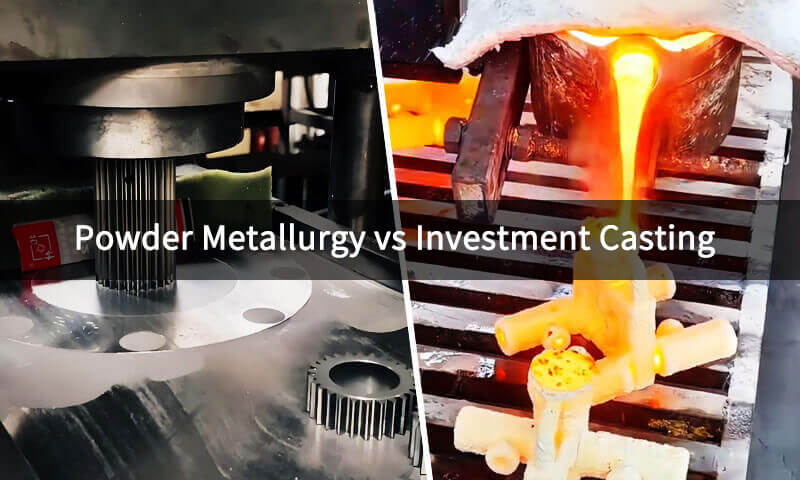
Bland de myriader av tillverkningsmetoder, två distinkt olika – men ofta konkurrerande – tekniker sticker ut: investeringsgjutning och pulvermetallurgi (Pm).
Investeringsgjutning, en årtusende gammal process som förfinats genom modern materialvetenskap, erbjuder oöverträffad geometrisk frihet och legeringsmångsidighet.
Pulvermetallurgi, en innovation från 1900-talet, ger exceptionell materialeffektivitet, höga produktionshastigheter, och kontrollerad porositet för specialiserade applikationer.
Vid första anblicken, båda processerna producerar nästan nätformade metalldelar med minimal bearbetning.
Men deras underliggande principer – stelning från smält metall kontra trycksintring av fasta pulver – leder till radikalt olika designregler, materiella förmågor, mekaniska egenskaper, och ekonomiska skalor.
Att välja mellan dessa två tekniker kräver en omfattande förståelse av inte bara produktionskostnader utan också mekaniska krav, geometri komplexitet, produktionsvolym, urval, och långsiktig serviceprestanda.
1. Förstå Investment Casting
Investeringsgjutning, även känd som tappad vaxgjutning, är en precisionsmetallformningsprocess där ett vaxmönster är belagt med ett eldfast keramiskt skal, Vaxet är smält ut, och den resulterande kaviteten fylls med smält metall.
Efter stelning, det keramiska skalet tas bort, avslöjar en nästan nätformad metallkomponent med exceptionell ytfinish och dimensionsnoggrannhet.
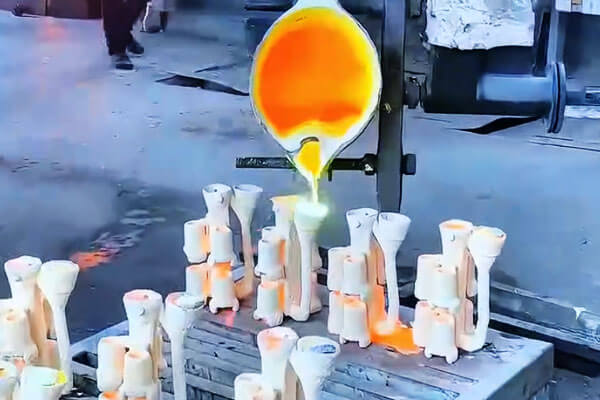
Processen går tillbaka till 5,000 år till antika civilisationer i Egypten, Porslin, och Mesopotamien, där den användes för bronsstatyer och smycken.
I dag, det är en högteknologisk tillverkningsmetod för flygturbinblad, medicinsk implantat, skjutvapenkomponenter, och industriventiler.
Proces grundläggande
| Etapp | Steg | Nyckeldetalj |
| 1 | Mönsterproduktion | Vax (eller termoplast) injiceras i precisionsmetallform (verktyg). |
| 2 | Träd montering | Flera mönster fästa på en central sprue (vaxträd). |
| 3 | Skalbyggnad | 6‑10 lager keramisk slurry (Kiselsol) + eldfast stuckatur (zirkon/aluminiumoxid). |
| 4 | Dewaxing | Ångautoklaven smälter vax; skalet förblir ihåligt. |
| 5 | Skaleldning | 900‑1100°C bränning för att stärka keramen och ta bort flyktiga ämnen. |
| 6 | Smältande & hällande | Metall smält i induktionsugn; hälls i ett förvärmt skal. |
| 7 | Knockout & avskärning | Skalet avlägsnas genom vibration; komponenter skurna från träd. |
| 8 | Efterbehandling | Slipning, skjutblåsning, värmebehandling, NDT-inspektion. |
Nyckelegenskaper
| Särdrag | Beskrivning |
| Geometri | Mycket hög komplexitet; underskott, interna passager, tunna väggar (≥0,5 mm). |
| Ytfin | As-cast Ra 1,6-6,3 µm; kan poleras till Ra <0.4 um. |
| Tolerans | ±0,1-0,3 mm per 25 mm typisk. |
| Materiel | Nästan vilken gjutbar legering som helst: kolstål, rostfri, Superlegering, titan, aluminium, brons. |
| Delstorlek | Gram till ~150 kg (stål). |
| Volym | Ekonomisk 100 till 10,000+ Delar/år. |
| Skrot | Minimal (nästan nätform). |
2. Förstå pulvermetallurgi
Pulvermetallurgi är en tillverkningsprocess där fina metallpulver komprimeras (nedtryckt) i en styv form och värms sedan upp (sintad) under smältpunkten för att binda partiklarna till en fast komponent.
Till skillnad från investeringsgjutning – som involverar en vätske-till-fast fasförändring – är PM en process i fast tillstånd som behåller pulvrets kemiska och mikrostrukturella egenskaper.
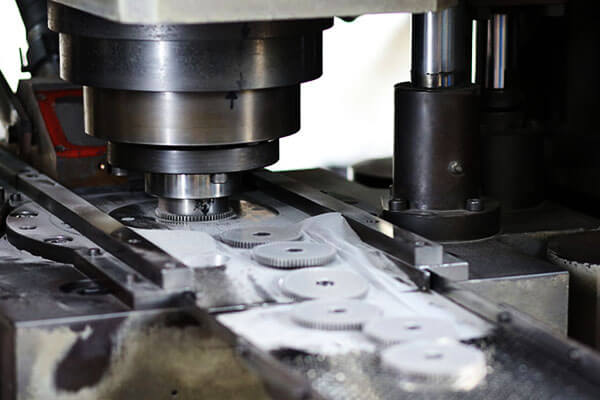
Den moderna PM-industrin uppstod på 1920-talet med tillverkning av självsmörjande lager och glödtrådar av volframlampa.
I dag, det är en mogen, högvolymtillverkningsteknik, med bilindustrin som konsumerar över 70% av alla järnhaltiga PM-delar globalt.
Proces grundläggande
| Etapp | Steg | Nyckeldetalj |
| 1 | Pulverproduktion | Vatten- eller gasförstoftning, elektrolys, minskning; kontrollerad partikelstorlek/form. |
| 2 | Blandning | Pulver blandat med smörjmedel (0.5– 1,5 %) och legeringstillsatser (TILL EXEMPEL., grafit). |
| 3 | Komprimering (brådskande) | Enaxlig pressning i styv form; tryck 200-800 MPa; grön densitet 70–85 %. |
| 4 | Sintring | Uppvärmning i kontrollerad atmosfär (endoterm gas, N₂‑H₂) till 70-90 % av smältpunkten (typiskt 1120-1150°C för järn). |
| 5 | Valfri sekundär operation | Dimensionering, mynt, värmebehandling, infiltration, bearbetning, hartsimpregnering. |
Nyckelegenskaper
| Särdrag | Beskrivning |
| Geometri | Måttlig komplexitet (2D-former); begränsade underskärningar; begränsade dragvinklar. |
| Ytfin | As-sintrad Ra 3-12 µm; kan förbättras genom att dimensionera/mynta. |
| Tolerans | ±0,05-0,1 mm per 25 mm (efter dimensionering). |
| Materiel | Främst järnhaltigt (järn, stål, rostfri), kopparbaserad, volfram, och speciallegeringar. Titan och aluminium är möjliga men mindre vanliga. |
| Delstorlek | Typiskt <10 kg, <300 mm diameter. |
| Volym | Ekonomisk 5,000 till miljontals delar/år. |
| Skrot | >95% materialanvändning. |
3. Tillverkningsprinciper: Hur processerna skiljer sig
| Aspekt | Investeringsgjutning | Pulvermetallurgi |
| Utgångsmaterial | Smält metall (flytande fas). | Metallpulver (fast fas). |
| Fasförändring | Flytande → Fast (stelning). | Solid → Solid (diffusionsbindning). |
| Energikälla | Värm för smältning + hällande. | Tryck + värme (sintring). |
| Mögelkrav | Keramiskt skal för engångsbruk (per del). | Återanvändbar metallform (tusentals cykler). |
| Cykeltid | Timme (skalbyggnad) till dagar. | Sekunder (brådskande) + timme (sintringssats). |
| Verktygskostnad | Måttlig (vax dör $5-20k). | Hög (pressen dör 10–50 000 USD). |
| Arbetsintensitet | Hög (skalbyggnad är manuell). | Låg (automatiserad pressning). |
| Dimensionell kontroll | Via skalkrympning + vaxmönster. | Via formprecision + sintringskrympning. |
Grundläggande skillnad: Investeringsgjutning är en precisionsgjutning i nätform behandla; PM är en pulverkonsolidering behandla.
Den förra erbjuder nästan oändlig geometrisk frihet; den senare erbjuder nästan oändlig materialeffektivitet.
4. Materialkompatibilitet och legeringsflexibilitet
| Materialfamilj | Investeringsgjutning | Pulvermetallurgi |
| Kolstål | Ja (brett utbud) | Ja (vanligaste PM-materialet) |
| Låglegerat stål | Ja | Ja (Fe-Cu-C, Fe-Ni-Mo-Cu) |
| Rostfritt stål | Excellent (CF‑8, CF-8M, 17--4ph) | Ja (304L, 316L, 410L, 17--4ph) |
| Nickel Superalloys | Excellent (Ocny 718, 625, Göra ren) | Begränsad (hög kostnad; specialiserade) |
| Koboltlegeringar | Excellent (Co‑Cr‑Mo) | Begränsad |
| Titan | Excellent (Kvalitet 5, Cp) | Möjlig (hög kostnad, reaktiv) |
| Aluminium | Ja (A356, 380) | Begränsad (oxidproblem; sällsynt) |
| Koppar / brons | Ja (C90500, C93200) | Excellent (Cu, mässing, brons) |
| Volfram / tunga legeringar | Svår (högsmältpunkt) | Excellent (W-Ni-Fe, W‑Ni‑Cu) |
| Keramiska metallkompositer | Inte möjligt | Ja (cermets, WC-Co) |
Nyckelinsikt: Investeringsgjuterbjudanden betydligt bredare legeringsflexibilitet, speciellt för högsmältning, reaktiv, eller svårpressade legeringar (titan, Superlegering, kobolt-krom).
Pulvermetallurgi utmärker sig i järn, kopparbaserad, och volframbaserade material, samt kompositer som inte kan gjutas på grund av oblandbarhet eller segregation.
5. Dimensionell noggrannhet och ytfinish
| Kriterium | Investeringsgjutning | Pulvermetallurgi |
| Typisk tolerans (mm/25 mm) | ±0,1–0,3 | ±0,05-0,1 (som sintrade) ±0,025–0,05 (dimensionerad/myntad) |
| Ytfin (Ra, um) | 1.6-6.3 (som sänds) | 3-12 (som sintrade) 0.8-3 (dimensionerad/myntad) |
| Toleransstabilitet | Bra (skalkrympningen konsekvent) | Excellent (formprecision; sintringsvariabler) |
| Dragvinkel krävs | Inga (vaxmönster tas bort utan drag) | Ja (för borttagning av delar från formen) |
| Trådar / interna funktioner | Kasta direkt | Måste bearbetas (kan inte trycka trådar) |
Vilket är bättre? För komplexa geometrier med fina detaljer och hög ytfinish, investeringsgjutning är överlägsen.
För enkla geometrier som kräver extremt snäva toleranser (speciellt efter sekundära operationer), PM har en fördel.
6. Geometrins komplexitet och designfrihet
| Designfunktion | Investeringsgjutning | Pulvermetallurgi |
| Underskott | Ja (vaxmönster kan monteras) | Inga (munstycksextraktion kräver rakt drag) |
| Inre passager | Ja (keramiska kärnor) | Inga (kan inte trycka på ihåliga detaljer) |
| Tunna väggar | 0.5-1,5 mm uppnåeligt | 1.5– minst 2,5 mm |
| Fina funktioner (text, logotyper) | Utmärkt reproduktion | Begränsad (måste myntas eller bearbetas) |
| Variabel sektionstjocklek | Ja (kan avta mjukt) | Begränsad (enhetlig densitet krävs) |
| Asymmetrisk / organiska former | Excellent | Dålig (pressning föredrar enhetliga väggar) |
| 3D komplexitet | Hög | Måttlig (i huvudsak 2,5D) |
Investeringsgjutning vinner avgörande i geometrisk komplexitet.
Förmågan att skapa underskärningar, böjda interna kanaler, organiska konturer, och fina ytdetaljer är oöverträffad av pulvermetallurgi, vilket begränsas av pressformen och kravet på enaxlig packning.
7. Mekaniska egenskaper och strukturell prestanda
| Mekanisk egendom | Investeringsgjutning | Pulvermetallurgi |
| Typisk densitet | 99– 100 % av det teoretiska | 85– 98 % (beroende på pressning och sintring) |
| Dragstyrka | Bra (smidesliknande i ljudgjutningar) | Måttligt-bra (beror på densitet) |
| Avkastningsstyrka | Jämförbar med smides | 10-30 % lägre än bearbetat (porositetseffekt) |
| Förlängning | 10-35 % (austenitisk) | 2-15 % (densitetsberoende) |
| Hårdhet | 80-600 HB (legeringsberoende) | 60-400 HB (beroende på material) |
| Trötthetsstyrka | Måttlig (hackkänslig) | Lägre (porositet fungerar som stresshöjare) |
| Påverka seghet | Bra (beroende på legering) | Lägre (porositeten blir spröd) |
| Enhetlighet | Gjuten struktur (dendritiska) | Sintrad struktur (porös, isotropisk) |
| Arbetshårdande respons | Begränsad (som sänds) | Sintrad struktur kan värmebehandlas |
Nyckeljämförelse: Investering gjutna delar är helt tät och, när den är korrekt gjuten, närma sig bearbetade egenskaper (90-95 % av förfalskade värden).
Pulvermetallurgiska delar, även i högdensitetsgrader (≥95 % teoretiskt), har kvarvarande porositet som minskar duktiliteten, seghet, och trötthetsprestanda.
För säkerhetskritisk, hög belastning, eller slagbenägna applikationer, investeringsgjutning är att föredra.
8. Densitet, Porositet, och intern kvalitet
| Aspekt | Investeringsgjutning | Pulvermetallurgi |
| Typisk densitet | 99– 100 % (helt tät) | 85– 98 % (kvarvarande porositet) |
| Porositetstyp | Krympning eller gas (slumpmässig, undvikas) | Sammankopplade och slutna (inneboende) |
| Porositetskontroll | Gating/risering design; HÖFT minskar porositeten | Komprimeringstryck; sintrande atmosfär |
| Trycktäthet | Excellent (läckagetäta gjutgods möjliga) | Dålig (porös, kräver tätning) |
| Densitetsfördelning | Uniform genomgående | Tät nära slagansikter; lägre nära mitten (packningsgradient) |
| HIP-tillämplighet | Gemensam (stänger porositeten) | Sällsynt (porerna redan stängda; HIP ökar kostnaden) |
| Inre renlighet | Bra (inneslutningar möjliga) | Excellent (pulver är rena) |
Nyckelinsikt: Investeringsgjutning ger helt täta delar som är trycktäta och kan värmebehandlas utan blåsor.
PM delar, såvida det inte är särskilt bearbetat (TILL EXEMPEL., varm packning, dubbelpressning, HÖFT), har kvarvarande porositet som begränsar trycktäthet och vissa värmebehandlingsreaktioner.
9. Produktionsvolym och tillverkningsekonomi
| Ekonomisk faktor | Investeringsgjutning | Pulvermetallurgi |
| Verktygskostnad | Måttlig ($5-20k vaxmatris) | Hög ($10‑50k pressform) |
| Verktygsliv | 50,000‑200 000 vaxcykler | 500,000-1 000 000 presscykler |
| Råvarukostnad | Högre (vax, keramisk, metall) | Lägre (pulver, smörjmedel) |
| Materialutnyttjande | 85– 95 % | >95% (nästan noll skrot) |
| Cykeltid | Minuter till timmar (manuell) | <1 andra (brådskande) |
| Arbetsintensitet | Hög (skalbyggnad) | Låg (automatiserad) |
| Break-even volym | ~100-1 000 delar/år | ~5 000–10 000 delar/år |
| Ledtid (bearbetade) | 8– 16 veckor | 6– 10 veckor |
| Kostnad per del (låg volym, <500) | Måttlig-hög | Mycket hög (verktyg avskrivna) |
| Kostnad per del (medium volym, 5k-50k) | Låg | Mycket låg |
| Kostnad per del (hög volym, >100k) | Låg (men PM är lägre) | Lägst |
Kostnadsbeslutsregel:
- <1,000 Delar/år → Investeringsgjutning (verktyg avskrivna).
- 1,000-5 000 delar/år → Båda möjliga; jämför på komplexitet.
- >10,000 Delar/år → Pulvermetallurgi (dramatiska kostnadsbesparingar).
- >100,000 Delar/år → PM är den klara vinnaren.
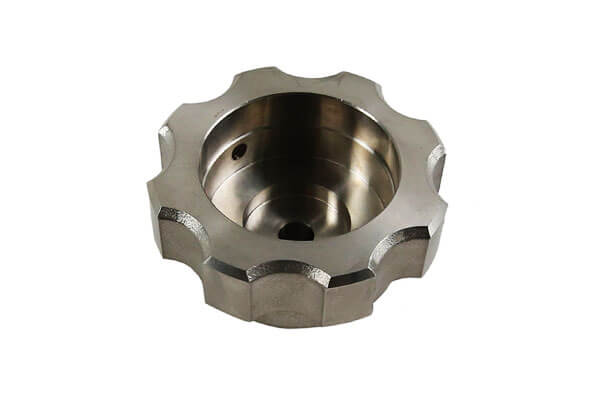
10. Branschapplikationer: Investeringsgjutning vs pulvermetallurgi
| Industri | Investeringsgjutning | Pulvermetallurgi |
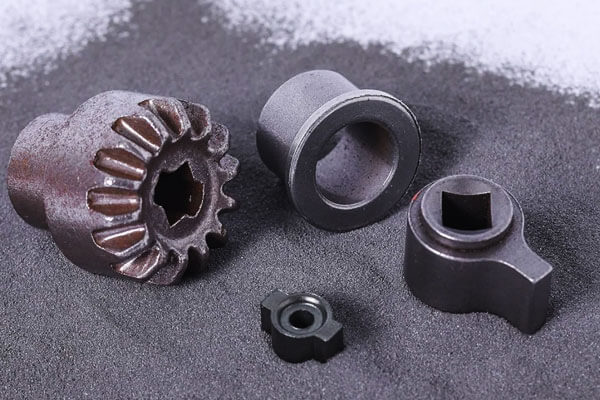
| Bil | Turboladdare hjul, avgasgrenrör (rostfri) | Växlar, kedjehjul, synkhubbar, anslutningsstavar (Fe-baserad PM) |
| Flyg- | Turbinblad, bränslemunstycken, konstruktionshus (Superlegering, titan) | Lättare applikationer: tryckbrickor, bussningar, filter |
| Medicinsk | Ortopediska implantat (höftstammar, knä brickor), kirurgiska instrument | Ortopediska skruvar (Mim, ett PM-derivat), benplattor |
| Olja & gas | Ventilkroppar, pumpa impeller, undervättskontakter (rostfritt/duplex) | Filterelement, balanserande vikter av volframtung legering |
Skjutvapen |
Mottagare, triggers, suppressor komponenter (17--4ph) | Triggermekanismer, tidningsföljare, rekylfjädrar |
| Industrimaskiner | Pumphus, ventilkroppar, växellådor (rostfritt/gjutjärn) | Växlar, kammar, rullar, skål, slitplattor |
| Elektrisk | Ställverkskomponenter, kylfläns | Elektriska kontakter, magnetiska kärnor, borsthållare |
| Konsumtionsvaror | Titta på ärenden, hårdvarubeslag, dekorativa föremål | Låskomponenter, dragkedja delar, små fästen |
11. Fördelar och begränsningar med investeringsgjutning
Fördelar
- Exceptionell geometrisk komplexitet – underskärningar, interna passager, tunna väggar, organiska former.
- Bred legeringsflexibilitet – nästan vilken gjutbar metall som helst, inklusive superlegeringar och titan.
- Utmärkt ytfinish – Ra 1,6-6,3 µm som gjuten; kan poleras till nära spegel.
- Nästan nätform – minimalt materialspill; köp-till-flyg-förhållande <1.5:1.
- Inget utkast krävs – vertikala väggar möjliga.
- Trycktäta gjutgods – kan svetsas och värmebehandlas.
- Beprövat arv – tusentals år; omfattande data och standarder.
Begränsningar
- Hög arbetsintensitet – skalbyggnad är manuell, kompetensberoende.
- Långsam cykeltid – dagar från mönster till färdig del.
- Storleksbegränsning – praktiskt max ~150 kg.
- Högre kostnad vid låga volymer – avskrivning av verktyg.
- Porositetsrisk – krympning och gasporositet kräver robust processkontroll.
- Begränsat till gjutbara legeringar – högsmältande, icke-gjutbara material kan inte användas.
12. Fördelar och begränsningar med pulvermetallurgi
Fördelar
- Överlägsen materialutnyttjande - >95% skrotfri; hållbart.
- Höga produktionshastigheter – tryckcykel <1 andra; sintring kontinuerligt.
- Utmärkt dimensionell konsistens – stansstyrd precision.
- Låg kostnad per del vid höga volymer.
- Kontrollerad porositet – för filter, självsmörjande lager, batterielektroder.
- Bra, enhetlig kornstruktur – inga gjutdefekter.
- Förmåga att blanda legeringar – skapa unika kompositioner som inte är möjliga via smältning.
- Bra bearbetbarhet – många PM-legeringar innehåller element som förbättrar bearbetningen.
Begränsningar
- Begränsad geometrisk komplexitet – i huvudsak 2,5D; inga underskärningar, interna passager.
- Dragvinklar krävs – för delutkastning från matriser.
- Lägre mekaniska egenskaper – kvarvarande porositet minskar duktilitet och trötthet.
- Storleks- och viktbegränsningar - <10 kg, <300 mm typisk.
- Porositeten begränsar trycktätheten – tätning krävs för vätskehanteringsapplikationer.
- Legeringsflexibilitet begränsad – titan, aluminium, superlegeringar är svåra eller kostsamma.
- Verktygskostnaden är hög – stanssatser är dyra; break-even volymer höga.
13. Investeringsgjutning vs pulvermetallurgi: Omfattande jämförelsestabell
| Kriterium | Investeringsgjutning | Pulvermetallurgi |
| Processprincip | Flytande metall stelning i keramisk form | Pulverkomprimering + sintring |
| Utgångsmaterial | Vax mönster + smält metall | Metallpulver + smörjmedel |
| Geometrisk komplexitet | Mycket hög (3D, underskott) | Måttlig (2.5D, inga underskärningar) |
| Minsta väggtjocklek | 0.5-1,5 mm | 1.5-2,5 mm |
| Ytfin (Ra, um) | 1.6-6.3 (som sänds) | 3-12 (som sintrade) |
| Dimensionell tolerans | ±0,1–0,3 mm/25 mm | ±0,05–0,1 mm/25 mm (efter dimensionering) |
| Densitet | 99– 100 % | 85– 98 % |
| Porositet | Låg (krympning/gas) | Inneboende (resterande) |
| Trycktäthet | Excellent | Dålig (kräver tätning) |
| Legeringssortiment | Mycket bred (stål, rostfri, Superlegering, Av, Al, brons) | Begränsad (Fe, Cu, W, några rostfria; Ti/Al sällsynt) |
| Dragstyrka | Smidesliknande (bra) | Måttlig (porositetsberoende) |
| Duktilitet | Bra (10-35 %) | Lägre (2-15 %) |
| Trötthetsstyrka | Måttlig | Lägre (stress stigare från porositet) |
| Verktygskostnad | Måttlig | Hög |
| Verktygsliv | 50k-200k cykler | 500k-1 000k cykler |
| Materialutnyttjande | 85– 95 % | >95% |
| Cykeltid (per del) | Minuter till timmar | <1 andra (brådskande) |
| Arbetsintensitet | Hög | Låg |
| Break-even volym | ~100–1 000/år | ~5 000–10 000/år |
| Kostnad per del (hög volym) | Måttlig | Mycket låg |
| Typisk max delvikt | 150 kg | 10 kg |
| Sekundära operationer | Skärande, slipning, värmebehandling, Ndt | Dimensionering, värmebehandling, bearbetning (begränsad) |
14. Slutsats
Investeringsgjutning vs pulvermetallurgi är inte konkurrerande teknologier i alla situationer; snarare, de löser olika tillverkningsutmaningar.
Investeringsgjutning utmärker sig när ingenjörer kräver komplexa geometrier, brett urval av legeringar, överlägsna mekaniska egenskaper, högdensitet, och strukturell tillförlitlighet.
Det är fortfarande det föredragna valet för flyg- och rymdkomponenter, ventilkroppar, pumpdelar, medicinsk utrustning, och högpresterande industriutrustning.
Pulvermetallurgi utmärker sig i storskaliga produktionsmiljöer där dimensionell överensstämmelse, materiell effektivitet, automatisering, och låga enhetskostnader är primära mål.
Det dominerar applikationer som bilväxlar, skål, bussningar, och masstillverkade mekaniska komponenter.
Det optimala valet beror på att balansera fem kritiska faktorer:
- Komponentgeometri
- Erforderlig mekanisk prestanda
- Materialkrav
- Produktionsvolym
- Total livscykelkostnad
Genom att förstå dessa faktorer kan tillverkarna välja den mest tekniskt lämpliga och ekonomiskt konkurrenskraftiga processen.
Vanliga frågor
Är investeringsgjutning starkare än pulvermetallurgi?
I de flesta strukturella tillämpningar, ja. Investeringsgjutna komponenter uppnår i allmänhet högre densitet, lägre porositet, och bättre utmattningsbeständighet än konventionella pulvermetallurgiska delar.
Vilken process ger bättre måttnoggrannhet?
För enkelt, högvolymdelar, pulvermetallurgi erbjuder ofta snävare repeterbarhet. För komplexa geometrier, investeringsgjutning ger vanligtvis bättre övergripande dimensionsförmåga.
Kan båda processerna producera komponenter i rostfritt stål?
Ja. Båda teknologierna stöder tillverkning av rostfritt stål, även om investeringsgjutning erbjuder större flexibilitet i legeringskvaliteter och komponentkomplexitet.
Vilken process är mer kostnadseffektiv?
Pulvermetallurgi är generellt sett mer kostnadseffektiv för mycket höga produktionsvolymer. Investeringsgjutning är ofta mer ekonomiskt för låga till medelstora produktionsserier och komplexa delar.
Vilka branscher förlitar sig mest på investeringsgjutning?
Flyg-, olje och gas, kemisk bearbetning, medicinsk utrustning, kraftproduktion, matbearbetning, och industrimaskiner är bland de största användarna av investeringsgjutna komponenter.

