What is Titanium CP-Ti Grade 1?
Commercially pure titanium Grade 1 (CP-Ti Grade 1) is the softest and most ductile of the standard commercially pure titanium grades. Its low interstitial impurity levels give it outstanding corrosion
Welcome to our blog for insights into different manufacturing processes.

Commercially pure titanium Grade 1 (CP-Ti Grade 1) is the softest and most ductile of the standard commercially pure titanium grades. Its low interstitial impurity levels give it outstanding corrosion

Introduction Die casting imposes very specific constraints: rapid filling, high cooling rates, thin sections, and extreme sensitivity to entrained gases, oxides and intermetallics. Design drivers typically include: thin-wall castability, dimensional

1. Executive summary Micro-Arc Oxidation (MAO) — also known as Plasma Electrolytic Oxidation (PEO) or spark anodizing — is an electrochemical-plasma surface treatment that grows a ceramic-rich oxide layer on

1. Why dimensional accuracy matters Dimensional accuracy is one of the most critical quality attributes of castings, directly influencing assembly precision, functional reliability, fatigue life, and interchangeability. In industries such

Investment casting shell making is not a single activity but a sequence of interdependent subprocesses. Most common shell defects (surface blemishes, sand inclusion, local thinning or piling, blisters, shell flaking,

Executive summary Refractory materials constitute the lion’s share (>90% by dry weight) of an investment-casting shell and therefore govern almost every performance attribute of the shell: tapos sa ibabaw, green and

1. Executive summary — why silica sol matters Silica sol is the binder that turns a packed refractory powder layer into a cohesive, high-fidelity facecoat and backer in modern precision

The topcoat coating is a pivotal link in the investment casting shell-making process, as its performance directly determines the surface finish, detail replication, and defect rate of castings. Unlike backcoat

The slurry used in silica sol shell making, especially the face coat slurry, exerts a decisive influence on the final casting quality. The performance of the face coat slurry directly

Introduction Shell quality is the defining variable in investment casting that determines surface finish, katumpakan ng sukat, defect incidence and downstream cleaning effort. A high-performance shell must simultaneously satisfy multiple, sometimes

Surface quality of castings is a function of every step that touches the pattern, mold and metal — from die/pattern condition and pattern-material rheology through shell/facecoat preparation, dewaxing and shell

1. Executive summary Conventional (pandekorasyon) anodizing and hard (hardcoat) anodizing are both electrochemical conversion processes that produce an aluminum-oxide (Al O) layer on aluminium alloys. They share the same basic chemistry

1. Executive summary Case hardening creates a thin, very hard surface layer (the “case”) on a tougher, ductile core. It combines surface wear and fatigue resistance with a ductile core

1. Executive Summary EN-GJS-400-15 is a widely used grade of ductile (spheroidal graphite) cast iron defined under the European EN 1563 standard. A balanced combination of moderate tensile strength, mataas na

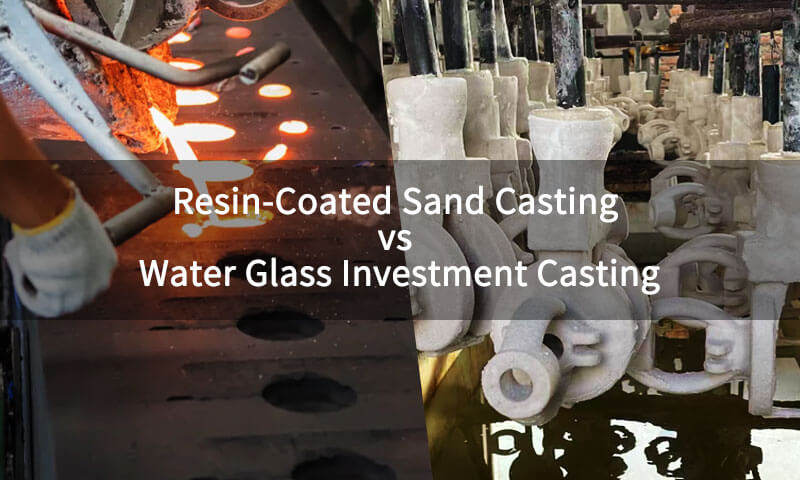
1. Introduction Water glass investment casting (also known as sodium silicate investment casting) is a precision casting technology that uses water glass as the binder for the shell, pinagsama sa
Karapatang-ari © 2024 LangHe Industry Co., Ltd.2026
Pinapatakbo ng LangHe Industry Co., Ltd.2026
Mangyaring punan ang iyong impormasyon at agad ka naming kokontakin.