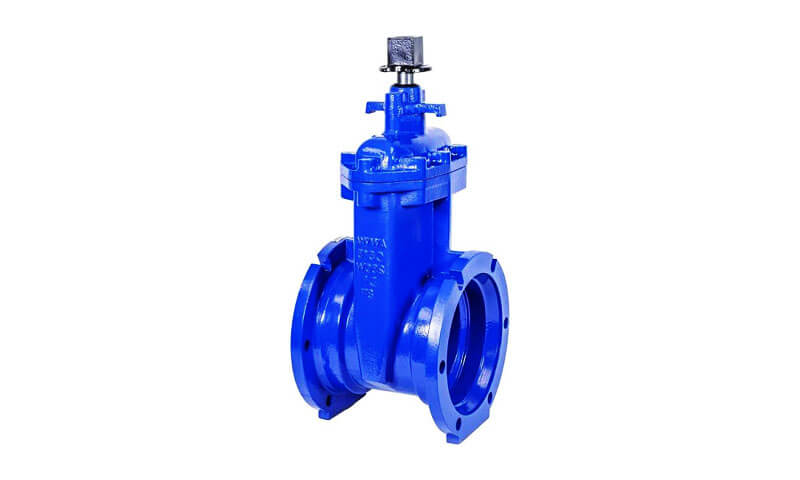
Gate valves are among the most widely used industrial valves, serving as the primary shut-off mechanism in countless piping systems across the globe.
Their simple yet robust design—a gate that moves perpendicular to the flow path—provides reliable, tight shut-off with minimal pressure drop when fully open.
While gate valves can be manufactured from various materials, ductile iron has emerged as the material of choice for many industrial applications due to its exceptional combination of strength, tigas na tigas, pagiging castable, at pagiging epektibo sa gastos.
When ductile iron gate valves are produced through investment casting, the result is a component with superior dimensional accuracy, mahusay na ibabaw tapusin, and consistent mechanical properties that exceed those of sand-cast alternatives.
Investment casting enables the production of near-net-shape components with complex internal geometries, precise sealing surfaces, and integral flanges—all in a single casting.
This article provides a comprehensive examination of investment-cast ductile iron gate valves.
1. What Is an Investment Casting Ductile Iron Gate Valve?
A ductile iron gate valve is a linear-motion isolation valve whose pressure-containing components—primarily the valve body and bonnet—are manufactured from ductile iron (nodular cast iron).
Unlike regulating valves that control flow continuously, a gate valve is designed to operate in either a fully open or fully closed position, providing minimal flow restriction when open and reliable shut-off when closed.
The distinguishing feature of ductile iron lies in its graphite morphology. During the nodularization process, magnesium or rare-earth elements transform graphite flakes into spherical nodules.
This microstructural change dramatically improves tensile strength, ductility, paglaban sa pagkapagod, and impact toughness while maintaining the excellent castability associated with cast iron.
An investment-cast ductile iron gate valve applies the precision investment casting process to manufacture complex valve components with exceptional dimensional consistency and surface quality.
Compared with conventional casting methods, investment casting enables the production of near-net-shape components that require less machining while maintaining excellent mechanical performance.
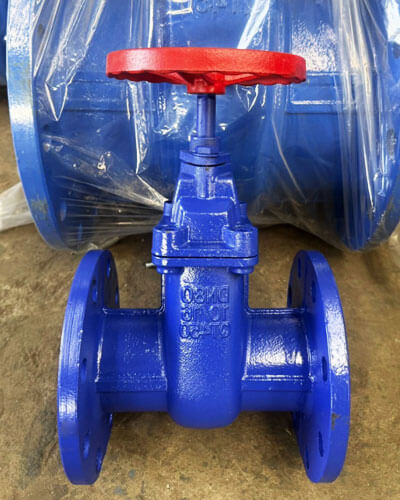
Working Principle of Gate Valves
The operating principle of a gate valve is straightforward yet highly effective.
Rotating the handwheel or actuator causes the threaded stem to move the gate (wedge or parallel disc) vertically within the valve body.
When the valve is opened, the gate rises completely out of the flow path, creating an unobstructed passage whose internal diameter closely matches that of the pipeline.
This full-port configuration minimizes pressure loss, Binabawasan ang kaguluhan, and allows high flow efficiency, making gate valves ideal for systems where unrestricted flow is essential.
When the valve is closed, the gate descends until it firmly contacts the valve seats, creating a pressure-tight seal that prevents fluid leakage.
Depending on the valve design, sealing may be achieved through resilient seats, metal-to-metal contact, o isang kumbinasyon ng parehong.
Because the sealing surfaces experience little relative movement once fully seated, gate valves generally exhibit lower seat wear than throttling valves when used for isolation purposes. Gayunpaman, they are not intended for flow regulation.
Operating a gate valve in a partially open position exposes the gate and seats to continuous fluid erosion, panginginig ng boses, and cavitation, significantly reducing service life.
Components of Gate Valve
| Component | Function | Mga Materyal na Pag-iisip |
| Katawan | Main housing; contains the gate and seats; provides pipe connections. | Ductile na bakal (investment cast) para sa lakas, pagiging castable, and pressure integrity. |
| Gate (disc) | The movable wedge that controls flow; rises and falls within the body. | Ductile na bakal (investment cast) for wear resistance and sealing surfaces. |
| Seats | Fixed sealing surfaces that the gate presses against. | Ductile na bakal (investment cast) with surface hardening (hal., stellite overlay). |
halamang singaw sa paa |
Transmits torque from the actuator to the gate. | Hindi kinakalawang na asero (martensitic) for corrosion resistance and wear resistance. |
| Bonnet | Covers the top of the valve; houses the stem and packing. | Ductile na bakal (investment cast) for pressure integrity. |
| Actuator | Manual (handwheel), gear, or automated (mga elektriko, niyumatik). | Commercial components. |
2. Why Choose Ductile Iron for Gate Valves?
What Is Ductile Iron?
Ductile na bakal, kilala rin bilang nodular cast iron o spheroidal graphite iron (SG iron), is a high-performance cast iron in which graphite exists as discrete spherical nodules rather than interconnected flakes.
This unique graphite morphology is achieved by adding controlled amounts of magnesium or cerium during molten metal treatment before casting.
The transformation from flake graphite to spheroidal graphite fundamentally changes the mechanical behavior of cast iron.
While gray iron is strong in compression but relatively brittle under tensile loading, ductile iron combines high tensile strength with excellent ductility, allowing it to absorb shock loads, accommodate stress concentrations, and resist crack propagation far more effectively.
For pressure-containing components such as gate valves, these characteristics are particularly valuable because valves are frequently subjected to fluctuating internal pressures, thermal stresses, mekanikal na panginginig ng boses, and occasional water hammer events.
Compared with many steel components, ductile iron also offers excellent castability, allowing manufacturers to produce complex valve geometries with fewer casting defects and lower production costs.
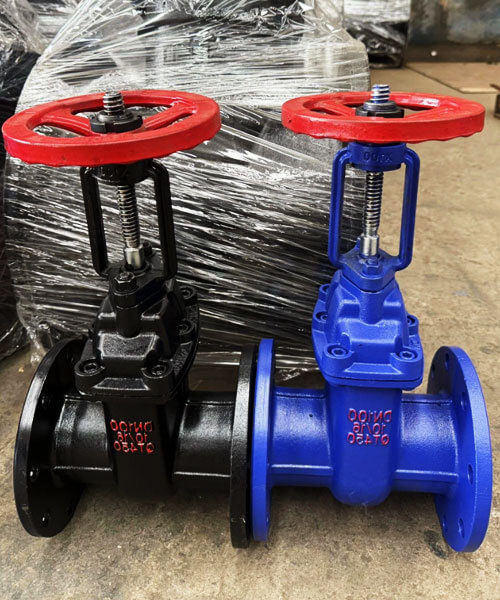
Mechanical and Metallurgical Advantages of Ductile Iron
Mahusay na ratio ng lakas-sa-timbang
Ductile iron provides mechanical strength approaching that of cast steel while maintaining lower manufacturing costs and excellent castability.
Its high tensile and yield strengths allow valve bodies to safely withstand internal pressure, flange loading, and external mechanical forces throughout long service periods.
Outstanding Toughness and Impact Resistance
The spherical graphite structure interrupts crack propagation and distributes stress more uniformly throughout the metal matrix.
Bilang isang resulta, ductile iron exhibits significantly greater fracture toughness than gray iron, reducing the likelihood of brittle failure under impact loading or pressure surges such as water hammer.
Superior Pressure-Bearing Capability
Because of its combination of strength and ductility, ductile iron is particularly well suited for pressure-retaining components.
Properly designed investment-cast gate valve bodies can safely withstand repeated pressure cycling while maintaining dimensional stability and sealing performance over extended operating periods.
Napakahusay na katatagan
Ductile iron flows well during casting and fills complex mold cavities efficiently, making it ideal for producing intricate valve bodies with integrated flanges, reinforcing ribs, mounting features, and optimized flow passages.
This excellent castability complements the investment casting process by enabling near-net-shape manufacturing with reduced machining requirements.
Magandang Machinability
Despite its high mechanical strength, ductile iron remains relatively easy to machine.
The graphite nodules act as natural chip breakers and provide a degree of self-lubrication during cutting, resulting in lower tool wear, improved machining efficiency, and excellent surface finish on sealing faces, flange surfaces, and threaded features.
Excellent Vibration Damping
Compared with steel, ductile iron possesses superior damping capacity, allowing it to absorb mechanical vibration and reduce noise transmission.
This characteristic contributes to quieter pump and valve operation while helping minimize fatigue stresses in piping systems subjected to cyclic loading.
Outstanding Cost Performance
Perhaps the greatest engineering advantage of ductile iron is its ability to deliver high mechanical performance at a competitive cost.
When combined with investment casting, manufacturers can achieve complex geometries, reliable pressure integrity, reduced machining, and long service life without the higher material costs associated with stainless steel or cast steel, making ductile iron an exceptionally economical choice for a wide range of gate valve applications.
3. Investment Casting Manufacturing Process for Ductile Iron Gate Valves
Producing high-performance ductile iron gate valves requires more than simply pouring molten metal into a mold.
Every stage of the investment casting process influences dimensional accuracy, pressure integrity, sealing performance, and long-term durability.
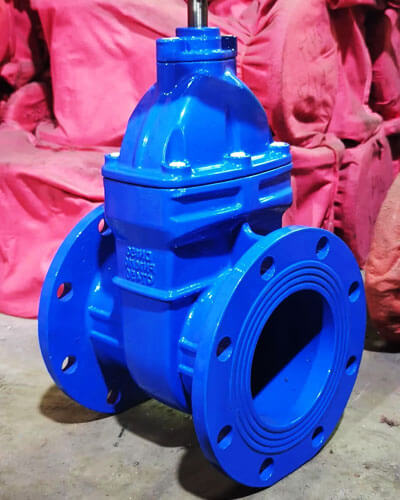
For critical valve components, the manufacturing process is carefully controlled from material preparation to final inspection to ensure compliance with international standards such as ASTM, ISO, API, EN, and customer-specific engineering specifications.
Process Flow Overview
| Yugto | Hakbang | Key Detail |
| 1 | Pattern production | Wax injection into precision die replicating gate valve geometry (body, gate, bonnet). |
| 2 | Core assembly | Ceramic or soluble wax cores for internal flow passages, seat grooves, at undercuts. |
| 3 | Tree assembly | Multiple wax patterns attached to central sprue (tree). |
| 4 | Shell building | 6-10 layers of ceramic slurry (silica sol) + stucco (zircon/alumina). |
| 5 | Dewaxing | Steam autoclave melts wax; shell remains hollow. |
| 6 | Shell firing | Fired at 900-1100°C to strengthen ceramic and remove volatiles. |
7 |
Ductile iron melting | Induction melting with magnesium nodularizing treatment. |
| 8 | Pagbubuhos ng | Molten ductile iron poured into pre-heated shell. |
| 9 | Paglamig & Knockout | Controlled cooling; shell removed by vibration or water jet. |
| 10 | Cut-off & pagtatapos ng | Gates and risers cut; paggiling ng mga, pagsabog ng baril, pagbagsak. |
| 11 | Lunas sa init | Annealing (for machinability) or normalising (for improved strength). |
| 12 | Inspeksyon & Pagsubok | Visual, dimensional, NDT (X-ray, Tinain na penetrant), hydrostatic pressure test. |
4. Advantages of Investment Casting for Ductile Iron Gate Valves
Investment casting has become one of the most effective manufacturing methods for producing high-quality ductile iron gate valve components.
By combining the excellent mechanical properties of ductile iron with the precision of the lost-wax process, manufacturers can achieve superior dimensional accuracy, enhanced pressure integrity, and greater design flexibility compared with conventional casting methods.
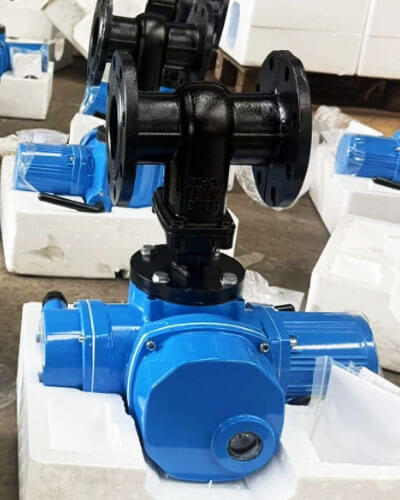
Pambihirang Katumpakan ng Dimensional
One of the primary advantages of investment casting is its ability to produce near-net-shape components with outstanding dimensional consistency.
Complex valve bodies, bonnets, wedges, and internal flow passages can be cast with minimal dimensional variation, significantly reducing secondary machining operations.
Accurate flange dimensions, concentric stem bores, and precisely formed sealing surfaces contribute directly to reliable valve assembly and leak-tight performance.
Superior Kalidad ng Ibabaw
The ceramic shell process reproduces the wax pattern with remarkable fidelity, resulting in much smoother as-cast surfaces than conventional sand casting.
Improved surface finish reduces machining allowances, shortens production cycles, and minimizes potential stress concentrations.
Smooth internal flow channels also decrease fluid turbulence and pressure losses during operation, improving hydraulic efficiency.
Ability to Manufacture Complex Geometries
Modern gate valves often incorporate intricate structural features that would be difficult or uneconomical to produce using traditional casting methods.
Investment casting allows complex elements—such as reinforced ribs, curved flow passages, integrated mounting bosses, precision guide rails, and optimized wall transitions—to be formed directly during casting.
This design freedom enables engineers to enhance strength, reduce unnecessary weight, and improve flow performance without increasing manufacturing complexity.
Excellent Pressure Integrity
Pressure-containing components demand internal soundness and structural reliability.
Investment casting offers excellent control over metal flow and solidification, reducing the likelihood of shrinkage cavities, malamig na mga shut, mga inclusions, and other internal discontinuities.
Combined with proper gating design, spheroidization control, and rigorous inspection, the process produces dense castings capable of meeting stringent pressure-testing requirements for industrial valve applications.
Pinahusay na Pagganap ng Mekanikal
Because the investment casting process provides controlled solidification and uniform microstructure development, ductile iron components exhibit consistent mechanical properties throughout the casting.
Proper graphite nodularity and matrix control contribute to high tensile strength, Mahusay na ductility, strong fatigue resistance, and reliable impact performance, making the valves suitable for demanding pressure and cyclic loading conditions.
Reduced Machining and Material Waste
Near-net-shape manufacturing significantly lowers the amount of material that must be removed during machining.
Less machining translates into shorter production times, lower tooling wear, reduced energy consumption, and improved material utilization.
These advantages become increasingly important for medium-volume and high-volume valve production where manufacturing efficiency directly affects overall cost.
High Production Consistency
Precision wax tooling, Awtomatikong Pagbuo ng Shell, controlled melting, and standardized process parameters ensure excellent repeatability from one production batch to another.
This consistency is particularly valuable for OEM manufacturers requiring interchangeable components, stable quality, and long-term supply reliability.
Cost Efficiency for Medium- to High-Volume Production
Although tooling investment is generally higher than for traditional sand casting, the overall manufacturing cost often becomes more economical over medium and large production runs.
Reduced machining, lower scrap rates, shorter assembly times, and improved product consistency help offset initial tooling expenses while delivering higher-value components.
Broad Material Compatibility
Investment casting supports a wide range of ductile iron grades, including ferritic, pearlitic, and austempered ductile iron (ADI).
This flexibility enables manufacturers to tailor mechanical strength, Paglaban sa Pagsusuot, tigas na tigas, and corrosion performance to specific service environments without changing the fundamental production process.
Enhanced Reliability and Longer Service Life
The combination of precision manufacturing, high structural integrity, consistent material quality, and optimized design results in gate valve components capable of delivering long-term performance under demanding operating conditions.
Reduced defect rates, improved sealing reliability, and excellent resistance to mechanical fatigue contribute to lower maintenance requirements and extended operational life in water distribution systems, industrial processing plants, power generation facilities, and municipal infrastructure.
5. Ductile Iron Materials for Investment Cast Gate Valves
Selecting the appropriate ductile na bakal grade is one of the most important engineering decisions in gate valve manufacturing.
Different grades are optimized for specific operating environments, ranging from municipal water systems to high-pressure industrial pipelines.
Common Ductile Iron Grades for Gate Valves
| Pamantayan | Grade | Lakas ng Paghatak (MPa) | Yield Lakas (MPa) | Pagpapahaba (%) | Mga Pangunahing Katangian | Mga Karaniwang Aplikasyon |
| ASTM A536 | 60-40-18 | ≥414 | ≥276 | ≥18 | Excellent ductility and impact toughness | Municipal water supply, low-pressure pipelines |
| ASTM A536 | 65-45-12 | ≥448 | ≥310 | ≥12 | Balanced strength and ductility | General industrial valves |
| ASTM A536 | 80-55-06 | ≥552 | ≥379 | ≥6 | Higher pressure capacity and wear resistance | Industrial processing systems |
| ASTM A536 | 100-70-03 | ≥690 | ≥483 | ≥3 | High strength and rigidity | Heavy-duty valves, kagamitan sa pagmimina |
| EN 1563 | EN-GJS-400-15 | ≥400 | ≥250 | ≥15 | Excellent toughness and machinability | Waterworks and municipal infrastructure |
| EN 1563 |
EN-GJS-500-7 |
≥500 | ≥320 | ≥7 | Good balance of strength and toughness | Langis & gas, HVAC, industrial piping |
| EN 1563 | EN-GJS-600-3 | ≥600 | ≥370 | ≥3 | High strength and pressure resistance | High-pressure valve bodies |
| EN 1563 | EN-GJS-700-2 | ≥700 | ≥420 | ≥2 | Maximum strength among conventional ductile irons | Severe-duty industrial applications |
| ASTM A897 | Austempered Ductile Iron (ADI) | 800–1600 | 500–1300 | 1–10 | Pambihirang lakas, pagkapagod, at magsuot ng resistensya | Pagmimina, pagbuo ng kapangyarihan, abrasive services |
6. Mechanical Performance and Pressure Resistance
The long-term reliability of a gate valve depends not only on its sealing mechanism but also on the mechanical performance of the valve body under continuous pressure, fluctuating loads, and demanding service environments.
Investment-cast ductile iron combines excellent mechanical properties with highly consistent casting quality, making it an ideal material for pressure-retaining valve components.
High Strength with Excellent Toughness
Unlike gray cast iron, which contains flake graphite that acts as natural stress concentrators, ductile iron features spheroidal graphite dispersed throughout the metal matrix.
This microstructure significantly improves tensile strength, magbunga ng lakas, ductility, and impact resistance while maintaining excellent castability.
Typical ductile iron grades used for gate valves provide tensile strengths ranging from 400 MPa sa higit sa 700 MPa, allowing the valve body to safely withstand both internal fluid pressure and external mechanical loads generated by pipeline weight, panginginig ng boses, and thermal expansion.
Excellent Pressure-Bearing Capability
Investment casting produces dense, uniform valve bodies with minimal shrinkage porosity and excellent dimensional consistency.
The absence of major casting discontinuities greatly improves pressure integrity and reduces the risk of leakage or crack initiation under high operating pressures.
When combined with precision machining of sealing surfaces and flanges, investment-cast gate valves can reliably satisfy pressure classes required by international standards such as:
- PN10, PN16, PN25
- ANSI Class 125
- ANSI Class 150
- Customized medium-pressure industrial systems
Each finished valve body is typically subjected to hydrostatic pressure testing to verify structural integrity before assembly and shipment.
Superior Fatigue Resistance
Gate valves rarely fail because of a single overload event. Sa halip, they are exposed to thousands of operating cycles involving opening, closing, presyon ng mga fluctuations, water hammer, and vibration.
Ductile iron exhibits excellent fatigue resistance due to its nodular graphite structure, which reduces stress concentration and delays crack initiation.
For municipal water networks and industrial utility systems operating continuously for decades, this fatigue performance translates directly into longer service life and lower maintenance costs.
Resistance to Mechanical Shock
Pipeline systems frequently experience transient loads caused by pump startup, valve operation, transportasyon, installation impacts, or accidental pressure surges.
Investment-cast ductile iron provides significantly better impact toughness than conventional cast iron, reducing the likelihood of brittle fracture under unexpected loading conditions.
This toughness is particularly valuable in buried pipelines, pumping stations, and infrastructure projects where maintenance access is limited.
Dimensional Stability Under Load
Uniform wall thickness and optimized solidification obtained through investment casting minimize residual stresses inside the valve body.
Bilang isang resulta, the housing maintains dimensional stability during machining, pressure testing, pag-install, and long-term operation.
Stable geometry ensures:
- Accurate seat alignment
- Smooth gate movement
- Reliable stem guidance
- Reduced operating torque
- Consistent sealing performance
7. Surface Finishing and Machining Options
Investment casting delivers near-net-shape valve components with excellent dimensional accuracy, but secondary machining and surface finishing remain essential for achieving precise sealing performance, assembly accuracy, and long-term durability.
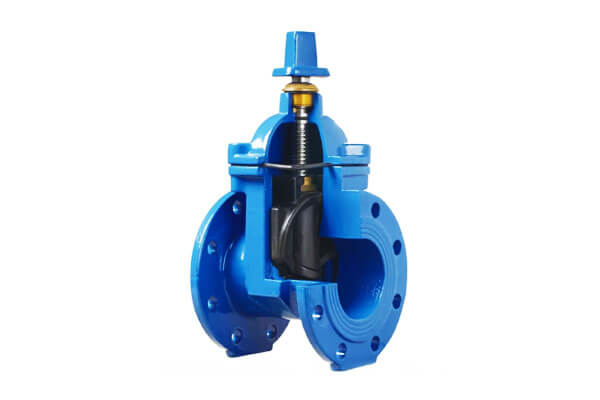
Precision CNC Machining
Critical functional surfaces are machined using CNC turning, paggiling, pagbabarena, and boring operations to achieve tight dimensional tolerances and excellent geometric accuracy.
Machining typically includes:
- Flange faces
- Stem bores
- Seat pockets
- Guide surfaces
- Threaded connections
- Mounting interfaces
Accurate machining ensures proper alignment between the gate, stem, bonnet, and sealing components while minimizing operating torque and wear.
Precision Sealing Surface Finishing
The sealing surfaces of resilient-seated or metal-seated gate valves require controlled surface finishes to achieve reliable shutoff performance.
Depending on valve design, sealing faces may be:
- Fine-machined
- Ground
- Lapped
- Precision-polished
These processes reduce leakage paths, improve seat contact, and increase sealing life under repeated operating cycles.
Shot Blasting and Surface Cleaning
Following investment casting and heat treatment, valve bodies undergo shot blasting to remove ceramic shell residue, oksihenasyon, and surface scale.
This process also produces a uniform surface texture that improves coating adhesion and prepares the casting for subsequent machining or painting operations.
Protective Surface Coatings
Pagkatapos ng machining, valve bodies may receive various protective finishes depending on operating conditions and customer specifications, including epoxy powder coating, fusion-bonded epoxy, zinc-rich primers, polyurethane coatings, or specialized corrosion-resistant systems.
These treatments not only improve corrosion resistance but also enhance appearance and extend maintenance intervals.
Custom Identification and Traceability
Modern gate valves often require permanent identification for quality management and lifecycle traceability.
Investment-cast components can incorporate cast-in logos, mga numero ng bahagi, heat numbers, customer trademarks, or QR codes during tooling manufacture, while additional laser marking or stamping may be performed after machining.
This integrated identification improves inventory management, maintenance tracking, and regulatory compliance.
8. Corrosion Resistance and Surface Protection
Although ductile iron offers excellent mechanical performance, its corrosion resistance depends largely on the service environment and the protective systems applied to the casting.
Modern investment-cast gate valves therefore combine optimized material selection with advanced surface engineering to achieve decades of reliable service.
Natural Corrosion Behavior of Ductile Iron
Compared with carbon steel, ductile iron forms a relatively stable oxide layer that provides moderate atmospheric corrosion resistance.
Gayunpaman, prolonged exposure to moisture, oxygen, Mga klorido, mga asido, or aggressive industrial chemicals can gradually deteriorate the metal surface if left unprotected.
Para sa kadahilanang ito, protective coatings have become an integral part of modern gate valve manufacturing rather than an optional finishing process.
Fusion-Bonded Epoxy (FBE) Mga Coatings
Fusion-bonded epoxy is one of the most widely specified protective systems for ductile iron gate valves used in potable water and municipal infrastructure.
Applied electrostatically onto preheated castings, the epoxy powder melts and chemically bonds to the metal surface, Bumubuo ng isang siksik na, highly adherent protective layer.
Kabilang sa mga pangunahing bentahe ang:
- Napakahusay na pagdikit
- High impact resistance
- Outstanding moisture barrier
- Resistance to soil corrosion
- Long-term protection for buried pipelines
- Compliance with potable water standards
Epoxy Powder Coating
Electrostatic epoxy powder coatings provide an economical solution for general industrial applications requiring excellent corrosion resistance and attractive appearance.
These coatings offer high hardness, paglaban sa hadhad, and chemical stability while maintaining excellent adhesion on investment-cast surfaces.
Zinc-Based Corrosion Protection
In buried or highly humid environments, zinc-rich primers or zinc metallization may be applied before epoxy topcoats.
Zinc acts as a sacrificial protective layer, reducing corrosion even if localized coating damage occurs during installation or operation.
Internal Linings for Specialized Media
Certain applications require additional protection against abrasive slurries, tubig dagat, wastewater, or mildly corrosive chemicals.
Depending on operating conditions, internal flow passages may incorporate:
- Ceramic-filled epoxy coatings
- Rubber linings
- Polyurethane coatings
- Specialized chemical-resistant polymer systems
These lining technologies extend valve life while maintaining hydraulic efficiency.
Surface Preparation Determines Coating Performance
Even the highest-quality coating cannot perform effectively without proper surface preparation.
Investment-cast gate valves are typically cleaned by shot blasting or abrasive blasting to achieve controlled surface roughness before coating application.
This process removes scale, Mga oxide, and contaminants while providing an ideal anchor profile for maximum coating adhesion.
Proper coating systems, combined with routine inspection and maintenance, enable investment-cast ductile iron gate valves to achieve service lives exceeding 30 mga taon in many municipal and industrial environments.
9. Industrial Applications of Investment Cast Ductile Iron Gate Valves
Investment-cast ductile iron gate valves are widely employed across industries where reliable shutoff, lakas ng istruktura, and long service life are critical.
Their ability to combine precision manufacturing with excellent mechanical performance makes them suitable for both infrastructure projects and demanding industrial process systems.
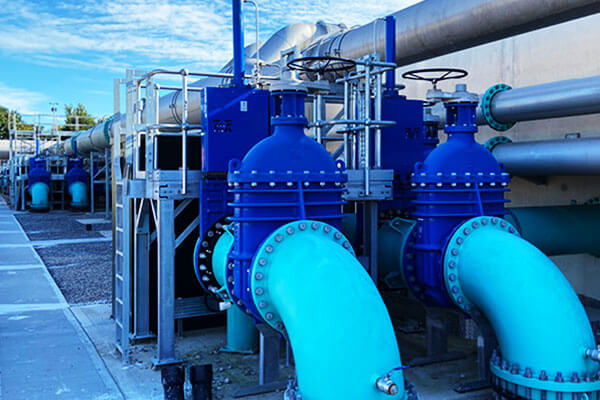
Municipal Water Supply Networks
Municipal water distribution remains the largest application sector for ductile iron gate valves.
They are installed in transmission mains, distribution pipelines, pumping stations, reservoirs, and water treatment facilities where dependable isolation and minimal maintenance are essential.
The combination of high pressure resistance, corrosion-protective coatings, and long operational life makes investment-cast valves particularly well suited for underground infrastructure expected to operate for several decades.
Wastewater and Sewage Treatment
Wastewater systems expose valves to abrasive particles, suspended solids, kahalumigmigan, and chemically aggressive environments.
Investment-cast ductile iron gate valves equipped with epoxy coatings and corrosion-resistant sealing systems provide reliable operation in sewage pumping stations, wastewater treatment plants, sludge handling systems, and reclaimed water networks.
Fire Protection Systems
Fire protection infrastructure demands valves capable of remaining operational for long periods with minimal maintenance while providing immediate reliability during emergencies.
Investment-cast gate valves are extensively used in fire mains, sprinkler systems, hydrant networks,
and fire pump stations because of their pressure integrity, durable coatings, and compliance with international fire protection standards.
Industrial Utility Pipelines
Manufacturing facilities require dependable isolation valves for cooling water, Email Address *, process water, and auxiliary utility systems.
Investment-cast ductile iron gate valves offer an excellent balance of mechanical strength, kahusayan sa gastos, and dimensional precision for continuous industrial operation.
Power Generation Facilities
Power plants employ gate valves throughout cooling water circuits, circulating water systems, auxiliary service lines, and plant utility networks.
Their robust construction and stable mechanical performance enable reliable service under continuous operating conditions with varying temperatures and pressures.
Irrigation and Agricultural Water Systems
Large-scale irrigation projects, pumping stations, reservoirs, and agricultural water distribution systems benefit from the durability and economic advantages of investment-cast ductile iron gate valves.
Their corrosion-resistant coatings and pressure-bearing capability ensure dependable operation in outdoor environments subjected to seasonal weather variations.
Mining and Industrial Water Management
Mining operations frequently transport abrasive process water and slurry through extensive pipeline networks.
Heavy-duty ductile iron gate valves provide reliable shutoff while resisting mechanical shock, panginginig ng boses, and demanding operating conditions commonly encountered in mining, quarrying, and mineral processing facilities.
HVAC and District Energy Networks
Pag init ng katawan, bentilasyon, de aircon, and district heating or cooling systems rely on gate valves to isolate sections of piping for maintenance and operational control.
Investment-cast valve bodies provide accurate alignment, dependable sealing, and long-term durability, supporting efficient energy distribution in commercial buildings, industrial plants, and urban district energy systems.
10. Investment Casting Ductile Iron Gate Valve vs Cast Steel Gate Valve
Material selection is one of the most critical decisions when designing or purchasing industrial gate valves.
| Comparison Factor | Ductile Iron (Pamumuhunan sa Paghahagis) | Carbon Steel (WCB) | Hindi kinakalawang na asero (CF8 / CF8M) |
| Material Structure | Spheroidal grapayt cast iron | Carbon alloy steel casting | Austenitic stainless steel casting |
| Typical Standards | ASTM A536, EN-GJS series | ASTM A216 WCB | ASTM A351 CF8 / CF8M |
| Lakas ng Paghatak | 400–700 MPa depending on grade | Tinatayang 485 MPa | Approximately 485–550 MPa |
| Yield Lakas | 250–480 MPa | Tinatayang 250 MPa | Approximately 200–300 MPa |
| Ductility | Excellent compared with gray iron | Katamtaman | Napakahusay |
| Epekto ng Paglaban | Napakahusay | Mabuti na lang | Napakahusay |
| Pressure Capability | High for general industrial service | Napakataas | Napakataas |
| Paglaban sa kaagnasan | Katamtaman (nangangailangan ng patong) | Poor without coating | Napakahusay |
| Paglaban sa Chloride | Limitado | Mga Maralita | Napakahusay, especially CF8M |
Temperature Capability |
Typically up to 300°C depending on grade | Up to approximately 425°C or higher | Excellent high-temperature capability |
| Timbang | Lower density than steel | Higher density | Similar to carbon steel |
| Machinability | Napakahusay | Mabuti na lang | Katamtaman |
| Casting Characteristics | Napakahusay | Mabuti na lang | Mabuti na lang |
| Surface Finish by Investment Casting | Napakahusay | Napakahusay | Napakahusay |
| Manufacturing Cost | Mababa hanggang sa katamtaman | Katamtaman | Mataas na |
| Maintenance Requirement | Low with proper coating | Katamtaman hanggang mataas | Mababa ang |
| Mga Karaniwang Aplikasyon | Tubig, wastewater, utilities, industrial pipelines | Langis & gas, steam, high-pressure systems | Kemikal, marine, pagkain, parmasyutiko |
11. Choose LangHe for Custom Investment Cast Ductile Iron Gate Valves
Selecting the right manufacturing partner is just as important as selecting the right valve material.
High-performance ductile iron gate valves require comprehensive expertise in casting technology, metalurhiya, machining, kontrol sa kalidad, and application engineering.
LangHe Foundry provides customized investment casting solutions for ductile iron gate valve components, supporting customers from initial design development through final production and inspection.
| Capability | Mga Detalye |
| Mga Materyal | Ductile na bakal (ASTM A536 grades 60-40-18, 65-45-12, 80-55-06). |
| Casting process | Pamumuhunan sa paghahagis (Nawawalang waks). |
| Part weight | 0.1 kg to 100 kg. |
| Dimensions | Hanggang sa 600 mm diameter. |
| Mga pagpapaubaya | ±0.1‑0.3 mm (CT5‑CT7 per ISO 8062). |
| Email Address * | Ra 1.6‑6.3 µm as‑cast; machining available. |
| Lunas sa init | Annealing, normalising. |
| Kalidad | ISO 9001:2015 sertipikado na; 100% NDT and pressure testing. |
| Lead time | 8‑12 weeks for tooling and first articles; 2‑4 weeks for repeat orders. |
12. Pangwakas na Salita
Investment cast ductile iron gate valves represent a high-value middle ground between commodity sand-cast iron valves and premium cast steel valves.
By combining ductile iron’s unique balance of strength, tigas na tigas, corrosion resistance and castability with investment casting’s near-net-shape precision, clean surface quality and design flexibility, this manufacturing route delivers exceptional performance-to-cost ratio for custom, specialty and medium-batch gate valve production.
As industrial demand grows for customized fluid control solutions and higher product consistency, investment casting will continue to expand its share of the premium ductile iron gate valve market, complementing rather than replacing high-volume sand casting for standard commodity products.
Mga FAQ
What is an investment casting ductile iron gate valve?
An investment casting ductile iron gate valve is an isolation valve manufactured using the lost-wax casting process with ductile iron as the primary material.
It uses a movable gate mechanism to completely stop or allow fluid flow and is widely used in water, pang industriya, and utility pipeline systems.
Are ductile iron gate valves corrosion resistant?
Ductile iron has moderate corrosion resistance but normally requires protective coatings for long-term service.
Common protections include fusion-bonded epoxy, epoxy powder coating, and specialized internal linings.
What are the common seat materials for ductile iron gate valves?
Ductile iron gate valves typically have seats of ductile iron (as‑cast), stellite (hardfaced), PTFE, or EPDM. The seat material depends on the service conditions and required sealing.
Can ductile iron gate valves be used for steam service?
Oo nga, up to 450°C. For higher temperature steam, stainless steel or alloy steel valves are required.