In the manufacturing industry, understanding the full spectrum of machining methods is essential for process engineers, mga machinista, and production planners.
For years, newcomers to the field have struggled to distinguish between the various cutting processes—when to turn, when to mill, when to grind, and when to abandon traditional methods altogether in favour of electrical or laser-based processes.
This confusion is understandable. The machining landscape has expanded dramatically over the past century, evolving from simple manual lathe work to a sophisticated ecosystem of CNC machining centres, electrical discharge machines, laser cutters, and waterjet systems.
Each process has its own strengths, Mga limitasyon, and ideal applications—and selecting the wrong one can lead to scrapped parts, damaged tools, and unnecessary costs.
This article systematically explains 13 common machining methods, kasama na ang 8 traditional machining processes and 5 special machining technologies, helping engineers understand their principles, Mga kalamangan, Mga limitasyon, at tipikal na mga aplikasyon.
1. The Three Fundamental Principles of Part Formation
Every mechanical component, from a simple washer to a complex turbine blade, is produced through one of three fundamental manufacturing principles.
These principles define how material is transformed from raw stock to finished part—and they serve as the primary distinction between different processing methods.
Principle 1: Material Formation (Δm ≈ 0)
In material formation processes, the overall mass of the workpiece remains almost unchanged before and after processing.
Instead of removing or adding material, the existing material is reshaped through plastic deformation, phase transformation, or solidification.
These processes are mainly used to manufacture the initial shapes of components, Karaniwang tinutukoy bilang blanks, preforms, or near-net-shape parts.
The formed parts may then undergo secondary machining operations to achieve precise dimensions and surface requirements.
Material formation processes are especially important because they determine the basic material structure, mekanikal na mga katangian, and manufacturing efficiency of the final component.
| Proseso | Manufacturing Mechanism | Mga Karaniwang Aplikasyon | Mga Pangunahing Bentahe |
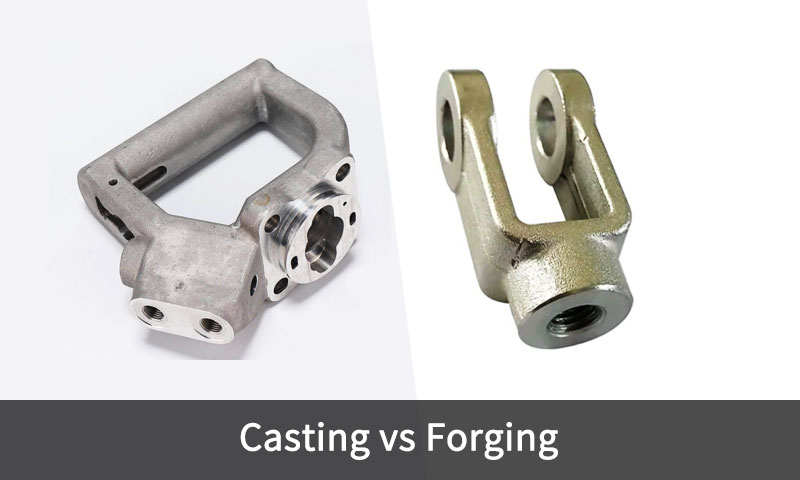
| Paghahagis | Molten metal is poured into a mold cavity and solidifies into the desired shape. | Mga pabahay ng bomba, mga katawan ng balbula, mga bloke ng engine, mga base ng makina, complex structural components. | Produces highly complex geometries, panloob na mga talata, and large components with relatively low material waste. |
| Pagbubuo ng mga | Heated metal is shaped through compressive forces using dies, Pindutin ang mga pindutin, or hammers. | Mga shaft, mga gears, pagkonekta ng mga rod, Mga bahagi ng presyon, mga istraktura ng aerospace. | Improves mechanical properties through refined grain flow, mas mataas na lakas, and superior fatigue resistance. |
Powder Metallurgy |
Metal powders are compacted under pressure and sintered at elevated temperatures to form solid components. | Mga bearing, mga filter, mga gears, wear-resistant components, mga bahagi ng katumpakan. | Extremely high material utilization, controlled porosity, and capability to produce special material compositions. |
Pangunahing Pananaw: While these processes are not “machining” in the traditional sense, they provide the starting material—the blank—that most precision components require.
Principle 2: Pag alis ng Materyal (Δm < 0)
Pag alis ng materyal, kilala rin bilang pagbabawas ng pagmamanupaktura, is the core principle behind conventional machining.
In these processes, excess material is removed from an initial workpiece—such as a casting, pagkukubli, bar stock, or plate—to create the final geometry with precise dimensions, mga tolerance, and surface finishes.
This category includes the most widely used machining methods:
- Turning.
- paggiling.
- Pagbutas ng butas.
- Boring na.
- Paggiling.
- Gear machining.
- Electrical discharge machining (EDM).
Material removal remains the dominant manufacturing approach for precision mechanical components because it provides excellent control over final part quality.
Core Characteristics:
- Material is removed, producing chips or swarf.
- Achieves the highest dimensional accuracy and surface finish.
- The most widely used method for producing precision components.
Pangunahing Pananaw
Material removal is the foundation of precision manufacturing because it converts near-net-shape blanks into functional engineering components.
A typical industrial manufacturing route often follows this pattern:
Paghahagis / Forging → Rough Machining → Heat Treatment → Precision Machining → Surface Finishing
This combination balances material efficiency, mekanikal na pagganap, at dimensional katumpakan.
Principle 3: Material Addition (Δm > 0)
Material addition processes create components by adding, depositing, or joining materials together.
Hindi tulad ng subtractive manufacturing, which removes excess material, additive processes increase the amount of material during production.
This category includes both traditional joining technologies and modern additive manufacturing methods.
| Proseso | Manufacturing Mechanism | Mga Karaniwang Aplikasyon | Mga Pangunahing Bentahe |
| Welding | Materials are joined through heat, presyon, or a combination of both to create a permanent bond. | Structural frameworks, mga tubo, presyon vessels, mga tangke, mabibigat na kagamitan. | Produces strong permanent joints and enables large structures to be fabricated efficiently. |
| Brazing / Soldering | A filler metal is melted and distributed between components without melting the base materials. | Mga heat exchanger, mga elektronikong bahagi, precision assemblies. | Allows joining of dissimilar materials with minimal thermal distortion. |
3D Paglilimbag (Paggawa ng Additive) |
Material is deposited layer by layer according to a digital model. | Mga prototype, magaan na mga istraktura, customized medical parts, kumplikadong mga geometries. | Provides exceptional design freedom and enables rapid production of complex shapes. |
Pangunahing Pananaw: Additive manufacturing is particularly valuable for prototyping, pasadyang mga bahagi, and geometries that are impossible or extremely difficult to achieve through subtractive methods.
2. Ang 8 Traditional Machining Processes: The Backbone of Manufacturing
Traditional machining relies on mechanical cutting tools to remove material from a workpiece.
These processes are the workhorses of the manufacturing industry, capable of producing everything from simple shafts to complex moulds and dies. Here are the 8 most common traditional processes, Ang kanilang mga alituntunin sa pagtatrabaho, and their ideal applications.
Turning: The Process for Rotational Parts
Prinsipyo ng Pagtatrabaho:
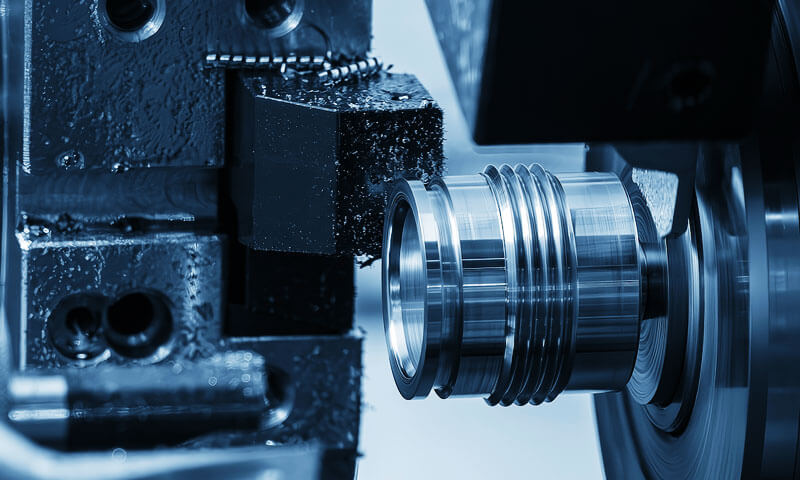
CNC Pagliko is a machining process in which the workpiece rotates (the primary motion) and a single-point cutting tool moves linearly (the feed motion).
The lathe is the machine tool used for turning operations. As the workpiece spins, the tool removes material to create cylindrical profiles, faces, tapers, mga thread, and other rotational features.

Why Turning Excels:
Turning offers exceptional precision for rotational parts because of the inherent stability of the process.
The rotating workpiece ensures that all features are concentric to the same axis, making it easy to achieve excellent coaxiality and perpendicularity between faces.
The cutting process is continuous (no interruptions), allowing for high cutting speeds, mahusay na ibabaw tapusin, and long tool life.
| Parameter | Karaniwang Saklaw | Mga Tala |
| Pagkamagaspang sa ibabaw | Ra 0.1 – 3.2 M | Diamond turning of non-ferrous metals can achieve Ra <0.1 M. |
| Dimensional katumpakan | ±0.01 – 0.05 mm | Precision lathes can achieve ±0.005 mm. |
| Typical materials | Mga Metal, mga plastik na, mga composite | Not suitable for very hard materials (>HRC 60) without special tooling. |
Mga Aplikasyon:
- Mga bahagi ng silindrikal: mga shaft, Mga Pin, mga roller
- Disc-shaped parts: mga flanges, mga gears, mga flywheel
- Threaded components: mga bolts, Mga tornilyo, mani mani
- Eccentric and non-round parts (on cam lathes)
Machine Types:
- Horizontal lathes: The most common type; handles a wide range of part sizes.
- Vertical lathes: Used for large, heavy disc-shaped components (hal., brake drums, large gears).
- Swiss-type (automatic) mga lathes: Perpekto para sa maliliit na, matagal na, and complex parts (hal., watch components, mga medikal na aparato).
- CNC turning centres: Multi-axis machines capable of complex operations (pagliko, paggiling, pagbabarena) in one setup.
Practical Tip: Turning is the process of choice for any part with a dominant rotational axis. Para sa mataas na dami ng produksyon, CNC lathes with bar feeders can run unattended for hours.
paggiling: The Versatile All-Rounder
Prinsipyo ng Pagtatrabaho:
CNC paggiling uses a rotating multi-tooth cutter (the primary motion) to remove material from a stationary or moving workpiece.
The cutter axis is typically perpendicular to the workpiece surface (end milling) or parallel to it (peripheral milling).
Milling can produce flat surfaces, mga puwang, pockets, contours, and complex 3D shapes.

Why Milling Excels:
Milling is the most versatile machining process. With the right cutter and setup, it can machine almost any feature on a workpiece: flat surfaces, mga grooves, mga profile, Mga Lukab, and even complex 3D surfaces.
The intermittent cutting action, while generating some vibration, allows for high metal removal rates.
Key Distinction: Up Milling vs. Down Milling:
| Milling Type | Pagputol ng Aksyon | Pinakamahusay Para sa | Tool Buhay |
| Up Milling (Maginoo) | Chip thickness increases from zero to maximum. | Older machines with backlash; castings and forgings with hard skin. | Shorter (due to rubbing at entry). |
| Down Milling (Climb) | Chip thickness decreases from maximum to zero. | CNC machines with backlash compensation; mas mahusay na pagtatapos ng ibabaw. | Mas mahaba (cleaner entry; less rubbing). |
Cutting Methods:
- End milling: Cutter axis perpendicular to the workpiece; used for slots, pockets, at mga profile.
- Peripheral milling: Cutter axis parallel to the workpiece; used for flat surfaces.
- Face milling: Flat-faced cutter with inserts; used for large flat surfaces.
- Fly cutting: Single-point tool for large flat surfaces; low production rate but good finish.
Mga Aplikasyon:
- Mga flat na ibabaw: top faces, mounting pads
- Slots and grooves: T-slots, keyways, dovetails
- Complex profiles: mga gears, cams, mga impeller
- 3D contours: mould cavities, die surfaces, mga bahagi ng aerospace
- Thread milling: high-quality threads in hard materials
Tolerances and Surface Finish:
| Parameter | Karaniwang Saklaw |
| Pagkamagaspang sa ibabaw | Ra 0.8 – 6.3 M |
| Dimensional katumpakan | ±0.02 – 0.10 mm |
| Precision milling | ±0.005 – 0.01 mm (with high-end equipment) |
Practical Tip: When milling, always consider the rigidity of the setup. Matagal na, slender cutters will deflect, leading to poor surface finish and inaccuracy. Use short, rigid tooling where possible.
Planing: The Low-Cost Flat Surface Solution
Prinsipyo ng Pagtatrabaho:
Planing is a machining process in which a single-point cutting tool moves in a straight line (the primary motion), cutting across a workpiece that is held on a reciprocating table.
The workpiece moves past the stationary tool, which removes a layer of material on each pass. The tool returns to the start without cutting (idle stroke).
Why Planing Excels:
Planing is a low-cost solution for machining large, flat surfaces, especially for single parts or small batches.
The machines are relatively simple and inexpensive, and the tooling is basic (HSS tools).
The long, straight strokes are ideal for machining straight surfaces such as machine beds, guideways, and large base plates.
| Parameter | Karaniwang Saklaw | Mga Tala |
| Pagkamagaspang sa ibabaw | Ra 1.6 – 6.3 M | Good but rougher than milling. |
| Dimensional katumpakan | ±0.05 – 0.20 mm | Less precise than milling. |
| Rate ng produksyon | Mababa ang | The idle stroke wastes time. |
Mga Aplikasyon:
- Malaki ang, flat surfaces: mga base ng makina, beds, and tables
- Straight grooves: V-grooves, dovetails, keyways
- Single parts and small-batch jobs: repair and maintenance work
- Toolroom and die-making applications
Mga Limitasyon:
- Low productivity: the idle stroke limits production rates.
- Low precision: not as accurate as milling.
- Limited shapes: can only produce flat or straight-line features.
Practical Tip: Planing is best suited for jobs where the cost of a milling machine or setup is prohibitive. It is rarely used in high-volume production.
Pagbutas ng butas: The Foundation of Hole Making
Prinsipyo ng Pagtatrabaho:
Drilling is the process of creating a round hole in a workpiece using a rotating multi-point cutting tool called a drill (or twist drill).
The drill rotates (primary motion) and is fed into the workpiece (feed motion). The cutting edges at the tip remove material, while the flutes evacuate chips.
Why Drilling Excels:
Drilling is the simplest and most economical way to create holes in metal.
It can be performed on a wide range of machine tools: drill presses, milling machines, and even hand drills. Drilling is typically the first step in a sequence of hole-making operations.
| Parameter | Karaniwang Saklaw | Mga Tala |
| Hole size range | 0.1 – 100+ mm | Small holes require special micro-drills. |
| Hole depth | Up to 10× diameter (standard) | Deep holes require specialised tooling (gun drilling). |
| Dimensional katumpakan | ±0.05 – 0.2 mm | Drilling is a roughing operation; holes may be oversized. |
| Email Address * | Ra 3.2 – 12.5 M | Relatively poor compared to reaming. |
Common Drilling-Related Operations:
| Operation | Paglalarawan | Layunin |
| Pagre-reaming | Enlarges and finishes an existing hole to a precise diameter. | Precision hole sizing; improved roundness and surface finish. |
| Counterboring | Enlarges the top portion of a hole to a larger diameter. | Creates a shoulder for a screw head (socket-head cap screw). |
| Countersinking | Creates a conical taper at the top of a hole. | For flat-head screws and deburring. |
| Tapping | Cuts internal threads in a hole. | For threaded fasteners. |
Common Drilling Problems:
| Problema | Dahilan | Solusyon |
| Oversized hole | Drill wobble; worn drill; improper feed. | Use a centre drill; check drill alignment; reduce feed. |
| Hole location error | Workpiece movement; poor layout. | Secure workpiece; use a drilling jig. |
| Burr formation | Improper drilling parameters. | Use a deburring operation; reduce feed on exit. |
Practical Tip: For precision hole-making, always start with a centre drill to create a precise starting point, then drill to size, and finally ream for the final dimension.
Boring na: The Precision Enlargement Process
Prinsipyo ng Pagtatrabaho:
Boring is the process of enlarging and refining an existing hole to achieve a precise size, pag-ikot, at ibabaw tapusin.
Boring is performed on a lathe (using a boring bar) or on a boring machine.
A single-point tool is fed into the hole along the axis, removing a thin layer of material.
Why Boring Excels:
Boring is the process of choice for achieving high accuracy in hole diameters, sentrisiko, and alignment.
It can correct positional errors from previous operations (hal., pagbabarena) and is essential for large and deep holes that cannot be reamed or drilled accurately.
| Parameter | Karaniwang Saklaw | Mga Tala |
| Hole diameter | 5 – 500+ mm | Limited by the diameter of the boring bar. |
| Depth | Limited by tool rigidity. | Deep bores require a rigid, well-supported boring bar. |
| Dimensional katumpakan | ±0.01 – 0.05 mm | Precision boring is very accurate. |
| Email Address * | Ra 0.4 – 3.2 M | Napakahusay. |
Mga Aplikasyon:
- Precise holes: pagdadala ng mga pabahay, engine cylinders, haydroliko mga bahagi
- Aligning holes: where multiple holes require precise coaxiality
- Large diameter holes: holes too large for standard reamers
- Correction of existing holes: fixing damaged or misaligned holes
Practical Tip: Boring bars must be rigid; even slight deflection can cause chatter and inaccuracy. Use the shortest possible tool overhang.
Gear Cutting and Tooth Profile Machining
Prinsipyo ng Pagtatrabaho:
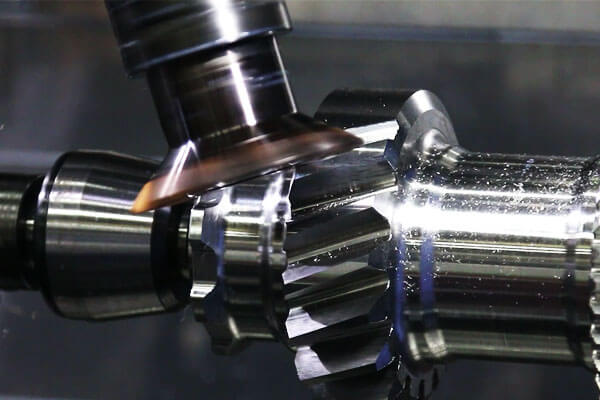
Gear cutting encompasses a range of processes used to produce the teeth of gears, mga splines, and other toothed components. The two most common methods are hobbing at gear shaping.
- Hobbing: A rotating cutter (the hob) is fed across the rotating workpiece, generating the gear teeth by a continuous cutting action. Hobbing is highly productive and widely used for spur and helical gears.
- Gear Shaping: A reciprocating cutter with the same tooth profile as the gear is pressed into the workpiece, generating teeth one at a time. Shaping is slower but can produce internal gears and some intricate profiles.
Why Gear Cutting Excels:
Gear cutting processes are specifically designed to produce accurate, malakas na, and quiet-running gear teeth. They are the standard method for manufacturing most gears and splines.
Typical Gear Machining Performance Range
| Parameter | Karaniwang Saklaw | Mga Tala |
| Module / Diametral Pitch | Module 0.5–20+ | Covers small precision gears to large industrial gears. |
| Gear Diameter | 10–1000+ mm | Limited mainly by machine capacity. |
| Tooth Accuracy | ISO Grade 5–8 | Higher grades are used for precision applications. |
| Pagkamagaspang ng Ibabaw | Ra 0.8–3.2 μm | Smooth tooth surfaces reduce friction and operating noise. |
| Mga Tipikal na Materyales | Carbon bakal, haluang metal na bakal, hindi kinakalawang na asero, cast iron, tanso | Material selection depends on load, bilis, and environment. |
Common Gear Cutting and Tooth Profile Machining Methods
| Paraan | Prinsipyo ng Pagtatrabaho | Best Applications |
| Gear Hobbing | A rotating hob cutter continuously generates gear teeth while the workpiece rotates in synchronization. | High-volume production of spur gears, helical gears, and industrial transmission gears. |
| Gear Shaping | A reciprocating cutter generates teeth through synchronized cutting motion. | Internal gears, mga splines, shoulder gears, and complex gear profiles. |
Broaching |
A multi-tooth broach removes material in a single progressive pass. | High-volume production of internal gears, keyways, and splines. |
| Form Milling | A formed milling cutter cuts individual tooth spaces according to the required profile. | Large gears, maliliit na batch, repair work, and custom gear designs. |
| Paggiling ng Gear | An abrasive finishing process removes small amounts of material after heat treatment. | High-precision hardened gears used in automotive, aerospace, at mataas na pagganap ng makinarya. |
Practical Tip: Gear hobbing is the most economical method for high-volume gear production. Shaping is used for internal gears and intricate shapes.
Paggiling: The Precision Finishing Process
Prinsipyo ng Pagtatrabaho:
Paggiling uses a rotating abrasive wheel (composed of thousands of hard, sharp grits) to remove material by a combination of cutting, plowing, and rubbing.
The abrasive wheel acts as a multi-tooth cutting tool, but with a negative rake angle, resulting in a very smooth, high-precision surface.
Why Grinding Excels:
Grinding is the process of choice for achieving the highest surface finish and dimensional accuracy, especially on hardened materials (HRC > 45).
It can correct heat treatment distortions and produce flat, parallel surfaces.
| Parameter | Karaniwang Saklaw | Mga Tala |
| Pagkamagaspang sa ibabaw | Ra 0.05 – 0.8 M | Precision grinding can achieve Ra <0.05 M. |
| Dimensional katumpakan | ±0.001 – 0.005 mm | Grinding is the most accurate machining process. |
| Material hardness | Hanggang sa 70 HRC | Can grind hardened steels, karbid. |
| Typical materials | Hardened steels, mga tool na bakal, karbid, Keramika | All hard, Malutong na materyales. |
Common Grinding Processes:
| Uri ng | Paglalarawan | Mga Aplikasyon |
| Surface grinding | Grinding of flat surfaces. | Mould plates, machine tables, mga tooling. |
| Cylindrical grinding | Grinding of external cylindrical surfaces. | Mga shaft, Mga Pin, bearing journals. |
| Internal grinding | Grinding of internal cylindrical surfaces. | Bearing housings, cylinder bores. |
| Centreless grinding | Cylindrical grinding without centres. | High-volume shaft production. |
| Tool and cutter grinding | Grinding of cutting tools. | Sharpening drills, mga end mill, mga reamers. |
| Creep-feed grinding | Deep, slow-feed grinding. | Complex profiles in hard materials. |
Practical Tip: Grinding generates significant heat, which can cause thermal damage (grinding burn) at natitirang stress. Use ample coolant and appropriate grinding parameters.
Form paggiling: The Profile Specialisation
Prinsipyo ng Pagtatrabaho:
Form grinding uses a shaped grinding wheel or a CNC-controlled process to grind complex, non-linear profiles.
The wheel is dressed to a specific contour, which is then ground into the workpiece.
This is an extension of grinding for specialised applications where a specific shape or profile is required.
Why Form Grinding Excels:
Form grinding can produce very precise, complex profiles in hardened materials, with excellent surface finish and dimensional accuracy.
It is the process of choice for forming dies, mga suntok, and moulds.
Mga Aplikasyon:
- Mould cavities
- Die profiles
- Complex contours in tool and die making
- Precision profiles in aerospace components
Practical Tip: Form grinding is a specialised, high-cost process, justified only where extreme accuracy and excellent surface finish are required.
3. Ang 5 Special Processes: Non-Traditional Machining
Traditional cutting tools struggle—or fail entirely—when faced with very hard materials (mga tool na bakal, karbid, Keramika), kumplikadong mga geometries (malalim na mga cavities, micro-features), or when thermal or mechanical damage must be minimised.
Special processes use energy forms other than mechanical cutting to remove material, offering solutions to these challenges.
Electrical Discharge Machining (EDM)
Prinsipyo ng Pagtatrabaho:
EDM—also known as spark erosion—removes material by a series of rapidly recurring electrical discharges (mga spark) between an electrode (tool) and the workpiece.
The sparks erode small amounts of material from both the electrode and the workpiece.
The workpiece is submerged in a dielectric fluid (hal., deionised water or oil) to control the discharge and flush away eroded particles.

Types of EDM:
| Uri ng | Paglalarawan | Mga Aplikasyon |
| Sinker EDM (Ram EDM) | The electrode is shaped to the negative of the desired cavity. | Mould cavities, die sinking, complex 3D cavities. |
| Wire EDM (WEDM) | Isang manipis na, continuously moving wire acts as the electrode. | Profiles, contours, mga bahagi ng katumpakan; blanks for stamping dies. |
| Small-hole EDM | A small-diameter electrode for drilling fine, deep holes. | Cooling holes, fuel injection nozzles. |
Why EDM Excels:
EDM can machine any conductive material, regardless of its hardness. It can produce complex, masalimuot na mga hugis (including sharp corners) with high accuracy and excellent surface finish.
The process applies no mechanical force, so thin-walled and delicate parts can be machined without distortion.
| Parameter | Karaniwang Saklaw | Mga Tala |
| Pagkamagaspang sa ibabaw | Ra 0.2 – 3.2 M | Depends on finish; excellent for finishing. |
| Dimensional katumpakan | ±0.005 – 0.02 mm | Mataas na katumpakan, especially in wire EDM. |
| Material hardness | Hanggang sa 70 HRC | Virtually unlimited for conductive materials. |
| Material conductivity | Must be electrically conductive. | Not suitable for ceramics, mga plastik na, o salamin. |
Mga Aplikasyon:
- Mould cavities and dies
- Injection moulds for plastics
- Mga bahagi ng sasakyang panghimpapawid engine
- Mga medikal na aparato
- Complex contours and profiles
Practical Tip: EDM is a slow process, so it is typically used for finishing operations, not for roughing.
Electrochemical Machining (ECM)
Prinsipyo ng Pagtatrabaho:
ECM is a non-traditional machining process that removes material by anodic dissolution. The workpiece (anode) and a shaped tool (cathode) are immersed in an electrolyte.
A high DC current passes between them, and metal ions are dissolved from the workpiece, which are then carried away by the electrolyte flow.
Why ECM Excels:
ECM can machine hard and difficult-to-machine materials with no tool wear and no heat-affected zone.
The process is capable of high material removal rates and can produce complex shapes with good surface finish. It is particularly suited for bulk material removal.
| Parameter | Karaniwang Saklaw | Mga Tala |
| Pagkamagaspang sa ibabaw | Ra 0.2 – 0.8 M | Very good finish. |
| Dimensional katumpakan | ±0.05 – 0.2 mm | Lower accuracy than EDM. |
| Material hardness | Hanggang sa 70 HRC | Virtually unlimited; material must be conductive. |
| Material removal rate | Mataas na | Suitable for bulk removal. |
Mga Aplikasyon:
- Jet engine blades and vanes
- Gun barrels (rifling)
- Medikal na implants
- Moulds for plastics
- Mahirap, complex aerospace components
Practical Tip: ECM is a specialised process requiring significant investment in equipment and electrolyte handling. It is justified by high production volumes or the difficulty of alternative methods.
Laser Machining
Prinsipyo ng Pagtatrabaho:
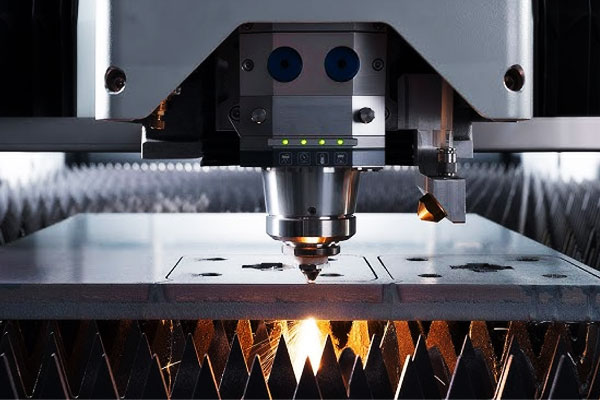
Laser machining uses a highly focused beam of coherent light (laser) to melt, vaporise, or ablate material from the workpiece.
The laser spot is moved across the surface using computer-controlled mirrors or motion stages.
Why Laser Machining Excels:
Laser machining is a fast, tumpak na tumpak, and contactless process. It can be performed on any material (mga metal, mga plastik na, Keramika, salamin, mga composite) and can achieve extremely fine features (down to a few microns).
The process does not generate mechanical forces, so thin and delicate parts can be processed.
| Parameter | Karaniwang Saklaw | Mga Tala |
| Kerf width | 0.02 – 0.2 mm | Very narrow cuts. |
| Bilis ng pagputol | Hanggang sa 50 m / min | High for sheet materials. |
| Feature size | Down to 10 M | For micro-machining. |
| Materyal | Virtually any material | Mga Metal, mga plastik na, Keramika, salamin. |
| Katumpakan | ±0.01 – 0.05 mm | Mataas na katumpakan. |
Mga Aplikasyon:
- Pagputol: sheet metal, mga profile, mga tubo
- Pagbutas ng butas: precision holes, cooling holes
- Engraving and marking: mga numero ng bahagi, mga logo
- Micro-machining: medical stents, mga microelectronics
- Surface texturing: creating micro-roughness
Practical Tip: Laser machining generates a heat-affected zone (HAZ). For materials sensitive to thermal damage, consider using short-pulse (picosecond/femtosecond) lasers.
Ultrasonic Machining (USM)
Prinsipyo ng Pagtatrabaho:
Ultrasonic machining uses a tool vibrating at high frequency (20-40 kHz) and amplitude (10-50 M).
An abrasive slurry (hal., boron carbide or silicon carbide in water) is introduced between the tool and the workpiece.
The vibrating tool impacts the abrasive particles against the workpiece, removing material by micro-chipping and erosion.
Why USM Excels:
USM is the process of choice for machining hard and brittle materials that are difficult or impossible to machine by traditional methods.
It is particularly effective for non-conductive materials (Keramika, salamin, stones) and materials with low electrical conductivity.
| Parameter | Karaniwang Saklaw | Mga Tala |
| Pagkamagaspang sa ibabaw | Ra 0.2 – 1.6 M | Good finish. |
| Dimensional katumpakan | ±0.005 – 0.02 mm | Mataas na katumpakan. |
| Materyal | Mahirap, malutong na, non-conductive materials | Keramika, salamin, stones, karbid. |
| Tool wear | Katamtaman | Tools are worn by the abrasive particles. |
Mga Aplikasyon:
- Drilling holes in ceramics and glass
- Machining of advanced composites
- Die sinking in hard materials
- Semiconductor and electronics components
Practical Tip: USM is a slow process, so it is typically limited to high-value or difficult-to-machine parts.
Waterjet Machining
Prinsipyo ng Pagtatrabaho:
Waterjet machining uses a high-pressure stream of water (with or without abrasive particles) to erode and cut material. Pressures can range from 2,000 sa 6,000 bar (30,000 sa 90,000 psi).
The water is forced through a small-diameter orifice, creating a supersonic jet that impacts the workpiece.
Why Waterjet Excels:
Waterjet machining is a cold-cutting process—there is no heat-affected zone, no thermal distortion, and no metallurgical changes.
It can cut a wide range of materials, kasama na ang mga metal, mga plastik na, salamin, mga composite, and even food.
The process is very flexible, can start anywhere (no pilot hole required), and produces a smooth, accurate edge.
| Parameter | Karaniwang Saklaw | Mga Tala |
| Cutting thickness | Hanggang sa 200+ mm | Depending on material and abrasive. |
| Kerf width | 0.5 – 1.5 mm | Makitid. |
| Cutting tolerance | ±0.05 – 0.2 mm | Good accuracy. |
| Email Address * | Ra 0.8 – 6.3 M | Good finish. |
| No heat-affected zone | Oo nga | No thermal damage. |
Mga Aplikasyon:
- Thick metal plates: aluminium, hindi kinakalawang na asero, titan
- Brittle materials: stone, salamin, Keramika
- Mga composite: laminated materials (no delamination)
- Food processing: cutting food products
- Mga bahagi ng aerospace: complex shapes in advanced materials
Practical Tip: Waterjet machining is a powerful and flexible process, but it is relatively slow and generates a large amount of noise and waste slurry.
It is best suited for thick or difficult-to-cut materials where other processes would cause thermal damage.
4. Engineering Guidelines for Selecting Machining Methods
There is no universally perfect machining process. The optimal choice depends on:
- Material properties.
- Part geometry.
- Production volume.
- Accuracy requirements.
- Surface finish requirements.
- Manufacturing cost.
| Paglalapat | Recommended Process | Bakit? |
| Rotational parts (mga shaft, Mga Pin) | Turning | Excellent for cylindrical shapes; good surface finish and accuracy. |
| Mga flat na ibabaw, mga puwang, pockets | paggiling | Highly versatile; can produce a wide range of shapes. |
| Malaki ang, flat surfaces (single parts) | Planing | Low cost for simple parts; good for repair and maintenance. |
| Precise holes | Pagbutas ng butas + Reaming or Boring | Drilling for rough hole; reaming/boring for final size and accuracy. |
| Gear teeth | Hobbing, Paghubog | Mataas na dami ng produksyon; standardised processes. |
Hardened materials (HRC > 45) |
Grinding or EDM | Grinding for flat surfaces; EDM for complex shapes. |
| Complex 3D cavities | EDM or Milling (5-axis) | EDM for deep, masalimuot na mga hugis; 5-axis milling for larger parts. |
| Napakahirap, non-conductive materials | Ultrasonic Machining | Keramika, salamin, stones. |
| Thermally sensitive materials | Waterjet Machining | No heat-affected zone; minimal na pagbaluktot. |
| Mataas na katumpakan, small features | Laser Machining | Very fine features, mabilis na, contactless. |
5. Pangwakas na Salita
The world of machining is vast and complex, but at its core, it is built upon three fundamental material transformation principles—formation, removal, and addition—and a set of well-defined processes that can be matched to specific part requirements.
Ang 8 traditional processes—turning, paggiling, planing, pagbabarena, nakakainip, gear cutting, paggiling ng mga, and form grinding—form the backbone of the manufacturing industry.
They are the workhorses that produce the vast majority of precision components, from simple pins to complex moulds and dies. Their strength lies in their versatility, katumpakan, at pagiging maaasahan.
Ang 5 special processes—EDM, ECM, laser machining, ultrasonic machining, and waterjet machining—provide powerful alternatives when traditional cutting tools reach their limits.
They enable the machining of very hard, malutong na, or complex materials, and they can achieve features that would be impossible by conventional methods.
The key to successful process selection lies in understanding the material, the geometry, the production volume, and the required tolerance.
By mastering the characteristics and applications of each process, manufacturing engineers can optimise production efficiency, reduce costs, and achieve superior quality.