Among all stainless steel families, Austenitic hindi kinakalawang na asero is the most extensively used and commercially significant category, accounting for more than half of global stainless steel production.
It is recognized for its exceptional corrosion resistance, mahusay na weldability, outstanding ductility, superior toughness, and remarkable performance in both high-temperature and cryogenic environments.
The unique properties of austenitic stainless steel originate from its special metallurgical structure.
Unlike ferritic or martensitic stainless steels, austenitic stainless steel maintains a Mukha na nakasentro sa kubiko (FCC) istraktura ng kristal sa temperatura ng kuwarto.
This structure provides excellent plastic deformation capability and prevents brittle failure, making it suitable for applications requiring complex forming, hinang, and reliable operation under severe conditions.
Common grades such as 304, 316, 321, at 347 hindi kinakalawang na asero have become industry standards, while advanced grades including 904L, 254 SMO, and other super austenitic stainless steels are engineered for highly corrosive environments.
1. What Is Austenitic Stainless Steel?
Austenitic hindi kinakalawang na asero is the largest and most widely used family of stainless steels, characterized by a stable Mukha na nakasentro sa kubiko (FCC) istraktura ng kristal, known metallurgically as austenite (γ-phase).
This unique microstructure is maintained at room temperature through the addition of austenite-stabilizing alloying elements, primarily nikel (Ni), along with elements such as mangganeso (Mn), nitrogen (N), and carbon (C).
Unlike pure iron, where austenite exists only at elevated temperatures, austenitic stainless steels are engineered through alloying to retain the austenitic phase over a wide temperature range, including ambient and cryogenic conditions.
This stable austenitic structure is the fundamental reason these materials exhibit their outstanding combination of corrosion resistance, ductility, tigas na tigas, weldability, and fabrication capability.
The term “austenitic” does not refer to a specific chemical composition but rather to the dominant metallurgical phase and crystal structure of the alloy.
In pure iron, the transformation from ferrite (α-phase, body-centered cubic structure) to austenite (γ-phase, Istraktura ng FCC) occurs at approximately 912°C.
Gayunpaman, the addition of nickel and other austenite-forming elements expands the stability range of the FCC phase, allowing austenite to remain stable at room temperature and even under extremely low-temperature service conditions.
Key defining features of austenitic stainless steel:
- Face‑centred cubic (FCC) istraktura ng kristal—provides excellent ductility, tigas na tigas, at pagiging formable.
- High chromium content (16‑26%)—provides corrosion resistance through a self‑healing passive oxide layer.
- High nickel content (6‑22%)—stabilises the austenitic structure, improves corrosion resistance, and enhances low‑temperature toughness.
- Non‑magnetic (in the annealed state)—unlike ferritic and martensitic stainless steels, austenitic grades are essentially non‑magnetic.
- Not hardenable by heat treatment—strength can only be increased by cold working (pagpapatigas ng trabaho).
- Napakahusay na weldability—most grades are readily weldable, with low‑carbon grades (L grades) specifically designed to resist sensitisation.
2. Chemical Composition of Austenitic Stainless Steel
The performance of austenitic stainless steels is determined by their precise chemical composition.
The following table summarises the typical composition ranges for the most common elements and their functions.
| Elemento | Karaniwang Saklaw (wt%) | Function |
| Chromium (Cr) | 16‑26 | Forms the passive chromium oxide (Cr₂O₃) film that provides corrosion resistance. Increased Cr improves resistance to oxidising acids and high‑temperature oxidation. |
| Nikel (Ni) | 6‑22 | Stabilises the austenitic structure sa temperatura ng kuwarto; improves corrosion resistance (especially in reducing acids); enhances low‑temperature toughness; reduces work‑hardening rate. |
| Molibdenum (Mo) | 0‑7 | Nagpapabuti ng paglaban sa pitting at bitak kaagnasan, especially in chloride‑containing environments; increases high‑temperature strength. |
| Mga mangganeso (Mn) | ≤2.0 | Deoxidiser; stabilises austenite in some grades (hal., 200 serye ng mga); improves hot workability. |
Silicon (Si Si) |
≤1.0 | Deoxidiser; improves oxidation resistance. |
| Carbon (C) | ≤0.08 (standard) <0.03 (L grades) | Strengthens the alloy but can reduce corrosion resistance by forming chromium carbides (sensitisation). Low‑carbon grades (304L, 316L) minimise sensitisation. |
| Nitrogen (N) | 0‑0.25 | Pinapalakas ang austenite; improves pitting resistance; stabilises the austenitic structure. |
| Tanso (Cu) | 0‑3 | Improves resistance to reducing acids (especially sulfuric acid); enhances formability. |
| Titanium (Ti) / Niobium (Nb) | ≤1.0 | Stabilisers—prevent sensitisation by forming carbides preferentially with carbon, leaving chromium in solution. |
Key Compositional Relationships
- Chromium equivalent vs. Nickel equivalent: The balance between ferrite‑stabilising elements (Cr, Mo, Si Si) and austenite‑stabilising elements (Ni, Mn, N, Cu) determines whether the microstructure is fully austenitic or contains some ferrite.
- PREN (Pitting Resistance Katumbas na Numero): An empirical formula used to compare the pitting resistance of stainless steels:
PREN = %Cr + 3.3 × %Mo + 16 × %N
Higher PREN values indicate better resistance to pitting and crevice corrosion in chloride environments.
| Grade | PREN (tinatayang.) | Paglaban sa kaagnasan |
| 304 | 19 | Mabuti na lang |
| 316 | 26 | Mas mahusay na |
| 904L | 34‑38 | Napakahusay |
| Superaustenitic (hal., 6‑Mo alloys) | >40 | Pambihirang |
3. Major Types and Grades of Austenitic Stainless Steel
Austenitic stainless steels represent the largest and most widely used category of stainless steel, containing numerous grades developed to meet different requirements for corrosion resistance, mekanikal na lakas, temperature capability, weldability, and fabrication performance.
Standard Austenitic Stainless Steel Grades (300 Serye)
Ang 300 serye ng mga is the most recognized family of austenitic stainless steels.
These grades typically contain chromium and nickel as their primary alloying elements, providing an excellent balance of corrosion resistance, mekanikal na mga katangian, weldability, at kahusayan sa gastos.
Common 300-Series Austenitic Stainless Steel Grades
| Grade | Pagtatalaga ng UNS | Approximate Composition | Mga Pangunahing Katangian | Mga Karaniwang Aplikasyon |
| 304 | S30400 | 18% Cr, 8% Ni | The most widely used austenitic stainless steel; mahusay na paglaban sa kaagnasan, pagiging formable, weldability, and cost-performance balance | Kagamitan sa pagpoproseso ng pagkain, mga kagamitan sa kusina, mga bahagi ng arkitektura, mga bahagi ng sasakyan, general industrial applications |
| 304L | S30403 | 18% Cr, 8% Ni, low C ≤0.03% | Low-carbon version of 304; minimizes chromium carbide precipitation and improves corrosion resistance after welding | Mga welded na istraktura, food equipment, kagamitan sa pagpoproseso ng kemikal, presyon vessels |
| 316 | S31600 | 16–18% Cr, 10–14% Ni, 2–3% Mo | Addition of molybdenum significantly improves resistance to chloride-induced pitting and crevice corrosion | Marine equipment, chemical processing systems, kagamitan sa parmasyutiko, mga medikal na aparato |
316L |
S31603 | 16–18% Cr, 10–14% Ni, 2–3% Mo, mababang C | Low-carbon version of 316; superior weldability and resistance to intergranular corrosion | Pharmaceutical tanks, marine structures, welded piping systems, offshore equipment |
| 321 | S32100 | 17–19% Cr, 9–12% Ni, Ti stabilized | Titanium stabilization prevents chromium carbide precipitation; maintains corrosion resistance after high-temperature exposure | Mga heat exchanger, aircraft exhaust systems, furnace components, high-temperature piping |
| 347 | S34700 | 17–19% Cr, 9–13% Ni, Nb stabilized | Niobium stabilization improves resistance to sensitization and enhances high-temperature creep strength | Mga bahagi ng aerospace, power generation equipment, high-temperature chemical processing systems |
309 |
S30900 | 22–24% Cr, 12–15% Ni | Higher chromium and nickel content provides improved oxidation resistance at elevated temperatures | Mga bahagi ng hurno, combustion equipment, heat treatment fixtures, high-temperature vessels |
| 310 | S31000 | 24–26% Cr, 19–22% Ni | Excellent oxidation resistance and strength at very high temperatures | Furnace linings, radiant tubes, mga heat exchanger, thermal processing equipment |
| 904L | N08904 | 20% Cr, 25% Ni, 4–5% Mo, Cu addition | Superaustenitic grade with outstanding resistance to sulfuric acid and highly corrosive chemicals | Mga reaktor ng kemikal, sulfuric acid processing equipment, pharmaceutical systems |
High-Performance and Superaustenitic Stainless Steel Grades
Standard austenitic stainless steels may not provide sufficient performance in extremely aggressive environments such as concentrated acids, tubig dagat, and high-chloride conditions.
For these applications, high-performance or superaustenitic stainless steels have been developed.
Representative Superaustenitic Grades
| Grade | Pagtatalaga ng UNS | Approximate Composition | Mga Pangunahing Katangian | Mga Karaniwang Aplikasyon |
| 254 SMO | S31254 | 20% Cr, 18% Ni, 6% Mo, 0.2% N | Extremely high chloride resistance; PREN value above 40; excellent pitting and crevice corrosion resistance | Seawater systems, mga platform sa malayo sa pampang, desalination plants, kagamitan sa pagpoproseso ng kemikal |
| AL-6XN | N08367 | 21% Cr, 24% Ni, 6.3% Mo, 0.2% N | Outstanding resistance to chloride corrosion and acidic environments; mataas na mekanikal na lakas | Marine engineering, pulp and paper industry, pagproseso ng kemikal, pollution control equipment |
| Incoloy 825 | N08825 | 21% Cr, 42% Ni, 3% Mo, 2% Cu | Excellent resistance to reducing acids, stress kaagnasan pag crack, and high-temperature environments | Oil and gas equipment, pagproseso ng kemikal, nuclear applications |
Cast Austenitic Stainless Steel Grades
Unlike wrought stainless steels, cast stainless steels are specifically designed for manufacturing through casting processes such as:
- Pamumuhunan sa paghahagis
- Buhangin paghahagis
- Shell molding
Common Cast Austenitic Stainless Steel Grades
| ASTM Cast Grade | Pagtatalaga ng UNS | Katumbas ng Gawa | Mga Pangunahing Katangian | Mga Karaniwang Aplikasyon |
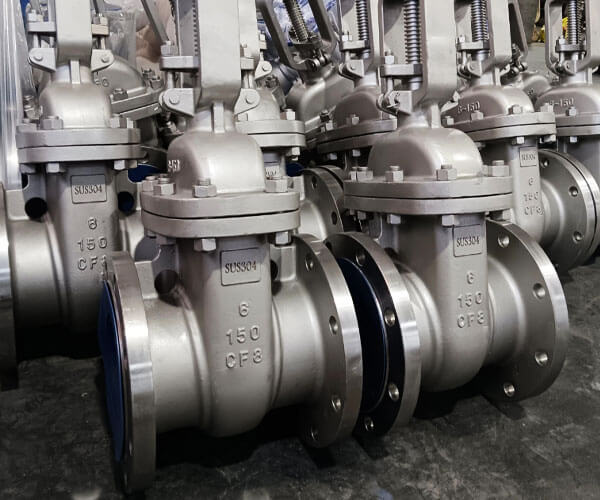
| CF-8 | J92600 | 304 | General-purpose cast austenitic stainless steel; excellent corrosion resistance and castability | Mga katawan ng balbula, Mga pabahay ng pump, Mga kagamitan sa tubo, Mga Bahagi ng Industriya |
| CF-3 | J92500 | 304L | Low-carbon cast grade; excellent weldability and resistance to sensitization | Welded valve components, Kagamitan sa Kemikal, presyon vessels |
| CF-8M | J92900 | 316 | Molybdenum-containing cast alloy with improved chloride corrosion resistance | Marine valves, chemical pumps, kagamitan sa parmasyutiko |
| CF-3M | J92800 | 316L | Low-carbon version of CF-8M; excellent weldability and corrosion resistance | Offshore equipment, desalination systems, chemical processing castings |
| CN-7M | J95150 | haluang metal 20 | High resistance to sulfuric acid and aggressive chemical environments | Acid processing equipment, petrochemical components |
4. Key Properties of Austenitic Stainless Steel
Austenitic stainless steels are widely recognized for their excellent balance of corrosion resistance, mekanikal na pagganap, fabrication capability, and service reliability.
These properties are primarily determined by their stable Mukha na nakasentro sa kubiko (FCC) istraktura ng kristal, high chromium content, and the presence of austenite-stabilizing elements such as nickel and nitrogen.
Paglaban sa kaagnasan
Exceptional corrosion resistance is the most defining characteristic of austenitic stainless steel.
The protection comes from the formation of a thin, stable, and self-healing oksido ng kromo (Cr₂O₃) Pasibo na Pelikula on the material surface.
When chromium reacts with oxygen in the surrounding environment, it forms a protective oxide layer that prevents further oxidation and shields the underlying metal from corrosive attack.
Even when the surface is mechanically damaged, this passive film can rapidly regenerate in oxygen-containing environments.
The corrosion performance of austenitic stainless steel depends on alloy composition. Chromium provides the basic corrosion resistance, while nickel improves resistance to chemical environments and stabilizes the austenitic structure.
Molybdenum-containing grades, tulad ng 316 at 316L, offer significantly improved resistance to chloride-induced pitting and crevice corrosion.
For more aggressive service conditions, advanced grades such as 904L, 254 SMO, and AL-6XN are developed with higher levels of nickel, molibdenum, and nitrogen to withstand severe environments, kasama na ang tubig dagat, strong acids, and chemical processing applications.
Mechanical Properties and Work Hardening Behavior
Austenitic stainless steels provide an excellent balance between strength and ductility.
In the annealed condition, their strength is moderate compared with martensitic or duplex stainless steels, but their superior plasticity allows them to undergo significant deformation without cracking.
Typical austenitic stainless steels exhibit:
- Lakas ng paghatak: approximately 500–750 MPa
- Yield strength: approximately 170–350 MPa
- Pagpapahaba: commonly above 40%
One of the most important mechanical characteristics of austenitic stainless steel is its strong work hardening capability.
During cold deformation, such as rolling, pagguhit, o pagbuo, the density of dislocations within the FCC structure increases, resulting in higher strength and hardness.
This behavior provides several engineering advantages. Cold working can significantly improve the mechanical strength of components without additional heat treatment, making it possible to manufacture high-strength stainless steel wire, mga bukal, Mga strip, and precision parts.
Gayunpaman, strong work hardening also creates challenges during manufacturing.
The material requires higher forming forces, accelerates tool wear during machining, and may require intermediate annealing during severe forming operations to restore ductility.
Low-Temperature Toughness
Austenitic stainless steels possess outstanding toughness at extremely low temperatures due to their stable FCC crystal structure.
Unlike ferritic and martensitic stainless steels, they do not experience a sharp ductile-to-brittle transition temperature, allowing them to maintain excellent impact resistance even under cryogenic conditions.
Common grades such as 304L and 316L retain excellent toughness at temperatures approaching −196°C, making them ideal materials for applications involving liquefied gases and extreme cold environments.
This unique combination of low-temperature toughness and corrosion resistance makes austenitic stainless steels widely used in:
- LNG storage and transportation systems
- Cryogenic piping
- Liquid oxygen and nitrogen equipment
- Aerospace fuel systems
- Cold-region infrastructure
Few engineering materials provide comparable cryogenic reliability while also maintaining good weldability and corrosion resistance.
Weldability
Austenitic stainless steels are considered among the most weldable stainless steel materials because of their stable microstructure, Mahusay na ductility, and relatively low risk of welding-related cracking.
They can be fabricated using common welding methods, including TIG, MIG, laser hinang, and resistance welding.
Most standard grades can be welded without preheating, and welded joints generally retain good mechanical properties and corrosion resistance.
A major consideration during welding is sensitization, which occurs when chromium carbide precipitates form at grain boundaries during exposure to temperatures around 450–850°C.
This process reduces chromium availability near the grain boundaries and may lead to intergranular corrosion.
To minimize this risk, low-carbon grades such as 304L and 316L Malawakang ginagamit.
Their reduced carbon content limits carbide formation and ensures better corrosion resistance after welding, making them particularly suitable for pressure vessels, Mga Sistema ng Tubo, kagamitan sa parmasyutiko, and chemical processing components.
Formability and Fabrication Performance
The excellent formability of austenitic stainless steel is a direct result of its FCC crystal structure and high ductility.
Compared with many other engineering alloys, austenitic grades can undergo extensive plastic deformation while maintaining structural integrity.
They are suitable for manufacturing processes such as:
- Malalim na pagguhit
- Stamping
- Pagbaluktot
- Email Address *
- Hydroforming
Mga grado tulad ng 304 at 316 are widely used for complex-shaped components, including kitchen equipment, mga medikal na aparato, mga bahagi ng sasakyan, and industrial housings.
Their high elongation allows manufacturers to produce thin-walled and intricate components with fewer risks of cracking.
Gayunpaman, because these materials harden rapidly during deformation, complex forming operations may require optimized tooling, multiple forming stages, or intermediate annealing.
Machining Characteristics
Although austenitic stainless steels are highly suitable for forming and welding, they are generally more difficult to machine than carbon steels.
The main machining challenges are related to their toughness, ductility, and work hardening behavior.
During cutting, the surface layer can quickly become harder, increasing cutting forces and accelerating tool wear.
Bukod pa rito, their relatively low thermal conductivity causes more heat to remain concentrated in the cutting zone, which can reduce tool life.
To achieve efficient machining performance, manufacturers typically use:
- Proper cutting parameters
- Sharp carbide or coated tools
- Effective cooling systems
- Rigid machine setups
Free-machining grades such as 303 hindi kinakalawang na asero are sometimes selected when improved machinability is required, although they generally provide slightly lower corrosion resistance than standard 304 o 316 mga grado.
Non-Magnetic Behavior (Kondisyon ng annealed)
Austenitic stainless steels are generally non-magnetic in the annealed condition because their FCC austenitic structure does not exhibit ferromagnetic behavior.
This characteristic distinguishes them from ferritic and martensitic stainless steels, which are naturally magnetic due to their different crystal structures.
Common grades such as 304, 316, and 316L have very low magnetic permeability after solution annealing, making them suitable for applications where magnetic interference must be minimized, kasama na ang:
- Medical equipment
- Laboratory instruments
- Precision electronic devices
- MRI-related environments
Gayunpaman, cold working can partially transform austenite into deformation-induced martensite, causing some increase in magnetic response. The degree of magnetism depends on alloy composition, nickel content, nilalaman ng nitrogen, and the amount of mechanical deformation.
5. Limitations of Austenitic Stainless Steel
Although austenitic stainless steels are widely used because of their excellent corrosion resistance, tigas na tigas, weldability, at pagiging formable, they also have several limitations that must be considered during material selection and component design.
Lower Yield Strength in the Annealed Condition
One of the primary limitations of conventional austenitic stainless steels is their relatively low yield strength in the annealed condition.
Common grades such as 304 at 316 hindi kinakalawang na asero typically have yield strengths lower than many ferritic, martensitic, and duplex stainless steels.
This means they may require thicker sections or additional strengthening methods when used in load-bearing applications.
Unlike martensitic stainless steels, austenitic grades cannot be strengthened through conventional heat treatment. Their strength is mainly increased through:
- Email Address *
- Nitrogen alloying
- Solid solution strengthening
Cold deformation can significantly improve strength, but it may reduce ductility and increase forming difficulty.
For applications requiring high strength-to-weight ratios, such as offshore structures or heavy mechanical components, duplex stainless steels or precipitation-hardening stainless steels may provide better performance.
Sensitization Risk During Thermal Exposure
Austenitic stainless steels with higher carbon content may experience sensitization when exposed to temperatures typically between 450° C at 850 ° C, especially during welding or long-term high-temperature service.
Sa panahon ng prosesong ito:
- Carbon reacts with chromium to form chromium carbide precipitates at grain boundaries.
- Chromium-depleted areas develop near the grain boundaries.
- Local corrosion resistance decreases, potentially causing intergranular corrosion.
To minimize this risk, engineers commonly select:
- Mababang-carbon na grado, such as 304L and 316L
- Stabilized grades, tulad ng 321 at 347
These grades are designed to maintain corrosion resistance after welding or thermal exposure.
Stress Corrosion Cracking in Chloride Environments
Although austenitic stainless steels provide excellent general corrosion resistance, they can be vulnerable to stress kaagnasan pag crack (SCC) sa ilalim ng ilang mga kondisyon.
SCC typically occurs when three factors exist simultaneously:
- Tensile stress
- Chloride-containing environment
- Elevated temperature
Common risk environments include:
- Seawater systems
- Offshore equipment
- Chloride-containing chemical processes
- High-temperature industrial systems
Higher-alloy austenitic grades with increased nickel, molibdenum, at nilalaman ng nitrogen, tulad ng 904L, 254 SMO, and AL-6XN, provide improved resistance to chloride-induced corrosion.
Gayunpaman, for extremely severe chloride environments, duplex or super duplex stainless steels may still be preferred.
Difficult Machining Performance
Austenitic stainless steels are generally more difficult to machine than carbon steels because of their unique mechanical behavior.
The main challenge is their strong work-hardening tendency. Sa panahon ng machining, the deformed surface layer becomes harder, increasing cutting forces and accelerating tool wear.
Additional machining difficulties include:
- Low thermal conductivity, causing heat concentration in the cutting zone
- Mataas na ductility, resulting in long and difficult-to-control chips
- Increased risk of poor surface finish
Efficient machining requires:
- Proper cutting parameters
- Sharp and wear-resistant tools
- Effective cooling and lubrication
- Rigid machine setups
Free-machining grades such as 303 hindi kinakalawang na asero can improve machining efficiency, although they generally sacrifice some corrosion resistance compared with standard 304.
Mas mataas na gastos sa materyal
Austenitic stainless steels are generally more expensive than ferritic or martensitic stainless steels because of their higher alloy content, especially nickel.
Nickel is essential for stabilizing the austenitic structure and improving toughness, but it significantly increases material cost.
Additional alloying elements such as molybdenum in 316 and super austenitic grades further increase the price.
Gayunpaman, the higher initial cost is often balanced by:
- Longer service life
- Lower maintenance requirements
- Better corrosion resistance
- Reduced replacement frequency
For applications where corrosion failure would result in high downtime or safety risks, austenitic stainless steel often provides better overall economic value.
Forming Challenges
Austenitic stainless steels have excellent formability, but their strong work-hardening behavior can create challenges during complex forming operations.
Compared with carbon steels, they require:
- Higher forming forces
- More powerful equipment
- More careful process control
During bending and stamping, Springback can occur because of their high elastic recovery. This may affect dimensional accuracy and require compensation during tool design.
For deep drawing and complex shaping processes, manufacturers may need to consider:
- Multi-stage forming operations
- Intermediate annealing
- Optimized tooling geometry
Despite these challenges, austenitic stainless steels remain among the most formable stainless steel materials available.
6. Applications of Austenitic Stainless Steel
Due to its excellent combination of corrosion resistance, tigas na tigas, weldability, and fabrication capability, austenitic stainless steel is used in almost every major industrial sector.
| Industriya ng Industriya | Mga Aplikasyon | Mga Tipikal na Grado | Key Requirements |
| Pagkain & inumin | Mga tangke, vessels, Email Address *, Mga Conveyor, cutlery, mga kagamitan sa kusina. | 304, 316L | FDA‑compliant; kalinisan; corrosion‑resistant; Madaling linisin. |
| Medikal na & parmasyutiko | Mga instrumento sa kirurhiko, mga implants, WFI systems, cleanroom equipment. | 316L, 304L | Biocompatible; sterilisable; non‑porous; corrosion‑resistant. |
| Pagproseso ng kemikal | Mga reaktor, mga heat exchanger, Email Address *, Mga balbula, mga bomba. | 316L, 904L, haluang metal 20 | Corrosion resistance to acids, mga kemikal, at mataas na temperatura. |
| Marine & sa malayo sa pampang | Seawater piping, mga bomba, mga heat exchanger, mga platform sa malayo sa pampang. | 316L, 254 SMO, Duplex | Chloride pitting resistance; seawater corrosion resistance. |
| Arkitektura & konstruksiyon | Pag-cladding, pag bubungan ng bubong, Mga handrail, mga pader ng kurtina, structural sections. | 304, 316 | Aesthetics; paglaban sa kaagnasan; tibay ng katawan; long service life. |
Pagbuo ng kapangyarihan |
Mga heat exchanger, condenser tubes, boiler components, Mga Bahagi ng Turbine. | 304L, 316L, 310, 347 | High‑temperature strength; paglaban sa oksihenasyon; paglaban sa creep. |
Automotive |
Mga sistema ng tambutso, turbocharger components, Mga Sensor, trim. | 304, 321, 310 | High‑temperature oxidation resistance; paglaban sa kaagnasan; pagiging formable. |
| Aerospace | Mga bahagi ng engine, mga sistema ng tambutso, mga bahagi ng istruktura, mga fastener. | 304, 321, 347 | High‑temperature strength; paglaban sa kaagnasan; tigas na tigas. |
| Cryogenic | LNG storage tanks, cryogenic piping, liquefied gas transport. | 304, 316 | Low‑temperature toughness (no DBTT). |
| Mga Elektronika | Email Address *, mga konektor, Kalasag, instrument components. | 304, 316L | Non‑magnetic; corrosion‑resistant; pagiging formable. |
| Langis & gas | Email Address *, Mga balbula, mga angkop na bagay, subsea equipment, Mga bahagi ng wellhead. | 316L, 904L, 254 SMO | Chloride SCC resistance; mataas na lakas; sour gas resistance. |
7. Austenitic Stainless Steel vs Other Stainless Steel Types
Stainless steels are classified into several major families according to their mikroistruktura, alloy composition, mekanikal na mga katangian, and heat treatment response.
Although all stainless steels rely on chromium to achieve corrosion resistance, differences in crystal structure and alloying elements result in significant variations in strength, tigas na tigas, pagganap ng kaagnasan, weldability, at pagiging angkop ng application.
| Pamantayan | Austenitic hindi kinakalawang na asero | Ferritic hindi kinakalawang na asero | Martensitic hindi kinakalawang na asero | Duplex hindi kinakalawang na asero | Pag-ulan ng pagtigas (PH) Hindi kinakalawang na asero |
| Istraktura ng Kristal | FCC (austenite) | BCC (ferrite) | BCT (martensite) | Mixed FCC + BCC | Martensitic or austenitic structure depending on grade |
| Typical Chromium Content | 16–26% | 10.5–30% | 11–18% | 21–26% | 14–17% |
| Typical Nickel Content | 6–22% | <1% | <2% | 4–7% | 3–8% |
| Nilalaman ng Molibdenum | 0–7% | 0–2% | 0–1% | 0–4% | 0–4% |
| Maximum Hardness | ≤217 HB | ≤250 HB | Hanggang sa 600 HB (pinatay) | ≤300 HB | Hanggang sa 500 HB |
| Yield Lakas (Annealed na ang mga) | 170–280 MPa | 200–300 MPa | 250–450 MPa | 450–550 MPa | 550–1,100 MPa |
| Lakas ng Paghatak | 485–650 MPa | 400–500 MPa | 700–1,000 MPa | 650–800 MPa | 1,000–1,300 MPa |
| Pagpapahaba | 35–60% | 20–30% | 10–20% | 20–30% | 8–15% |
| Pangkalahatang Paglaban sa Kaagnasan | Napakahusay | Mabuti na lang | Katamtaman | Napakahusay | Mabuti sa napakahusay |
| Chloride Stress Corrosion Cracking Resistance | Katamtaman | Mabuti na lang | Mga Maralita | Napakahusay | Katamtaman |
| Low-Temperature Toughness | Napakahusay | Mga Maralita (ductile-to-brittle transition) | Mga Maralita (ductile-to-brittle transition) | Moderate to good | Katamtaman |
Lakas ng Mataas na Temperatura |
Napakahusay (approximately 800–1100°C depending on grade) | Mabuti na lang (up to approximately 800°C) | Katamtaman (typically below 400°C) | Limited compared with austenitic grades | Katamtaman |
| Weldability | Napakahusay | Mabuti na lang | Poor to moderate | Mabuti na lang | Mabuti na lang |
| Magnetikong Pag-uugali | Non-magnetic in annealed condition | Magnetic | Magnetic | Weakly magnetic | Generally magnetic |
| Heat Treatment Hardening | Hindi (strengthened mainly by cold working) | Limitado | Oo nga | Hindi | Oo nga |
| Kamag-anak na Gastos | Higher due to nickel content | Mas mababa | Katamtaman | Mas Mataas | Mas Mataas |
| Mga Karaniwang Aplikasyon | Kagamitan sa kemikal, pagproseso ng pagkain, Mga Sistema ng Dagat, mga medikal na aparato, arkitektura | Automotive exhaust systems, Mga Kagamitan, architectural panels | Cutlery, Mga balbula, mga bearing, wear-resistant components | Mga platform sa malayo sa pampang, Mga Sistema ng Tubig sa Dagat, pagproseso ng kemikal | Mga bahagi ng aerospace, high-strength fasteners, precision mechanical parts |
8. Pangwakas na Salita
Austenitic stainless steels occupy a unique and irreplaceable position in the materials engineering landscape.
Their fully austenitic FCC crystal structure delivers a combination of excellent corrosion resistance, exceptional formability, outstanding cryogenic toughness and good high-temperature performance that no other stainless steel family can fully match.
From the ubiquitous 18/8 grade na ba 304 to high-performance super-austenitic alloys, this class of materials provides calibrated solutions for every corrosive service severity level.
Understanding austenitic stainless steels means recognizing both their extraordinary versatility and their defined boundaries.
They excel in general corrosion, Cryogenic, high-temperature and forming-intensive applications, but they are not the optimal choice for high-strength structural duty, severe chloride SCC environments or high-volume machined components where other stainless steel families may deliver better performance at lower cost.
Mga FAQ
Why is austenitic stainless steel non‑magnetic?
The face‑centred cubic (FCC) structure of austenite is non‑ferromagnetic.
This is in contrast to ferritic and martensitic stainless steels, which have BCC structures and are magnetic.
Can austenitic stainless steel be hardened by heat treatment?
Hindi. Austenitic stainless steels cannot be hardened by heat treatment. They are strengthened only by cold working (pagpapatigas ng trabaho).
This is because the FCC structure does not undergo a martensitic transformation on cooling.
What is sensitisation, and how is it prevented?
Sensitisation occurs when chromium carbides precipitate at grain boundaries at 450‑850°C, depleting chromium locally and causing intergranular corrosion.
It is prevented by using low‑carbon grades (304L, 316L), stabilised grades (321, 347), or rapid cooling after welding.
Ano ang pagkakaiba ng 304 and 304L?
304L has a lower carbon content (≤0.03% vs. ≤0.08% for 304).
This reduces the risk of sensitisation during welding, making 304L suitable for welded structures requiring good corrosion resistance.
What is the PREN number?
PREN (Pitting Resistance Katumbas na Numero) is an empirical formula used to predict the pitting resistance of stainless steels: PREN = %Cr + 3.3 × %Mo + 16 × %N.
Higher PREN values indicate better resistance to pitting and crevice corrosion in chloride environments.
Is austenitic stainless steel suitable for cryogenic applications?
Oo nga. Austenitic hindi kinakalawang na asero (lalo na 304 at 316) maintain high toughness down to cryogenic temperatures (−269°C, liquid helium).
They do not exhibit a ductile‑to‑brittle transition, making them essential for LNG storage and cryogenic equipment.