

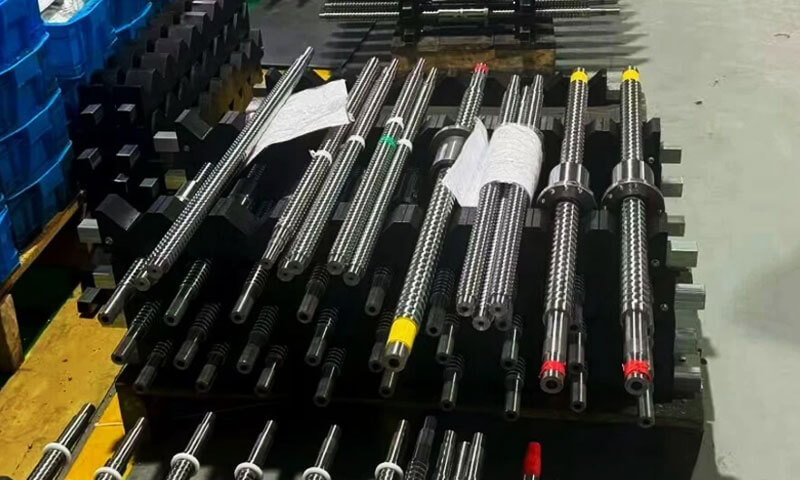
In the world of linear motion, lead screws are often the quiet workhorses—simple, maaasahan, at matipid sa gastos.
They convert rotary motion into linear motion through a threaded shaft and nut, providing a mechanical advantage that is predictable and robust.
But when standard catalog screws cannot meet the demands of a specific application, custom lead screws become the difference between a good design and a great one.
1. What Is a Lead Screw?
A lead screwis a threaded mechanical component that converts rotary motion into linear motion through the engagement of a threaded shaft and a mating nut.
As the screw rotates relative to the nut, the helical thread guides the nut along the screw’s axis, producing controlled linear displacement.
Depending on the mechanism, either the screw or the nut may rotate while the other component moves.
Lead screws are widely used in industrial automation, linear actuators, packaging equipment, mga medikal na aparato, mga instrumento sa laboratoryo, and 3D printers.
Their simple construction, compact na disenyo, relatively low cost, and ability to generate substantial axial force make them suitable for applications requiring controlled positioning or mechanical adjustment.
For custom lead screws, engineers can specify the thread profile, diameter, humantong sa, length, materyal na bagay, surface treatment, and end-machining features to match the application’s mechanical and operating requirements.
These parameters influence load capacity, positioning accuracy, Paglaban sa Pagsusuot, operating torque, and service life.
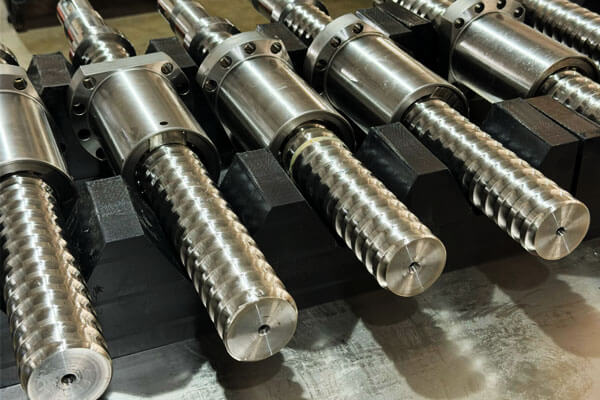
Key Terminology
- Humantong sa: Axial distance per revolution.
- Pitch: Axial distance between corresponding points on adjacent threads.
- Starts: Number of independent threads on the screw. Lead = Pitch × Starts.
- Major diameter: Outside diameter of the screw.
- Minor diameter: Root diameter of the thread.
- Backlash: Lost motion between screw and nut when direction is reversed.
- Preload: Applied force to reduce backlash.
2. Common Lead Screw Thread Types and Their Characteristics
Thread geometry determines how a lead screw carries axial loads, generates friction, engages with its nut, and responds to wear.
The correct profile depends on the required force, motion direction, manufacturing method, available nut materials, and applicable dimensional standards.
Acme Threads
Acme threads use a trapezoidal profile with a nominal 29° included thread angle under the common Acme system.
They are widely used in North American power-transmission and adjustment mechanisms.
Their relatively broad thread form provides a practical balance between strength, manufacturability, and nut compatibility.
Acme threads can be produced through thread cutting, pagulong gulong, or other suitable processes, depending on geometry and accuracy requirements.
Typical applications include machine-tool adjustments, lifting mechanisms, mga clamp, actuators, and positioning assemblies.
Manufacturing considerations:The specified Acme standard, diameter, pitch, class of fit, and nut design must be confirmed before machining.
Acme threads should not be treated as interchangeable with metric trapezoidal threads merely because both have trapezoidal profiles.
Metric Trapezoidal Threads
Metric trapezoidal threads commonly follow ISO metric trapezoidal thread specifications and use a nominal 30° included thread angle.
They are widely used in industrial equipment and motion systems designed around metric dimensions.
They are available in a range of diameters and pitches and can be customized for shaft length, humantong sa, end geometry, and material.
Metric trapezoidal threads are particularly useful when the lead screw must integrate with metric bearings, Mga Pagkabit, sumusuporta sa, and other machine components.
Square Threads
Square threads have nearly perpendicular thread flanks and a profile designed to reduce the radial force components associated with inclined thread flanks.
Their geometry can provide favorable transmission efficiency under suitable conditions.
Gayunpaman, square threads are more difficult to manufacture and inspect than many trapezoidal profiles.
Their relatively delicate geometry and specialized tooling requirements may increase production costs, particularly for small batches or complex components.
They are appropriate for selected power-transmission applications where their performance advantages justify the manufacturing complexity.
Buttress Threads
Buttress threads have an asymmetric profile designed to transmit substantial axial loads primarily in one direction.
One flank is relatively steep, while the opposite flank provides a more gradual profile for thread formation and engagement.
They are used in specialized mechanisms such as presses, clamping systems, and other applications with a dominant load direction.
The design must account for the direction of the working force, reverse loading, thread-root stress, and the contact geometry of the mating nut.
Custom Thread Profiles
Some applications require a thread profile that differs from standard Acme, metric trapezoidal, square, or buttress forms.
Custom profiles may be necessary when integrating with an existing assembly, meeting unusual load requirements, or matching a proprietary nut.
Before specifying a nonstandard profile, engineers should consider tooling availability, inspection methods, nut manufacturing, replacement-part availability, and the cost of future production.
A custom thread should solve a clearly defined engineering problem rather than introduce complexity without measurable benefit.
3. Materials for Custom Lead Screws
Material selection affects load capacity, Paglaban sa Pagsusuot, pag-uugali ng kaagnasan, machinability, dimensional na katatagan, at gastos.
A lead screw and its mating nut should be selected as a working pair rather than as independent components.
Common Lead Screw Materials
| Materyal | Key characteristics | Mga kalamangan | Mga Dapat Isaalang alang | Mga tipikal na aplikasyon |
| Carbon bakal na bakal | Good strength and machinability in suitable grades | Economical, widely available | Corrosion protection may be required | General industrial machinery |
| haluang metal bakal na bakal | Strength and hardenability vary by grade and heat treatment | Suitable for demanding loads and wear conditions | Heat treatment can affect distortion and final dimensions | Heavy-duty actuators and transmission systems |
| Stainless bakal na bakal | Corrosion resistance depends on grade and environment | Useful in humid, washdown, or corrosive conditions | Not all grades offer the same strength, tigas na tigas, o paglaban sa kaagnasan | Food-processing equipment, laboratory systems, outdoor mechanisms |
Mga haluang metal ng aluminyo |
Low density and good machinability | Magaan ang timbang, madali sa makina | Lower stiffness and wear resistance than many steels | Lightweight mechanisms and specialized low-load systems |
| tanso | Commonly used for nuts rather than long lead screw shafts | Useful sliding and wear characteristics in suitable pairings | Grade, lubrication, and load determine performance | Lead screw nuts and power-transmission components |
| Engineering Mga polimer | Low friction or corrosion-resistant behavior in suitable grades | Magaan ang timbang, potentially quiet, and suitable for dry-running designs | Gumagapang, pagpapalawak ng thermal, temperatura, and load limits must be assessed | Polymer nuts, compact actuators, laboratory equipment |
4. Manufacturing Processes for Custom Lead Screws
The appropriate manufacturing process depends on thread geometry, materyal na bagay, katumpakan ng sukat, tapos sa ibabaw, order quantity, at mga target na gastos. No single process is optimal for every custom lead screw.
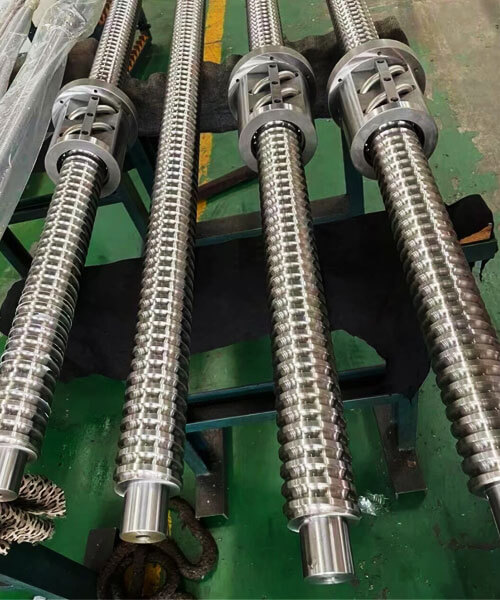
CNC Turning and Thread Cutting
CNC turning is commonly used to produce lead screw shafts, stepped diameters, bearing journals, shoulders, and end features.
Thread cutting can then generate the specified profile using suitable tooling and a controlled tool path.
This approach offers flexibility for custom dimensions, special materials, Maikling Produksyon Run, and designs with multiple machined features.
It is particularly useful when the screw requires nonstandard lengths or complex end geometry.
Gayunpaman, thread cutting removes material and does not automatically provide the same surface characteristics as cold-formed threads.
Tool condition, machine rigidity, workholding, thermal effects, and cutting parameters can all influence thread quality.
For long or slender shafts, support methods and machining sequence are especially important because cutting forces can cause deflection.
In-process measurement and suitable finishing operations help control the final dimensions.
Thread Rolling
Thread rolling forms a thread by plastically deforming the material between dies rather than cutting away the thread profile.
Under suitable conditions, this process can produce consistent threads with a favorable surface finish and a work-hardened surface layer.
Potential advantages include high production efficiency and reduced material waste.
Thread rolling is often attractive for repeat production when the material, diameter, thread profile, and tooling are compatible with the process.
Its limitations include tooling costs, restrictions associated with certain geometries and materials, and the need to control blank diameter and forming conditions.
It is not suitable for every large-diameter, mababang dami, or highly specialized lead screw.
Thread Whirling
Thread whirling uses a specialized cutting arrangement to generate helical thread forms, particularly on long or slender screw components.
Depending on the machine setup and component geometry, it can support productive machining of lead screws with demanding thread requirements.
The process requires suitable equipment, mga tooling, and setup expertise. Its cost-effectiveness depends on the thread form, screw length, materyal na bagay, and production quantity.
Thread Grinding
Thread grinding removes material using an abrasive wheel and is often selected when high thread accuracy, controlled profile geometry, or a suitable finish is required.
It may also be used after heat treatment when the component requires final dimensional correction.
Grinding generally involves higher equipment and processing costs than many conventional cutting operations.
Kaya nga, it is most appropriate when the required accuracy, material condition, or performance justifies the additional expense.
A precision-ground thread does not eliminate the need to control shaft straightness, bearing-journal dimensions, or assembly alignment. These features remain part of the overall accuracy chain.
Paggamot sa Init at Pagtatapos sa Ibabaw
Heat treatment may improve hardness, lakas ng loob, or wear resistance, depending on the material and process. Gayunpaman, it can also cause distortion or dimensional changes.
A typical manufacturing plan may therefore rough-machine the component, heat-treat it, and then perform finish machining or grinding where necessary.
Surface finishing may include polishing, Passivation, Itim na oksido, pag plating, or application-specific coatings.
The process must be compatible with the base material, mating nut, lubricant, and service environment.
Thread dimensions should be checked after operations that can alter the surface or geometry. If a coating is specified, its thickness and uniformity must be included in the dimensional planning.
5. CNC Machining and Precision Control
CNC machining plays a central role in producing custom lead screws because the shaft usually combines a threaded working section with several precision-machined end features.
A successful process must control both the helical thread geometry and the relationship between the thread axis, bearing surfaces, and drive interfaces.
Machining Sequence and Workholding
A typical production route may include material preparation, rough turning, thread machining, heat treatment if required, finish machining, deburring, surface treatment, and final inspection.
The actual sequence depends on the material, thread process, Mga kinakailangan sa pagpapaubaya, and component design.
For long shafts, workholding deserves particular attention. Excessive clamping force may distort a slender workpiece, while inadequate support can cause chatter or deflection during cutting.
Tailstock support, steady rests, suitable chucking arrangements, and carefully planned machining sequences can help maintain stability.
Where a screw requires high concentricity between the thread and bearing journals, the manufacturer should define appropriate datums and control how these features are machined relative to one another.
Critical Features and Their Manufacturing Risks
| Tampok | Why it matters | Potential manufacturing issue | Control method |
| Thread profile | Determines engagement and load transmission | Incorrect angle, depth, or root form | Suitable tooling and profile inspection |
| Humantong sa katumpakan | Influences travel per revolution | Cumulative axial positioning error | Lead measurement over a defined length |
| Major at minor Mga diameter | Affect fit and core strength | Oversize, undersize, or inconsistent thread geometry | Dimensional measurement and thread gauging |
| Shaft straightness | Influences rotation and alignment | Pagbaluktot, deflection, o natitirang stress | Controlled machining, Suporta, and straightness inspection |
Bearing journals |
Determine bearing fit and rotational support | Incorrect diameter, taper, or poor finish | Precision turning or grinding and diameter measurement |
| Shoulder positions | Control axial location of components | Incorrect bearing seating or assembly length | Datum-based machining and dimensional inspection |
| End-feature sentrisiko | Affects drive alignment and runout | Misalignment between coupling and screw axis | Consistent datum strategy and runout measurement |
| Ibabaw tapusin | Influences friction and contact behavior | Tool marks, burrs, or excessive roughness | Appropriate finishing and surface inspection |
Tolerances Must Reflect Function
A drawing should distinguish between critical functional dimensions and noncritical dimensions.
Thread lead accuracy, fit with the mating nut, bearing-journal diameter, shoulder location, and runout may require tighter controls than the overall length or nonfunctional surfaces.
The required tolerance should be defined according to the assembly’s performance needs and measurement capability.
A blanket tolerance applied to every dimension can increase cost without improving system performance.
For custom lead screws, the specification should clearly state the measurement method or applicable standard when a tolerance could be interpreted in different ways.
This is particularly important for thread lead accuracy, straightness, and custom profiles.
Deburring and Edge Quality
Burrs at thread starts, thread ends, keyways, cross-holes, and shoulders can interfere with assembly, damage mating components, or create localized stress concentrations.
Excessive deburring can also alter thread geometry or remove material from functional edges.
A controlled finishing procedure should remove unwanted burrs while preserving the specified thread form and functional dimensions.
Where assembly depends on a defined lead-in or chamfer, that geometry should be specified on the drawing rather than left entirely to operator judgment.
6. Lead Screw Accuracy, Backlash, at Pagganap
Lead screw performance is determined by several related but distinct characteristics.
Dimensional tolerance, thread lead accuracy, backlash, straightness, runout, and positioning repeatability should not be treated as interchangeable measures of precision.
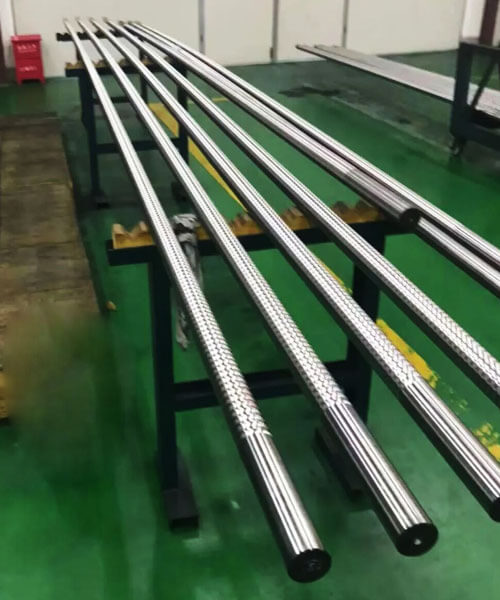
Thread Lead Accuracy
Lead accuracy describes how closely the actual axial advance per revolution follows the specified value.
Errors can accumulate over the working length, causing the nut to travel farther or less far than expected.
Halimbawa na lang, a screw may have an acceptable local thread profile but still exhibit cumulative travel error across a long stroke.
This is why measuring only the diameter or checking the thread with a simple go/no-go gauge cannot fully establish lead accuracy.
The required lead accuracy should be specified over a defined measurement length or according to the relevant standard.
The application determines whether local pitch error, cumulative lead error, or both require control.
Backlash and Lost Motion
Backlash is the axial clearance between the screw and nut that becomes apparent when the direction of motion reverses.
It can be influenced by manufacturing tolerances, magsuot ng, nut design, temperatura, and assembly conditions.
Common methods for reducing backlash include:
- Selecting a closer-fitting screw-and-nut combination.
- Using an adjustable or split-nut design.
- Applying controlled preload where appropriate.
- Replacing a worn nut or screw.
- Compensating for predictable lost motion through the motion controller, when the application permits it.
Preload can improve bidirectional positioning behavior, but it may also increase friction, driving torque, init, at magsuot ng.
The design should therefore target the lowest practical backlash consistent with the required operating life and load.
Positioning Accuracy and Repeatability
Positioning accuracy describes how closely the system reaches its intended position.
Repeatability describes how consistently it returns to the same position under comparable conditions.
A lead screw can have good repeatability while exhibiting systematic positioning error.
Sa kabilang banda, a screw with relatively low cumulative lead error may still deliver poor repeatability if backlash, friction variation, misalignment, or temperature changes are not controlled.
System performance also depends on the motor, coupling, mga bearing, mounting stiffness, encoder resolution, control strategy, and external loading.
Dahil dito, a lead screw’s thread tolerance alone cannot guarantee the positioning accuracy of the complete machine.
Kahusayan, Friction, and Self-Locking
Lead screws operate primarily through sliding contact, so friction is an important part of their behavior.
Efficiency depends on the thread profile, lead angle, friction coefficient, lubrication, nut material, and load.
Some lead screw designs can resist back-driving under specific conditions, but self-locking should never be assumed solely because a component is a lead screw.
The behavior depends on thread geometry and friction and can change with lubrication, magsuot ng, panginginig ng boses, or operating conditions.
For lifting, hawak ang, or safety-critical applications, the design should independently evaluate back-driving and incorporate a suitable brake or other load-holding mechanism where required.
Wear, Pagpapadulas, and Service Life
Wear develops at the sliding interface between the screw and nut. Its rate depends on contact pressure, sliding speed, tapos sa ibabaw, material pairing, lubrication, kontaminasyon, and duty cycle.
Lubrication can reduce friction and wear when the selected lubricant is compatible with the materials, temperatura, environment, and operating method.
Some polymer nuts are designed for dry-running conditions, but their load and temperature limits still require verification.
A useful service-life assessment considers not only material hardness but also the nut’s wear behavior, shaft finish, pagkakahanay, and maintenance requirements.
In dusty or abrasive environments, effective protection against contamination can be as important as the initial material selection.
7. Applications of Custom Lead Screws
Custom lead screws are used in equipment that requires controlled linear movement, adjustable positioning, or mechanical force transmission.
Their design varies significantly according to the application, particularly in terms of load, travel speed, backlash, paglaban sa kaagnasan, and expected operating life.
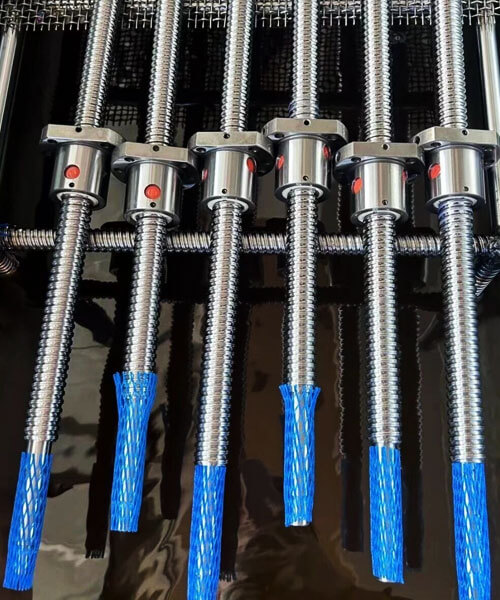
Industrial Automation and Linear Actuators
Automated machinery uses lead screws for positioning slides, adjusting fixtures, operating compact actuators, and controlling mechanical movements.
Custom lead screws allow equipment manufacturers to specify the stroke, humantong sa, mounting interfaces, and nut configuration required by a particular machine.
For frequently cycled systems, engineers should prioritize wear resistance, stable running torque, backlash control, and appropriate lubrication.
High-speed applications also require evaluation of critical speed, support stiffness, and heat generation.
CNC Equipment and Precision Positioning Systems
Lead screws can be used in selected machine adjustments, auxiliary axes, tool-positioning mechanisms, and compact positioning stages.
The required precision depends on the function: a manual adjustment mechanism may tolerate more backlash than an automated axis that repeatedly reverses direction.
For positioning applications, the design should define lead accuracy, straightness, end-feature concentricity, nut clearance, and the required system-level repeatability.
Where high speed, high stiffness, and high efficiency dominate the requirements, a ball screw may be a more appropriate solution.
Packaging and Assembly Machinery
Packaging and assembly equipment often uses lead screws to adjust guides, change product formats, position components, and regulate mechanical settings.
These applications may require repeated adjustments, compact packaging, and reliable operation under exposure to dust or cleaning agents.
Custom end machining can simplify integration with handwheels, Mga Pagkabit, mga bearing, and mounting brackets.
Material and surface-treatment selection should reflect the actual operating environment and maintenance procedure.
Kagamitan sa Medikal at Laboratoryo
Laboratory instruments and selected medical devices may use lead screws for sample positioning, height adjustment, dosing mechanisms, and controlled movement.
Depending on the equipment, important requirements may include smooth motion, low operating noise, compact dimensions, paglaban sa kaagnasan, and consistent repeatability.
The selected material and lubricant must be compatible with the cleaning regime and surrounding components.
Where the equipment is subject to regulatory or cleanliness requirements, applicable material, Traceability, and documentation requirements should be defined before production.
3D Printers and Compact Motion Systems
Some 3D printers and compact motion systems use lead screws to move platforms or adjust components along a linear axis.
Design priorities include compactness, mababang alitan, consistent movement, and sufficient stiffness.
The appropriate lead depends on the desired travel per revolution, motor characteristics, required positioning resolution, and operating speed.
A finer lead can provide greater mechanical displacement reduction per motor revolution, but the actual achievable positioning resolution also depends on motor control, backlash, tigas na tigas, and other system factors.
Heavy-Duty Adjustment and Industrial Equipment
Lead screws are also used in clamps, Pindutin ang mga pindutin, lifting mechanisms, and heavy-duty adjustment systems.
These applications require careful assessment of axial load, core diameter, thread contact pressure, support conditions, and possible back-driving.
Where a lead screw supports a suspended or hazardous load, the design must include appropriate load-holding provisions and safety measures.
A screw’s frictional resistance alone should not be treated as a guaranteed safety lock.
8. Common Pitfalls and How to Avoid Them
Many lead screw problems originate from incomplete specifications or a mismatch between the component and its operating conditions.
Addressing these issues during design is generally more economical than correcting them after installation.
Selecting a Screw by Diameter Alone
A larger diameter may increase stiffness and core strength, but it does not automatically guarantee the required load capacity, katumpakan, or service life.
Thread form, minor diameter, material condition, unsupported length, nut contact, and operating conditions also matter.
How to avoid it: Define the load, stroke, bilis, support arrangement, duty cycle, and required life before finalizing the diameter.
Check tensile or compressive stress, buckling, and thread contact conditions as applicable.
Confusing Pitch with Lead
Using pitch as though it were the linear travel per revolution can produce an incorrect speed calculation or an incompatible design.
This is especially important for multi-start threads, where lead is greater than pitch.
How to avoid it: State pitch, humantong sa, and number of starts separately on the drawing or technical specification. Verify that the nut and screw use the same thread system and geometry.
Specifying Tight Tolerances Without a Functional Reason
Overly restrictive tolerances can increase machining time, inspection costs, and rejection risk without improving the finished machine’s performance.
How to avoid it: Identify critical functional dimensions and apply tighter tolerances only where necessary.
Define lead accuracy, fit, straightness, runout, and end-feature tolerances according to the assembly requirements.
Ignoring Backlash and Reversal Behavior
A mechanism may move accurately in one direction but show lost motion when the direction reverses.
This can be caused by nut clearance, magsuot ng, mounting flexibility, or other sources of mechanical play.
How to avoid it: Specify the allowable backlash and the operating conditions under which it must be achieved.
Consider an adjustable or preloaded nut where justified, while accounting for the associated friction, torque, at magsuot ng.
Choosing Incompatible Screw and Nut Materials
A material combination that performs well under low loads may experience excessive wear, galling, gumagapang, or thermal problems under different operating conditions.
How to avoid it: Evaluate the screw and nut together. Consider contact pressure, sliding speed, lubrication, temperatura, kontaminasyon, pagkakalantad sa kemikal, and expected service life.
Overlooking Shaft Support and Alignment
Even a well-machined screw can produce vibration, uneven wear, or inconsistent torque when installed with poor alignment or inadequate support.
How to avoid it: Design the bearing arrangement early, control the relationship between the thread axis and functional end features, and inspect straightness and runout where required.
Check the assembled system rather than relying exclusively on individual-part measurements.
Failing to Plan for Lubrication and Contamination
Inadequate lubrication or the ingress of abrasive particles can accelerate wear and increase friction.
Sa kabilang banda, an unsuitable lubricant can damage polymer nuts, contaminate a process, or create incompatibility with the operating environment.
How to avoid it: Define lubrication and protection requirements before production.
Consider covers, bellows, mga tatak, maintenance intervals, and material-compatible lubricants where appropriate.
9. Pangwakas na Salita
Custom lead screws are a precision-engineered solution for applications where standard screws cannot meet the demands of load, bilis, katumpakan, or environment.
By understanding thread geometry, pagpili ng materyal, mga proseso ng pagmamanupaktura, at kontrol sa kalidad, engineers and buyers can specify lead screws that deliver reliable, long-life performance.
The key is early collaboration with a machining expert. A supplier who understands both the design intent and the manufacturing realities can recommend the right thread form, materyal na bagay, and precision grade—and avoid the costly pitfalls that come from guesswork.
Mga FAQ
What Is the Difference Between Pitch and Lead?
Pitch is the axial distance between adjacent corresponding thread points, while lead is the axial distance traveled during one full revolution.
For a single-start screw, lead and pitch are equal. For a multi-start screw, lead equals pitch multiplied by the number of starts.
Which Thread Type Is Best for a Custom Lead Screw?
There is no universally best thread type. Acme and metric trapezoidal threads are common choices for industrial power transmission because they balance strength and manufacturability.
Square threads may suit specialized applications requiring favorable transmission efficiency, while buttress threads are designed for substantial axial loading primarily in one direction.
Selection should account for load, bilis, fit, nut design, manufacturing capability, at gastos.
How Can Backlash in a Lead Screw Be Reduced?
Backlash can be reduced through appropriate screw-and-nut tolerances, adjustable nuts, split-nut designs, or controlled preload.
The choice depends on the required positioning performance and acceptable friction.
Excessive preload can increase driving torque, init, at magsuot ng, so the design should balance lost motion against service life.
How Can the Service Life of a Lead Screw Be Improved?
Service life can be improved by selecting a compatible screw-and-nut material pair, controlling contact pressure, ensuring proper alignment, using suitable lubrication, and protecting the thread from contamination.
Operating within the design’s load and speed limits and inspecting wear periodically can also help prevent premature failure.
For demanding applications, service-life expectations should be established through engineering analysis and, where necessary, representative testing.
Can I use a lead screw vertically without a brake?
A single-start lead screw with a low lead angle is often self-locking and can hold a vertical load without a brake. Multi-start screws are generally not self-locking and may require a brake.

