V průmyslových odvětvích, kde provozní teploty běžně přesahují 500 °C – výroba energie, petrochemické zpracování, kosmonautika, a operace průmyslových pecí – standardní materiály rychle selhávají.
Běžné uhlíkové oceli oxidují a okují. Dokonce i mnoho konvenčních nerezových ocelí ztrácí svou pevnost a odolnost proti korozi, když je vystaveno dlouhodobému tepelnému působení. Toto je místo tepelně odolná nerezová ocel se stává nepostradatelným.
Žáruvzdorné nerezové oceli jsou specializovanou skupinou slitin navržených tak, aby byla zachována jejich mechanická integrita, odolnost proti korozi, and dimensional stability at elevated temperatures.
Unlike standard stainless steels, which are primarily designed for corrosion resistance at ambient conditions, heat resistant grades are formulated to resist oxidation, plíží se, Tepelná únava, and microstructural degradation at temperatures that would destroy lesser materials.
1. Co je tepelně odolná nerezová ocel?
Tepelně odolný nerez is a group of stainless steel grades specifically selected or developed for operation at elevated temperatures.
Their principal requirements include resistance to high-temperature oxidation, retention of useful mechanical strength, and stability under prolonged thermal exposure.
Conventional stainless steels are often selected primarily for corrosion resistance in aqueous environments. Heat-resistant grades place greater emphasis on performance in hot gases, furnace atmospheres, combustion products, and other elevated-temperature environments.
Role Chromia
Chrom je nezbytný pro výkon většiny tepelně odolných nerezových ocelí.
Při zvýšených teplotách v oxidujícím prostředí, podporuje tvorbu oxidových usazenin bohatých na chrom, které mohou omezit další difúzi kyslíku do kovu.
Když vodní kámen zůstane spojitý a přilnavý, působí jako ochranná bariéra.
Pokud praskne, praskne, nebo se stane chemicky nestabilní, oxidace může urychlit a vést k postupné ztrátě materiálu.
Účinnost této ochranné vrstvy závisí na obsahu chromu, teplota, složení plynu, doba vystavení, a schopnost slitiny udržovat přilnavost okují během tepelného cyklování.
Role niklu
Nikl je zvláště důležitý v austenitických žáruvzdorných nerezových ocelích. Stabilizuje austenitickou mikrostrukturu a přispívá k mechanickému výkonu při zvýšených teplotách, včetně odolnosti proti tečení.
Nikl také ovlivňuje chování slitiny během tepelného cyklování a v určitých vysokoteplotních korozivních atmosférách.
Jeho přínos je zvláště cenný u komponent pracujících při trvalém zatížení, kde záleží jak na odolnosti proti oxidaci, tak na dlouhodobé rozměrové stabilitě.
Příspěvek dalších legujících prvků
Další prvky pomáhají přizpůsobit žáruvzdorné nerezové oceli pro specifické provozní podmínky.
| Legující prvek | Hlavní příspěvek | Technická úvaha |
| Chromium (Cr) | Podporuje odolnost proti oxidaci prostřednictvím ochranné tvorby oxidů | K udržení ochranného kamene musí zůstat dostatek chromu |
| Nikl (V) | Stabilizuje austenit a přispívá k pevnosti při vysokých teplotách | Zvyšuje náklady na materiál a může ovlivnit výkon v určitých prostředích bohatých na síru |
| Křemík (A) | Může zlepšit tvorbu ochranného kamene a odolnost proti oxidaci | Jeho přínos závisí na složení slitiny a provozní atmosféře |
| Uhlík (C) | Může přispívat k pevnosti při vysokých teplotách prostřednictvím tvorby karbidů | Nadměrné nebo nekontrolované srážení karbidů může snížit tažnost a místní odolnost proti korozi |
| Titan (Z) | Stabilizuje vybrané stupně proti určitým formám senzibilizace | Stabilizace nevylučuje všechny mechanismy vysokoteplotní degradace |
| Niobium (NB) | Podporuje stabilizaci a vysokoteplotní pevnost ve vybraných jakostech | Důležité je složení specifické pro jakost a tepelné zpracování |
Konečné složení slitiny musí tyto vlastnosti vyvážit.
Zvýšení jednoho prvku automaticky nezlepší každou vlastnost, protože odolnost proti oxidaci, síla dotvarování, Tepelná stabilita, a výrobní chování může reagovat odlišně na změny složení.
2. Vysokoteplotní degradační mechanismy
Understanding how metals deteriorate under elevated temperatures is essential for selecting suitable heat-resistant alloys.
V průmyslových pecích, petrochemické zařízení, heat-treatment systems, and high-temperature process machinery, components may experience oxidation, plíží se, Karburizační karburizace, and sulfidation simultaneously.
The severity of each mechanism depends on temperature, stres, doba vystavení, Složení slitiny, and the surrounding atmosphere.
Oxidace a odlupování vodního kamene
Při zvýšených teplotách, metals react with oxygen in the surrounding atmosphere to form oxide scales.
Many heat-resistant stainless steels rely on a chromium-rich oxide layer to slow further oxidation.
When this layer remains continuous and adherent, it can provide effective protection to the underlying metal.
Under severe thermal cycling, však, differences in thermal expansion between the oxide scale and the metal substrate can generate substantial stresses.
Oxide growth stresses, teplotní gradienty, and inadequate scale adhesion can further contribute to cracking and spalling.
Once the protective scale breaks away, fresh metal becomes exposed to the atmosphere, allowing oxidation to continue and potentially accelerating material loss.
The resistance of a heat-resistant alloy to oxidation therefore depends not only on its chromium content, but also on its ability to form and maintain a stable protective scale under actual operating conditions.
Creepová deformace
Creep is the time-dependent, permanent deformation of a material subjected to sustained stress, zejména při zvýšených teplotách.
It becomes increasingly important when the operating temperature is sufficiently high relative to the material’s absolute melting temperature.
A homologous temperature of approximately (0.4T_m), s (T_m) expressed in kelvin, is often used as a general reference, although the practical threshold varies with the alloy, aplikovaný stres, and service duration.
Depending on the material and operating conditions, creep can involve dislocation motion, diffusion-related processes, and grain boundary deformation.
Over extended service, the resulting strain may cause pipes to sag, furnace fixtures to distort, or load-bearing components to lose dimensional stability.
V těžkých případech, progressive creep damage can lead to crack formation and eventual rupture.
For components operating under sustained loads at high temperatures, alloy selection must therefore consider creep strength and long-term dimensional stability rather than relying solely on room-temperature tensile properties.
Nauhličování a prášení kovů
In carbon-rich industrial atmospheres, carbon can diffuse into a metal and react with alloying elements to form carbides.
Tento proces, known as carburization, can alter the material’s microstructure, reduce ductility, and promote local depletion of chromium when chromium carbides form. Such chromium depletion may impair the alloy’s ability to maintain a protective chromium-rich oxide scale.
Metal dusting is a distinct but related form of degradation associated with certain carbon-rich, low-oxygen-potential environments.
Under susceptible conditions, the metal can break down into fine particles accompanied by carbon deposition, resulting in severe localized material loss.
These mechanisms are particularly relevant to selected petrochemical and chemical-processing equipment exposed to carbonaceous process gases.
Suitable alloy selection requires consideration of carbon activity, provozní teplota, atmosphere composition, and the ability of the alloy to maintain protective surface films.
Sulfidace
Sulfidation occurs when metals react with sulfur-containing species in high-temperature environments, producing metal sulfides on or beneath the surface.
Depending on the alloy and atmosphere, these sulfide layers may provide less effective protection than stable oxide scales, allowing corrosion to progress more rapidly.
Sulfidation can be particularly important in petrochemical processing, spalovací systémy, and industrial equipment exposed to sulfur-bearing gases or deposits.
The rate of attack depends on temperature, sulfur potential, složení plynu, and alloy chemistry.
Selecting an appropriate heat-resistant alloy therefore requires evaluating the actual process atmosphere rather than considering operating temperature alone.
Where oxidation, Karburizační karburizace, and sulfidation risks overlap, both the alloy composition and the stability of its protective surface layers must be considered.
Tepelná únava a tepelný šok
Thermal fatigue results from repeated temperature changes that generate cyclic stresses within a component.
Thermal shock involves more abrupt temperature changes that create steep thermal gradients and potentially high localized stresses.
These effects are especially relevant to furnace fixtures, sálavé trubice, koše na tepelné zpracování, and equipment that repeatedly undergoes heating and cooling.
Ostré rohy, náhlé změny tloušťky stěny, welded joints, and constrained sections can increase local stress concentrations.
Appropriate geometry, controlled heating and cooling rates, and suitable alloy selection help reduce the risk of cracking.
3. Hutní klasifikace & Třídy slitiny jádra
Heat-resistant stainless steels are commonly classified by their microstructure into austenitic and ferritic grades, each offering different combinations of oxidation resistance, Síla vysoké teploty, and resistance to specific furnace atmospheres.
The appropriate grade depends on operating temperature, tepelné cyklování, mechanické zatížení, and exposure to oxidizing or sulfur-bearing gases.
Porovnání hlavních tříd tepelně odolných nerezových ocelí
| Stupeň | Americké označení | Mikrostruktura | Approximate Oxidation-Service Reference | Key Characteristics and Applications |
| 309 / 309S | S30900 / S30908 | Austenic | Around 1,000°C in suitable oxidizing conditions | Higher chromium and nickel contents than 304 provide improved scaling resistance. Used for furnace equipment, annealing boxes, baffle plates, and heat-treatment fixtures. |
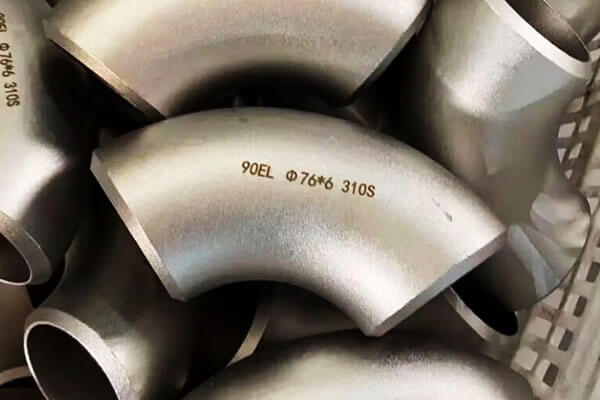
| 310 / 310S | S31000 / S31008 | Austenic | Around 1,050°C under suitable conditions | High chromium and nickel contents support oxidation resistance and high-temperature strength. Used for furnace components, koše na tepelné zpracování, and selected heat-exposed industrial equipment. |
| 314 | S31400 | Austenic | Up to approximately 1,150°C in suitable conditions | High chromium and nickel contents, combined with elevated silicon, support oxidation resistance. Used for furnace equipment, grates, and heat-treatment fixtures. |
253 MA |
S30815 | Austenic | Approximately 1,100–1,150°C, depending on conditions | Designed for oxidation and creep resistance, including cyclic service. Used for radiant tubes, přípravky pece, rotační pece, and power-generation components. |
| 409 | S40900 | Ferritic | Primarily lower-temperature exhaust duty rather than the most severe furnace environments | Titanium-stabilized grade with economical oxidation resistance. Commonly used for automotive exhaust pipes, tlumiče, and related components. |
| 446 | S44600 | Ferritic | Up to approximately 1,090°C in suitable oxidation conditions | High chromium content provides strong oxidation and resistance to certain sulfur-bearing environments, but elevated-temperature mechanical strength is comparatively limited. Used for furnace parts, dampers, rekuperátory, and combustion equipment. |
These temperatures are approximate oxidation-resistance references, not universal maximum operating limits.
Actual service capability depends on atmosphere composition, continuous or cyclic exposure, mechanické zatížení, geometrie součásti, and the specific product condition.
4. Klíčové vlastnosti tepelně odolné nerezové oceli
The performance of heat resistant stainless steel depends on a combination of chemical composition, mikrostruktura, high-temperature mechanical behavior, and the stability of protective surface scales.
Oxidační rezistence na vysokou teplotu
Oxidation resistance is one of the defining characteristics of heat resistant stainless steel.
Chromium helps form a protective oxide scale, while silicon and other alloying elements can influence scale structure and stability.
The effectiveness of this scale depends on its continuity, přilnavost, and ability to remain protective under changing temperature and atmospheric conditions.
When evaluating a grade, engineers should distinguish between continuous oxidation resistance and performance under thermal cycling.
A component exposed to a relatively stable furnace temperature may experience different scale behavior from one that is repeatedly heated and cooled.
Síla tečení a dlouhodobá stabilita
Při zvýšených teplotách, a material may gradually deform under a load that it could withstand for a short period without failure.
Creep properties are therefore critical for furnace supports, sálavé trubice, suspended fixtures, and other components exposed to sustained mechanical stress.
Material selection should use relevant creep data at the expected temperature and stress level.
In applications where dimensional stability is critical, the design must consider cumulative deformation over the entire service life, not merely short-term strength.
Odolnost proti tepelné únavě
Thermal fatigue resistance is important for components subjected to repeated temperature fluctuations.
Austenitic and ferritic grades have different thermal expansion behavior, which affects the stresses generated during heating and cooling.
Austenitic stainless steels commonly exhibit higher thermal expansion and lower thermal conductivity than carbon steels, making distortion control especially important during fabrication and welding.
Practical measures include avoiding unnecessary stress concentrations, controlling section transitions, selecting suitable weld sequences, and managing heating and cooling rates.
Odolnost vůči agresivním atmosférám
High-temperature corrosion depends heavily on the surrounding gas chemistry.
| Prostředí | Main Risk | Material Selection Priority |
| Oxidizing atmosphere | Scale growth and spalling | Stable protective oxide scale |
| Carbon-rich atmosphere | Carburization and possible metal dusting | Resistance to carbon uptake and the specific process atmosphere |
| Sulfur-bearing atmosphere | Sulfidation and hot corrosion | Compatibility with sulfur potential and oxygen potential |
| Opakované tepelné cyklování | Oxide-scale damage and thermal fatigue | Scale adhesion and thermal-cycle performance |
| High temperature under sustained load | Creep and rupture | Long-term mechanical strength |
No single grade is optimal for all these conditions. When several degradation mechanisms occur simultaneously, selection should be based on the combined environment rather than a single property such as chromium content.
Výroba a majitelnost
Heat resistant stainless steels can be formed, obrobeno, a svařeno, but their fabrication behavior differs by grade.
Austenitic grades tend to work harden and can distort during welding because of their thermal expansion and conductivity characteristics.
Ferritic grades may present different forming limitations and can become embrittled under unsuitable thermal exposure.
Pro přesné díly, fabrication planning should include material condition, forming sequence, weld procedure, přídavek na obrábění, and dimensional inspection.
V mnoha aplikacích, controlling residual stresses and distortion is as important as meeting the nominal material specification.
5. Výroba a výroba tepelně odolných součástí z nerezové oceli
The manufacturing process has a direct impact on the dimensional accuracy, mikrostruktura, and high-temperature performance of heat resistant stainless steel components.
Obsazení, formování, obrábění, svařování, and heat treatment must be selected according to the alloy grade, geometrie součásti, and intended service conditions.
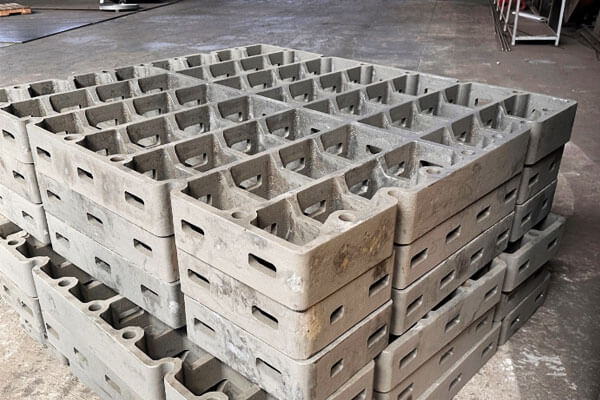
Přesné obsazení
Precision casting is suitable for manufacturing heat resistant stainless steel components with complex geometries, vnitřní pasáže, or large cross-sections.
| Proces obsazení | Popis | Typické aplikace |
| Písek Obsazení | Flexible process suitable for large and complex components, with relatively low tooling costs | Komponenty pece, tělesa ventilu, tepelně odolná pouzdra |
| Investice Obsazení | Uses wax patterns and ceramic shells to produce intricate shapes with good dimensional accuracy | Complex furnace fixtures, precision heat-resistant components |
| Odstředivý Obsazení | Uses mold rotation to distribute molten metal, making it suitable for tubular and cylindrical components | Zářivé trubice, reformer tubes, furnace rollers |
| Shell Lití | Uses resin-bonded sand shells to achieve good surface finish and dimensional consistency | Small and medium-sized furnace components and precision castings |
Casting quality depends on controlled melting, nalévání, Design plísní, tuhnutí, a prevence defektů.
The process should be selected according to component size, geometrie, vlastnosti slitiny, and required inspection level.
Formování
Heat resistant stainless steels can be hot formed or cold formed, v závislosti na stupni, required geometry, a stavu materiálu.
| Forming Process | Popis | Klíčové úvahy |
| Hot Formování | Forms the material at elevated temperatures to reduce deformation resistance | Typical working temperatures vary by grade; control heating, forming temperature, and subsequent cooling to prevent excessive grain growth or undesirable phase formation |
| Studený Formování | Shapes the material at or near room temperature | Austenitic grades can work-harden rapidly, increasing forming loads and the risk of cracking |
| Hluboký Výkres | Produces cup-shaped or hollow components from sheet metal | Ductile austenitic grades are often suitable, subject to material thickness, nástroje, and draw ratio |
| Ohýbání | Forms angles, křivky, and other profiles | Account for springback, Kalení práce, minimum bend radius, a poškození povrchu |
For hot forming, a broad temperature range of approximately 900–1,200°C may be relevant to certain grades and operations, but it should not be applied universally.
The approved working range must follow the specific alloy’s processing recommendations.
Obrábění
Heat resistant stainless steels can be difficult to machine because many grades combine relatively high strength, houževnatost, Kalení práce, a nízká tepelná vodivost.
Heat generated during cutting can concentrate near the cutting edge, Zrychlení opotřebení nástroje.
| Machining Parameter | General Recommendation | Klíčové úvahy |
| Nástroj Materiál | Povlakovaný karbid; cermets may be suitable for selected finishing operations | Choose tool grade and coating according to the alloy and operation |
| Řezání Rychlost | Approximately 60–120 m/min as an initial reference for certain carbide operations | Some heat-resistant grades require lower speeds; follow tooling recommendations and validate the conditions |
| Krmivo Hodnotit | Approximately 0.1–0.3 mm/rev as a starting reference for suitable turning operations | Adjust for insert geometry, workpiece stiffness, povrchová úprava, a hloubka řezání |
Hloubka řezu |
Roughing: approximately 1–3 mm; dokončení: approximately 0.2–0.5 mm | Depends on component geometry, machine rigidity, tool setup, and stock allowance |
| Chladicí kapalina | Flood coolant where appropriate | Supports heat removal, mazání, a evakuaci čipů |
| Work Kalení Řízení | Use sharp tools and maintain a consistent feed | Avoid prolonged rubbing, dwell, and repeated cutting over hardened surfaces |
These machining values are indicative starting points rather than universal parameters.
Actual cutting conditions should be established according to the grade, schopnost stroje, tooling manufacturer’s recommendations, and required surface quality.
Svařování
Welding may be required when heat resistant stainless steel components include fabricated assemblies or welded connections.
The welding procedure must account for alloy composition, společný design, provozní teplota, and the potential effects of the heat-affected zone.
| Welding Aspect | General Recommendation | Klíčové úvahy |
| Svařování Procesy | GTAW (TIG), Gawn (MĚ), or SMAW, as appropriate | Select the process according to component thickness, joint geometry, a výrobní požadavky |
| Tyč Kov | Compatible filler selected for the base grade and service conditions | Například, ER310 may be appropriate for certain 310-grade joints; confirm through the qualified welding procedure |
| Předehřívání | Generally not required for many austenitic grades | Requirements depend on the alloy, Tloušťka sekce, joint restraint, and approved procedure |
Teplota interpassu |
A limit of approximately 150°C may be used where specified | The maximum should be established by the welding procedure and material requirements |
| Post-Weld Teplo Zacházení | Not routinely required for many austenitic grades | Apply only where the grade, servisní podmínky, kód, or qualified procedure requires it |
| Back Purging | Argon or another specified inert gas for root protection where required | Helps prevent excessive oxidation on the root side of stainless steel welds |
Správné čištění, ovládání tepelného příkonu, filler-metal selection, and inspection are essential.
For components exposed to severe high-temperature service, the welding procedure should be qualified for the actual alloy and operating conditions.
Tepelné zpracování
Heat treatment may be used to establish the required material condition, restore corrosion resistance where applicable, stabilize the microstructure, or address residual stresses.
The correct treatment depends on the alloy grade and manufacturing history.
| Heat-Treatment Process | Typical Temperature or Condition | Purpose and Considerations |
| Řešení Žíhání | Approximately 1,040–1,150°C for many austenitic grades | Dissolves carbides and restores the intended microstructure. Rapid cooling is required where specified by the grade and procedure |
| Stres Relief | Stupeň- and procedure-specific | Intended to address residual stresses where appropriate. A temperature of 300–400°C should not be treated as a universal stress-relief cycle |
Stabilizační léčba |
Approximately 850–900°C for certain stabilized grades, subject to specification | Used for grades such as 321 nebo 347 to promote stabilization through titanium- or niobium-containing carbides |
| Homogenizace | May involve approximately 1,100–1,200°C for selected cast alloys | Used only where appropriate to the alloy and qualified procedure; time and temperature depend on casting composition and section thickness |
Heat treatment must be selected carefully because excessive temperature, unsuitable holding time, or improper cooling can cause grain growth, zkreslení, or undesirable phase formation.
For heat resistant stainless steel components, grade-specific procedures and controlled cooling are essential to achieving consistent properties and reliable high-temperature performance.
6. Běžné aplikace tepelně odolné nerezové oceli
Heat resistant stainless steel is used wherever components must retain useful properties during prolonged exposure to elevated temperatures.
The appropriate grade depends on the operating environment and the dominant degradation mechanism.
| Průmysl | Typické komponenty | Main Requirements | Grades to Evaluate |
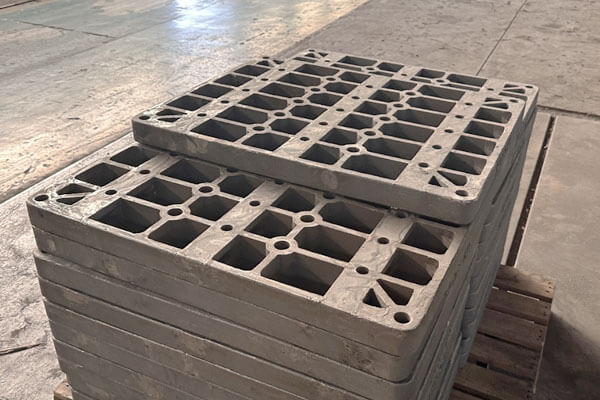
| Průmyslový pece | Podnosy, koše, Podpory, přepážky | Oxidation resistance and thermal stability | 309S, 310S, 314, 253 MA |
| Teplo zacházení | Příslušenství, annealing boxes, odsekne | Resistance to thermal cycling, oxidace, a zkreslení | 309S, 310S, 314 |
| Petrochemický zpracování | Furnace internals, sálavé trubice, selected process components | High-temperature strength and atmosphere compatibility | 310S, 314, 253 MA; specialized alloys where required |
| Moc generation | Heat-exposed supports, hadice, selected furnace components | Creep resistance and oxidation resistance | 310S, 253 MA, other application-specific grades |
Automobilový průmysl |
Exhaust pipes, tlumiče, tepelné komponenty | Oxidation resistance and cost control | 409 and selected higher-temperature grades |
| Cement a minerální zpracování | Kiln-related components, hot-gas equipment | Odolnost proti oxidaci a trvanlivost tepelného cyklu | 309S, 310S, 253 MA, selected ferritic grades |
| Kov zpracování | Zařizovací předměty pece, odsekne, spalovací zařízení | Odolnost vůči horkým plynům a rozměrová stálost | 310S, 314, 446, depending on atmosphere |
Tato doporučení pro hodnocení jsou výchozími body pro hodnocení, not automatic approvals.
Například, 253 MA se používá v aplikacích včetně sálavých trubic, rotační pece, heat-treatment trays, and power-generation equipment, zatímco 409 je primárně spojen s automobilovými výfukovými systémy.
7. Závěr
Tepelně odolná nerezová ocel je nezbytná pro průmyslové komponenty, které musí spolehlivě fungovat při zvýšených teplotách.
Jeho výkon závisí na více než jmenovité teplotě. Chemie slitin, mikrostruktura, oxidační odolnost, síla dotvarování, Tepelná únava, process-gas compatibility, a kvalita výroby ovlivňují životnost.
Stupně jako 309S, 310S, 314, 253 MA, 409, a 446 nabízejí různé bilance nemovitostí.
Správná volba závisí na tom, zda je dominantním požadavkem odolnost proti oxidaci, pevnost při trvalém zatížení, stabilita tepelného cyklu, nebo odolnost vůči specifické vysokoteplotní atmosféře.
Pro inženýry a nákupní týmy, nejspolehlivější proces výběru začíná skutečnými provozními podmínkami a vyhodnocuje materiál oproti očekávaným poruchovým mechanismům.
Řízení výroby – včetně tváření, svařování, tepelné zpracování, obrábění, a kontrola – pak musí zachovat vlastnosti požadované v provozu.
Nejlepší tepelně odolná nerezová ocel nemusí být nutně třídou s nejvyšší teplotní třídou.
It is the grade that maintains the required properties in the actual operating environment throughout the intended service life.
Časté časté
Jaká je maximální provozní teplota pro žáruvzdornou nerezovou ocel?
The maximum service temperature varies by grade. Austenitické známky jako 310 and 253MA can be used up to 1,100–1,150°C.
Ferritic grades like 446 can be used up to 1,100°C. Cast grades like HW can be used up to 1,150°C.
Jaký je rozdíl mezi žáruvzdornou nerezovou ocelí a standardní nerezovou ocelí?
Heat resistant grades are formulated with higher chromium, nikl, and silicon content to resist oxidation, plíží se, and microstructural degradation at elevated temperatures. Standard grades are optimized for corrosion resistance at ambient temperature.
Která žáruvzdorná nerezová ocel má nejlepší odolnost proti oxidaci?
Grades with high chromium and silicon content, například 314, 253MA, and 353MA, offer the best oxidation resistance. These grades form a protective Cr₂O₃ + SiO₂ scale that resists spalling.
Která žáruvzdorná nerezová ocel má nejlepší pevnost při tečení?
Austenitic grades with high nickel content, například 310, 330, 253MA, and Incoloy 800H, nabízejí nejlepší pevnost při tečení. Tyto druhy si zachovávají svou pevnost při teplotách až 1 100 °C.
Lze svařovat žáruvzdornou nerezovou ocel?
Ano. Austenitické třídy jsou snadno svařitelné pomocí GTAW, Gawn, or SMAW.
Nízkouhlíkové a stabilizované druhy (NAPŘ., 310S, 321, 347) jsou preferovány pro svařované aplikace, aby se zabránilo senzibilizaci.
Jaký je rozdíl mezi 309 a 310 nerez?
309 má 22–24 % Cr a 12–15 % Ni, s maximální provozní teplotou 1 000 °C.
310 má 24–26 % Cr a 19–22 % Ni, s maximální provozní teplotou 1 100 °C. 310 nabízí lepší odolnost proti oxidaci a pevnost při tečení.
Co je 253MA, a proč se používá?
253MA je austenitická tepelně odolná nerezová ocel s 20–22 % Cr, 10-12 % In, 1.4-1,6 % Ano, a přírůstky vzácných zemin.
Nabízí vynikající odolnost proti oxidaci, síla dotvarování, a odolnost proti tepelné únavě do 1 150 °C.