Panimula
Among the myriad of manufacturing methods, two distinctly different—yet often competing—technologies stand out: investment casting and powder metallurgy (PM).
Pamumuhunan sa paghahagis, a millennia‑old process refined through modern materials science, offers unparalleled geometric freedom and alloy versatility.
Powder metallurgy, a 20th‑century innovation, delivers exceptional material efficiency, high production rates, and controlled porosity for specialized applications.
Sa unang sulyap, both processes produce near‑net‑shape metal parts with minimal machining.
But their underlying principles—solidification from molten metal versus pressure‑sintering of solid powders—lead to radically different design rules, material capabilities, mekanikal na mga katangian, and economic scales.
Choosing between these two technologies requires a comprehensive understanding of not only production costs but also mechanical requirements, geometry complexity, dami ng produksyon, pagpili ng materyal, and long-term service performance.
1. Understanding Investment Casting
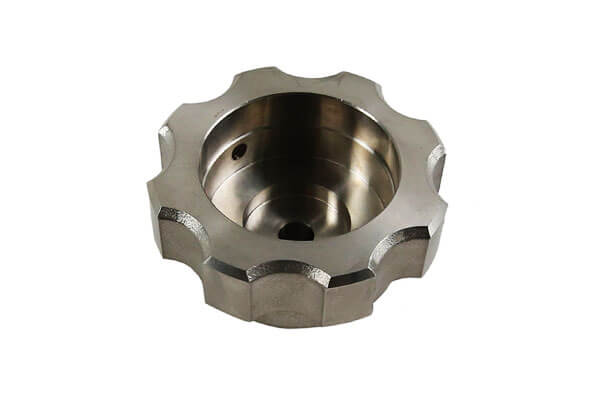
Pamumuhunan sa paghahagis, also known as lost‑wax casting, is a precision metal forming process in which a wax pattern is coated with a refractory ceramic shell, ang waks ay natunaw, and the resulting cavity is filled with molten metal.
After solidification, the ceramic shell is removed, revealing a near‑net‑shape metal component with exceptional surface finish and dimensional accuracy.
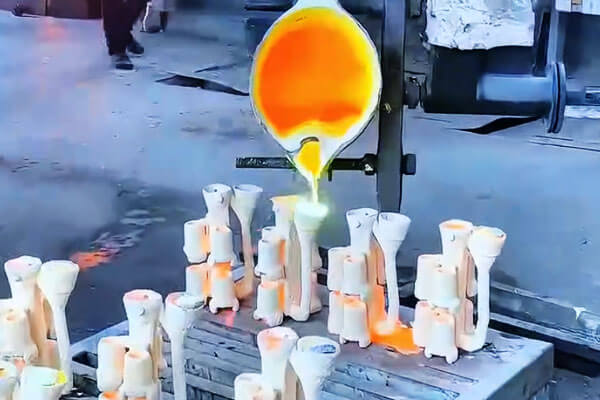
The process dates back over 5,000 years to ancient civilizations in Egypt, Tsina, and Mesopotamia, where it was used for bronze statues and jewellery.
Ngayong araw, it is a high‑technology manufacturing method for aerospace turbine blades, medikal na implants, firearm components, and industrial valves.
Process Fundamentals
| Yugto | Hakbang | Key detail |
| 1 | Pattern production | Wax (or thermoplastic) injected into precision metal die (tool). |
| 2 | Tree assembly | Multiple patterns attached to a central sprue (wax tree). |
| 3 | Shell building | 6‑10 layers of ceramic slurry (silica sol) + refractory stucco (zircon/alumina). |
| 4 | Dewaxing | Steam autoclave melts wax; shell remains hollow. |
| 5 | Shell firing | 900‑1100°C firing to strengthen ceramic and remove volatiles. |
| 6 | Natutunaw na & pagbuhos | Metal melted in induction furnace; poured into pre‑heated shell. |
| 7 | Knockout & cut‑off | Shell removed by vibration; components cut from tree. |
| 8 | Pagtatapos | Paggiling, pagsabog ng baril, paggamot ng init, NDT inspection. |
Mga Pangunahing Katangian
| Tampok | Paglalarawan |
| Heometriya | Very high complexity; mga undercuts, panloob na mga talata, manipis na pader (≥0.5 mm). |
| Email Address * | As‑cast Ra 1.6‑6.3 µm; can be polished to Ra <0.4 M. |
| Pagpaparaya | ±0.1‑0.3 mm per 25 mm tipikal. |
| Mga Materyal | Almost any castable alloy: carbon bakal, hindi kinakalawang, mga superalloys, titan, aluminium, tanso. |
| Part size | Grams to ~150 kg (bakal na bakal). |
| Dami | Matipid mula sa 100 sa 10,000+ Mga Bahagi / Taon. |
| Scrap | Minimal (near‑net shape). |
2. Understanding Powder Metallurgy
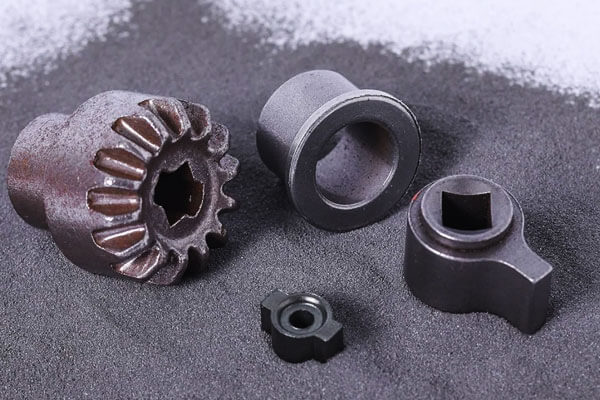
Powder metallurgy is a manufacturing process in which fine metal powders are compacted (pressed) in a rigid die and then heated (sintered) below the melting point to bond the particles into a solid component.
Unlike investment casting—which involves a liquid‑to‑solid phase change—PM is a solid‑state process that retains the powder’s chemical and microstructural features.
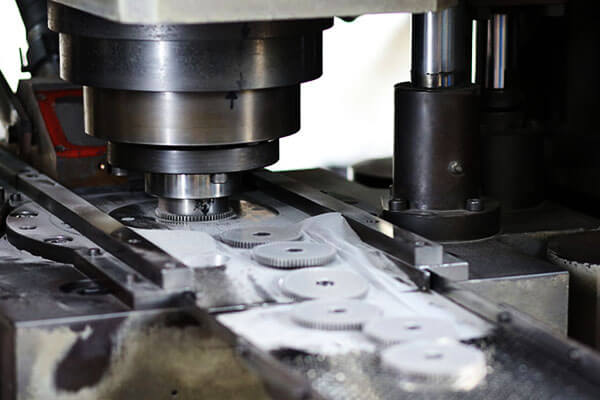
The modern PM industry emerged in the 1920s with the production of self‑lubricating bearings and tungsten lamp filaments.
Ngayong araw, it is a mature, high‑volume manufacturing technology, with the automotive industry consuming over 70% of all ferrous PM parts globally.
Process Fundamentals
| Yugto | Hakbang | Key detail |
| 1 | Powder production | Water or gas atomisation, electrolysis, reduction; controlled particle size/shape. |
| 2 | Blending | Powders mixed with lubricants (0.5‑1.5%) and alloy additions (hal., grapayt). |
| 3 | Pag-compaction (pagpindot sa) | Uniaxial pressing in rigid die; pressure 200‑800 MPa; green density 70‑85%. |
| 4 | Pag-iiskrima | Heating in controlled atmosphere (endothermic gas, N₂‑H₂) to 70‑90% of melting point (typically 1120‑1150°C for iron). |
| 5 | Optional secondary ops | Sizing, pag-barya, paggamot ng init, pagpasok, machining, resin impregnation. |
Mga Pangunahing Katangian
| Tampok | Paglalarawan |
| Heometriya | Moderate complexity (2D shapes); limited undercuts; restricted draft angles. |
| Email Address * | As‑sintered Ra 3‑12 µm; can be improved by sizing/coining. |
| Pagpaparaya | ±0.05‑0.1 mm per 25 mm (after sizing). |
| Mga Materyal | Primarily ferrous (bakal, bakal na bakal, hindi kinakalawang), copper‑based, mga tungsten, at mga espesyal na haluang metal. Titanium and aluminium are possible but less common. |
| Part size | Karaniwan <10 kg, <300 mm diameter. |
| Dami | Matipid mula sa 5,000 to millions of parts/year. |
| Scrap | >95% material utilisation. |
3. Manufacturing Principles: How the Processes Differ
| Aspeto | Pamumuhunan sa Paghahagis | Powder Metallurgy |
| Starting material | Tinunaw na metal (liquid phase). | Metal powder (solid phase). |
| Phase change | Liquid → Solid (pagpapatibay). | Solid → Solid (diffusion bonding). |
| Energy source | Heat for melting + pagbuhos. | Presyon + init (pag-sinter). |
| Mold requirement | Single‑use ceramic shell (Bawat bahagi). | Reusable metal die (thousands of cycles). |
| Oras ng pag-ikot | Hours (shell building) to days. | Seconds (pagpindot sa) + mga oras (sintering batch). |
| Tooling cost | Katamtaman (wax dies $5‑20k). | Mataas na (press dies $10‑50k). |
| Labour intensity | Mataas na (shell building is manual). | Mababa ang (automated pressing). |
| Dimensional control | Via shell shrinkage + wax pattern. | Via die precision + sintering shrinkage. |
Fundamental difference: Investment casting is a net‑shape precision casting proseso ng; PM is a powder consolidation proseso ng.
The former offers near‑infinite geometric freedom; the latter offers near‑infinite material efficiency.
4. Materials Compatibility and Alloy Flexibility
| Material family | Pamumuhunan sa Paghahagis | Powder Metallurgy |
| Carbon bakal | Oo nga (wide range) | Oo nga (most common PM material) |
| Low‑alloy steel | Oo nga | Oo nga (Fe‑Cu‑C, Fe‑Ni‑Mo‑Cu) |
| Hindi kinakalawang na asero | Napakahusay (CF‑8, CF‑8M, 17‑4PH) | Oo nga (304L, 316L, 410L, 17‑4PH) |
| Nickel superalloys | Napakahusay (Inconel 718, 625, Rene) | Limitado (high cost; specialised) |
| Cobalt alloys | Napakahusay (Co‑Cr‑Mo) | Limitado |
| Titanium | Napakahusay (Grade 5, CP) | Possible (high cost, reactive) |
| Aluminium | Oo nga (A356, 380) | Limitado (oxide issues; rare) |
| Tanso / tanso | Oo nga (C90500, C93200) | Napakahusay (Cu, tanso, tanso) |
| Tungsten / heavy alloys | Mahirap (mataas na punto ng pagtunaw) | Napakahusay (W‑Ni‑Fe, W‑Ni‑Cu) |
| Ceramic‑metal composites | Not possible | Oo nga (cermets, WC‑Co) |
Key insight: Investment casting offers substantially broader alloy flexibility, particularly for high‑melting, reactive, or difficult‑to‑press alloys (titan, mga superalloys, cobalt‑chrome).
Powder metallurgy excels in ferrous, copper‑based, and tungsten‑based materials, as well as composites that cannot be cast due to immiscibility or segregation.
5. Dimensional Accuracy at Surface Finish
| Pamantayan | Pamumuhunan sa Paghahagis | Powder Metallurgy |
| Tipikal na pagpapaubaya (mm/25mm) | ±0.1‑0.3 | ±0.05‑0.1 (as‑sintered) ±0.025‑0.05 (sized/coined) |
| Email Address * (Ra, M) | 1.6‑6.3 (as‑cast) | 3‑12 (as‑sintered) 0.8‑3 (sized/coined) |
| Tolerance stability | Mabuti na lang (shell shrinkage consistent) | Napakahusay (die precision; sintering variables) |
| Draft angle required | Hindi (wax patterns remove without draft) | Oo nga (for part removal from die) |
| Threads / Mga Panloob na Tampok | Cast directly | Must be machined (cannot press threads) |
Which is better? For complex geometries with fine detail and high surface finish, investment casting is superior.
For simple geometries requiring extremely tight tolerances (especially after secondary operations), PM has an edge.
6. Complexity of Geometry and Design Freedom
| Design feature | Pamumuhunan sa Paghahagis | Powder Metallurgy |
| Undercuts | Oo nga (wax pattern can be assembled) | Hindi (die extraction requires straight‑pull) |
| Internal passages | Oo nga (ceramic cores) | Hindi (cannot press hollow features) |
| Manipis na pader | 0.5‑1.5 mm achievable | 1.5‑2.5 mm minimum |
| Fine features (lettering, mga logo) | Excellent reproduction | Limitado (must be coined or machined) |
| Variable section thickness | Oo nga (can taper smoothly) | Limitado (uniform density required) |
| Asymmetric / organic shapes | Napakahusay | Mga Maralita (pressing prefers uniform walls) |
| 3D complexity | Mataas na | Katamtaman (essentially 2.5D) |
Investment casting wins decisively in geometric complexity.
The ability to create undercuts, curved internal channels, organic contours, and fine surface details is unmatched by powder metallurgy, which is constrained by the pressing die and the requirement for uniaxial compaction.
7. Mechanical Properties and Structural Performance
| Mechanical property | Pamumuhunan sa Paghahagis | Powder Metallurgy |
| Typical density | 99‑100% of theoretical | 85‑98% (depending on pressing and sintering) |
| Lakas ng paghatak | Mabuti na lang (wrought‑like in sound castings) | Moderate‑good (depends on density) |
| Yield strength | Maihahambing sa ginawa | 10‑30% lower than wrought (porosity effect) |
| Pagpapahaba | 10‑35% (austenitic) | 2‑15% (density‑dependent) |
| Ang katigasan ng ulo | 80‑600 HB (alloy‑dependent) | 60‑400 HB (Depende sa materyal) |
| Lakas ng pagkapagod | Katamtaman (notch‑sensitive) | Mas mababa (porosity acts as stress raisers) |
| Katigasan ng epekto | Mabuti na lang (depende sa alloy) | Mas mababa (porosity embrittles) |
| Pagkakapareho | Cast structure (dendritic) | Sintered structure (butas na butas, isotropic) |
| Work‑hardening response | Limitado (as‑cast) | Sintered structure can be heat‑treated |
Key comparison: Investment cast parts are fully dense at, when properly cast, approach wrought properties (90‑95% of forged values).
Powder metallurgy parts, even in high‑density grades (≥95% theoretical), have residual porosity that reduces ductility, tigas na tigas, and fatigue performance.
For safety‑critical, high‑load, or impact‑prone applications, investment casting is preferred.
8. Densidad ng katawan, Porosity, and Internal Quality
| Aspeto | Pamumuhunan sa Paghahagis | Powder Metallurgy |
| Typical density | 99‑100% (fully dense) | 85‑98% (residual porosity) |
| Porosity type | Shrinkage or gas (random, avoidable) | Interconnected and closed (inherent) |
| Porosity control | Gating/risering design; HIP reduces porosity | Compaction pressure; sintering atmosphere |
| Pressure tightness | Napakahusay (leak‑tight castings possible) | Mga Maralita (butas na butas, requires sealing) |
| Density distribution | Uniform throughout | Dense near punch faces; lower near centre (compaction gradient) |
| HIP applicability | Karaniwan (closes porosity) | Rare (pores already closed; HIP adds cost) |
| Internal cleanliness | Mabuti na lang (inclusions possible) | Napakahusay (powders are clean) |
Key insight: Investment casting produces fully dense parts that are pressure‑tight and can be heat‑treated without blistering.
PM parts, unless specially processed (hal., warm compaction, double pressing, HIP), have residual porosity that limits pressure‑tightness and certain heat‑treat responses.
9. Production Volume and Manufacturing Economics
| Economic factor | Pamumuhunan sa Paghahagis | Powder Metallurgy |
| Tooling cost | Katamtaman ($5‑20k wax die) | Mataas na ($10‑50k press die) |
| Tooling life | 50,000‑200,000 wax cycles | 500,000‑1,000,000 press cycles |
| Raw material cost | Mas Mataas (waks, keramika, metal) | Mas mababa (pulbos, lubricant) |
| Material utilisation | 85‑95% | >95% (near‑zero scrap) |
| Oras ng pag-ikot | Minutes to hours (manual) | <1 second (pagpindot sa) |
| Labour intensity | Mataas na (shell building) | Mababa ang (awtomatiko) |
| Break‑even volume | ~100‑1,000 parts/year | ~5,000‑10,000 parts/year |
| Lead time (tooled) | 8‑16 weeks | 6‑10 weeks |
| Per‑part cost (low volume, <500) | Moderate‑high | Napakataas (tooling amortised) |
| Per‑part cost (medium volume, 5k‑50k) | Mababa ang | Napakababa |
| Per‑part cost (high volume, >100k) | Mababa ang (but PM is lower) | Lowest |
Cost decision rule:
- <1,000 Mga Bahagi / Taon → Investment casting (tooling amortised).
- 1,000‑5,000 parts/year → Both possible; compare on complexity.
- >10,000 Mga Bahagi / Taon → Powder metallurgy (dramatic cost savings).
- >100,000 Mga Bahagi / Taon → PM is the clear winner.
10. Industry Applications: Investment Casting vs Powder Metallurgy
| Industriya ng Industriya | Pamumuhunan sa Paghahagis | Powder Metallurgy |
| Automotive | Turbocharger wheels, Mga manifolds ng tambutso (hindi kinakalawang) | Mga Gear, Mga sprocket, synchroniser hubs, pagkonekta ng mga rod (Fe‑based PM) |
| Aerospace | Mga blades ng turbine, Mga nozzle ng gasolina, structural housings (mga superalloys, titan) | Lighter applications: thrust washers, mga bushing, mga filter |
| Medikal na | Orthopaedic implants (Mga tangkay ng balakang, knee trays), kirurhiko instrumento | Orthopaedic screws (MIM, a PM derivative), bone plates |
| Langis & gas | Mga katawan ng balbula, Mga Impeller ng Bomba, subsea connectors (stainless/duplex) | Filter elements, tungsten‑heavy alloy balancing weights |
Mga baril |
Receivers, triggers, suppressor components (17‑4PH) | Trigger mechanisms, magazine followers, recoil springs |
| Pang industriya na makinarya | Mga pabahay ng bomba, mga katawan ng balbula, mga gearbox (stainless/cast iron) | Mga Gear, cams, mga roller, mga bearing, wear plates |
| Mga de koryenteng | Switchgear components, nalulubog ang init | Electrical contacts, magnetic cores, brush holders |
| Mga kalakal ng consumer | Mga kaso ng panonood, hardware fittings, mga item na pandekorasyon | Lock components, zipper parts, small brackets |
11. Advantages and Limitations of Investment Casting
Mga kalamangan
- Exceptional geometric complexity – undercuts, panloob na mga talata, manipis na pader, organic shapes.
- Broad alloy flexibility – almost any castable metal, including superalloys and titanium.
- Napakahusay na pagtatapos sa ibabaw – Ra 1.6‑6.3 µm as‑cast; can be polished to near‑mirror.
- Near‑net shape – minimal material waste; buy‑to‑fly ratio <1.5:1.
- No draft required – vertical walls possible.
- Pressure‑tight castings – can be welded and heat‑treated.
- Proven heritage – thousands of years; extensive data and standards.
Mga Limitasyon
- High labour intensity – shell building is manual, skill‑dependent.
- Slow cycle time – days from pattern to finished part.
- Size limitation – practical maximum ~150 kg.
- Higher cost at low volumes – tooling amortisation.
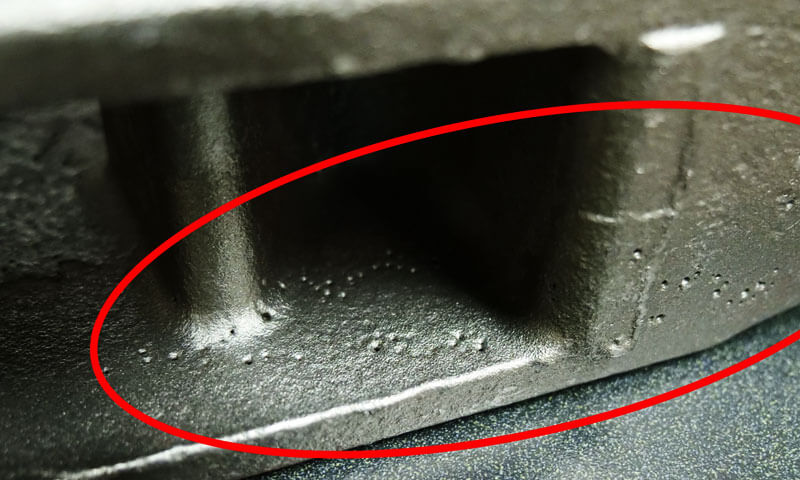
- Porosity risk – shrinkage and gas porosity require robust process control.
- Limited to castable alloys – high‑melting, non‑castable materials cannot be used.
12. Advantages and Limitations of Powder Metallurgy
Mga kalamangan
- Superior material utilisation – >95% scrap‑free; sustainable.
- High production rates – pressing cycle <1 second; sintering continuous.
- Excellent dimensional consistency – die‑controlled precision.
- Low per‑part cost at high volumes.
- Controlled porosity – for filters, self‑lubricating bearings, battery electrodes.
- Fine, unipormeng istraktura ng butil – no cast defects.
- Ability to blend alloys – create unique compositions not possible via melting.
- Magandang machinability – many PM alloys contain elements that enhance machining.
Mga Limitasyon
- Limited geometric complexity – essentially 2.5D; no undercuts, panloob na mga talata.
- Draft angles required – for part ejection from dies.
- Lower mechanical properties – residual porosity reduces ductility and fatigue.
- Size and weight restrictions – <10 kg, <300 mm tipikal.
- Porosity limits pressure‑tightness – sealing required for fluid‑handling applications.
- Alloy flexibility limited – titanium, aluminium, superalloys are difficult or costly.
- Tooling cost high – die sets are expensive; break‑even volumes high.
13. Investment Casting vs Powder Metallurgy: Comprehensive Comparison Table
| Pamantayan | Pamumuhunan sa Paghahagis | Powder Metallurgy |
| Process principle | Liquid metal solidification in ceramic mold | Powder compaction + pag-sinter |
| Starting material | Wax pattern + natunaw na metal | Metal powder + lubricant |
| Geometric complexity | Napakataas (3D, mga undercuts) | Katamtaman (2.5D, no undercuts) |
| Minimum na kapal ng pader | 0.5‑1.5 mm | 1.5‑2.5 mm |
| Email Address * (Ra, M) | 1.6‑6.3 (as‑cast) | 3‑12 (as‑sintered) |
| Dimensional tolerance | ±0.1‑0.3 mm/25mm | ±0.05‑0.1 mm/25mm (after sizing) |
| Densidad ng katawan | 99‑100% | 85‑98% |
| Porosity | Mababa ang (shrinkage/gas) | Inherent (residual) |
| Pressure‑tightness | Napakahusay | Mga Maralita (requires sealing) |
| Alloy range | Very wide (bakal na bakal, hindi kinakalawang, mga superalloys, Ti, Al, tanso) | Limitado (Fe, Cu, W, some stainless; Ti/Al rare) |
| Lakas ng paghatak | Wrought‑like (good) | Katamtaman (porosity‑dependent) |
| Ductility | Mabuti na lang (10‑35%) | Mas mababa (2‑15%) |
| Lakas ng pagkapagod | Katamtaman | Mas mababa (stress risers from porosity) |
| Tooling cost | Katamtaman | Mataas na |
| Tooling life | 50k‑200k cycles | 500k‑1,000k cycles |
| Material utilisation | 85‑95% | >95% |
| Oras ng pag-ikot (Bawat bahagi) | Minutes to hours | <1 second (pagpindot sa) |
| Labour intensity | Mataas na | Mababa ang |
| Break‑even volume | ~100‑1,000/year | ~5,000‑10,000/year |
| Per‑part cost (high volume) | Katamtaman | Napakababa |
| Typical max part weight | 150 kg | 10 kg |
| Secondary operations | Pagputol, paggiling ng mga, paggamot ng init, NDT | Sizing, paggamot ng init, machining (limitado) |
14. Pangwakas na Salita
Investment casting vs powder metallurgy are not competing technologies in every situation; rather, they solve different manufacturing challenges.
Investment casting excels when engineers require complex geometries, broad alloy selection, superior mechanical properties, high density, and structural reliability.
It remains the preferred choice for aerospace components, mga katawan ng balbula, mga bahagi ng pump, mga medikal na aparato, and high-performance industrial equipment.
Powder metallurgy excels in large-scale production environments where dimensional consistency, kahusayan sa materyal, pag aautomat, and low unit costs are primary objectives.
It dominates applications such as automotive gears, mga bearing, mga bushing, and mass-produced mechanical components.
The optimal selection depends on balancing five critical factors:
- Component geometry
- Required mechanical performance
- Material requirements
- Production volume
- Total lifecycle cost
Understanding these factors allows manufacturers to select the most technically appropriate and economically competitive process.
Mga FAQ
Is investment casting stronger than powder metallurgy?
In most structural applications, yes. Investment cast components generally achieve higher density, mas mababang porosity, and better fatigue resistance than conventional powder metallurgy parts.
Which process provides better dimensional accuracy?
For simple, Mga Bahagi ng Mataas na Dami, powder metallurgy often offers tighter repeatability. For complex geometries, investment casting typically provides better overall dimensional capability.
Can both processes produce stainless steel components?
Oo nga. Both technologies support stainless steel manufacturing, although investment casting offers greater flexibility in alloy grades and component complexity.
Which process is more cost-effective?
Powder metallurgy is generally more cost-effective for very high production volumes. Investment casting is often more economical for low-to-medium production runs and complex parts.
Which industries rely most heavily on investment casting?
Aerospace, langis at gas, pagproseso ng kemikal, mga kagamitang medikal, pagbuo ng kapangyarihan, pagproseso ng pagkain, and industrial machinery are among the largest users of investment-cast components.