

Introduktion
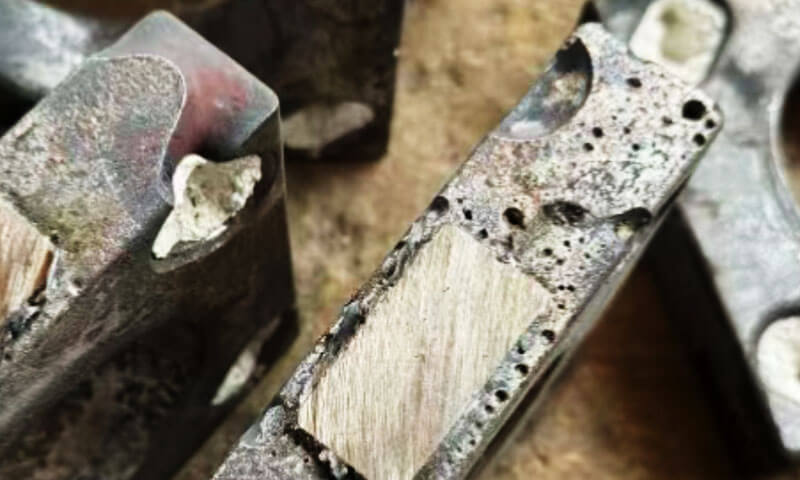
Porositet rankas som den vanligaste och mest problematiska defektfamiljen inom järn- och icke-järninvesteringsgjutningsproduktion.
Baserat på bildningsmekanismer, morfologiska egenskaper och gaskällor, gjutporositet är konventionellt kategoriserad i tre kärntyper: invasiv porositet, reaktiv porositet och utfälld porositet.
Bland dem, reaktiv porositet och invasiv porositet förväxlas ofta av frontlinjens gjuteritekniker på grund av överlappande morfologiska egenskaper och korrelerade inducerande faktorer, speciellt i hot-shell-gjutningsscenarier exklusivt för industriell investeringsgjutning.
Det som gör dessa två defekttyper särskilt utmanande är att de kan se likadana ut på ytan samtidigt som de har väldigt olika ursprung.
Ett porkluster nära ytan kan orsakas av en skal-metallreaktion, av gasformiga produkter som frigörs från formsystemet, eller genom inre metallurgisk reaktion i själva smältan.
I praktiken, korrekt identifiering är viktigare än bara namngivning, eftersom den förebyggande strategin helt beror på källan.
Den här artikeln undersöker reaktiv porositet och invasiv porositet ur ett praktiskt investeringsgjutningsperspektiv: hur de ser ut, hur de bildas, Varför de inträffar, hur de skiljer sig från andra porositetstyper, och hur man kontrollerar dem i produktionen.
1. Vad är reaktiv porositet?
Reaktiv porositet är en typ av gjutningsdefekt som bildas när kemiska reaktioner förekommer antingen vid gränsytan mellan den smälta metallen och formen, eller i själva den smälta metallen, producerar gas som fastnar under stelningen.
I investeringsgjutning, detta betyder att poren inte enbart kommer från mekanisk inneslutning eller från en minskning av gaslösligheten enbart.
Det genereras av en reaktionsprocess som skapar bubblor, destabiliserar smältan, eller försvagar gränssnittet mellan skal och metall.
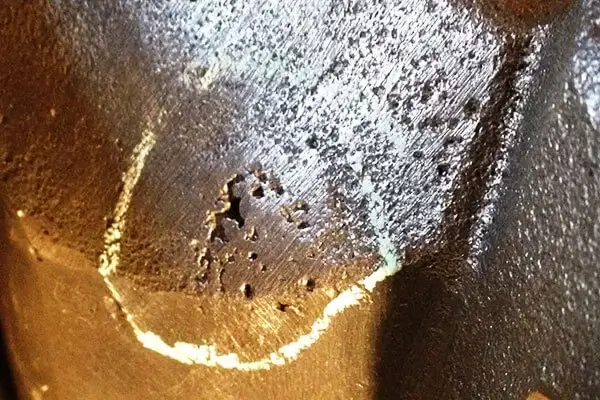
Denna defekt är särskilt viktig eftersom den ofta dyker upp nära ytan eller strax under den, och kanske inte syns förrän vid bearbetning, slipning, eller rengöring exponerar det.
I många fall, gjutningen ser acceptabel ut i det gjutna tillståndet, men problemet blir uppenbart först efter sekundär bearbetning.
Det gör reaktiv porositet särskilt besvärlig i precisionsgjutgods, där dolda defekter kan leda till avslag sent i tillverkningscykeln.
Reaktiv porositet kan uppstå från flera vägar:
- metall-skal reaktion, där den smälta legeringen reagerar med den keramiska formen eller dess rester;
- slaggrelaterad reaktion, där icke-metalliska inneslutningar och oxidationsprodukter deltar i gasbildande reaktioner;
- inre smältreaktion, där element som kol, syre, och väte interagerar för att bilda gasformiga produkter.
2. Typisk morfologi för reaktiv porositet
Reaktiv porositet uppträder ofta i två igenkännbara former.
2.1 Underytan eller subkutana porer
Dessa porer är vanliga 1–3 mm under gjutytan, och ibland direkt under oxidhuden eller ytskalet.
Under rengöring, bearbetning, slipning, eller skottsprängning, de blir utsatta, det är därför de också kallas porer under ytan.
Typiska egenskaper inkluderar:
- runda, päronformad, eller långsträckta hålrum
- porstorlek ofta runt 1–3 mm
- släta inre ytor
- metalliskt eller ljust silver utseende när den öppnas
- ibland vertikalt orienterade korta kanaler eller smala långsträckta porer som sträcker sig djupare in i delen
För de är ofta gömda under ytan, dessa porer är särskilt besvärliga vid precisionsgjutningar.
En del kan verka frisk i sitt gjutna tillstånd men avslöja en allvarlig defekt efter bearbetning.
2.2 Inre reaktionsporer
En annan form av reaktiv porositet visas som enhetliga bikakeliknande porgrupper inuti gjutningen.
Dessa är ofta päronformade eller klustrade bubblor fördelade på ett relativt jämnt sätt.
Denna form förknippas vanligtvis med:
- smältreaktion med slagg
- interna syre-kol-reaktioner
- väte-syre reaktioner
- kol-väte-reaktioner i segregationszoner
Porerna kan vara spridda eller samlade, beroende på var reaktionen skedde och hur snabbt gjutgodset stelnade.
3. Hur reaktiv porositet bildas
Reaktiv porositet härrör i allmänhet från två huvudreaktionsvägar.
3.1 Reaktion mellan smält metall och skalsystemet
Inom investeringsgjutning, skalet är inte tänkt att kemiskt destabilisera metallen.
Dock, detta ideal beror på kvaliteten på skalet, eldningsschemat, hälltemperaturen, och designen av flödesvägen.
Reaktiv porositet kan uppträda när:
- granaten är otillräckligt avfyrad,
- resterande vax eller kol blir kvar i formen,
- flyktiga föreningar finns fortfarande kvar i kaviteten,
- lågsmältande föroreningar i det eldfasta systemet reagerar med den heta metallen,
- metallströmmen förblir i kontakt med en lokaliserad het zon för länge.
I sådana fall, gaser som bildas genom reaktion eller sönderdelning kommer in i den smälta metallen och fastnar under stelningen.
En särskild risk uppstår nära grindsystem. Den intagna regionen utsätts ofta för långvarig varmmetallpåverkan.
Om det lokala skalområdet är överhettat eller upprepade gånger skurat av en ström med hög temperatur, det eldfasta materialet kan reagera, mjukna, eller släpp ut oönskade produkter.
Detta är anledningen till att porer ofta ackumuleras nära grindar eller runt områden med första kollision.
3.2 Reaktion inuti den smälta metallen
Den andra vägen är intern. I det här fallet, den smälta metallen i sig innehåller komponenter som reagerar under rådande kemiska förhållanden.
Tre vanliga interna reaktionsmekanismer brukar diskuteras.
Kol-syrereaktionsporer
Om deoxidationen är ofullständig, löst syre kan reagera med kol i smältan för att bilda kolmonoxidgas.
Detta är en klassisk porbildande reaktion i stål och vissa reaktiva legeringar.
CO-bubblorna kan växa när de stiger, absorberar väte eller kväve på vägen, och om stelningen sker för snabbt, de är fångade.
Denna typ av porer producerar ofta en bikake- eller svampliknande struktur.
Väte–syre reaktion porer
Löst väte och syre kan kombineras för att bilda vattenånga eller vattenrelaterade gasbubblor.
Om dessa bubblor inte försvinner före stelning, de förblir som porer, ofta koncentrerad till de övre zonerna eller hot spots av gjutgodset.
Kol-väte-reaktionsporer
I de sista frysområdena av en gjutning, segregering kan berika den kvarvarande vätskan i kol och väte.
Under rätt förutsättningar, metanliknande gasbildning kan förekomma, skapa lokaliserade porgrupper, speciellt i mitten eller i den slutliga stelningszonen.
Dessa inre reaktionsporer är viktiga eftersom de visar att inte all porositet orsakas av enkel gasupptagning.
Ibland skapas gasen av kemi inuti smältan efter att metallen redan finns i ugnen.
4. Vad är invasiv porositet?
Invasiv porositet är en gjutningsdefekt som bildas när gas från det externa formsystemet, skalsystem, eldfast material, eller hjälpmaterial kommer in i formhåligheten och fastnar i metallen under stelningen.
Till skillnad från reaktiv porositet, som drivs av kemisk reaktion, invasiv porositet är främst en gasintrångsdefekt.
Gaskällan är utanför den smälta metallen och "invaderar" kavitetsmiljön under hällning eller tidig stelning.
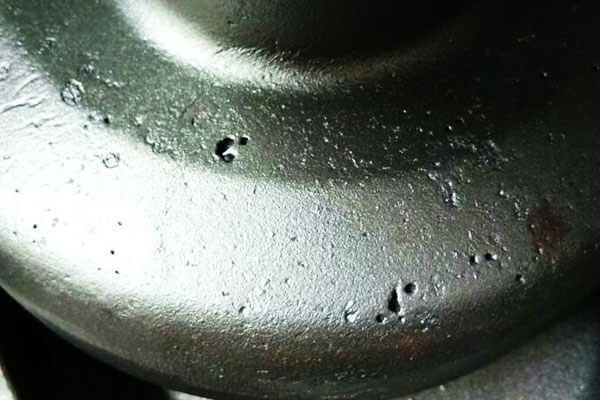
Inom investeringsgjutning, denna defekt är ofta kopplad till:
- ofullständig skalutbrändhet,
- kvarvarande fukt i skalet eller verktyget,
- flyktiga nedbrytningsprodukter från vax eller bindemedel,
- dålig granatskjutning,
- instabila eller lågkvalitativa eldfasta material,
- lokal överhettning som orsakar utsläpp av gas.
Invasiv porositet uppträder ofta nära gjutytan, runt gateregioner, eller i områden där skalet utsätts för intensiv termisk belastning.
Eftersom det till en början ofta döljs under ytan, defekten kan bli synlig först efter bearbetning eller rengöring.
Den praktiska betydelsen är att invasiv porositet vanligtvis pekar på en problem med mögelberedning eller skalkontroll, inte ett smältkemiproblem.
Det betyder att den korrekta motåtgärden är att förbättra utbrändhet, torkning, skalkvalitet, och hålighetens renhet snarare än att bara fokusera på att förädla själva metallen.
5. Typiska egenskaper för invasiv porositet
Invasiv porositet förknippas ofta med följande egenskaper:
- ligger nära ytan eller strax under den
- koncentrerad till områden som påverkas av mögelkontakt eller skaluppvärmning
- i samband med problem med granatutbränning eller otillräcklig eldning
- ofta kopplade till specifika områden i grindsystemet
- kan visas som rundad, långsträckt, eller oregelbundna hålrum
- ibland åtföljd av svärtning av ytan, oxidfläckar, eller skalrester
Eftersom gaskällan är extern, invasiv porositet återspeglar ofta ett mögelberedningsproblem snarare än ett smältkemiproblem.
6. Huvudorsakerna till invasiv porositet
6.1 Ofullständig skalutbrändhet
Om granaten inte har blivit helt avfyrad, kvarvarande vax, organiskt bindemedel, eller flyktiga nedbrytningsprodukter kan finnas kvar inne i kaviteten.
När den heta metallen hälls, dessa material sönderdelas ytterligare och frigör gas direkt i smältgränsytan.
Detta är särskilt farligt eftersom den frigjorda gasen ofta kommer fram i det exakta ögonblicket när formhålan fylls och metallen börjar stelna.
6.2 Fukt i skalet eller det eldfasta systemet
Eventuellt kvarvarande vatten i skalet, beläggningsmaterial, eller hjälpverktyg kan generera ånga när de utsätts för smält metall.
Även små mängder fukt kan vara tillräckligt för att skapa lokalt gastryck och porbildning, speciellt i fin- eller tunnväggiga gjutgods.
6.3 Dålig skalmaterialkvalitet
Skalmaterial av låg kvalitet kan innehålla lågsmältande föroreningar eller instabila komponenter som sönderdelas under hällning.
Detta kan skapa svarta fläckar, slaggrelaterade defekter, eller gasporer nära gjutytan.
6.4 Otillräcklig eldningstemperatur eller tid
Om skalet inte värms upp till rätt sintrings- eller utbränningstemperatur, flyktiga ämnen kanske inte tas bort helt. Det återstående materialet blir sedan en gaskälla under hällningen.
6.5 Lokal överhettning nära porten
Det intagna området kan exponeras för het metall under en längre period.
Om skalet eller det eldfasta materialet innehåller instabila beståndsdelar, den höga lokala värmen kan utlösa gasutsläpp eller lokala reaktionsprodukter som uppträder som samlade porer.
7. Teoretisk klassificeringskontrovers och intern korrelation
Gränsen mellan reaktiv porositet och invasiv porositet är tvetydig i praktisk investeringsgjutproduktion, utlöser långvariga klassificeringstvister bland metallurgiska forskare.
Enligt konventionella klassificeringskriterier, reaktiv porositet härrör från kemiska reaktioner medan invasiv porositet härrör från fysisk gasinvasion.
Dock, i faktiska hot-shell-hällningsprocesser, de flesta gränssnittsreaktiva porer uppfyller samtidigt dubbla defektegenskaper:
kemiska reaktioner mellan smält metall och skal genererar gasformiga produkter, och nybildad gas invaderar direkt flytande metall för att bilda slutliga porer.
Känd castingmonografi Gjutdefekter Orsaker och förebyggande av precisionsinvesteringsgjutgods kategoriserar typiska subkutana reaktiva porer direkt i familjen invasiv porositet, eftersom gasens slutliga formningsbeteende överensstämmer med invasionsmekanismen.
Detta dokument föreslår en reviderad klassificeringslogik som är lämplig för investeringsgjutning:
definiera defekter med gasgenereringsvägar för teoretisk forskning, och definiera defekter med gasinvasionsbeteenden för kvalitetskontroll på plats.
Gränssnittets subkutana porer är kemiskt reaktiva i huvudsak men invasiva i att bilda mönster,
som avslöjar den inneboende korrelationen mellan de två porositetstyperna som är unika för precisionsgjutning.
Dessutom, dåligt deoxiderat smält stål med rikliga oxidinneslutningar uppvisar högre kemisk aktivitet.
Oxidföroreningar bildar inte bara endogena reaktiva porer utan påskyndar också metall-skal gränsytreaktioner, ökar indirekt sannolikheten för bildande av invasiv porositet.
Kärnskillnad i mekanism
Reaktiv porositet är en reaktionsdriven defekt. Det bildas när gaser produceras genom kemisk interaktion, antingen inuti smältan eller vid gränsytan mellan metall och form.
Typiska exempel inkluderar kol-syre-reaktioner, väte-syre reaktioner, eller reaktioner mellan smält metall och lågsmältande skalföroreningar.
Invasiv porositet är en gasintrångsdefekt.
Det uppstår när flyktigt material, kvarvarande fukt, ofullständiga utbrändhetsprodukter, eller skalsönderdelningsgaser kommer in i formhåligheten och fastnar när metallen stelnar.
Praktisk jämförelse
| Punkt | Reaktiv porositet | Invasiv porositet |
| Huvudkälla | Kemisk reaktion | Extern gasinvasion |
| Primär plats | Nära ytan, under ytan, eller interna reaktionszoner | Nära ytan, grindregioner, skalkontaktzoner |
| Typisk trigger | Smält kemi, slagg, skal-metall interaktion | Fukt, ofullständig utbrändhet, flyktiga skal, eldfast instabilitet |
| Vanligt utseende | Päronformad, vaxkaka, långsträckt, hålrum under ytan | Rundade eller oregelbundna porer, ofta klustrade nära mögelgränssnitt |
| Processfokus | Metallurgisk kontroll | Skalförberedelse och kontroll av utbrändhet |
| Förebyggande fokus | Deoxidation, smälta renlighet, skalkompatibilitet | Torkning, bränning, utbrändhet, eldfast kvalitet |
8. Varför dessa defekter är särskilt farliga
Reaktiv och invasiv porositet är mer än kosmetiska problem. De kan skapa allvarliga risker nedströms eftersom de ofta är dolda tills delen bearbetas eller tas i bruk.
Huvudrisker inkluderar:
- reducerad tryckintegritet
- lägre utmattningsstyrka
- dålig ytkvalitet efter bearbetning
- läckage i tryckbärande komponenter
- dålig respons på plätering, putsning, eller beläggning
- dolda interna defektkluster som undkommer visuell inspektion
- avstötning efter sekundära operationer
I högvärdiga gjutgods, en por som blir synlig först efter avslutad bearbetning kan omvandla ett till synes acceptabelt gjutgods till skrot.
Det är en anledning till att dessa defekter är så frustrerande vid precisionsgjutning.
9. Hur man förhindrar reaktiv porositet
Reaktiv porositet kontrolleras genom att eliminera de förhållanden som tillåter kemiska reaktioner att generera gas i eller runt den smälta metallen.
Eftersom defekten är reaktionsdriven, förebyggande måste fokusera på smältkemi, smälta renlighet, skalkompatibilitet, och termisk disciplin.
Nyckeln är att stoppa reaktionen innan den skapar en gasfas som kan fångas under stelning.
9.1 Stärk smältdeoxidation och raffinering
Ofullständig deoxidation är en av de vanligaste prekursorerna till reaktionsrelaterade porer.
När löst syre finns kvar i smältan, det kan reagera med kol eller andra aktiva ämnen för att generera gas.
En disciplinerad deoxidationspraxis minskar den risken genom att sänka syrepotentialen i smältan och minimera bildningen av reaktionsbubblor.
Effektiv kontroll inkluderar:
- använda rätt deoxidationsmedel för legeringssystemet,
- tillsätt deoxidationsmedel vid rätt tidpunkt,
- säkerställer tillräcklig blandning utan överskakning,
- undvika försenad eller partiell behandling,
- verifiera att smältan inte redan är oxidladdad innan den hälls.
Deoxidation är inte bara ett metallurgiskt steg. Det är ett stabilitetssteg som avgör om smältan kommer in i formen i ett kemiskt kontrollerat tillstånd eller i ett reaktivt tillstånd.
9.2 Upprätthåll smältrenhet och slaggborttagning
Reaktiv porositet är ofta kopplad till förekomsten av slagg, oxider, och icke-metalliska inneslutningar.
Dessa material kan fungera som reaktionsställen eller gasbildningsbärare.
Om smältan innehåller instabila oxider eller restslagg, gjutgodset blir mycket mer känsligt för porositet.
En ren smälta kräver:
- noggrann slaggskumning,
- noggrann ugnsövning,
- minimering av sekundär oxidation,
- undvika överdriven turbulens,
- och ordentlig grindning som inte drar in slagg i hålrummet.
Ju renare smältan, desto mindre är chansen att en reaktionskärna bildas och växer till en por.
9.3 Förbättra skal-metallkompatibiliteten
Det keramiska skalet måste vara kemiskt kompatibelt med den smälta legeringen.
Om skalet innehåller lågsmältande föroreningar, instabila komponenter, eller reaktiva rester, gränsytan mellan metall och mögel blir en reaktionszon.
Detta är särskilt viktigt vid investeringsgjutning eftersom formytan reproduceras direkt i gjutningen.
Förebyggande åtgärder inkluderar:
- använder stabil, högkvalitativa eldfasta material,
- styr bindemedelskemin,
- undvika kontaminering i skalmaterial,
- välja ansiktsrockar som motstår kemiska angrepp,
- och validering av skalbeteende under faktisk hälltemperatur.
Ett välmatchat skal håller inte bara smältan. Det bevarar den kemiska integriteten hos gjutgränsytan.
9.4 Ta bort kvarvarande kol och flyktiga produkter från skalet
Restvax, bindemedelsnedbrytningsprodukter, och kolhaltiga filmer kan utlösa gränssnittsreaktioner.
Om de inte är helt borttagna innan de hälls, de kan skapa gas eller minska lokal ytstabilitet i formhåligheten.
Det problemet förstärks ofta i heta zoner som grindområden eller hörn där metalluppehållstiden är längre.
För att minska denna risk:
- säkerställa fullständig utbrändhet,
- elda skalet tillräckligt länge för att avlägsna organiska rester,
- verifiera att ingen kolfilm finns kvar i kaviteten,
- och bekräfta att skalet är helt stabiliserat före gjutning.
Poängen är enkel: om skalet fortfarande innehåller reaktivt material, gjutningen kommer att ärva problemet.
9.5 Kontrollera lokal överhettning, speciellt nära porten
Många reaktiva porer samlas nära grindsystemet eftersom det är där den smälta metallen först kommer in och där den lokala termiska exponeringen är högst.
Om det intagna området förblir vid förhöjd temperatur för länge, det kan påskynda nedbrytningen av eldfast eller främja lokal kemisk reaktion.
Detta kan minskas med:
- förbättra portgeometrin,
- förkorta infallstiden,
- balanserande fyllningshastighet,
- undvika alltför aggressiva hällförhållanden,
- och designa systemet så att grinden inte blir en termisk hot spot.
Bra grinddesign handlar inte bara om flöde. Det handlar också om att begränsa tiden och intensiteten av kemikalieexponeringen.
9.6 Undvik överhettning
En varmare smälta är inte alltid en bättre smälta.
Överdriven överhettning kan intensifiera oxidationen, accelerera eldfast interaktion, och öka sannolikheten för reaktionsdriven gasgenerering.
Temperaturen bör vara tillräckligt hög för att säkerställa fullständig fyllning, men inte så hög att metallen förblir kemiskt överaktiv för länge.
Rätt termofönster beror på:
- legeringstyp,
- sektionens tjocklek,
- form förvärma,
- grindsdesign,
- och önskad ytkvalitet.
I reaktiv porositetsförebyggande, temperatur är en kontrollvariabel, inte en kraftmultiplikator.
9.7 Förbättra processspårbarhet
Reaktiv porositet uppträder ofta i mönster kopplade till specifika värme, operatörer, skalpartier, eller ugnsförhållanden.
Om processen inte är väl dokumenterad, defekten blir svår att isolera.
Användbara spårbarhetsartiklar inkluderar:
- smälttemperaturhistorik,
- tidpunkt för deoxidation,
- slaggborttagningsprotokoll,
- granatparti och skjutdata,
- hällsekvens,
- och defekt platskartläggning.
När reaktiv porositet upprepas, svaret finns ofta redan i processprotokollet.
10. Hur man förhindrar invasiv porositet
Invasiv porositet förhindras genom att hålla oönskad gas borta från formhålan i första hand.
Eftersom denna defekt vanligtvis är relaterad till skal, eldfast, fukt, eller problem med utbrändhet, kontrollstrategin måste fokusera på torrhet, eldningskvalitet, skal stabilitet, och förberedelse av ren hålighet.
10.1 Säkerställ fullständig avvaxning och utbrändhet
Ofullständig utbrändhet är en av de vanligaste orsakerna till invasiv porositet.
Eventuellt kvarvarande vax, bindemedel, eller organiskt material som finns kvar i skalet kan sönderfalla under hällning och släppa ut gas direkt i kaviteten.
Den gasen kan sedan fångas när metallen stelnar.
För att förhindra detta:
- använd en fullt validerad avvaxningscykel,
- verifiera fullständigt avlägsnande av vaxrester,
- se till att uppehållstiden för utbrändhet är tillräckligt lång,
- och bekräfta att kaviteten är fri från förkolnade rester innan den hälls.
Ett skal som ser tomt ut är inte nödvändigtvis ett skal som är riktigt rent.
10.2 Eliminera skalfukten
Fukt är en direkt gaskälla. Även små mängder vatten i skalet, beläggning, eller hjälpverktyg kan blixtra till ånga när de utsätts för smält metall.
Invasiv porositet blir ofta värre när skaltorkningen är ofullständig eller när fuktigheten inte kontrolleras mellan skalberedningen och hällningen.
Bästa metoder inkluderar:
- torka skalet helt efter varje beläggningssteg,
- lagring av skal under kontrollerade förhållanden,
- förvärma ordentligt innan hällning,
- och förhindrar kondens under hantering.
Skalet måste vara torrt inte bara på ytan, men genom hela dess tjocklek och inre porstruktur.
10.3 Förbättra skalets materialkvalitet
Eldfast material av dålig kvalitet kan innehålla instabila beståndsdelar, lågsmältande föroreningar, eller förorening som sönderfaller under gjutning.
Dessa material kan avge gas, skapa ytdefekter, eller destabilisera kavitetsmiljön.
Ett starkare skalsystem kräver:
- stabilt eldfast val,
- kontrollerad partikelstorleksfördelning,
- rena bindemedelssystem,
- och konsekventa skaluppbyggnadsprocedurer.
Högkvalitativa skalmaterial minskar risken för gasutsläpp och förbättrar även gjutgodsets ytintegritet.
10.4 Avfyra skalet vid rätt temperatur och varaktighet
Skaleldning är inte bara ett styrkeutvecklingssteg. Det är också ett gaskontrollsteg.
Korrekt bränning tar bort rester av flyktigt material, stabiliserar skalstrukturen, och minskar risken att själva formen blir en gaskälla under hällning.
Förebyggande beror på:
- tillräcklig bränningstemperatur,
- tillräckligt med blötläggningstid,
- ordentlig skalkylning före gjutning,
- och undviker undereldade eller delvis sintrade formar.
Om skalet inte har stabiliserats helt, den kan fortfarande bete sig som en gaskälla.
10.5 Kontrollera värmepåverkan från den smälta metallen
Om mögelhålan upplever lokal överhettning för länge, skalkomponenter kan börja sönderdelas eller frigöra gas.
Detta är särskilt viktigt nära grindar, tjocka sektioner, och metallpåverkanszoner.
Användbara kontroller inkluderar:
- justering av grind så att metallflödet blir jämnare,
- minskar onödig termisk koncentration,
- undvika alltför lång vistelse i ett mögelområde,
- och balansera hällhastigheten med kraven på hålighetsfyllning.
Målet är att låta metallen fylla kaviteten utan att förvandla formen till en gasgenerator.
10.6 Minimera kontaminering från hjälpmaterial
Formsystemet är inte den enda möjliga gaskällan.
Hjälpmaterial, verktyg, hantering av fixturer, och överföringsutrustning kan alla bära fukt eller flyktiga föroreningar in i processen.
Om dessa inte torkas eller rengörs ordentligt, de kan bidra till invasiv porositet på samma sätt som ett defekt skal.
Kontrollåtgärder bör innefatta:
- torka hjälpverktyg före användning,
- förhindrar kontaminering från smörjmedel eller rengöringsmedel,
- hålla hanteringsutrustning ren,
- och undvika exponering för fuktiga miljöer innan hällning.
Även små fuktkällor kan ha betydelse vid precisionsgjutning.
Skalrelaterad porositet är ofta förutsägbar om beredningsprocessen övervakas noggrant.
Krackning, svaga skalzoner, svärtade områden, ofullständig utbrändhet, eller ovanliga ytrester kan alla signalera ett problem innan gjutgodset gjuts.
En praktisk inspektionsrutin bör kontrollera:
- granat utseende efter avfyring,
- hålighetens renhet,
- fuktstatus,
- lokal skalstyrka,
- och konsistens från batch till batch.
Ju tidigare en skaldefekt hittas, desto billigare är det att korrigera.
10.8 Standardisera skalprocessparametrar
Invasiv porositet uppträder ofta när skalberedningen varierar från batch till batch. Standardisering minskar denna variation och förbättrar repeterbarheten.
Standardisering bör omfatta:
- slurrys viskositet,
- doppningsintervaller,
- stuckatursekvens,
- torktid,
- avvaxningscykel,
- eldningsschema,
- och hanteringsförhållanden före hällning.
Ett skalsystem byggt på disciplin är mycket mindre sannolikt att bli en gaskälla.
11. Slutsats
Reaktiv porositet och invasiv porositet är två sammanflätade men ändå väsentligen distinkta porositetsdefekter som dominerar defekta investeringsgjutgods.
Reaktiv porositet härrör från kemiska reaktioner mellan smält metall, legeringselement, oxidslagg och keramiska skal, uppdelad i subkutana gränssnittporer och endogena cellulära porer baserat på genereringsplatser.
Invasiv porositet hänvisar till tomma defekter som bildas av fysiskt frigjord gas från ofullständigt sintrade eller lågkvalitativa keramiska skal som invaderar smält metall.
För att mildra porositetsrelaterade avvisningsfrekvenser, gjuterier måste särskilja defekttyper via morfologiska egenskaper och distributionsregler,
och implementera kombinerade kontrollstrategier som täcker smält metallsmältning, skaltillverkning, sintringsspecifikation och optimering av hällparameter.
Att klargöra korrelationen och väsentliga skillnader mellan reaktiv porositet och invasiv porositet hjälper inte bara tekniker att eliminera felbedömningar i daglig defektanalys utan ger också en standardiserad teoretisk grund för att förfina moderna kvalitetskontrollsystem för investeringsgjutning.
Nomenklatur
- Subkutan porositet: En gren med reaktiv porositet fördelad 1–3 mm under gjutytorna, exklusivt för investeringsgjutna stålkomponenter
- Hot-shell hällning: Standard industriellt hällläge för precisionsgjutning med användning av försintrade högtemperaturkeramiska formar
- Oxidkärnbildande kärna: Oxidslagginneslutningar som ger fästpunkter för reaktiv bubbelbildning
- Hälla Superheat: Temperaturskillnad mellan verklig smält metall temperatur och legerings liquidus temperatur

