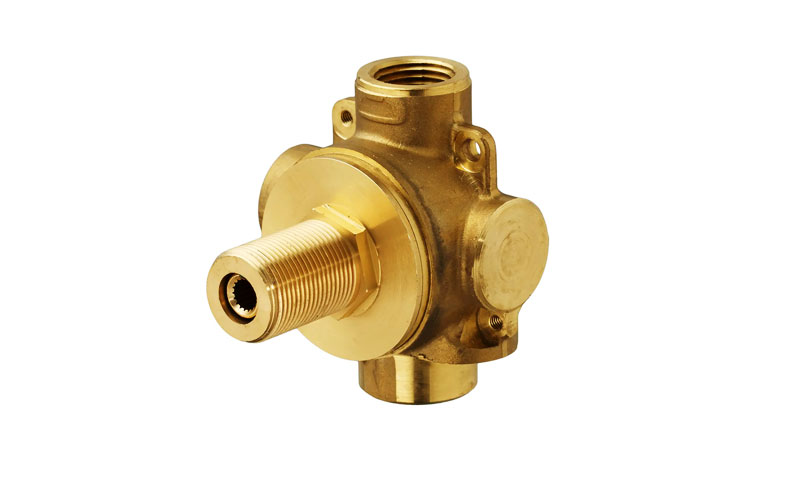
Avledningsventiler er viktige komponenter i væskehåndteringssystemer, muliggjør omdirigering av flyt fra en vei til en annen.
Disse ventilene er mye brukt i rørleggerarbeid, oppvarming, ventilasjon, Klimaanlegg (HVAC), vannbehandling, og industriell prosessering.
Blant de ulike materialene som brukes til avledningsventiler, messing skiller seg ut som det foretrukne valget på grunn av sin utmerkede bearbeidbarhet, Korrosjonsmotstand, antimikrobielle egenskaper, og estetisk appell.
Produksjonen av høykvalitets omlederventiler i messing krever en kombinasjon av presisjonsstøping og avansert CNC-bearbeiding.
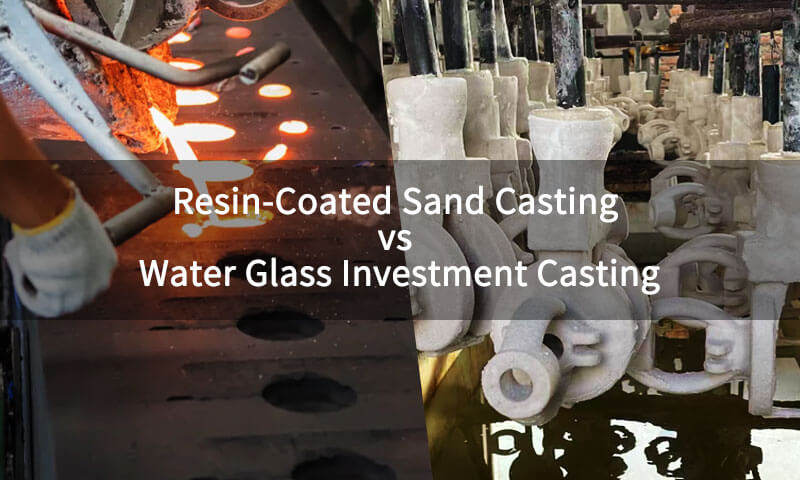
Mistet voksstøping (Investeringsstøping) er den ideelle metoden for å produsere komplekse indre passasjer og intrikate geometrier til avledningsventilhus.
Kombinert med presisjons CNC-bearbeiding, denne prosessen leverer ventiler med eksepsjonell dimensjonsnøyaktighet, glatt overflatebehandling, og pålitelig ytelse.
1. Hva er en avledningsventil i messing?
EN avledningsventil i messing er en multi-port væskekontrollenhet designet for å omdirigere, velge, eller fordele væskestrøm mellom forskjellige strømningsbaner.
I motsetning til en vanlig to-ports avstengningsventil, en avledningsventil bruker flere porter og et internt bevegelig element for å bestemme hvilke passasjer som er koblet til en gitt driftsposisjon.
Ventilhuset er normalt den trykkholdige komponenten. Den har innløps- og utløpsporter, indre strømningspassasjer, ventilkammer, tette grensesnitt, og tilkoblingsfunksjoner.
Et internt element - vanligvis en ball, støpsel, patron, eller spindelbetjent mekanisme – endrer strømningsbanen når ventilen roteres eller aktiveres.
En typisk tre-ports avledningsventil, for eksempel, kan operere i to grunnleggende posisjoner:
Posisjon A: Innløp → Uttak A
Stilling B: Innløp → Uttak B
Mer sofistikerte konfigurasjoner kan kombinere eller isolere strømningsbaner avhengig av prosesskravene.
Ytelsen til en avledningsventil av messing avhenger av mer enn dens evne til å bytte strøm.
Ventilen må opprettholde trykkintegritet, kontrollert strømningsmotstand, pålitelig avstengning, Dimensjonell stabilitet, og repeterbar forsegling gjennom den tiltenkte levetiden.
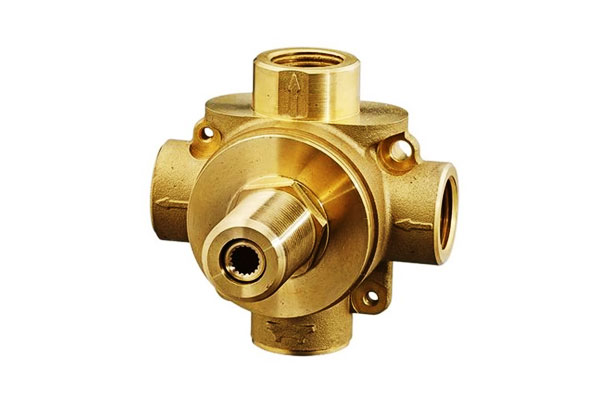
Typer avledningsventiler
| Type | Beskrivelse | Typiske applikasjoner |
| 3-Veiavledningsventil | Ett innløp, to uttak (eller omvendt). | Dusjsystemer, blandeventiler, HVAC, Prosesskontroll. |
| 4-Veiavledningsventil | To innløp, to uttak. | Varmesystemer, varmepumper, applikasjoner med omvendt flyt. |
| Roterende avledningsventil | Et roterende element leder strømmen mellom portene. | Pneumatisk transport, pulverhåndtering, Industriell prosessering. |
| Slide omkoblingsventil | En glideplate omdirigerer flyten. | Håndtering av bulkmaterialer, støvoppsamling. |
| Kuleavledningsventil | En ball med flere passasjer roterer for å rette strømning. | Rørleggerarbeid, Kjemisk prosessering, gassdistribusjon. |
2. Vanlige messinglegeringer for avledningsventilstøping
Å velge riktig messing legering er grunnleggende for trykkintegriteten, Korrosjonsmotstand, maskinbarhet, Dimensjonell stabilitet, og levetid for en avledningsventil.
Messing er ikke et enkelt materiale, men en bred familie av kobberbaserte legeringer med vesentlig forskjellige sammensetninger og ytelsesegenskaper.
For en presisjonsstøpt skifteventil, valg av legering bør vurdere mer enn mekanisk styrke.
Produsenten må også vurdere støpeatferd, krav til internt trykk, flytende kjemi, avsinkingsmotstand, maskineringskrav, temperatur, miljøeksponering, og regulatoriske restriksjoner på legeringsbestanddeler.
Spesielt, ventiler beregnet for drikkevann eller andre regulerte væskekontaktapplikasjoner kan kreve lavt bly- eller blyfrie legeringer som er spesifikt kvalifisert for den tjenesten.
Derfor, den "beste" messinglegeringen er bruksavhengig i stedet for universell.
Vanlig brukte messinglegeringer for avledningsventilstøping
| Legering (OSS) | Nøkkelegenskaper | Typiske ventilapplikasjoner |
| C84400 | God støpeevne og bearbeidbarhet; tradisjonell blyholdig halvrød messing | Støpte ventilhus, Rørleggerbeslag, generelle væskekontrollkomponenter |
| C85700 | Blyført marinemessing; god bearbeidbarhet og korrosjonsbestandighet | Støpte trykkholdige komponenter, marineorienterte beslag |
| C87610 | Kobber-silisiumlegering med god styrke og korrosjonsbestandighet; lavt bly | Vannservicekomponenter og korrosjonsbestandig støpegods der spesifisert |
| C87800 | Silisium messing; God castability, styrke, Korrosjonsmotstand, og lav bly-egenskaper | Vannserviceventilhus, Rørleggerbeslag, Industrielle komponenter |
C87850 |
Silisiummessing med god bearbeidbarhet, trykktetthet, og korrosjonsmotstand | Ventillegemer, kraner, vannmålerkasser, rørleggerarbeid og marine komponenter |
| C89833 | Blyfri vismutholdig legering; god bearbeidbarhet og korrosjonsbestandighet | Blyfrie trykkholdige komponenter, drikkevannsorienterte ventiler og rørleggerapplikasjoner der dette er spesifisert |
| C36000 | Utmerkede fribearbeidingsegenskaper | Maskinerte ventilkomponenter, stilker, beslag, adaptere, Små presisjonsdeler |
3. Messing avledningsventil tapt voksstøpeprosess
De tapt voksstøpeprosess for messing avledningsventiler er designet for å konvertere en kompleks ventilhusgeometri til en nesten nettformet metallstøping med kontrollert dimensjonskonsistens og solid strukturell integritet.
CAD-gjennomgang og verktøy
Prosessen begynner med ventiltegningen eller 3D CAD-modellen. Før verktøy produseres, geometrien gjennomgås for støpemuligheter og produksjonsstabilitet.
Produsenten fastsetter nødvendig svinntillegg, maskineringsgodtgjørelse, veggoverganger, Fileter, portplasseringer, og casting orientering.
For en avledningsventil, spesiell oppmerksomhet gis til områdene rundt kryssende strømningspassasjer fordi plutselige endringer i snitttykkelse kan påvirke metallmating og størkning.
Verktøyet produseres deretter for å reprodusere den nødvendige voksmønstergeometrien.
Voksmønsterproduksjon
Smeltet voks injiseres i presisjonsdysen for å skape offermønsteret til ventilhuset.
Mønsterkvalitet bestemmer det dimensjonale fundamentet til støpingen. Injeksjonstemperatur, trykk, holdetid, kjøling, og dysens tilstand må kontrolleres for å minimere blink, forvrengning, ufullstendig fylling, og dimensjonsvariasjon.
Det ferdige voksmønsteret inspiseres før det går videre til montering.
Voksmontering og port
Individuelle voksmønstre er koblet til et sentralt innløpssystem for å danne et støptetre.
På dette stadiet, portsystemet er etablert slik at smeltet messing kan fylle ventilhulrommet på en kontrollert måte.
Portposisjon og løpedimensjoner påvirker fylletiden, turbulens, Termiske gradienter, og fôringsatferd.
For komplekse omkoblingsventiler, port er utformet rundt hele kroppens geometri, i stedet for bare å maksimere fyllingshastigheten.
Keramisk skallbygning
Vokstreet dyppes gjentatte ganger i keramisk slurry og belegges med ildfast stukk. Påfølgende lag bygger et stivt keramisk skall rundt mønsteret.
Skallet må gi tilstrekkelig styrke for avvoksing og metallstøping samtidig som den gjengir de nødvendige overflatedetaljene.
De primære prosesskontrollene er:
Slurry viskositet + ildfast partikkelstørrelse + lagtykkelse + tørkeforhold + skallstyrke
Inkonsekvent skallpreparering kan føre til sprekker, dimensjonsvariasjon, dårlig overflatekvalitet, eller skallfeil under helling.
Avvoksing og skyting av skall
Det keramiske skallet varmes opp for å fjerne voksmønsteret og skape det negative hulrommet til ventilhuset.
Etter avlegg, skallet avfyres for å fjerne gjenværende organisk materiale og utvikle den nødvendige ildfaste styrken og termisk stabilitet.
Den resulterende keramiske formen må være ren, tørke, og strukturelt forsvarlig før smeltet messing introduseres.
Messingsmelting og legeringskontroll
Den valgte messinglegeringen smeltes under kontrollerte forhold.
Hovedmålet er å sikre at det smeltede metallet oppfyller spesifiserte kjemisk sammensetning og renhetskrav før du strømmer.
Dette er spesielt viktig for tilpassede ventiler der materialegenskaper og regulatoriske krav kan avhenge av en spesifikk legeringskvalitet.
Prosesskontroll inkluderer vanligvis:
- Verifiserte ladematerialer
- Overvåking av smeltetemperatur
- Kjemisk analyse
- Slagg- og oksidkontroll
- Varmeidentifikasjon og sporbarhet
Kontrollert helling
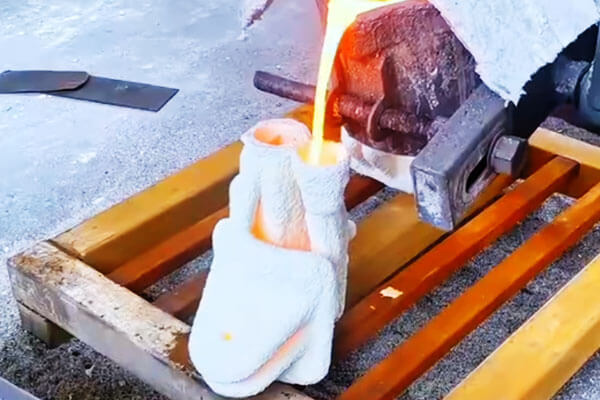
Det forvarmede keramiske skallet er fylt med smeltet messing gjennom det utformede portsystemet.
Helletemperatur og fyllingshastighet må tilpasses legeringen og ventilgeometrien.
Metallet må forbli tilstrekkelig flytende til å fylle tynne seksjoner og komplekse passasjer uten overdreven turbulens eller for tidlig størkning.
En godt kontrollert skjenkeoperasjon søker å oppnå:
Komplett fylling + stabil flyt + minimum medføring + kontrollerte termiske forhold
Størkning og fôring
Etter fylling, messingen begynner å stivne. Fordi ventilhuset kan inneholde forskjellige veggtykkelser, sjefer, og passasjekryss, forskjellige områder kan avkjøles med forskjellige hastigheter.
Støpedesignet må derfor støtte kontrollert størkning og tilstrekkelig tilførsel av krympende metall.
Dårlig størkningskontroll kan gi defekter som f.eks:
- Svinn porøsitet
- Krympehulrom
- Gassrelaterte diskontinuiteter
- Varm sprekker
For komplekse ventilhus, støpesimulering kan brukes til å forutsi fyllings- og størkningsatferd og optimalisere port- og fôringssystemet før produksjon.
Knockout
Når støpen er avkjølt tilstrekkelig, det keramiske skallet fjernes mekanisk.
Vibrasjon, mekanisk separasjon, eller andre egnede metoder kan brukes avhengig av komponenten og produksjonssystemet.
Forsiktighet må utvises under knockout fordi overdreven mekanisk kraft kan skade tynne seksjoner, portfunksjoner, eller støpte overflater.
Fjerning av port og stigerør
Sprue, løpere, porter, og stigerør kuttes fra ventilstøpen.
Kuttplasseringene er valgt slik at fjerning ikke skader funksjonsområder eller etterlater for mye materiale som vil komplisere etterfølgende maskinering.
Dette stadiet konverterer det investeringsstøpte treet til et individuelt ventilhusstøping.
Etterbehandling av støping
Det rensede støpegodset utsettes for sliping, sprengning, eller andre passende etterbehandlingsoperasjoner for å fjerne gjenværende keramikk, Fins, Flash, og portrester.
Målet er å produsere en ren og stabil støping som er egnet for inspeksjon og etterfølgende maskinering.
Viktigere, etterbehandling bør ikke brukes for å skjule uakseptable støpeavbrudd. Områder som vil bli pressgrenser, Tetningsflater, eller kritiske bearbeidingsdatum krever spesiell oppmerksomhet.
4. CNC-bearbeiding av støpegods til avledningsventil i messing
Tapt voksstøping etablerer hovedgeometrien til en avledningsventil i messing, men det gir normalt ikke den endelige nøyaktigheten som kreves for kritiske grensesnitt.
CNC maskinering er derfor broen mellom en nesten nettformet støping og en funksjonell presisjonsventil.
Maskineringsprosessen skal ikke bare oppnå individuelle dimensjoner; den må opprettholde det geometriske forholdet mellom porter, strømningspassasjer, Ventilseter, Tetningsflater, stilker, og aktuatorgrensesnitt.
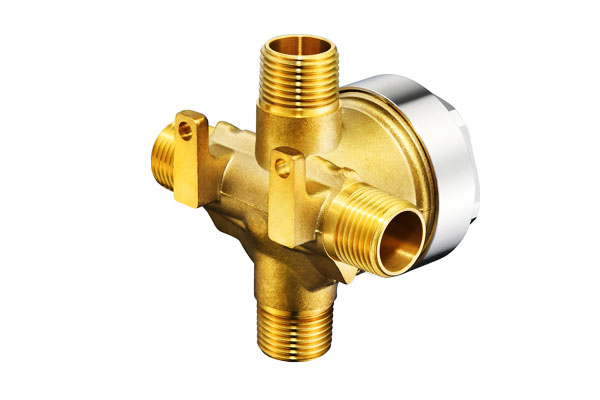
En typisk produksjonssekvens er:
Støpeinspeksjon → Datumetablering → Grov bearbeiding → Bore-/portbearbeiding → Gjengebearbeiding → Sete- og tetningssporbearbeiding → Bearbeiding av aktuatorgrensesnitt → Avgrading → Dimensjonsinspeksjon
Den nøyaktige rekkefølgen avhenger av ventilarkitekturen.
Maskinering av ventilporter og innvendige boringer
Innløps- og utløpsportene etablerer ventilens forbindelse med det eksterne væskesystemet. Avhengig av ventildesign, disse grensesnittene kan bruke:
- NPT eller andre koniske rørgjenger
- BSP eller BSPP/BSPT tråder
- Metriske eller tilpassede tråder
- Kompresjonsgrensesnitt
- Flensforbindelser
- Lodding eller spesialiserte koblingsgeometrier
Portbearbeidingsoperasjonen må kontrollere både dimensjon og posisjon.
En riktig bearbeidet gjenge kan fortsatt skape monteringsproblemer hvis portaksen er feil plassert i forhold til ventilhuset eller tilstøtende porter.
For kryssende indre passasjer, maskinering kan innebære boring, kjedelig, kryssboring, eller en kombinasjon av støpte og maskinerte funksjoner.
Overgangen mellom disse passasjene bør undersøkes nøye fordi overdreven bråhet kan øke trykktap og turbulens.
I tilpassede design, støping kan produsere mesteparten av flytarkitekturen mens CNC-maskinering fullfører åpningene og funksjonelle grensesnitt.
Presisjonsbearbeiding av ventilseter
Ventilsetet er blant de mest kritiske egenskapene til en avledningsventil fordi det danner grensesnittet som begrenser uønsket væskelekkasje.
Seteytelsen avhenger av at flere egenskaper fungerer sammen:
Konsentrisitet + Kontaktgeometri + Overflatebehandling + Flathet/Rundhet + Materialkompatibilitet
Et ventilsete som oppfyller sin nominelle diameter, men som ikke er konsentrisk med ventilelementet, kan gi ujevn kontakt.
Tilsvarende, en for ru overflate kan forstyrre forseglingen, mens feil overflategeometri kan øke driftsmomentet.
Passende setetoleranse og overflatefinish bør derfor spesifiseres i henhold til den spesielle ventildesignen, tetningselement, Trykkvurdering, og lekkasjekrav.
Trådbearbeiding
Gjenger er vanlige på avledningsventiler i messing fordi de gir kompakte og økonomiske tilkoblinger.
CNC-bearbeiding kan brukes for både innvendige og utvendige gjenger. Kritiske parametere inkluderer:
- Hoveddiameter
- Mindre diameter
- Pitch
- Trådprofil
- Effektiv diameter
- Tråddybde
- Konsentrisitet
- Overflatebehandling
Gjengemålere brukes ofte til produksjonsverifisering, mens dimensjonal inspeksjon kan bekrefte den underliggende geometrien.
Fordi messing er relativt bearbeidbart, den støtter effektiv trådproduksjon, men kuttestrategien må fortsatt tilpasses den spesielle legeringen.
Noen blyfrie messinglegeringer kan oppføre seg annerledes enn tradisjonelle fribearbeidende kvaliteter og kan kreve optimaliserte skjæreverktøy og parametere.
O-ring og tetningsspor maskinering
Der det brukes elastomere tetninger, O-ringsporet er en presisjonsfunksjon i stedet for en enkel fordypning.
Dens dimensjoner bestemmer tetningskompresjonen og påvirker derfor lekkasjeytelsen. Feil sporbredde, dybde, hjørnegeometri, eller overflatetilstand kan forårsake:
- Utilstrekkelig forsegling
- Overdreven kompresjon
- Forseglingsekstrudering
- Monteringsvansker
- For tidlig tetningsslitasje
Maskineringsprosessen må følgelig opprettholde den spesifiserte sporgeometrien samtidig som den omgivende tetningsflaten beskyttes.
5. Alternativer for overflatebehandling for avledningsventiler i messing
For tilpassede ventilkomponenter, overflatebehandling bør velges sammen med legeringen, maskineringsprosess, dimensjonstoleranser, og driftsmiljø.
Ikke hver etterbehandlingsprosess er egnet for alle overflater.
Spesielt, Ventilseter, tråder, tette grensesnitt, og fuktede passasjer kan kreve tett kontrollerte etterbehandlingsforhold for å unngå å endre deres funksjonelle dimensjoner.
Mekanisk polering
Mekanisk polering bruker gradvis finere slipemidler for å fjerne maskineringsmerker, mindre ujevnheter i overflaten, og støpe-relaterte overflatefeil fra messingoverflaten.
Avhengig av ønsket utseende, prosessen kan variere fra grunnleggende slipende etterbehandling til høyglanspolering.
Fordeler:
- Gir en glatt og attraktiv messingoverflate
- Forbedrer det visuelle utseendet
- Reduserer synlige maskinerings- og støpemerker
- Gir et effektivt underlag for påfølgende plettering
- Kan forbedre overflateens jevnhet på utvendige ventiloverflater
Nikkelplating
Nikkelbelegg legger et kontrollert nikkellag på den forberedte messingoverflaten, vanligvis gjennom en galvaniseringsprosess.
Riktig forbehandling er avgjørende for å sikre god vedheft mellom messingunderlaget og belegget.
Fordeler:
- Forbedrer korrosjonsmotstand
- Gir større overflatehardhet enn ubehandlet messing
- Forbedrer slitasje motstand
- Gir et jevnt metallisk utseende
- Egnet for komponenter utsatt for fuktighet og håndtering
- Kan gi et underlag for dekorative eller funksjonelle etterbehandlingssystemer
Kromplating
Forkromning påfører et krombasert overflatelag over et passende preparert underlag, ofte over nikkelbelegg.
Prosessen produserer en hard, lys overflate med god motstand mot slitasje og anløpning.
Fordeler:
- Utmerket dekorativt utseende
- Høy overflatehardhet
- God slitasje motstand
- God motstand mot anløpning og atmosfærisk eksponering
- Egnet for utsatte ventilkomponenter og dekorative rørleggerutstyr
Elektroløs nikkelbelegg
Elektrofri nikkelbelegg avsetter et nikkel-fosfor eller beslektet nikkellegeringsbelegg gjennom en autokatalytisk kjemisk reaksjon i stedet for å stole på direkte ekstern elektrisk strøm.
Dette muliggjør relativt jevn beleggtykkelse på tvers av komplekse geometrier.
Fordeler:
- Mer jevn beleggtykkelse på komplekse overflater
- God korrosjonsmotstand
- God slitestyrke og slitestyrke
- Egnet for innfelte og uregelmessige geometrier
- Gir kontrollert overflatebeskyttelse med relativt forutsigbar dimensjonsoppbygging
- Nyttig for industrielle ventilkomponenter som krever både beskyttelse og dimensjonskonsistens
Presisjonsbearbeidet overflatefinish
For funksjonelle overflater som ventilseter, Bores, tråder, og forseglingsgrensesnitt, den nødvendige finishen produseres ofte direkte gjennom kontrollert CNC-bearbeiding, fin svinging, kjedelig, sliping, eller andre presisjonsoperasjoner i stedet for gjennom et dekorativt belegg.
Fordeler:
- Opprettholder nøyaktig dimensjonskontroll
- Muliggjør nøyaktig tetningsgeometri
- Støtter kontrollert overflateruhet
- Unngår unødvendig oppbygging av belegg på kritiske grensesnitt
- Gir forutsigbar montering og funksjonell ytelse
- Spesielt egnet for ventilseter, Bores, tråder, og tetningskontaktflater
6. Fordeler med tapt voksstøping for avledningsventiler i messing
Tapt voksstøping gir unike fordeler for vekselventilproduksjon som ikke kan matches med alternative støpe- eller formingsmetoder.
Uovertruffen dimensjonsnøyaktighet & Repeterbarhet
Investeringsstøping oppnår ±0,05–0,1 mm pr 25 mm støpt toleranse, med jevn repeterbarhet på tvers av høye produksjonsvolumer.
Dette reduserer maskinbeholdningen, minimerer toleransestabling, og sikrer utskiftbar montering.
Kompleks intern geometri & Flytoptimalisering
Tapt voks kan produsere intrikate interne portgeometrier, jevne flytoverganger, og profilerte passasjer som ville være umulige med sandstøping eller uøkonomiske å bearbeide.
Optimaliserte interne strømningsbaner reduserer turbulens, trykkfall, og flytstøy.
Overlegen støpt overflatefinish
Den fine keramiske ansiktslakken gir Ra 1,6–3,2 μm som støpt overflatefinish, reduserer maskineringstiden og forbedrer tetningsoverflatens ytelse.
Glatte støpte overflater reduserer også strømningsindusert erosjon inne i væskepassasjer.
Minimal maskinbeholdning & Materiell effektivitet
Støping i nesten nettform krever bare 0,8–1,5 mm maskineringsmateriale per side, mot 3–6 mm for sandstøping.
Dette reduserer materialavfallet med 40–60 % og reduserer bearbeidingstiden betraktelig.
Legeringsfleksibilitet & Egendefinert formulering
Tapt voksstøping fungerer med praktisk talt alle messinglegeringer, som lar tilpasset legeringsformulering matche spesifikk korrosjon, styrke, eller myndighetskrav uten store verktøyendringer.
Konsekvent trykkintegritet & Lekkasjemotstand
Støpte kropper i ett stykke eliminerer sammensatte skjøtelekkasjebaner. Kontrollert størkning minimerer indre porøsitet, sikrer trykktett ytelse som består 1,5x arbeidstrykklekkasjetesting.
7. Lost Wax Casting vs. Omlederventiler i smidd messing
Både støping og smiing produserer ventilkomponenter i messing, men de tjener distinkte design- og ytelsesscenarier.
| Ytelsesdimensjon | Tapte voksstøpte messingventiler | Smidde messingventiler |
| Dimensjonal nøyaktighet | ±0,05 – ±0,1 mm/25 mm som støpt; tettere etter bearbeiding | ±0,02 – ±0,05 mm; veldig konsekvent |
| Intern geometri kompleksitet | Svært høy — komplekse porter, konturformede passasjer, design med flere porter | Begrenset - bare enkle aksiale former; dype interne funksjoner ikke gjennomførbare |
| Trykk & Utmattelsesmotstand | Bra for standard trykk; porøsitetsavhengig | Glimrende; høyere utmattelsesmotstand og sprengningstrykk |
| Produksjonsvolum egnethet | 500 - 50,000 PCS/år | 10,000 - 500,000+ PCS/år |
| Verktøykostnad & Ledetid | Moderat verktøykostnad; 4–6 ukers ledetid | Høye verktøykostnader; 6–10 ukers leveringstid |
| Total enhetskostnad | Middels høy for lavt volum; konkurransedyktig på middels volum | Høyt ved lavt volum; lavest ved veldig høyt volum |
| Ideelle applikasjonsscenarier | Komplekse multi-port kropper, konturerte strømningsbaner, middels volum | Enkle aksiale design, høyt trykk, høysyklus tretthet, veldig høyt volum |
8. Bruksområder for avledningsventiler i messing
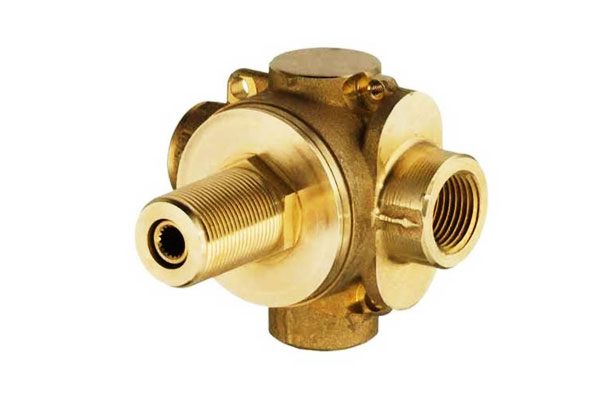
VVS og vanndistribusjon
Avledningsventiler av messing er mye brukt i rørsystemer for å omdirigere vann mellom forskjellige uttak, kretsløp, eller inventar.
Deres kompakte design, Korrosjonsmotstand, og god bearbeidbarhet gjør dem egnet for både boliger og kommersielle vannkontrollutstyr.
Typiske applikasjoner inkluderer:
- Dusjsystemer
- Kransammenstillinger
- Vanndistribusjonsutstyr
- Blande- og rutingsystemer
- Husholdnings rørleggerutstyr
VVS og varmesystemer
Avledningsventiler i messing brukes ofte i HVAC og hydroniske varmesystemer for å kontrollere retningen til sirkulerende vann og andre kompatible væsker.
Ventilen kan bytte strøm mellom varmekretser, omkjøringslinjer, eller sekundære løkker.
Typiske applikasjoner inkluderer:
- Radiator varmesystemer
- Gulvvarmesystemer
- HVAC sirkulasjonskretser
- Varmepumpesystemer
- Kjele og varmeutstyr
Vanningssystemer
I vanningsutstyr, avledningsventiler i messing kan brukes til å lede vann mellom ulike grener eller soner.
Deres korrosjonsmotstand og robuste konstruksjon gjør dem egnet for gjentatt flytveksling i utendørsmiljøer.
Typiske applikasjoner inkluderer:
- Landbruks vanningssystemer
- Hage vanningsutstyr
- Sprinkler Systems
- Drivhusvanning
- Vannfordelingsmanifolder
Utstyr for vannbehandling
Avledningsventiler i messing kan integreres i kompakte vannbehandlingssystemer der forskjellige strømningsveier må velges eller isoleres.
Presisjonsstøping er spesielt nyttig når ventilhuset krever tilpassede indre passasjer.
Typiske applikasjoner inkluderer:
- Vannfiltreringssystemer
- Vannrenseutstyr
- Mykgjørende systemer
- Pumpe- og filtreringsenheter
- Kontrollenheter for vannbehandling
Hvitevarer og boligutstyr
Kompakte avledningsventiler i messing brukes også i apparater der vann eller annen kompatibel væske må omdirigeres mellom ulike interne kretsløp.
Typiske applikasjoner inkluderer:
- Kaffe- og drikkeutstyr
- Vaskeapparater
- Varmtvannsberedere
- Rengjøringsutstyr
- Vannkontrollenheter for boliger
Industrielt væskekontrollutstyr
Industrielt utstyr kan bruke avledningsventiler av messing for å lede vann, olje, luft, eller andre kompatible væsker hvor trykket, temperatur, og kjemisk miljø er innenfor material- og ventildesigngrensene.
Typiske applikasjoner inkluderer:
- Pumpesystemer
- Kompressorer og hjelpeutstyr
- Maskiner for væskebehandling
- Industrielle kjølesystemer
- Skreddersydde utstyrssammenstillinger
Kommersielle og spesialiserte systemer
Tilpassede avledningsventiler i messing er også egnet for utstyrsprodusenter som krever en kompakt flerports strømningskontrollkomponent designet rundt en spesifikk sammenstilling eller væskekrets.
Typiske applikasjoner inkluderer:
- Kommersielt rørleggerutstyr
- Vannsirkulasjonssystemer
- Utstyrsmanifolder
- OEM væskekontrollenheter
- Skreddersydde maskiner og prosessutstyr
9. Hvorfor velge LangHe Industry for messingavledningsventil tapt voksstøping & Maskinering?
For tilpassede avledningsventiler i messing, å velge en produsent er ikke bare et spørsmål om å finne en leverandør som kan støpe messing.
Den endelige komponenten avhenger av koordineringen av støpeteknikk, Legeringsutvalg, CNC maskinering, overflatebehandling, Dimensjonal kontroll, og funksjonstesting.
Langhe -industrien nærmer seg spesialtilpasset messingavledningsventilproduksjon som et integrert produksjonsprosjekt, slik at støpe- og maskineringsstadiene kan utvikles sammen rundt kundens funksjonskrav.
| Evne | Detaljer |
| Materialer | C84400, C85700, C87610, C87800, C87850, C89833, C36000. |
| Støpeprosess | Mistet voksstøping (Investeringsstøping). |
| Toleranser | ± 0,1–0,3 mm (CT5-CT7 per ISO 8062). |
| CNC maskinering | CNC snur, fresing, boring, Tapping, kjedelig, reaming, tråd. |
| Kvalitet | ISO 9001:2015 sertifisert; 100% undersøkelse; CMM. |
| Ledetid | 6–12 uker for verktøy; 2–4 uker for gjentatte bestillinger. |
10. Konklusjon
En avledningsventil i messing er en kompakt komponent, men dets produksjonskrav er sterkt sammenkoblet.
Ventilhuset må inneholde trykk, gi nøyaktige strømningsbaner, romme det interne ventilelementet, opprettholde forseglingsgrensesnitt, og kobles pålitelig til eksternt rør eller utstyr.
For komplekse tilpassede design, tapt voksstøping gir en effektiv måte å etablere hovedventilhusets geometri, inkludert tilpassede porter, sjefer, overganger, og egnet intern arkitektur.
CNC-bearbeiding gir da gjenger, Bores, Ventilseter, tette spor, og aktuator-grensesnitt til nødvendig presisjon.
Materialvalg er like viktig. Ulike messinglegeringer tilbyr forskjellige kombinasjoner av støpeevne, maskinbarhet, Mekanisk styrke, Korrosjonsmotstand, og forskriftsmessig egnethet.
Riktig valg må derfor baseres på faktisk væske og driftsmiljø.
LangHe Industry kombinerer presisjonsstøping av messing og CNC-maskinering for å støtte tilpasset produksjon av avlederventiler fra første designgjennomgang til inspeksjon av ferdige komponenter, hjelpe OEM-kunder med å konvertere komplekse ventilkonsepter til produserbare og repeterbare produkter.
FAQ
Hva er en avledningsventil i messing?
En avledningsventil av messing er en flerports væskekontrollanordning som brukes til å omdirigere eller selektivt fordele væske mellom forskjellige strømningsbaner.
Det interne ventilelementet bestemmer hvilke porter som er koblet til i hver driftsposisjon.
Hvorfor brukes messing ofte til avledningsventiler?
Messing gir en nyttig kombinasjon av korrosjonsbestandighet, maskinbarhet, Mekanisk styrke, støptbarhet, og kostnadseffektivitet.
Disse egenskapene gjør den egnet for mange vann, HVAC, Rørleggerarbeid, Apparat, og industrielle væskekontrollapplikasjoner.
Hvorfor bruke tapt voksstøping for en avledningsventil i messing?
Tapt voksstøping er spesielt nyttig når ventilhuset inneholder kompleks geometri, flere porter, integrerte sjefer, eller tilpassede strømningspassasjer.
Den produserer en nesten nettformet kropp som deretter kan CNC-maskineres.
Kan avledningsventiler av messing brukes til drikkevann?
Det kan de være, forutsatt at den komplette ventilkonstruksjonen oppfyller gjeldende krav for drikkevannsservice.
Messinglegeringen, blyinnhold, fuktede komponenter, produksjonsprosess, og påkrevd produktoverholdelse må alle vurderes.