


1. Panimula
Rapid prototyping is a cornerstone of modern product development, allowing designers and engineers to test, iterate, and refine parts in a fraction of the time required by traditional manufacturing methods.
While plastics and aluminum dominate early-stage design due to cost and ease of use, stainless steel rapid prototyping is gaining ground for applications that demand high strength, thermal katatagan, paglaban sa kaagnasan, and real-world functionality.
As product development cycles shorten across industries—particularly in aerospace, medikal na, automotive, and robotics—stainless steel enables functional prototyping, not just visual models.
It offers durability for form-fit-function testing and can often transition directly into low-volume production.
2. What Is Stainless Steel Rapid Prototyping?
Hindi kinakalawang na asero rapid prototyping refers to the fast production of physical prototypes using stainless steel alloys through additive (hal., 3D pag print) and subtractive (hal., CNC machining) mga proseso.
Unlike traditional long-cycle manufacturing, rapid prototyping aims to accelerate product development by enabling fast iteration, functional testing, and pre-production evaluation.
While many prototypes are made from plastic or aluminum due to lower costs and ease of processing, stainless steel is increasingly chosen when prototypes need to simulate the final product’s performance in terms of mechanical strength, paglaban sa init, at paglaban sa kaagnasan.

Common Stainless Steel Grades Used in Prototyping
- 304: Most widely used stainless steel; good formability and corrosion resistance.
- 316/316L: Better resistance to chemicals and chlorides; ideal for marine and medical applications.
- 17-4PH: Precipitation-hardening stainless steel offering high strength and moderate corrosion resistance; can be heat-treated to improve mechanical properties.
- 15-5PH: Similar to 17-4PH, with better toughness and ductility, often used in aerospace and structural applications.
3. Stainless Steel Rapid Prototyping Methods
Stainless steel rapid prototyping encompasses several advanced manufacturing techniques, each offering unique advantages depending on the part’s geometry, Aplikasyon, Mga kinakailangan sa pagpapaubaya, at dami ng produksyon.
The most common methods include CNC machining, metal 3D printing, pamumuhunan paghahagis, at sheet metal gawa gawa.
CNC Machining
CNC (Kontrol sa Numerikal ng Computer) machining is a subtractive manufacturing process that uses computer-controlled cutting tools to remove material from a stainless steel block.

Mga Pangunahing Tampok:
- Mataas na katumpakan: Tolerances of ±0.005 mm or better
- Napakahusay na pagtatapos sa ibabaw: Ra 0.4 μm makakamit
- Best for functional and structural prototypes
Mga kalamangan:
- Suitable for both simple and complex geometries
- Wide material availability (304, 316, 17-4PH)
- Ideal for parts that require threading, nakakainip, or tight tolerances
Typical Lead Time: 3–7 business days
Pag print ng Metal 3D (DMLS / SLM)
Direktang Metal Laser Sintering (DMLS) at Pumipili ng Laser Pagtunaw (SLM) are additive manufacturing techniques that build parts layer by layer using stainless steel powders.

Mga Pangunahing Tampok:
- Pinapagana ang kumplikado, organic shapes, including internal channels
- No need for tooling or molds
- High material utilization (mas kaunting basura)
Common Stainless Steels Used:
- 316L: Corrosion resistance and biocompatibility
- 17-4PH: High strength and heat treatable
Mga kalamangan:
- Design freedom for lattice structures and weight optimization
- Excellent for prototyping in aerospace, medikal na, and research sectors
Mga Limitasyon:
- Rougher surface finish (Ra 6–12 μm) unless post-processed
- Cost-effective mostly for low-volume or complex parts
Typical Lead Time: 2–5 business days
Pamumuhunan sa Paghahagis (Nawala ang Wax Casting)
This process involves creating a wax model of the part, patong ito sa isang ceramic shell, and then replacing the wax with molten stainless steel to form the final shape.

Mga Pangunahing Tampok:
- Angkop para sa detailed and intricate parts
- Supports medium to low volume produksyon ng
- Good dimensional accuracy and surface finish
Mga kalamangan:
- Capable of producing parts with thin walls and undercuts
- Offers better mechanical properties than 3D printing
Common Alloys: 304, 316, 17-4PH, CF8M, and other castable stainless steels
Mga Limitasyon:
- Longer lead time due to mold preparation
- Less suitable for quick iterations
Typical Lead Time: 7–10+ business days
Paggawa ng Sheet Metal
Sheet metal prototyping involves cutting, pagbaluktot, and assembling stainless steel sheets to create flat or semi-flat components.
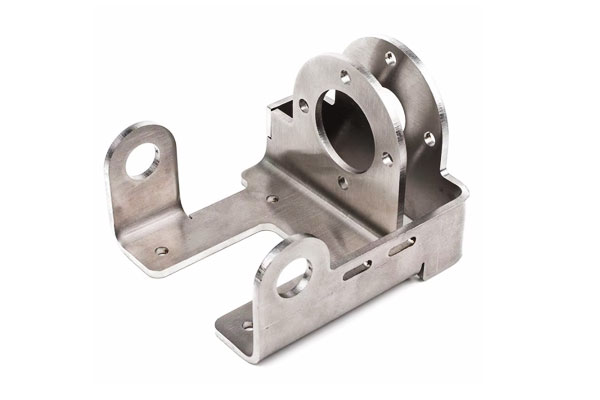
Mga Pangunahing Tampok:
- Efficient for 2D and 2.5D parts
- Used for enclosures, mga panaklaw, Mga Panel, and casings
Processes Involved:
- Laser pagputol
- Waterjet cutting
- CNC bending
- Spot welding and TIG welding
Mga kalamangan:
- Fast and cost-effective for thin-walled parts
- Material savings compared to subtractive methods
Typical Lead Time: 3–5 business days
4. Design Considerations for Stainless Steel Rapid Prototyping
Designing for stainless steel rapid prototyping requires a strategic approach to balance material characteristics, process capabilities, and functional objectives.

Wall Thickness and Feature Size
- CNC Machining:
-
- Minimum na kapal ng pader: ≥ 0.8–1.0 mm (Depende sa laki ng bahagi)
- Deep cavities (>3× diameter) may require special tooling
- Metal 3D Paglilimbag (hal., DMLS/SLM):
-
- Minimum na kapal ng pader: ≥ 0.5 mm for structural integrity
- Small features: avoid unsupported structures <0.3 mm
- Pamumuhunan sa Paghahagis:
-
- Wall thickness typically ≥ 1.5–2.0 mm for reliable mold filling
- Sheet Metal:
-
- Thickness depends on gauge; common ranges for stainless steel: 0.5-3 mm
Tip sa Disenyo: Avoid sharp internal corners—use fillets to reduce stress concentration and facilitate machining or printing.
Mga pagpapaubaya
- CNC Machining:
-
- Tight tolerances achievable: ±0.005–0.01 mm for precision parts
- Pag print ng Metal 3D:
-
- Mga tipikal na tolerance: ±0.05–0.1 mm; improved with post-machining
- Paghahagis:
-
- Standard tolerances: ±0.2–0.5 mm depending on part size and complexity
- Sheet Metal:
-
- Tolerance depends on cutting and bending process: typically ±0.1–0.3 mm
Tip sa Disenyo: Include post-processing allowances if precision finishing (hal., polishing or machining) is required after printing or casting.
Disenyo para sa Manufacturability (DFM)
Each process imposes specific manufacturing constraints:
- CNC Machining:
-
- Avoid deep, narrow cavities unless necessary
- Ensure tool access and clearance
- 3D Paglilimbag:
-
- Optimize for minimal support structures (especially overhangs >45°)
- Consider print orientation to reduce warping and improve strength
- Paghahagis:
-
- Include proper draft angles (Karaniwang 1-3 °) to facilitate mold release
- Avoid isolated thin walls that may cool too quickly and cause defects
- Sheet Metal:
-
- Maintain consistent bend radii
- Minimize complex bends or formed features in a single part
Surface Roughness Expectations
| Proseso | As-Built Surface Roughness (Ra) | After Finishing |
| CNC Machining | ~0.4–1.6 µm | ≤ 0.2 M (pinakintab na) |
| Pag print ng Metal 3D | ~6–12 µm | ~1–3 µm (post-polishing) |
| Pamumuhunan sa Paghahagis | ~3–6 µm | ≤ 1 M (pagkatapos ng buli) |
| Sheet Metal Cutting | ~1.6–3.2 µm | ~0.8 µm (with sanding) |
5. Post-Processing and Finishing Options for Stainless Steel Rapid Prototyping
Post-processing is a critical step in stainless steel rapid prototyping. It enhances the mechanical properties, kalidad ng ibabaw, hitsura, and corrosion resistance of the final part.

Machining and Surface Refinement
- Secondary Machining
Used to achieve tight tolerances or refine critical dimensions, especially in 3D printed or cast parts. Common operations include drilling, pagliko, and milling. - Paggiling
Ideal for achieving precise flatness and smooth surface finishes (Ra ≤ 0.4 M), commonly used for tooling or bearing surfaces.
Paggamot ng Heat
Heat treatment can enhance the strength, tigas na tigas, or corrosion resistance of certain stainless steel grades.
- 17-4PH hindi kinakalawang na asero
-
- Can be precipitation hardened to increase strength up to ~1100 MPa tensile strength
- Age hardening cycles: H900, H1025, H1150 (number indicates temperature in °F)
- Annealing (for austenitic grades like 304 o 316):
-
- Removes internal stresses
- Improves ductility and corrosion resistance
Tala: Heat treatment must be carefully controlled to prevent warping or scale formation.
Mga Paggamot sa Ibabaw
- Passivation
-
- Chemical process (usually with nitric or citric acid) that removes free iron from the surface
- Enhances corrosion resistance by promoting the formation of a chromium oxide layer
- Standard for medical, grado ng pagkain, and marine components
-
- Electrochemical process that smooths and brightens surfaces
- Reduces surface roughness by ~50%
- Excellent for biomedical and cleanroom applications
- Blasting
-
- Sandblasting or glass bead blasting is used to achieve a uniform matte or satin finish
- Removes surface imperfections and minor burrs
- Pagbagsak / Vibratory Finishing
-
- Efficient for small or batch parts
- Produces deburred, polished surfaces with minimal labor
Mga patong at pag-plating
Although stainless steel is naturally corrosion-resistant, certain applications may require additional coatings:
- PVD (Pisikal na Vapor Deposition)
-
- Applies decorative and functional coatings (hal., titanium nitride, chrome-like finishes)
- Increases wear resistance and enhances visual appeal
- Palabok na patong / Pagpipinta
-
- Used when color-coding or non-metallic finishes are needed
- Typically used for enclosures or consumer-facing parts
- Nickel or Chrome Plating
-
- Rarely needed but occasionally used to improve appearance or surface hardness in specific functional components
Paghinang at Pagsali (if part of assembly)
- TIG and MIG welding are commonly used to join stainless steel parts during prototyping
- Post-weld treatments may include pickling, Passivation, or grinding to restore corrosion resistance and surface finish
6. Cost and Lead Time Analysis
| Paraan | Cost Range (USD/Part) | Lead Time | Mga Pangunahing Pagsasaalang alang |
| CNC Machining | $150–$1000+ | 3–7 working days | Mataas na katumpakan, low volume |
| Pag print ng Metal 3D | $300–$2500+ | 2–5 working days | Complex geometry, limited size |
| Pamumuhunan sa Paghahagis | $200–$1500+ | 7–14 working days | Good for batches and fine detail |
| Sheet Metal Fab | $50–$400+ | 3–7 working days | Mabilis, flat or bent parts |
Costs depend on volume, geometry complexity, pagkatapos ng pagpoproseso, at uri ng materyal.
7. Key Applications of Stainless Steel Rapid Prototyping

| Industriya ng Industriya | Halimbawa ng mga Aplikasyon | Mga Karaniwang Pamamaraan |
| Aerospace | Turbine brackets, Mga Mount ng Makina, test rigs | DMLS, CNC |
| Automotive | Exhaust manifolds, fuel rails, mga jigs | Paghahagis, CNC, Sheet Metal |
| Medikal na | Mga tool sa kirurhiko, implant trials | CNC, DMLS, Electropolishing |
| Mga Elektronika | Device enclosures, mga konektor, mga frame | CNC, 3D Paglilimbag |
| Pang industriya | Mga pabahay ng bomba, End Effectors, mga tooling | CNC, Paghahagis |
| Langis & Gas | Subsea connectors, pressure fittings | 3D Paglilimbag, Machining |
| Pagkain & Email Address * | Mga balbula ng sanitario, Mga Mixer, line components | Paghahagis, CNC, Passivation |
| Arkitektura | Structural joints, decorative fittings, mga fixture sa pag iilaw | CNC, Sheet Metal, Polishing |
8. Advantages of Stainless Steel Rapid Prototyping
Stainless steel rapid prototyping offers a unique combination of mechanical performance, material reliability, at bilis ng produksyon, making it a highly valuable approach in engineering, product development, and industrial testing.

Excellent Mechanical Strength and Durability
- Stainless steel prototypes exhibit high tensile strength, paglaban sa pagkapagod, and load-bearing capability.
- Suitable for functional testing and end-use parts, lalo na sa malupit na kapaligiran.
Paglaban sa kaagnasan at init
- Grades like 316L are highly resistant to corrosion, mga asido, and saline environments, enabling prototypes to be tested in real-world operational conditions.
- Stainless steel can maintain structural integrity at elevated temperatures, useful for heat exchangers, exhaust parts, or engine components.
Functional and Production-Equivalent Prototypes
- Unlike plastic or resin-based prototypes, stainless steel prototypes closely simulate final production parts in terms of mechanical and thermal performance.
- Engineers can use them for destructive testing, pressure tolerance assessments, or field trials.
Compatibility with Multiple Manufacturing Methods
- Stainless steel is versatile and supports several prototyping processes:
-
- CNC Machining for precision parts
- Pag print ng Metal 3D for complex geometries
- Pamumuhunan sa Paghahagis for short runs and intricate shapes
- Paggawa ng Sheet Metal for structural and enclosure-type components
Superior Surface Finishing Options
- Stainless steel can be finished to a wide range of surface qualities:
-
- Mirror-polished for consumer products
- Passivated for medical or food-grade use
- Brushed or bead-blasted for industrial applications
Biocompatibility and Sanitary Properties
- Grades such as 316L are biocompatible, allowing for safe use in medical devices and implants.
- In the food and pharmaceutical industries, stainless steel’s non-reactive surface supports hygiene and easy sterilization.
Reusability and Sustainability
- Stainless steel prototypes can be repurposed, recycled, or reused in certain cases, unlike most polymer-based prototypes.
- Metal scrap generated during prototyping is recyclable, Bawasan ang basura ng materyal.
Accelerated Design Validation
- Rapid prototyping in stainless steel allows engineers to validate function, fit, and form in a compressed timeframe.
- Reduces the need for multiple iteration cycles before moving to mass production.
Broad Industry Compatibility
- From aerospace and automotive to consumer electronics and medical devices, stainless steel prototyping is applicable across high-performance industries.
9. Limitations of Stainless Steel Rapid Prototyping
- Mas Mataas na Gastos
Stainless steel material and processing costs are much higher than plastics or aluminum, increasing prototype expenses. - Design Restrictions
Mga kumplikadong hugis, manipis na pader, or internal features can be hard or costly to produce, especially with CNC machining or 3D printing. - Warping and Distortion
Metal 3D printing of stainless steel can cause warping or residual stress, especially in large or thin parts, requiring extra heat treatment. - Tapos na sa ibabaw
Raw stainless steel parts from 3D printing or casting often have rough surfaces and need additional polishing or finishing. - Tool Wear
Stainless steel is tough on cutting tools, causing faster wear and longer machining times, which raises costs. - Size Limits
Metal 3D printers have limited build volumes, making large parts challenging without assembly. - Mas mahabang oras ng lead
Some methods like casting take longer (7–10+ days), delaying prototype delivery. - Safety and Environmental Concerns
Handling stainless steel powders and chips requires proper safety measures and waste management.
10. How to Choose the Right Prototyping Method
Selecting the most appropriate stainless steel prototyping method depends on several key factors, including geometry, pag andar, dami ng produksyon, Lead oras, at badyet.

- CNC Machining is ideal for parts with simple to moderately complex geometries that require high dimensional accuracy and fine surface finishes.
It is best suited for functional prototypes that demand tight tolerances and material integrity. - Metal 3D Paglilimbag (such as DMLS or SLM) is well-suited for highly complex designs with internal channels, Mga istraktura ng sala-sala, or weight-saving features that are difficult or impossible to machine. It allows rapid iteration without tooling.
- Pamumuhunan sa Paghahagis offers a cost-effective solution for low- to medium-volume production of intricate stainless steel parts with excellent surface finish and near-net-shape capabilities.
- Paggawa ng Sheet Metal is the preferred method for rapid production of flat or simple 3D components, especially when speed and low tooling costs are priorities.
In addition to technical considerations, ang experience and capabilities of the supplier play a critical role.
A qualified prototyping partner with expertise in stainless steel and the selected process can provide valuable engineering support, minimize errors, and ensure that the final prototype meets performance expectations.
Lastly, material certification ay mahalaga, particularly in regulated industries like aerospace, automotive, at medikal na.
It ensures that the stainless steel used meets required mechanical and chemical specifications for safety and performance.
11. Comparison of Stainless Steel, Aluminyo, and Plastic in Rapid Prototyping
| Katangian | Hindi kinakalawang na asero | Aluminyo | plastik na plastik |
| Densidad ng katawan | ~ 7.9 g / cm³ | ~ 2.7 g / cm³ | ~0.9–1.5 g/cm³ |
| Lakas ng Paghatak | 515–1180 MPa (hal., 304, 17-4PH) | 130–570 MPa (hal., 6061, 7075) | 20–80 MPa (hal., ABS nga ba, PLA, Naylon) |
| Punto ng Pagtunaw | ~1400–1450°C | ~ 660 ° C | ~120–250°C (varies by polymer) |
| Thermal kondaktibiti | ~15–25 W/m·K (304 SS) | ~205 W/m·K (6061 Al) | ~0.2–0.5 W/m·K |
| Electrical kondaktibiti | 1.45 MS/m (304 SS) | ~35 MS/m | Insulating (near 0 MS/m) |
| Paglaban sa kaagnasan | Napakahusay (lalo na 316) | Katamtaman (anodizing improves resistance) | Poor to moderate (depends on polymer type) |
| Machinability Index | ~45% (compared to free-machining steel) | ~80–90% | ~100% (easiest to machine/print) |
| 3D Print Layer Resolution | ~20–50 µm (DMLS metal printing) | ~50–100 µm (via FDM or SLA with metal fill) | ~50–200 µm (FDM/SLA/SLS) |
| Lead Time (Typical) | 5–10 business days | 3–7 business days | 1–3 business days |
| Average Cost per Part | $100–$1,000+ (depending on size/method) | $50–$300 | $5-$ 100 |
| Tapos na sa ibabaw (as-fabricated) | Ra 6.3–12.5 μm (CNC), 15-30 μm (3D print) | Ra 3.2–6.3 μm (CNC), 6–15 µm (3D print) | Ra 10–25 µm (SLA/FDM) |
| Post-Processing Options | Polishing, Passivation, paggamot ng init | Pagpapahid ng langis, buli na, pagsabog ng kuwintas | Sanding, pagpipinta, vapor smoothing |
| Environmental Durability | Mataas na: Heat, kaagnasan, mga kemikal | Katamtaman: Heat, kaagnasan (anodized) | Mababa ang: UV, init, chemicals degrade polymers |
| Mga Aplikasyon | Medical tools, aerospace, mekanikal na mga bahagi | Mga bahagi ng sasakyan, mga pabahay, mga fixtures | Mga enclosure, design models, disposable parts |
12. Pangwakas na Salita
Stainless steel rapid prototyping is transforming how functional prototypes are developed, tested, and iterated.
By combining the robustness of stainless steel with the agility of rapid prototyping technologies like CNC machining, 3D pag print, at pamumuhunan paghahagis,
Engineers can test performance under real-world conditions, bridging the gap between prototype and production.
Whether for aerospace reliability, medical biocompatibility, or industrial durability, stainless steel prototyping is an essential tool in high-performance product development.
LangHe: Stainless Steel Rapid Prototyping Services
LangHe offers professional stainless steel rapid prototyping solutions tailored for industries that demand precision, bilis, at pagganap ng pag-andar.
From early-stage product validation to functional testing and low-volume production, our services enable engineers and designers to bring stainless steel parts to market faster and with greater confidence.
With advanced prototyping technologies and material expertise, LangHe ensures that every stainless steel prototype meets strict mechanical, dimensional, at mga kinakailangan sa aesthetic.
Our Stainless Steel Prototyping Capabilities Include:
CNC Machining
Fast-turnaround, high-precision stainless steel machining for functional prototypes with tight tolerances.
Pag print ng Metal 3D (DMLS/SLM)
Complex geometries and internal features with stainless steel materials such as 316L and 17-4PH.
Pamumuhunan sa Paghahagis (Lost Wax Prototyping)
Ideal para sa masalimuot, short-run parts where surface finish and dimensional repeatability are key.
Paggawa ng Sheet Metal
Quick production of flat or bent stainless steel parts through cutting, pagbaluktot, at hinang.
Whether you require a single stainless steel prototype or short-run production for functional testing, LangHe delivers speed, kalidad, and material integrity — every time.
Makipag ugnay sa amin ngayon to discuss your stainless steel prototyping needs and accelerate your product development cycle.

