1. Panimula
UNS C86300 is one of the most distinctive copper alloys in industrial service because it is designed not for electrical conductivity or easy machining, but for mataas na lakas, Paglaban sa Pagsusuot, and corrosion resistance under heavy load.
It belongs to the family formally described as manganese bronze and leaded manganese bronze alloys, also referred to as high-strength yellow brasses,
which already signals its position in the copper-alloy landscape: it is a structural bronze with serious load-carrying intent, not a general-purpose brass.
What makes C86300 especially valuable is its ability to work in slow-speed, high-load conditions where surface durability matters more than conductivity, and where the material must resist both mechanical wear and corrosive exposure.
That is why it appears in applications such as bridge pins, mga bushing, cams, mga gears, hydraulic cylinder parts, large valve stems, mga propeller, and slow-speed heavy-load bearings.
2. What Is C86300 Manganese Bronze?
UNS C86300 is a mangganeso tanso, also commonly described as a high-strength yellow brass for heavy-duty service.
It is not selected for conductivity or easy machining; it is selected because it combines mataas na lakas, magandang paglaban sa kaagnasan, and strong load-bearing capability in demanding mechanical environments.
Copper development literature places C86300 in the group of high-strength brasses that can operate under very high loads at moderately high speeds, while noting that these alloys require hardened, well-aligned shafts at reliable lubrication.
Sa praktikal na mga termino, C86300 is a cast copper alloy for severe-service mechanical parts.
Ito ay malawakang ginagamit para sa bridge pins, mga bushing, cams, mga gears, hydraulic cylinder parts, large valve stems, mga propeller, and slow-speed heavy-load bearings,
which tells you almost everything about its design intent: this is a structural bronze meant to survive wear, load, and corrosion rather than a general-purpose fabrication alloy.
Mga Tampok
High strength and wear resistance.
C86300 is designed to carry load and resist surface damage in slow-speed or boundary-lubricated systems.
Copper-alloy references describe this family as capable of very high loads, with tensile strength well above 800 MPa for the alloy class, and with properties suitable for heavy-duty bearing and gear service.
Magandang paglaban sa kaagnasan.
C86300 is used in marine hardware, boat parts, mga clamp, Mga pabalat, Mga timon, and other corrosion-exposed service parts, which reflects its ability to perform in aggressive environments better than many ordinary brasses.
Excellent structural usefulness, but low machinability.
The alloy is strong enough to be used as a machine part in its own right, but its published machinability rating is only 8, so it should be treated as a performance bronze rather than an easy-cutting alloy.
Best suited to slow-speed, high-load service.
The alloy family is specifically recommended for high-load applications where shaft alignment and lubrication are well controlled.
Copper-bearing-material guidance also notes that these high-strength brasses have moderate fatigue resistance and do not tolerate dirty lubricants well because they have little capacity to embed particles.
A cast alloy with multiple supply forms.
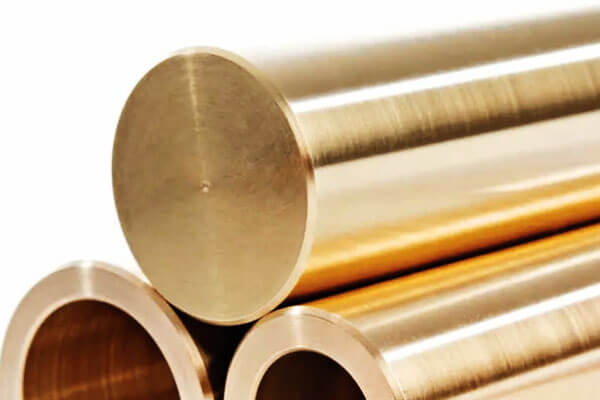
C86300 is available as continuous cast, centrifugal cast, sand cast, and precision cast material, which makes it usable both as finished cast components and as semi-finished stock for further machining or fabrication.
Equivalent designations to UNS C86300
Tala: these are published equivalent or associated specification designations for C86300; in several cases, they refer to product standards rather than identical chemistry-only aliases.
| Standard family | Katumbas / related designations for UNS C86300 |
| AMS | AMS 4860 |
| ASTM | ASTM B22, ASTM B271, ASTM B30, ASTM B505, ASTM B584, ASTM B763 |
| MIL | MIL-C-11866 |
| QQ-C-390, QQ-C-523 | |
| SAE | SAE J461, SAE J462 |
3. Chemical Composition of C86300 Manganese Bronze
| Elemento | C86300 composition range | Metallurgical role |
| Cu | 60.0–66.0% | Base matrix and corrosion-resistant copper foundation. |
| Pb | hanggang sa 0.20% | Residual lead only; C86300 is not a leaded free-machining bronze. |
| Sn | hanggang sa 0.20% | Minor residual element; not a tin-bronze design. |
| Zn | 22.0–28.0% | Major matrix partner; helps define the brass-like character. |
| Fe | 2.0–4.0% | Strengthening and wear-supporting element. |
Ni |
hanggang sa 1.0% | Nickel value includes cobalt; supports strength and corrosion performance. |
| Al | 5.0–7.5% | Key strengthening element in manganese bronze. |
| Mn | 2.5–5.0% | Principal strengthening and phase-stabilizing element. |
| Cu + named elements | 99.0% min. | Composition control is relatively tight for a cast structural bronze. |
4. Physical and Mechanical Properties of UNS C86300
The data below are the published continuous-cast values for standard-stocked C86300, measured at 68°F / 20°C unless otherwise stated.
C86300 is also generally regarded as a Hindi magamot sa init haluang metal, so its performance is governed primarily by composition and casting condition rather than by conventional strengthening heat treatments.
Mga Katangian ng Pisikal
| Pag-aari | US Customary | Metriko | Engineering significance |
| Melting point – liquidus | 1693 °F | 923 °C | High pouring temperature; requires careful melt and mold control. |
| Melting point – solidus | 1625 °F | 885 °C | Indicates a relatively narrow freezing range for a cast bronze. |
| Densidad ng katawan | 0.283 lb/in³ | 7.83 g/cm³ | Siksik na siksik, robust alloy suited to load-bearing parts. |
| Specific gravity | 7.83 | 7.83 | Confirms the density level. |
| Kondaktibiti ng kuryente | 8% IACS | 0.046 MS/m | Low conductivity; not intended as an electrical-conducting alloy. |
| Thermal kondaktibiti |
20.5 Btu/ft²·hr·°F |
35.5 W/m·K | Moderate heat transfer, far below copper. |
| Coefficient of thermal expansion | 12 × 10⁻⁶ /°F (68–572°F) | 20.7 × 10⁻⁶ /°C (20–300°C) | Moderate thermal growth; important for fit and clearance design. |
| Specific heat capacity | 0.09 Btu/lb·°F | 377.1 J/kg· K | Typical copper-alloy heat-storage behavior. |
| Modulus of elasticity in tension | 14,200 ksi | 97,900 MPa | Stiff enough for structural service, though less stiff than steel. |
| Magnetic permeability* | 1.09 | 1.09 | Essentially weakly magnetic in practical service. |
Mga Katangian ng Mekanikal
The published mechanical values below are for ASTM B505/B505M-23 continuous-cast C86300 sa temperatura ng kuwarto.
| Mechanical property | US Customary | Metriko |
| Lakas ng paghatak, min. | 110 ksi | 758 MPa |
| Yield strength at 0.5% extension under load, min. | 62 ksi | 427 MPa |
| Pagpapahaba sa 2 sa. o 50 mm, min. | 14% | 14% |
| Brinell hardness (3000 kg load), typical | 223 BHN | 223 BHN |
| Compression deformation limit, min. | 55 ksi | 380 MPa |
| Machinability rating | 8 | 8 |
5. Processing and Manufacturing of C86300 Manganese Bronze
Paghahagis
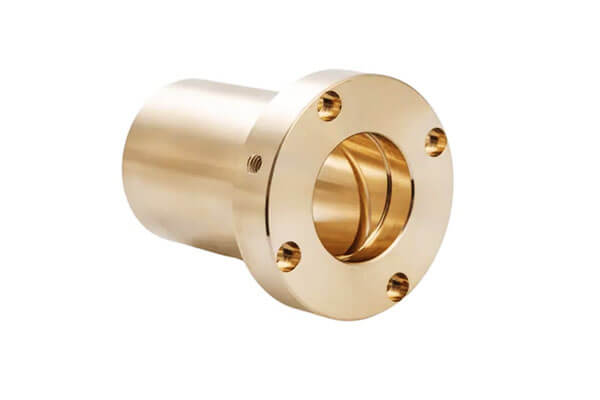
C86300 is fundamentally a casting-oriented alloy, and it is commercially supplied as continuous cast, centrifugal cast, and sand cast materyal na bagay.
It is also covered by several foundry-related specifications, kasama na ang ASTM B505/B505M for continuous castings, ASTM B271/B271M for centrifugal castings, ASTM B584 for sand castings, at ASTM B763/B763M for valve castings.
That specification breadth is a strong signal that C86300 is intended for serious structural and wear-service cast components rather than for simple decorative or general-purpose brass parts.
From a foundry standpoint, C86300 is not an especially forgiving alloy.
Its published casting characteristics show low casting yield, high drossing, medium fluidity, low gassing, low effect of section size, at high shrinkage in solidification.
Sa praktikal na mga termino, that means successful production depends heavily on melt cleanliness, controlled pouring practice, and a well-designed gating and feeding system.
The alloy can make excellent castings, but only when the foundry treats oxide control and shrinkage compensation as first-order variables.
Machining
C86300 is machinable, but not in the free-cutting sense. Its published machinability rating is 8, which is very low relative to free-machining brasses.
Sa praktikal na mga termino, this means machining is possible, but tool wear, chip control, and surface finish demand more attention than they would for a leaded brass.
C86300 should therefore be selected for performance first, not for machining convenience.
Pagsali sa
Joining behavior is another area where C86300 shows its “performance alloy” character.
Published fabrication guidance rates soldering as poor, brazing as poor, oxyacetylene welding as poor, at gas-shielded arc welding as poor, habang ang coated metal arc welding is rated good.
Sa madaling salita, this is not an alloy that rewards casual joining methods.
That matters in design. If a component is likely to be assembled by soft soldering or brazing, C86300 is usually the wrong choice.
If joining is unavoidable, the design and procedure should be developed around the one clearly acceptable route: coated metal arc welding, with appropriate qualification and attention to distortion, input ng init, and joint design.
Paggamot ng Heat
C86300 does not respond to conventional heat treatment in the way precipitation-hardening alloys do.
Its strength comes from composition and cast structure, not from a hardening cycle that significantly increases mechanical properties.
That means you should not expect a heat-treatment step to transform C86300 into a materially different strength class.
What can be used, gayunpaman, ay pampawala ng stress. Published data indicate a stress-relief condition of 500°F / 260°C, with time at temperature of 1 hour per inch of wall thickness.
This is a residual-stress management step, not a strengthening treatment.
It is useful when the casting or machined component needs improved dimensional stability after heavy machining or fabrication, but it should not be mistaken for a property-enhancement process.
6. Advantages and Limitations of C86300 Manganese Bronze
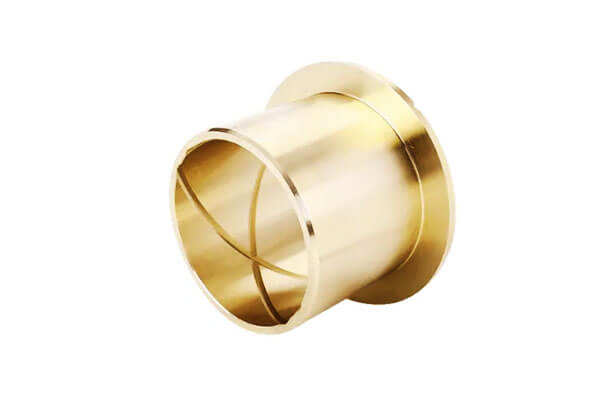
Core Advantages
High strength for a copper alloy.
C86300 is designed as a severe-duty bronze, not a general-purpose brass.
Its alloying system gives it very high load-bearing capability, and copper-alloy references place it among materials suited for heavy loads and shock loads under slow speeds.
Excellent wear and anti-galling behavior.
This alloy performs well in sliding contact applications where surface durability matters more than electrical conductivity or easy machining.
Its use in slow-speed heavy-load bearings and wear-prone components reflects that strength-plus-wear profile.
Magandang paglaban sa kaagnasan.
C86300 is repeatedly described as corrosion resistant, which is one reason it is used in marine hardware, propeller-related components, Mga timon, and other exposure-prone parts.
In service, this corrosion resistance is especially valuable when combined with its strength and wear resistance.
Strong performance in slow-speed, high-load service.
The alloy family is particularly well suited to slow-speed, heavy-load bearings, provided the shaft is hard and the environment is not abrasive.
Copper bearing-material guidance also notes that these manganese bronzes can operate at high loads, but they need good lubrication and nonabrasive operating conditions.
Available in multiple casting routes.
C86300 can be produced as continuous cast, centrifugal cast, sand cast, and precision cast material, which gives engineers flexibility in part size, geometry, and production route.
Main Limitations
Low machinability.
C86300 is not a free-machining alloy. Its machinability rating is only 8, which means tool wear, chip control, and surface finish must be managed carefully.
It is a performance bronze, not a shop-friendly brass.
Casting is demanding.
The alloy shows low casting yield, high drossing, medium fluidity, low gassing, at high shrinkage in solidification.
That combination means sound castings require strong process discipline, good feeding design, and careful melt control.
Joining options are limited.
Published fabrication guidance rates soldering, brazing, oxyacetylene welding, and gas-shielded arc welding as poor, while coated metal arc welding is the practical exception.
Sa madaling salita, C86300 is not a convenient alloy for simple joining workflows.
Not ideal for dirty or abrasive operating conditions.
Copper bearing-material guidance warns that manganese bronze bearings need high shaft hardness at nonabrasive operating conditions,
and that they do not tolerate dirty lubrication well because they have little capacity to embed debris.
7. Applications of C86300 Manganese Bronze
Heavy-Duty Marine Components
C86300 is widely used in marine-related hardware because it combines corrosion resistance with wear resistance and structural strength.
Typical examples include mga propeller, Mga timon, mga clamp, Mga pabalat, and boat hardware.
Mga Bearings at Bushings
One of the alloy’s classic roles is in slow-speed, heavy-load bearings at mga bushing. This is one of the alloy’s most important engineering niches.
Mga Gear, Cams, and Motion-Transmission Parts
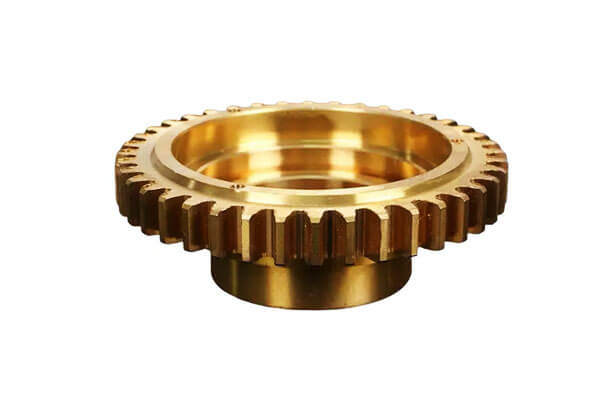
C86300 is commonly used in mga gears, cams, and machine components that need surface durability under high contact stress.
Hydraulic and Valve Components
The alloy is a frequent choice for hydraulic cylinder parts, large valve stems, at screwdown nuts.
These applications demand good compressive strength, Paglaban sa Pagsusuot, at paglaban sa kaagnasan, especially where motion is repetitive and lubrication is imperfect.
Structural and Industrial Hardware
C86300 also appears in bridge pins, struts, mga frame, mga panaklaw, mga fastener, and builders’ hardware.
Special-Load and Heavy-Service Equipment
Copper-alloy references connect manganese bronzes to heavy loads and shock loads under slow speeds,
kasama na ang aircraft landing gear bearings and other control-surface or structural parts where dimensional integrity is critical.
8. C86300 vs. Competing Alloys: What Sets It Apart
| Comparison item | C86300 | C95400 | C95500 |
| Alloy family / Pagpoposisyon | Manganese bronze; a high-strength yellow brass designed for heavy-duty mechanical service. | Aluminum bronze; a broad-purpose structural bronze used widely for wear and load service. | Nickel aluminum bronze; a severe-service alloy with stronger marine and wear-oriented positioning. |
| Representative continuous-cast tensile strength | 110 ksi minimum. | 85 ksi minimum. | 95 ksi minimum. |
| Representative continuous-cast yield strength | 62 ksi minimum. | 32 ksi minimum.
) |
42 ksi minimum. |
| Representative continuous-cast elongation | 14% minimum na. | 12% minimum na.
) |
10% minimum na. |
| Densidad ng katawan | 0.283 lb/cu in; specific gravity 7.83. | 0.269 lb/cu in; specific gravity 7.45. | 0.272 lb/cu in; specific gravity 7.53. |
| Kondaktibiti ng kuryente | 8% IACS. | 13% IACS. | 8% IACS. |
| Thermal kondaktibiti | 20.5 Btu/sq ft/hr/°F. | 33.9 Btu/sq ft/hr/°F. | 24.2 Btu/sq ft/hr/°F. |
| Modulus of elasticity | 14,200 ksi. | 15,500 ksi. | 16,000 ksi. |
| Machinability rating | 8. | 60. | 50. |
| Casting behavior | Low casting yield, high drossing, medium fluidity, low gassing, high shrinkage in solidification. | Low casting yield, high drossing, medium fluidity, medium gassing, high shrinkage in solidification. | Low casting yield, high drossing, medium fluidity, medium gassing, high shrinkage in solidification. |
Pagsali sa / gawa gawa lang |
Soldering poor, brazing poor, oxyacetylene welding poor, gas-shielded arc welding poor, coated metal arc welding good. | Soldering good, brazing good, oxyacetylene welding not recommended, gas-shielded arc welding good, coated metal arc welding good. | Soldering good, brazing fair, oxyacetylene welding not recommended, gas-shielded arc welding good, coated metal arc welding good. |
| Typical service emphasis | Slow-speed heavy-load bearings, mga bushing, mga gears, cams, hydraulic cylinder parts, bridge pins, mga propeller, balbula stems, at marine hardware. | Mga bearing, mga bushing, mga gears, mga katawan ng balbula, mga bahagi ng pump, hot mill guides, mga bahagi ng landing gear, and industrial wear components. | Hardware ng dagat, mga katawan ng balbula, mga bearing, mga bushing, mga gears, propeller-related parts, wear plates, and severe-service industrial parts. |
9. Pangwakas na Salita
C86300 manganese bronze is a testament to the power of material engineering, combining the castability of brass, the strength of steel, and the corrosion resistance of aluminum bronzes into a single, versatile material.
Its carefully balanced chemical composition—copper, sink, mangganeso, aluminyo, and iron—creates a multi-phase microstructure
that delivers exceptional strength, Paglaban sa Pagsusuot, at ductility, making it the go-to choice for the most demanding heavy-duty applications.
From its role in heavy machinery bearings and marine propeller hubs to aerospace landing gear and civil infrastructure, C86300 solves the limitations of conventional copper alloys and even some steels.
Its ability to withstand high loads, malupit na kapaligiran, and cyclic loading—while remaining castable and machinable—sets it apart as a true workhorse in engineering.
For anyone seeking a material that balances strength, Paglaban sa Pagsusuot, and corrosion resistance for heavy-duty use, C86300 is not just a choice—it is the standard.
Mga FAQ
Can C86300 be used in self-lubricating applications?
Oo nga, but only when modified.
C86300 is frequently used as the base metal for Graphite-Plugged Bearings, where solid lubricant plugs are inserted into the bronze to allow for oil-free operation in harsh environments.
Is C86300 the same as “Manganese Bronze”?
C86300 is the most common “High-Strength” Manganese Bronze. Gayunpaman, there are other grades like C86200 and C86500 with lower strengths.
Always specify the UNS number to ensure correct mechanical properties.
How does C86300 compare to Aluminum Bronze (C95400)?
Both are highstrength alloys. C86300 generally offers higher tensile strength and hardness, while C95400 (Aluminyo Bronze) provides better resistance to cavitation and impact loading.