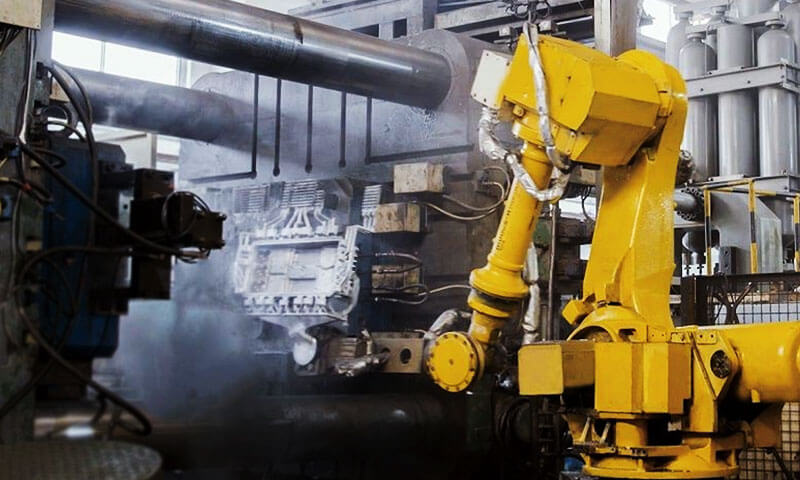
Stainless steel coupling is indispensable in modern machinery, enabling precise torque transmission between rotating shafts in applications ranging from aerospace engines to marine propulsion systems.
Their performance requirements are demanding: mataas na katumpakan, superior kaagnasan paglaban, at integridad ng istruktura must be guaranteed, as even minor misalignment or premature wear can lead to catastrophic equipment failure.
Halimbawa na lang, a single coupling failure in a wind turbine gearbox can halt over 2 MW of power generation, causing $10,000–$50,000 in downtime losses.
Among available manufacturing methods, pamumuhunan paghahagis (Paghahagis ng Lost Wax) has established itself as the gold standard for producing stainless steel couplings, particularly when complex geometries—such as mga flanges, keyways, or internal bores—are required.
Unlike forging, which is restricted to relatively simple shapes, or sand casting, which offers poor precision, pamumuhunan paghahagis naghahatid near-net-shape components with exceptional accuracy.
Dimensional tolerances as tight as ±0.05–0.1 mm and surface finishes as smooth as Ra 1.6 μm are achievable, ensuring reliable fit and extended service life in critical assemblies.
1. The Role of Investment Casting in Stainless Steel Coupling Manufacturing
Stainless steel coupling act as the mechanical bridge in power transmission, enabling torque transfer while accommodating small angular, parallel, or axial misalignments.
Their design must balance lakas ng loob, paglaban sa pagkapagod, at proteksyon ng kaagnasan, making material choice and manufacturing method critical.
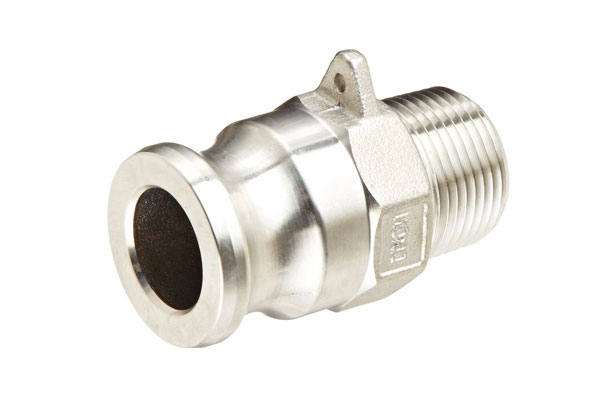
Investment casting addresses three central challenges in coupling manufacturing:
- Complex Geometry – Couplings often integrate flanges, keyways, mga splines, or internal locking features. Investment casting reproduces these shapes directly, reducing part count by 30–50% compared with assemblies machined from multiple components.
- Kahusayan sa Materyal – With stainless steel’s high raw material cost, waste reduction is essential. Investment casting achieves 85–95% yield, kumpara sa 60–70% in forging at 50–60% in machining.
- Katumpakan & Time Savings – Critical surfaces can be cast to ±0.05–0.1 mm katumpakan, minimizing post-machining. This reduces lead times by 40–60% compared to traditional subtractive methods, while ensuring repeatability across high-volume runs.
2. What is an Investment Casting Stainless Steel Coupling?
Core Definition and Function
Isang investment casting stainless steel coupling is a precision-engineered, one-piece component produced through the lost-wax casting process, designed to connect two rotating shafts and ensure reliable torque transmission.
Beyond simple shaft connection, these couplings safeguard system stability by maintaining alignment, minimizing vibration, and protecting adjacent components from mechanical overload.
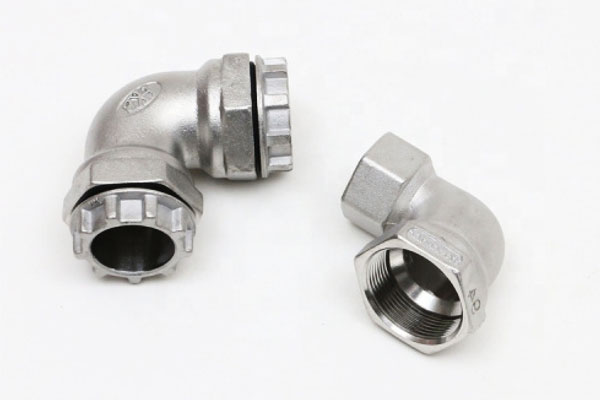
Key structural elements include:
- Bore – The central hole, straight or tapered, often designed with keyways, mga splines, or set screw holes to secure the shaft interface.
- Flange/Hub – The torque-bearing body, which may integrate bolt-hole patterns or rigid hubs to ensure efficient power transfer.
- Flexible Elements (opsyonal) – Rubber spiders, metallic bellows, or diaphragm-style inserts may be incorporated (cast-in or post-assembled) to absorb shock, misalignment, and vibration in dynamic systems.
Key Types of Investment Cast Stainless Steel Couplings
| Coupling Type | Distinctive Design Features | Typical Torque Capacity (N·m) | Representative Applications |
| Rigid Flange Coupling | Two integrally cast flanges, bolted for a fixed shaft connection, with no flexibility | 100 – 100,000 | Heavy-duty equipment such as steel rolling mills, mining crushers |
| Flexible Jaw Coupling | Cast hubs shaped with interlocking jaws; elastomeric spider insert absorbs shock and allows small angular misalignment (±0.5°) | 50 – 5,000 | Mga Pump, HVAC fans, Mga Conveyor |
| Spline Coupling | Bore cast with internal or external splines, enabling torque transfer with limited axial movement | 500 – 20,000 | Automotive transmissions, mga turbine ng gas |
| Disc Coupling | Multiple thin cast stainless discs provide torsional stiffness with flexural compliance, ideal for high-speed service | 1,000 – 50,000 | Aerospace engines, precision gas turbines |
Bakit hindi kinakalawang na asero? The Material Advantages
The choice of hindi kinakalawang na asero for couplings is driven by a combination of paglaban sa kaagnasan, mekanikal na pagganap, and service longevity that alternative materials cannot match:
- Paglaban sa kaagnasan – The self-repairing oksido ng kromo (Cr₂O₃) pelikula shields against rust even in saline or chemically aggressive conditions.
Halimbawang, 316L hindi kinakalawang na asero shows a corrosion rate of only 0.01 mm/year in seawater, kumpara sa 0.5 mm/year for carbon steel. - Lakas ng Mekanikal – Austenitic stainless steels (hal., 304) Eksibit tensile strengths of 515–720 MPa, outperforming carbon steel (400–550 MPa).
Ito ay nagbibigay daan para sa smaller, lighter couplings without compromising torque capacity. - Temperature Stability – Stainless steels such as 321 maintain integrity from cryogenic conditions (-196°C) hanggang sa 870°C, ensuring safe performance in demanding systems like gas turbines or steam plants.
- Kalinisan & Pagsunod sa Regulasyon – Grades like 304 at 316L meet FDA and EU food-contact requirements,
making them indispensable for pharmaceutical mixers, dairy plants, and beverage processing equipment where contamination control is critical.
3. Stainless Steel Grades for Investment Cast Couplings
The performance and reliability of investment cast couplings are highly dependent on the selected stainless steel grade.
| Hindi kinakalawang na asero Grade | Komposisyon (Tinatayang.) | Lakas ng Paghatak (MPa) | Mga Pangunahing Bentahe | Mga Karaniwang Aplikasyon | Mga Pamantayan |
| CF8 / 304 | 18% Cr, 8% Ni | 515–620 | Good general corrosion resistance; matipid sa gastos; easy to cast | General machinery, HVAC, light-duty pumps | ASTM A351 CF8 |
| CF8M / 316 | 18% Cr, 10% Ni, 2–3% Mo | 515–620 | Superior resistance to chlorides and seawater; higher pitting resistance | Marine equipment, pagproseso ng kemikal, pagkain & inumin | ASTM A351 CF8M |
| 17-4 PH | 17% Cr, 4% Ni + Cu, Nb | 900–1100 | Very high strength after heat treatment; good fatigue resistance | Aerospace couplings, Mga turbine, robotics | ASTM A564 / A705 |
| Duplex 2205 | 22% Cr, 5% Ni, 3% Mo | 620–800 | Excellent stress corrosion cracking resistance; higher yield strength than 316 | Langis & mga gas pipeline, desalination, sa malayo sa pampang | ASTM A995 Grade 4A |
| Super Duplex (S32750 / S32760) | 25% Cr, 7% Ni, 4% Mo, 0.25% N | 800–900 | Exceptional resistance to seawater and aggressive chemicals; PREN >40 | Subsea couplings, offshore rigs, Mga reaktor ng kemikal | ASTM A995 Grade 5A/6A |
4. The Investment Casting Process for Stainless Steel Couplings
Manufacturing stainless steel couplings through pamumuhunan paghahagis (Paghahagis ng Lost Wax, ASTM A958 compliant) involves a highly controlled multi-stage workflow.
Each step is designed to maximize dimensional katumpakan, kalidad ng ibabaw, and material integrity, ensuring that the final coupling can reliably transmit torque under demanding conditions.
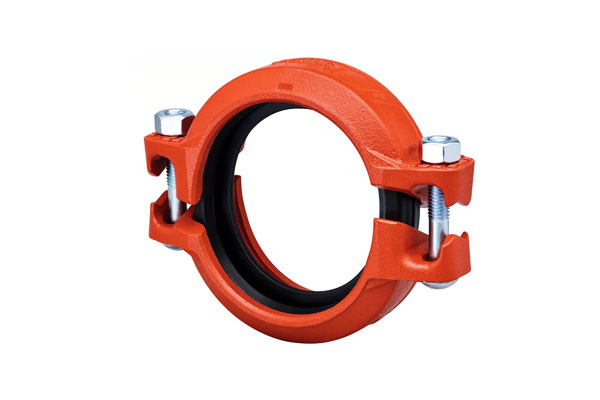
4.1 Wax Pattern Fabrication – Defining Geometry with Precision
The wax pattern acts as the “blueprint” for the final coupling, replicating its geometry at a near-net-shape level:
- Master Pattern: Traditionally CNC-machined from aluminum or tool steel (tolerance ±0.02 mm).
For complex profiles such as spline couplings, SLA 3D-printed masters shorten lead time by 30–50%. - Wax iniksyon: A paraffin-synthetic wax blend is injected into molds under 2–5 MPa presyon, forming precise replicas.
Large couplings (>300 mm) often require split molds to prevent deformation. - Pattern Assembly: Multiple wax patterns (typically 5–10 couplings per tree) are fixed to a wax sprue, enabling batch production.
4.2 Ceramic Shell Building – Creating a High-Strength Mold
The ceramic shell defines both dimensional fidelity at thermal katatagan sa panahon ng paghahagis:
- Prime Coat: A fine ceramic slurry (alumina-zirconia, 5–10 μm) captures intricate details such as keyways or splines, where a 0.1 mm deviation could compromise fit.
- Backup Coats: 4–8 additional layers of coarser ceramic (50–100 μm) reinforce the shell. Final thickness: 6–10 mm for small couplings, hanggang sa 20 mm for large ones.
- Pagpapagaling & Firing: Dried at 25–40°C and fired at 800–1000°C, which both removes wax (“lost wax”) and boosts shell compressive strength to ≥5 MPa.
4.3 Melting and Pouring – Ensuring Alloy Purity
Stainless steel melting is one of the most critical phases, directly determining mechanical and corrosion performance:
- Melting Technology:
-
- Vacuum Induction Melting (VIM) reduces oxygen to ≤0.005%, preventing oxide inclusions.
- For Duplex 2205 or Super Duplex, Vacuum Arc Remelting (VAR) further refines microstructure for stress corrosion resistance.
- Pouring Parameters: Molten steel (1550–1650°C) is introduced via bottom-pouring to minimize turbulence and misruns.
- Kontrol sa Solidification: Ceramic shells are preheated in sand beds at 200–400°C, ensuring gradual cooling in thicker hubs and finer grain in thinner walls—key to preventing shrinkage porosity.
4.4 Post-Casting Finishing – Achieving Functional Performance
Minsan nang tumibay, the casting undergoes a series of finishing steps to reach final specifications:
- Pagtanggal ng Shell: Vibration or high-pressure water jet breaks the ceramic shell cleanly.
- Gate & Runner Removal: Cut using abrasive water jet or precision saw, avoiding thermal stress.
- Paggamot ng Heat (tailored per alloy):
-
- 304/316L: Solution annealing at 1050–1100°C + water quenching restores corrosion resistance.
- 321: Stabilization annealing at 850–900°C prevents carbide precipitation.
- 2205 Duplex: Solution annealed at 1020–1080°C for balanced austenite/ferrite phases (50/50).
- katumpakan machining: Bore diameters, keyways, and flange faces are finished on 5-axis CNC machines, pagkamit ng ±0.02 mm tolerances at Ra 0.8–1.6 μm tapos sa ibabaw.
5. Katumpakan ng Dimensyon, Mga pagpapaubaya & Tapos na sa ibabaw
The performance of a stainless steel coupling depends heavily on its dimensional katumpakan at integridad sa ibabaw.
Investment casting offers near-net-shape capability, minimizing post-machining while meeting strict engineering requirements.
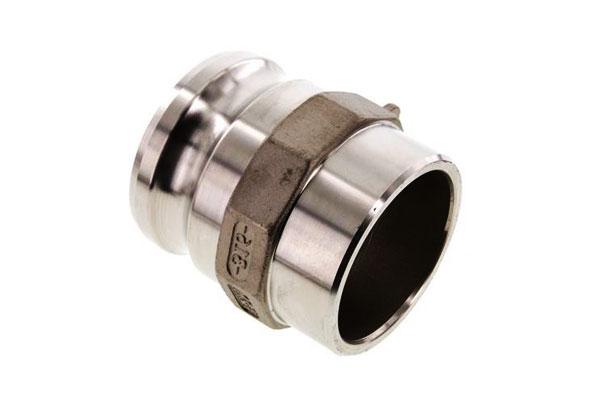
Katumpakan ng Dimensyon & Mga pagpapaubaya
- Casting Tolerance Grades: According to ISO 8062 and ASTM A802, investment castings for couplings typically achieve CT4–CT6 tolerance levels.
- Linear Accuracy: Dimensional tolerances are generally ±0.1–0.3 mm for features up to 100 mm, and scale proportionally (±0.3–0.6 mm) for larger sizes.
- Critical Interfaces: Bore diameters, keyways, and flange faces can be cast to near-net-shape, then CNC-finished to ±0.02 mm katumpakan.
- Geometric Tolerancing (GD&T): Features such as coaxiality, patag, and angularity are controlled within 0.02–0.05 mm, essential to ensure concentric torque transfer and reduce vibration.
Tapos na sa ibabaw
- As-Cast Surface Roughness: Investment castings achieve Ra 3.2–6.3 μm, superior to sand casting (Ra 12.5–25 μm).
- Machined Surfaces: Post-machining reduces roughness to Ra 0.8–1.6 μm, suitable for bore and keyway contact areas.
- Advanced Finishing Options:
-
- Passivation (ASTM A967): Enhances corrosion resistance by restoring Cr₂O₃ protective layer.
- Electropolishing: Binabawasan ang ibabaw pagkamagaspang sa Ra 0.2–0.4 μm, often required in hygienic applications (pagkain, Pharma, biotech).
- Salamin sa Buli: Achieved for marine couplings, minimizing crevice corrosion initiation.
6. Coupling Typologies
Couplings can be broadly categorized into shaft couplings at pipe couplings, each designed to serve distinct mechanical or fluid-transfer purposes.
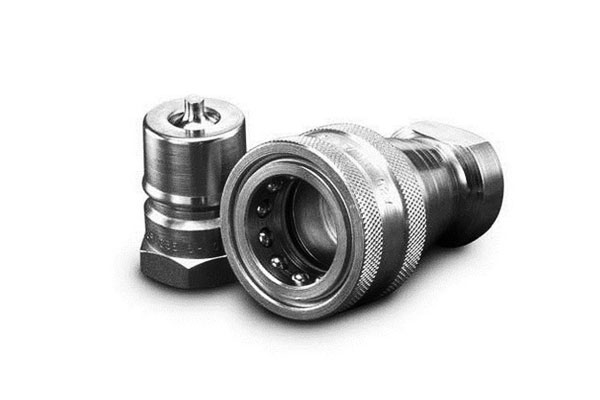
Shaft Couplings
Shaft couplings transmit torque between rotating shafts in machinery and are critical to motion integrity.
- Rigid Flange Couplings
-
- Mga Tampok: Two cast flanges bolted together; no allowance for misalignment.
- Investment Casting Fit: Excellent for producing integrated bolt patterns and hubs with minimal machining.
- Jaw Couplings (May kakayahang umangkop)
-
- Mga Tampok: Cast jaw-shaped hubs with elastomeric spiders; allow small misalignments.
- Investment Casting Fit: Near-net-shape production of jaw profiles and keyways reduces CNC time by 40–60%.
- Spline Couplings
-
- Mga Tampok: Internal/external splines for sliding or torque transfer.
- Investment Casting Fit: 3D-printed wax patterns replicate fine spline geometry, impractical in forging.
- Disc & Oldham Couplings
-
- Mga Tampok: Thin metallic discs or offset hubs for flexible motion transfer.
- Investment Casting Fit: Precision thin-walled sections (1.5-3 mm) achievable only with investment casting.
Pipe Couplings
Pipe couplings ensure fluid-tight or quick-connect joints in industrial piping systems.
- Union Couplings
-
- Mga Tampok: Threaded ends with sealing seats.
- Investment Casting Fit: Pinapayagan ang paghahagis ng integrated threads and seats, lowering leak risk.
- Camlock / Quick-Connect Couplings
-
- Mga Tampok: Lever arms and grooves for rapid hose/pipeline connection.
- Investment Casting Fit: Masalimuot na cam arms and groove geometries cast directly, saving assembly cost.
- Grooved Couplings
-
- Mga Tampok: Pipe ends joined via grooved housings and gaskets.
- Investment Casting Fit: Strong yet lightweight housings produced with uniform wall thickness.
- Hygienic Clamp Couplings (Tri-Clamp)
-
- Mga Tampok: Widely used in food, inumin, and pharma.
- Investment Casting Fit: Cast-to-size smooth radii and crevice-free surfaces, essential for FDA/3-A compliance.
7. Applications of Stainless Steel Coupling
Stainless steel couplings produced by investment casting are widely deployed in industries where paglaban sa kaagnasan, katumpakan, and mechanical reliability ay kritikal.
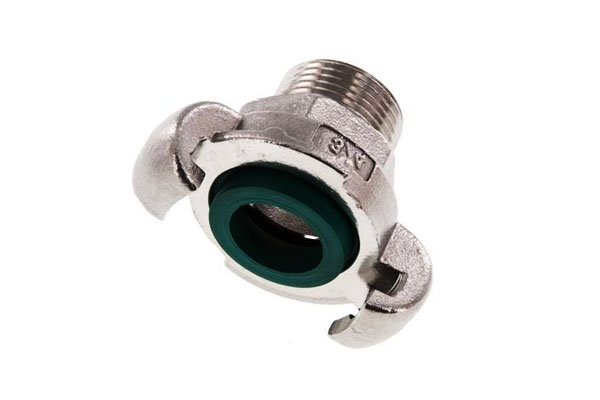
Marine & Malayo sa pampang
- Mga Aplikasyon: Ship propulsion shafts, offshore drilling pumps, Mga sistema ng ballast water.
Pagkain, Email Address * & Mga parmasyutiko
- Mga Aplikasyon: Mixers, Mga Conveyor, hygienic pumps, CIP/SIP pipelines.
Pagproseso ng Kemikal & Pulp/Paper
- Mga Aplikasyon: Agitators, chemical dosing pumps, digesters, bleaching lines.
Paggamot ng Tubig & Desalination
- Mga Aplikasyon: High-pressure pumps, reverse osmosis units, aerators, blowers.
General Machinery & Motion Systems
- Mga Aplikasyon: Gearboxes, mga compressor, Mga makina ng CNC, robotics.
8. Comparison with Other Manufacturing Methods
Investment casting offers unique advantages for stainless steel couplings, partikular na ang when the parts have complex geometries or require high precision.
Below is a comparison with common manufacturing methods:
| Tampok / Paraan | Pamumuhunan sa Paghahagis | Pagbubuo ng mga | buhangin paghahagis | Bar-stock Machining / CNC |
| Typical Complexity | Kumplikadong geometries, integrated keyways, mga flanges, internal bores | Simple, symmetric shapes; limited internal features | Malaki ang, Mga simpleng hugis; open geometries | Any shape; limited by stock size |
| Katumpakan ng Dimensyon | ±0.05–0.1 mm | ±0.2–0.5 mm | ±0.5-1.0 mm | ±0.01–0.05 mm |
| Paggamit ng Materyal | 85–95% yield | 60–70% | 70–80% | 50–60% |
| Tapos na sa ibabaw | Ra 0.8–1.6 μm (post-polish) | Ra 1.6–3.2 μm | Ra 3.2–6.3 μm | Ra 0.8–1.6 μm |
| Dami ng Produksyon | Mababa hanggang sa katamtaman | Katamtaman hanggang mataas | Mababa hanggang sa katamtaman | Mababa hanggang sa katamtaman |
| Mga Pangunahing Bentahe | Near-net-shape, Minimal na Machining, mataas na kaagnasan paglaban, suitable for precise torque transfer | Excellent mechanical strength, good for high-stress applications | Mababang gastos sa tooling, suitable for very large parts | Ultimate precision, masikip na mga tolerance, easy to prototype |
| Mga Limitasyon | Initial tooling cost, slower cycle than forging for very high volume | Cannot easily produce internal bores or complex flanges; more machining required | Poor dimensional control, high porosity risk, extensive post-machining | High material waste, labor-intensive for complex geometries, not cost-effective for large parts |
Mga Pangunahing Pananaw
- Pamumuhunan sa paghahagis is the preferred choice for couplings with complex geometry—like spline hubs, disc couplings, or flanged rigid couplings—where forging or sand casting would require multiple assemblies or extensive machining.
- Material efficiency is higher than CNC machining o pagkukubli, reducing the cost of high-grade stainless steel like 316L or Duplex 2205.
- Dimensional tolerances and surface finish achievable by investment casting allow for precision torque transfer at smooth shaft alignment, kritikal sa aerospace, marine, and food/pharma applications.
- Para sa extremely high-volume, simple couplings, forging may still be more cost-effective, while sand casting suits very large but low-precision parts.
9. Pangwakas na Salita
Investment casting stainless steel couplings combine the mechanical strength of stainless alloys with the precision and efficiency of lost-wax casting.
By selecting the right alloy (316 for corrosion, 17-4PH for strength, duplex for chlorides) and leveraging investment casting’s accuracy,
Manufacturers achieve cost-effective, long-life couplings that serve reliably across industries from marine to pharmaceuticals.
Investment casting not only ensures precision and corrosion resistance but also offers sustainability advantages by minimizing machining waste and extending service life.
Mga FAQ
Can investment cast stainless steel couplings be customized for non-standard shaft sizes?
Yes—3D-printed wax patterns enable custom bore diameters (10–500 mm), keyway profiles, and flange dimensions.
Prototypes can be produced in 2–3 weeks, with production runs scaling to 10,000+ Mga yunit / taon.
What is the maximum torque capacity of an investment cast stainless steel coupling?
A 200 mm diameter CD4MCuN (2205) rigid flange coupling handles up to 50,000 N·m torque—suitable for offshore propulsion systems.
Small CF8 (304) jaw couplings (50 mm diameter) handle 1,200 N·m for pumps.
How does investment casting ensure corrosion resistance in marine couplings?
VIM/VAR melting minimizes oxygen content (<0.005%), while passivation enhances the chromium oxide layer.
CD4MCuN (2205) couplings with PREN 35 survive 10,000+ hours of ASTM B117 salt spray testing with no red rust.
Are investment cast stainless steel couplings suitable for high-temperature applications?
Yes—CF8M (316L) at 321 grades operate at up to 870°C. Halimbawa na lang, 321 couplings in gas turbine auxiliary systems handle 600°C exhaust with no strength loss.
What standards apply to investment cast stainless steel pipe couplings for pressure service?
EU PED (2014/68/EU) and ASME B16.5 (flange dimensions) for pressure ratings up to ANSI Class 600. NACE MR0175 applies to couplings in sour gas/water service (Mga kapaligiran ng H ₂ S).