In industries where operating temperatures routinely exceed 500°C—power generation, petrochemical processing, ваздухопловство, and industrial furnace operations—standard materials fail rapidly.
Ordinary carbon steels oxidize and scale. Even many conventional stainless steels lose their strength and corrosion resistance when subjected to prolonged thermal exposure. Ево где heat resistant stainless steel becomes indispensable.
Heat resistant stainless steels are a specialized family of alloys engineered to maintain their mechanical integrity, отпорност на корозију, and dimensional stability at elevated temperatures.
Unlike standard stainless steels, which are primarily designed for corrosion resistance at ambient conditions, heat resistant grades are formulated to resist oxidation, пузати, термички умор, and microstructural degradation at temperatures that would destroy lesser materials.
1. What Is Heat Resistant Stainless Steel?
Отпоран на топлоту нерђајући челик is a group of stainless steel grades specifically selected or developed for operation at elevated temperatures.
Their principal requirements include resistance to high-temperature oxidation, retention of useful mechanical strength, and stability under prolonged thermal exposure.
Conventional stainless steels are often selected primarily for corrosion resistance in aqueous environments. Heat-resistant grades place greater emphasis on performance in hot gases, furnace atmospheres, combustion products, and other elevated-temperature environments.
The Role of Chromium
Chromium is essential to the performance of most heat resistant stainless steels.
At elevated temperatures in oxidizing environments, it supports the formation of a chromium-rich oxide scale that can limit further oxygen diffusion into the metal.
When the scale remains continuous and adherent, it acts as a protective barrier.
If it cracks, spalls, or becomes chemically unstable, oxidation can accelerate and lead to progressive material loss.
The effectiveness of this protective layer depends on chromium content, температура, gas composition, време излагања, and the alloy’s ability to maintain scale adhesion during thermal cycling.
The Role of Nickel
Nickel is particularly important in austenitic heat-resistant stainless steels. It stabilizes the austenitic microstructure and contributes to elevated-temperature mechanical performance, including creep resistance.
Nickel also influences the alloy’s behavior during thermal cycling and in certain high-temperature corrosive atmospheres.
Its contribution is especially valuable in components operating under sustained loads, where both oxidation resistance and long-term dimensional stability matter.
The Contribution of Other Alloying Elements
Other elements help tailor heat resistant stainless steels for specific service conditions.
| Легирајући елемент | Principal Contribution | Engineering Consideration |
| Хром (ЦР) | Supports oxidation resistance through protective oxide formation | Sufficient chromium must remain available to maintain the protective scale |
| Никл (У) | Stabilizes austenite and contributes to high-temperature strength | Increases material cost and can affect performance in certain sulfur-rich environments |
| Силицијум (И) | Can improve protective scale formation and oxidation resistance | Its benefit depends on alloy composition and operating atmosphere |
| Угљеник (Ц) | Can contribute to high-temperature strength through carbide formation | Excessive or uncontrolled carbide precipitation can reduce ductility and local corrosion resistance |
| Титанијум (Од) | Stabilizes selected grades against certain forms of sensitization | Stabilization does not eliminate every high-temperature degradation mechanism |
| Ниобијум (Наклопити) | Supports stabilization and high-temperature strength in selected grades | Grade-specific composition and heat treatment are important |
The final alloy composition must balance these characteristics.
Increasing one element does not automatically improve every property, because oxidation resistance, снага пузања, топлотна стабилност, and fabrication behavior may respond differently to compositional changes.
2. High-Temperature Degradation Mechanisms
Understanding how metals deteriorate under elevated temperatures is essential for selecting suitable heat-resistant alloys.
У индустријским пећима, петрохемијска опрема, heat-treatment systems, and high-temperature process machinery, components may experience oxidation, пузати, Карбуризација карбуризације, and sulfidation simultaneously.
The severity of each mechanism depends on temperature, стрес, време излагања, састав легура, and the surrounding atmosphere.
Oxidation and Scale Spalling
На повишеним температурама, metals react with oxygen in the surrounding atmosphere to form oxide scales.
Many heat-resistant stainless steels rely on a chromium-rich oxide layer to slow further oxidation.
When this layer remains continuous and adherent, it can provide effective protection to the underlying metal.
Under severe thermal cycling, међутим, differences in thermal expansion between the oxide scale and the metal substrate can generate substantial stresses.
Oxide growth stresses, температурни градијенти, and inadequate scale adhesion can further contribute to cracking and spalling.
Once the protective scale breaks away, fresh metal becomes exposed to the atmosphere, allowing oxidation to continue and potentially accelerating material loss.
The resistance of a heat-resistant alloy to oxidation therefore depends not only on its chromium content, but also on its ability to form and maintain a stable protective scale under actual operating conditions.
Creep Deformation
Creep is the time-dependent, permanent deformation of a material subjected to sustained stress, Посебно на повишеним температурама.
It becomes increasingly important when the operating temperature is sufficiently high relative to the material’s absolute melting temperature.
A homologous temperature of approximately (0.4T_m), са (T_m) expressed in kelvin, is often used as a general reference, although the practical threshold varies with the alloy, примењени стрес, and service duration.
Depending on the material and operating conditions, creep can involve dislocation motion, diffusion-related processes, and grain boundary deformation.
Over extended service, the resulting strain may cause pipes to sag, furnace fixtures to distort, or load-bearing components to lose dimensional stability.
У тешким случајевима, progressive creep damage can lead to crack formation and eventual rupture.
For components operating under sustained loads at high temperatures, alloy selection must therefore consider creep strength and long-term dimensional stability rather than relying solely on room-temperature tensile properties.
Carburization and Metal Dusting
In carbon-rich industrial atmospheres, carbon can diffuse into a metal and react with alloying elements to form carbides.
Овај процес, known as carburization, can alter the material’s microstructure, reduce ductility, and promote local depletion of chromium when chromium carbides form. Such chromium depletion may impair the alloy’s ability to maintain a protective chromium-rich oxide scale.
Metal dusting is a distinct but related form of degradation associated with certain carbon-rich, low-oxygen-potential environments.
Under susceptible conditions, the metal can break down into fine particles accompanied by carbon deposition, resulting in severe localized material loss.
These mechanisms are particularly relevant to selected petrochemical and chemical-processing equipment exposed to carbonaceous process gases.
Suitable alloy selection requires consideration of carbon activity, радна температура, atmosphere composition, and the ability of the alloy to maintain protective surface films.
Сулфидација
Sulfidation occurs when metals react with sulfur-containing species in high-temperature environments, producing metal sulfides on or beneath the surface.
Depending on the alloy and atmosphere, these sulfide layers may provide less effective protection than stable oxide scales, allowing corrosion to progress more rapidly.
Sulfidation can be particularly important in petrochemical processing, Системи за сагоревање, and industrial equipment exposed to sulfur-bearing gases or deposits.
The rate of attack depends on temperature, sulfur potential, gas composition, and alloy chemistry.
Selecting an appropriate heat-resistant alloy therefore requires evaluating the actual process atmosphere rather than considering operating temperature alone.
Where oxidation, Карбуризација карбуризације, and sulfidation risks overlap, both the alloy composition and the stability of its protective surface layers must be considered.
Thermal Fatigue and Thermal Shock
Thermal fatigue results from repeated temperature changes that generate cyclic stresses within a component.
Thermal shock involves more abrupt temperature changes that create steep thermal gradients and potentially high localized stresses.
These effects are especially relevant to furnace fixtures, зрачеће цеви, корпе за термичку обраду, and equipment that repeatedly undergoes heating and cooling.
Оштар углови, нагле промене у дебљини зида, welded joints, and constrained sections can increase local stress concentrations.
Appropriate geometry, controlled heating and cooling rates, and suitable alloy selection help reduce the risk of cracking.
3. Metallurgical Classifications & Core Alloy Grades
Heat-resistant stainless steels are commonly classified by their microstructure into austenitic and ferritic grades, each offering different combinations of oxidation resistance, Снага високог температура, and resistance to specific furnace atmospheres.
The appropriate grade depends on operating temperature, Термални бициклизам, механичко оптерећење, and exposure to oxidizing or sulfur-bearing gases.
Comparison of Major Heat Resistant Stainless Steel Grades
| Разреда | Америчка ознака | Микроструктура | Approximate Oxidation-Service Reference | Key Characteristics and Applications |
| 309 / 309С | С30900 / S30908 | Аустенитски | Around 1,000°C in suitable oxidizing conditions | Higher chromium and nickel contents than 304 provide improved scaling resistance. Used for furnace equipment, annealing boxes, baffle plates, and heat-treatment fixtures. |
| 310 / 310С | С31000 / S31008 | Аустенитски | Around 1,050°C under suitable conditions | High chromium and nickel contents support oxidation resistance and high-temperature strength. Used for furnace components, корпе за термичку обраду, and selected heat-exposed industrial equipment. |
| 314 | S31400 | Аустенитски | Up to approximately 1,150°C in suitable conditions | High chromium and nickel contents, combined with elevated silicon, support oxidation resistance. Used for furnace equipment, grates, and heat-treatment fixtures. |
253 МА |
S30815 | Аустенитски | Approximately 1,100–1,150°C, depending on conditions | Designed for oxidation and creep resistance, including cyclic service. Used for radiant tubes, опрема за пећи, ротационе пећи, and power-generation components. |
| 409 | С40900 | Феритни | Primarily lower-temperature exhaust duty rather than the most severe furnace environments | Titanium-stabilized grade with economical oxidation resistance. Commonly used for automotive exhaust pipes, пригушивачи, and related components. |
| 446 | С44600 | Феритни | Up to approximately 1,090°C in suitable oxidation conditions | High chromium content provides strong oxidation and resistance to certain sulfur-bearing environments, but elevated-temperature mechanical strength is comparatively limited. Used for furnace parts, dampers, рекуператори, and combustion equipment. |
These temperatures are approximate oxidation-resistance references, not universal maximum operating limits.
Actual service capability depends on atmosphere composition, continuous or cyclic exposure, механичко оптерећење, геометрија компоненти, and the specific product condition.
4. Key Properties of Heat Resistant Stainless Steel
The performance of heat resistant stainless steel depends on a combination of chemical composition, микроструктура, high-temperature mechanical behavior, and the stability of protective surface scales.
Отпорност на оксидацију високог температура
Oxidation resistance is one of the defining characteristics of heat resistant stainless steel.
Chromium helps form a protective oxide scale, while silicon and other alloying elements can influence scale structure and stability.
The effectiveness of this scale depends on its continuity, лепак, and ability to remain protective under changing temperature and atmospheric conditions.
When evaluating a grade, engineers should distinguish between continuous oxidation resistance and performance under thermal cycling.
A component exposed to a relatively stable furnace temperature may experience different scale behavior from one that is repeatedly heated and cooled.
Creep Strength and Long-Term Stability
На повишеним температурама, a material may gradually deform under a load that it could withstand for a short period without failure.
Creep properties are therefore critical for furnace supports, зрачеће цеви, suspended fixtures, and other components exposed to sustained mechanical stress.
Material selection should use relevant creep data at the expected temperature and stress level.
In applications where dimensional stability is critical, the design must consider cumulative deformation over the entire service life, not merely short-term strength.
Thermal Fatigue Resistance
Thermal fatigue resistance is important for components subjected to repeated temperature fluctuations.
Austenitic and ferritic grades have different thermal expansion behavior, which affects the stresses generated during heating and cooling.
Austenitic stainless steels commonly exhibit higher thermal expansion and lower thermal conductivity than carbon steels, making distortion control especially important during fabrication and welding.
Practical measures include avoiding unnecessary stress concentrations, controlling section transitions, selecting suitable weld sequences, and managing heating and cooling rates.
Resistance to Aggressive Atmospheres
High-temperature corrosion depends heavily on the surrounding gas chemistry.
| Окружење | Main Risk | Material Selection Priority |
| Oxidizing atmosphere | Scale growth and spalling | Stable protective oxide scale |
| Carbon-rich atmosphere | Carburization and possible metal dusting | Resistance to carbon uptake and the specific process atmosphere |
| Sulfur-bearing atmosphere | Sulfidation and hot corrosion | Compatibility with sulfur potential and oxygen potential |
| Поновљени термални циклуси | Oxide-scale damage and thermal fatigue | Scale adhesion and thermal-cycle performance |
| High temperature under sustained load | Creep and rupture | Long-term mechanical strength |
No single grade is optimal for all these conditions. When several degradation mechanisms occur simultaneously, selection should be based on the combined environment rather than a single property such as chromium content.
Израда и израда и израда
Heat resistant stainless steels can be formed, обрађен, и заварени, but their fabrication behavior differs by grade.
Austenitic grades tend to work harden and can distort during welding because of their thermal expansion and conductivity characteristics.
Ferritic grades may present different forming limitations and can become embrittled under unsuitable thermal exposure.
За прецизне делове, fabrication planning should include material condition, forming sequence, weld procedure, додатак за машинску обраду, and dimensional inspection.
У многим апликацијама, controlling residual stresses and distortion is as important as meeting the nominal material specification.
5. Manufacturing and Fabrication of Heat Resistant Stainless Steel Components
The manufacturing process has a direct impact on the dimensional accuracy, микроструктура, and high-temperature performance of heat resistant stainless steel components.
Цастинг, формирање, обрада, заваривање, and heat treatment must be selected according to the alloy grade, геометрија компоненти, and intended service conditions.
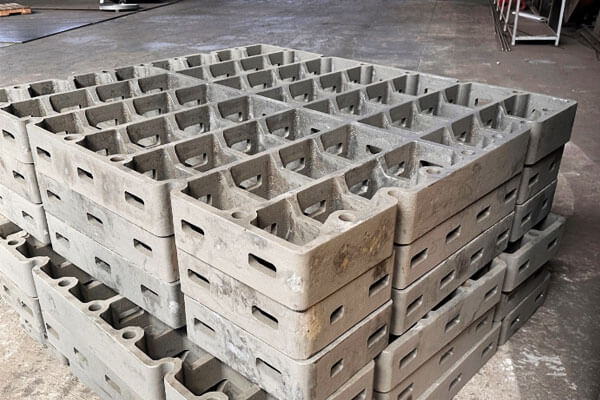
Прецизно ливење
Precision casting is suitable for manufacturing heat resistant stainless steel components with complex geometries, Унутрашње одломаке, or large cross-sections.
| Процес ливења | Опис | Типичне апликације |
| Песак Цастинг | Flexible process suitable for large and complex components, with relatively low tooling costs | Компоненте пећи, Тела вентила, кућишта отпорна на топлоту |
| Инвестиција Цастинг | Uses wax patterns and ceramic shells to produce intricate shapes with good dimensional accuracy | Complex furnace fixtures, precision heat-resistant components |
| Центрифугалан Цастинг | Uses mold rotation to distribute molten metal, making it suitable for tubular and cylindrical components | Зрачеве цеви, reformer tubes, furnace rollers |
| Шкољка Калупљење | Uses resin-bonded sand shells to achieve good surface finish and dimensional consistency | Small and medium-sized furnace components and precision castings |
Casting quality depends on controlled melting, сипајући, дизајн калупа, очвршћавање, и превенцију кварова.
The process should be selected according to component size, геометрија, карактеристике легуре, and required inspection level.
Формирање
Heat resistant stainless steels can be hot formed or cold formed, Зависно од оцене, required geometry, и материјално стање.
| Forming Process | Опис | Кључна разматрања |
| Hot Формирање | Forms the material at elevated temperatures to reduce deformation resistance | Typical working temperatures vary by grade; control heating, forming temperature, and subsequent cooling to prevent excessive grain growth or undesirable phase formation |
| Прехлађен Формирање | Shapes the material at or near room temperature | Austenitic grades can work-harden rapidly, increasing forming loads and the risk of cracking |
| Дубоко Цртање | Produces cup-shaped or hollow components from sheet metal | Ductile austenitic grades are often suitable, subject to material thickness, алат за алате, and draw ratio |
| Савијање | Forms angles, криве, and other profiles | Account for springback, отврдњавање, minimum bend radius, и површинских оштећења |
For hot forming, a broad temperature range of approximately 900–1,200°C may be relevant to certain grades and operations, but it should not be applied universally.
The approved working range must follow the specific alloy’s processing recommendations.
Обрада
Heat resistant stainless steels can be difficult to machine because many grades combine relatively high strength, жилавост, отврдњавање, и ниска топлотна проводљивост.
Heat generated during cutting can concentrate near the cutting edge, Акцелерациона трака алата.
| Machining Parameter | General Recommendation | Кључна разматрања |
| Средство Материјал | Обложен карбид; cermets may be suitable for selected finishing operations | Choose tool grade and coating according to the alloy and operation |
| Сечење Брзина | Approximately 60–120 m/min as an initial reference for certain carbide operations | Some heat-resistant grades require lower speeds; follow tooling recommendations and validate the conditions |
| Хранити се Рате | Approximately 0.1–0.3 mm/rev as a starting reference for suitable turning operations | Adjust for insert geometry, workpiece stiffness, површинска завршна обрада, и дубина сечења |
Дубина сечења |
Roughing: approximately 1–3 mm; завршњак: approximately 0.2–0.5 mm | Depends on component geometry, machine rigidity, tool setup, and stock allowance |
| Расхладна течност | Flood coolant where appropriate | Supports heat removal, подмазивање, и евакуација чипова |
| Work Очвршћавање Контрола | Use sharp tools and maintain a consistent feed | Avoid prolonged rubbing, dwell, and repeated cutting over hardened surfaces |
These machining values are indicative starting points rather than universal parameters.
Actual cutting conditions should be established according to the grade, способност машине, tooling manufacturer’s recommendations, and required surface quality.
Заваривање
Welding may be required when heat resistant stainless steel components include fabricated assemblies or welded connections.
The welding procedure must account for alloy composition, заједнички дизајн, радна температура, and the potential effects of the heat-affected zone.
| Welding Aspect | General Recommendation | Кључна разматрања |
| Заваривање Процеси | Гтав (Камен), Раскопер (MIG), or SMAW, as appropriate | Select the process according to component thickness, joint geometry, и захтеви производње |
| Род Метал | Compatible filler selected for the base grade and service conditions | На пример, ER310 may be appropriate for certain 310-grade joints; confirm through the qualified welding procedure |
| Загревање | Generally not required for many austenitic grades | Requirements depend on the alloy, дебљина секције, joint restraint, and approved procedure |
Интервосс температура |
A limit of approximately 150°C may be used where specified | The maximum should be established by the welding procedure and material requirements |
| Post-Weld Топлота Лечење | Not routinely required for many austenitic grades | Apply only where the grade, услове услуге, код, or qualified procedure requires it |
| Back Purging | Argon or another specified inert gas for root protection where required | Helps prevent excessive oxidation on the root side of stainless steel welds |
Правилно чишћење, контрола уноса топлоте, filler-metal selection, and inspection are essential.
For components exposed to severe high-temperature service, the welding procedure should be qualified for the actual alloy and operating conditions.
Топлотни третман
Heat treatment may be used to establish the required material condition, restore corrosion resistance where applicable, stabilize the microstructure, or address residual stresses.
The correct treatment depends on the alloy grade and manufacturing history.
| Heat-Treatment Process | Typical Temperature or Condition | Purpose and Considerations |
| Решење Враголовање | Approximately 1,040–1,150°C for many austenitic grades | Dissolves carbides and restores the intended microstructure. Rapid cooling is required where specified by the grade and procedure |
| Стрес Relief | Разреда- and procedure-specific | Intended to address residual stresses where appropriate. A temperature of 300–400°C should not be treated as a universal stress-relief cycle |
Третман стабилизације |
Approximately 850–900°C for certain stabilized grades, subject to specification | Used for grades such as 321 или 347 to promote stabilization through titanium- or niobium-containing carbides |
| Хомогенизација | May involve approximately 1,100–1,200°C for selected cast alloys | Used only where appropriate to the alloy and qualified procedure; time and temperature depend on casting composition and section thickness |
Heat treatment must be selected carefully because excessive temperature, unsuitable holding time, or improper cooling can cause grain growth, дисторзија, or undesirable phase formation.
For heat resistant stainless steel components, grade-specific procedures and controlled cooling are essential to achieving consistent properties and reliable high-temperature performance.
6. Common Applications of Heat Resistant Stainless Steel
Heat resistant stainless steel is used wherever components must retain useful properties during prolonged exposure to elevated temperatures.
The appropriate grade depends on the operating environment and the dominant degradation mechanism.
| Индустрија | Типичне компоненте | Main Requirements | Grades to Evaluate |
| Индустријски пећи | Ладице, кошаре, Подржава, преграда | Oxidation resistance and thermal stability | 309С, 310С, 314, 253 МА |
| Топлота третман | Фиктурес, annealing boxes, узвраћа | Resistance to thermal cycling, оксидација, и изобличење | 309С, 310С, 314 |
| Петрохемијски прерада | Furnace internals, зрачеће цеви, selected process components | High-temperature strength and atmosphere compatibility | 310С, 314, 253 МА; specialized alloys where required |
| Моћ generation | Heat-exposed supports, цеви, selected furnace components | Creep resistance and oxidation resistance | 310С, 253 МА, other application-specific grades |
Аутомотиве |
Exhaust pipes, пригушивачи, термичке компоненте | Oxidation resistance and cost control | 409 and selected higher-temperature grades |
| Cement и минералне прерада | Kiln-related components, hot-gas equipment | Oxidation resistance and thermal-cycle durability | 309С, 310С, 253 МА, selected ferritic grades |
| Метал прерада | Опрема за пећи, узвраћа, опрема за сагоревање | Resistance to hot gases and dimensional stability | 310С, 314, 446, depending on atmosphere |
These grade recommendations are starting points for evaluation, not automatic approvals.
На пример, 253 MA is used in applications including radiant tubes, ротационе пећи, heat-treatment trays, and power-generation equipment, док 409 is primarily associated with automotive exhaust systems.
7. Закључак
Heat resistant stainless steel is essential for industrial components that must operate reliably at elevated temperatures.
Its performance depends on more than a nominal temperature rating. Хемија легуре, микроструктура, отпорност на оксидацију, снага пузања, термички умор, process-gas compatibility, and manufacturing quality all influence service life.
Grades such as 309S, 310С, 314, 253 МА, 409, и 446 offer different balances of properties.
The correct choice depends on whether the dominant requirement is oxidation resistance, sustained-load strength, thermal-cycle stability, or resistance to a specific high-temperature atmosphere.
For engineers and purchasing teams, the most reliable selection process begins with the actual service conditions and evaluates the material against the expected failure mechanisms.
Manufacturing controls—including forming, заваривање, топлотни третман, обрада, and inspection—must then preserve the properties required in service.
The best heat resistant stainless steel is not necessarily the grade with the highest temperature rating.
It is the grade that maintains the required properties in the actual operating environment throughout the intended service life.
Често постављана питања
What is the maximum service temperature for heat resistant stainless steel?
The maximum service temperature varies by grade. Аустенитнице попут 310 and 253MA can be used up to 1,100–1,150°C.
Ferritic grades like 446 can be used up to 1,100°C. Cast grades like HW can be used up to 1,150°C.
What is the difference between heat resistant stainless steel and standard stainless steel?
Heat resistant grades are formulated with higher chromium, никл, and silicon content to resist oxidation, пузати, and microstructural degradation at elevated temperatures. Standard grades are optimized for corrosion resistance at ambient temperature.
Which heat resistant stainless steel has the best oxidation resistance?
Grades with high chromium and silicon content, као што је 314, 253МА, and 353MA, offer the best oxidation resistance. These grades form a protective Cr₂O₃ + SiO₂ scale that resists spalling.
Which heat resistant stainless steel has the best creep strength?
Austenitic grades with high nickel content, као што је 310, 330, 253МА, and Incoloy 800H, offer the best creep strength. These grades maintain their strength at temperatures up to 1,100°C.
Can heat resistant stainless steel be welded?
Да. Austenitic grades are readily weldable using GTAW, Раскопер, or SMAW.
Low-carbon and stabilized grades (Нпр., 310С, 321, 347) are preferred for welded applications to prevent sensitization.
Каква је разлика између 309 и 310 нерђајући челик?
309 has 22–24% Cr and 12–15% Ni, with a maximum service temperature of 1,000°C.
310 has 24–26% Cr and 19–22% Ni, with a maximum service temperature of 1,100°C. 310 offers better oxidation resistance and creep strength.
What is 253MA, and why is it used?
253MA is an austenitic heat resistant stainless steel with 20–22% Cr, 10–12% Ин, 1.4–1.6% Si, and rare earth additions.
It offers excellent oxidation resistance, снага пузања, and thermal fatigue resistance up to 1,150°C.