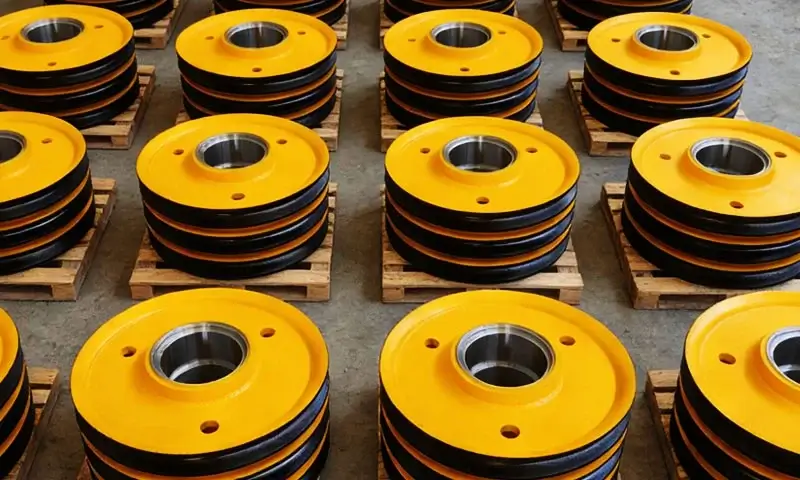
Le moulage de précision constitue une voie de fabrication efficace pour les poulies de grue personnalisées, car il peut reproduire des géométries métalliques relativement complexes tout en conservant une cohérence dimensionnelle contrôlée et en fournissant un point de départ de forme proche de la valeur nette pour l'usinage ultérieur..
Lorsqu'il est combiné avec une sélection d'alliage appropriée, traitement thermique contrôlé, Usinage CNC, et contrôle non destructif, le moulage de précision peut produire des réas adaptés à des systèmes de câbles et à des applications de levage spécifiques.
L'objectif technique n'est pas simplement de produire une poulie qui s'adapte à un assemblage.
L'objectif est de fabriquer un composant dont l'intégrité de coulée, propriétés mécaniques, géométrie des rainures, précision dimensionnelle, et l'état de la surface reste approprié tout au long des cycles de service répétés.
Cet article examine poulies de grue de coulée de précision du point de vue de la conception des composants, ingénierie des matériaux, production de fonderie, usinage, contrôle de qualité, et performances des applications.
1. Qu'est-ce qu'une poulie de grue?
UN poulie de grue est une roue rainurée utilisée pour guider, réorienter, soutien, ou distribuer un câble métallique dans une grue ou un autre mécanisme de levage.
Le câble métallique fait le tour de la circonférence de la poulie, tandis que la poulie tourne autour d'un arbre, épingle, ou moyeu supporté par roulement.
Selon la configuration de la grue, une ou plusieurs réas peuvent être installées dans un bloc réa, système de mouflage, tête de flèche, ensemble de chariot, ou autre mécanisme de levage.
Le but fondamental d’une réa est simple: il change la direction du câble métallique et permet au câble de se déplacer sous charge avec un frottement réduit et une flexion contrôlée.
Sa fonction mécanique réelle, cependant, est considérablement plus exigeant.
Lorsqu'un câble métallique chargé passe sur une poulie, la corde est pliée et dépliée à plusieurs reprises. La rainure de la poulie soutient le câble et répartit les forces de contact sur une zone définie.
En même temps, la poulie elle-même doit résister aux efforts transmis à travers le câble sans déformation excessive, craquage, porter, ou perte d'alignement.
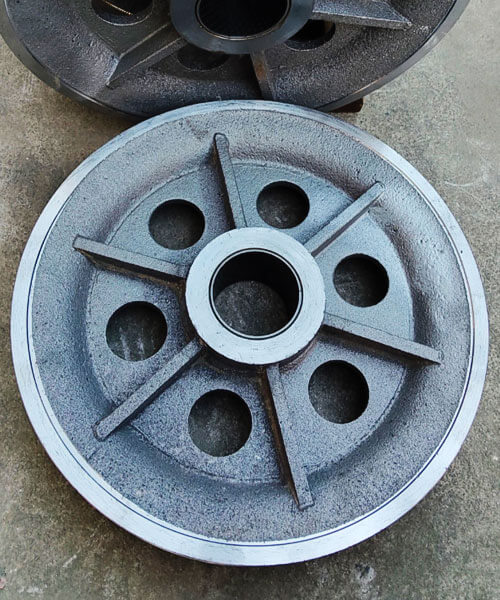
Structure de base de la poulie de grue
Une poulie de grue conventionnelle se compose généralement de plusieurs zones fonctionnelles:
| Composant | Fonction primaire | Considérations techniques clés |
| Corps de poulie | Supporte la corde et transmet la charge | Force, rigidité, intégrité du moulage |
| Rainure de corde | Reçoit et guide le câble métallique | Rayon, profondeur, profil, finition de surface |
| Moyeu | Relie la poulie au support rotatif | Transmission de charge, épaisseur de paroi |
| Alésage | S'adapte à l'arbre ou à l'arrangement de roulements | Diamètre, tolérance, concentricité |
| Brise | Aide à retenir le câble métallique | Hauteur, rigidité, autorisation |
| Siège de roulement | Supporte le roulement le cas échéant | Précision dimensionnelle, finition de surface |
| Rainure de clavette / Caractéristiques de montage | Transfère le couple ou sécurise l’assemblage | Position, géométrie, alignement |
2. Matériaux courants pour les poulies de grue
La sélection des matériaux est l'une des décisions les plus importantes dans la fabrication de poulies de grue sur mesure, car le matériau influence la résistance., dureté, se résistance à l'usure, comportement en fatigue, résistance à la corrosion, machinabilité, réponse au traitement thermique, et performances de casting.
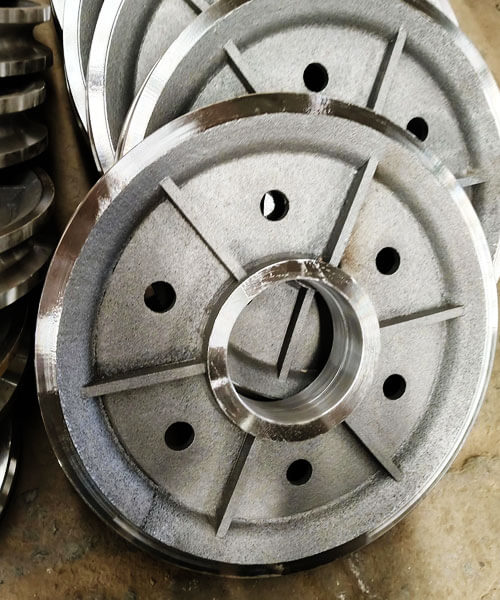
Pièces moulées en acier en carbone
L'acier au carbone est largement applicable aux composants industriels généraux car il offre une combinaison utile de résistance, dureté, machinabilité, soudabilité, et rentabilité.
Pour poulies de grue, l'acier au carbone peut être approprié lorsque les conditions de service n'exigent pas une résistance accrue, Durabilité, ou résistance à la corrosion associée à des matériaux plus fortement alliés.
La nuance d'acier exacte doit être sélectionnée en fonction des propriétés mécaniques requises, taille de la section de coulée, état de traitement thermique, environnement opérationnel, et spécifications techniques applicables.
Pièces moulées en acier allié
Les aciers alliés deviennent attractifs lorsque la poulie est soumise à des charges plus exigeantes ou lorsque la trempabilité est accrue., dureté, force, ou une résistance à l'usure est requise.
Éléments d'alliage tels que le manganèse, chrome, molybdène, et le nickel peut être utilisé dans différentes combinaisons pour modifier la réponse du matériau au traitement thermique et à la charge de service.
Pour poulies de grue pour charges lourdes, l'avantage de l'acier allié n'est pas simplement une résistance supérieure. Une conception correcte de l'alliage peut aider à obtenir une combinaison plus équilibrée de:
Force + dureté + résistance à la fatigue + Durabilité + se résistance à l'usure
Cet équilibre est particulièrement important lorsque la poulie contient des sections relativement épaisses où une réponse uniforme au traitement thermique peut devenir plus difficile..
Acier inoxydable
L'acier inoxydable peut être envisagé pour les poulies de grues spécialisées exposées à des conditions corrosives., y compris Marine, côtier, offshore, chimique, ou environnements de lavage.
Cependant, l’acier inoxydable ne doit pas automatiquement être considéré comme la meilleure option simplement parce qu’il présente une résistance supérieure à la corrosion.
La sélection des matériaux doit tenir compte du chargement mécanique, comportement à l'usure, coût, exigences d'usinage, et la corrosivité réelle de l'environnement.
Pour de nombreuses applications de levage lourdes, un acier au carbone ou allié correctement conçu avec un système de protection approprié peut être plus pratique que l'acier inoxydable.
Fer à fonte ductile
La fonte ductile peut offrir des caractéristiques de coulée attrayantes ainsi qu'une résistance utile, dureté, se résistance à l'usure, amortissement des vibrations, et stabilité dimensionnelle.
Son applicabilité dépend fortement des exigences de conception et de charge..
Il ne doit pas être sélectionné uniquement parce que sa coulabilité est favorable; les conséquences complètes du chargement mécanique et de la défaillance de l'application doivent être évaluées.
3. Processus de moulage de précision pour poulies de grue
Le moulage de précision est une méthode de fabrication efficace pour produire des poulies de grue aux profils complexes, hubs intégrés, transitions structurelles, et d'autres géométries qui seraient coûteuses ou inefficaces à fabriquer entièrement par usinage.
Pour poulies de grue personnalisées, casting d'investissement (casting de la cire perdue) est particulièrement utile car le processus peut reproduire des géométries complexes avec des tolérances de coulée relativement serrées et une structure de forme proche de la forme nette, tandis que l'usinage CNC ultérieur établit les dimensions fonctionnelles critiques.
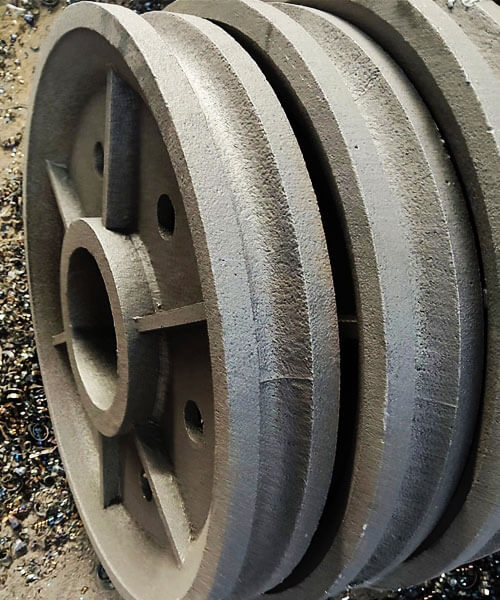
Moulage d'investissement (Casting de la cire perdue) Processus
| Scène | Étape du processus | Description | Contrôles clés |
| 1. Ingénierie & Outillage | Analyse DFM | Le dessin 2D ou le modèle CAO 3D est examiné pour la faisabilité du moulage., épaisseur de paroi, transitions, rétrécissement, indemnités d'usinage, et exigences de contrôle. | Simulation de coulée; exigences dimensionnelles; brouillon; rayon de congé; surépaisseur d'usinage |
| 2. Production de modèles | Injection de cire | La cire est injectée dans un outil de précision pour produire un motif sacrificiel précis représentant la géométrie de la poulie de la grue.. | Température de la cire; pression d'injection; pression de maintien; temps de cycle; dimensions du motif |
| Inspection de modèle | Les modèles de cire sont vérifiés pour la distorsion, remplissage incomplet, éclair, variation dimensionnelle, et défauts de surface. | Dimensions du motif; inspection visuelle; cohérence dimensionnelle | |
| 3. Assemblage de motifs | Assemblage d'arbre | Les modèles de cire individuels sont fixés à un système de carottes central avec des canaux et des portes conçus pour fournir un flux de métal contrôlé.. | Disposition du portail; orientation du motif; espacement; dimensions des patins |
| 4. Bâtiment de coquille | Revêtement en boue | L'assemblage de cire est plongé à plusieurs reprises dans une pâte céramique et recouvert de stuc réfractaire pour créer une coque en céramique multicouche.. | Viscosité; épaisseur de couche; temps de séchage; humidité; taille des particules de stuc |
| Renfort de coque | Des couches de céramique supplémentaires sont appliquées jusqu'à ce que la coque ait une résistance et une perméabilité suffisantes pour le coulage du métal.. | Épaisseur de coquille; conditions de séchage; intégrité de la coque | |
5. Déwax |
Autoclave / décirage flash | La coque assemblée est chauffée pour éliminer le motif en cire et laisser une cavité céramique propre. | Température; pression de vapeur; taux de chauffage; temps de décirage |
| 6. Tir de la coquille | Cuisson de la céramique | La coque en céramique est cuite à température élevée pour éliminer les résidus de cire, renforcer le moule, et établir la stabilité thermique. | Température du four; taux de chauffage; temps de maintien; température de la coquille |
| 7. Fusion | Fusion par induction | L'alliage sélectionné est fondu dans un four contrôlé et amené à la composition chimique et aux conditions de coulée requises.. | Chimie des alliages; faire fondre; temps de maintien; fondre la propreté |
| 8. Vérification des métaux | Analyse chimique | Le métal fondu est analysé pour vérifier que sa composition correspond à la qualité d'alliage spécifiée avant de le couler.. | Analyse spectrométrique; contrôle charge-matériau; numéro de chaleur |
9. Coulant |
Pesanteur / versement contrôlé | Le métal en fusion est introduit dans la coque en céramique préchauffée via le système d'entrée technique.. | Température de versement; taux de coulée; préchauffer le moule; stabilité de remplissage |
| 10. Solidification | Refroidissement contrôlé | Le moulage se solidifie dans le moule en céramique. L'alimentation et la solidification directionnelle sont contrôlées pour minimiser le retrait et autres discontinuités internes. | Gradients thermiques; efficacité de la colonne montante; taux de refroidissement; épaisseur de section |
| 11. Assommer | Retrait de la coque | Après un refroidissement suffisant, la coque en céramique est retirée mécaniquement de la pièce moulée en métal. | Intensité des vibrations; méthode de retrait de la coquille; protection contre les coulées |
| 12. Couper | Dépose du portail et de la contremarche | Puces, coureurs, portes, et les colonnes montantes sont séparées du moulage de la poulie de la grue. | Emplacement de coupe; paramètres de la scie abrasive; manipulation des pièces |
13. Finition du moulage |
Affûtage / dynamitage | Portes résiduelles, nageoires, éclair, et la céramique adhérente sont retirés et la surface est préparée pour un traitement ultérieur. | Type abrasif; pression de dynamitage; surépaisseur de broyage; état de surface |
| 14. Traitement thermique | Normalisation / Q&T / soulagement du stress | La pièce moulée est traitée thermiquement en fonction de l'alliage et des propriétés mécaniques requises. | Température du four; temps de trempage; taux de refroidissement; dureté |
| 15. Usinage CNC | Tournant / ennuyeux / usinage de rainures | Caractéristiques fonctionnelles telles que l'alésage, moyeu, siège de roulement, rainure de corde, et les surfaces de montage sont usinées aux dimensions finales. | Tolérance dimensionnelle; concentricité; s'épuiser; rugosité de la surface |
| 16. Inspection finale | Inspection dimensionnelle et CND | La poulie finie est inspectée pour vérifier la géométrie, propriétés mécaniques, état de surface, et, où spécifié, intégrité interne. | Cmm; dureté; UT/MT/PT/RT selon le cas; inspection visuelle |
4. Usinage des rainures de câble et finition de surface
La rainure du câble est l'une des caractéristiques fonctionnelles les plus importantes d'une poulie de grue, car elle détermine la manière dont le câble métallique est soutenu., guidé, et plié pendant le fonctionnement.
Même lorsque le corps de coulée présente une excellente intégrité métallurgique, une rainure mal usinée peut accélérer l'usure du câble, augmenter le stress de contact local, favoriser un chargement inégal, et réduire la durée de vie du câble et de la poulie.
Usinage de rainures après coulée
Le moulage à modèle perdu ou d'autres procédés de moulage de précision peuvent produire une poulie de forme presque nette, mais la rainure finale du câble nécessite normalement un usinage lorsque la géométrie et la finition de surface contrôlées sont essentielles.
La séquence d'usinage peut inclure:
Inspection de fonderie → établissement de références → tournage grossier → usinage de rainures → tournage de finition → vérification dimensionnelle
La poulie est d'abord localisée de manière sécurisée à l'aide de références appropriées. La référence d'usinage doit être établie à partir de la ligne centrale fonctionnelle du composant plutôt qu'à partir d'une surface arbitraire telle que coulée..
Ceci est particulièrement important pour les réas de grande taille ou asymétriques, car la variation de coulée peut autrement se transférer directement dans la position finale de la rainure..
Concentricité et faux-rond de la rainure
La relation entre la rainure du câble et l'alésage de la poulie est essentielle.
Si la rainure n'est pas concentrique à l'alésage, le câble peut connaître une position radiale changeante à mesure que la poulie tourne.
Un voile excessif peut entraîner une variation cyclique du contact et de la charge du câble et peut contribuer à des vibrations ou à une usure accélérée des composants..
Pour poulies de grue de précision, les fabricants devraient donc établir des critères d'inspection pour:
- Concentricité rainure-alésage
- Voile radial
- Faux-rond axial
- Diamètre d'alésage
- Diamètre de rainure
- Profil de rainure
- Dimensions des brides
Les valeurs admissibles doivent provenir du dessin technique ou des spécifications applicables plutôt que d'être attribuées universellement..
Finition de surface de la rainure du câble
La finition de surface doit être suffisamment contrôlée pour éviter une abrasion inutile du câble métallique tout en conservant la géométrie de contact prévue.
Un rugueux, déchiré, poreux, ou une rainure mal meulée peut créer des aspérités localisées qui agissent comme des concentrations de contraintes ou des points abrasifs.
Inversement, la finition de surface ne doit pas être utilisée pour compenser un profil de rainure incorrect.
La séquence de préparation de la surface peut impliquer:
- Usinage brutal
- Usinage semi-fini
- Usinage final
- Débarquant
- Polissage ou meulage contrôlé lorsque spécifié
- Nettoyage final
La rugosité de surface requise doit être définie en fonction des spécifications du câble et de la poulie..
Une seule valeur numérique Ra ne doit pas être considérée comme universellement applicable, car différentes constructions de câbles et conditions de service peuvent nécessiter différents critères de surface..
5. Traitement thermique des poulies de grue en fonte
Traitement thermique est une étape critique dans la fabrication des poulies de grue en fonte, en particulier lorsque de l'acier au carbone ou de l'acier allié est utilisé.
Le moulage établit la géométrie de base du composant, mais la microstructure telle que coulée n'est pas nécessairement la structure optimale pour un service mécanique exigeant.
Un processus de traitement thermique correctement contrôlé peut modifier la microstructure et améliorer la combinaison requise de force, dureté, dureté, résistance à la fatigue, et stabilité dimensionnelle.
La voie de traitement thermique appropriée dépend de la chimie de l'alliage, taille de la section de coulée, propriétés mécaniques requises, et spécification client.
Processus courants de traitement thermique
Normalisation
La normalisation consiste à chauffer l'acier à une plage de température appropriée au-dessus de sa température de transformation., le tenir pendant suffisamment de temps, puis le refroidir à l'air.
Pour les aciers moulés, la normalisation peut aider à affiner et à homogénéiser la microstructure et à réduire une partie de la non-uniformité associée au moulage.
Il peut être utilisé lorsqu'une résistance modérée à élevée combinée à une ténacité et une stabilité dimensionnelle raisonnables est requise..
Recuit
Le recuit implique généralement un chauffage suivi d'un refroidissement contrôlé.
Cela peut réduire la dureté, améliorer l'usinabilité, soulager les contraintes internes, et produire un plus doux, état métallurgique plus stable.
Le recuit peut être utile comme processus intermédiaire lorsque les exigences d'usinage ultérieures sont particulièrement exigeantes..
Trempage et tempérament
Pour les aciers alliés et au carbone appropriés, trempe et revenu (Q&T) le traitement peut être utilisé pour obtenir une résistance et une dureté considérablement accrues ainsi qu'une ténacité contrôlée.
Le processus de base est:
Austénitisation → Trempe → Revenu
L'étape de trempe produit une microstructure plus dure, tandis que le revenu réduit la fragilité excessive et ajuste l'équilibre final entre résistance et ténacité..
Pour les composants de grue fortement chargés, l'étape de revenu est particulièrement importante car une dureté maximale n'équivaut pas nécessairement à des performances de service optimales.
Stress soulageant
Un traitement thermique de soulagement des contraintes peut être utilisé pour réduire les contraintes résiduelles générées lors de la coulée, soudage, usinage étendu, ou traitement thermique antérieur.
Cela peut être particulièrement utile pour les grandes poulies où la stabilité dimensionnelle est importante..
6. Défauts de moulage de la poulie de grue commune et leurs causes profondes
Les défauts de coulée peuvent affecter considérablement la fiabilité structurelle des poulies de grue.
Parce qu'une poulie est un composant chargé de manière cyclique, les discontinuités internes qui pourraient être tolérées dans une pièce moulée décorative à faible contrainte peuvent devenir importantes lorsque le composant est soumis à des charges de levage répétées.
| Défaut | Description | Cause première | Mesures préventives |
| Porosité de rétrécissement | Vides internes | Alimentation insuffisante lors de la solidification. | Optimiser la conception des colonnes montantes; utiliser des frissons; simulation. |
| Porosité des gaz | Petits vides arrondis | Piégeage au gaz; gaz dissous dans la masse fondue. | Brûler pour fondre; améliorer la pratique du versement; charge propre. |
| Larmes | Fissures | Contrainte de traction lors de la solidification. | Réduire la température de coulée; améliorer la repliabilité de la coque. |
| Inclusions de sable | Sable incorporé | Érosion de la coque en céramique. | Améliorer la résistance de la coque; réduire les turbulences. |
Egypte |
Remplissage incomplet | Faible température de coulée; métal insuffisant. | Augmenter la température de coulée; améliorer le déclenchement. |
| Ferme à froid | Tours de surface | Deux courants se rencontrant sans fusion. | Augmenter la température de coulée; améliorer le déclenchement. |
| Variation dimensionnelle | Dimensions hors tolérance | Usure du motif; expansion de la coque. | Entretenir les outillages; processus de shell de contrôle. |
| Mauvaise finition de surface | Surface rugueuse | Céramique grossière; défauts de coque. | Utiliser une coque plus fine; améliorer le processus de shell. |
7. Applications des poulies de grue coulées de précision
Les poulies de grue coulées avec précision sont utilisées dans les systèmes de levage où les câbles métalliques doivent être redirigés, soutenu, ou mouflage tout en maintenant un contact contrôlé du câble et une fiabilité mécanique.
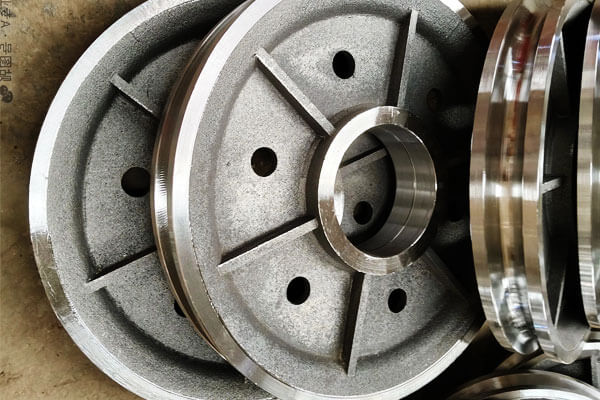
Ponts roulants et EOT
Ponts roulants et ponts roulants électriques (EOT) les grues utilisent couramment des réas dans le moufle à crochets, mécanisme de levage, et système de mouflage.
Ces applications nécessitent généralement:
- Haute résistance aux chargements répétés
- Géométrie précise de la rainure du câble
- Bon équilibre de rotation
- Interfaces de roulements fiables
- Concentricité contrôlée entre alésage et rainure
- Résistance à la fatigue adéquate
Pour les grues de production à cycles fréquents, la durabilité de la poulie peut avoir une influence directe sur les intervalles de maintenance, car l'usure des rainures et la fatigue du câble sont étroitement liées.
Les réas moulés sur mesure sont particulièrement utiles lorsque le fabricant de grues a besoin de dimensions optimisées pour un tambour particulier., bloc à crochet, câble métallique, ou enveloppe d'installation.
Portiques et portiques
Les portiques et portiques sont largement utilisés pour la manutention de conteneurs, chantiers navals, chantiers industriels, usines sidérurgiques, et manutention de matériaux lourds.
Leurs poulies peuvent subir des tensions de câble et des charges dynamiques relativement élevées..
En outre, les installations extérieures exposent les composants à la pluie, humidité, poussière, fluctuations de température, et des conditions atmosphériques potentiellement corrosives.
La sélection des matériaux devient par conséquent une partie importante de la conception.
L'acier moulé au carbone ou en alliage peut être approprié pour les applications générales à usage intensif, tandis que les alliages résistants à la corrosion ou les systèmes de finition de protection peuvent devenir plus pertinents dans les environnements marins.
Pour les grands portiques, la stabilité dimensionnelle et l'intégrité structurelle du moulage sont particulièrement importantes car les dimensions de la poulie peuvent devenir importantes.
Grues à tour
Les grues à tour utilisent des poulies pour le levage, chariotage, et mécanismes de relevage. Contraintes d'espace, acheminement des câbles, et les cycles de fonctionnement relativement élevés rendent l'optimisation dimensionnelle importante.
Une poulie personnalisée peut devoir satisfaire plusieurs exigences concurrentes:
Assez grand pour réduire les flexions sévères de la corde, mais suffisamment compact pour tenir dans l’enveloppe mécanique de la grue.
Le profil de la rainure doit également correspondre au câble sélectionné, tandis que l'agencement du moyeu et des roulements doit s'intégrer aux composants existants de la grue..
Le moulage de précision peut offrir de la flexibilité dans le développement de configurations complexes de moyeux et de brides sans nécessiter que l'ensemble du composant soit usiné à partir d'une grosse billette..
Port, Port, et grues à conteneurs
Les grues portuaires fonctionnent sous des combinaisons exigeantes de:
- Charges de levage élevées
- Utilisation élevée
- Service continu ou semi-continu
- Ambiances salées
- Chargement dynamique
- Exigences d'entretien strictes
Les réas utilisés dans ces systèmes peuvent donc nécessiter une combinaison de résistance mécanique, se résistance à l'usure, résistance à la fatigue, protection contre la corrosion, et un usinage précis.
Là où la corrosion est sévère, des pièces moulées en acier inoxydable ou en acier inoxydable duplex peuvent être envisagées pour certains composants, bien que la sélection doive être basée sur l'ensemble des exigences mécaniques et environnementales plutôt que sur la seule résistance à la corrosion.
Construction navale et grues marines
Les grues marines fonctionnent généralement dans des conditions humides, environnements contenant de l'eau salée où la corrosion peut affecter considérablement la durée de vie des composants.
Les poulies de grue moulées avec précision peuvent être utilisées dans:
- Systèmes de levage à bord des navires
- Grues de chantier naval
- Grues de pont
- Systèmes de manutention maritime
- Équipement de support offshore
Pour ces applications, le fabricant doit tenir compte non seulement du matériau en vrac mais également de l'état des surfaces usinées, attaches, roulements, revêtements protecteurs, drainage, et maintenance.
Corrosion localisée au niveau de la rainure, moyeu, ou l'interface du roulement peut être particulièrement indésirable car ces zones sont fonctionnellement critiques.
Grues offshore
Les systèmes de levage offshore imposent des conditions de service particulièrement exigeantes car ils combinent des charges mécaniques élevées et la corrosion marine., mouvement induit par le vent, vibration, et des effets dynamiques potentiellement graves.
Une poulie de grue moulée avec précision pour le service offshore peut nécessiter:
- Ténacité à forte fracture
- Composition chimique contrôlée
- Traitement thermique qualifié
- Matériau ou revêtement résistant à la corrosion
- CND étendus
- Certification des matériaux traçables
- Contrôle dimensionnel strict
Pour de telles applications, la spécification technique doit définir en détail les critères d'inspection et d'acceptation requis. La qualité du matériau à elle seule ne suffit pas à établir l'adéquation.
Grues minières et industrielles lourdes
Installations minières, aciéries, fonderies, centrales électriques, et les opérations de fabrication lourde utilisent souvent des grues dans des environnements caractérisés par la poussière, vibration, températures élevées, utilisation élevée, et de lourdes charges.
Les poulies destinées à ces applications peuvent nécessiter une résistance accrue à:
- Fatigue cyclique
- Impact mécanique
- Usure des rainures
- Contamination
- Températures de fonctionnement élevées
- Environnements abrasifs
Les pièces moulées en acier allié avec un traitement thermique approprié peuvent fournir une solide combinaison de propriétés mécaniques là où des performances élevées sont requises.
Matériel de construction et de manutention
Grues de chantier, palans, treuils, et les systèmes de manutention utilisent également des réas pour rediriger le câble métallique et maintenir un mouflage contrôlé..
Les exigences varient considérablement. Une poulie de levage relativement petite peut donner la priorité au coût et à la compacité, tandis qu'une grue de construction de grande capacité peut nécessiter des interfaces de rainures et de roulements hautement techniques.
Cette diversité d'applications est l'une des raisons pour lesquelles un fabricant personnalisé compétent devrait être en mesure de prendre en charge plusieurs matériaux et itinéraires de fabrication au lieu de forcer chaque application dans une seule conception standard..
8. Avantages du moulage de précision pour les poulies de grue
| Avantage | Valeur technique |
| Capacité de forme proche du net | Réduit les usinages inutiles |
| Géométrie complexe | Prend en charge le hub optimisé, bride, et caractéristiques structurelles |
| Flexibilité du matériau | Permet la sélection d'alliages spécifiques à l'application |
| Production intégrée | Le moulage et l'usinage CNC peuvent être conçus ensemble |
| Répétabilité | Utile pour la production OEM et de pièces de rechange |
| Réduction des déchets de matériaux | Moins d'enlèvement que l'usinage à partir d'un stock important |
| Personnalisation du design | Prend en charge la géométrie spécifique à l'application |
| Production évolutive | Convient pour une production répétée lorsque l'outillage est justifié |
9. Poulies de grue moulées de précision vs. Réas forgées et fabriquées
Le choix parmi casting de précision, forgeage, et fabrication doit être basé sur les exigences techniques réelles de la poulie de grue plutôt que sur l'hypothèse qu'un processus de fabrication est universellement supérieur.
Chaque méthode crée un équilibre géométrique différent, utilisation du matériel, propriétés mécaniques, flexibilité de production, exigences d'usinage, et coûter.
Pour poulies de grue personnalisées, la question centrale n’est donc pas simplement « Quel processus est le plus fort?" mais plutôt:
Quel processus de fabrication peut fournir le plus efficacement la capacité de charge requise, Performance de fatigue, précision du rainurage du câble, intégrité structurelle, dimensions, volume de production, et la fiabilité du service?
La comparaison suivante se concentre sur les principales différences techniques qui comptent lors de la sélection d'un itinéraire de fabrication pour les poulies de grue..
| Différence clé | Réas de grue moulés de précision | Poulies de grue forgées | Fabriqué / Réas soudées |
| Meilleur ajustement | Complexe, réas personnalisés nécessitant une géométrie de forme proche de la forme nette et une production répétée | Applications à haute résistance et critiques en fatigue | Très grand, à faible volume, ou réas hautement personnalisés |
| Géométrie & Liberté de conception | Excellent pour les hubs complexes, brise, côtes, et transitions | Modéré; la géométrie doit être compatible avec le forgeage | Excellent grâce à une construction en plusieurs parties |
| Performance mécanique | Excellent lorsque la qualité de la coulée et le traitement thermique sont correctement contrôlés | Excellent, en particulier pour les applications à haute résistance et exigeantes en fatigue | Bien, mais fortement dépendant de la conception et de la qualité des soudures |
| Efficacité des matériaux | Haut, avec relativement peu de matière en excès | Modéré; une surépaisseur d'usinage est généralement requise | Variable; ça dépend de l'assiette, anneau, et disposition des composants |
| Exigence d'usinage | Modéré; surfaces fonctionnelles principalement critiques | Modéré à élevé | Modéré à élevé |
| Capacité de grand diamètre | Bien, mais cela dépend de l'équipement et du processus de coulée | Limité par la capacité de forgeage et l'outillage | Excellent pour les très grandes structures |
Volume de production |
Bien adapté pour répéter la production OEM | Idéal pour répéter la production lorsque l'outillage est justifié | Bien adapté à la production en petits volumes ou basée sur des projets |
| Coût d'outillage | Modéré | Haut | Relativement bas |
| Principal souci de qualité | Défauts de coulée tels que le retrait, porosité, et inclusions | Qualité des matériaux, forger l'intégrité, et contrôle du traitement thermique | Défauts de soudure, stress résiduel, et distorsion |
| Principal avantage | Géométrie complexe + personnalisation + forme proche | Hautes performances mécaniques | Grande taille + flexibilité structurelle |
| Principale limite | Nécessite un contrôle strict de fonderie et de CND | Coût d’outillage et de traitement plus élevé | Plus de défis en matière de soudage et de contrôle dimensionnel |
10. Pourquoi choisir LangHe Industry pour des poulies de grue moulées avec précision sur mesure?
La sélection d'un fournisseur de poulies de grue doit aller au-delà de la comparaison des prix de fonderie.
Parce que le composant combine le moulage structurel, traitement thermique, usinage de précision, géométrie de contact avec la corde, et inspection, la capacité du fournisseur à contrôler la chaîne de fabrication complète est souvent plus importante que le processus de coulée nominale lui-même.
Industrie de Langhe peut aborder des poulies de grue moulées avec précision sur mesure dans le cadre d'un projet de fabrication intégré, examen technique de connexion, développement du casting, usinage, finition, et une inspection de qualité.
| Capacité | Détails |
| Matériels | Carbone (WCB), acier coulé, fer à fonte ductile (60-40-18, 65-45-12, 80-55-06), acier inoxydable (CF-8, CF-8M, 17-4PH), acier en alliage (4140, 4340) |
| Processus de coulée | Moulage de précision, coulée de sable. |
| Poids partiel | 0.5 kg à 500 kg. |
| Tolérances | ± 0,1 à 0,3 mm (CT5-CT7 selon ISO 8062). |
| Qualité | ISO 9001:2015 agréé; 100% inspection; Cmm; profilomètre de surface; NDT (radiographie, colorant pénétrant). |
| Délai de mise en œuvre | 6–12 semaines pour l'outillage; 2–4 semaines pour les commandes répétées. |
11. Conclusion
Une poulie de grue est un composant d'apparence relativement simple avec une fonction mécanique exigeante. Il doit guider et plier le câble métallique à plusieurs reprises tout en transmettant la charge à travers le moyeu., roulements, et structure de support.
Par conséquent, géométrie des rainures, intégrité des matériaux, état de traitement thermique, précision d'usinage, concentricité, et la qualité de la surface contribuent toutes aux performances réelles des réas.
Le moulage de précision offre une voie de fabrication convaincante pour les poulies de grue personnalisées lorsque la géométrie est complexe, production proche de la forme nette, flexibilité du matériau, et la répétabilité sont importantes.
Il peut réduire les usinages inutiles tout en permettant aux ingénieurs d'intégrer des moyeux, brise, côtes, transitions, et d'autres caractéristiques structurelles dans le moulage.
LangHe Industry propose une approche de fabrication personnalisée pour les poulies de grue moulées avec précision, combinant l'ingénierie de fonderie, sélection des matériaux, Usinage CNC, traitement thermique, finition, et inspection pour répondre aux exigences OEM spécifiques à l'application.
FAQ
Qu'est-ce qu'une poulie de grue en coulée de précision?
Une poulie de grue coulée de précision est une poulie à câble métallique fabriquée à l'aide d'un processus de coulée contrôlé., généralement un investissement ou une autre méthode de coulée axée sur la précision, suivi de l'usinage des surfaces fonctionnelles critiques.
Le moulage crée la géométrie principale, tandis que l'usinage CNC établit des caractéristiques telles que la rainure du câble., alésage, et sièges de roulement.
Pourquoi utiliser un moulage de précision au lieu d'usiner une poulie de grue en acier massif?
Le moulage de précision peut produire une grande partie de la géométrie finale avant l'usinage.
Cela peut réduire l'enlèvement de matière, temps d'usinage, et le gaspillage de matériaux tout en permettant une plus grande liberté pour les hubs complexes, brise, côtes, et transitions structurelles.
Une poulie de grue en fonte est-elle aussi solide qu'une poulie forgée?
Il n'y a pas de réponse universelle. Une poulie en acier moulé correctement conçue et traitée peut fournir d'excellentes performances mécaniques,
mais le forgeage peut offrir des avantages dans les applications où une structure forgée hautement consolidée et des propriétés de fatigue spécifiques sont requises.
L'adéquation dépend du matériau, géométrie, Taille de la section, traitement thermique, chargement, et les exigences en matière d'inspection.
Quel est le facteur de qualité le plus important pour une poulie de grue?
Il n’existe pas de paramètre unique qui détermine la qualité. Intégrité du casting, propriétés mécaniques, géométrie des rainures, alignement de l'alésage, état de surface, et la précision dimensionnelle doivent fonctionner ensemble.
Pour les applications critiques en matière de sécurité, ces caractéristiques doivent être vérifiées par rapport aux spécifications techniques et au plan d'inspection approuvés.
Comment améliorer la durée de vie des poulies de grue?
La durée de vie peut être améliorée grâce à un dimensionnement correct de la poulie au câble, géométrie de rainure appropriée, sélection de matériaux adaptés, lubrification et entretien appropriés,
alignement précis, qualité de fabrication contrôlée, et remplacement en temps opportun lorsque l'usure des rainures ou d'autres dommages dépassent la limite spécifiée.