Dans la fabrication moderne, les pièces mono-matériau répondent rarement à toutes les exigences de performance, esthétique, et les fonctionnalités.
Les produits d’aujourd’hui doivent être durables mais confortables, imperméable mais respirant, et complexe mais facile à assembler.
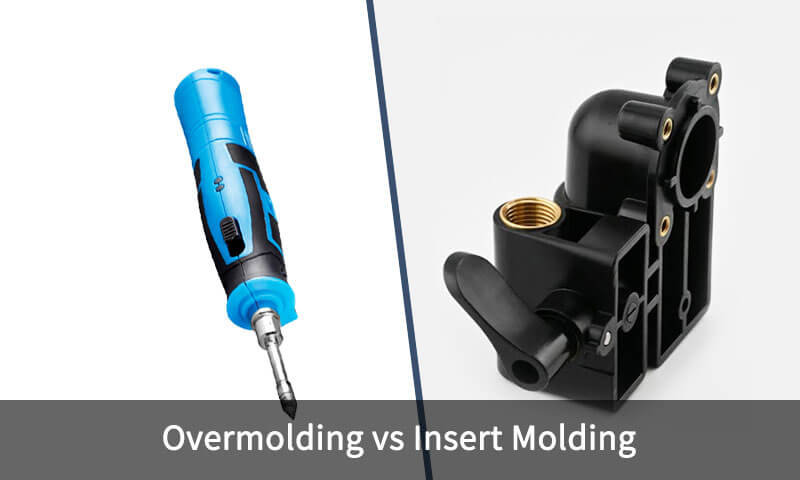
Cela a conduit à l’adoption généralisée de processus de fabrication multi-matériaux. Parmi ces, le surmoulage et le moulage par insert sont deux des techniques les plus importantes et les plus fréquemment comparées.
Bien que les deux termes soient parfois utilisés de manière interchangeable, ils décrivent différentes approches de fabrication et résolvent différents problèmes d'ingénierie.
Le surmoulage consiste généralement à mouler un deuxième matériau sur un substrat existant pour créer un composant multi-matériaux..
Insérer, en revanche, place un insert préformé, souvent en métal, à l'intérieur d'un moule d'injection et l'encapsule ou l'entoure partiellement de plastique.
Cet article fournit un complet, comparaison côte à côte du surmoulage et du moulage par insert.
1. Qu'est-ce que le surmoulage?
Surmoule est un processus de moulage par injection dans lequel un matériau est moulé sur un substrat existant ou un composant préalablement moulé pour créer une pièce multi-matériaux intégrée..
Le premier composant est communément appelé le substrat, tandis que le matériau appliqué lors de l'opération de moulage secondaire est le matériau de surmoulage.
En fonction de la conception du produit, le substrat peut être un thermoplastique rigide, élastomère, composant métallique, ou une autre pièce préformée appropriée.
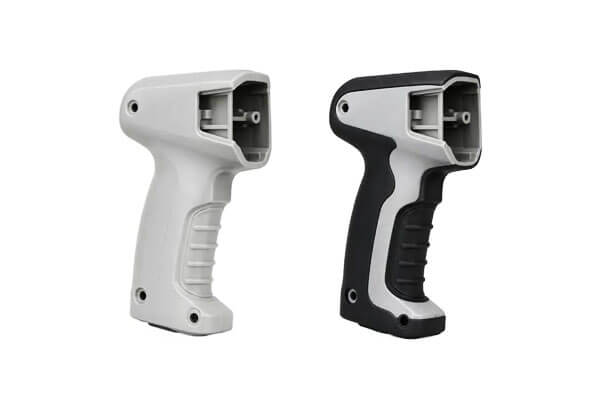
Un composant surmoulé typique peut combiner un matériau structurel rigide avec un matériau plus souple..
Par exemple, un boîtier rigide en ABS peut recevoir un surmoulage en TPE pour offrir une prise en main confortable, améliorer l'étanchéité, ou créer une surface extérieure protectrice.
L’objectif n’est pas simplement de superposer un matériau sur un autre. L'interface entre les deux matériaux doit assurer une adhérence adéquate, rétention mécanique, ou une combinaison des deux pour résister aux contraintes mécaniques attendues du produit, thermique, chimique, et les conditions environnementales.
Comment fonctionne le surmoulage
Le processus de surmoulage commence généralement par la fabrication du substrat.
Cela peut impliquer une opération de moulage par injection distincte, processus d'usinage, opération d'emboutissage, processus de coulée, ou une autre méthode de fabrication.
Une fois le substrat inspecté, il est positionné à l'intérieur d'un deuxième moule. Le moule est conçu pour exposer les zones qui doivent recevoir le matériau de surmoulage tout en localisant et en soutenant avec précision le substrat..
Le matériau secondaire est ensuite chauffé à la température de traitement appropriée et injecté dans la cavité du moule..
Il s'écoule autour des surfaces de substrat désignées et forme la géométrie extérieure requise.
Après remplissage et emballage, le matériau refroidit et se solidifie avant que le composant terminé ne soit éjecté.
Un flux de travail typique est:
Production de substrat → inspection du substrat → chargement du moule → positionnement → injection de matière secondaire → emballage → refroidissement → éjection → inspection
La qualité du produit final dépend fortement de la conception de l'interface. Si une adhésion chimique est requise, le substrat et le matériau de surmoulage doivent avoir une compatibilité suffisante.
Si la rétention mécanique est le mécanisme principal, le substrat peut nécessiter des rainures, côtes, trous, sous-dépouille, ou d'autres caractéristiques qui permettent au deuxième matériau de se verrouiller en position.
La contamination des surfaces est une autre considération importante. Huile, poussière, agents de démoulage, oxydation, humidité, ou d'autres contaminants peuvent interférer avec l'adhérence et conduire à un délaminage ou à une séparation prématurée.
Matériaux de surmoulage courants
Le surmoulage peut utiliser une large gamme de matériaux thermoplastiques et élastomères, mais toutes les combinaisons de matériaux ne sont pas intrinsèquement compatibles.
La sélection des matériaux doit tenir compte de la température de fusion, compatibilité chimique, rétrécissement, coefficient de dilatation thermique, dureté, flexibilité, caractéristiques des surfaces, et conditions de service attendues.
Les combinaisons courantes incluent:
| Substrat | Matériau de surmoulage | Objectif typique |
| ABS | TPE | Boîtiers et poignées doux au toucher |
| PC | TPE | Produits résistants aux chocs avec des surfaces ergonomiques |
| Nylon | TPE/TPU | Poignées industrielles et interfaces flexibles |
| Pp | TPE | Produits de consommation et sceaux |
| PC/ABS | TPU | Surfaces protectrices et ergonomiques |
| Thermoplastique rigide | LSR | Etanchéité et composants flexibles spécialisés |
Applications typiques de surmoulage
Le surmoulage est particulièrement utile lorsque le produit doit allier performance structurelle et douceur, flexibilité, scellage, isolation, ou une ergonomie améliorée.
Le surmoulage est couramment utilisé pour:
- Poignées pour outils à main
- Commutateurs et commandes automobiles
- Boîtiers pour appareils électroniques grand public
- Composants de dispositifs médicaux
- Appareils portables
- Protection des câbles et des fils
- Composants d'étanchéité
- Poignées et interfaces ergonomiques
- Housses de protection
- Contrôles d'équipements industriels
2. Qu'est-ce que le moulage par insertion?
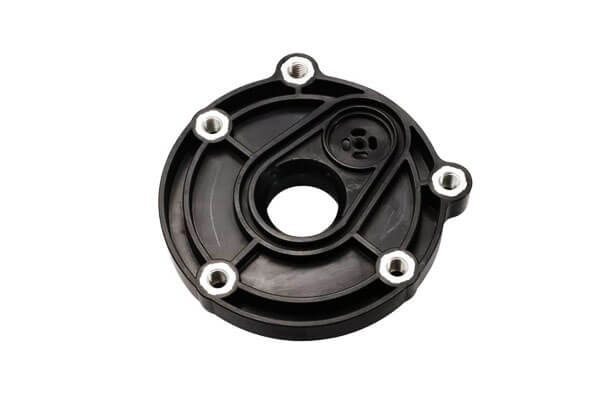
Insérer est un processus de moulage par injection dans lequel un composant préformé, connu sous le nom de insérer, est positionné à l'intérieur d'un moule d'injection puis partiellement ou complètement encapsulé par du plastique fondu.
L'insert est souvent en métal, bien qu'en plastique, céramique, électronique, et d'autres composants préformés peuvent également être utilisés.
Contrairement au moulage par injection mono-matériau conventionnel, le moulage par insert combine un composant fabriqué indépendamment avec du plastique injecté au cours d'une opération de moulage.
Le plastique se solidifie autour de l'insert, produire une pièce intégrée qui peut éliminer les opérations d'assemblage ultérieures.
Par exemple, un insert fileté en laiton peut être positionné à l'intérieur d'un moule et entouré de nylon.
Après moulage, le composant résultant contient une interface métallique filetée permanente sans nécessiter l'installation ultérieure de l'insert fileté.
Comment fonctionne le moulage par insertion
Le moulage d'insert commence par la fabrication et l'inspection de l'insert. La précision dimensionnelle est particulièrement importante car l'insert doit s'adapter correctement dans le moule et conserver sa position spécifiée tout au long de l'injection..
L'insert est ensuite placé manuellement dans le moule., semi-automatique, ou via un système de chargement automatisé.
Luminaires dédiés, broches, cavités, ou des dispositifs de rétention peuvent être utilisés pour empêcher le mouvement.
Une fois le moule fermé, du plastique fondu est injecté autour de l'insert. La pression d'injection peut être importante, le moule doit donc fournir un support suffisant pour empêcher l'insert de se déplacer, déformant, ou devenir mal aligné.
Le plastique refroidit ensuite et se solidifie autour de l'insert. Après éjection, le composant fini est inspecté pour vérifier sa précision dimensionnelle, position d'insertion, éclair, vides, fissure, et autres défauts.
La séquence de base est:
Fabrication d'inserts → inspection d'inserts → chargement d'inserts → positionnement et rétention → fermeture du moule → injection plastique → refroidissement → éjection → inspection
Pour la fabrication en grand volume, le chargement automatisé des inserts peut être intégré à la cellule de moulage. Cela peut améliorer la cohérence du cycle tout en réduisant la manipulation manuelle.
Matériaux d'insertion courants
Le métal est le matériau d'insert le plus largement reconnu car il offre des propriétés que les plastiques ne peuvent généralement pas reproduire., comme une conductivité électrique élevée, durabilité du fil, rigidité, se résistance à l'usure, ou résistance mécanique localisée.
Les matériaux d'insertion courants incluent:
- Laiton
- Acier inoxydable
- Carbone
- Aluminium
- Cuivre et alliages de cuivre
- Plastiques techniques
- Céramique
- Composants électroniques
Applications typiques de moulage par insert
Le moulage par insert est couramment utilisé lorsqu'un produit nécessite qu'un métal ou un autre composant préformé soit intégré de manière permanente dans un corps en plastique..
Les applications typiques incluent:
- Bosses filetées
- Connecteurs électriques
- Terminaux automobiles
- Boîtiers de capteurs
- Composants de commutation
- Instruments médicaux
- Composants de renforcement structurel
- Connecteurs de câbles
- Assemblages électroniques
- Composants mécaniques de précision
3. Surmoulage ou moulage par insert: Quelle est la différence?
Bien que les deux technologies intègrent plusieurs matériaux ou composants, leur logique de fabrication est différente.
La distinction la plus simple est:
Le surmoulage ajoute un nouveau matériau sur un substrat existant, tandis que le moulage par insert encapsule ou entoure un insert préformé avec du plastique moulé par injection.
Cependant, la terminologie peut se chevaucher. Dans certains contextes manufacturiers, le moulage par insert peut être considéré comme une forme plus large de surmoulage car les deux impliquent le moulage d'un matériau autour d'un composant préexistant.
Pour la communication technique, cependant, il est utile de les distinguer en fonction du rôle du composant préexistant.
Comparaison entre le surmoulage et le moulage par insert
| Facteur | Surmoule | Moulage par insertion |
| Objectif principal | Combinez différentes propriétés de matériaux | Intégrer un insert préformé dans du plastique |
| Composant préexistant | Substrat | Insérer |
| Substrat/insert commun | Plastique, élastomère, métal | Métal, plastique, céramique, composant électronique |
| Combinaison typique | Plastique rigide + élastomère | Plastique + métal |
| Mécanisme d'interface principal | Adhésion, verrouillage mécanique, ou les deux | Encapsulation, rétention mécanique, adhésion dans certains cas |
| Problème de conception clé | Compatibilité des matériaux | Positionnement et rétention des inserts |
| Application typique | Poignée douce au toucher | Insert métallique fileté |
| Fonction superficielle | Poignée, joint, coussin, protection | Électrique, mécanique, de construction, fixation |
| Automation | Hautement automatisable | Hautement automatisable, mais le chargement des inserts est critique |
| Risque majeur | Délaminage ou mauvaise adhérence | Insérer un mouvement ou un désalignement |
4. Surmoulage ou moulage par insert: Considérations de conception
Les exigences de conception pour le surmoulage et le moulage par insert diffèrent principalement parce que les deux processus gèrent des interfaces différentes..
Le surmoulage vise à créer une interface fiable entre le substrat et le matériau surmoulé, tandis que le moulage d'inserts se concentre sur le positionnement précis et l'encapsulation sécurisée d'un insert préformé..
| Considération de conception | Surmoule | Moulage par insertion |
| Compatibilité des matériaux | Sélectionnez des substrats et des matériaux de surmoulage compatibles en fonction de l'adhérence, température de fusion, rétrécissement, dureté, et dilatation thermique. | Assurez-vous que l'insert peut résister à la température et à la pression de moulage sans déformation ni instabilité dimensionnelle.. |
| Géométrie & Épaisseur de paroi | Maintenir une épaisseur de surmoulage uniforme et fournir une zone de liaison suffisante. Évitez les changements brusques d’épaisseur qui peuvent provoquer un retrait, warpage, ou une faible liaison. | Prévoir une épaisseur de plastique suffisante autour de l'insert pour plus de solidité et utiliser des rainures, grognements, trous, ou les épaules lorsqu'une rétention supplémentaire est requise. |
| Collage & Rétention | Concevoir l'interface pour l'adhésion chimique, verrouillage mécanique, ou les deux, en fonction de la compatibilité des matériaux. | Concevoir des fonctionnalités de rétention mécanique et d'encapsulation pour résister à l'arrachement et à la rotation. |
| Grille & Flux de matières | Positionner les portes pour obtenir un remplissage équilibré et minimiser les lignes de soudure, emprisonnement d'air, et un stress excessif à l'interface. | Contrôlez soigneusement le flux de matériau pour éviter le déplacement de la plaquette., encapsulation incomplète, ou une pression excessive sur l'insert. |
Insérer / Positionnement du substrat |
Le substrat doit être localisé avec précision et solidement maintenu pendant l’injection. | Un positionnement précis des inserts est essentiel; broches de localisation, poches, luminaires, ou un placement automatisé peut être nécessaire. |
| Rétrécissement & Extension thermique | Tenir compte des différences de retrait et de dilatation thermique entre le substrat et le surmoulage pour éviter le gauchissement, stress résiduel, et délaminage. | Tenir compte des différences de dilatation thermique entre l'insert et le polymère, en particulier dans les applications métal-plastique, pour éviter les variations dimensionnelles et les contraintes internes. |
| Brouillon & Éjection | Prévoir un tirage adéquat et des éjecteurs correctement positionnés pour libérer la pièce sans endommager le surmoulage ou l'interface. | Concevez soigneusement le dépouille et l'éjection pour éviter tout mouvement de l'insert., déformation, ou desserrage lors du démoulage. |
Tolérances |
Tenir compte des dimensions du substrat, épaisseur de surmoulage, rétrécissement des matériaux, et mouvement possible de l'interface. | Tenir compte des dimensions d'insertion, précision de positionnement, retrait du polymère, et emplacement final de l'insertion. |
| DFM & Flux de moule | Évaluer la zone de liaison, flux de matières, épaisseur de paroi, emplacement de la porte, et retrait différentiel avant outillage. | Évaluer la rétention des inserts, positionnement, flux de polymère, comportement thermique, et déplacement potentiel de la plaquette avant l'outillage. |
| Contrôle de qualité | Concentrez-vous sur la force de liaison, épaisseur de surmoulage, éclair, délaminage, warpage, et précision dimensionnelle. | Concentrez-vous sur la position d'insertion, force de rétention, encapsulation, éclair, vides, et précision dimensionnelle. |
5. Services de surmoulage et de moulage par insertion personnalisés de LangHe Industry
Industrie de Langhe fournit des solutions de moulage par injection personnalisées pour les applications nécessitant un surmoulage, moulage par insertion, et autres technologies de moulage intégrées.
Notre approche de fabrication peut soutenir les projets depuis le développement initial du produit et de l'outillage jusqu'à la production et l'inspection qualité..
| Capacité | Détails |
| Types de surmoulage | Deux coups (2K) surmoule, surmoulage pick-and-place. |
| Moulage par insertion | Inserts métalliques (laiton, acier, cuivre), inserts en céramique, inserts électroniques (PCBS, capteurs). |
| Matériels (Substrat) | ABS, PC, Nylon (PA6, PA66), Pp, PBT. |
| Matériels (Surmoulage) | TPE, TPU, LSR, T.V.A., silicone. |
| Outillage | Conception et fabrication d'outillage en interne. |
| Qualité | ISO 9001:2015 agréé; 100% inspection. |
| Délai de mise en œuvre | 2–4 semaines pour les prototypes; 4–8 semaines pour les outillages de production. |
6. Conclusion
Surmoulage vs moulage par insert il ne s’agit pas de déterminer quel processus est universellement meilleur. Les deux sont des technologies de moulage par injection très efficaces, mais ils répondent à des exigences différentes en matière de développement de produits.
Le surmoulage convient principalement aux produits qui doivent combiner différentes caractéristiques de matériaux au sein d'un seul composant intégré..
Il est particulièrement utile pour les surfaces douces au toucher, poignées ergonomiques, joints flexibles, amorti, isolation, et couches de protection.
Son succès dépend fortement de la compatibilité des matériaux, conception d'interfaces, adhésion, verrouillage mécanique, et contrôle du retrait différentiel.
Insérer, en revanche, est particulièrement efficace lorsqu'un composant préformé, souvent un insert métallique, doit être intégré de manière permanente dans une structure en plastique.
Il est largement adapté aux interfaces threadées, bornes électriques, composants de renfort, capteurs, connecteurs, et d'autres applications où le plastique et un autre matériau remplissent des fonctions complémentaires.
Finalement, la sélection du processus doit être basée sur l'ensemble du système de fabrication, y compris le comportement des matériaux, géométrie du produit, outillage, stratégie de liaison ou de rétention, volume de production, automation, inspection, et coût du cycle de vie.
FAQ
Quelle est la différence entre le moulage par insert et le moulage en deux temps?
Le moulage par insertion utilise un insert préformé qui est placé dans le moule avant l'injection plastique.
Le moulage en deux temps produit généralement deux matériaux séquentiellement à l'aide d'un outillage spécialisé et de plusieurs étapes d'injection., souvent sans charger manuellement un substrat fabriqué séparément entre les prises de vue.
Quel processus est le plus rapide: surmoulage ou surmoulage?
Le moulage par insert est généralement plus rapide car il utilise une seule injection. Le surmoulage nécessite deux prises de vue ou un processus en plusieurs étapes.
Quel processus a des coûts d'outillage inférieurs?
Le moulage par insert présente des coûts d'outillage inférieurs car il ne nécessite qu'une seule cavité de moule. Le surmoulage nécessite deux moules distincts ou un moule complexe à deux coups.
Quand dois-je utiliser le surmoulage?
Utilisez le surmoulage lorsque vous avez besoin de poignées douces au toucher, étanchéité à l'eau, amortissement des vibrations, ou une esthétique améliorée.
Quand dois-je utiliser le moulage par insert?
Utilisez le moulage par insertion lorsque vous avez besoin de connexions filetées à haute résistance, conductivité électrique, ou renfort structurel dans les pièces en plastique.
Le surmoulage et le moulage par insert peuvent-ils être utilisés ensemble?
Oui. Certaines pièces complexes combinent les deux processus, par exemple, un filetage métallique moulé par insert avec une poignée soft-touch surmoulée sur le même composant.
Le moulage par insert est-il un type de surmoulage?
La terminologie peut se chevaucher car les deux processus moulent le matériau autour d'un composant préexistant..
Cependant, dans la terminologie pratique de la fabrication, surmoule met généralement l'accent sur l'ajout d'une autre couche de matériau ou d'un autre système de matériaux, alors que moulage par insertion met spécifiquement l'accent sur l'intégration d'un insert préformé dans le composant moulé.
Le métal peut-il être utilisé en surmoulage?
Oui. Les substrats métalliques peuvent être surmoulés avec des plastiques ou des élastomères adaptés.
Cependant, le processus doit tenir compte de la préparation de la surface, extension thermique, adhésion, rétention mécanique, et retrait différentiel.