Ang jet nozzle is a critical component in propulsion, pagbuo ng kapangyarihan, pang-industriya na pagmamanupaktura, at transportasyon.
Its core role is to convert thermal and pressure energy into high-velocity jet flow, thereby delivering thrust, directed momentum, or precise flow control.
While its aerodynamic and thermodynamic behavior has been well studied, the successful realization of a jet nozzle depends heavily on mga materyales agham, casting-plant practices, and manufacturing choices.
1. What is a Jet Nozzle?
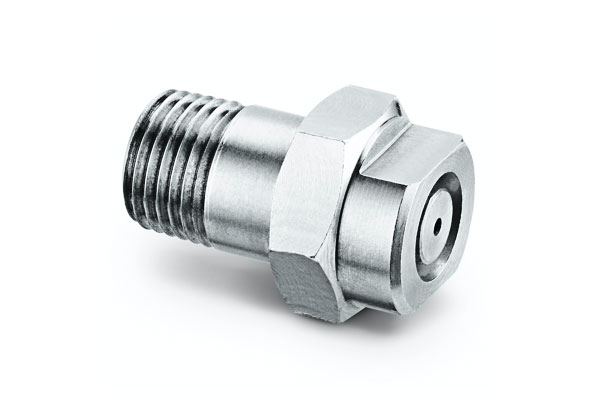
A jet nozzle is a specially engineered device that converts pressure and thermal energy of a fluid (gas or liquid) sa directed kinetic energy, creating a high-velocity jet.
Unlike simple spray or orifice nozzles used for low-pressure applications, jet nozzles are designed to manage mataas na bilis, mataas na temperatura, and compressible flows, making them essential in propulsion, pagbuo ng kapangyarihan, and advanced manufacturing.
Mga Pangunahing Katangian
- Energy conversion: Ang nozzle transforms stagnation pressure and enthalpy from a fluid source (hal., combustion chamber, compressor, or pump) into directed velocity.
- Flow control: It dictates jet direction, bilis ng bilis, and expansion; in propulsion, this translates into thrust.
- Geometry-driven performance: The contour of the nozzle (convergent, convergent–divergent, annular, atbp.) determines whether the jet is subsonic or supersonic.
Why “Jet” Nozzle?
The term “jet” distinguishes these nozzles from ordinary industrial nozzles by their purpose and operating regime:
- Exit velocities can exceed 2,500 m/s in rocket engines (supersonic to hypersonic).
- Turbine and automotive jet nozzles operate in the 300–1,000 °C range, handling both aerodynamic and structural loads.
- Waterjet nozzles for marine propulsion accelerate seawater to 20–50 m/s, enabling thrust without propellers.
2. Classification of Jet Nozzles
A Jet nozzle can be classified according to geometry, operating flow regime, and functional purpose.
Each type addresses different requirements in aerospace propulsion, automotive systems, energy generation, and industrial processes.

Based on Geometry & Mga Katangian ng Daloy
Convergent Nozzles
- Hugis: Narrowing passage until the exit.
- Flow regime: Accelerates subsonic flows (M < 1) to near-sonic at the exit.
- Mga Aplikasyon: Automotive turbochargers, gas turbine stages, air knives in industrial cooling/drying.
- Casting implications: Simple to cast, often stainless steel or heat-resistant alloys.
Convergent–Divergent Nozzles (de Laval)
- Hugis: Narrow throat followed by an expanding section.
- Flow regime: Subsonic → Sonic at throat → Supersonic in diverging section.
- Mga Aplikasyon: Mga rocket engine, supersonic jet engines, high-pressure industrial gas jets.
- Pagganap: Exhaust velocities of 2,500–3,500 m/s are achievable in rocket propulsion.
- Casting implications: Complex shape, masikip na mga tolerance; often cast in nickel superalloys with ceramic cores.
Annular and Co-annular Nozzles
- Hugis: Ring-shaped outlets for bypass and core flow.
- Flow regime: Balances multiple streams (hal., cold bypass air and hot jet core).
- Mga Aplikasyon: Turbofan engines in aviation, improving fuel efficiency and reducing noise.
- Casting implications: Requires precise concentricity; large-diameter investment castings are common.
Variable-Area / Adaptive Nozzles
- Hugis: Adjustable throat and exit areas.
- Flow regime: Maintains efficiency across varying flight or load conditions.
- Mga Aplikasyon: Fighter jet afterburners, VTOL systems, some space launch systems.
- Casting implications: Cast housings combined with precision-machined moving petals or rings.
Based on Functional Application
Exhaust Nozzles
- Found in jet engines and rockets, converting thermal energy into thrust.
- Halimbawa: F-22 Raptor nozzles use 2D thrust-vectoring to enhance maneuverability.
Propulsion Waterjet Nozzles
- Accelerate water instead of gas.
- Mga Aplikasyon: Marine vessels, where jets at 20–50 m/s provide efficient thrust without exposed propellers.
- Foundry needs: Resistant to cavitation and seawater corrosion (often duplex stainless steel or bronze).
Turbine Guide Nozzles
- Direct high-temperature gases into turbine blades at controlled angles and velocities.
- Typical outlet velocities: 250–350 m/s.
- Foundry needs: Precision airfoil casting, madalas sa single-crystal superalloys.
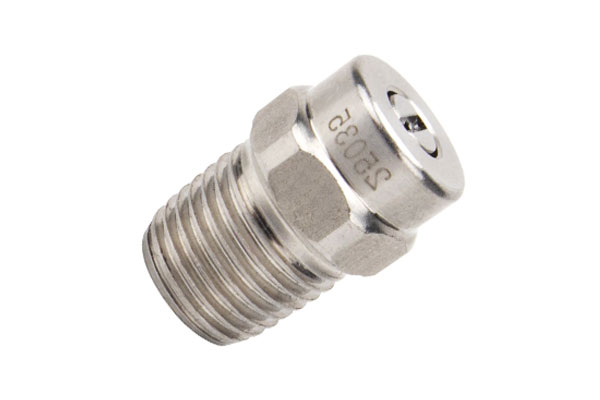
Industrial Jet Nozzles
- Used for cutting, paglamig, and combustion control.
- Mga Halimbawa: Oxygen jet nozzles in steelmaking, gas burners in foundries, compressed air jets in drying systems.
- Casting focus: Robustness and mass production at lower cost.
Buod ng Talahanayan
| Uri ng nozzle | Flow Regime | Key Application | Typical Exit Velocity | Casting Challenge |
| Convergent | Subsonic → Sonic | Automotive, Mga turbine | 100–500 m/s | Relatively simple, mass-producible |
| Convergent–Divergent | Supersonic | Rockets, supersonic jets | 2,000–3,500 m/s | Kumplikado, high-alloy, mahigpit na pagpaparaya |
| Annular / Co-annular | Mixed | Turbofans | 300–600 m/s | Large-scale, concentric accuracy |
| Variable-area | Adaptive | Military aircraft, VTOL | Variable (0.5–3 Mach) | Katumpakan + moving components |
| Waterjet | Subsonic | Marine propulsion | 20–50 m/s | Anti-cavitation alloys |
| Industrial Jet | Subsonic | bakal na bakal, mga halaman ng kemikal | 50–200 m/s | Rugged, cost-focused |
3. Materials Selection of Jet Nozzles
Ang material selection for jet nozzles is one of the most critical engineering decisions, as it directly influences thermal paglaban, mekanikal na lakas, erosion/corrosion durability, and manufacturability.
Materials by Application and Temperature Range
| Paglalapat / Field | Saklaw ng Temperatura (°C) | Mga Tipikal na Materyales | Mga Pangunahing Katangian |
| Aerospace & Rockets | 1,000 – 3,000+ | Mga superalloy na nakabatay sa nikel (Inconel, Rene), Cobalt superalloys, Refractory metals (Nb, Ta, W), Mga Composite ng Ceramic Matrix (SiC/Si₃N₄) | High-temperature strength, paglaban sa creep, paglaban sa oksihenasyon |
| Gas Turbines & Kapangyarihan | 900 – 1,100 | Single-crystal nickel superalloys, Thermal Barrier Coatings (YSZ) | Long-term creep resistance, thermal fatigue resistance |
| Automotive & Transport | 800 – 1,000 | Lumalaban sa init hindi kinakalawang na aseros (310, 321, 347), Mga haluang metal ng titan (Ti-6Al-4V) | Paglaban sa init, magaan ang timbang (Ti), matipid sa gastos |
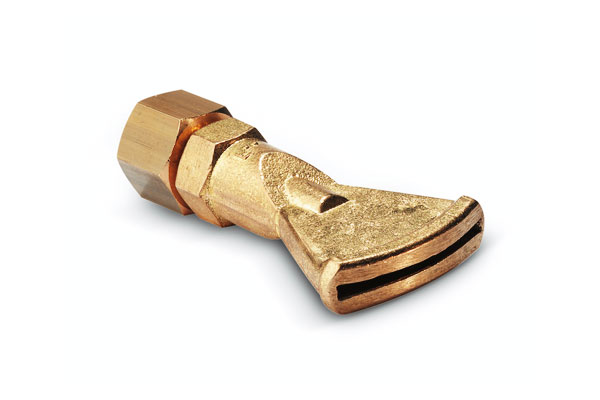
| Marine Waterjets | < 300 | Duplex stainless steel, Super-duplex stainless steel, Tanso ng Nikel Aluminyo | Paglaban sa kaagnasan (tubig dagat), cavitation resistance |
| Mga Proseso ng Industriya | 200 – 1,600+ | Mga tool steels (H13, D2 po), Tungsten karbid (WC-Co), Keramika (Al O, SiC) | Email Address *, erosion resistance, durability under abrasive/oxidizing environments |
4. Paggawa & Foundry Processes of Jet Nozzles
The production of jet nozzles is one of the most technically demanding areas of modern foundry and manufacturing engineering,
as these components must withstand matinding temperatura, high-velocity flows, at mekanikal na mga stress while maintaining precise aerodynamic profiles.
The choice of process depends on geometry, materyal na bagay, Aplikasyon, at mga kinakailangan sa pagganap.
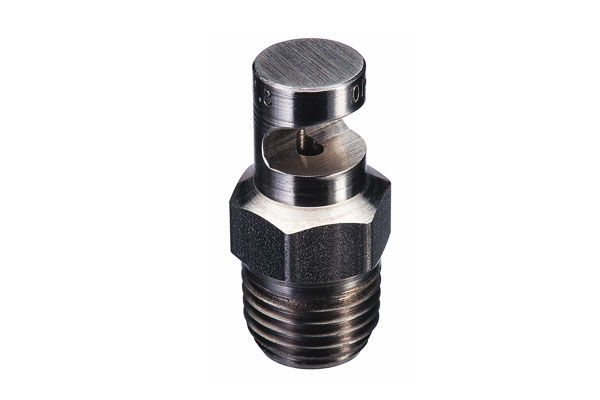
Pamumuhunan sa Paghahagis (katumpakan paghahagis)
- Proseso: Wax pattern → Ceramic shell → Alloy pouring → Shell removal → Finishing.
- Mga Aplikasyon: Turbine nozzle guide vanes, rocket nozzle liners, convergent–divergent sections.
- Mga kalamangan:
-
- Complex geometries achievable.
- Dimensional accuracy up to ±0.1 mm.
- Ability to cast nickel-based superalloys.
- Foundry Considerations:
-
- Requires vacuum or inert atmosphere casting for oxidation-sensitive alloys.
- Ceramic core design is critical for hollow cooling passages.
Direksyon ng Solidification & Single-Crystal Casting
- Proseso: Control solidification from bottom to top to align grains; advanced version prevents grain boundaries completely.
- Mga Aplikasyon: High-temperature turbine nozzle vanes (mga turbine ng gas, mga jet engine).
- Mga kalamangan:
-
- Eliminates grain boundary creep and oxidation.
- Increases service life under 900–1,100 °C operation.
- Foundry Considerations:
-
- High process complexity, long cycle times.
- Requires advanced thermal gradient control during solidification.
Forging and Machining
- Proseso: Alloy billets are hot-forged, then CNC-machined to final geometry.
- Mga Aplikasyon: Automotive exhaust nozzles, marine waterjet housings, smaller industrial jet nozzles.
- Mga kalamangan:
-
- High strength through grain refinement.
- Economical for simpler geometries.
- Mga Limitasyon:
-
- Less suited for internal cooling channels or complex convergent-divergent profiles.
Paggawa ng Additive (AM) / 3D Paglilimbag
- Proseso: Layer-by-layer metal deposition (SLM, EBM, DED) with alloys like Inconel, titan, or copper-based liners.
- Mga Aplikasyon: Rocket nozzles (hal., SpaceX SuperDraco, Relativity Space Aeon), turbine prototypes, cooling-channel integrated nozzles.
- Mga kalamangan:
-
- Pinapagana ang complex internal cooling channels not possible with casting.
- Rapid prototyping and design iteration.
- Reduced part count (hal., nozzle + manifold printed as one).
- Mga Limitasyon:
-
- Surface roughness requires post-processing.
- Limited build size for large aerospace nozzles.
Protective Coating & Paggamot sa ibabaw
- Thermal Barrier Coatings (Mga TBC): Yttria-stabilized zirconia (YSZ) reduces metal temperatures by 100-200 ° C.
- Oxidation/Corrosion Coatings: MCrAlY, aluminide coatings protect against hot corrosion and oxidation.
- Erosion Resistance: Tungsten carbide or ceramic coatings for abrasive waterjets and industrial oxygen nozzles.
5. Mga kalamangan & Mga disadvantages
Mga nozzle ng jet, as critical flow-directing devices, magbigay ng unique performance benefits across aerospace, automotive, enerhiya, and industrial sectors.
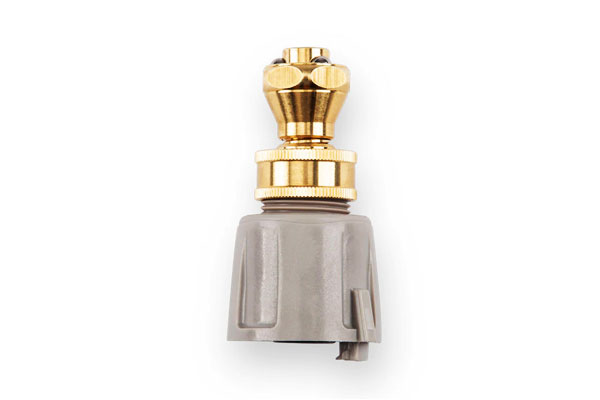
Advantages of Jet Nozzles
Enhanced Flow Control & Thrust Efficiency
- In aerospace engines, convergent–divergent nozzles can accelerate gases to Mach 2–4, maximizing thrust.
- In industrial burners, jet nozzles optimize flame stability and combustion efficiency.
Versatility Across Media
- Can operate with gases (hangin, combustion gases, steam), mga likido (waterjets, iniksyon ng gasolina), and even multiphase flows (aerosol sprays).
High Energy Transfer
- Jet nozzles convert pressure energy into velocity with efficiencies often exceeding 90% in well-designed systems.
- Enables applications like high-pressure waterjet cutting (hanggang sa 4,000 bar).
Precision Application
- Enables focused delivery of fluids (hal., fuel injection in engines, oxygen jets in steelmaking).
- Nagpapabuti industrial yield by reducing wastage and ensuring localized energy transfer.
Materyal & Process Adaptability
- Can be manufactured from mga superalloys, Keramika, karbid, or stainless steels, depending on use case.
- Compatible with advanced coatings for thermal and corrosion resistance.
Scalability
- Sizes range from micro-nozzles (<1 mm) in fuel injectors to large-scale (>2 m diameter) rocket and marine nozzles.
Disadvantages of Jet Nozzles
High Manufacturing Cost
- Aerospace-grade nozzles require pamumuhunan paghahagis, single-crystal growth, o additive manufacturing, driving costs up to tens of thousands of dollars per unit.
- Complex inspection and certification requirements (X-ray, Pag scan ng CT).
Mga Limitasyon sa Materyal
- Even advanced superalloys begin to degrade above 1,200–1,400 °C without cooling or coatings.
- Erosion in abrasive or particle-laden flows reduces service life (common in industrial waterjets).
Pagpapanatili & Durability Issues
- Nozzles suffer from magsuot ng, thermal pagkapagod, at kaagnasan, requiring frequent replacement in steelmaking and abrasive cutting.
- Cooling channel blockages in aerospace nozzles can lead to catastrophic failures.
Pagiging kumplikado ng disenyo
- Optimizing geometry for efficiency requires CFD (Computational Fluid Dynamics) and extensive testing.
- Small deviations in surface finish or angle can significantly reduce performance.
Energy Losses in Off-Design Conditions
- Fixed-geometry nozzles may lose efficiency when operating outside their designed pressure or temperature range.
- Variable-geometry nozzles (hal., aircraft afterburners) are more efficient but much more complex and expensive.
Foundry Challenges
- Casting high-temperature alloys often results in defects (porosity, hot tearing, mga inclusions) that require rework or scrap.
- Sand casting provides economy but sacrifices accuracy and surface finish, limiting its aerospace suitability.
6. Application Domains of Jet Nozzles
Jet nozzles are applied across a wide range of industries where dinamika ng likido, thermal control, and precision energy transfer ay kritikal.
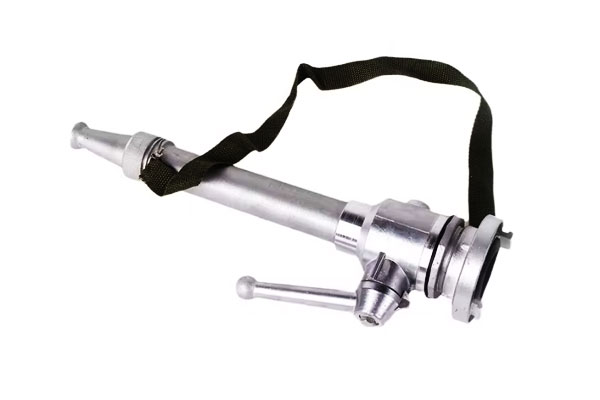
Their role differs by sector, depending on the working medium (gas, liquid, or multiphase), mga kinakailangan sa pagganap, and material constraints.
| Sector | Mga Pangunahing Aplikasyon | Temp. Saklaw (°C) | Typical Alloys/Materials | Common Foundry Process |
| Aerospace & Rockets | Turbine & rocket nozzles | 1,000–3,000+ | Ni superalloys, Mga CMC, refractory metals | Pamumuhunan sa paghahagis, SX casting |
| Automotive & Marine | Mga tambutso, mga fuel injector, waterjets | 300–1,000 | Hindi kinakalawang na asero, Ti alloys, Ni-Al bronze | Buhangin paghahagis, pagkukubli |
| Enerhiya & Kapangyarihan | Gas & steam turbine nozzles | 900–1,100 | Single-crystal superalloys, Mga TBC | DS/SX casting |
| Industrial Manufacturing | Oxygen lances, waterjet cutters, mga nozzle ng spray | 200–1,600+ | Mga tool steels, karbid, Keramika | Buhangin paghahagis, pamumuhunan paghahagis |
| pagtatanggol & Militar | Rocket motors, thrust-vector nozzles | 1,000–3,000+ | Graphite, C/C composites, mga superalloys | Cast + composite hybrids |
| Agrikultura | Irrigation, crop spraying, fertilizer atomizers | 20–120 | Hindi kinakalawang na asero, mga plastik na, tanso | Buhangin paghahagis, machining, polymer molding |
| Paglaban sa sunog | High-pressure water & foam nozzles | 20–150 | Hindi kinakalawang na asero, tanso, aluminyo | Buhangin paghahagis, CNC machining, pagkukubli |
| Emerging/Other Sectors | Hydrogen turbines, EV battery cooling, smart nozzles | 100–1,200+ | Advanced alloys, Keramika, mga composite | Paggawa ng additive, hybrid casting |
7. Comparison with Other Nozzles
Jet nozzles are one among many types of nozzles used across industrial, automotive, aerospace, and energy applications.
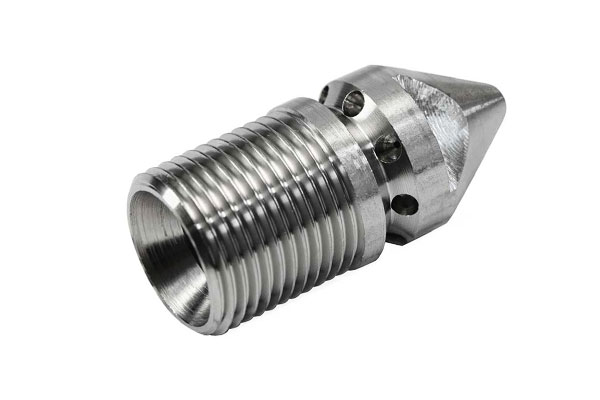
Comparing them to other nozzle types highlights their unique advantages, Mga limitasyon, and optimal use cases.
| Uri ng nozzle | Typical Flow Medium | Core Function | Mga kalamangan | Mga Limitasyon | Mga Karaniwang Aplikasyon |
| Jet Nozzle | Gas, liquid, multiphase | Convert pressure to high-velocity flow | High thrust/velocity, katumpakan, maraming nalalaman | High cost, wear in abrasive/thermal loads | Rockets, Mga turbine, waterjets, industrial lances |
| Spray Nozzle | Liquid | Atomize and distribute liquid evenly | Fine droplet control, unipormeng saklaw | Limited velocity, low-pressure applications | Agrikultura, firefighting, pagproseso ng kemikal |
| Orifice/Flow Nozzle | Gas, liquid | Measure flow rate, control small flows | Simple, robust, matipid sa gastos | Not suitable for high thrust or supersonic flow | Flow metering, small pipelines |
| Converging/Diverging Nozzle | Gas | Accelerate to supersonic speeds | High Mach number achievable, efficient thrust | Complex design, high-temperature requirement | Rockets, supersonic wind tunnels |
| Pressure-Reducing Nozzle | Liquid/Gas | Lower downstream pressure | Simple, easy maintenance | Limited control over flow velocity | Steam systems, pamamahagi ng tubig |
| Abrasive Waterjet Nozzle | Liquid + nakasasakit | Focus water + abrasive for cutting | Very high material removal rate, katumpakan | Rapid wear, high maintenance | Industrial cutting, stone/metal fabrication |
8. Future Trends in Jet Nozzle Technology
Innovation in jet nozzles is driven by demand for higher efficiency, mas magaan ang timbang, and extreme performance:
- Paggawa ng Additive (AM): 3D printing of nozzles (hal., Inconel 718 via LPBF) enables complex geometries (hal., variable-throat CD nozzles) that optimize thrust for multiple altitudes.
AM also reduces lead time from 8–12 weeks to 1–2 weeks. - Mga Smart Nozzle: Embedded sensors (temperatura, presyon, panginginig ng boses) monitor performance in real time.
Halimbawa na lang, rocket nozzles with fiber-optic sensors detect thermal stress before cracking. - Advanced Materials: Mga alloy ng mataas na entropiya (HEAs, hal., AlCoCrFeNi) offer 20–30% higher temperature resistance than Inconel 718, enabling hypersonic nozzles for next-generation space vehicles.
- Variable-Geometry Nozzles: Adjustable divergence angles (hal., in jet engines) optimize thrust at different altitudes—reducing fuel consumption by 5–10%.
9. Pangwakas na Salita
Ang jet nozzle is far more than a fluid exit duct — it is a multidisciplinary convergence of aerodynamics, termodinamika, materials engineering, and foundry expertise.
Casting plants play a decisive role in enabling performance by providing precise geometries, mataas na temperatura alloys, and certified manufacturing quality.
As industries move toward higher efficiency, mas mababang mga emisyon, and adaptive systems, foundries that embrace advanced alloys, additive-assisted casting, and digital quality control will remain indispensable to the evolution of jet nozzle technology.
Mga FAQ
What is a jet nozzle?
A jet nozzle is a device that converts fluid pressure into a focused, high-velocity flow. It is used across industries to generate thrust, cut materials, deliver drugs, clean surfaces, or propel water.
Where are jet nozzles commonly used?
- Aerospace & pagtatanggol: Rockets, mga jet engine, hypersonic vehicles.
- Industrial Manufacturing: Water jet cutting, Paglilinis, patong na patong.
- Automotive & Transportasyon: Iniksyon ng gasolina, mga turbocharger, water jet boats.
- Enerhiya & Kapangyarihan: Mga turbina ng gas, geothermal plants, wind turbine cleaning.
- Medikal na & Biomedical: Drug delivery, surgery, instrument sterilization.
- Environmental & Municipal: Wastewater treatment, air pollution control, snow/ice removal.
How do jet nozzles enhance industrial manufacturing?
They allow precise, high-speed operations like water jet cutting, deburring, and uniform coating application, improving efficiency, reducing waste, and minimizing thermal damage.
Can jet nozzles reduce emissions in automotive engines?
Oo nga. Fuel injection nozzles atomize fuel for better combustion, lowering NOₓ and particulate emissions. Turbocharger nozzles optimize exhaust flow to boost engine efficiency.
How do jet nozzles contribute to environmental protection?
They enable energy-efficient wastewater treatment, remove particulate matter from industrial exhaust, and clear snow/ice without excessive chemical use, pagbabawas ng epekto sa kapaligiran.