1. Panimula
In the realm of engineering materials, titan mga bes hindi kinakalawang na asero frequently stand out as two high-performance metals utilized across a broad range of industries.
Their applications span aerospace, medikal na, marine, at mga produkto ng mamimili, driven by their unique mechanical, kemikal na, and physical characteristics.
This article delivers a professional, data-driven comparison of these two materials, aiming to inform material selection decisions with authority and clarity.
2. Komposisyon ng kemikal & Alloy Systems
Ang pag unawa sa mga komposisyon ng kemikal at alloy systems of titanium and stainless steel is critical for material selection,
as these factors directly influence mechanical properties, paglaban sa kaagnasan, thermal pag-uugali, and processability.
Mga haluang metal ng Titanium
It is typically used in two forms:
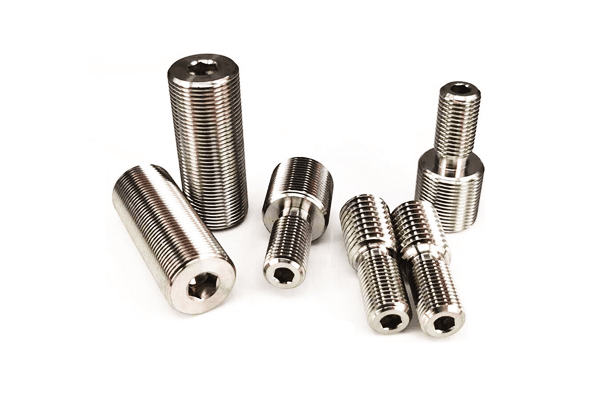
- Commercially pure titanium (Grades 1–4) – varying oxygen content controls strength and ductility.
- Mga haluang metal ng titan – mainly Ti-6Al-4V (Grade 5), the industry workhorse.
| Titanium Grade | Komposisyon | Mga Pangunahing Katangian |
| Grade 1 | ~99.5% Ti, very low O | Softest, most ductile, mahusay na paglaban sa kaagnasan |
| Grade 2 | ~99.2% Ti, low O | Stronger than Grade 1, widely used in industrial applications |
| Grade 5 (Ti-6Al-4V) | ~90% Ti, 6% Al, 4% V | Mataas na ratio ng lakas sa timbang, aerospace & biomedical use |
| Grade 23 | Ti‑6Al‑4V ELI (Extra Low Interstitial) | Improved biocompatibility for implants |
Stainless Steel Families
Hindi kinakalawang na asero ay iron-based alloys with ≥10.5% chromium, forming a passive Cr₂O₃ film for corrosion resistance. They are grouped by microstructure:
| Family | Mga Tipikal na Grado | Mga Pangunahing Elementong Alloying | Primary Characteristics | Mga Karaniwang Aplikasyon |
| Austenitic | 304, 316, 321 | Cr, Ni, (Mo in 316), (Ti in 321) | Napakahusay na paglaban sa kaagnasan, di-magnetiko, magandang formability | Food processing, mga medikal na aparato, Kagamitan sa Kemikal |
| Ferritic | 409, 430, 446 | Cr | Magnetic, katamtamang paglaban sa kaagnasan, magandang thermal kondaktibiti | Automotive exhausts, Mga Kagamitan, arkitektura trim |
Martensitiko |
410, 420, 440A/B/C | Cr, C | Mataas na katigasan at lakas, magnetiko, less corrosion-resistant | Knives, mga blades ng turbine, mga tool |
| Duplex | 2205, 2507 | Cr, Ni, Mo, N | Mataas na lakas, improved chloride stress corrosion cracking (SCC) paglaban | Marine structures, langis & gas, mga tulay |
| Pag-ulan ng pagtigas | 17-4PH, 15-5PH, 13-8Mo | Cr, Ni, Cu, Al (or Mo, Nb) | Combines high strength and corrosion resistance, Maaaring gamutin ang init | Aerospace, pagtatanggol, mga shaft, Mga balbula, nuclear components |
3. Mechanical Properties of Titanium vs Stainless Steel
Selecting between titanium and stainless steel requires understanding their distinct mechanical profiles. The table below outlines the most relevant properties for commonly used grades:
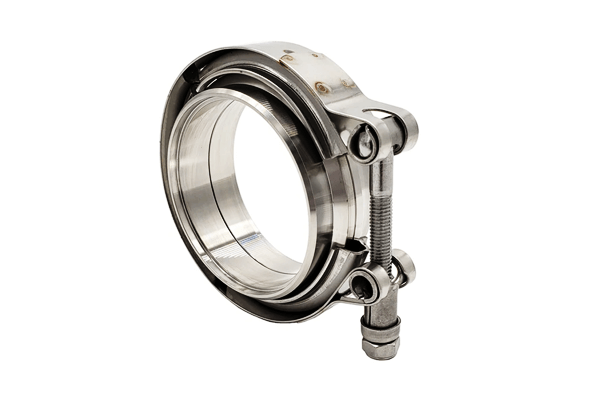
Mechanical Properties Comparison Table
| Pag-aari | Titanium Grade 2 (Commercially Pure) | Ti-6Al-4V (Grade 5) | 304 Hindi kinakalawang na asero | 316 Hindi kinakalawang na asero |
| Densidad ng katawan (g/cm³) | 4.51 | 4.43 | 8.00 | 8.00 |
| Lakas ng Paghatak (MPa) | ~345 | ~900 | ~505 | ~515 |
| Yield Lakas (MPa) | ~275 | ~830 | ~215 | ~205 |
| Pagpapahaba (%) | ~20 | 10–14 | ~ 40 | ~ 40 |
| Ang katigasan ng ulo (HB) | ~160 | ~330 | 150–170 | 150–180 |
| nababanat na modulus (GPa) | ~105 | ~114 | ~193 | ~193 |
| Lakas ng Pagkapagod (MPa) | ~ 240 | ~510 | ~ 240 | ~230 |
4. Paglaban sa kaagnasan & Surface Behavior
Corrosion performance often dictates material choice in demanding environments.
Both titanium and stainless steel rely on passive oxide films—yet their behavior diverges sharply under chlorides, mga asido, and elevated temperatures.
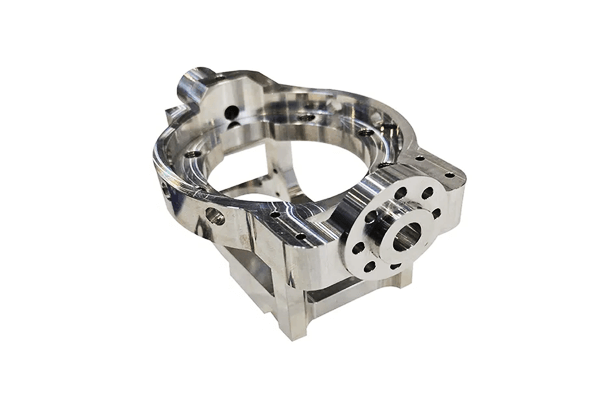
Passive Film Formation
- Titanium (TiO ₂)
-
- Instantly forms a 2-10 nm makapal, self-healing oxide layer
- Re‑passivates rapidly if scratched—even in seawater
- Hindi kinakalawang na asero (Cr₂O₃)
-
- Develops a 0.5–3 nm chromium oxide film
- Effective in oxidizing environments but vulnerable where oxygen is depleted
Pangunahing punto: TiO₂ is more stable than Cr₂O₃, granting titanium superior resistance to a wider range of corrosive media.
Performance in Aggressive Environments
| Kapaligiran | Ti-6Al-4V | 316 Hindi kinakalawang na asero |
| Chloride‑bearing solutions | No pitting at Cl⁻ up to 50 g/L at 25 °C | Pagtatalik na threshold ~ 6 g/L Cl⁻ at 25 °C |
| Seawater Immersion | < 0.01 mm/year corrosion rate | 0.05–0.10 mm/year; localized pitting |
| Acidic media (HCl 1 M) | Passive up to ~ 200 °C | Severe uniform attack; ~ 0.5 mm / taon |
| Oxidizing acids (HNO₃ 10%) | Napakahusay; negligible attack | Mabuti na lang; ~ 0.02 mm / taon |
| High‑temperature oxidation | Stable to ~ 600 °C | Stable to ~ 800 °C (intermittent) |
Localized Corrosion Susceptibility
- Pag-ipit & Kaagnasan ng bitak
-
- Titanium: Pitting potential > +2.0 V vs. SCE; essentially immune under normal service.
- 316 SS: Pitting potential ~ +0.4 V vs. SCE; crevice corrosion common in stagnant chlorides.
- Stress‑Corrosion Cracking (SCC)
-
- Titanium: Virtually SCC‑free in all aqueous media.
- Austenitic SS: Prone to SCC in warm chloride Mga kapaligiran (hal., sa itaas 60 °C).
Mga Paggamot sa Ibabaw & Mga Coatings
Titanium
- Pagpapahid ng langis: Enhances oxide thickness (hanggang sa 50 nm), allows color marking.
- Micro‑Arc Oxidation (MAO): Lumilikha ng isang 10-30 μm ceramic‑like layer; boosts wear and corrosion resistance.
- Plasma Nitriding: Improves surface hardness and fatigue life.
Hindi kinakalawang na asero
- Acid Passivation: Nitric or citric acid removes free iron, thickens Cr₂O₃ film.
- Electropolishing: Smooths microscale peaks and valleys, reducing crevice sites.
- Mga Patong ng PVD (hal., TiN, CrN): Adds a thin hard barrier for wear and chemical attack.
5. Mga Katangian ng Thermal & Heat Treatment of Titanium vs Stainless Steel
Thermal behavior influences material choice for components exposed to temperature swings or high‑heat service.
Titanium vs stainless steel differ significantly in heat conduction, expansion, and treatability.
Thermal kondaktibiti & Pagpapalawak
| Pag-aari | Ti-6Al-4V | 304 Hindi kinakalawang na asero |
| Thermal kondaktibiti (W/m·K) | 6.7 | 16.2 |
| Tiyak na Kapasidad ng Init (J/kg· K) | 560 | 500 |
| Koepisyent ng Thermal Expansion (20-100 ° C, 10⁻⁶/K) | 8.6 | 17.3 |
Heat‑treatable vs. non‑hardenable grades
Martensitic stainless steels are heat-treatable and can be hardened and tempered to achieve desired mechanical properties.
Austenitic stainless steels are non-hardenable by heat treatment, but their strength can be increased through cold working.
Duplex steels rely on controlled heat input during welding, with no further hardening.
Mga haluang metal ng titan, such as Ti-6Al-4V, can be heat-treated to optimize their mechanical properties, including solution annealing, pagtanda, and stress relieving.
High‑Temperature Stability & Oksihenasyon
- Titanium resists oxidation up to ~ 600 °C in air. Higit pa rito, embrittlement from oxygen diffusion can occur.
- Hindi kinakalawang na asero (304/316) remains stable to ~ 800 °C intermittently, with continuous use up to ~ 650 °C.
- Scale Formation: SS forms protective chromia scales; titanium’s oxide adheres strongly, but thick scales can spall under cycling.
6. Gawa-gawa & Joining of Titanium vs Stainless Steel
Formability and machinability
Austenitic stainless steels are highly formable and can be easily shaped using processes like deep drawing, pag stamp ng, and bending.
Ferritic and martensitic stainless steels have lower formability. Titanium is less formable at room temperature due to its high strength, but hot-forming techniques can be used to shape it.
Machining titanium is more difficult than stainless steel due to its low thermal conductivity, mataas na lakas, and chemical reactivity, which can lead to rapid tool wear.
Welding and brazing challenges
Welding stainless steel is a well-established process, with various techniques available. Gayunpaman, care must be taken to prevent issues such as corrosion at the weld site.
Welding titanium is more challenging as it requires a clean environment and inert gas shielding to prevent contamination from oxygen, nitrogen, and hydrogen, which can degrade the mechanical properties of the weld.
Brazing can also be used for both materials, but different filler metals and process parameters are required.
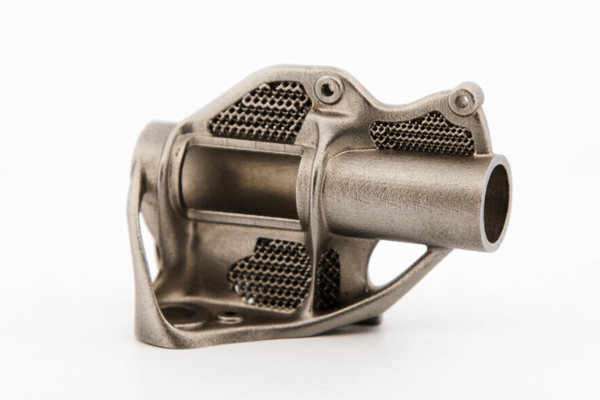
Paggawa ng additive (3D pag print) readiness
Both titanium and stainless steel are suitable for additive manufacturing.
Titanium’s high strength-to-weight ratio makes it attractive for aerospace and medical applications produced via 3D pag print.
Stainless steel is also widely used in 3D printing, especially for producing complex geometries in consumer goods and medical instruments.
Email Address * (buli na, Passivation, pag anod ng)
Stainless steel can be polished to a high shine, and passivated to enhance its corrosion resistance.
Titanium can be polished and anodized to create different surface finishes and colors, as well as to improve its corrosion and wear resistance.
7. Biocompatibility & Medical Use
Sa mga medikal na aplikasyon, tissue compatibility, corrosion resistance in body fluids, at long‑term stability determine material suitability.
Titanium’s Implant History & Osseointegration
- Early Adoption (1950s):
-
- Research by Per-Ingvar Brånemark revealed that bone bonds directly to titanium (osseointegration).
- First successful dental implants used CP titanium, demonstrating > 90% success rates sa 10 mga taon.
- Osseointegration Mechanism:
-
- Native TiO ₂ surface layer supports bone cell attachment and proliferation.
- Roughened or anodized surfaces increase bone–implant contact area by 20–30%, improving stability.
- Current Uses:
-
- Orthopedic implants: Hip and knee joints (Ti‑6Al‑4V ELI)
- Dental fixtures: Mga tornilyo, abutments
- Spinal devices: Cages and rods
Stainless Steel in Surgical Tools & Temporary Implants
- Mga Instrumentong Kirurhiko:
-
- 304L at 316L stainless steels dominate scalpels, mga puwersa, and clamps due to ease of sterilization and high strength.
- Autoclave cycles (> 1,000) induce no significant corrosion or fatigue failures.
- Temporary Fixation Devices:
-
- Mga Pin, Mga tornilyo, and plates crafted from 316L offer sufficient strength for fracture repair.
- Removal within 6–12 buwan minimizes concerns over nickel release or sensitization.
Nickel Allergy Considerations
- Nickel Content in 316L SS: ~ 10–12% by weight
- Prevalence of Nickel Sensitivity: Mga Epekto 10–20% of the population, leading to dermatitis or systemic reactions.
Mga Diskarte sa Pagpapagaan:
- Mga Patong sa Ibabaw: Parylene, keramika, or PVD barriers reduce nickel ion release by up to 90%.
- Alternative Alloys: Gamitin ang nickel‑free stainless (hal., 2205 Duplex) o titan for allergy‑prone patients.
Isterilisasyon & Long‑Term Tissue Response
| Sterilization Method | Titanium | Hindi kinakalawang na asero |
| Autoclave (steam) | Napakahusay; no surface change | Napakahusay; requires passivation check |
| Kemikal (hal., glutaraldehyde) | No adverse effect | May accelerate pitting if chloride‑contaminated |
| Gamma irradiation | No impact on mechanical properties | Slight surface oxidation possible |
- Titanium mga exhibit minimal ion release (< 0.1 µg/cm²/day) and elicits a mild foreign‑body response, Bumubuo ng isang manipis, stable fibrous capsule.
- 316L SS releases bakal, kromo, nickel ions at higher rates (0.5–2 µg/cm²/day), potentially provoking local inflammation in rare cases.
9. Applications of Titanium vs Stainless Steel
Hindi kinakalawang na asero mga bes titan are both widely used engineering materials known for their corrosion resistance and strength,
but their application fields differ significantly due to differences in weight, gastos, mekanikal na mga katangian, at biocompatibility.
Titanium Applications
Aerospace at Aviation
- Airframes and landing gear components
- Jet engine parts (compressor blades, mga casings, discs)
- Spacecraft structures and fasteners
Katwiran: Mataas na ratio ng lakas sa timbang, mahusay na paglaban sa pagkapagod, and corrosion resistance in extreme environments.
Medical and Dental
- Orthopedic implants (hip and knee replacements)
- Dental implants and abutments
- Mga instrumento sa kirurhiko
Katwiran: Exceptional biocompatibility, non-toxicity, and resistance to body fluids.
Marine at Offshore
- Submarine hulls
- Heat exchangers and condenser tubing in seawater
- Offshore oil and gas platforms
Katwiran: Superior corrosion resistance in chloride-rich and saltwater environments.
Industriya ng Pagproseso ng Kemikal
- Mga reaktor, vessels, and piping for handling corrosive acids (hal., hydrochloric, Sulpuriko acid)
Katwiran: Inert to most chemicals and oxidizing agents at high temperatures.
Sports and Consumer Goods
- Mga bisikleta na may mataas na pagganap, mga golf club, and watches
Katwiran: Magaan ang timbang, matibay na matibay, and premium aesthetics.
Stainless Steel Applications
Arkitektura at Konstruksyon
- Pag-cladding, Mga handrail, mga estruktural na beam
- Roofing, elevator doors, and facade panels
Katwiran: Aesthetic appeal, paglaban sa kaagnasan, and structural strength.
Industriya ng Pagkain at Inumin
- Kagamitan sa pagpoproseso ng pagkain, mga tangke, and sinks
- Brewery and dairy equipment
Katwiran: Hygienic surface, resistance to food acids, easy to sterilize.
Medical Devices and Tools
- Mga instrumento sa kirurhiko (mga scalpel, mga puwersa)
- Hospital equipment and trays
Katwiran: Mataas na katigasan, paglaban sa kaagnasan, and ease of sterilization.
Industriya ng Automotive
- Mga sistema ng tambutso, trim, at mga fastener
- Fuel tanks and frames
Katwiran: Paglaban sa kaagnasan, pagiging formable, and moderate cost.
Industrial Equipment and Chemical Processing
- Mga daluyan ng presyon, mga heat exchanger, and tanks
- Mga Pump, Mga balbula, at mga sistema ng piping
Katwiran: High-temperature resistance and resistance to a broad range of chemicals.
10. Pros and Cons of Titanium vs Stainless Steel
Parehong hindi kinakalawang na asero at titan offer excellent corrosion resistance and strength, but they diverge in areas such as gastos, bigat ng katawan, machinability, at biocompatibility.
Pros of Titanium
- Mataas na Ratio ng Lakas sa Timbang
Titanium is about 45% lighter than stainless steel while offering comparable or even superior strength. - Napakahusay na Paglaban sa Kaagnasan
Especially resistant to chlorides, tubig na maalat, and many aggressive acids—ideal for marine and chemical environments. - Superior Biocompatibility
Non-toxic, non-reactive with bodily fluids—preferred in medical implants and surgical applications. - Pagkapagod at Paglaban sa Gumapang
Performs well under cyclic loading and high-temperature stress over time. - Thermal katatagan
Retains mechanical properties at elevated temperatures (>400°C) better than most stainless steels.
Cons of Titanium
- Mataas na Gastos
Raw material and processing costs are significantly higher than stainless steel (up to 10× or more). - Difficult to Machine and Weld
Low thermal conductivity and work-hardening behavior increase tool wear and require specialized techniques. - Limited Availability of Alloys
Fewer commercial grades and alloy options compared to the stainless steel family. - Lower Wear Resistance
In uncoated conditions, titanium may gall or wear under friction-intensive conditions.
Pros of Stainless Steel
- Epektibo sa Gastos
Widely available and much cheaper than titanium, particularly in grades like 304 o 430. - Napakahusay na Paglaban sa Kaagnasan
Especially in oxidizing environments and mild acids; mga marka tulad ng 316 excel in chloride-rich settings. - Mataas na Lakas at Tigas
Good load-bearing capability with options tailored for hardness, ductility, or strength. - Good Fabrication Properties
Readily welded, mga makinang, and formed using standard tools—ideal for high-volume production. - Versatile Alloys and Finishes
Dozens of commercial grades and surface finishes for diverse applications.
Cons of Stainless Steel
- Heavier than Titanium
Nearly 60% denser—unsuitable for weight-sensitive applications (hal., aerospace, mga implants). - Susceptibility to Chloride Pitting
Especially in lower grades (hal., 304) in marine or salt-spray environments. - Lower Biocompatibility (Some Grades)
Can cause allergic reactions or leach nickel—less preferred in long-term implantable devices. - Magnetismo (in Some Grades)
Ferritic and martensitic stainless steels may be magnetic, which could interfere in sensitive applications.
11. Mga Pamantayan, Mga pagtutukoy & Sertipikasyon
Titanium Standards
- ASTM F136: Ti‑6Al‑4V ELI for implants
- AMS 4911: Aerospace titanium
- ISO 5832-3: Implants—unalloyed titanium
Stainless Steel Standards
- ASTM A240: Plate, Sheet
- ASTM A276: Bars and rods
- EN 10088: Hindi kinakalawang na asero grado
- ISO 7153-1: Mga instrumento sa kirurhiko
12. Talahanayan ng Paghahambing: Titanium vs Stainless Steel
| Pag-aari / Katangian | Titanium (hal., Ti-6Al-4V) | Hindi kinakalawang na asero (hal., 304, 316, 17-4PH) |
| Densidad ng katawan | ~4.5 g/cm³ | ~7.9 – 8.1 g/cm³ |
| Specific Strength (Strength-to-Weight) | Napakataas | Katamtaman |
| Lakas ng Paghatak | ~900–1,100 MPa (Ti-6Al-4V) | ~500–1,000 MPa (Depende sa grado) |
| Yield Lakas | ~830 MPa (Ti-6Al-4V) | ~200–950 MPa (hal., 304 to 17-4PH) |
| nababanat na modulus | ~110 GPa | ~190–210 GPa |
| Paglaban sa kaagnasan | Napakahusay (especially in chlorides and seawater) | Napakahusay (nag iiba ayon sa grado; 316 > 304) |
| Oxide Layer | TiO ₂ (very stable and self-healing) | Cr₂O₃ (protective but susceptible to pitting in chlorides) |
| Ang katigasan ng ulo (HV) | ~330 HV (Ti-6Al-4V) | ~150–400 HV (grade dependent) |
| Thermal kondaktibiti | ~7 W/m·K | ~15–25 W/m·K |
Punto ng Pagtunaw |
~1,660°C | ~1,400–1,530°C |
| Weldability | Paghahamon; requires inert atmosphere | Generally good; care needed to avoid sensitization |
| Machinability | Mahirap; causes tool wear | Mas mahusay na; especially with free-machining grades |
| Biocompatibility | Napakahusay; ideal for implants | Mabuti na lang; used in surgical tools and temporary implants |
| Mga Katangian ng Magnetic | Hindi magnetic | Austenitic: di-magnetiko; Martensitiko: magnetiko |
| Gastos (Hilaw na materyal) | Mataas na (~5–10× stainless steel) | Katamtaman |
| Recyclability | Mataas na | Mataas na |
13. Pangwakas na Salita
Titanium and stainless steel each have distinct advantages. Titanium is ideal where lightweight strength, paglaban sa pagkapagod, or biocompatibility are mission-critical.
Hindi kinakalawang na asero, sa kabaligtaran, offers versatile mechanical properties, easy fabrication, at kahusayan sa gastos.
Material selection should be application-specific, considering not just performance, but also long-term cost, manufacturability, at mga pamantayan sa regulasyon.
A total-cost-of-ownership approach often reveals titanium’s true value, particularly in demanding environments.
Mga FAQ
Is titanium stronger than stainless steel?
Titanium has a higher specific strength (Lakas sa timbang ratio) than stainless steel, meaning it provides more strength per unit mass.
Gayunpaman, some hardened stainless steel grades (hal., 17-4PH) can exceed titanium in absolute tensile strength.
Is stainless steel magnetic while titanium is not?
Oo nga. Austenitic hindi kinakalawang na asero (hal., 304, 316) Hindi Magnetiko, pero martensitic and ferritic Ang mga grado ay magnetic.
Titanium, sa kabilang banda, ay di-magnetiko, making it ideal for applications like MRI-compatible medical devices.
Can both titanium and stainless steel be welded?
Oo nga, but with different requirements. Hindi kinakalawang na asero is easier to weld using standard methods (hal., TIG, MIG).
Titanium welding requires a fully inert atmosphere (argon shielding) to avoid contamination and embrittlement.
Which material is better for high-temperature applications?
Hindi kinakalawang na asero, partikular na ang heat-resistant grades tulad ng 310 o 446, performs well at sustained high temperatures.
Titanium resists oxidation up to ~600°C, but its mechanical properties degrade beyond that.
Can titanium and stainless steel be used together in assemblies?
Caution is advised. Galvanic corrosion can occur when titanium and stainless steel are in contact in the presence of an electrolyte (hal., Tubig), especially if stainless steel is the anodic material.