

1. Executive summary
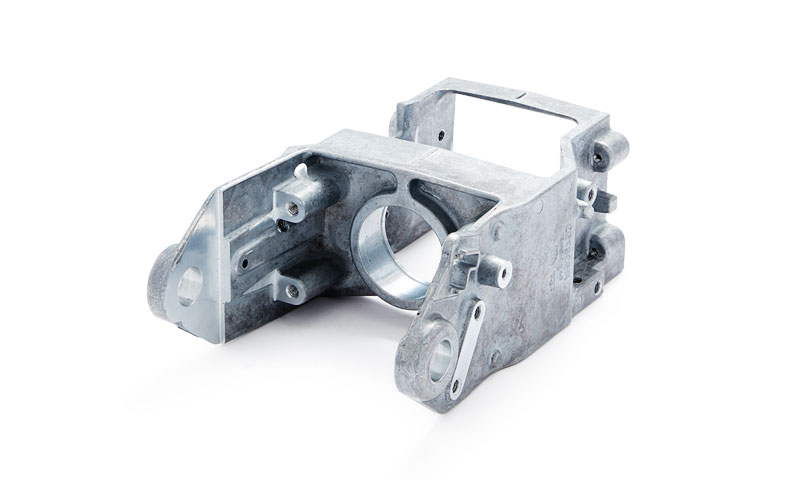
Cast aluminum combines low density, good specific strength, excellent castability and corrosion resistance with wide process flexibility.
Its properties are strongly dependent on alloy chemistry, casting method and post-cast treatments (hal., paggamot ng init, ibabaw ng pagtatapos).
Understanding the physical constants, microstructural drivers, process–property relationships and common failure modes is essential for selecting cast aluminum for durable, magaan ang timbang, manufacturable components.
2. Introduction — why cast aluminum matters
Aluminum castings are foundational in automotive, aerospace (non-critical parts), marine, mga consumer electronics, paghahatid ng kuryente, mga heat exchanger, and general industrial equipment.
Designers choose cast aluminum when a complex geometry, integrated features, low part weight (specific strength/stiffness), and reasonable corrosion resistance are required.
The appeal is a combination of physical performance, manufacturing economy at scale, at recyclability.
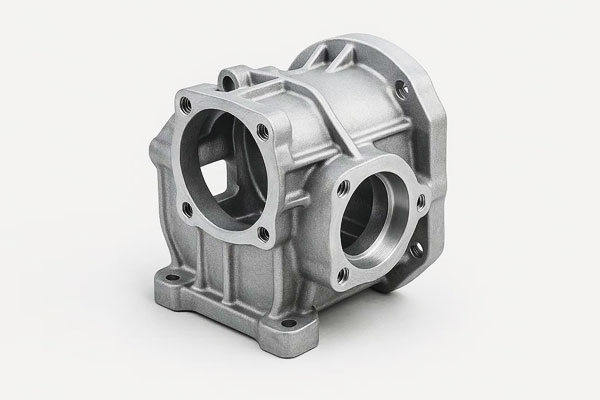
3. Physical Properties of Cast Aluminum
| Pag-aari | Typical value | (notes) |
| Densidad ng katawan (ρ) | 2.70 g·cm⁻³ (≈2700 kg·m⁻³) | Roughly one-third the density of steel |
| Melting point (pure Al) | 660.3 °C | Alloys melt over a range; Al–Si eutectic ≈ 577 °C |
| Young’s modulus (E) | ≈ 69 GPa | Modulus is relatively insensitive to alloying |
| Thermal kondaktibiti | Pure Al ≈ 237 W·m⁻¹·K⁻¹; cast alloys ≈ 100–180 W·m⁻¹·K⁻¹ | Pag-aayos ng Katapatan, porosity and microstructure reduce conductivity vs pure Al |
| Coefficient of thermal expansion (CTE) | ~22–24 ×10⁻⁶ K⁻¹ | High relative to steels—important for multi-material assemblies |
Kondaktibiti ng kuryente (pure Al) |
≈ 37 ×10⁶ S·m⁻¹ | Cast alloys have lower conductivity; conductivity falls with alloying and porosity |
| Typical as-cast tensile strength | ~70–300 MPa | Wide range depending on alloy, casting method and porosity |
| Typical heat-treated (T6-type) lakas ng paghatak | ~200–350+ MPa | Applies to heat-treatable Al–Si–Mg casting alloys after solution-quench-age |
| Typical elongation (ductility) | ~1–12% | Varies strongly with alloy, microstructure and casting quality |
| Ang katigasan ng ulo (Brinell) | ≈ 30–120 HB | Highly dependent on alloy composition, Si content and heat treatment |
4. Metallurgy and microstructure of cast aluminum
Cast aluminyo alloys are typically based on the aluminium (Al) matrix with controlled additions:
- Al–Si family (silumin) is the most widely used casting family because silicon improves fluidity, binabawasan ang pag urong, and lowers melting range.
Microstructure: α-Al dendritic matrix with eutectic Si particles; morphology and distribution of Si strongly affect strength, ductility and wear. - Al–Si–Mg alloys are heat-treatable (age hardening via precipitates such as Mg₂Si).
- Al–Cu and Al–Zn cast alloys offer higher strength but can have reduced corrosion resistance and require careful heat treatment.
- Intermetallics (Fe-rich phases, Cu-Al phases) form during solidification and influence mechanical properties and machinability.
Controlled chemistry and treating (hal., Mn for Fe modification) are used to limit deleterious intermetallic morphologies. - Dendritic segregation is inherent in solidification: primary α-Al dendrites and interdendritic eutectic; finer dendrite arm spacing (fast cooling) generally improves mechanical properties.
Important microstructural control mechanisms:
- Pagpipino ng butil (Ti, B additions or grain-refining inoculants) reduces hot tearing and improves mechanical properties.
- Modification (hal., Sr, Na for Si modification) transforms plate-like Si into fibrous/rounded morphologies improving ductility and toughness.
- Degassing and hydrogen control ay kritikal: dissolved hydrogen causes gas porosity; degassing and proper melt handling reduce porosity and improve fatigue.
5. Mga katangian ng mekanikal (lakas ng loob, ductility, tigas na tigas, pagkapagod)
Strength and ductility
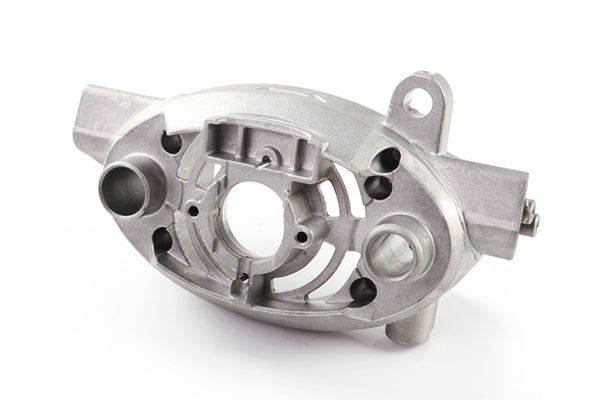
- Cast aluminum alloys span a wide strength/ductility spectrum.
As-cast tensile strengths for common Al–Si casting alloys typically fall in the lower-to-mid hundreds of MPa range when heat treated; unmodified, coarse eutectic microstructures and porosity lower strength and elongation. - Mga paggamot sa init (solution treatment, pawiin, artificial aging — commonly called T6) precipitate strengthening phases (hal., Mg₂Si) and can significantly increase yield and ultimate tensile strengths.
Ang katigasan ng ulo
- Hardness correlates with alloying, primary Si content, at paggamot sa init. Hypereutectic Al–Si alloys (high Si) and heat-treated alloys show greater hardness and wear resistance.
Pagkapagod
- Cast aluminum generally has lower fatigue performance than wrought alloys of similar tensile strength because casting defects (porosity, Mga pelikulang oksido, pag urong) act as crack initiation sites.
Fatigue life is extremely sensitive to surface quality, porosity, and notch features. - Improving fatigue: reduce porosity (Pag-aalis ng gas, kinokontrol na pagpapatibay), refine microstructure, shot peen or surface finish, and use design to minimize stress concentrations.
Creep and elevated temperature
- Aluminium alloys have limited high-temperature strength vs steels; creep becomes relevant above ~150–200 °C for many casting alloys.
Selection for sustained elevated temperatures requires specialty alloys and design allowances.
6. Thermal and electrical properties
- Thermal kondaktibiti: Cast aluminum retains good thermal conductivity compared to most structural metals, making it favorable for heat sinks, housings and components where heat transfer is important.
Gayunpaman, alloying, porosity and microstructure reduce conductivity compared with pure Al. - Thermal expansion: Relatively high CTE (~22–24×10⁻⁶ K⁻¹) mandates careful tolerance and joint design with lower-CTE materials (bakal na bakal, Keramika) to avoid thermal stress or seal failure.
- Kondaktibiti ng kuryente: Lower in cast alloys than pure Al; still used where weight-specific conductivity is important (hal., busbars, housings combined with conductors).
7. Corrosion and environmental behaviour
- Native oxide protection: Aluminium spontaneously forms a thin, adherent Al₂O₃ oxide film that provides good general corrosion resistance in many atmospheres.
- Pitting in chloride environments: In aggressive chloride-containing environments (marine splash, deicing salts), localized pitting or crevice corrosion can occur, especially where intermetallics create micro-galvanic sites.
- Galvanic considerations: When coupled to more noble metals (hal., hindi kinakalawang na asero), aluminum is anodic and will corrode preferentially if electrically connected in an electrolyte.
- Protective measures: Alloy selection, mga patong na patong (pag anod ng, conversion coatings, mga pintura, powder coat), sealants at joints and design to avoid crevices improve long-term corrosion performance.
8. Casting processes and how they affect properties
Different casting routes produce characteristic microstructures, ibabaw ay nagtatapos, tolerances and mechanical properties:
- Buhangin paghahagis: Mababang gastos sa tooling, good design flexibility, coarser microstructure, higher porosity risk, magaspang na ibabaw tapusin. Typical for large, low-volume parts. Mechanical properties generally lower than die casting.
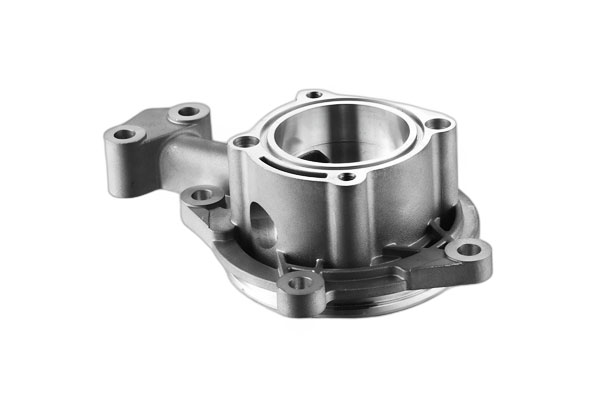
- Die (mataas na presyon) paghahagis ng mga: Manipis na pader, malapit na mga tolerance, excellent surface finish and high production rates.
Rapid solidification yields fine microstructure and good mechanical properties, but die castings often contain gas and shrinkage porosity; many die-cast alloys are not heat-treatable in the same way as sand-cast Al–Si–Mg alloys. - Permanent-mold casting (gravity): Improved microstructure vs sand casting (mas mababang porosity, better mechanical properties), moderate tooling cost.
- Pamumuhunan (Nawawalang waks) paghahagis ng mga: Excellent surface finish and complex geometries, used for precision parts at moderate volumes.
- Sentripugal paghahagis / pisilin ang paghahagis: Useful where high integrity and directional solidification are required (cylindrical parts, castings for pressure-containing applications).
Process–property trade-offs:
- Faster cooling (mamatay sa paghahagis, permanent mold with chills) → finer dendrite arm spacing → higher strength and ductility.
- Porosity control (Pag-aalis ng gas, pressurized casting) → critical for fatigue-sensitive applications.
- Economic choice depends on part size, pagiging kumplikado, unit cost and performance requirements.
9. Lunas sa init, alloying, and microstructure control
This section summarizes how alloy chemistry, casting practice and post-cast thermal processing interact to determine the microstructure — and therefore the mechanical, fatigue and corrosion properties — of cast aluminum.
Key alloying elements and their effects
| Alloying element | Typical range in cast Al alloys | Primary metallurgical effects | Mga Benepisyo | Potential drawbacks / considerations |
| Silicon (Si Si) | ~5–25 wt% (Al–Si alloys) | Forms Al–Si eutectic; controls fluidity and shrinkage; influences Si particle morphology | Napakahusay na katatagan; reduced hot cracking; improved wear resistance | Coarse plate-like Si reduces ductility unless modified (Sr/Na) |
| Magnesium (Mg) | ~0.2–1.0 wt% | Forms Mg₂Si; enables precipitation hardening (T6/T5 tempers) | Significant strength increase; mahusay na weldability; improved age-hardening response | Over-addition increases porosity sensitivity; requires good quench control |
| Tanso (Cu) | ~2–5 wt% | Strengthening via Al–Cu precipitates; increases high-temperature stability | High strength potential; good elevated-temperature performance | Nabawasan ang paglaban sa kaagnasan; increased hot-tear risk; may affect fluidity |
| Bakal na Bakal (Fe) | Typically ≤0.6 wt% (karumihan) | Forms Fe-rich intermetallics (β-AlFeSi, α-AlFeSi) | Necessary tolerance for recycled feedstock; improves melt handling | Brittle phases reduce ductility and fatigue life; Mn additions often required |
| Mga mangganeso (Mn) | ~0.2–0.6 wt% | Modifies Fe intermetallics into more benign morphologies | Improves ductility and toughness; increases tolerance to Fe impurities | Excess Mn can form sludge at low temperatures; affects fluidity |
Nikel (Ni) |
~0.5–3 wt% | Forms Ni-rich intermetallics with good thermal stability | Enhances high-temperature strength and wear resistance | Increases brittleness; Binabawasan ang paglaban sa kaagnasan; mas mataas na gastos |
| Sink (Zn) | ~0.5–6 wt% | Contributes to age-hardening in certain alloy systems | High strength in Al–Zn–Mg–Cu systems | Less common in castings; can reduce corrosion resistance |
| Titanium (Ti) + Boron (B) (grain refiners) | Added as master alloys | Promote fine, equiaxed grain structure | Reduces hot tearing; improves mechanical uniformity | Excess may reduce fluidity; must be carefully controlled |
| Strontium (Sr), Sosa (Na) (modifiers) | ppm-level additions | Modify eutectic Si from plate-like to fibrous/rounded | Dramatically improves elongation and toughness; better fatigue behaviour | Excess Na causes porosity; Sr requires tight control to avoid fading |
| Zirconium (Zr) / Scandium (Sc) (microalloying) | ~0.05–0.3 wt% (varies) | Form stable dispersoids that prevent grain growth during heat treatment | Excellent high-temperature stability; improved strength | High cost; used mainly in aerospace or specialty alloys |
Precipitation (age) hardening — mechanisms and stages
Many cast Al–Si–Mg alloys are heat-treatable through precipitation hardening (T-temp families). The general sequence:
- Paggamot ng solusyon — hold at elevated temperature to dissolve soluble phases (hal., Mg₂Si) into a homogeneous supersaturated solid solution.
Typical solution temperatures for common Al–Si casting alloys are high enough to approach but not exceed incipient melting; times depend on section thickness. - Quench — rapid cooling (pagpatay ng tubig, polymer quench) to retain a supersaturated solid solution at room temperature.
The quench rate must be sufficient to avoid premature precipitation that reduces hardening potential. - Pag-iipon — controlled reheating (artipisyal na pagtanda) to precipitate fine strengthening particles (hal., Mg₂Si) that impede dislocation motion.
There is often a peak-hardness condition (peak age); further aging causes coarsening and overaging (reduced strength, increased ductility).
Stages of precipitation typically proceed from Guinier-Preston (GP) zones (coherent, very fine) → semi-coherent fine precipitates → incoherent coarser precipitates.
The coherent/semicoherent precipitates produce the strongest strengthening effect.
Two common temper designations:
- T6 — solution-treated, quenched and artificially aged to a peak strength (common for A356/T6 and similar alloys).
- T4 — natural (room-temperature) aging after quench (no artificial aging step) — gives different property balance and is used in particular applications.
Practical consequence: heat-treatable cast alloys (Al–Si–Mg family) can have their tensile strength and yield strength increased substantially with T6 processing, often at the cost of some ductility and increased sensitivity to casting defects (quench demands, pagbaluktot).
Advanced approaches and specialty treatments
- Retrogression and re-aging (RRA): used in some wrought alloys to recover properties after thermal excursions; less common for castings but applicable in niche cases.
- Two-step aging or multi-stage aging: can optimise strength–ductility balance; specific recipes tuned for alloy and section.
- Microalloying with Zr/Sc/Be: in performance alloys Zr or Sc form dispersoids that pin grain growth during heat treatment and improve high-temperature stability; cost consideration is high.
- Hot isostatic pressing (HIP): reduces internal porosity and can improve fatigue life for high-integrity castings (pamumuhunan paghahagis, high-value aerospace parts).
10. Surface finishing and joining considerations
- Pagpapahid ng langis: electrochemical thickening of the oxide for wear, corrosion resistance and cosmetic finish. Good for castings if designed for uniform current distribution.
- Conversion coatings (chromate or non-chrome alternatives): improve paint adhesion and corrosion resistance; chromates historically used but increasingly replaced for environmental reasons.
- Pagpipinta / patong ng pulbos: common for aesthetics and added corrosion protection; surface prep (Paglilinis, etching) ay kritikal.
- Machining: cast aluminum generally machines well, especially Al–Si alloys with free-machining grades developed for die-casting. Intermetallics and hard Si particles affect tool wear.
- Welding: many cast alloys can be welded, but care must be taken: heat-affected zones can create cracking or porosity; repair welding often requires preheat, appropriate filler metals and post-weld treatments.
Some high-Si cast alloys are difficult to weld and are better repaired mechanically.
11. Sustainability, Ekonomiya, and lifecycle considerations
- Recyclability: aluminum is highly recyclable; recycled (secondary) aluminum dramatically reduces energy use vs primary production (commonly cited energy savings up to ~90% compared with primary aluminium).
- Lifecycle costs: lower part weight often reduces operating energy in transportation applications; initial casting costs must be balanced with maintenance, coatings and end-of-life recycling.
- Material circularity: casting scraps and end-of-life parts are readily remelted; careful alloy control is needed to avoid buildup of impurities (Fe being a common problem).
12. Pagsusuri ng Comparative: Cast Aluminum vs. Competitors
| Pag-aari / Materyal | Cast Aluminum | Cast Iron (Kulay-abo & Ductile) | Cast Steel | Magnesium Casting Alloys | Zinc Casting Alloys |
| Densidad ng katawan | ~2.65–2.75 g/cm³ | ~6.8–7.3 g/cm³ | ~7.7–7.9 g/cm³ | ~1.75–1.85 g/cm³ | ~6.6–7.1 g/cm³ |
| Typical Cast Strength | 150–350 MPa (T6: 250–350 MPa) | Kulay-abo: 150–300 MPa; Ductile: 350–600 MPa | 400–800+ MPa | 150–300 MPa | 250–350 MPa |
| Thermal kondaktibiti | 100–180 W/m·K | 35–55 W/m·K | 40-60 W / m · K | 70-100 W / m · K | 90–120 W/m·K |
| Paglaban sa kaagnasan | Mabuti na lang (oxide film) | Katamtaman; rusts without coatings | Moderate to poor | Katamtaman; coatings often needed | Mabuti na lang |
| Katatagan / Manufacturability | Napakahusay na pagkatubig; great for complex shapes | Good for sand casting; lower fluidity | Higher melting point, more difficult to cast | Napakahusay; ideal for high-pressure die casting | Excellent for die casting; mataas na katumpakan |
Kamag-anak na Gastos |
Katamtaman | Mababa ang | Katamtaman - Mataas | Katamtaman - Mataas | Mababa - Katamtaman |
| Mga Pangunahing Bentahe | Magaan ang timbang; corrosion resistant; mahusay na castability | Mataas na lakas & pag-damping; low cost | Very high strength & tigas na tigas | Lightest structural metal; rapid casting cycles | Excellent dimensional accuracy; thin-wall capability |
| Key Limitations | Lower stiffness; porosity risk | Malakas na; poor corrosion without coatings | Malakas na; heat treatment needed | Lower corrosion resistance; flammability in melt | Malakas na; low melting point limits high-temp use |
13. Konklusyon
Cast aluminyo ay isang versatile, high-value engineering material whose performance is determined as much by alloy chemistry and post-process treatments as by the metal itself.
When properly specified, produced and maintained, cast aluminum delivers a compelling combination of mababang density, good specific strength, mataas na thermal kondaktibiti, corrosion resistance and excellent castability—advantages that make it the material of choice for automotive housings, heat-exchange components, control enclosures and many consumer and industrial applications.
Mga FAQ
Is cast aluminum weaker than wrought aluminum?
Not inherently; many cast alloys can achieve competitive strengths, particularly after heat treatment.
Gayunpaman, castings are more susceptible to casting-specific defects (porosity, mga inclusions) that reduce fatigue performance compared with wrought, wrought-and-formed alloys.
Which casting process gives the best mechanical properties?
Processes that promote rapid, controlled solidification and low porosity (permanenteng amag, die casting with proper degassing, pisilin ang paghahagis) typically yield better mechanical properties than coarse sand castings.
Can cast aluminum be heat-treated?
Yes—many Al–Si–Mg casting alloys are heat-treatable (T6-type) to substantially increase strength via solution treatment, pawiin, and aging.
How do I prevent porosity in castings?
Reduce dissolved hydrogen (Pag-aalis ng gas), control melt turbulence, use proper gating and risering, apply filtration, and optimize pouring temperature and mold design.
Is cast aluminum good for marine environments?
Aluminum offers good general corrosion resistance due to passive oxide formation but is vulnerable to localized chloride-induced pitting and galvanic corrosion; appropriate alloy choice (marine-grade alloys), coatings and design are required for long-term marine service.

