In modern manufacturing, single-material parts rarely meet the full demands of performance, mga estetika, at pag andar.
Today’s products must be durable yet comfortable, waterproof yet breathable, and complex yet easy to assemble.
This has driven the widespread adoption of multi-material manufacturing processes. Kabilang sa mga ito, overmolding and insert molding are two of the most important and frequently compared techniques.
Although the two terms are sometimes used interchangeably, they describe different manufacturing approaches and solve different engineering problems.
Overmolding generally involves molding a second material over an existing substrate to create a multi-material component.
Ipasok ang paghubog, sa kabaligtaran, places a preformed insert—often metal—inside an injection mold and encapsulates or partially surrounds it with plastic.
This article provides a comprehensive, side-by-side comparison of overmolding and insert molding.
1. What Is Overmolding?
Sobrang pag aalis ng amag is an injection molding process in which one material is molded over an existing substrate or previously molded component to create an integrated multi-material part.
The first component is commonly referred to as the substrat, while the material applied during the secondary molding operation is the overmold material.
Depending on the product design, the substrate may be a rigid thermoplastic, elastomer, metal component, or another suitable preformed part.
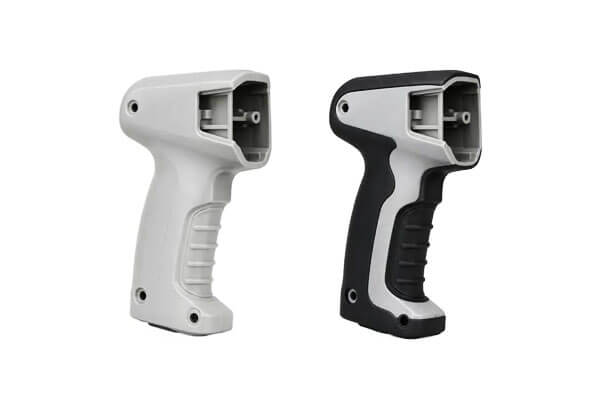
A typical overmolded component may combine a rigid structural material with a softer material.
Halimbawa na lang, a rigid ABS housing can receive a TPE overmold to provide a comfortable grip, improve sealing, or create a protective exterior surface.
The objective is not simply to place one material on top of another. The interface between the two materials must provide adequate adhesion, mechanical retention, or a combination of both to withstand the product’s expected mechanical, thermal, kemikal na, at mga kondisyon sa kapaligiran.
How Overmolding Works
The overmolding process generally begins with production of the substrate.
This may involve a separate injection molding operation, machining process, stamping operation, Proseso ng Die Casting, or another manufacturing method.
After the substrate is inspected, it is positioned inside a second mold. The mold is designed to expose the areas that need to receive the overmold material while accurately locating and supporting the substrate.
The secondary material is then heated to the appropriate processing temperature and injected into the mold cavity.
It flows around the designated substrate surfaces and forms the required outer geometry.
After filling and packing, the material cools and solidifies before the completed component is ejected.
A typical workflow is:
Substrate production → substrate inspection → mold loading → positioning → secondary material injection → packing → cooling → ejection → inspection
The quality of the final product depends heavily on interface design. If chemical adhesion is required, the substrate and overmold material must have sufficient compatibility.
If mechanical retention is the primary mechanism, the substrate may require grooves, mga tadyang, mga butas, mga undercuts, or other features that allow the second material to lock into position.
Surface contamination is another important consideration. Langis, alikabok na, release agents, oksihenasyon, kahalumigmigan, or other contaminants can interfere with adhesion and lead to delamination or premature separation.
Common Overmolding Materials
Overmolding can use a broad range of thermoplastics and elastomeric materials, but not every material combination is inherently compatible.
Material selection should consider melt temperature, chemical compatibility, pag urong, koepisyent ng thermal expansion, tigas na tigas, kakayahang umangkop, surface characteristics, and expected service conditions.
Common combinations include:
| Materyal ng Substrate | Overmold Material | Typical Purpose |
| ABS nga ba | TPE | Soft-touch housings and grips |
| PC | TPE | Impact-resistant products with ergonomic surfaces |
| Naylon | TPE/TPU | Industrial grips and flexible interfaces |
| PP | TPE | Consumer products and seals |
| PC/ABS | TPU | Protective and ergonomic surfaces |
| Rigid thermoplastic | LSR | Sealing and specialized flexible components |
Typical Overmolding Applications
Overmolding is particularly useful when the product must combine structural performance with softness, kakayahang umangkop, sealing, pagkakabukod, or improved ergonomics.
Overmolding is commonly used for:
- Hand-tool grips
- Automotive switches and controls
- Consumer electronics housings
- Medical device components
- Mga naisusuot na aparato
- Cable and wire protection
- Sealing components
- Handles and ergonomic interfaces
- Protective covers
- Industrial equipment controls
2. What Is Insert Molding?
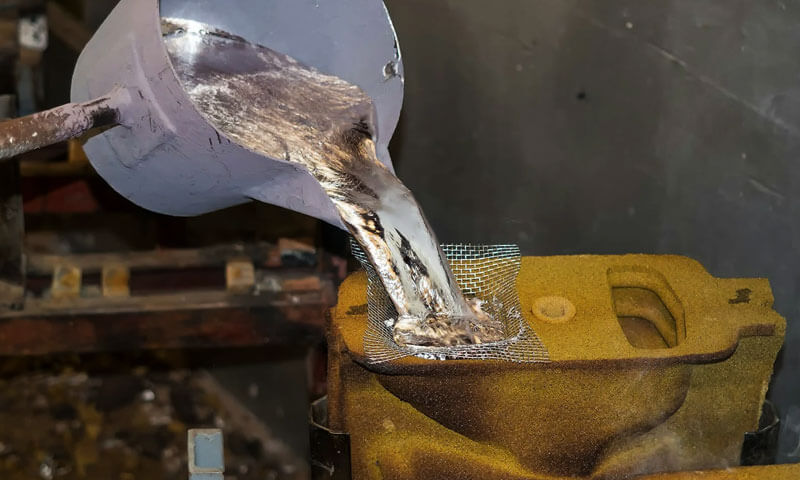
Ipasok ang paghubog is an injection molding process in which a preformed component, known as an insert, is positioned inside an injection mold and then partially or completely encapsulated by molten plastic.
The insert is often made from metal, although plastic, keramika, elektroniko, and other preformed components can also be used.
Unlike conventional single-material injection molding, insert molding combines an independently manufactured component with injected plastic during one molding operation.
The plastic solidifies around the insert, producing an integrated part that can eliminate subsequent assembly operations.
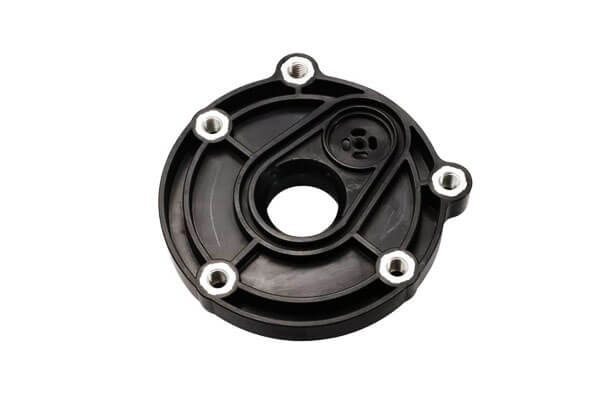
Halimbawa na lang, a brass threaded insert can be positioned inside a mold and surrounded by nylon.
After molding, the resulting component contains a permanent threaded metal interface without requiring the threaded insert to be installed afterward.
How Insert Molding Works
Insert molding begins with manufacturing and inspecting the insert. Dimensional accuracy is particularly important because the insert must fit correctly within the mold and maintain its specified position throughout injection.
The insert is then placed into the mold manually, semi-automatically, or through an automated loading system.
Dedicated fixtures, Mga Pin, Mga Lukab, or retention features may be used to prevent movement.
Once the mold closes, molten plastic is injected around the insert. Injection pressure can be substantial, so the mold must provide sufficient support to prevent the insert from shifting, deforming, or becoming misaligned.
The plastic then cools and solidifies around the insert. After ejection, the finished component is inspected for dimensional accuracy, insert position, flash, mga voids, mga bitak, and other defects.
The basic sequence is:
Insert manufacturing → insert inspection → insert loading → positioning and retention → mold closing → plastic injection → cooling → ejection → inspection
For high-volume manufacturing, automated insert loading can be integrated into the molding cell. This can improve cycle consistency while reducing manual handling.
Common Insert Materials
Metal is the most widely recognized insert material because it provides properties that plastics generally cannot reproduce, such as high electrical conductivity, thread durability, tigas na tigas, Paglaban sa Pagsusuot, or localized mechanical strength.
Common insert materials include:
- tanso
- Hindi kinakalawang na asero
- Carbon bakal
- Aluminyo
- Copper and copper alloys
- Engineering plastics
- Keramika
- Electronic components
Typical Insert Molding Applications
Insert molding is commonly used when a product requires a metal or other preformed component to be permanently integrated into a plastic body.
Kabilang sa mga karaniwang aplikasyon ang:
- Threaded bosses
- Mga konektor ng kuryente
- Automotive terminals
- Sensor housings
- Switch components
- Mga instrumentong medikal
- Structural reinforcement components
- Cable connectors
- Electronic assemblies
- Precision mechanical components
3. Overmolding vs Insert Molding: What Is the Difference?
Although both technologies integrate multiple materials or components, their manufacturing logic is different.
The simplest distinction is:
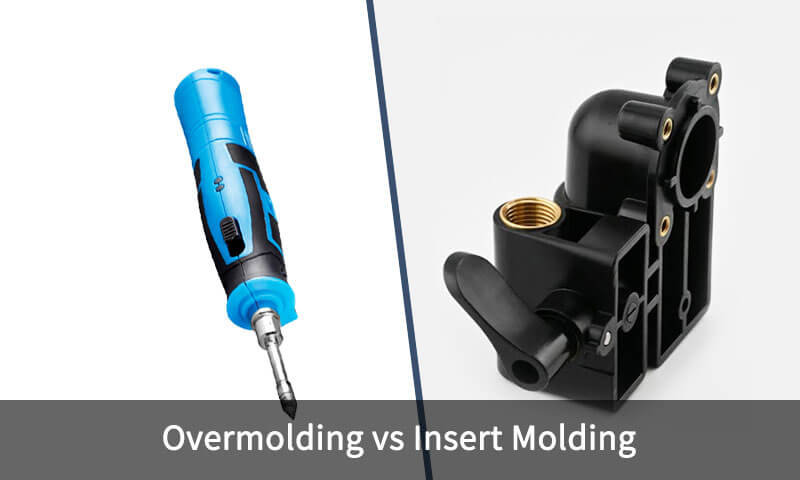
Overmolding adds a new material over an existing substrate, while insert molding encapsulates or surrounds a preformed insert with injection-molded plastic.
Gayunpaman, the terminology can overlap. In some manufacturing contexts, insert molding may be discussed as a broader form of overmolding because both involve molding material around a preexisting component.
For engineering communication, gayunpaman, it is useful to distinguish them based on the role of the preexisting component.
Overmolding vs Insert Molding Comparison
| Kadahilanan | Sobrang pag aalis ng amag | Insert Molding |
| Primary purpose | Combine different material properties | Integrate a preformed insert into plastic |
| Preexisting component | Substrate | Insert |
| Common substrate/insert | plastik na plastik, elastomer, metal | Metal, plastik na plastik, keramika, electronic component |
| Typical combination | Rigid plastic + elastomer | plastik na plastik + metal |
| Main interface mechanism | Pagdikit, mechanical interlocking, o pareho | Encapsulation, mechanical retention, adhesion in some cases |
| Key design concern | Pagiging tugma ng materyal | Insert positioning and retention |
| Typical application | Soft-touch grip | Threaded metal insert |
| Surface function | Grip, seal, cushion, protection | Mga de koryenteng, mekanikal, istruktura, fastening |
| Automation | Highly automatable | Highly automatable, but insert loading is critical |
| Major risk | Delamination or poor bonding | Insert movement or misalignment |
4. Overmolding vs Insert Molding: Mga Pagsasaalang alang sa Disenyo
The design requirements for overmolding and insert molding differ primarily because the two processes manage different interfaces.
Overmolding focuses on creating a reliable interface between the substrate and the overmolded material, while insert molding focuses on accurately positioning and securely encapsulating a preformed insert.
| Design Consideration | Sobrang pag aalis ng amag | Insert Molding |
| Pagkakatugma ng Materyal | Select compatible substrate and overmolding materials based on adhesion, melting temperature, pag urong, tigas na tigas, and thermal expansion. | Ensure the insert can withstand molding temperature and pressure without deformation or dimensional instability. |
| Heometriya & kapal ng pader | Maintain uniform overmold thickness and provide sufficient bonding area. Avoid abrupt thickness changes that can cause shrinkage, warpage, or weak bonding. | Provide sufficient plastic thickness around the insert for strength and use grooves, knurls, mga butas, or shoulders when additional retention is required. |
| Bonding & Retention | Design the interface for chemical adhesion, mechanical interlocking, o pareho, depending on material compatibility. | Design mechanical retention and encapsulation features to resist pull-out and rotation. |
| Gate & Material Flow | Position gates to achieve balanced filling and minimize weld lines, air entrapment, and excessive stress at the interface. | Control material flow carefully to prevent insert displacement, incomplete encapsulation, or excessive pressure on the insert. |
Insert / Substrate Positioning |
The substrate must be accurately located and securely held during injection. | Precise insert positioning is critical; locating pins, pockets, mga fixtures, or automated placement may be required. |
| Pag-urong & Pagpapalawak ng Thermal | Consider differences in shrinkage and thermal expansion between the substrate and overmold to prevent warpage, natitirang stress, and delamination. | Consider thermal expansion differences between the insert and polymer, particularly in metal-to-plastic applications, to prevent dimensional variation and internal stress. |
| Draft & Pagpapaalis | Provide adequate draft and properly positioned ejectors to release the part without damaging the overmold or interface. | Design draft and ejection carefully to prevent insert movement, pagpapapangit, or loosening during demolding. |
Mga pagpapaubaya |
Account for substrate dimensions, overmold thickness, material shrinkage, and possible interface movement. | Account for insert dimensions, positioning accuracy, polymer shrinkage, and final insert location. |
| DFM & Mold Flow | Evaluate bonding area, material flow, kapal ng pader, gate location, and differential shrinkage before tooling. | Evaluate insert retention, Pagpoposisyon, polymer flow, thermal pag-uugali, and potential insert displacement before tooling. |
| Kontrol sa Kalidad | Focus on bonding strength, overmold thickness, flash, delamination, warpage, at dimensional katumpakan. | Focus on insert position, retention strength, encapsulation, flash, mga voids, at dimensional katumpakan. |
5. Custom Overmolding and Insert Molding Services From LangHe Industry
Industriya ng LangHe provides customized injection molding solutions for applications that require overmolding, insert molding, and other integrated molding technologies.
Our manufacturing approach can support projects from initial product development and tooling through production and quality inspection.
| Capability | Mga Detalye |
| Overmolding Types | Two-shot (2K) overmolding, pick-and-place overmolding. |
| Insert Molding | Metal inserts (tanso, bakal na bakal, tanso), ceramic inserts, electronic inserts (Mga PCB, Mga Sensor). |
| Mga Materyal (Substrate) | ABS nga ba, PC, Naylon (PA6, PA66), PP, PBT. |
| Mga Materyal (Overmold) | TPE, TPU, LSR, TPV, silicone. |
| Tooling | In-house tooling design and manufacturing. |
| Kalidad | ISO 9001:2015 sertipikado na; 100% Inspeksyon. |
| Lead Time | 2–4 weeks for prototypes; 4–8 weeks for production tooling. |
6. Pangwakas na Salita
Overmolding vs insert molding is not a matter of determining which process is universally better. Both are highly effective injection molding technologies, but they address different product-development requirements.
Overmolding is primarily suited to products that need to combine different material characteristics within one integrated component.
It is particularly valuable for soft-touch surfaces, ergonomic grips, flexible seals, cushioning, pagkakabukod, and protective layers.
Its success depends heavily on material compatibility, interface design, pagdikit, mechanical interlocking, and differential shrinkage control.
Ipasok ang paghubog, sa kabilang banda, is especially effective when a preformed component—often a metal insert—must be permanently integrated into a plastic structure.
It is widely suited to threaded interfaces, mga terminal ng kuryente, reinforcement components, Mga Sensor, mga konektor, and other applications where plastic and another material perform complementary functions.
Sa huli, process selection should be based on the entire manufacturing system, including material behavior, product geometry, mga tooling, bonding or retention strategy, dami ng produksyon, pag aautomat, Inspeksyon, and lifecycle cost.
Mga FAQ
What is the difference between insert molding and two-shot molding?
Insert molding uses a preformed insert that is placed into the mold before plastic injection.
Two-shot molding typically produces two materials sequentially using specialized tooling and multiple injection stages, often without manually loading a separately manufactured substrate between shots.
Which process is faster: overmolding or insert molding?
Insert molding is generally faster because it uses a single injection shot. Overmolding requires two shots or a multi-step process.
Which process has lower tooling costs?
Insert molding has lower tooling costs because it only requires a single mold cavity. Overmolding requires two separate molds or a complex two-shot mold.
When should I use overmolding?
Use overmolding when you need soft-touch grips, waterproof sealing, vibration dampening, or improved aesthetics.
When should I use insert molding?
Use insert molding when you need high-strength threaded connections, electrical kondaktibiti, or structural reinforcement in plastic parts.
Can overmolding and insert molding be used together?
Oo nga. Some complex parts combine both processes—for example, an insert-molded metal thread with an overmolded soft-touch grip on the same component.
Is insert molding a type of overmolding?
The terminology can overlap because both processes mold material around a preexisting component.
Gayunpaman, in practical manufacturing terminology, overmolding usually emphasizes adding another material layer or material system, habang ang insert molding specifically emphasizes embedding a preformed insert into the molded component.
Can metal be used in overmolding?
Oo nga. Metal substrates can be overmolded with suitable plastics or elastomers.
Gayunpaman, the process must account for surface preparation, pagpapalawak ng thermal, pagdikit, mechanical retention, and differential shrinkage.