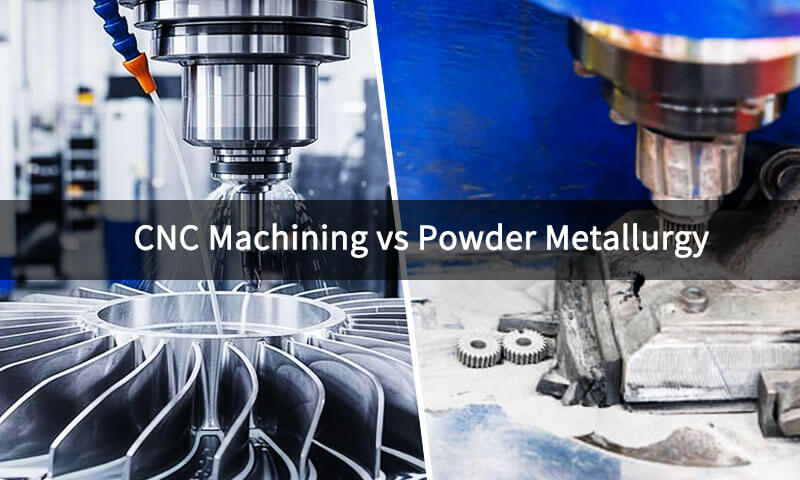
1. Panimula
High-pressure aluminum die casting (HPDC) is a high-throughput, near-net-shape manufacturing route for aluminum components that combines a cold-chamber injection system with steel dies to produce complex shapes at high production rates.
HPDC excels where complex geometry, low per-part cost at volume, and modest mechanical requirements are required — notably in automotive, mga consumer electronics, power tools and housings.
Key engineering tradeoffs are porosity versus productivity, tooling cost versus unit cost, and specification of appropriate alloy and post-processing (heat treat, HIP) to meet mechanical and fatigue requirements.
2. What is High-Pressure Die Casting (HPDC)?
High pressure mamatay sa paghahagis uses a high-force plunger to inject molten metal into a closed, water-cooled steel die at high velocity and pressure.
For aluminum alloys the malamig na silid variant is standard: molten aluminum is ladled into a cold shot sleeve, and a hydraulic or mechanical plunger forces the melt into the die.
The “high pressure” keeps metal in contact with the die and forces feeding to compensate for shrinkage during solidification; typical intensification/holding pressures are high relative to gravity-fed casting and are key to good dimensional reproduction.

3. Typical High-Pressure Die Casting Aluminum Alloys
High-pressure die casting for aluminyo most commonly uses Al–Si based alloys because they combine excellent fluidity, low melting range, good dimensional stability and acceptable mechanical properties in the as-cast condition.
| haluang metal (common name) | Humigit-kumulang. composition highlights (wt%) | Densidad ng katawan (g·cm³) | Typical as-cast mechanical range* | Typical HPDC uses / remarks |
| A380 / Al-Si (Al–Si–Cu) | Si ~8–10; Cu ≈ 2–4; Fe 0.6–1.3; Mn, Mg small | ~2.70 | UTS ≈ 200–320 MPa; pagpapahaba 1–6% | Industry standard for housings, structural castings where good fluidity, die life and low cost are priorities. Sensitive to Cu/Fe for corrosion and intermetallics. |
| ADC12 (Hapon) / A383 (regional variants) | Similar to A380; regional chemistries and impurity limits | ~2.69–2.71 | Similar to A380 | Common in Asia (ADC12) for automotive & mga electrical housings; often direct replacement for A380. |
| A360 / A356 (Al–Si–Mg family) | Si ~7–10; Mg ≈ 0.3–0.6; low Cu and Fe | ~2.68–2.70 | As-cast UTS ~180–300 MPa; pagpapahaba 2–8%; T6: UTS hanggang sa ~250–350+ MPa | Chosen when higher mechanical performance and corrosion resistance needed. More sensitive to porosity control because T6 can accentuate defects. |
A413 / high-Si Al-Si |
Si moderate to high; alloyed for elevated temp performance | ~2.68–2.70 | UTS variable ~180–300 MPa | Used for thicker sections and parts exposed to higher operating temperatures; slower solidification alloys. |
| Hypereutectic / high-Si alloys (special) | Si Si > 12–18% | ~2.7 | Mataas na paglaban sa wear, lower ductility as cast | Selected for wear surfaces (silindro liners); high Si is abrasive to dies — less common in HPDC. |
| Modified / engineered HPDC alloys | Small Mg, Sr, grain refiners, reduced Fe | ~2.68–2.71 | Tailored; aim to improve ductility, reduce porosity | Foundries often use proprietary tweaks to standard alloys to improve feedability, die life or T6 response. |
Notes on properties: HPDC as-cast mechanical properties are sensitive to melt cleanliness, Email Address *, shot profile, die temperature and porosity.
Mga paggamot sa init (T6) and HIP can raise strength, close pores and increase elongation significantly.
4. High-Pressure Die Casting Aluminum Process

Core steps (cold-chamber HPDC):
- Melt preparation in a holding furnace (fluxing, Pag-aalis ng gas).
- Ladle molten metal into the shot sleeve (cold chamber).
- Fast shot: plunger pushes melt through the gooseneck and gate into the die — fill time typically tens to hundreds of milliseconds depending on shot volume and geometry.
- Intensification/holding: after fill, a holding pressure (intensification) maintains pressure to feed solidifying metal and minimize shrinkage porosity.
- Cooling and die opening: cast part solidifies against cool die walls; eject and trim.
Representative process windows (engineering ranges):
- Melt temperature (aluminyo):640–720 °C (common practice ~660–700 °C; adjust for alloy).
- Die temperature:150-250 ° C typical (varies by part and alloy; surface coatings lower soldering).
- Plunger velocity (filling): Karaniwan 0.5–8 m/s (fast fill to minimize cold shuts; optimized profile).
- Fill time:20–300 ms depending on part size and gating.
- Intensification pressure:30–150 MPa (intensification hydraulic pressure; higher for thin walls and to reduce porosity).
- Shot sleeve temperature: maintained to prevent premature solidification near the entry; typical sleeve preheat 150-250 ° C.
- Oras ng pag-ikot (typical):10–60 s (small parts faster; large parts and complex dies slower).
Shot profile control: modern machines allow finely tuned multi-stage plunger motion (slow initial pneumatic to reduce turbulence, then rapid fill, then intensification) — a well-designed shot profile reduces entrained air and turbulence.
5. Tooling and Die Design
Die materials and heat treatment: dies are machined from high-quality tool steels (commonly H13 / 1.2344) and are typically heat treated (pawiin & pag-uugali) to achieve hardness and toughness.
Surface treatments (nitriding, Mga patong ng PVD) extend life and reduce soldering.
Cooling and thermal control: Conformal na paglamig, drilled channels and baffles regulate die temperature for uniform solidification and to avoid hot spots and thermal fatigue.
Controlled die temperature is crucial to manage the skin layer, reduce soldering and control cycle time.
Die features & lifetime:
- Mga Insert, sliders and cores allow undercuts and complex geometry.
- Typical die life depends on alloy and part severity — from thousands to hundreds of thousands of shots; A380 is relatively forgiving; corrosive alloys and high thermal cycling reduce life.
Email Address *: die polish grade and texture determine as-cast surface roughness; fine polishing reduces friction and improves cosmetic finish, but may increase soldering risk.
6. Pagpapatibay, Microstructure and As-Cast Mechanical Properties
Solidification behavior: HPDC produces very rapid cooling at the die interface (high thermal gradient), producing a characteristic fine, chilled surface layer (skin) and a progressively coarser interior microstructure.
Rapid solidification refines dendrite arm spacing and improves mechanical properties locally.
Microstructural features:
- Chill zone (skin): fine α-Al matrix with finely distributed eutectic Si — good strength, low porosity near surface.
- Central region: coarser dendrites, interdendritic eutectic; more prone to shrinkage porosity.
- Intermetallics: Fe-rich phases (platelets) form if Fe is present; Cu and Mg produce strengthening phases; Fe morphology influences brittleness and machinability.
Mga katangian ng mekanikal (as-cast typical ranges): (process dependent)
- Ultimate tensile strength (Mga UTS): ~200–350 MPa (wide range).
- Yield strength: ~100–200 MPa.
- Pagpapahaba: low to moderate — commonly 1–8% in as-cast condition; can be increased by heat treatment or HIP.
- Ang katigasan ng ulo: humigit-kumulang 60–100 HB depending on alloy and microstructure.
Lunas sa init: alloys such as A360/A356 family can be solutionized and artificially aged (T6) to increase strength and ductility; HPDC A380 is not always fully heat-treatable and may show limited response.
7. Mga Karaniwang Depekto, Root Causes, and Remedies
Below is a practical troubleshooting table engineers use on the shop floor.
| Depekto | Typical appearance / effect | Primary causes | Countermeasures |
| Porosity — gas porosity | Spherical or elongated pores; reduces strength and leak tightness | Hydrogen pickup, turbulent fill, inadequate degassing, moist die | Melt degassing (umiikot), fluxing, reduce turbulence, shot profile tuning, vacuum HPDC |
| Porosity — shrinkage (interdendritic) | Irregular shrink cavities in last-solidifying regions | Poor feeding, inadequate intensification pressure, thick sections | Improve gating/feeders, increase intensification pressure, local chills or vents, design changes |
| Cold shut / lack of fusion | Surface lap or line where metal failed to fuse | Low melt temp, slow/insufficient fill, complex flow | Increase melt temp, increase plunger speed, redesign gates to promote flow |
| Hot tear / pag crack na | Cracks during solidification | High restraint, non-uniform solidification, tensile thermal stress | Adjust gating to change solidification pattern, add fillets, reduce restraint, control die temp |
Soldering / die sticking |
Metal adheres to die, reduces finish, damages die | Die surface reaction with melt, high die temp, poor coating | Lower die temp, apply anti-solder coatings, improve lubricant, better die materials |
| Flash | Thin excess metal at parting lines | Die wear, excessive injection pressure, misalignment | Repair or rework die, optimize clamping, reduce pressure, improve guide / pagkakahanay |
| Inclusion / slag | Non-metallic chunks in casting | Melt contamination, fluxing failure, poor skimming | Improve melt handling, filtration (ceramic filters), better flux practice |
| Dimensional inaccuracy | Out-of-tolerance features | Die wear, thermal distortion, shrinkage not accounted | Compensation in die machining, improved cooling, Kontrol sa Proseso |
8. Process Enhancements & Variants
High-pressure aluminum die casting (HPDC) is highly productive, pero process enhancements and variants are often required to achieve higher part quality, reduce porosity, or cast challenging geometries.
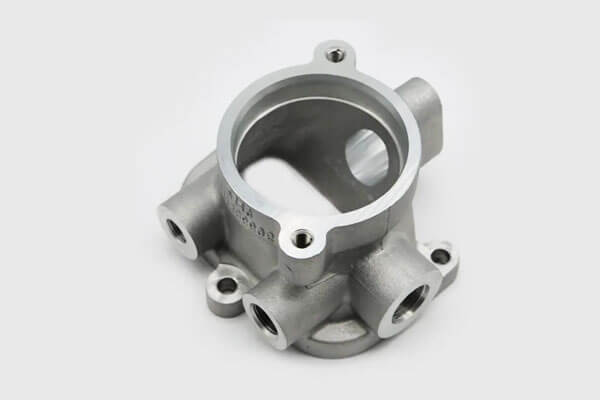
Vacuum High-Pressure Die Casting
- Layunin: Significantly reduces gas porosity and entrapped air, improves Higpit ng presyon, and enhances mechanical consistency in critical castings such as hydraulic housings or pressure vessels.
- Paraan: A vacuum system partially evacuates the die cavity and/or shot chamber just before and during metal injection, minimizing air entrapment and allowing intensification pressure to consolidate the metal more effectively.
- Pinakamahusay para sa: High-pressure, leak-tight, or fatigue-sensitive components.
- Tradeoff: Requires die sealing, vacuum pumps, and additional maintenance; moderate capital cost.
Pisil Casting / In-Die Squeeze
- Layunin: Binabawasan ang shrinkage porosity in thick or complex sections and increases local density, pagpapabuti ng lakas ng pagkapagod and mechanical reliability.
- Paraan: After filling, a static or quasi-static pressure (typically 20–150 MPa) is applied through a press or in-die platen while the metal solidifies, densifying the last-solidifying regions.
- Pinakamahusay para sa: Parts with thick bosses, webs, or stress-critical zones.
- Tradeoff: Increased die complexity, longer hold times, and higher capital requirements.
Semi-Solid / Rheocasting
- Layunin: Minimizes turbulence, reduces oxide and gas entrapment, and improves as-cast mechanical properties without extensive post-processing.
- Paraan: Metal is injected in a semi-solid state, either as stirred slurry (rheocasting) or preformed non-dendritic billets (thixocasting), flowing more gently and filling the die uniformly.
- Pinakamahusay para sa: High-performance parts with demanding density or surface requirements.
- Tradeoff: Narrow process window, high temperature control demand, higher capital investment, and more complex handling.
Low-Pressure / Bottom-Fill Variants
- Layunin: Nagbibigay ng magiliw, low-turbulence filling to reduce porosity and oxides in larger or thicker castings.
- Paraan: Metal is introduced from the bottom under low pressure, displacing air naturally, allowing better control of flow and solidification.
- Pinakamahusay para sa: Large structural or pressure-containing components where conventional HPDC may generate defects.
- Tradeoff: Lower throughput, specialized die design, and slower fill rates.
Melt Conditioning & Filtration
- Layunin: Improves overall melt quality, reduces gas porosity, oxide inclusions, and bifilms, directly impacting as-cast mechanical properties at pagkakapare-pareho.
- Paraan: Techniques include rotary degassing with inert gases, fluxing and skimming, ceramic foam or mesh filters, at ultrasonic melt treatment to agglomerate and remove impurities.
- Pinakamahusay para sa: All high-quality HPDC parts, particularly critical housings, aerospace, or automotive components.
- Tradeoff: Requires moderate capital, consumables, and operator skill.
Post-Processing Enhancements
- Hot-Isostatic Pressing (HIP):
-
- Layunin: Eliminates remaining porosity, enhances paglaban sa pagkapagod, at nagpapabuti ng ductility.
- Paraan: Castings are subjected to high temperature (typically 450–540°C) at mataas na presyon (100–200 MPa) in a pressurized gas environment.
- Paggamot ng Heat (T6, atbp.):
-
- Layunin: Increases strength and ductility, stabilizes microstructure, and improves corrosion resistance.
- Paraan: Solution heat treatment followed by quenching and aging; timing and temperature depend on alloy chemistry.
- Pagtatapos ng Ibabaw / Machining:
-
- Layunin: Tinitiyak ang katumpakan ng sukat, removes surface defects, and prepares parts for sealing or coating.
- Paraan: CNC machining, paggiling ng mga, or surface treatments such as shot blasting, pag anod ng, o pagbubuklod.
9. Kontrol sa Kalidad, Inspeksyon, and NDT

Key QC practices:
- Melt quality: regular O₂, H₂ monitoring; inclusion checks; turbidity and flux effectiveness.
- In-process monitoring: shot profile logging, intensification pressure tracking, die temperature mapping.
- NDT: radiography (X-ray) or CT scanning for internal porosity; pressure/leak testing for hydraulic parts; penetrant/magnetic particle for surface cracks.
- Pagsubok sa mekanikal: tensile coupons cast in runner system, hardness checks, metallography for microstructure and porosity quantification.
- Dimensional control: CMM, optical scanning and SPC for key tolerances.
Acceptance criteria: defined per application — structural aerospace parts demand very low porosity (madalas na <0.5 vol% and CT verification) while consumer housings tolerate higher porosity.
10. Design for High-Pressure Die Casting Aluminum Alloys
General principles:
- Uniform wall thickness: minimize thick-to-thin transitions; target consistent wall thickness (typical thin-wall HPDC capability ~1–3 mm; practical minimum depends on alloy and die).
- Ribs and bosses: use ribs for stiffness but keep them thin and well-connected to walls; bosses should have proper draft and be supported with ribs.
- Draft angles: provide adequate draft (0.5°–2° typical) for ejection; more for textured surfaces.
- Mga Fillet & radii: avoid sharp corners; generous fillets reduce stress concentration and hot tearing risk.
- Mga Tip sa Pag-install & overflows: design gates to produce progressive directional solidification; place vents and overflows for trapped air.
- Threading & inserts: use solid bosses for threading or insert molded helicoils; consider post-machining for precision threads.
- Tolerance planning: specify tolerances with awareness of casting shrinkage and machining allowance — typical as-cast positional tolerances ~±0.3–1.0 mm depending on feature size.
DFM checklist: run casting simulation (mold flow / pagpapatibay) early; agree on critical dimensions and tolerance stack. Prototype with rapid tooling or soft dies if necessary.
11. Economics, Pamumuhunan sa Tooling, and Production Scale
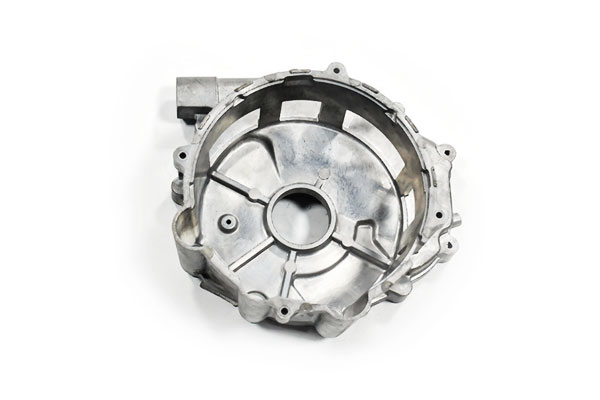
Tooling cost: high — dies typically cost from tens of thousands to several hundred thousand dollars depending on complexity, inserts and conformal cooling. Lead times range from weeks to months.
Per-part cost drivers: alloy cost, Oras ng pag-ikot, scrap rate, machining/secondary operations, pagtatapos ng, at inspeksyon.
Break-even / when to choose HPDC:
- HPDC is economical at katamtaman hanggang mataas na dami (hundreds to millions of parts), especially when the part geometry reduces secondary machining.
- For low volumes or large parts, buhangin paghahagis, CNC machining or cast-and-machine approaches may be preferable.
Throughput example: a well-optimized HPDC cell can produce multiple shots per minute; total hourly output depends on part size and cycle time.
12. Sustainability and Material Recycling
- Recyclability: aluminum alloy swarf and scrap from die casting are highly recyclable; scrap can often be re-melted to reuse metal (with attention to alloy banding and impurity control).
- Enerhiya: die production and melting consume energy; gayunpaman, HPDC’s high yield per shot and low machining requirements can lower embodied energy per final part compared with machined parts.
- Lightweighting benefits: substituting HPDC aluminum for heavier materials (bakal na bakal) reduces component mass, with consequent life-cycle fuel/energy savings in automotive and aerospace applications.
- Pamamahala ng basura: flux residues, used die lubricants and spent sand (for cores) require proper handling.
13. Mga kalamangan & Mga Limitasyon
Advantages of High-Pressure Aluminum Die Castings
- High Production Rate: Fast cycle times support large-volume manufacturing.
- Complex Geometry: Capable of thin walls, integrated ribs, Mga Boss, at mga flanges.
- Napakahusay na Tapos sa ibabaw: Smooth as-cast surfaces suitable for plating, pagpipinta, or cosmetic parts.
- Katumpakan ng Dimensyon: Tight tolerances reduce post-machining requirements.
- Magaan ang timbang & Malakas na: Aluminum alloys offer high strength-to-weight ratios.
- Material Versatility: Compatible with high-strength, corrosion-resistant aluminum alloys (A380, A360, A356).
- Post-Processing Integration: Supports heat treatment, vacuum casting, HIP, and surface finishing to improve properties.
- Kahusayan sa Materyal: Minimal scrap due to near-net-shape casting.
Limitations of High-Pressure Aluminum Die Castings
- High Tooling & Equipment Cost: Significant upfront investment limits cost-effectiveness for small runs.
- Laki & Thickness Constraints: Large or very thick parts may suffer porosity or incomplete fill.
- Porosity & Mga depekto: Gas entrapment and shrinkage can affect fatigue-critical components.
- Limited High-Temperature Performance: Aluminum softens at elevated temperatures.
- Design Restrictions: Requires minimum wall thickness, Mga anggulo ng draft, and careful gating.
- Pagpapanatili & Skilled Operation: Machines and dies require ongoing maintenance and experienced operators.
14. Typical Applications of High-Pressure Aluminum Die Castings
Mataas na presyon ng die casting (HPDC) is chosen where complex geometry, mataas na throughput, good as-cast dimensional control and attractive surface finish are primary drivers.

Automotive
- Mga pabahay ng paghahatid, gearbox cases, clutch housings
- Mga bahagi ng engine (Mga pabalat, oil pump housings)
- Mga buko ng manibela, bracketry, electronic module housings, wheel hubs (in some programs)
- Turbocharger housings (with special alloys / proseso ng)
Powertrain & Transmission (automotive & pang industriya)
- Mga kaso ng paghahatid, Mga Katawan ng Bomba, compressor housings, flywheel housings.
Consumer & Mga Kagamitan sa Industriya
- Power tool housings, gearboxes for hand tools, motor end-covers, HVAC housings, appliance frames.
Mga Elektronika, Pamamahala ng Thermal & Mga enclosure
- Housings for power electronics (inverters, motor controllers), heat-sink integrated housings, LED luminaires.
haydroliko / Mga Bahagi ng Niyumatik & Mga Valve
- Mga katawan ng balbula, Mga pabahay ng pump, actuator bodies, hydraulic manifolds.
Mga Bahagi ng Aerospace
- Mga panaklong, housings for avionics, actuator housings, non-primary structural parts.
Marine & Malayo sa pampang
- Mga Pump, Mga pabahay ng balbula, mga panaklaw, mga konektor (non-propulsive parts).
Specialty & Emerging Uses
- EV traction motor housings & e-power electronics cages — need complex cooling features and electromagnetic considerations.
- Integrated heat exchangers / mga pabahay — combine structural and thermal functionality.
- Lightweighting in non-automotive transport — bicycles, e-scooters, atbp., where volume cost and aesthetics matter.
15. Custom High-Pressure Aluminum Die Castings — Tailored Solutions from LangHe
LangHe specializes in delivering custom high-pressure aluminum die castings engineered for katumpakan, tibay ng katawan, at mataas na dami ng produksyon.
Leveraging advanced HPDC technology, LangHe produces components with kumplikadong mga geometries, manipis na pader, integrated ribs and bosses, masikip na mga tolerance, and superior surface finish—all optimized for automotive, aerospace, pang industriya, mga electronics, at mga aplikasyon ng mamimili.
16. Pangwakas na Salita
High-pressure aluminum die casting (HPDC) ay isang highly versatile and efficient manufacturing process for producing complex, magaan ang timbang, and precision aluminum components across automotive, aerospace, pang industriya, mga electronics, and consumer sectors.
Its ability to achieve manipis na pader, integrated features, masikip na mga tolerance, and excellent surface finish makes it an attractive choice for high-volume production where performance, mga estetika, and cost efficiency are critical.
Bukod pa rito, enhancements such as vacuum HPDC, pisilin ang paghahagis, semi-solid casting, filtration, at pagkatapos ng pagpoproseso (paggamot ng init, HIP, ibabaw ng pagtatapos) further expand the performance envelope, enabling near-forged properties in demanding applications.
Mga FAQ
Which aluminum alloy is the most commonly used for High-Pressure Die Casting?
Alloys in the Al–Si–Cu family such as A380 (or ADC12) are widely used because they balance fluidity, reduced hot tearing and good die life.
For heat-treatable needs, Al–Si–Mg family alloys (A360/A356) may be selected with adjusted process parameters.
How can porosity be minimized in High-Pressure Die Casting parts?
Use melt degassing/fluxing, proper ladling and filtration, optimize shot profile to minimize turbulence, apply adequate intensification pressure, and consider vacuum HPDC or post-process HIP where necessary.
Is High-Pressure Die Casting suitable for structural aerospace parts?
HPDC can be used for certain aerospace components when porosity and mechanical properties are tightly controlled (vacuum HPDC, stringent NDT and/or HIP).
Many critical aerospace parts are produced by alternative routes (pagkukubli, precision casting + HIP) where fatigue life is paramount.
Do High-Pressure Die Casting parts require machining?
Often yes — critical seats, threads and mating surfaces are machined to final tolerance. HPDC reduces machining scope significantly compared with fully machined parts.
How long does a High-Pressure Die Casting die last?
Die life varies widely with alloy, die maintenance and part geometry — from a few thousand shots for highly abrasive or large parts to several hundred thousand shots with proper steel, coatings and maintenance.