1. Panimula
A check valve (non-return valves, one-way valves) is a fundamental component in fluid systems: simple in principle, they are often critical in practice.
They protect equipment from reverse flow, maintain process sequencing, preserve pump priming, and prevent contamination between process streams.
Because many check valves are passive and located in hard-to-access piping, correct selection, installation and maintenance determine system reliability and lifecycle cost.
2. What is a Check Valve?
A check valve is a self-actuated, one-way fluid control device engineered to permit flow in a predetermined direction and prevent reverse flow.
It operates on the principle of force balance: forward fluid pressure overcomes a closing force (gravity, spring tension, or reverse pressure) to open the valve, while reverse pressure or the closing force restores a leak-tight seal.
Unlike other valves, check valves have no “on/off” control—they respond dynamically to flow conditions.
Their primary function is protection, not regulation: they do not adjust flow rate or pressure, only enforce unidirectional flow.

Mga Pangunahing Tampok
Check valve performance is defined by four non-negotiable features, each quantified by industry standards:
- Cracking Pressure: The minimum forward pressure required to lift the closure element (hal., disc, PISTON) ayon kay 0.1 mm.
Typical ranges: 0.2–1 psi for swing valves (low-flow systems) and 1–5 psi for spring-loaded lift valves (stable operation in fluctuating pressure). - Full Flow Pressure: The pressure needed to fully open the valve, minimizing pressure drop (ΔP).
For swing check valves, this is 10–15% above cracking pressure; for spring-loaded designs, 20–30% above. - Closing Speed: The time to seal after reverse flow initiates. Critical for preventing water hammer: dual-plate valves close in <0.1 Mga segundo, while swing valves may take 0.5–1 second (higher hammer risk).
- Leakage Rate: Fluid loss in the closed position (tested at 90% of rated pressure).
Soft-sealed valves (PTFE seats) achieve ISO 5208 Class VI (<0.0001 cm³/min); metal-sealed valves (Stellite seats) meet Class IV (<0.01 cm³/min).
3. How Check Valves Work
Fundamentally a check valve opens when the upstream (inlet) pressure plus dynamic lift force exceeds the downstream (outlet) pressure plus any spring or gravity closure force.
When upstream pressure falls or reverses, gravity, spring force, or the reverse pressure pushes the closure element onto the seat and the valve closes.

Key operational terms:
- Cracking (or opening) presyon: minimum ΔP required to begin opening (hal., gravity-type ≈0; spring assisted typical 0.02–1.0 bar).
- Reseat / closing behaviour: speed and manner of closure (soft/controlled vs. abrupt/slam).
- Leakage class: allowable leakage in the closed position (defined by standard or purchaser).
- Hydraulic characteristics: Cv (KAMI) / Kv (metric) describe flow capacity; pressure drop across valve at operating flows determines pump power and surge behaviour.
- Dynamic response: influenced by mass of moving parts, spring stiffness, and flow inertia — critical for water hammer risk.
4. Major Check Valve Types and Comparison
Check valves come in a wide range of designs, each with distinct characteristics to suit different flow conditions, pipe layouts, and service fluids.
Choosing the correct type is essential to avoid water hammer, minimize pressure drop, and ensure long-term reliability.

Main Types of Check Valves
| Uri ng | Operating Principle | Mga kalakasan | Mga Limitasyon | Mga Karaniwang Aplikasyon |
| Swing Check Valve | A hinged disc swings open under forward flow and returns to seat when flow reverses. | Simpleng disenyo, low pressure drop at high flow, widely available in large sizes (up to DN 2400+). | Slow closure → risk of slam/water hammer; requires horizontal installation space. | Water distribution mains, wastewater, large pump discharge, mga planta ng kuryente. |
| Lift (Piston) Check Valve | A disc or piston lifts vertically from the seat under forward pressure and reseats by gravity/spring under reverse flow. | Fast response, tight sealing, good for high-pressure systems and steam service. | Higher pressure drop; not suited for slurries or dirty fluids (risk of clogging). | Boiler feedwater, steam turbines, mga halaman ng kemikal. |
| Ball Check Valve | A free-moving ball lifts off its seat with forward flow and reseats when flow reverses. | Very simple, tolerant of solids and viscous fluids, can handle slurries. | Leakage under low ΔP; orientation-sensitive; limited to smaller sizes. | Wastewater, mining slurries, small pump discharge. |
Wafer / Dual-Plate Check Valve |
Two spring-loaded plates pivot open with forward flow and snap shut when flow decreases. | Compact face-to-face length, magaan ang timbang, fast closure reduces slam risk. | Springs can corrode; limited in large-bore or severe service; seat replacement can be harder. | HVAC, compact pump discharge, mga platform sa malayo sa pampang. |
| Tilting Disc Check Valve | Disc tilts off the seat at its center of gravity, reducing turbulence and slam. | Stable closure, reduced water hammer compared to swing type, lower head loss. | Mas mataas na gastos, more complex than swing check. | Langis & mga gas pipeline, high-capacity water systems. |
| Spring-Assisted (Silent) Check Valve | A spring pushes the disc against the seat; opens only when ΔP exceeds spring force. | Silent, slam-free operation, fast closure; suitable for vertical or horizontal piping. | Limited to moderate sizes; spring fatigue over time. | Centrifugal pumps, chilled water loops, chemical systems. |
| Pilot-Operated Check Valve | A pilot system senses pressure and actively controls the main closure element. | High reliability in critical systems, precise control of closing dynamics. | Complex design, mas mataas na gastos, requires auxiliary connections. | Hydraulic systems, safety-critical oil & gas and aerospace. |
5. Design Components & Material Selection of Check Valves
The reliability of a check valve depends not only on its type but also on the integrity of its individual components and the suitability of materials selected for the service environment.
Engineers and procurement specialists must balance mekanikal na pagganap, paglaban sa kaagnasan, temperatura tolerance, at gastos when specifying valve materials.
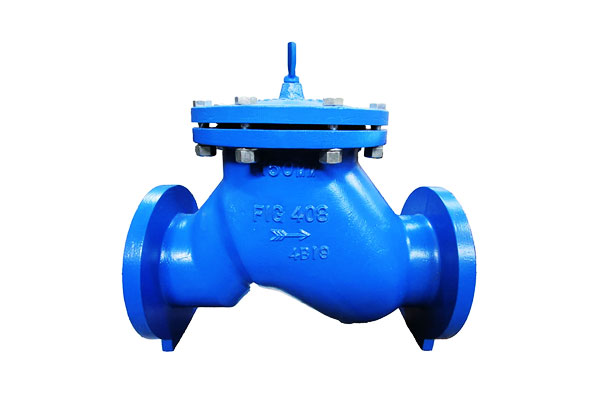
Key Design Components
| Component | Function | Mga Pagsasaalang alang sa Disenyo |
| Valve Katawan | Encases internal parts, withstands pressure and fluid conditions. | Must resist internal pressure, kaagnasan, and external loads; usually the heaviest part. |
| Bonnet/Cover | Provides access to internal components for inspection and maintenance. | Requires leak-tight sealing; bolted or welded to body. |
| Disc / Closure Element | Moves to open or close the flow path under pressure differential. | Shape and mass affect response time and slam risk; sealing face critical to leak-tightness. |
| Upuan | Provides the sealing surface where the disc rests when closed. | Hardfacing materials (Stellite, nitrided steel) used to resist wear and erosion. |
| Hinge Pin / Shaft (swing types) | Acts as pivot point for disc movement. | Needs high fatigue resistance; may require anti-galling coatings. |
| Tagsibol (spring-assisted types) | Ensures rapid closure, minimizes slam and backflow. | Material must resist relaxation, pagkapagod, at kaagnasan. |
| Mga Tatak & Mga gasket | Prevent leakage between mating surfaces. | Must match fluid chemistry and temperature (Mga Elastomer, PTFE, grapayt). |
Pagpili ng Materyal
Valve Katawan & Bonnet
- Carbon Steel (A216 WCB, A105)
-
- Widely used for water, langis, gas at moderate temperature/pressure.
- Service temperature: −29 °C to 425 °C.
- Hindi kinakalawang na asero (CF8M/316, CF3M/316L, CF8/304)
-
- Excellent corrosion resistance in aggressive media (mga kemikal, tubig dagat).
- Handles up to 600 °C depending on grade.
- Duplex hindi kinakalawang na asero (2205, 2507)
-
- Mataas na lakas, pitting and stress corrosion resistance.
- Ideal for seawater, desalination, mga platform sa malayo sa pampang.
- Mga haluang metal na bakal (WC6, WC9, C12A)
-
- Suited for high-temperature steam service.
- Used in power plants, petrochemical heaters.
- Mga Espesyal na Alloys (Monel, Inconel, Bilisan mo na)
-
- Severe corrosive or high-temperature service.
- Mahal na mahal, used where failure risks outweigh costs.
Disc & Upuan
- Same material as body to avoid galvanic corrosion.
- Stellite overlay or tungsten carbide for erosion resistance in slurry/steam.
- Elastomeric seals (EPDM, NBR, Viton) for soft-seated, tight shut-off in low/medium-pressure water systems.
Shaft / Pin / Tagsibol
- 17-4 PH hindi kinakalawang na asero: Combines high strength with corrosion resistance.
- Inconel X-750 / 718 (Springs): Excellent high-temperature fatigue strength, paglaban sa oksihenasyon.
- Nitride-coated carbon steel: Low cost, improved wear resistance.
Typical Data Ranges
- Body material pressure classes:
-
- Carbon bakal: ASME Class 150–900.
- Mga bakal na haluang metal: up to Class 2500.
- Hindi kinakalawang na asero: Class 150–1500.
- Temperature resistance:
-
- Carbon bakal: hanggang sa 425 °C.
- haluang metal na bakal: hanggang sa 650 °C.
- Hindi kinakalawang na asero: cryogenic to 600 °C.
6. Manufacturing Processes for Check Valves
The performance, tibay ng katawan, and safety of check valves depend heavily on how they are manufactured.
Each process impacts katumpakan ng sukat, material integrity, gastos, and lead time. Below is a structured look at the main manufacturing processes for check valves.

Body and Bonnet Manufacturing
| Proseso | Paglalarawan | Mga kalamangan | Mga Limitasyon | Mga Karaniwang Aplikasyon |
| buhangin paghahagis | Molten metal poured into expendable sand molds. | Flexible for large sizes (up to DN 2000+); matipid sa gastos. | Rougher surface finish; requires machining; casting tolerances ±2–3 mm. | Large carbon steel or stainless steel valve bodies. |
| Pamumuhunan sa Paghahagis | Wax pattern coated in ceramic slurry → precision mold. | Mataas na dimensional katumpakan; surface finish Ra 3.2–6.3 µm; tolerances ±0.5 mm. | Mas mataas na gastos; size limit (up to ~DN 200). | Small stainless steel check valves, wafer types. |
| Pagbubuo ng mga | Hot-worked billets shaped under high pressure. | Superior grain structure; mataas na lakas; mababang porosity. | Limited to smaller/medium sizes; higher machining cost. | High-pressure alloy steel check valves (steam, langis & gas). |
| Gawa-gawa (Welding & Machining) | Plate or pipe sections welded and machined. | Lightweight designs possible; mabilis na prototyping. | Weld quality critical; risk of residual stresses. | Pasadyang, large-diameter or special-alloy check valves. |
Mga Panloob na Bahagi
- Disc / bola / Piston
-
- Madalas na investment cast, machined from bar, o huwad na depending on strength and precision needs.
- Hardfacing (Stellite, tungsten karbid, nitriding) applied for erosion resistance.
- Seats
-
- Integral with body (cast/machined) o replaceable seat rings.
- Hardfaced or elastomer-lined for improved sealing.
- Springs (in spring-assisted valves)
-
- Cold-coiled from stainless steel (302, 316) or nickel alloys (Inconel X-750).
- Heat treated for stress relief and fatigue resistance.
Machining & Pagtatapos
- CNC machining ensures dimensional accuracy of sealing surfaces and critical tolerances.
- Paggiling & lapping applied to seat-disc interface to achieve leakage class standards (API 598, MSS-SP-61).
- Email Address * for corrosion protection:
-
- Email Address * & passivation for stainless steel.
- Fusion-bonded epoxy (FBE) or painting for carbon steel.
- Electroless nickel or chrome plating for enhanced wear resistance.
Assembly and Testing
- Assembly includes installing disc, seat, hinge pins, mga bukal, mga tatak, and body-bonnet connection.
- Hydrostatic test: Karaniwan 1.5 × rated pressure on shell, 1.1 × on seat.
- Leakage test: per API 598, EN 12266 (different leakage classes).
- Special tests: NDT (radiography, ultrasonic, magnetic particle) on critical castings/forgings for high-spec valves.
7. Typical sizes, Mga rating ng presyon, and capacity considerations
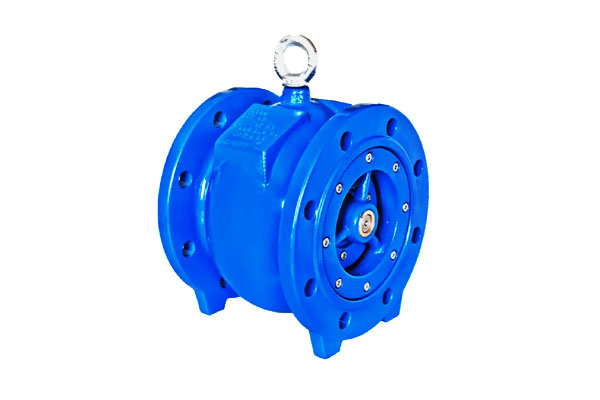
- Nominal sizes: check valves are manufactured from very small (DN 8 / ¼”) to very large (>DN 1200 / 48″) for pipelines.
- Pressure classes: common ANSI classes 150, 300, 600, 900, 1500, 2500; metric PN10–PN420 equivalents.
- Capacity metrics: Cv (KAMI) or Kv (metric) indicate flow for given pressure drop.
Example generalities (very approximate): a 2″ swing check valve Cv could be tens to a few hundred, whereas a 24″ tilting disc could have Cv in the thousands. Always use manufacturer performance curves for sizing. - Head loss: wafer/dual-plate designs often have lower face-to-face but higher loss at partial openings; tilting disc reduces turbulence and loss at high flow.
8. Common failure modes and root-cause mitigation
| Failure mode | Root cause | Pagbawas |
| Valve slam / water hammer | Rapid closure on reverse flow, poor hydraulic design | Use slow-closing designs, snubbers, check valve with dashpot or pilot, surge analysis |
| Stuck-open / failing to reseat | Debris, kaagnasan, hinge seizure | Install strainers, periodic cleaning, material upgrade, proper lubrication |
| Leakage (seat wear) | Erosion, particulate damage, seat erosion | Hardfaced seats, improved filtration, replace seats, ensure correct material compatibility |
| Pagkapagod / hinge pin failure | Cyclic loads, misalignment | Proper design for cycles, use fatigue-resistant materials, align piping |
| Spring failure (wafer/dual plate) | Corrosion, creep at elevated temp | Use corrosion-resistant springs (Inconel), inspect and replace after service life |
| Corrosion / material attack | Incorrect material selection vs. fluid | Use appropriate metallurgy (hindi kinakalawang, Duplex, Mga haluang metal ng nikel), apply coatings where needed |
9. Industry Applications of Check Valve

- Tubig & wastewater: Wafer and swing checks protect pumps and prevent backflow; often ductile iron bodies with bronze trim.
- Power generation and steam plants: Lift and tilting disc checks for high-pressure steam service; robust trim and minimal leakage required.
- Langis & mga gas pipeline: Tilting disc and swing checks used in large diameters; dual-plate wafer in some block valve stations for compact layouts. API 6D addresses pipeline applications.
- Marine: Bronze or duplex check valves in seawater systems; material and galvanic compatibility essential.
- Mga halaman ng kemikal: Stainless or nickel alloy check valves with hardfaced seats for corrosive or erosive fluids.
- HVAC & pumping systems: Wafer/dual plate for compact layouts; spring models to avoid backspin in pumps.
10. Paghahambing sa Iba pang mga Uri ng Valve
Check valves are often evaluated alongside other valve categories when engineers and procurement managers specify equipment for fluid systems.
While they serve a distinct role—automatic prevention of reverse flow—understanding how they compare with globe, ball, paru paro, and gate valves provides clarity on their advantages and limitations.

Pagsusuri ng Comparative
| Pamantayan | Check Valve | Globe Valve | Ball Valve | Butterfly balbula | Gate Valve |
| Pangunahing Tungkulin | Prevents backflow automatically | On/off and throttling | On/off, limited throttling | On/off and throttling | On/off isolation |
| Kontrol sa Daloy | No throttling; unidirectional only | Excellent for throttling | Mabuti na lang, not precise for modulation | Katamtaman, depends on disc angle | Not suitable for throttling |
| Pressure Drop | Mababa-katamtaman (depends on design) | Mataas na (tortuous flow path) | Napakababa (straight-through bore) | Mababa-katamtaman | Napakababa (full bore) |
| Pagbubuklod / Leak Tightness | Mabuti na lang (API 598 leakage class B–D) | High sealing integrity | Napakahusay (bubble-tight with soft seats) | Good with resilient seat; metal seat less tight | Good but less tight than ball/globe |
| Automation | Self-acting, no actuator needed | Manual/actuated | Manual/actuated (quarter-turn) | Manual/actuated (quarter-turn) | Manual/actuated (multi-turn) |
| Mga kalakasan | Simple, automatic, prevents pump/system damage | Precise flow control | Quick operation, low ΔP, compact na compact | Magaan ang timbang, cost-effective for large diameters | Minimal flow resistance, good for infrequent operation |
| Mga Limitasyon | No flow modulation; risk of slam if improperly selected | High energy loss from pressure drop | Not ideal for continuous throttling; seat wear with solids | Limited sealing under high pressure; cavitation risk | Slow operation; seat wear; large footprint |
| Mga Karaniwang Aplikasyon | Pump discharge, mga tubo, backflow protection | Steam lines, chemical dosing, Kontrol sa Proseso | Langis & gas, kemikal na, water systems | HVAC, paggamot ng tubig, large pipelines | Water mains, oil pipelines, mga planta ng kuryente |
11. Pangwakas na Salita
Check valves are a deceptively simple but indispensable class of valves in industrial piping.
Correct selection requires attention to fluid chemistry, haydroliko, mechanical design, mga materyales, and expected transients.
The biggest operational risks — valve slam, stuck discs, seat erosion, and spring failures — are largely preventable with the right specification (cracking pressure, spring material), filtration, installation practice and a condition-based maintenance program.
Mga umuusbong na teknolohiya (Mga Sensor, new alloys, additive na pagmamanupaktura) are improving reliability and serviceability, but the foundational disciplines of good engineering — define the service, specify precisely, test thoroughly, and maintain proactively — remain paramount.
Mga FAQ
How do I choose between wafer and swing check valves?
Use wafer (dual plate) when space and weight are constrained and flow is relatively clean; choose swing for robustness in low-velocity, large-diameter water or wastewater lines where slower closure is acceptable.
Can a check valve be installed vertically?
Depends on type. Lift checks may work vertical upflow; many swing checks require horizontal hinge pin orientation. Always follow manufacturer guidance.
How do I prevent valve slam?
Choose slow-closing designs, install snubbers/dampers, use pilot-controlled or spring-assisted valves, and perform surge analysis to size relief/accumulator systems.
What maintenance interval is appropriate?
Varies with criticality: quarterly to annual visual/functional checks for pump discharges and safety services; less critical systems may use annual or risk-based intervals.
Use monitored trend data to move to condition-based maintenance.
Are check valves suitable for slurries?
Specialized swing or piston check valves with hardened seats and larger clearances can handle slurries; knife-like or flap designs are sometimes used. Regular inspection and filtration are essential.