1. Panimula
Stainless steels are classified into five primary families—ferritic, austenitic, martensitic, pagtigas ng ulan, at duplex.
Among them, duplex hindi kinakalawang na asero combine the best features of ferritic and austenitic structures, offering higher mechanical strength and superior corrosion resistance.
AISI 2304, kilala rin bilang EN 1.4362, belongs to the lean duplex category. This low-alloyed grade provides a well-balanced structure (~50% ferrite, ~50% austenite) while minimizing the use of expensive elements like nickel and molybdenum.
It is particularly well-suited for applications that demand strength and corrosion resistance without the high cost of premium duplex or super austenitic grades.
2. What Is AISI 2304 (EN 1.4362) Duplex hindi kinakalawang na asero?
AISI 2304, kilala rin bilang EN 1.4362 o UNS S32304, ay isang lean duplex hindi kinakalawang na asero characterized by a dual-phase microstructure—approximately 50% ferrite (BCC) at 50% austenite (FCC).
This duplex balance imparts a unique combination of mechanical strength, paglaban sa kaagnasan, at kahusayan sa gastos, making it an increasingly popular material in industrial applications.
Ang ferritic phase provides high yield strength, resistance to chloride-induced stress corrosion cracking (SCC), and lower thermal expansion.
Ang austenitic phase contributes to ductility, tigas na tigas, and enhanced corrosion resistance, especially in mildly aggressive environments.

Standard Designations for AISI 2304 Duplex hindi kinakalawang na asero
| Pamantayang Organisasyon | Grade Designation | Paglalarawan |
| AISI / ASTM | AISI 2304 / ASTM A240 S32304 | American designation for duplex stainless sheet and plate products |
| UNS | S32304 | Pinag-isang Sistema ng Pagbilang (North American alloy classification) |
| EN / ISO | 1.4362 / X2CrNiN23-4 | European standard (EN 10088); ISO international naming |
| DIN | X2CrNiN23-4 | German standard designation (DIN EN 10088-1) |
| ISO | X02Cr23Ni4CuN | Chemical-based designation per ISO 15510 |
3. Chemical Composition of 2304 Duplex hindi kinakalawang na asero
AISI 2304 (EN 1.4362) Inuri bilang isang lean duplex stainless steel—designed to offer a balance of strength, paglaban sa kaagnasan, and cost efficiency by reducing the use of expensive alloying elements such as nickel and molybdenum.
Its duplex structure (humigit-kumulang 50% ferrite at 50% austenite) is stabilized through precise control of its chemical makeup, particularly chromium, nikel, at nitrogen.

Typical Chemical Composition (% sa pamamagitan ng timbang):
| Elemento | Karaniwang Saklaw (%) | Function |
| Chromium (Cr) | 21.5 – 24.5 | Improves general corrosion and oxidation resistance; key to duplex stability |
| Nikel (Ni) | 3.0 – 5.5 | Promotes austenite phase; enhances toughness and weldability |
| Molibdenum (Mo) | ≤ 0.6 | Opsyonal na; enhances pitting corrosion resistance in chloride media |
| Nitrogen (N) | 0.05 – 0.20 | Increases strength; helps stabilize austenite phase in lean compositions |
| Mga mangganeso (Mn) | ≤ 2.5 | Aids deoxidation and hot working behavior |
| Silicon (Si Si) | ≤ 1.0 | Pinahuhusay ang paglaban sa oksihenasyon; deoxidizer |
| Carbon (C) | ≤ 0.030 | Low carbon improves weldability and prevents intergranular corrosion |
| Posporus (P) | ≤ 0.040 | Residual element; kept low to prevent embrittlement |
| Sulfur (S) | ≤ 0.015 | Residual; minimized to improve ductility and corrosion resistance |
| Bakal na Bakal (Fe) | Balanse | Base metal; forms the matrix of both ferrite and austenite phases |
4. Mechanical and Physical Properties of 2304 Duplex hindi kinakalawang na asero
AISI 2304 (EN 1.4362) duplex stainless steel offers an excellent combination of strength, paglaban sa kaagnasan, and moderate ductility, making it ideal for structural and corrosive-service applications where cost and performance must be balanced.

Typical Mechanical Properties
| Pag-aari | Halaga (Typical) | Mga Tala |
| Yield Lakas (Rp0.2) | 450–550 MPa | ~2x higher than 304/316; supports thinner wall sections |
| Lakas ng Paghatak (Rm) | 650–800 MPa | Strong structural performance under stress |
| Pagpapahaba (A5) | ≥ 25% | Good ductility for forming and welding |
| Ang katigasan ng ulo (HBW) | ≤ 230 Brinell | Katamtamang katigasan; wear-resistant compared to 304 |
| Epekto ng tigas | > 100 J (at room temp) | Good impact strength; reduces at sub-zero temperatures |
| Lakas ng Pagkapagod | ~300 MPa (estimated) | Varies with surface finish and loading type |
Mga Katangian ng Pisikal
| Pag-aari | Tipikal na Halaga | Mga Tala |
| Densidad ng katawan | ~ 7.80 g / cm³ | Slightly less than austenitic stainless due to ferrite |
| Modulus ng Pagkalastiko (E) | ~ 200 GPa | Similar to most stainless steels |
| Thermal kondaktibiti (100°C) | ~18 W/m·K | Higher than austenitic grades; better heat dissipation |
| Koepisyent ng Thermal Expansion | ~13.0 × 10⁻⁶ /K (20-100 ° C) | Lower than 304/316; reduces thermal distortion |
| Electrical Resistivity | ~0.80 µΩ·m | Slightly lower than austenitic steels |
| Magnetikong Pag-uugali | Partially magnetic | Due to ferrite content; can be magnetized under stress |
5. Paglaban sa kaagnasan
AISI 2304 mga alok excellent general corrosion resistance, especially in environments with moderate chlorides.
- PREN (Pitting Resistance Katumbas na Numero): ~ 24–26
(Comparable to AISI 316, which typically has a PREN of 23–25) - Resistance to Chloride-Induced SCC: Superior to 304/316, thanks to the ferrite phase.
- Crevice and pitting corrosion: Performs well in mildly acidic and brackish environments.
- Hindi inirerekumenda for highly aggressive chlorides or sour gas service (Mga kapaligiran ng H ₂ S).
6. Advantages and Limitations of AISI 2304 Duplex hindi kinakalawang na asero

Mga kalamangan
- Higher Mechanical Strength
Approximately twice the yield strength of 304/316 austenitic hindi kinakalawang na asero (≈450 MPa vs. ≈220 MPa), allowing for thinner sections and lighter structures. - Good Corrosion Resistance
Pitting Resistance Katumbas na Numero (PREN) around 24–26, suitable for mild to moderate chloride environments such as process water and splash zones. - Epektibo sa Gastos
Lower nickel (~3.5%) at molibdenum (~0.3%) content reduces material cost volatility and total lifecycle cost. - Mahusay na Weldability
Proper welding procedures maintain phase balance and resist intergranular corrosion; easier to weld than higher-grade duplex steels. - Mababang Thermal Pagpapalawak
Lower coefficient of thermal expansion compared to austenitic steels, reducing thermal distortion in structural applications. - Superior Stress Corrosion Cracking (SCC) Paglaban
Duplex microstructure offers much better SCC resistance in chloride environments than 304/316 mga grado. - Mga Pakinabang sa Kapaligiran
Reduced use of critical raw materials like nickel and molybdenum improves sustainability and supply chain stability.
Mga Limitasyon
- Limited Suitability for High Chloride or Sour Environments
Not recommended for harsh marine, seawater immersion, or H2S-containing sour service; higher duplex grades (2205, 2507) are preferred. - Lower Impact Toughness at Cryogenic Temperatures
Ferritic phase can reduce toughness below −40°C compared to fully austenitic stainless steels. - Welding Sensitivity
Excessive heat input or poor welding practices may cause brittle intermetallic phases, compromising corrosion resistance. - Formability Less than Austenitic Grades
Requires higher forming forces during cold working and tends to have more springback. - Cannot Be Hardened by Heat Treatment
Mechanical properties depend on chemistry and processing; no precipitation hardening possible. - Limited Availability in Large Sizes
Compared to common grades like 304 o 316, 2304 is less widely available in large plates, mga tubo, or bars.
7. Applications of AISI 2304 Duplex hindi kinakalawang na asero
AISI 2304 duplex stainless steel is utilized in a variety of demanding industrial and structural applications, thanks to its excellent balance of strength, paglaban sa kaagnasan, at tibay.

- Bridges: Structural components requiring high strength and corrosion resistance to withstand environmental exposure.
- Storage Tanks: Vessels for storing liquids, including corrosive substances, where durability and leak-tightness are critical.
- Water Heaters: Components exposed to heated water and mild corrosive environments.
- Mga Heat Exchanger: Equipment facilitating efficient thermal transfer in chemical, paggamot ng tubig, and industrial processes.
- Mga Daluyan ng Presyon: Containers designed to hold gases or liquids at high pressure with reliable structural integrity.
- Potable Water Pipes: Pipes used in water supply systems that demand corrosion resistance and long service life.
- Flue Gas Cleaning Systems: Components in emission control systems that resist acidic and corrosive flue gases.
- Seawater Systems: Pipes and equipment exposed to seawater, benefiting from enhanced chloride resistance.
- Mga Halaman ng Desalination: Equipment and piping used in converting seawater to fresh water under mildly aggressive conditions.
- Structural Design Components: Various architectural and engineering parts requiring mechanical strength and corrosion resistance.
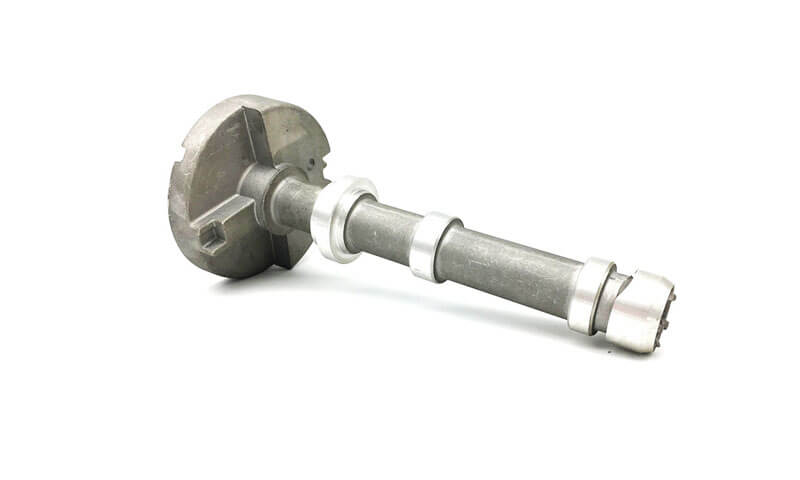
- Rotors, Mga Impeller, and Shafts: Rotating parts in pumps and turbines needing excellent wear resistance and mechanical performance.
- Fire and Blast Walls on Offshore Platforms: Safety barriers in harsh marine environments where fire resistance and durability are paramount.
- Cargo Holds and Piping Systems on Chemical Tankers: Corrosion-resistant containment and transport of aggressive chemicals.
- General Service Piping and Instrumentation Tubing: Versatile piping solutions for moderate corrosive service conditions across multiple industries.
8. Comparison with Similar Alloys
| haluang metal | Mga Highlight ng Komposisyon | Lakas ng loob | Paglaban sa kaagnasan | Kahusayan sa Gastos | Mga Karaniwang Aplikasyon | Mga Tala |
| AISI 2304 | ~23% Cr, 4.5% Ni, 0.7% Mo, N | Yield ~450 MPa, makunat ~ 650 MPa | Good in mild chloride environments (PREN ~24–26) | Lower cost than higher duplex grades | Water treatment, pagproseso ng kemikal, mga bahagi ng istruktura | Lean duplex with balanced properties |
| AISI 304/316 | 304: 18-20% Cr, 8-10.5% Ni; 316: adds 2-3% Mo | Yield ~215 MPa (304), ~290 MPa (316) | Katamtaman (316 better in chlorides) | Lower initial cost but lower strength | Pagkain, inumin, pangkalahatang paglaban sa kaagnasan | Austenitic; less strength, more ductile |
| AISI 2205 | ~22% Cr, 5-6.5% Ni, 3% Mo, N | Yield ~520 MPa, tensile ~750 MPa | Mataas na (PREN ~33) | Higher cost than 2304 | Aggressive chemical, marine, at langis & gas | Standard duplex with superior corrosion resistance |
| Super Duplex (2507) | ~25-26% Cr, 7% Ni, 4% Mo, N | Yield ~620 MPa, tensile ~850 MPa | Napakataas (PREN >40) | Premium cost | Severe chloride and sour environments | Best corrosion and strength, mas mahal |
| Carbon Steel + Mga Coatings | Mainly Fe, low Cr | Yield ~250-400 MPa | Depends on coating | Mababang paunang gastos | General structural where corrosion is controlled | Less corrosion resistant, maintenance intensive |
9. Pangwakas na Salita
AISI 2304 Duplex Hindi kinakalawang na Asero ay isang versatile, lean duplex alloy that balances strength, paglaban sa kaagnasan, at gastos.
Ideal for applications involving moderate chloride exposure and requiring enhanced mechanical properties,
it is increasingly chosen as a cost-effective alternative to 304, 316, and even 2205, especially in construction, paggamot ng tubig, and chemical processing sectors.