1. Panimula
1.4542 stainless steel—also known by its American designation 17-4PH—is a widely used pagtigas ng ulan (PH) martensitic stainless steel.
It plays a crucial role in sectors demanding mataas na lakas, magandang paglaban sa kaagnasan, and excellent dimensional stability, kasama na ang aerospace, medikal na, petrochemical, at mga industriya ng pagpoproseso ng pagkain.
The development of PH stainless steels emerged in the 1940s to bridge the performance gap between austenitic stainless steels (good corrosion resistance but low strength) and martensitic grades (high strength but limited corrosion resistance).
Kabilang sa mga ito, 17-4PH (1.4542) stainless steel gained rapid popularity due to its unique ability to be strengthened by heat treatment without significant distortion.
2. What Is 1.4542 Hindi kinakalawang na asero?
1.4542 (X5CrNiCuNb16-4) hindi kinakalawang na asero, also known as 17-4PH stainless steel, is a precipitation-hardening martensitic stainless steel containing approximately 17% chromium and 4% nikel, along with copper, niobiyum, and other trace elements.
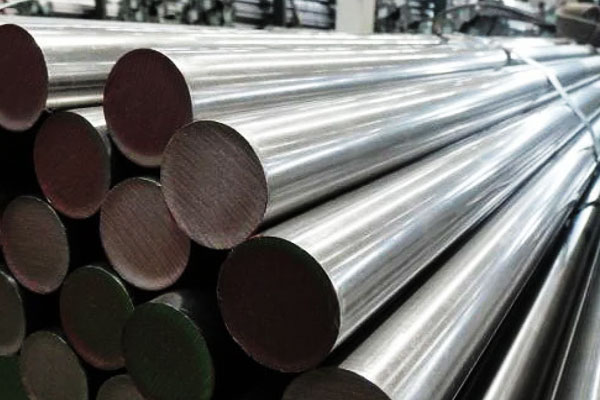
It is specifically engineered to offer a unique combination of high strength, paglaban sa kaagnasan, and heat treatability, making it ideal for critical structural and mechanical applications.
Komposisyon ng kemikal & Metalurhiya
| Elemento | Tipikal na Nilalaman (%) | Function in the Alloy |
| Chromium (Cr) | 15.0 – 17.5 | Forms a stable passive oxide layer for corrosion resistance; enhances hardness and oxidation resistance. |
| Nikel (Ni) | 3.0 – 5.0 | Pinapatatag ang austenitic phase; enhances toughness and ductility; improves corrosion resistance. |
| Tanso (Cu) | 3.0 – 5.0 | Key element for precipitation hardening; forms fine Cu-rich precipitates during aging, which strengthen the alloy. |
| Niobium (Nb) + Tantalum (Ta) | ≤ 0.45 | Acts as a grain refiner; forms stable carbides; helps control precipitation and improves strength and corrosion resistance. |
| Carbon (C) | ≤ 0.07 | Improves hardness and strength by forming martensite; excess carbon may reduce corrosion resistance. |
| Mga mangganeso (Mn) | ≤ 1.00 | Aids in deoxidation during steelmaking; improves hot workability and slightly enhances hardenability. |
| Silicon (Si Si) | ≤ 1.00 | Acts as a deoxidizer and improves strength and toughness; enhances resistance to oxidation. |
| Posporus (P) | ≤ 0.040 | Typically an impurity; small amounts can improve machinability, but too much reduces toughness. |
| Sulfur (S) | ≤ 0.030 | Improves machinability, especially in free-machining grades, but negatively affects ductility and corrosion resistance. |
3. Heat Treatment and Aging of 1.4542 Hindi kinakalawang na asero
Heat treatment is central to unlocking the full mechanical performance of 1.4542 hindi kinakalawang na asero (17-4PH).
Its strength and hardness are not obtained during casting or forming, but through a pagtigas ng ulan (pagtanda) proseso ng that follows solusyon annealing.
The alloy’s unique ability to be heat-treated to high strength without extensive distortion makes it ideal for precision components.
Solusyon sa Pagsusubo (Condition A)
Kilala rin bilang solution treatment, this is the first step in the heat treatment cycle:
- Temperatura: ~1020–1060 °C (Karaniwan 1040 °C)
- Proseso: Heat uniformly, hold to dissolve precipitates, then cool rapidly—often air-cooled
- Layunin:
-
- Dissolves copper and niobium-rich phases into the solid solution
- Promotes a fully martensitic structure upon cooling
- Provides a soft and machinable condition before aging
- Resulting Microstructure: Martensite (with retained austenite depending on cooling rate)
Pagtigas ng ulan (Paggamot sa Pag-iipon)
After solution annealing, the material is aged at intermediate temperatures to form nano-scale copper precipitates within the martensitic matrix.
These particles obstruct dislocation movement, increasing strength and hardness.
Standard Aging Temperatures and Conditions:
| Parameter | H900 | H925 | H1025 | H1075 | H1150 | H1150-M (Double Aged) |
| Aging Temperature (°C) | 482 | 496 | 552 | 579 | 621 | 2 × 621 |
| Aging Time (Hours) | 1 | 4 | 4 | 4 | 4 | 2 × 4 |
| Ang katigasan ng ulo (HRC) | 40–44 | 38–42 | 34–38 | 31–35 | 28–32 | 27–30 |
| Lakas ng Paghatak (MPa) | ≥1310 | ~1240 | ~1140 | ~1070 | ~930 | ~900 |
| Yield Lakas (MPa) | ≥1170 | ~1100 | ~1000 | ~930 | ~800 | ~790 |
| Pagpapahaba (%) | ≥10 | ~11 | ~12 | ~14 | ~ 15 | ~ 16 |
Key Trends and Considerations:
- Lower aging temperatures (hal., H900) → maximum na lakas, reduced ductility
- Higher aging temperatures (hal., H1150) → pinahusay na ductility, tigas na tigas, and SCC resistance
- Double-aging (hal., H1150M) improves stability and corrosion resistance further, used in marine or sour environments
Overaging and Stabilization
Overaging occurs when the material is aged at too high a temperature or for too long. This causes:
- Coarsening of copper precipitates
- Reduction in strength and hardness
- Improvement in ductility and stress corrosion resistance
Stabilization aging, tulad ng H1150-M, is often used after welding or machining to:
- Mapawi ang natitirang stress
- Restore corrosion resistance
- Minimize distortion
4. Pisikal & Thermal Properties of 1.4542 Hindi kinakalawang na asero
1.4542 stainless steel exhibits a well-balanced combination of physical and thermal properties, making it highly suitable for precision components in high-performance environments such as aerospace, petrochemical, at industriya ng enerhiya.
General Physical Properties
| Pag-aari | Halaga | Remarks |
| Densidad ng katawan | ~7.75–7.80 g/cm³ | Slightly higher than 300-series stainless steels |
| nababanat na modulus (Ang Modulus ni Young) | ~ 200 GPa | Varies slightly by temper and orientation |
| Ratio ng Poisson | 0.27–0.30 | |
| Electrical Resistivity | ~0.8 × 10⁻⁶ Ω·m | Higher than carbon steel; typical of martensitic stainless steels |
| Magnetic Permeability | Ferromagnetic | Due to martensitic matrix |
| Sound Velocity | ~5,900 m/s | Longitudinal wave in solid bar |
Mga Katangian ng Thermal
| Pag-aari | Halaga | Remarks |
| Thermal kondaktibiti (sa 20 ° C) | ~16–18 W/m·K | Lower than carbon steels and 400-series stainless |
| Tiyak na Kapasidad ng Init (sa 20 ° C) | ~ 500 J / kg · K | Katamtaman; comparable to other martensitic grades |
| Koepisyente ng Pagpapalawak ng Thermal (20-200 ° C) | ~10.8–11.5 × 10⁻⁶ /K | Influences fit tolerance in precision assemblies |
| Saklaw ng Pagtunaw | 1400–1440°C | |
| Saklaw ng Temperatura ng Pagpapatakbo | −40°C to +315°C (typical) | Aging tempers influence maximum service temperature |
| Scaling Resistance | Moderate up to 600°C | Not recommended for continuous use above 315°C |
5. Corrosion Resistance of 1.4542 Hindi kinakalawang na asero
- Pangkalahatang kaagnasan: Excellent resistance in atmospheric, freshwater, and many chemical environments.
- Pitting/Crevice Resistance: Less resistant than austenitic stainless (hal., 316L), but better than basic martensitic grades.
- Pag-crack ng Stress-Corrosion (SCC): Vulnerable in chloride environments under tensile stress; improved by overaging (H1150-M).
6. Fabrication and Machinability of 1.4542 (17-4PH) Hindi kinakalawang na asero
1.4542 stainless steel is valued for its exceptional combination of mechanical strength and corrosion resistance, but its fabrication and machinability characteristics vary significantly depending on its heat treatment condition.

Machinability
The machinability of 1.4542 stainless steel depends largely on its heat treatment state:
| Condition | Relative Machinability (%) | Mga Tala |
| Solution Annealed (Condition A) | ~55–60% (vs free-machining steel) | Softer, more ductile—easier to machine but gummy chip formation |
| Aged (hal., H900, H1025) | ~65–70% | Better surface finish, improved chip formation; tool wear increases |
Key considerations:
- Tooling: Use carbide or cobalt HSS tools with proper coatings (TiAlN, TiCN).
- Email Address *: Flood coolant recommended to control heat and prolong tool life.
- Bilis ng Pagputol: 60–90 m/min with carbide inserts, depending on temper and operation.
- Feed/Depth of Cut: Should be moderate to avoid work hardening.
Weldability
While not as easily welded as austenitic stainless steels (tulad ng 304 o 316), 1.4542 material can be successfully welded with proper precautions:
- Welding Methods: GTAW (TIG), GMAW (MIG), and SMAW are suitable.
- Filler Metals: ER630 or AWS A5.9 Class ER17-4PH (matching chemistry)
- Preheat/Postheat:
-
- Preheat: Not typically required.
- Post-weld aging: Required to restore mechanical properties and minimize residual stresses.
- Cracking Risk: Mababa ang, but avoid welding in the over-aged (H1150+) condition.
Forming and Forging Considerations
Sa mga solution-annealed (Condition A) state, 1.4542 (17-4PH) hindi kinakalawang na asero mga exhibit magandang formability, making it suitable for operations such as pagbaluktot, pagulong gulong, and stamping.
Sa yugtong ito, the material’s ductile martensitic structure (prior to aging) allows it to undergo plastic deformation without significant risk of cracking or fracture.
Gayunpaman, once the material is aged (hal., H900–H1150 tempers), its formability declines due to a substantial increase in strength and hardness from the precipitation of copper-rich phases.
Bilang isang resulta, cold forming after aging is not recommended, and any forming operations should be performed prior to aging.
Para sa hot forging, the recommended temperature range is 950-1150 ° C. This range ensures optimal plasticity and minimizes the risk of thermal cracking.
To achieve uniform mechanical properties and microstructure, careful attention should be paid to:
- Forging ratio: Avoid excessive deformation in a single pass; use multiple controlled passes.
- Cooling method: Matapos ang pagkukulang, air cooling is typical, followed by solution annealing (~1040°C) and age hardening to desired properties.
- Pagpipino ng butil: Proper deformation and controlled temperature cycling promote fine grain size, critical for fatigue and toughness.
7. Surface Finishing of 1.4542 Hindi kinakalawang na asero
1.4542 hindi kinakalawang na asero, kilala rin bilang 17-4PH, responds well to a variety of surface finishing processes depending on its intended application. Common Surface Finishing Techniques:
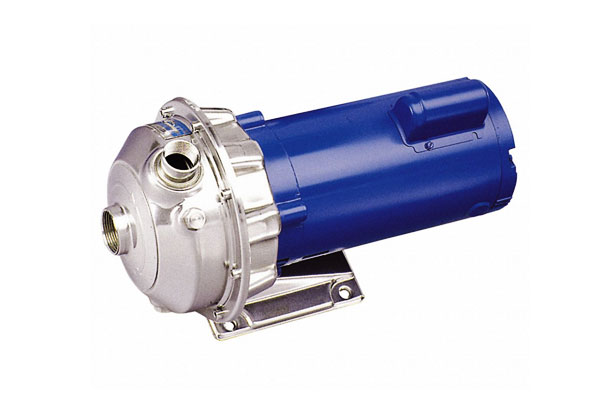
Machined Finish
- Paglalapat: General engineering parts, mga bahagi ng aerospace.
- Remarks: Achievable in both solution-annealed and aged states. In the aged condition (hal., H900), surface roughness may increase due to tool wear.
- Typical Roughness (Ra): 0.8–3.2 μm, depending on tooling and cutting parameters.
Pag-aatsara at Passivation
- Layunin: Removes scale and enhances corrosion resistance by restoring the chromium-rich passive layer.
- Proseso: Chemical treatment with nitric acid or citric acid after fabrication or welding.
- Mga Pamantayan: ASTM A380 / A967.
Mekanikal na Kinis
- Layunin: Improves aesthetics and reduces surface roughness.
- Mga Tala: Fine polishing (up to mirror finish) is more challenging in hardened tempers like H900 due to surface hardness (≥40 HRC).
- Mga Aplikasyon: Kagamitan sa grado ng pagkain, surgical tooling.
Electropolishing
- Layunin: Micro-smooths and deburrs the surface while enhancing corrosion resistance.
- Benepisyo: Especially useful for parts with complex geometries (hal., Mga balbula, medical tools).
- Kinalabasan: Maliwanag na, makinis na, and highly cleanable surface (Ra < 0.2 μm possible).
Bead or Shot Blasting
- Paglalapat: Aerospace, petrochemical.
- Media: Mga beads ng salamin, stainless steel shot, or ceramic media.
- Epekto: Produces a uniform matte surface, removes scale and minor imperfections.
- Consideration: Should be followed by passivation to restore corrosion protection.
Patong na patong & Pag-plating (kung kinakailangan)
- Mga Halimbawa: Mga patong ng PVD (TiN, CrN) for wear resistance; PTFE for anti-fouling.
- Tala: 1.4542 often performs well without additional coatings due to its intrinsic corrosion resistance, but coatings are used in harsh or abrasive environments.
8. Applications of 1.4542 (17‑4PH) Hindi kinakalawang na asero
1.4542 stainless steel—also known as 17-4PH (Pag-ulan ng pagtigas) stainless steel—is widely used across industries where mataas na lakas, magandang paglaban sa kaagnasan, at excellent dimensional stability after heat treatment ay kritikal.
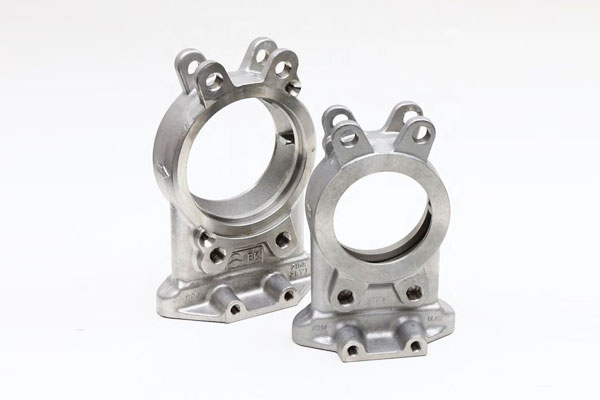
Industriya ng Aerospace
- Mga Aplikasyon:
-
- Turbine engine components
- Aircraft fasteners and bushings
- Mga bahagi ng landing gear
- Structural brackets and fittings
Mekanikal & Katumpakan Engineering
- Mga Aplikasyon:
-
- High-load shafts
- Mga bahagi ng balbula
- Springs and couplings
- Gear assemblies
Langis, Gas & Petrochemical
- Mga Aplikasyon:
-
- Valve bodies and seats
- Pump shafts and impellers
- Mga Flanges, nozzles, and downhole tools
Industriya ng Pagproseso ng Kemikal
- Mga Aplikasyon:
-
- Reactor components
- Mixing shafts and agitators
- High-pressure vessels
Medikal na & Pagproseso ng Pagkain
- Mga Aplikasyon:
-
- Mga instrumento sa kirurhiko
- Food processing molds and dies
- Email Address *
Paggawa ng Additive (AM) / 3D Paglilimbag
- Mga Aplikasyon:
-
- Custom mechanical parts
- Lightweight lattice structures
- Medical implants and tools
Automotive & Motorsport
- Mga Aplikasyon:
-
- High-performance drivetrain components
- Suspension links
- Turbocharger housings
9. Pros of 1.4542 Hindi kinakalawang na asero
Mataas na Lakas
- Achieves tensile strengths up to ~1310 MPa in H900 condition, making it ideal for high-load applications.
Good Corrosion Resistance
- Offers corrosion resistance comparable to 304 stainless steel in many neutral and mildly corrosive environments.
Napakahusay na katigasan
- Hardness can reach up to ~44 HRC in aged conditions, suitable for wear-resistant components.
Katatagan ng Dimensyon
- Maintains dimensional accuracy during heat treatment and machining—ideal for precision parts.
Versatile Heat Treatment Options
- Strength and toughness can be tailored via age-hardening at different temperatures (H900, H1025, H1150, atbp.).
Good Fatigue Resistance
- Resistant to fatigue and stress corrosion cracking, even under cyclic loading conditions.
Weldability in Solution-Annealed Condition
- Can be welded effectively in the annealed condition, with post-weld heat treatment recommended.
Additive Manufacturing Friendly
- Available as metal powder for 3D pag print technologies such as SLM and DMLS.
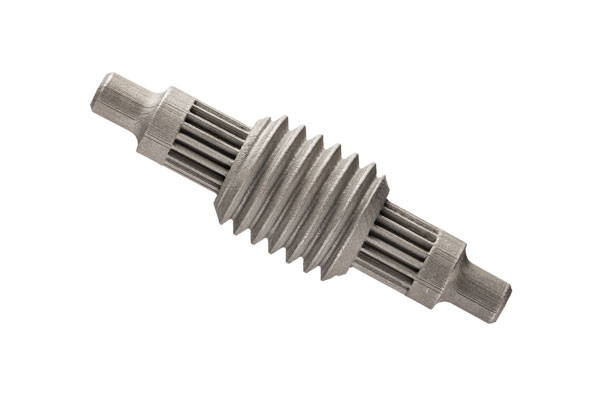
10. Cons of 1.4542 Hindi kinakalawang na asero
Lower Corrosion Resistance than Austenitic Grades
- Not suitable for highly aggressive environments (hal., high chloride or acidic conditions); 316L is superior in such cases.
Reduced Performance at Elevated Temperatures
- Properties degrade above ~300°C (572°F), limiting use in high-temperature applications.
Brittleness in Overaged Conditions
- Aging at higher temperatures (hal., H1150) reduces hardness and can compromise toughness.
Poor Low-Temperature Toughness
- Impact resistance significantly declines at sub-zero temperatures.
Strict Heat Treatment Control Required
- Inadequate or improper aging can lead to performance inconsistencies or embrittlement.
Decreased Ductility After Aging
- Formability is reduced in aged conditions, making it less suitable for complex cold forming.
11. Equivalent Designations of 1.4542 Hindi kinakalawang na asero
| Standard System | Pagtatalaga | Mga Tala |
| EN (Europa) | 1.4542 / X5CrNiCuNb16-4 | Official EN designation |
| UNS (Estados Unidos) | S17400 | Pinag-isang Sistema ng Pagbilang |
| AISI/ASTM (Estados Unidos) | 17-4PH | Common industry name under ASTM |
| DIN (Alemanya) | X5CrNiCuNb16-4 | Equivalent to 1.4542 in older German specs |
| AFNOR (Pransya) | Z6CNU17-04 | French designation |
| BS (UK) | BS 970: 630 | British standard (now largely superseded) |
| Hapon (Hapon) | SUS630 | Japanese Industrial Standard |
| GOST (Russia) | 12Kh17N4G9 | Approximate Russian equivalent |
| ISO | ISO 15156 / ISO 3506-6 | For corrosion-resistant applications |
12. Paghahambing ng 1.4542 (17‑4PH) with Similar Alloys
| Pag-aari / haluang metal | 1.4542 (17-4PH) | 15-5PH | 17-7PH | 316L | CA6NM (13Cr) |
| Uri ng | PH Martensitic SS | PH Martensitic SS | PH Semi-austenitic SS | Austenitic SS | Martensitic SS |
| Lakas ng Paghatak (MPa) | 930–1310 (H900–H1150) | 930–1200 | 1030–1310 (CH900) | ~485 | ~655–760 |
| Yield Lakas (MPa) | 860–1170 | 860–1100 | 965–1170 | ~170 | ~415–655 |
| Pagpapahaba (%) | 10–20 | 10–17 | 8–12 | ≥40 | 15–20 |
| Ang katigasan ng ulo (HRC) | 28–44 | 30–42 | 38–47 | ~20 | 20–32 |
| Tigas na tigas | Katamtaman (low temp: poor) | Improved over 17-4PH | Lower in aged condition | Napakahusay | Katamtaman |
| Paglaban sa kaagnasan | Mabuti na lang | Mabuti na lang (slightly better) | Katamtaman | Napakahusay | Katamtaman |
| Weldability | Good in solution-annealed | Better than 17-4PH | Limitado | Napakahusay | Good with post HT |
| Formability | Limited when aged | Slightly better | Good in annealed state | Napakahusay | Katamtaman |
| Service Temp Range (°C) | -40 sa 300 | -50 sa 315 | -50 sa 425 | -200 sa 500 | -50 sa 275 |
| Magnetic? | Oo nga (martensitic) | Oo nga | Slight | Hindi | Oo nga |
| Mga Aplikasyon | Aerospace, Mga balbula, mga tool | Structural aerospace, mga amag | Springs, bellows, diaphragms | Pharma, pagkain, kemikal na | Mga Turbine, mga bomba, mga impeller |
Mga Tala:
- PH = Precipitation-Hardening
- Values may vary by heat treatment (hal., H900, H1025, H1150) and specific standards (AMS, ASTM).
- 15-5PH is chemically similar to 17-4PH but offers slightly improved toughness and better weldability due to reduced δ-ferrite.
- 17-7PH is designed for spring applications, with excellent strength and fatigue but less corrosion resistance.
- 316L is superior in corrosive environments but far lower in mechanical strength.
- CA6NM, a cast martensitic stainless steel, offers a good balance for hydro turbines and pressure-retaining parts.
13. Pangwakas na Salita
1.4542 (17-4PH) stainless steel represents one of the most versatile precipitation-hardening grades available.
Ang ganda nito mataas na lakas, controlled mechanical properties, and good corrosion resistance make it indispensable in demanding environments.
While it may not match austenitic grades in toughness or corrosion resistance, its ability to be precipitation-hardened with minimal distortion offers distinct advantages in precision components.
When selecting materials for aerospace, medikal na, pagtatanggol, or manufacturing, 1.4542 material remains a balanced, high-performance choice, especially where strength, paglaban sa kaagnasan, and dimensional control are equally important.
LangHe: Precision Stainless Steel Casting & Fabrication Services
LangHe is a trusted provider of high-quality stainless steel casting and precision metal fabrication services, serving industries where performance, tibay ng katawan, and corrosion resistance are critical.
With advanced production capabilities and a commitment to engineering excellence, LangHe delivers reliable, customized stainless steel solutions to meet the most demanding application requirements.
Our Stainless Steel Capabilities Include:
- Pamumuhunan sa Paghahagis & Nawala ang Wax Casting
High-precision casting for complex geometries, ensuring tight tolerances and superior surface finishes. - buhangin paghahagis & Paghuhulma ng Shell
Ideal for larger components and cost-effective production, especially for industrial and structural parts. - CNC Machining & Pagkatapos ng Pagproseso
Complete machining services including turning, paggiling, pagbabarena, buli na, and surface treatments.
Whether you need high-precision components, complex stainless assemblies, or custom-engineered parts, LangHe is your dependable partner in stainless steel manufacturing.
Makipag ugnay sa amin ngayon to learn how LangHe can deliver stainless steel solutions with the performance, pagiging maaasahan, and precision your industry demands.
Mga FAQ
Is 1.4542 Stainless Steel Magnetic?
Oo nga. Due to the 1.4542 hindi kinakalawang na asero martensitic microstructure, ito ay Ferromagnetic, especially after aging.
Does 1.4542 Stainless Steel Rust?
Oo nga, 1.4542 hindi kinakalawang na asero (17-4PH) can rust under certain conditions.
It has good corrosion resistance due to its chromium content and protective oxide layer but may experience localized corrosion, like pitting, in harsh environments or if improperly treated.
Proper heat treatment, pagtatapos ng, and maintenance are key to preventing rust.
Can 1.4542 stainless steel be welded?
Oo nga, it can be welded, but post-weld heat treatment (PWHT) is typically required to restore mechanical properties and corrosion resistance.
Is 1.4542 material suitable for cryogenic or high-temperature service?
It performs well at moderate temperatures (hanggang sa ~ 300 ° C) but is not recommended for cryogenic or high-temperature (>400°C) service due to loss of toughness or overaging.