1. Introduksjon
Industridyser er langt mer enn enkle uttak for væsker. I petrokjemiske anlegg, Luftfartssystemer, matforedlingslinjer, marint utstyr, hydrauliske enheter,
og presisjonssprøyteutstyr, dyser spiller en avgjørende rolle i atomisering, jetformasjon, Flytforordning, trykkkontroll, og middels levering.
Ytelsen deres er direkte påvirket av geometrisk nøyaktighet, intern kanalkvalitet, Korrosjonsmotstand, Mekanisk integritet, og produksjonskonsistens.
På grunn av disse kravene, dyseproduksjon er et klassisk teknisk beslutningsproblem: skal delen være produsert av presisjonsstøping eller av CNC maskinering?
2. Hva gjør dyseproduksjon teknisk krevende?
EN dyse er en strømningsformende komponent, som betyr at dens indre og ytre form har en direkte funksjonell innvirkning.
I motsetning til mange konstruksjonsdeler, en dyse kan ikke bare bedømmes etter styrke eller utseende. Dens geometri må støtte stabil væskeoppførsel.
Nøkkeltekniske krav til dyser
- Nøyaktige interne strømningskanaler
- Glatte og jevne flytende overflater
- Nøyaktig åpningsstørrelse
- Stabile tetningsflater
- God korrosjons- og slitestyrke
- Motstand mot vibrasjoner, trykksjokk, og kavitasjon
- Repeterbar ytelse på tvers av produksjonspartier
Disse kravene skaper et smalt produksjonsvindu. For mye overflateruhet kan forstyrre flyten. Dimensjonsavvik kan endre sprøytemønster eller utslippskoeffisient.
Innvendige defekter kan forårsake lekkasje, tilstopping, eller lokal svikt. Av denne grunn, produksjonsprosessen er uatskillelig fra dyseytelsen.
3. Prosessfundament
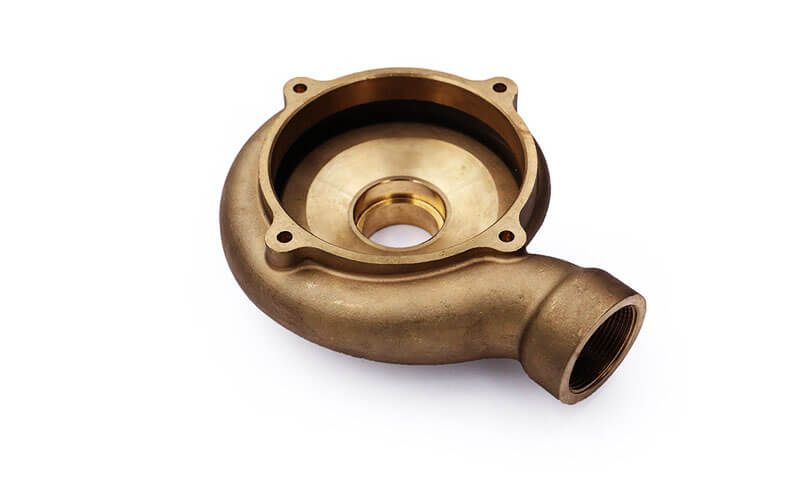
Presisjonsstøpemunnstykke
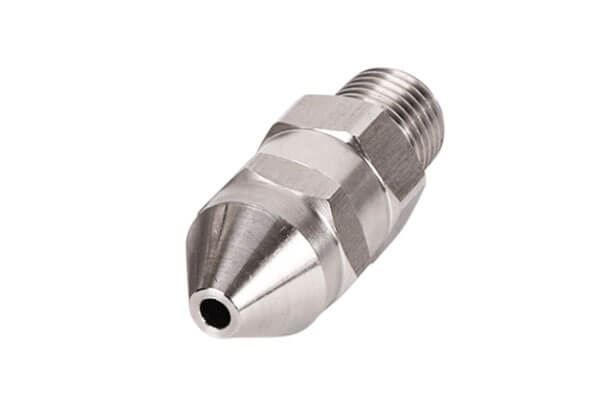
Presisjonsstøping, ofte referert til som Investeringsstøping eller mistet voksenstøping, er en nesten nettformet prosess som er spesielt egnet for deler med kompleks geometri.
Den typiske ruten inkluderer oppretting av voksmønster, Keramisk skallbygning, avvoksing, Skallskyting, metall skjenking, kjøling, Skallfjerning, og etterbehandling.
For dyseproduksjon, denne prosessen tillater smeltet rustfritt stål, messing, eller høytemperaturlegering som skal helles i en tilpasset keramisk form.
Resultatet er et nesten ferdig dyseemne med integrerte konturer, buede kanaler, og komplekse funksjoner som ville være vanskelige eller kostbare å bearbeide fra solid lager.
Kjerneegenskaper
- Sterk geometrisk frihet
- God egnethet for integrerte konstruksjoner
- Redusert behov for bearbeiding av hele kroppen
- Effektiv for middels og høye produksjonsvolumer
- Egnet for komplekse, korrosjonsbestandige legeringsdeler
CNC maskinert munnstykke
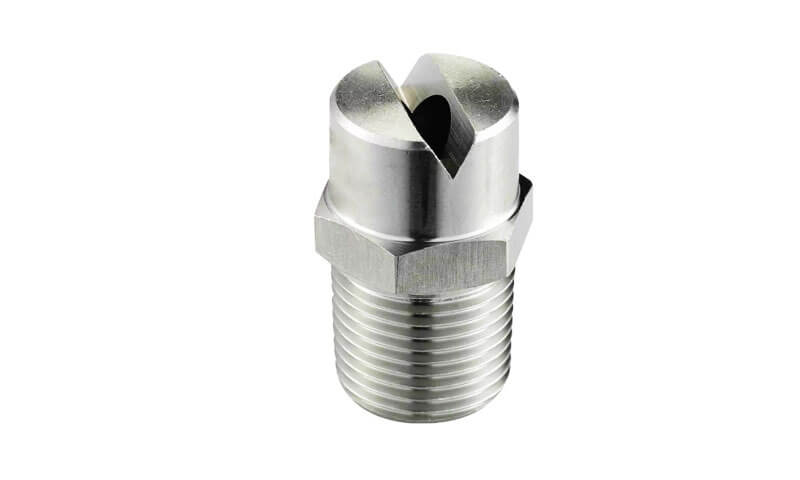
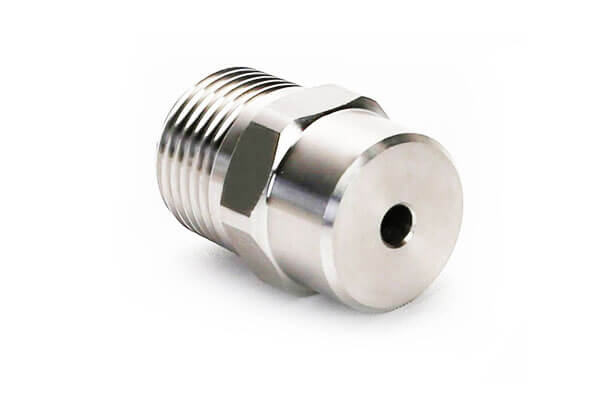
CNC maskinering er en subtraktiv prosess som bruker programmerte verktøybaner for å fjerne materiale fra emner, barer, Forgings, eller rullet materiell.
Det innebærer vanligvis å snu, fresing, boring, tråd, dyphulls maskinering, og presisjonsbehandling.
For dyseproduksjon, CNC-bearbeiding er spesielt sterk når geometrien er vanlig, toleransene er stramme, og strømningspassasjene er tilgjengelige for verktøy.
Den er mye brukt for høypresisjonsdyser med rette hull, konsentriske trekk, pålitelige tetningsflater, og strenge dimensjonskrav.
Kjerneegenskaper
- Utmerket dimensjonsnøyaktighet
- Overlegen kontroll over kritiske overflater
- Raske prototyping og designendringer
- Ingen mugginvestering
- Høy fleksibilitet for små partier og spesialarbeid
4. Side-by-side teknisk sammenligning
Strukturell tilpasningsevne og designkompleksitet
| Aspekt | Presisjonsstøpemunnstykke | CNC maskinert munnstykke |
| Geometri frihet | Veldig høyt | Moderat til høy, men avhengig av verktøytilgang |
| Buede løpere / spiralkanaler | Glimrende | Vanskelig og kostbart |
| Innvendige passasjer med flere grener | Glimrende | Vanligvis ineffektiv |
| Tynnveggede integrerte strukturer | God | Mulig, men ofte dyrere |
| Skarpe innvendige hjørner | Begrenset av castabilitet | Enklere å maskinere i tilgjengelige områder |
| Formasjon i ett stykke | Sterk fordel | Krever vanligvis enklere geometri |
Presisjonsstøping er det sterkere valget når munnstykket inkluderer buede løpere, asymmetriske hulrom, flergrenede passasjer, eller en kompleks integrert kropp.
Den kan produsere komponenter i nesten nettform som reduserer monteringstrinn og eliminerer sveisede sømmer, som er spesielt verdifull for lekkasjefølsomme væskesystemer.
CNC-bearbeiding er mer egnet for vanlig, symmetrisk, og verktøytilgjengelige former. Den utmerker seg ved rette hull, konsentriske boringer, tråder, flate tetningsflater, og standard koniske geometrier.
Men når designet blir svært komplekst internt, maskineringstiden og kostnadene øker kraftig.
Dimensjonal nøyaktighet og overflatekvalitet
| Ytelsesparameter | Presisjonsstøpemunnstykke | CNC maskinert munnstykke |
| Generell dimensjonstoleranse | CT4 - CT6, omtrent ±0,05 til ±0,15 mm | ±0,005 til ±0,02 mm |
| Minimum praktisk blenderåpning | Om 0.5 mm | Om 0.1 mm |
| Overflateruhet av rå form | Ra 1,6–6,3 μm | Ra 0,2–1,6 μm |
| Forseglingsflathet | Trenger vanligvis sekundær etterbehandling | Kan formes direkte med høy presisjon |
| Glatthet i indre kanal | God, men med støpt tekstur | Glimrende |
CNC-bearbeiding er klart overlegen når dysen krever ekstremt tett toleransekontroll, spesielt i åpningssonen, tetningsflate, og konsentriske trekk.
Det gir jevnere overflater og bedre kontroll over kritiske dimensjoner.
Presisjonsstøping kan oppnå brukbar nøyaktighet for mange industrielle dyser, men den støpte overflaten beholder typisk størkningstekstur.
Det er ikke nødvendigvis et problem i vanlige spray- eller jetapplikasjoner, men de mest funksjonelle overflatene krever vanligvis lokal maskinering eller polering.
Materialutnyttelse og mikrostruktur
| Aspekt | Presisjonsstøpemunnstykke | CNC maskinert munnstykke |
| Materiell startform | Smeltet metall | Solid lager, smi, eller bar |
| Materialutnyttelse | Omtrent 85 %–92 % | Omtrent 30 %–55 % |
| Skrapgenerering | Lav til moderat | Høyt brikkevolum |
| Mikrostruktur | Støpt dendritisk struktur | Smidd kornstruktur |
| Orientering av metallflyt | Ikke kontinuerlig som smidt lager | Bevart i grunnmateriale, delvis forstyrret av kutting |
Presisjonsstøping er generelt mer materialeffektivt.
Dette er spesielt viktig når munnstykket er laget av dyre legeringer som rustfritt stål, Nikkellegeringer, eller titanlegeringer. Mindre avfall betyr lavere effektive kostnader og enklere skalering.
CNC-bearbeiding begynner med et smidd materiale som allerede har en raffinert kornstruktur og sterk mekanisk kontinuitet.
Det gir den ferdige delen høy grunnlinjestyrke og utmattelsesmotstand. Imidlertid, skjæreprosessen genererer spon og kan lokalt endre overflatelaget gjennom varme og stress.
Forskjellen er ikke bare akademisk. Det påvirker kostnadene, mekanisk respons, og korrosjonsadferd under bruk.
Mekaniske egenskaper og holdbarhet
| Mekanisk indikator | Presisjonsstøpemunnstykke | CNC maskinert munnstykke |
| Strekkfasthet | Noe lavere i typiske rustfrie støpegods | Høyere i smidde lager |
| Påvirke seighet | Moderat | Høy |
| Utmattelsesmotstand | Bra for jevn service | Sterkere for syklisk belastning |
| Høytrykksmotstand | Egnet for middels trykk | Bedre for svært høyt trykk |
| Bruk motstand | Uniform, stabilt slitasjemønster | Høyere lokal hardhet og slitestyrke |
| Etsende middels service | Veldig bra, spesielt etter riktig varmebehandling | God, men overflatens tilstand er viktig |
CNC-maskinerte dyser er vanligvis foretrukket i høytrykk, utsatt for vibrasjoner, eller tretthetsintensive miljøer.
Grunnmaterialet deres har en tendens til å beholde bedre mekanisk kontinuitet, som støtter krevende serviceforhold.
Presisjonsstøpedyser er ofte bedre egnet til korrosive kjemiske medier, fuktige miljøer med høy temperatur, og stabile strømningssystemer der geometri og materialkompatibilitet betyr mer enn ekstrem trykkmotstand.
Når riktig varmebehandlet, støpt rustfritt stål kan levere utmerket korrosjonsytelse.
Produksjonssyklus og batchtilpasning
| Aspekt | Presisjonsstøpemunnstykke | CNC maskinert munnstykke |
| Innledende oppsett | Mugg- og prosessutvikling kreves | Ingen form nødvendig |
| Prototype hastighet | Saktere | Veldig fort |
| Masseproduksjon | Effektiv når den er stabilisert | Effektiv kun for enklere former |
| Beste batchstørrelse | Lav til medium, ofte 50–10 000 stk | Svært små partier til moderate kjøringer |
| Omstillingsfleksibilitet | Senke | Veldig høyt |
Støping krever forhåndsverktøy og prosessforberedelse, så ledetiden er lengre i begynnelsen. En gang stabilisert, Imidlertid, det kan bli svært effektivt for gjentatt produksjon.
Det gjør det attraktivt når dysedesignet er modent og forventes å forbli uendret.
CNC-bearbeiding er det motsatte. Den har nesten ingen verktøybarriere og er ideell for rask prototyping, ingeniørforsøk, hastelevering, og skreddersydd produksjon.
Avveiningen er at hver del må kuttes individuelt, som kan gjøre storskalaproduksjon tregere og dyrere for komplekse geometrier.
Omfattende kostnadsstruktur
| Kostnadsfaktor | Presisjonsstøpemunnstykke | CNC maskineringsmunnstykke |
| Verktøykostnad | Høyere ved start | Svært lav eller ingen |
| Materialkostnad | Lavere effektivt avfall | Høyere skrotkostnad |
| Arbeidskostnad | Lavere per del i skala | Høyere per del for komplekse deler |
| Etterbehandlingskostnad | Moderat | Lav til moderat |
| Beste kostnadstilstand | Komplekse deler, moderat til høyt volum | Enkle deler, Lavt volum, Rask snuoperasjon |
For enkle dysegeometrier, CNC-maskinering kan være den rimeligere ruten, spesielt når produksjonsvolumet er lite og ingen verktøyinvestering er rettferdiggjort.
For dysegeometrier med middels til høy kompleksitet, presisjonsstøping reduserer ofte de totale kostnadene ved å unngå overdreven flerakset bearbeiding, gjentatt fastspenning, og monteringsoperasjoner.
Materialbesparelsen er spesielt viktig for dyre legeringer.
5. Vanlige mangler og kvalitetskontrollutfordringer
Presisjonsstøpedysefeil
Presisjonsstøping gir mange fordeler, men den er ikke fri for prosessrisiko.
| Vanlig defekt | Typisk effekt | Kontrollmetode |
| Sandhull / inneslutninger | Kan blokkere små passasjer eller svekke lokale soner | Forbedre skallkvaliteten og filtreringen |
| Svinn porøsitet | Reduserer trykkbærende evne | Optimaliser port- og størkningsdesign |
| Dimensjonskrymping | Påvirker toleranser og tetningsflater | Reserver maskineringsgodtgjørelse |
| Overflatekorntekstur | Gjør strømningskanalene noe ru | Avslutt kritiske områder med maskinering eller polering |
Den viktigste kontrollstrategien ved støping av dyser er å etterlate maskineringsgodtgjørelse på kritiske flater og åpninger.
I praksis, tetningsoverflater og flytfunksjoner med tett toleranse bør ikke stole helt på nøyaktighet som støpt.
CNC maskineringsdysefeil
CNC-bearbeiding er svært presis, men det har sine egne kvalitetsproblemer.
| Vanlig defekt | Typisk effekt | Kontrollmetode |
| Burrs | Forstyrrer flyten og kan forårsake tilstopping | Avbør, kantavslutning |
| Klemmeavvik | Skaper konsentrisitetsfeil | Forbedre armaturets design |
| Overflatearbeidsherding | Kan påvirke korrosjon og etterbehandlingskvalitet | Bruk optimalisert skjærehastighet og kjølevæske |
| Verktøymerker | Øk ruhet i følsomme strømningsområder | Sekundær polering eller etterbehandling |
I dyseapplikasjoner, små grader kan være mer skadelige enn de ser ut til. Selv små kantfeil kan forårsake turbulens, ujevn spray, eller oppbevaring av forurensning.
Derfor er etterbearbeiding avgrading ikke valgfritt i kritisk dyseproduksjon.
6. Programvalg: Hvilken prosess passer til hvilken dyse?
Presisjonsstøpedyse er best for
- Komplekse buede kanaler
- Flergrenet eller uregelmessige indre passasjer
- Store eller integrerte dysekropper
- Etsende medier og moderat press service
- Middels batch produksjon
- Høyverdilegeringer der materialbesparelser betyr noe
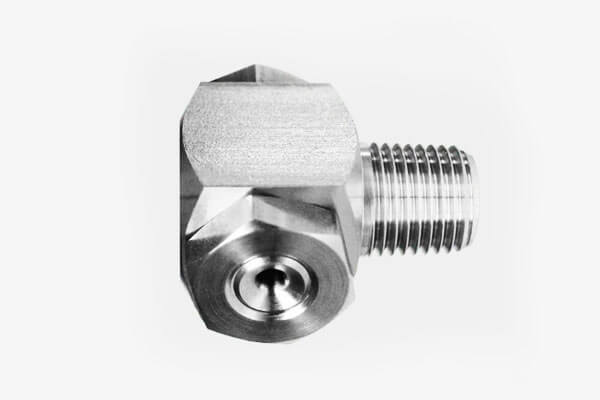
Typiske bransjer
- Kjemisk prosessering
- Marin avsalting
- Håndtering av sjøvann
- Matsprøyting og rengjøring
- Mediumtrykks industriell væskelevering
CNC maskineringsmunnstykke er best for
- Enkle dyser med rett hull
- Mikroåpningsdyser
- Presisjonsforseglingsflater
- Høytrykks- eller vibrasjonsintensiv service
- Rask prototyping og tilpassede deler
- Små batchproduksjon med stramme toleranser
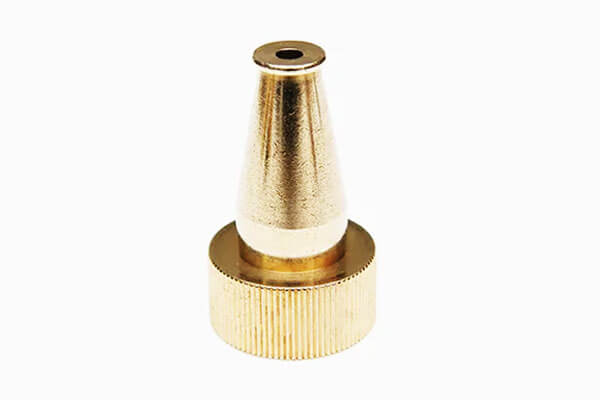
Typiske bransjer
- Luftfarts drivstoffinnsprøytning
- Høytrykksrenseutstyr
- Hydrauliske systemer
- Medisinsk forstøvningsutstyr
- Presisjonslaboratorieutstyr
7. Komposittproduksjon: Casting Blank + CNC etterbehandling
I moderne dyseproduksjon, den mest teknisk modne tilnærmingen er ofte verken ren presisjonsstøping eller ren CNC-maskinering, men a hybrid produksjonsrute som kombinerer styrken til begge.
Denne metoden begynner med et presisjonsstøpt emne og ender med målrettet CNC-finishing på de funksjonelle overflatene.
For mange industrielle dyser, spesielt de som brukes i krevende væskekontrollmiljøer, denne kombinerte prosessen gir den beste balansen mellom geometrikompleksitet, dimensjonsnøyaktighet, overflatekvalitet, Kostnadseffektivitet, og produksjonsstabilitet.
Hvorfor den hybride tilnærmingen er viktig
En dyse er en funksjonsdrevet komponent.
Dens ytre form kan være relativt kompleks, men de mest kritiske ytelsesfunksjonene er vanligvis konsentrert i spesifikke soner: åpningen, tetningsflate, gjenget tilkobling, datum overflater, og noen ganger interne overgangsområder.
Dette er stedene hvor selv et svært lite avvik kan påvirke sprøytemønsteret, utslippskonsistens, trykkadferd, eller lekkasjeytelse.
Presisjonsstøping er utmerket til å forme hele munnstykket i en nesten nettformet tilstand.
Det kan produsere buede konturer, integrerte passasjer, uregelmessige ytre geometrier, og komplekse strukturelle former som ellers ville kreve omfattende maskinering eller flere sammensatte deler.
Imidlertid, støping alene kan vanligvis ikke garantere de ekstremt stramme toleransene og overflateglattheten som kreves ved de mest kritiske funksjonelle grensesnittene.
Det er der CNC-etterbehandling blir uunnværlig.
Ved å reservere maskineringsgodtgjørelse på nødvendige arealer, produsenter kan bruke CNC-operasjoner til å avgrense bare de viktige sonene i stedet for å bearbeide hele delen fra solid lager.
Denne tilnærmingen bevarer de geometriske fordelene ved støping samtidig som den oppnår presisjonsnivået som forventes av avanserte dyser.
Prosesslogikk: Fra Near-Net Shape til funksjonell presisjon
Hybridprosessen begynner med et støpedesign som med hensikt er optimalisert for senere maskinering.
Ingeniører designer ikke delen som en endelig ferdig støping; i stedet, de designer den som en støpeemne med kontrollerte kvoter.
Disse kvotene er vanligvis igjen på åpningsregionen, trådsoner, tetningsansikter, og andre datumflater som krever tett dimensjonskontroll.
Den gjenværende kroppen, spesielt områder som ikke påvirker den endelige væskeoppførselen direkte, er igjen i sin nesten nettformede støpte form.
Etter casting-stadiet, dyseemnet er rengjort, inspisert, og varmebehandles om nødvendig.
Denne mellomkomponenten inneholder allerede de viktigste strukturelle egenskapene til den ferdige delen.
CNC-bearbeiding påføres deretter selektivt og presist, ved hjelp av inventar og verktøybaner skreddersydd til de kritiske overflatene.
I praksis, dette betyr at bare en brøkdel av den totale geometrien maskineres til endelig størrelse, som reduserer syklustiden, Verktøyslitasje, og materialavfall sammenlignet med full-lager maskinering.
Tekniske fordeler med den sammensatte ruten
Den viktigste fordelen med støping pluss CNC etterbehandling er funksjonell separasjon. Prosessen lar hver produksjonsmetode gjøre det den gjør best.
Støpehåndtak formskaping og materialøkonomi. CNC-bearbeiding håndterer presisjon, repeterbarhet, og overflateforfining.
Ved å dele delen på denne måten, produsenten unngår å tvinge én prosess for å løse alle problemer.
Dette er spesielt verdifullt for dyser med blandede krav.
For eksempel, ytterkroppen må kanskje være stor, konturert, og strukturelt integrert, mens det interne jetsetet eller tetningskjeglen kan kreve mikronnivåkontroll.
En ferdig maskinert del ville være bortkastet og tidkrevende.
En helstøpt del oppfyller kanskje ikke presisjonskravet. En hybrid del løser begge problemene på en rasjonell måte.
En annen stor fordel er redusert maskineringsbyrde. Når dyselegemet er støpt nær endelig form, mengden lager som fjernes ved maskinering er langt lavere enn ved billettmaskinering.
Dette reduserer råvaresvinnet, forkorter behandlingstiden, og reduserer verktøybelastningen.
Fordelen blir spesielt betydelig når munnstykket er laget av dyre legeringer som rustfritt stål, Nikkellegeringer, eller titanlegeringer.
Hybridprosessen forbedres også design frihet. Ingeniører kan spesifisere komplekse interne eller eksterne geometrier uten å bekymre seg for at hele delen må være tilgjengelig for skjæreverktøy.
Så lenge de kritiske etterbehandlingssonene er bearbeidbare, resten av strukturen kan forbli støpt.
Dette er svært nyttig i applikasjoner hvor væskeruting, monteringsintegrering, og kompakt pakkedesign er viktig.
Kostnads- og produksjonseffektivitet
Fra et produksjonsøkonomisk perspektiv, komposittruten er ofte den mest balanserte løsningen for medium- til høyverdige dyseprodukter.
Støpestadiet absorberer kompleksiteten til formen, mens CNC-trinnet er begrenset til det minste antallet høyverdige overflater.
Dette forbedrer forholdet mellom produksjonsinnsats og funksjonell verdi betydelig.
Sammenlignet med maskinering av hele munnstykket fra massiv stang, hybridmetoden reduserer typisk materialforbruk og skjæretid.
Sammenlignet med å stole helt på casting, det forbedrer den endelige presisjonen og konsistensen kraftig.
Dette gjør det spesielt attraktivt i bransjer der kostnadene ved feil er høye, der dimensjonell repeterbarhet er viktig, og hvor selve legeringen er dyr nok til å gjøre avfall til et alvorlig problem.
Prosessen er også skalerbar. Når støpeverktøyet er stabilisert og CNC-etterbehandlingsprogrammet er validert, produksjon kan gå over i en repeterbar og kontrollert arbeidsflyt.
For moderate og store produksjonsserier, enhetskostnadene blir ofte svært konkurransedyktige fordi støpeemnet er effektivt å forme og etterbehandlingsoperasjonene forblir lokaliserte.
Kvalitetskontrollhensyn
Suksessen til hybridmetoden avhenger av god ingeniørdisiplin på begge stadier.
Hvis støpeemnet er dårlig utformet, den påfølgende bearbeidingsgodtgjørelsen kan være ujevn, overdreven, eller utilstrekkelig.
Hvis CNC-etterbehandlingsstrategien ikke er nøye kontrollert, de kritiske dysefunksjonene kan miste konsentrisitet, forseglingsintegritet, eller flytnøyaktighet.
Av denne grunn, overgangen mellom støping og maskinering må planlegges fra begynnelsen.
Støpemønsteret bør inkludere veldefinerte kvoter på de maskinerte sonene, og inspeksjonen etter støping skal bekrefte at emnet er egnet for sekundære operasjoner.
Under CNC etterbehandling, inventar må opprettholde nøyaktig datumkontroll, spesielt når dysen krever koaksiale eller ortogonale forhold mellom åpningen, tråd, og forseglingsflater.
Overflateintegritet er også viktig. Den støpte strukturen kan inneholde mindre korntekstur eller lokal ruhet, men de endelige maskinerte overflatene bør eliminere disse ufullkommenhetene i de funksjonelle sonene.
I mange tilfeller, en siste avgrading, polere, eller rensetrinn legges til for å sikre at ingen gjenværende grader eller partikler blir igjen i strømningsbanen.
Typiske industrielle brukstilfeller
Denne kombinerte produksjonsruten er mye brukt i dyser som betjener krevende industrielle miljøer.
Det er spesielt vanlig i petrokjemi, Marine, luftfart, og avanserte væskekontrollsystemer.
Disse applikasjonene krever ofte en dysekropp som er strukturelt kompleks og korrosjonsbestandig, men krever også en eller flere overflater med ekstremt presis dimensjonskontroll.
Eksempler inkluderer sprøytedyser med integrerte hus, høyytelses forstøvningsdyser, presisjonsstrålekomponenter, og korrosjonsbestandige væskefordelingsdyser.
I hvert tilfelle, støpetrinnet gir den strukturelle plattformen, og maskineringsstadiet sikrer den endelige funksjonelle ytelsen.
Hvorfor det har blitt en mainstream-løsning
Den økende bruken av "støpeblanken + CNC-finishing”-modellen er ikke tilfeldig.
Det reflekterer en bredere trend innen avansert produksjon: bruke den mest effektive prosessen for hver funksjon i stedet for å tvinge en enkelt prosess til å gjøre alt.
I dyseproduksjon, det prinsippet er spesielt overbevisende fordi delen inneholder både formdominante soner og presisjonsdominante soner.
Som et resultat, hybridruten er nå allment sett på som den foretrukne løsningen for avanserte industrielle dyser.
Det gir den geometriske fleksibiliteten til støping, presisjonen til CNC-maskinering, og en kostnadsstruktur som ofte er gunstigere enn enten helstøpte eller ferdig maskinerte alternativer.
For produsenter som søker pålitelig ytelse og konkurransedyktig økonomi, det er ofte det mest rasjonelle ingeniørvalget.
8. Konklusjon
Sammenligningen mellom presisjonsstøping og CNC-bearbeiding for dyser er ikke et spørsmål om hvilken prosess som er universelt overlegen. Det er et spørsmål om ingeniørmessig passform.
Presisjonsstøping utmerker seg når munnstykket er strukturelt komplekst, materialeffektiv produksjon er viktig, og arbeidstilstanden er kompatibel med produksjon med middels presisjon nesten nettformet.
Den er spesielt kraftig for integrering, korrosjonsbestandig design og kostnadseffektiv middels volumutgang.
CNC maskinering utmerker seg når dysen krever ekstrem dimensjonell presisjon, Utmerket overflatefinish, høy trykkmotstand, og rask iterasjon.
Det er det foretrukne valget for enkle, men svært kritiske strømningskomponenter, prototyper, og spesialtilpasset produksjon i små partier.
I moderne industriell praksis, den mest modne løsningen er ofte den hybride: støp formen, bearbeide funksjonen.
Denne strategien fanger det beste fra begge verdener og gir den sterkeste balansen mellom ytelse, koste, og produserbarhet.
Vanlige spørsmål
Hvilken dyse har bedre korrosjonsbestandighet?
I mange tilfeller, presisjonsstøpte dyser i rustfritt stål kan tilby utmerket korrosjonsbestandighet, spesielt etter riktig varmebehandling og overflatebehandling.
Det endelige resultatet avhenger av valg av legering, overflatekvalitet, og servicemiljø.
Kan spiral eller svært komplekse dyser lages ved CNC-maskinering?
Ja, men vanligvis bare med flerakset utstyr og til en mye høyere pris. For svært komplekse interne strukturer, presisjonsstøping er vanligvis mer økonomisk.
Hvilken prosess er billigere for masseproduksjon?
For komplekse dysedesign, presisjonsstøping blir ofte billigere i skala. For enkel dysedesign, CNC-maskinering kan forbli mer økonomisk, spesielt i lave volumer.
Hvilken prosess er bedre for svært høytrykkstjeneste?
CNC-maskinerte dyser er generelt bedre egnet til ultrahøytrykksforhold fordi de vanligvis bruker smide materialer med sterkere mekanisk kontinuitet og tettere dimensjonskontroll.
Er etterbearbeiding nødvendig for støpte dyser?
For kritiske overflater, ja. Forsegling av ansikter, gjengede områder, og fine åpninger er vanligvis maskinert etter støping for å sikre endelig presisjon og overflatekvalitet.