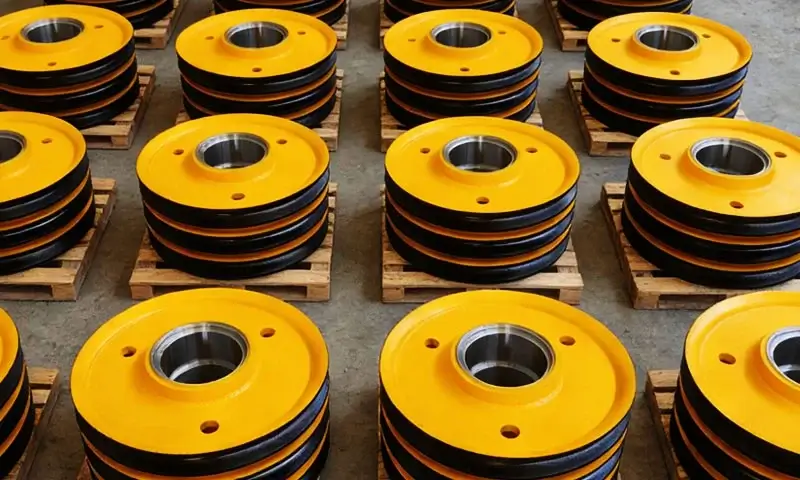
La fusione di precisione fornisce un percorso di produzione efficace per pulegge di gru personalizzate perché può riprodurre geometrie metalliche relativamente complesse mantenendo una coerenza dimensionale controllata e fornendo un punto di partenza quasi netto per la lavorazione successiva.
Se combinato con un'appropriata selezione della lega, Trattamento termico controllato, MACCHING CNC, e controlli non distruttivi, la fusione di precisione può produrre carrucole su misura per specifici sistemi di funi metalliche e applicazioni di sollevamento.
L'obiettivo ingegneristico non è semplicemente quello di produrre una puleggia che si adatti ad un assieme.
L'obiettivo è produrre un componente la cui integrità di fusione, Proprietà meccaniche, geometria della scanalatura, precisione dimensionale, e le condizioni della superficie rimangono adeguate durante i ripetuti cicli di servizio.
Questo articolo esamina pulegge per gru in fusione di precisione dal punto di vista della progettazione dei componenti, ingegneria dei materiali, produzione di fonderia, lavorazione, controllo di qualità, e prestazioni dell'applicazione.
1. Cos'è una puleggia di gru?
UN puleggia della gru è una ruota scanalata utilizzata per guidare, reindirizzare, supporto, o distribuire una fune metallica all'interno di una gru o altro meccanismo di sollevamento.
La fune metallica corre attorno alla circonferenza della puleggia, mentre la puleggia ruota attorno ad un albero, spillo, o mozzo supportato da cuscinetti.
A seconda della configurazione della gru, in un blocco di pulegge è possibile installare una o più pulegge, sistema di alimentazione, testa del braccio, montaggio del carrello, o altro meccanismo di sollevamento.
Lo scopo fondamentale di una carrucola è semplice: cambia la direzione della fune metallica e consente alla fune di muoversi sotto carico con attrito ridotto e flessione controllata.
La sua effettiva funzione meccanica, Tuttavia, è decisamente più impegnativo.
Quando una fune metallica carica passa sopra una puleggia, la corda viene piegata e srotolata ripetutamente. La scanalatura della puleggia sostiene la fune e distribuisce le forze di contatto su una regione definita.
Allo stesso tempo, la puleggia stessa deve resistere alle forze trasmesse attraverso la fune senza deformarsi eccessivamente, cracking, Indossare, o perdita di allineamento.
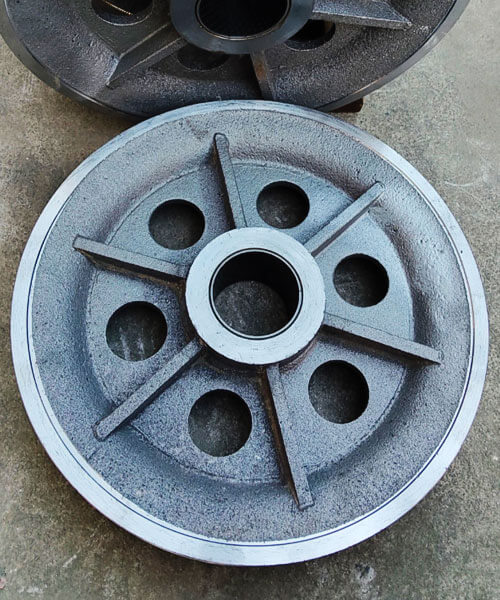
Struttura base della carrucola della gru
Una puleggia di gru convenzionale è generalmente costituita da diverse aree funzionali:
| Componente | Funzione primaria | Considerazioni ingegneristiche chiave |
| Corpo della puleggia | Supporta la fune e trasmette il carico | Forza, rigidità, integrità del lancio |
| Scanalatura della corda | Riceve e guida la fune metallica | Raggio, profondità, profilo, finitura superficiale |
| Centro | Collega la puleggia al supporto rotante | Trasmissione del carico, spessore del muro |
| Foro | Adatto ad albero o disposizione di cuscinetti | Diametro, tolleranza, concentricità |
| Flange | Aiuta a trattenere la fune metallica | Altezza, rigidità, sdoganamento |
| Sede del cuscinetto | Supporta il cuscinetto ove applicabile | Precisione dimensionale, finitura superficiale |
| Chiavetta / Caratteristiche di montaggio | Trasferisce la coppia o fissa il gruppo | Posizione, geometria, allineamento |
2. Materiali comuni per le pulegge delle gru
La selezione del materiale è una delle decisioni più importanti nella produzione di pulegge per gru personalizzate perché il materiale influenza la resistenza, tenacità, resistenza all'usura, comportamento a fatica, Resistenza alla corrosione, machinabilità, risposta al trattamento termico, e prestazioni di lancio.
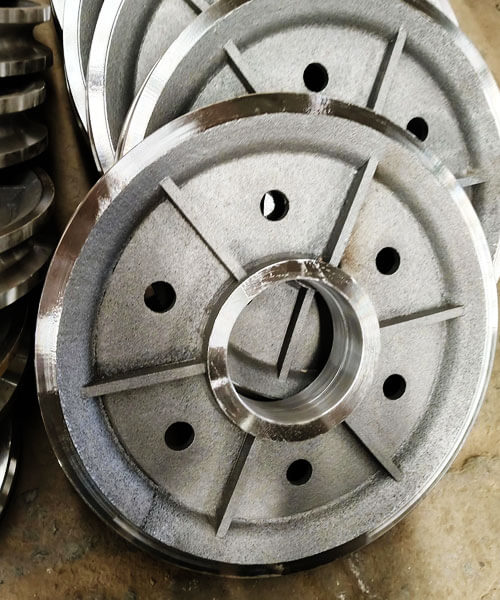
Fusioni in acciaio al carbonio
L'acciaio al carbonio è ampiamente applicabile ai componenti industriali generali perché fornisce un'utile combinazione di resistenza, tenacità, machinabilità, saldabilità, ed efficienza dei costi.
Per pulegge di gru, l'acciaio al carbonio può essere appropriato laddove le condizioni di servizio non richiedono una maggiore resistenza, Affidamento, o resistenza alla corrosione associata a materiali più altamente legati.
L'esatto tipo di acciaio deve essere selezionato in base alle proprietà meccaniche richieste, dimensione della sezione di colata, condizione di trattamento termico, ambiente operativo, e specifica tecnica applicabile.
Getti di acciaio legato
Gli acciai legati diventano attraenti quando la puleggia è sottoposta a carichi più impegnativi o quando aumenta la temprabilità, tenacità, forza, o è richiesta resistenza all'usura.
Elementi leganti come il manganese, cromo, molibdeno, e il nichel può essere utilizzato in diverse combinazioni per modificare la risposta del materiale al trattamento termico e al carico di servizio.
Per pulegge di gru per carichi pesanti, il vantaggio dell'acciaio legato non è semplicemente una maggiore resistenza. Una corretta progettazione della lega può aiutare a ottenere una combinazione più equilibrata di:
Forza + tenacità + Resistenza alla fatica + Affidamento + resistenza all'usura
Questo equilibrio è particolarmente importante quando la puleggia contiene sezioni relativamente spesse dove la risposta uniforme al trattamento termico può diventare più difficile.
Acciaio inossidabile
L'acciaio inossidabile può essere preso in considerazione per pulegge di gru specializzate esposte a condizioni corrosive, Compreso Marine, costiero, Offshore, chimico, o ambienti di lavaggio.
Tuttavia, l’acciaio inossidabile non dovrebbe essere automaticamente considerato l’opzione migliore semplicemente perché ha una resistenza alla corrosione superiore.
La selezione del materiale deve considerare il carico meccanico, comportamento all'usura, costo, requisiti di lavorazione, e l'effettiva corrosività dell'ambiente.
Per molte applicazioni di sollevamento pesanti, un acciaio al carbonio o legato adeguatamente progettato con un sistema protettivo appropriato può essere più pratico dell'acciaio inossidabile.
Ferro duttile
La ghisa duttile può fornire caratteristiche di fusione attraenti insieme a una resistenza utile, tenacità, resistenza all'usura, smorzamento delle vibrazioni, stabilità dimensionale.
La sua applicabilità dipende fortemente dai requisiti di progettazione e di carico.
Non dovrebbe essere selezionato solo perché la sua colabilità è favorevole; è necessario valutare il carico meccanico completo e le conseguenze di guasto dell'applicazione.
3. Processo di fusione di precisione per pulegge di gru
La fusione di precisione è un metodo di produzione efficace per produrre pulegge di gru con profili complessi, hub integrati, transizioni strutturali, e altre geometrie che sarebbero costose o inefficienti da produrre interamente mediante lavorazione meccanica.
Per pulegge gru personalizzate, Casting per investimenti (Casting di cera perduto) è particolarmente prezioso perché il processo può riprodurre geometrie complesse con tolleranze di fusione relativamente strette e una struttura quasi netta, mentre la successiva lavorazione CNC stabilisce le dimensioni funzionali critiche.
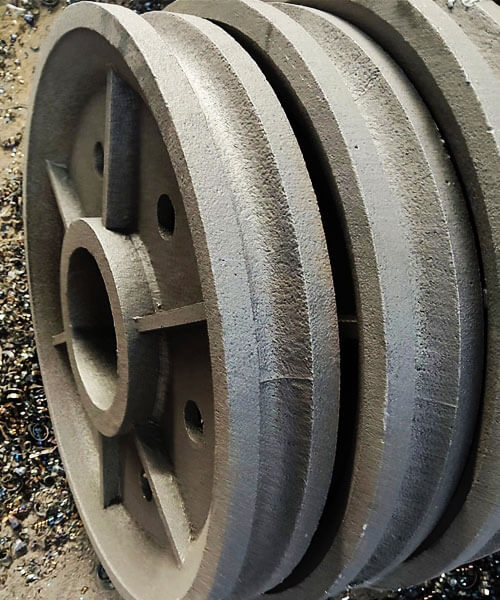
Colata di investimento (Casting di cera perduto) Processo
| Palcoscenico | Fase del processo | Descrizione | Controlli chiave |
| 1. Ingegneria & Utensili | Analisi DFM | Il disegno 2D o il modello CAD 3D viene esaminato per verificare la fattibilità della fusione, spessore del muro, transizioni, restringimento, indennità di lavorazione, e requisiti di gate. | Simulazione del getto; Requisiti dimensionali; bozza; raggio del raccordo; sovrametallo di lavorazione |
| 2. Produzione di modelli | Iniezione di cera | La cera viene iniettata in uno strumento di precisione per produrre un modello sacrificale accurato che rappresenta la geometria della puleggia della gru. | Temperatura della cera; pressione di iniezione; trattenere la pressione; Tempo del ciclo; dimensioni del modello |
| Ispezione del modello | I modelli in cera vengono controllati per eventuali distorsioni, riempimento incompleto, flash, variazione dimensionale, e difetti di superficie. | Dimensioni del modello; ispezione visiva; coerenza dimensionale | |
| 3. Assemblaggio del pattern | Assemblaggio dell'albero | I singoli modelli in cera sono fissati a un sistema di colata centrale con guide e cancelli progettati per fornire un flusso di metallo controllato. | Disposizione del cancello; orientamento del modello; spaziatura; dimensioni del corridore |
| 4. Costruzione di conchiglie | Rivestimento in liquame | Il gruppo di cera viene ripetutamente immerso in un impasto ceramico e ricoperto con stucco refrattario per creare un guscio ceramico multistrato. | Viscosità del liquame; spessore dello strato; tempo di asciugatura; umidità; granulometria dello stucco |
| Rinforzo del guscio | Ulteriori strati di ceramica vengono applicati fino a quando il guscio non ha sufficiente resistenza e permeabilità per la colata del metallo. | Spessore del guscio; condizioni di essiccazione; integrità del guscio | |
5. Dewaxing |
Autoclave / deparaffinazione flash | Il guscio assemblato viene riscaldato per rimuovere il modello in cera e lasciare una cavità ceramica pulita. | Temperatura; pressione del vapore; velocità di riscaldamento; tempo di deparaffinazione |
| 6. Sparare a conchiglia | Cottura ceramica | Il guscio in ceramica viene cotto a temperatura elevata per rimuovere la cera residua, rafforzare lo stampo, e stabilire la stabilità termica. | Temperatura del forno; velocità di riscaldamento; tempo di trattenimento; temperatura del guscio |
| 7. Fusione | Fusione ad induzione | La lega selezionata viene fusa in un forno controllato e portata alla composizione chimica e alle condizioni di colata richieste. | Chimica delle leghe; temperatura di scioglimento; tempo di trattenimento; sciogliere la pulizia |
| 8. Verifica dei metalli | Analisi chimica | Il metallo fuso viene analizzato per verificare che la sua composizione soddisfi il grado di lega specificato prima della colata. | Analisi spettrometrica; controllo del materiale di carica; Numero di calore |
9. Versare |
Gravità / colata controllata | Il metallo fuso viene introdotto nel guscio ceramico preriscaldato attraverso il sistema di colata ingegnerizzato. | Temperatura di versamento; tasso di versamento; preriscaldamento dello stampo; stabilità del riempimento |
| 10. Solidificazione | Raffreddamento controllato | La fusione solidifica all'interno dello stampo ceramico. L'alimentazione e la solidificazione direzionale sono controllate per ridurre al minimo il ritiro e altre discontinuità interne. | Gradienti termici; efficienza del montante; Tasso di raffreddamento; Spessore della sezione |
| 11. Tramortire | Rimozione del guscio | Dopo un raffreddamento sufficiente, il guscio ceramico viene rimosso meccanicamente dalla fusione metallica. | Intensità delle vibrazioni; metodo di rimozione del guscio; protezione del getto |
| 12. Tagliare | Rimozione del cancello e dell'alzata | Sprue, corridori, porte, e le colonne montanti sono separate dalla fusione della puleggia della gru. | Posizione di taglio; parametri della sega abrasiva; movimentazione delle parti |
13. Finitura della fusione |
Macinazione / Scatto | Cancelli residui, pinne, flash, e la ceramica aderente vengono rimosse e la superficie viene preparata per la successiva lavorazione. | Tipo abrasivo; pressione di sabbiatura; indennità di macinazione; condizione della superficie |
| 14. Trattamento termico | Normalizzare / Q&T / sollievo da stress | La fusione viene trattata termicamente in base alla lega e alle proprietà meccaniche richieste. | Temperatura del forno; tempo di ammollo; Tasso di raffreddamento; durezza |
| 15. Lavorazione CNC | Rotazione / noioso / lavorazione della scanalatura | Caratteristiche funzionali come il foro, centro, sede del cuscinetto, scanalatura della corda, e le superfici di montaggio sono lavorate alle dimensioni finali. | Tolleranza dimensionale; concentricità; esaurire; Rugosità superficiale |
| 16. Ispezione finale | Controlli dimensionali e CND | La puleggia finita viene ispezionata per verificarne la geometria, Proprietà meccaniche, condizione della superficie, E, dove specificato, integrità interna. | CMM; durezza; UT/MT/PT/RT a seconda dei casi; ispezione visiva |
4. Lavorazione della scanalatura della corda e finitura superficiale
La scanalatura della fune è una delle caratteristiche funzionali più importanti di una puleggia della gru perché determina il modo in cui viene supportata la fune metallica, guidato, e piegato durante il funzionamento.
Anche quando il corpo fuso presenta un'eccellente integrità metallurgica, una scanalatura lavorata in modo errato può accelerare l'usura della fune, aumentare lo stress da contatto locale, promuovere un carico irregolare, e ridurre la durata sia della fune che della puleggia.
Lavorazione della scanalatura dopo la fusione
La fusione a cera persa o altri processi di fusione di precisione possono produrre una puleggia con una forma quasi netta, ma la scanalatura finale della fune richiede normalmente una lavorazione meccanica quando la geometria controllata e la finitura superficiale sono fondamentali.
La sequenza di lavorazione può includere:
Ispezione della fusione → definizione del riferimento → tornitura di sgrossatura → lavorazione di scanalature → tornitura di finitura → verifica dimensionale
La puleggia viene innanzitutto posizionata in modo sicuro utilizzando i riferimenti appropriati. Il riferimento di lavorazione dovrebbe essere stabilito dalla linea centrale funzionale del componente piuttosto che da una superficie arbitraria come fusa.
Ciò è particolarmente importante per pulegge grandi o asimmetriche perché altrimenti la variazione della fusione può trasferirsi direttamente nella posizione finale della scanalatura.
Concentricità e runout della scanalatura
Il rapporto tra la scanalatura della fune e il foro della puleggia è fondamentale.
Se la scanalatura non è concentrica al foro, la fune può subire una modifica della posizione radiale durante la rotazione della puleggia.
Un'eccentricità eccessiva può provocare variazioni cicliche nel contatto e nel carico della fune e può contribuire alle vibrazioni o all'usura accelerata dei componenti.
Per pulegge di precisione per gru, i produttori dovrebbero pertanto stabilire criteri di ispezione per:
- Concentricità tra gola e foro
- Eccentricità radiale
- Eccentricità assiale
- Diametro del foro
- Diametro della scanalatura
- Profilo della scanalatura
- Dimensioni della flangia
I valori consentiti dovrebbero provenire dal disegno tecnico o dalle specifiche applicabili anziché essere assegnati universalmente.
Finitura superficiale della scanalatura della corda
La finitura superficiale deve essere sufficientemente controllata per prevenire inutili abrasioni della fune metallica mantenendo la geometria di contatto prevista.
Un grezzo, strappato, poroso, o una scanalatura rettificata in modo improprio possono creare asperità localizzate che agiscono come concentrazioni di stress o punti abrasivi.
Al contrario, la finitura superficiale non deve essere utilizzata per compensare un profilo scanalato errato.
La sequenza di preparazione della superficie può comportare:
- Macchinatura ruvida
- Lavorazioni semifinite
- Finitura di lavorazione
- Sfacciato
- Lucidatura o molatura controllata dove specificato
- Pulizia finale
La rugosità superficiale richiesta deve essere definita in base alle specifiche della fune e della puleggia.
Un singolo valore numerico Ra non dovrebbe essere considerato universalmente applicabile perché diverse costruzioni di funi e condizioni di servizio possono richiedere criteri di superficie diversi.
5. Trattamento termico delle pulegge fuse di gru
Trattamento termico è una fase critica nella produzione delle pulegge fuse per gru, in particolare quando si utilizza acciaio al carbonio o acciaio legato.
La fusione stabilisce la geometria di base del componente, ma la microstruttura grezza non è necessariamente la struttura ottimale per un servizio meccanico impegnativo.
Un processo di trattamento termico adeguatamente controllato può modificare la microstruttura e migliorare la combinazione richiesta di forza, durezza, tenacità, Resistenza alla fatica, stabilità dimensionale.
Il percorso di trattamento termico appropriato dipende dalla chimica della lega, dimensione della sezione di colata, proprietà meccaniche richieste, e specifica del cliente.
Processi comuni di trattamento termico
Normalizzare
La normalizzazione comporta il riscaldamento dell'acciaio a un intervallo di temperatura appropriato superiore alla sua temperatura di trasformazione, trattenendolo per un tempo sufficiente, e poi raffreddandolo all'aria.
Per acciai fusi, la normalizzazione può aiutare a perfezionare e omogeneizzare la microstruttura e ridurre alcune delle non uniformità associate alla fusione.
Può essere utilizzato quando è richiesta una resistenza da moderata ad elevata combinata con una ragionevole tenacità e stabilità dimensionale.
Ricottura
La ricottura generalmente comporta un riscaldamento seguito da un raffreddamento controllato.
Può ridurre la durezza, migliorare la lavorabilità, alleviare le sollecitazioni interne, e produrre un più morbido, condizioni metallurgiche più stabili.
La ricottura può essere utile come processo intermedio laddove i successivi requisiti di lavorazione sono particolarmente impegnativi.
Spegnimento e tempera
Per acciai legati e al carbonio idonei, tempra e tempra (Q&T) Il trattamento può essere utilizzato per ottenere resistenza e durezza sostanzialmente aumentate insieme ad una tenacità controllata.
Il processo di base è:
Austenitizzazione → Tempra → Rinvenimento
La fase di tempra produce una microstruttura più dura, mentre il rinvenimento riduce l'eccessiva fragilità e regola l'equilibrio finale tra resistenza e tenacità.
Per componenti di gru sottoposti a carichi pesanti, la fase di rinvenimento è particolarmente importante perché la massima durezza non equivale necessariamente ad una prestazione di servizio ottimale.
Sviluppo dello stress
Il trattamento termico di distensione può essere utilizzato per ridurre le tensioni residue generate durante la fusione, saldatura, Macchina estesa, o precedente trattamento termico.
Ciò può essere particolarmente utile per pulegge di grandi dimensioni dove la stabilità dimensionale è importante.
6. Difetti comuni della fusione delle carrucole della gru e loro cause principali
I difetti di fusione possono influire in modo significativo sull'affidabilità strutturale delle pulegge delle gru.
Perché una puleggia è un componente caricato ciclicamente, le discontinuità interne che potrebbero essere tollerate in un getto decorativo a bassa tensione possono diventare importanti quando il componente è sottoposto a carichi di sollevamento ripetuti.
| Difetto | Descrizione | Causa ultima | Misure preventive |
| Porosità di restringimento | Vuoti interni | Alimentazione insufficiente durante la solidificazione. | Ottimizza il design del montante; utilizzare i brividi; simulazione. |
| Porosità del gas | Piccoli vuoti arrotondati | Intrappolamento del gas; gas disciolti nella massa fusa. | Bruciare per sciogliersi; migliorare la pratica del versamento; carica pulita. |
| Lacrime calde | Crepe | Sollecitazione di trazione durante la solidificazione. | Ridurre la temperatura di versamento; migliorare la collassabilità del guscio. |
| Inclusioni di sabbia | Sabbia incorporata | Erosione del guscio ceramico. | Migliora la resistenza del guscio; ridurre la turbolenza. |
Egitto |
Riempimento incompleto | Bassa temperatura di versamento; metallo insufficiente. | Aumentare la temperatura di versamento; migliorare il gating. |
| Il freddo si chiude | Giri di superficie | Due correnti che si incontrano senza fusione. | Aumentare la temperatura di versamento; migliorare il gating. |
| Variazione dimensionale | Dimensioni fuori tolleranza | Usura del modello; espansione della shell. | Mantenere gli strumenti; processo della shell di controllo. |
| Finitura superficiale scadente | Superficie ruvida | Ceramica grossolana; difetti del guscio. | Usa conchiglie più fini; migliorare il processo di shell. |
7. Applicazioni delle pulegge per gru in fusione di precisione
Le pulegge per gru in fusione di precisione vengono utilizzate nei sistemi di sollevamento in cui le funi metalliche devono essere reindirizzate, supportato, o riavvolto mantenendo il contatto controllato della fune e l'affidabilità meccanica.
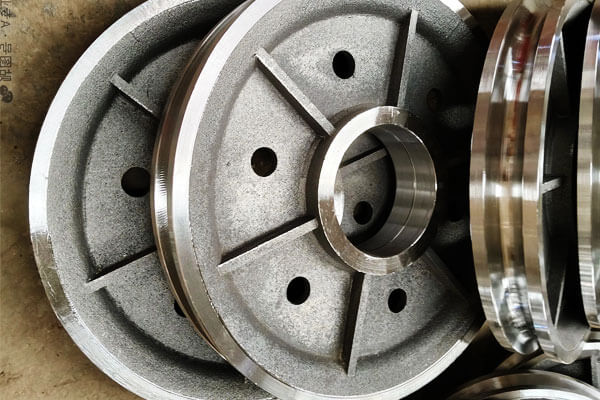
Gru a ponte ed EOT
Carroponti e traslatori elettrici (EOT) le gru utilizzano comunemente pulegge nel bozzello, meccanismo di sollevamento, e sistema di alimentazione.
Queste applicazioni in genere richiedono:
- Elevata resistenza ai carichi ripetuti
- Geometria precisa della scanalatura della fune
- Buon equilibrio rotazionale
- Interfacce dei cuscinetti affidabili
- Concentricità controllata tra foro e scanalatura
- Adeguata resistenza alla fatica
Per gru di produzione con cicli frequenti, la durata della puleggia può avere un'influenza diretta sugli intervalli di manutenzione poiché l'usura della scanalatura e la fatica della fune sono strettamente correlate.
Le pulegge fuse personalizzate sono particolarmente utili quando il produttore della gru necessita di dimensioni ottimizzate per un tamburo particolare, blocco del gancio, fune metallica, o busta di installazione.
Gru a portale e a portale
Le gru a portale e a portale sono ampiamente utilizzate per la movimentazione dei container, cantieri navali, cantieri industriali, impianti siderurgici, e movimentazione di materiali pesanti.
Le loro pulegge possono subire tensioni della fune e carichi dinamici relativamente elevati.
Inoltre, le installazioni esterne espongono i componenti alla pioggia, umidità, polvere, fluttuazioni della temperatura, e condizioni atmosferiche potenzialmente corrosive.
La scelta dei materiali diventa quindi una parte importante della progettazione.
L'acciaio fuso al carbonio o legato può essere appropriato per applicazioni generali pesanti, mentre le leghe resistenti alla corrosione o i sistemi di finitura protettiva possono diventare più rilevanti in ambienti marini.
Per gru a portale di grandi dimensioni, la stabilità dimensionale e l'integrità strutturale del getto sono particolarmente importanti perché le dimensioni della puleggia possono diventare sostanziali.
Gru a torre
Le gru a torre utilizzano le pulegge per il sollevamento, carrello, e meccanismi di orzata. Vincoli di spazio, passaggio della corda, e cicli operativi relativamente elevati rendono importante l'ottimizzazione dimensionale.
Una puleggia personalizzata potrebbe dover soddisfare diversi requisiti concorrenti:
Abbastanza grande da ridurre la flessione grave della corda, ma abbastanza compatto da adattarsi all’involucro meccanico della gru.
Anche il profilo della scanalatura deve corrispondere alla fune metallica selezionata, mentre la disposizione del mozzo e dei cuscinetti deve integrarsi con i componenti esistenti della gru.
La fusione di precisione può fornire flessibilità nello sviluppo di configurazioni complesse di mozzi e flange senza richiedere la lavorazione meccanica dell'intero componente da una billetta di grandi dimensioni.
Porta, Porto, e gru per container
Le gru portuali operano in combinazioni impegnative di:
- Carichi di sollevamento elevati
- Utilizzo elevato
- Servizio continuo o semicontinuo
- Atmosfere saline
- Caricamento dinamico
- Requisiti di manutenzione rigorosi
Le pulegge utilizzate in questi sistemi possono quindi richiedere una combinazione di resistenza meccanica, resistenza all'usura, Resistenza alla fatica, protezione della corrosione, e lavorazione precisa.
Dove la corrosione è grave, Per alcuni componenti possono essere prese in considerazione fusioni inossidabili o duplex, sebbene la selezione debba basarsi sui requisiti meccanici e ambientali completi piuttosto che sulla sola resistenza alla corrosione.
Costruzioni navali e gru marine
Le gru marine operano comunemente in ambienti umidi, ambienti contenenti acqua salata in cui la corrosione può influire in modo significativo sulla durata dei componenti.
È possibile utilizzare pulegge per gru in fusione di precisione:
- Sistemi di sollevamento a bordo delle navi
- Gru per cantieri navali
- Gru a ponte
- Sistemi di movimentazione marittima
- Attrezzature di supporto offshore
Per queste applicazioni, il produttore deve considerare non solo il materiale sfuso ma anche le condizioni delle superfici lavorate, dispositivi di fissaggio, cuscinetti, rivestimenti protettivi, drenaggio, e manutenzione.
Corrosione localizzata in corrispondenza della scanalatura, centro, oppure l'interfaccia del cuscinetto può essere particolarmente indesiderabile perché queste aree sono funzionalmente critiche.
Gru offshore
I sistemi di sollevamento offshore impongono condizioni di servizio particolarmente impegnative perché combinano elevati carichi meccanici con la corrosione marina, movimento indotto dal vento, vibrazione, ed effetti dinamici potenzialmente gravi.
Potrebbe essere necessaria una puleggia della gru in fusione di precisione per il servizio offshore:
- Alta tenacità della frattura
- Composizione chimica controllata
- Trattamento termico qualificato
- Materiale o rivestimento resistente alla corrosione
- NDT estesi
- Certificazione dei materiali tracciabili
- Controllo dimensionale stretto
Per tali applicazioni, le specifiche tecniche dovrebbero definire in dettaglio i criteri di ispezione e accettazione richiesti. La sola qualità del materiale non è sufficiente per stabilire l’idoneità.
Gru minerarie e industriali pesanti
Strutture minerarie, acciaierie, fonderie, centrali elettriche, e le operazioni di produzione pesante spesso utilizzano gru in ambienti caratterizzati da polvere, vibrazione, temperature elevate, elevato utilizzo, e carichi pesanti.
Le pulegge per queste applicazioni potrebbero richiedere una maggiore resistenza a:
- Fatica ciclica
- Impatto meccanico
- Usura delle scanalature
- Contaminazione
- Temperature di esercizio elevate
- Ambienti abrasivi
I getti di acciaio legato con un adeguato trattamento termico possono fornire una forte combinazione di proprietà meccaniche laddove sono richieste prestazioni per impieghi gravosi.
Attrezzature per l'edilizia e la movimentazione dei materiali
Gru edili, montacarichi, argani, e i sistemi di movimentazione dei materiali utilizzano anche carrucole per reindirizzare la fune metallica e mantenere la catenaria controllata.
I requisiti variano notevolmente. Una puleggia di sollevamento relativamente piccola può dare priorità al costo e alla compattezza, mentre una gru da cantiere ad alta capacità può richiedere interfacce con scanalature e cuscinetti altamente ingegnerizzate.
Questa diversità di applicazioni è uno dei motivi per cui un produttore personalizzato competente dovrebbe essere in grado di supportare più materiali e percorsi di produzione invece di forzare ogni applicazione in un unico progetto standard.
8. Vantaggi della fusione di precisione per pulegge di gru
| Vantaggio | Valore ingegneristico |
| Capacità di forma quasi netta | Riduce le lavorazioni inutili |
| Geometria complessa | Supporta hub ottimizzato, flangia, e caratteristiche strutturali |
| Flessibilità del materiale | Consente la selezione della lega specifica per l'applicazione |
| Produzione integrata | La fusione e la lavorazione CNC possono essere progettate insieme |
| Ripetibilità | Utile per la produzione OEM e di pezzi di ricambio |
| Scasso di materiale ridotto | Meno asportazioni rispetto alla lavorazione da stock di grandi dimensioni |
| Personalizzazione del design | Supporta la geometria specifica dell'applicazione |
| Produzione scalabile | Adatto per la produzione ripetuta quando l'attrezzatura è giustificata |
9. Pulegge per gru in fusione di precisione vs. Pulegge forgiate e fabbricate
La scelta tra Casting di precisione, forgiatura, e fabbricazione dovrebbe basarsi sugli effettivi requisiti tecnici della puleggia della gru piuttosto che sul presupposto che un processo di produzione sia universalmente superiore.
Ciascun metodo crea un diverso equilibrio geometrico, utilizzazione del materiale, Proprietà meccaniche, flessibilità produttiva, requisiti di lavorazione, e costo.
Per pulegge gru personalizzate, la questione centrale quindi non è semplicemente “Quale processo è più forte?" ma piuttosto:
Quale processo di produzione può fornire in modo più efficiente la capacità di carico richiesta, prestazioni a fatica, precisione della scanalatura della fune, Integrità strutturale, dimensioni, volume di produzione, e affidabilità del servizio?
Il seguente confronto si concentra sulle differenze ingegneristiche fondamentali che contano quando si seleziona un percorso di produzione per le pulegge delle gru.
| Differenza chiave | Pulegge per gru in fusione di precisione | Pulegge di gru forgiate | Fabbricato / Pulegge saldate |
| Migliore adattamento | Complesso, pulegge personalizzate che richiedono una geometria quasi perfetta e una produzione ripetuta | Applicazioni ad alta resistenza e critiche per la fatica | Molto grande, a basso volume, o pulegge altamente personalizzate |
| Geometria & Design Libertà | Eccellente per hub complessi, Flange, costolette, e transizioni | Moderare; la geometria deve essere compatibile con la forgiatura | Eccellente attraverso la costruzione in più parti |
| Prestazioni meccaniche | Eccellente quando la qualità della fusione e il trattamento termico sono adeguatamente controllati | Eccellente, in particolare per applicazioni ad alta resistenza e impegnative in termini di fatica | Bene, ma fortemente dipendente dal design e dalla qualità della saldatura |
| Efficienza materiale | Alto, con relativamente poco materiale in eccesso | Moderare; generalmente è richiesto un sovrametallo di lavorazione | Variabile; dipende dalla piastra, squillo, e disposizione dei componenti |
| Requisito di lavorazione | Moderare; superfici funzionali principalmente critiche | Da moderato a alto | Da moderato a alto |
| Capacità di grande diametro | Bene, ma dipende dall'attrezzatura e dal processo di fusione | Limitato dalla capacità di forgiatura e dagli strumenti | Ottimo per strutture molto grandi |
Volume di produzione |
Adatto per ripetere la produzione OEM | Più adatto per la produzione ripetuta dove l'attrezzatura è giustificata | Particolarmente adatto alla produzione a basso volume o basata su progetti |
| Costo degli utensili | Moderare | Alto | Relativamente basso |
| Principale preoccupazione per la qualità | Difetti di fusione come il ritiro, porosità, e inclusioni | Qualità dei materiali, forgiare l’integrità, e controllo del trattamento termico | Difetti di saldatura, stress residuo, e distorsione |
| Vantaggio principale | Geometria complessa + personalizzazione + forma vicina | Elevate prestazioni meccaniche | Grandi dimensioni + flessibilità strutturale |
| Limitazione principale | Richiede un rigoroso controllo di fonderia e NDT | Costi di lavorazione e lavorazione più elevati | Ulteriori sfide di saldatura e controllo dimensionale |
10. Perché scegliere LangHe Industry per pulegge per gru con fusione di precisione personalizzate?
La scelta di un fornitore di pulegge per gru dovrebbe andare oltre il confronto dei prezzi di fusione.
Perché il componente unisce il getto strutturale, Trattamento termico, lavorazione di precisione, geometria del contatto con la corda, e ispezione, la capacità del fornitore di controllare l’intera catena di produzione è spesso più importante del processo di fusione nominale stesso.
Industria di Langhe può avvicinarsi alle pulegge per gru personalizzate con fusione di precisione come progetto di produzione integrato, collegamento della revisione ingegneristica, sviluppo del casting, lavorazione, finitura, e ispezione di qualità.
| Capacità | Dettagli |
| Materiali | Acciaio al carbonio (WCB), acciaio fuso, ferro duttile (60-40-18, 65-45-12, 80-55-06), acciaio inossidabile (CF-8, CF-8M, 17-4Ph), acciaio in lega (4140, 4340) |
| Processo di fusione | Colata di investimento, Casting di sabbia. |
| Peso parziale | 0.5 da kg a 500 kg. |
| Tolleranze | ± 0,1-0,3 mm (CT5-CT7 secondo ISO 8062). |
| Qualità | Iso 9001:2015 certificato; 100% ispezione; CMM; profilometro di superficie; Ndt (Radiografia, Dye penetrant). |
| Tempi di consegna | 6–12 settimane per l'attrezzatura; 2–4 settimane per ordini ripetuti. |
11. Conclusione
Una puleggia di gru è un componente dall'aspetto relativamente semplice con una funzione meccanica impegnativa. Deve guidare e piegare ripetutamente la fune metallica durante la trasmissione del carico attraverso il mozzo, cuscinetti, e struttura portante.
Di conseguenza, geometria della scanalatura, Integrità materiale, condizione di trattamento termico, precisione di lavorazione, concentricità, e la qualità della superficie contribuiscono tutti alle prestazioni della puleggia nel mondo reale.
La fusione di precisione offre un percorso di produzione avvincente per pulegge di gru personalizzate con geometria complessa, produzione quasi netta, flessibilità del materiale, e la ripetibilità sono importanti.
Può ridurre le lavorazioni non necessarie consentendo agli ingegneri di integrare gli hub, Flange, costolette, transizioni, e altre caratteristiche strutturali nel getto.
LangHe Industry fornisce un approccio di produzione personalizzato per pulegge per gru in fusione di precisione, combinando l'ingegneria della fusione, Selezione del materiale, MACCHING CNC, Trattamento termico, finitura, e ispezione per supportare i requisiti OEM specifici dell'applicazione.
FAQ
Che cos'è una puleggia per gru in fusione di precisione?
Una puleggia per gru in fusione di precisione è una puleggia per fune metallica prodotta utilizzando un processo di fusione controllata, comunemente rivestimento o un altro metodo di fusione orientato alla precisione, seguita dalla lavorazione delle superfici funzionali critiche.
La fusione crea la geometria primaria, mentre la lavorazione CNC stabilisce caratteristiche come la scanalatura della fune, foro, e sedi dei cuscinetti.
Perché utilizzare la fusione di precisione invece di lavorare la puleggia di una gru in acciaio massiccio?
La fusione di precisione può produrre gran parte della geometria finale prima della lavorazione.
Ciò può ridurre la rimozione del materiale, tempo di lavorazione, e sprechi di materiali, consentendo allo stesso tempo una maggiore libertà per gli hub complessi, Flange, costolette, e transizioni strutturali.
La puleggia della gru fusa è resistente quanto una puleggia forgiata?
Non esiste una risposta universale. Una puleggia in acciaio fuso adeguatamente progettata e lavorata può fornire eccellenti prestazioni meccaniche,
ma la forgiatura può offrire vantaggi nelle applicazioni in cui sono richieste una struttura lavorata altamente consolidata e specifiche proprietà di fatica.
L'idoneità dipende dal materiale, geometria, Dimensione della sezione, Trattamento termico, caricamento, e requisiti di ispezione.
Qual è il fattore di qualità più importante per una puleggia di gru??
Non esiste un singolo parametro che determina la qualità. Integrità del lancio, Proprietà meccaniche, geometria della scanalatura, allineamento del foro, condizione della superficie, e la precisione dimensionale devono lavorare insieme.
Per applicazioni critiche per la sicurezza, tali caratteristiche devono essere verificate rispetto alle specifiche tecniche approvate e al piano di ispezione.
Come si può migliorare la durata utile della puleggia della gru??
La durata utile può essere migliorata attraverso il corretto dimensionamento della puleggia alla fune, geometria appropriata della scanalatura, selezione del materiale adatto, corretta lubrificazione e manutenzione,
allineamento accurato, qualità produttiva controllata, e sostituzione tempestiva quando l'usura della scanalatura o altri danni superano il limite specificato.