Uvod
Među obitelji postupaka preciznog lijevanja, livenje po ulošku—često nazivano "lijevanje po izgubljenom vosku"— ističe se svojom sposobnošću proizvodnje metalnih komponenti gotovo neto oblika s izuzetnom završnom obradom površine, zamršena geometrija, i tijesne dimenzijske tolerancije.
Ovaj članak secira proces lijevanja uloškom od prvih principa do naprednih primjena.
Istraživat ćemo njegove metalurške temelje, detaljan tok procesa, varijante tehnologije (čaša za vodu, Silikal, kompozitni), mehanizmi kvara, usporedno pozicioniranje u odnosu na druge metode proizvodnje, i industrijskim slučajevima uporabe.
1. Što je investicijski kasting?
Investicijski lijev, Poznat i kao proces izgubljenog voska, je precizna metoda oblikovanja metala u kojoj se jednokratni voštani ili topljivi uzorak oblaže vatrostalnom keramičkom ljuskom, zatim uklonjeni kako bi se stvorila šupljina koja je ispunjena rastaljenim metalom.
Proces je osmišljen za reprodukciju izvornog uzorka s visokim stupnjem vjernosti, što ga čini jednim od najučinkovitijih proizvodnih puteva za složene, metalni dijelovi gotovo neto oblika.
Za razliku od konvencionalnih ruta lijevanja koje su često optimizirane samo za jednostavnost ili volumen, okolo se gradi investicijsko lijevanje replikacija detalja, dimenzionalna kontrola, i fleksibilnost legura.
Koristi se kada komponenta mora kombinirati zamršenu geometriju, funkcionalna točnost, i pouzdanu metaluršku kvalitetu u jednom lancu procesa.
Zbog toga je naširoko prihvaćen u industrijama poput zrakoplovstva, energija, automobilski, medicinska oprema, i precizni industrijski hardver.
Osnovne konkurentske prednosti lijevanja pomoću kalupa
U usporedbi s drugim postupcima oblikovanja metala, livenje za uložak nudi šest ključnih prednosti koje mu daju prepoznatljivu i trajnu poziciju na tržištu:
Vrhunska točnost dimenzija i završna obrada površine
Investicijskim lijevanjem mogu se postići standardne tolerancije dimenzija CT4–CT7, znatno čvršći od lijevanja u pijesak (CT9 – CT14).
Hrapavost površine obično se može kontrolirati na Ra 1,6–6,3 μm, što uvelike smanjuje potrebu za opsežnim mljevenjem, poliranje, ili sekundarna završna obrada na dekorativnim i preciznim funkcionalnim površinama.
Izvanredna sposobnost za složene geometrije
Ovaj je postupak posebno prikladan za dijelove s vrlo složenim značajkama, uključujući Unutarnje šupljine, podreza, Odjeljci tankog zida (spustiti 0.5 mm), složene zakrivljene površine, i fine uzorke rupa.
Može reproducirati gotovo bilo koju geometriju potrebnu za industrijske precizne komponente.
Kompatibilnost sa širokom legurom
Lijev za investicije je kompatibilan s vrlo širokim rasponom legura, uključujući uobičajene željezne i obojene metale kao i zahtjevne materijale visokih performansi.
Može se primijeniti na nehrđajuće čelike, Ugljični čelici, aluminijske legure, bakrene legure, Nikal-bazene na bazi nikla, legure na bazi kobalta, pa čak i aktivne legure kao što je titan.
Ova široka tolerancija legure daje inženjerima puno više slobode u odabiru materijala od mnogih drugih procesa oblikovanja.
Visoka metalurška kvaliteta
Kemijski inertna keramička ljuska smanjuje kontaminaciju rastaljenog metala.
Uz to, kontrolirano skrućivanje i dobro dizajnirani sustavi zatvaranja pomažu smanjiti skupljanje, poroznost, i segregacija, proizvodnju dijelova s gustom mikrostrukturom i stabilnim mehaničkim svojstvima.
Visoka učinkovitost materijala
Kao proces gotovo neto oblika, livenje za ulaganje nudi stopu iskorištenja materijala od približno 92%–98%, znatno smanjujući metalni otpad u usporedbi sa subtraktivnim procesima strojne obrade.
Fleksibilna proizvodna skala
Investicijski lijev je vrlo prilagodljiv, što ga čini prikladnim za jednokratni prilagođeni prototipovi, male serije specijalnih dijelova, i velika proizvodnja standardiziranih komponenti.
2. Temeljni metalurški i procesni principi
Investicijski lijev nije samo metoda oblikovanja. To je usko integrirana metalurški sustav u kojem uzoru vjernost, ponašanje ljuske, toplinsko upravljanje, i skrućivanje legure međusobno djeluju.
Kvaliteta završnog dijela određena je koliko su dobro ta četiri čimbenika kontrolirana zajedno.
Geometrijska replikacija kroz prijenos uzorka
Proces započinje voštanim ili taljivim uzorkom koji hvata konačnu geometriju dijela s visokom vjernošću.
Budući da je keramički kalup izgrađen izravno oko ovog uzorka, šupljina reproducira željeni oblik gotovo točku po točku.
To je ono što investicijskom lijevanju daje prednost u proizvodnji:
- fina rebra,
- oštri prijelazi,
- utori,
- male rupe,
- Unutarnji odlomci,
- i složene površinske karakteristike.
Drugim riječima, investicijsko lijevanje ne "približava" geometriju.
Prenosi ga iz uzorka u kalup uz vrlo visoko zadržavanje detalja. To je temelj njegove sposobnosti gotovo neto oblika.
Keramička školjka kao precizna toplinska barijera
Keramička ljuska nije samo spremnik za rastaljeni metal. To je a precizna vatrostalna struktura koji mora zadovoljiti dva sukobljena zahtjeva u isto vrijeme.
Mora biti dovoljno jak da izdrži:
- dewaxing,
- pucanje školjki,
- ulijevanje,
- pritisak metala,
- i toplinski šok.
Istovremeno, mora ostati dimenzionalno vjeran tako da šupljina ne narušava geometriju dijela.
Ova ravnoteža između mehanička čvrstoća i dimenzijska stabilnost jedan je od središnjih tehničkih izazova lijevanja uloškom.
Ako je ljuska preslaba, puca ili erodira. Ako se loše kontrolira, iskrivljuje ili gubi vjernost.
Školjka je stoga kritično inženjersko sučelje između uzorka i konačnog odljeva.
Kontrola skrućivanja kao metalurška jezgra
Nakon što rastaljeni metal uđe u šupljinu školjke, proces postaje pitanje kako se legura puni i skrućuje.
Ova faza određuje hoće li dio biti gust, zvuk, i dimenzionalno stabilan, ili hoće li sadržavati poroznost, skupljanje, Hladno se zatvara, ili strukturna neravnoteža.
Ključne kontrolne varijable uključuju:
- projektiranje sustava zatvarača,
- postavljanje uspona,
- temperatura predgrijavanja ljuske,
- temperatura ulijevanja,
- fluidnost legure,
- i brzina skrućivanja.
Ovi čimbenici oblikuju unutarnju strukturu odljevka jednako kao i vanjski oblik.
Dio može izvana izgledati ispravno, a iznutra ipak pokvariti ako se skrućivanjem ne upravlja pravilno.
Zašto je proces metalurški, ne samo geometrijski
Lijevanje po betonu često se opisuje kao proces preciznog oblikovanja, ali taj je opis nepotpun.
Također je a metalurški proces, jer se konačna svojstva dijela izgrađuju tijekom taljenja, ulijevanje, punjenje, i skrućivanje.
To znači da ljevaonica ne reproducira samo oblik. Aktivno se upravlja:
- zrna,
- gustoća,
- segregacija,
- formiranje,
- i konačno mehaničko ponašanje.
Zbog toga među tehnologijama oblikovanja metala posebno mjesto zauzima investicijsko lijevanje.
Kombinira se replikacija oblika s kontrolirana metalurška konsolidacija, a oba su jednako važna.
3. Cjeloviti radni tijek cjelovitog procesa lijevanja pomoću kalupa
Industrijsko livenje u kalupu je strogo kontrolirani procesni lanac u kojem svaka faza utječe na konačnu kvalitetu odljevka.
Točnost dimenzije, stanje površine, unutarnja zvučnost, i metalurška izvedba određuju se time koliko se dobro upravlja procesom od uzorka voska do završne inspekcije.
U praksi, livenje u kalupu nije jedna operacija već slijed međuovisnih koraka proizvodnje.
3.1 Izrada voštanih uzoraka i odabir materijala
Voštani uzorak je prvi fizički prikaz završnog dijela, tako da njegova dimenzijska stabilnost izravno definira gornju točnost odljevka.
Izbor voštanog materijala
Industrijsko livenje za uložak općenito koristi tri kategorije voska:
- Vosak niske temperature za jednostavno, dijelovi niske preciznosti
- Vosak srednje temperature za proizvodnju opće namjene
- Vosak visoke temperature za ultraprecizne ili posebne primjene
Među njima, vosak srednje temperature je najrašireniji. Nudi nisko skupljanje, dobra fluidnost, stabilne performanse rukovanja, i pouzdanu reprodukciju detalja.
To ga čini prikladnim za većinu čelika, bakrena legura, i odljevaka od aluminijskih legura.
Kontrola brizganja
Ubrizgavanje voska mora kontrolirati:
- temperatura voska,
- tlak ubrizgavanja,
- vrijeme držanja,
- i geometrija dijela.
Ako je vosak prehladan, punivost se pogoršava. Ako je prevruće, dimenzionalna stabilnost može biti ugrožena.
Tlak držanja također je bitan jer unutarnje praznine skupljanja u vosku mogu kasnije biti naslijeđene od metalnog odljevka kao nedostaci.

Kompenzacija skupljanja
Voštani uzorak mora sadržavati izračunato dopušteno skupljanje na temelju legure koja se lijeva.
Različite legure skrućuju s različitim ponašanjem skupljanja, tako da kompenzacija mora biti ugrađena u alat od samog početka.
Kontrola oštećenja
Moraju se pregledati uzorci voska:
- mjehurići,
- depresije,
- deformacija,
- bljesak,
- i oštećenje površine.
Svaki neispravni uzorak voska treba odbaciti prije ulaska u proizvodnju ljuski, jer defekti voska često kasnije u procesu postanu defekti lijevanja.
3.2 Montaža uzorka i projektiranje sustava pregrada
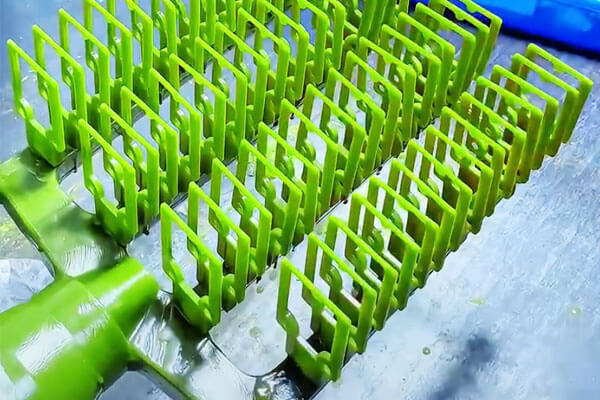
Pojedinac voštani uzorci sastavljaju se u a grozd ili stablo, što poboljšava učinkovitost proizvodnje i omogućuje proizvodnju više odljevaka u jednom ciklusu kalupa.
Raspored klastera
Razmak između uzoraka mora biti dovoljan da spriječi smetnje ljuske tijekom premazivanja i sušenja.
Broj dijelova po klasteru također treba odgovarati kapacitetu peći, ritam izlijevanja, i ponašanje legure pri skrućivanju.
Dizajn vratašca
Sustav kapije trebao bi podržavati:
- glatko punjenje,
- niska turbulencija,
- i kontrolirani protok metala.
Poželjno je laminarno strujanje jer turbulencija povećava rizik od:
- ulazak u zrak,
- preklapanje oksida,
- i uključivanje troske.
Za zahtjevnije legure, osobito visokolegirani čelici i superlegure, uobičajeno se koriste konstrukcije s donjim vratima ili stepenastim vodilicama.
Mogu se dodati hvatači troske ili nastavci klizača za presretanje plutajućih nečistoća prije nego što uđu u šupljinu.
Raspored uspona
Usponi su postavljeni na vrućim točkama i zonama posljednjeg skrućivanja kako bi se osiguralo dovod metala tijekom skrućivanja. Ovo je bitno za prevenciju:
- šupljine,
- mikroporoznost,
- i središnjeg skupljanja.
Za legure sa širokim rasponom smrzavanja, mogu biti potrebni višestruki pomoćni dizači kako bi se održalo dobro ponašanje pri hranjenju.
3.3 Izrada keramičkih školjki (Temeljni proces lijevanja pomoću kalupa)
Izrada keramičkih školjki je vremenski i tehnički najzahtjevniji postupak.
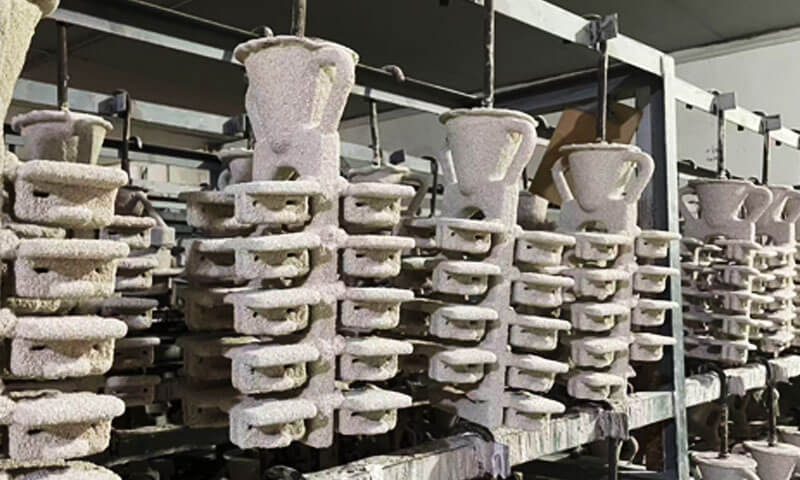
Školjka se formira ponovljenim premazivanjem vatrostalne kaše i suhog pijeska, podijeljen na lice kaput, prijelazni premaz i pomoćni premaz s različitim vatrostalnim materijalima i funkcijama.
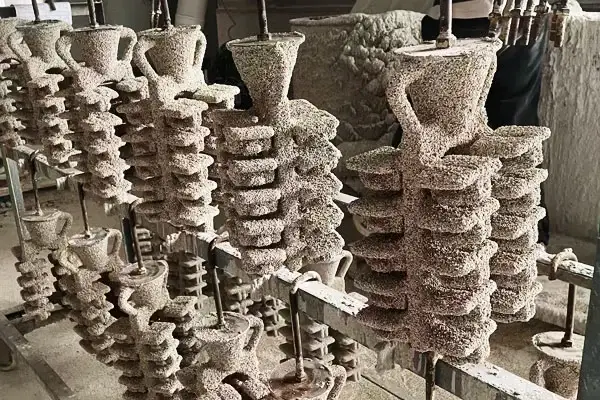
Slojevita struktura i usklađenost materijala
- Kaput za lice (površinski sloj): Izravan kontakt s rastaljenim metalom na visokoj temperaturi, zahtijevaju ultravisoku vatrostalnost i kemijsku inertnost.
Za visokokvalitetni nehrđajući čelik i superlegure, usvajaju se cirkonsko brašno i cirkonski pijesak visoke čistoće; za opći ugljični čelik, obično se koristi taljeni aluminijev oksid.
Ovaj sloj sprječava prodiranje metala, lijepljenje pijeska i kemijska reakcija između rastaljenog metala i vatrostalnog materijala. - Prijelazni kaput: Povećava snagu povezivanja između premaza za lice i pomoćnog sloja kako bi se izbjeglo raslojavanje ljuske tijekom pečenja i lijevanja.
- Rezervni kaput (stražnji sloj): Koristi jeftini kvarcni pijesak i mulitni agregat za poboljšanje ukupne strukturne čvrstoće ljuske i smanjenje sveobuhvatnih troškova materijala.
Kontrola sušenja:
Svaki premazani sloj mora se potpuno prirodno osušiti na konstantnoj temperaturi (22~26°C) i stalnom vlagom (55%~65% RH).
Nedovoljno sušenje ostavlja ostatke slobodne vode unutar ljuske, koji postaje izvor vodika i uzrokuje pinhole poroznost u odljevcima.
Ukupan broj slojeva ljuske kreće se od 8 do 12; debelih stijenki veliki odljevci zahtijevaju više od 12 slojeva za povećanu čvrstoću.
Diferencijacija veziva:
Vrsta veziva određuje vatrostalnost ljuske, sadržaj nečistoća i ukupnu izvedbu, što je ujedno i osnova za klasificiranje glavnih tehničkih putova lijevanja za investicije.
3.4 Dewaxing
Deparafinizacija uklanja materijal uzorka s keramičke ljuske i stvara šupljinu koja će se kasnije ispuniti rastaljenim metalom.
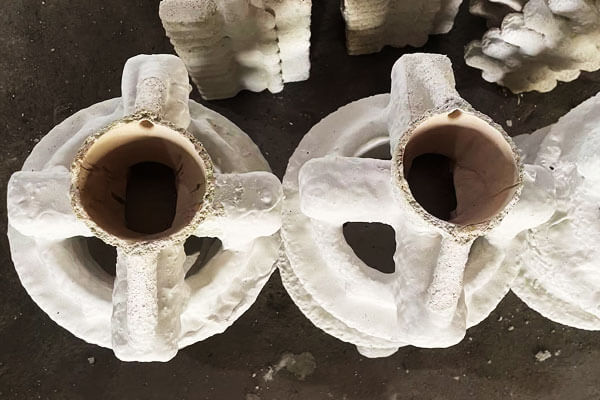
Standardna industrijska metoda
Preferirana industrijska metoda je deparafinizacija parom pod visokim pritiskom. Ovo se široko koristi jer brzo uklanja vosak i smanjuje rizik od oštećenja ljuske.
Kontrola procesa
Deparafinizacija parom mora se pažljivo kontrolirati tako da:
- vosak se potpuno otopi,
- ljuska nije napuknuta toplinskim udarom,
- i nema ostataka unutar šupljine.
Sav preostali vosak je ozbiljan problem jer se može razgraditi tijekom kasnijeg pečenja i izazvati kontaminaciju ugljikom, razvijanje plina, ili površinske greške u konačnom odljevku.
Oporaba materijala
Oporabljeni vosak obično se skuplja, filtriran, i reciklirati, što poboljšava ekonomičnost procesa i podržava ponovnu upotrebu materijala.
3.5 Pečenje čaure i predgrijavanje prije izlijevanja
Šuplji keramički omotač treba segmentirano pečenje na visokoj temperaturi za potpuno uklanjanje organskih ostataka, sinteriraju vatrostalne čestice i stabiliziraju strukturu ljuske; predgrijavanje se provodi prije izlijevanja kako bi se prilagodilo temperaturi rastaljenog metala.
Segmentirano paljenje
Ispaljivanje granata obično se provodi u fazama:
- Faza niske temperature: uklanja zaostale organske tvari i vosak u tragovima
- Stadij srednje temperature: tjera vezanu vlagu i razgrađuje preostale ostatke veziva
- Faza visoke temperature: sinteruje vatrostalnu ljusku i gradi konačnu čvrstoću
Ovo postupno zagrijavanje sprječava pucanje ljuske i osigurava da ljuska postigne stabilno toplinsko i strukturno stanje.
Predgrijavanje prije izlijevanja
Pečena ljuska se zatim prethodno zagrijava kako bi se smanjio temperaturni jaz između kalupa i rastaljenog metala. Predgrijavanje pomaže:
- poboljšati punjenje,
- smanjiti rizik od pogrešnog rada i hladnog zatvaranja,
- minimizirati toplinski šok,
- i podržavaju tanje dijelove tijekom punjenja.
Točan raspon predgrijavanja ovisi o leguri, debljina presjeka, i složenost dijela.
3.6 Topljenje, Kontrola atmosfere, i Izlijevanje
Ovo je faza u kojoj se odlučuje o metalurškoj čistoći i punjenju kalupa.
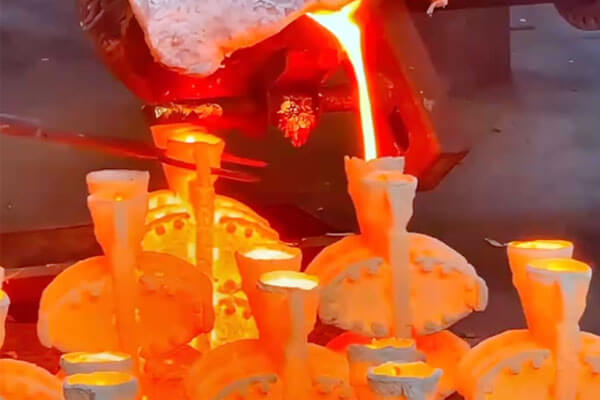
Oprema za topljenje
Metoda taljenja mora odgovarati obitelji legura:
- Srednjefrekventna indukcijska peć za opće industrijske odljevke
- Vakuumsko indukcijsko taljenje (Vim) za legure nikla, legure od titana, i nehrđajućeg čelika visoke čistoće
Kontrola atmosfere
Atmosferski zahtjevi ovise o leguri:
- obični ugljični čelici mogu se taliti u sustavima na bazi zraka,
- nehrđajući čelici i legure bakra često zahtijevaju zaštitu od dušika ili argona,
- a reaktivne ili visokoučinkovite legure zahtijevaju vakuum ili visoko kontroliranu atmosferu.
Kontrola temperature izlijevanja
Temperatura lijevanja jedna je od najosjetljivijih varijabli u investicijskom lijevanju. Ako je previsoka, povećanje rizika od segregacije i mikroporoznosti.
Ako je preniska, fluidnost pada i moguć je pogrešan rad ili hladno zatvaranje.
Pregrijavanje mora biti usklađeno s kemijom legure, fluidnost, i ponašanje skrućivanja.
Način izlijevanja
Gravitacijsko izlijevanje je najčešća metoda. Lijevanje potpomognuto vakuumom može se koristiti za ultratanke ili vrlo zamršene dijelove.
Bez obzira na metodu, protok treba ostati ravnomjeran i što je više moguće laminaran.
3.7 Hlađenje, Treseo, i Primarno čišćenje
Nakon ulijevanja, metal se mora skrutiti i ohladiti u kontroliranim uvjetima.
Režim hlađenja
Odljevci unutar keramičke ljuske usvajaju prirodno sporo hlađenje.
Za legure sklone toplinskom pucanju (kao što su visokolegirani nehrđajući čelik i superlegure), prisilno brzo hlađenje je zabranjeno kako bi se postupno oslobodio stres skrućivanja.
Uklanjanje školjki
Nakon što odljevak postigne sobnu temperaturu, keramička ljuska se uklanja tako:
- mehanička vibracija,
- voda pod visokim pritiskom,
- ili abrazivne metode čišćenja kao što je pjeskarenje.
Cilj je ukloniti sve ostatke školjke bez oštećenja površine odljevka.
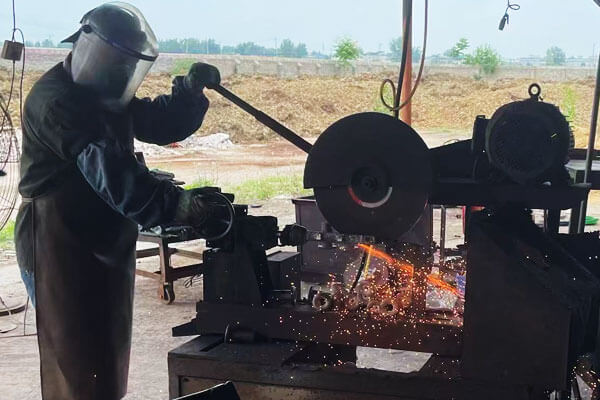
Primarno obrezivanje
U ovoj fazi, odljevak je odvojen od sustava klizača i uspona.
Višak materijala se uklanja, a prvi koraci brušenja ili čišćenja izvode se na područjima konektora i točkama rezanja.
3.8 Naknadna obrada i završna obrada
Nakon što se izradi tijelo odljevka, dodatne operacije se koriste za postizanje konačnih dimenzija, mehanički, i površinski zahtjevi.
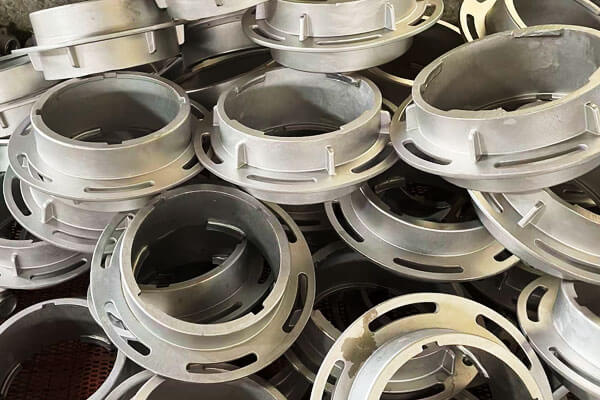
Uobičajeni koraci naknadne obrade
- Precizno brušenje i skidanje ivica
- Toplotna obrada
- Završnica površine
- Precizna obrada
- Ispitivanje bez razaranja
- Konačna provjera dimenzija
Toplotna obrada
Način toplinske obrade ovisi o leguri:
- ugljični čelik može zahtijevati normalizaciju, gašenje, I kajanje,
- nehrđajući čelik može trebati žarenje otopinom,
- taloženjem ojačane legure mogu zahtijevati otopinu i starenje.
Ovaj korak je bitan za stabilizaciju mikrostrukture i postizanje konačnih mehaničkih svojstava.
Površinska obrada
Ovisno o prijavi, dio može primiti:
- pucanj,
- kiseli,
- pasivacija,
- Anodirajući,
- melediranje,
- ili zaštitni premaz.
Precizna obrada
Kritične površine kao što su:
- montažna lica,
- rupe s navojem,
- lociranje površina,
- i područja brtvljenja
može zahtijevati dodatnu strojnu obradu s malim dopuštenjima.
Inspekcija
Konačna provjera kvalitete obično uključuje:
- prodorno testiranje,
- radiografsko testiranje,
- ultrazvučno testiranje,
- i mjerenje dimenzija.
Klasificiraju se samo dijelovi koji prođu sve potrebne provjere, upakirano, i isporučeno.
4. Klasifikacija glavnih tehnologija lijevanja pomoću kalupa
Najpraktičniji način klasificiranja mainstream livenja za ulaganje je prema vezivni sustav koji se koristi za izradu keramičke ljuske.
U sadašnjoj industrijskoj praksi, tri dominantne rute su liveno staklo za ulaganje u livenje, investicing silika sol, i kompozitni investicijski lijev.
Ova se klasifikacija široko koristi jer vezivo izravno utječe na čvrstoću ljuske, točnost dimenzije, kvaliteta površine, ciklus izrade školjke, i obitelji legura koje svaka ruta može podržati.
Ulaganje u investiciju u vodu
Lijevanje od vodenog stakla uporaba natrijev silikat kao vezivo ljuske.
Opisi industrije karakteriziraju ga kao proces s relativno kratkim ciklusom izrade školjke i niskom cijenom, što ga čini atraktivnim za proizvodnju gdje je važna ekonomičnost.
Istovremeno, više izvora primjećuje da školjke od vodenog stakla općenito daju niža točnost dimenzija i veća hrapavost površine nego silika-sol školjke.
Ovu rutu je stoga najbolje shvatiti kao troškovno orijentirana metoda preciznog lijevanja.
Široko se koristi za ugljični čelik, čelik niskog legura, aluminijska legura, i odljevci od bakrenih legura, gdje ravnoteža procesa daje prednost produktivnosti i cijeni u odnosu na najveću površinu ili razinu tolerancije.
Investicing silika sol
Silika-sol investicijski lijev uporaba koloidni silicij Kao vezivo.
Tehnički izvori to dosljedno opisuju kao rutu veće preciznosti: nudi bolje dimenzijske i geometrijske tolerancije, glatkija kvaliteta površine, i jače ukupne performanse ljuske od lijevanja vodenog stakla.
Također je povezan s duljim vremenom izrade školjke i višim troškovima, jer se preciznost postiže kontroliranijom proizvodnjom školjke.
Ova ruta općenito je preferirani izbor za nehrđajući čelik, čelik otporan na toplinu, i odljevci od legura visokih performansi, posebno tamo gdje dio treba fine detalje, pouzdana kvaliteta površine, i stroža kontrola tolerancije.
U praksi, silika sol je put koji se najčešće povezuje sa zahtjevnim industrijskim dijelovima gdje kvaliteta procesa mora odgovarati performansama legure.
Kompozitni liveni materijal
Kompozitni uložni lijev je a hibridni pristup koji kombinira elemente oba sustava uvezivanja kako bi uravnotežio preciznost, produktivnost, i trošak.
Ljevaonički izvori opisuju ovu vrstu rute kao praktičnu sredinu, gdje je dizajn ljuske ili izbor veziva prilagođen tako da proces nije potpuno skup kao silika sol, ali također nije toliko ograničena troškovima kao čisto ljuštenje vodenog stakla.
U inženjerskom smislu, kompozitna ruta se koristi kada dio treba bolja ekonomija od potpunog lijevanja silika-sola ali i potrebe bolja kvaliteta od čistog lijevanja vodenog stakla.
Točna implementacija ovisi o ljevaonici, jer kompozitni sustavi uvelike ovise o tome kako je premaz lica, rezervni kaput, i kemija veziva se kombiniraju.
5. Tipični nedostaci lijevanja: Temeljni uzroci i ciljane mjere popravljanja
Investicijski lijev, unatoč svojoj preciznosti, je osjetljiv na nekoliko vrsta kvarova. Donja tablica sažima uobičajene kvarove, njihovo porijeklo, i korektivne radnje.
| Mana | Vizualan / NDT potpis | Korijenski uzrok | Mjere sanacije |
| Poroznost plina | Krug, unutarnje šupljine glatkih stijenki | Otopljeni plinovi (H₂, N₂) u rastaljenom metalu; niska deoksidacija | Vakuumsko taljenje; otplinjavanje inertnim plinom; pravilnu praksu deoksidacije |
| Poroznost skupljanja | Nazubljen, nepravilne šupljine | Nedovoljno hranjenje; loš dizajn uspona | Povećajte veličinu uspona; dodati zimice; modificirati gating za promicanje usmjerenog skrućivanja |
| Vruća suza | Crack s ragged, oksidirani rubovi | Vlačno naprezanje tijekom kasnog skrućivanja; ograničenje kalupa | Smanjite krutost školjke; niža temperatura izlijevanja; Izmijenite sastav legura |
| Uključenje (šljaka, drolja) | Nepravilne nemetalne čestice | Burno izlijevanje; prljava talina; erodiran vatrostalan | Koristite čisto punjenje; keramički filteri; donje izlijevanje; nježno punjenje |
Površinska hrapavost / veining |
Uzdignute linije ili "peraje" na zabacivanju | Pucanje ljuske tijekom punjenja; niska čvrstoća ljuske | Povećajte debljinu ljuske; veći sadržaj veziva; koristiti jači vatrostalni |
| Egipat / hladno zatvoriti | Nepotpuno punjenje; presavijena površina | Niska temperatura izlijevanja; slaba fluidnost; tanki presjek | Povećajte temperaturu izlijevanja; poboljšati gating; evakuirati plijesan (vakuum) |
| Pomak jezgre | Varijacija debljine stijenke | Kretanje jezgre tijekom izgradnje ljuske ili izlijevanja | Bolja podrška jezgri (vjenčići); sporije sušenje ljuske; niži tlak izlijevanja |
6. Usporedba s lijevanjem u pijesak, Lijevanje pod pritiskom, i Kovanje
Inženjeri često uspoređuju investicijsko lijevanje s tri alternativna načina proizvodnje. Tablica u nastavku pruža kvantitativni kompromis.
| Kriterij ocjenjivanja | Investicijski lijev | Lijevanje pijeska | Lijevanje pod pritiskom (HPDC) | Kovanje |
| Površinski završetak (Ram, µm) | 1.6–6.3 | 6.3–25 | 0.8–3.2 | 0.4–3.2 |
| Dimenzijska tolerancija (mm / 25 mm) | ±0,1–0,3 | ±0,5–1,0 | ±0,1–0,3 | ±0,05–0,2 |
| Minimalni praktični dio (mm) | 0.5–1.5 | 3–5 | 0.5–1.0 | 1–3 |
| Geometrijska složenost | Vrlo visok; podreza, fini detalji, Unutarnje značajke | Visoko s jezgrama, ali ograničene preciznosti | Umjeren; ograničena mogućnost potkopavanja | Nisko do umjeren; najbolji za jednostavnije oblike |
| Iskorištavanje materijala | 90–95% | 60–80% | 90–95% | 60–80% |
| Trošak alata | Umjeren do visok | Nisko do umjeren | Visok | Vrlo visok |
| Cijena po dijelu pri velikoj količini | Umjeren | Nizak | Vrlo nizak | Umjeren |
| Cijena po dijelu pri maloj količini | Visoko osim ako se alat ne amortizira | Nisko do umjeren | Nepraktično zbog opterećenja alatom | Vrlo visok |
| Tipična najveća težina | Do otprilike 150 kg za čelične odljevke | Vrlo velik; nad 10,000 kg moguće | Obično oko 15 kg | Nad 500 kg moguće |
| Asortiman legura | Gotovo sve legure koje se mogu lijevati | Gotovo sve legure koje se mogu lijevati | Uglavnom legure obojenih metala | Svi metali, ali geometrijski ograničen |
7. Industrijska primjena investicijskog lijevanja
Investicijski lijev se koristi u industrijama gdje geometric complexity, kvaliteta površine, izvedba legure, i ponovljivost bitniji od najnižeg mogućeg troška proizvodnje.
Zrakoplovne i plinske turbine
Zrakoplovstvo je jedno od tehnički najzahtjevnijih područja primjene livenog lijevanja.
Komponente poput turbinske lopatice, lopatice, mlaznice za gorivo, kućišta difuzora, i drugi dijelovi vrućeg dijela često zahtijevaju složenu geometriju aeroprofila, tanki zidovi, precizni unutarnji prolazi, i izvrsna otpornost na visoke temperature.
Superlegure na bazi nikla i legure na bazi kobalta naširoko se koriste jer mogu zadržati mehanički integritet u teškim uvjetima topline i stresa.
Medicinski uređaji i implantati
Medicinske primjene postavljaju različite zahtjeve na proces.
Dijelovi kao što su ortopedski implantati, stabljike kuka, ladice za koljena, kirurški instrumenti, i precizni anatomski hardver zahtijevaju biokompatibilnost, kvaliteta površine, točnost dimenzije, i pouzdane mehaničke performanse.
Uobičajeni materijali uključuju 316L nehrđajući čelik, Co-Cr-Mo legure, i legure od titana kao što je Ti-6AL-4V.
Automobilizam i transport
U automobilskom sektoru, livenje po investiciji se koristi za komponente kao što su kotači turbopunjača, ispušni razvodnici, Komponente povezane s EGR-om, mjenjačke vilice, zagrada, i drugi hardver visokih performansi.
Ovi dijelovi često zahtijevaju ravnotežu otpornosti na toplinu, kontrola težine, i geometrijska složenost.
Nehrđajući čelici i visokougljični ili legirani čelici obično se koriste ovisno o toplinskom i mehaničkom slučaju opterećenja.
Nafta i plin, kemijska obrada, i rukovanje tekućinom
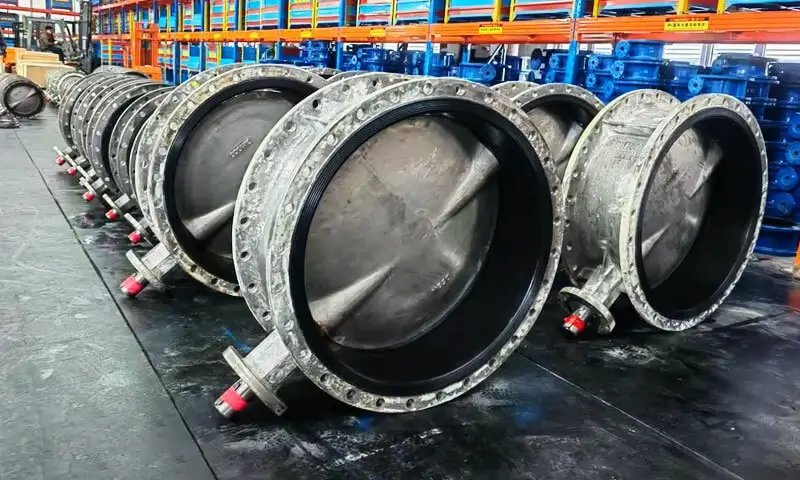
Industrija nafte i plina te kemijska industrija uvelike se oslanjaju na livenje za ulaganje tijela ventila, pumpa za pumpanje, kućišta mjerača protoka, fiting, i komponente protoka otporne na koroziju.
Tipični materijali uključuju Nehrđajući čelik tipa CF-8M, Dupleks nehrđajući čelici, i legure otporne na koroziju na bazi nikla.
Proizvodnja električne energije i toplinska oprema
Proizvodnja električne energije stavlja investicijsko lijevanje u neke od svojih najtežih uvjeta rada.
Komponente poput obloge za izgaranje, prijelazni komadi, prstenovi mlaznica, i drugi hardver za vrući plin su izloženi oksidaciji, toplinski biciklizam, i strujanje plina visoke temperature.
Nehrđajući čelici kao što su 310 i legure na bazi nikla kao što su Udruživanje 625 se obično koriste zbog svoje sposobnosti rada na povišenim temperaturama.
10. Zaključak
Investicijski lijev je zreo, višestruka i kontinuirano razvijajuća precizna tehnologija oblikovanja metala.
Njegova temeljna vrijednost leži u razbijanju strukturnih ograničenja tradicionalnih kalupa i ostvarivanju integriranog oblikovanja gotovo neto oblika složenih komponenti visokih performansi.
Tri glavne tehničke rute koje se temelje na registratoru čine jasno hijerarhijsko tržište: jeftini liveni liveni staklo dominira općim industrijskim dijelovima srednje preciznosti,
dok livenje silicijevog sola visoke čistoće postaje zlatnim standardom za vrhunske precizne komponente u zrakoplovstvu, medicinska i vrhunska energetska polja.
Kvaliteta uložnih odljevaka ovisi o cijelom lancu precizne kontrole izrade voštanog uzorka, izrada školjki, dewaxing, pucajući, topljenje i prelijevanje.
Svaki procesni parametar i radna norma međusobno su povezani, a svaki nemar potaknut će kaskadne nedostatke.
Iako ograničen proizvodnim ciklusom i troškovima u nekim scenarijima, njegove jedinstvene prednosti u oblikovanju složene strukture, metalurška kvaliteta i prilagodljivost materijala osiguravaju mu nezamjenjiv status u vrhunskoj proizvodnji.
Vođen inteligentnom proizvodnjom, zelena proizvodnja i iteracija novih materijala, moderno livenje za uložak dodatno će probiti tehnička uska grla, poboljšati učinkovitost proizvodnje i smanjiti sveobuhvatne troškove.
Kao temeljna tehnologija preciznog lijevanja, nastavit će podržavati nadogradnju globalne proizvodnje vrhunske opreme i proširiti svoje granice primjene u industrijama u nastajanju.
Česta pitanja
Koja je glavna ideja iza lijevanja uloškom?
Voštani ili plastični uzorak za jednokratnu upotrebu okružen je keramičkom školjkom, uzorak se uklanja, a rastaljeni metal se ulijeva u šupljinu kako bi se stvorio dio gotovo neto oblika.
Zašto je odabrano livenje po ulošku umjesto lijevanja u pijesak?
Jer općenito daje sitnije detalje, Bolja površinska završna obrada, i strože tolerancije, koji smanjuju završne radove.
Koji sustav veziva daje najveću preciznost?
Silika sol se općenito koristi za najveću preciznost, liveni odljevci s glatkom površinom, dok su sustavi vodenog stakla više orijentirani na troškove.
Koji su najčešći nedostaci?
Inkluzije, poroznost, oštećenja skupljanja, pogrešan rad/hladno zatvoren, i pucanje ljuske su među najčešćim problemima lijevanja.