1. Introduction
L'acier inoxydable ferritique est une des grandes familles d'aciers inoxydables., se distingue principalement par son cubique ferritique à corps centré (BCC) structure cristalline à température ambiante et sa teneur en chrome relativement élevée.
Contrairement aux aciers inoxydables austénitiques classiques, les qualités ferritiques contiennent normalement peu ou pas de nickel intentionnellement ajouté.
Cette caractéristique de composition peut fournir une combinaison intéressante de résistance à la corrosion, stabilité thermique, propriétés magnétiques, et le coût du matériel.
Les aciers inoxydables ferritiques sont largement utilisés dans les systèmes d'échappement automobiles, appareils électroménagers, échangeurs de chaleur, composants architecturaux, équipement de transformation des aliments, et machines industrielles.
Leur performance, cependant, dépend fortement de la chimie des alliages, contrôle du carbone et de l'azote, stabilisation, Historique de traitement, et environnement de service.
2. Qu'est-ce que l'acier inoxydable ferritique?
Ferritique acier inoxydable est un groupe de alliages fer-chrome dont la matrice est majoritairement ferritique à température ambiante.
La ferrite a une structure cristalline cubique centrée et reste stable sur une large plage de températures dans des compositions alliées de manière appropriée..
Le chrome est le principal élément d'alliage responsable du comportement de l'acier inoxydable..
Une fois qu’il y a suffisamment de chrome, l'acier peut former une fine couche, adhérent, film passif riche en chrome qui ralentit considérablement la corrosion.
Les aciers inoxydables ferritiques commerciaux couvrent une gamme de compositions relativement large. Les grades courants peuvent contenir environ 11–30% de chrome, tandis que le carbone et l'azote sont généralement contrôlés à des niveaux relativement faibles.
Certaines qualités plus performantes contiennent en outre du molybdène pour une meilleure résistance à la corrosion localisée ou du titane et du niobium pour la stabilisation..
Contrairement aux aciers inoxydables martensitiques, les aciers inoxydables ferritiques conventionnels sont pas normalement durci par un traitement thermique de trempe et de revenu conventionnel.
Leurs propriétés finales sont principalement déterminées par la composition chimique, traitement thermomécanique, recuit, structure de grains, et déformation à froid.
L’acier inoxydable ferritique est donc mieux compris comme une famille métallurgique distincte plutôt que comme une simple alternative moins coûteuse à l’acier inoxydable austénitique..
3. Composition chimique de l'acier inoxydable ferritique
La composition chimique est l'un des facteurs les plus importants contrôlant les performances de l'acier inoxydable ferritique..
Le chrome fournit la caractéristique fondamentale de l'acier inoxydable, tandis que le carbone, azote, molybdène, titane, niobium, et d'autres éléments sont ajustés pour obtenir des combinaisons spécifiques de résistance à la corrosion, propriétés mécaniques, soudabilité, et stabilité thermique.
Composition chimique typique
La composition varie considérablement d'un niveau à l'autre. Les valeurs suivantes représentent gammes typiques pour les aciers inoxydables ferritiques commerciaux courants, pas de limites de spécification universelles.
| Élément | Gamme typique / Niveau | Fonction métallurgique primaire |
| Chrome (Croisement) | ~10,5 à 30 % | Passivation, résistance à la corrosion, stabilisation des ferrites |
| Carbone (C) | Généralement faible, souvent ≤0,08% | Renforcement; des niveaux excessifs peuvent favoriser la sensibilisation |
| Azote (N) | Généralement faible | Renforcement; des niveaux excessifs peuvent altérer les propriétés ferritiques |
| Molybdène (MO) | 0–4%+ selon note | Améliore la résistance aux piqûres et à la corrosion caverneuse |
| Titane (De) | En fonction du niveau | Stabilise le carbone et l'azote |
Niobium (NB) |
En fonction du niveau | Stabilise le carbone et l'azote; améliore les performances de soudure |
| Nickel (Dans) | Généralement faible | Contrôlé pour maintenir la stabilité de la phase ferritique |
| Manganèse (MN) | Généralement limité | Désoxydation et contrôle des alliages/processus |
| Silicium (Et) | Généralement limité | Contribution à la désoxydation et à la résistance à l'oxydation |
Les limites exactes doivent toujours être tirées de la spécification du matériau concerné., tel que le applicable ASTM, DANS, Il est, ou autre norme nationale/internationale, parce que les noms de qualité nominaux ne définissent pas à eux seuls toutes les limites de composition autorisées.
4. Principaux types et qualités d'acier inoxydable ferritique
Les aciers inoxydables ferritiques couvrent une large gamme d'alliages à base de chrome, des nuances économiques conçues pour les systèmes d'échappement automobiles aux nuances à haute teneur en chrome et en molybdène destinées aux environnements exigeants en matière de corrosion et de haute température.
Les tableaux suivants organisent les notes représentatives en trois catégories pratiques: nuances ferritiques standards, nuances ferritiques à haute teneur en chrome, et fontes d'aciers inoxydables ferritiques.
Qualités ferritiques standards (400 Série)
Ces qualités sont largement utilisées car elles offrent un équilibre pratique de résistance à la corrosion., fabrication, performance thermique, et coûter.
Des notes telles que 409 et 430 sont particulièrement importants dans le secteur automobile, appareil, architectural, et applications industrielles générales.
| Grade | Désignation américaine | Composition approximative | Caractéristiques clés | Applications typiques |
| 409 | S40900 | Cr 10,5 à 11,7 %; C≤0,08 %; Le stabilisé | Acier inoxydable ferritique économique avec une bonne résistance à l'oxydation et une résistance adéquate à la corrosion; adapté au service à température élevée | Systèmes d'échappement automobile, tuyaux d'échappement, composants du convertisseur catalytique |
| 410L | S41003 | Cr 11,5–13,5 %; C≤0,03 % | Une très faible teneur en carbone améliore la soudabilité et réduit le risque de sensibilisation liée à la soudure; résistance à la corrosion modérée | Composants automobiles, parties structurelles, réservoirs d'eau, équipement industriel |
| 430 | S43000 | Cr 16–18 %; C≤0,08 % | Bonne résistance à la corrosion générale, comportement magnétique, bonne formulation, et un aspect de surface attrayant; largement disponible et économique | Appareils, équipement de cuisine, garniture automobile, panneaux architecturaux |
430L |
S43003 | Cr 16–18 %; C≤0,03 % | Version bas carbone de 430 avec une soudabilité améliorée et une sensibilité réduite à la corrosion intergranulaire | Équipement soudé, équipement de transformation des aliments, composants architecturaux |
| 434 | S43400 | Cr 16–18 %; Mo environ 0,5 à 1,0 %; C≤0,08 % | Le molybdène améliore la résistance à la corrosion localisée par rapport au molybdène conventionnel 430; conserve une bonne résistance à l’oxydation | Garniture automobile, composants d'échappement, équipement lié à la chaleur |
| 436 | S43600 | Cr 16–18 %; Mo environ 0,5 à 1,0 %; Ti / nb stabilisé | Nuance ferritique stabilisée avec soudabilité améliorée, résistance à la corrosion, et résistance à la corrosion intergranulaire | Systèmes d'échappement automobile, composants architecturaux, équipement industriel |
Qualités ferritiques à haute teneur en chrome
Les aciers inoxydables ferritiques à haute teneur en chrome contiennent beaucoup plus de chrome que les nuances conventionnelles de la série 400.
Certains contiennent également du molybdène et des éléments stabilisants comme le titane et le niobium..
Ces stratégies d'alliage améliorent la résistance à l'oxydation, résistance à la corrosion localisée, et des performances à haute température.
| Grade | Désignation américaine | Composition approximative | Caractéristiques clés | Applications typiques |
| 439 | S43035 | Cr 17–19 %; Le stabilisé | Bonne résistance à la corrosion et à l'oxydation avec une soudabilité améliorée; adapté au service à température élevée | Systèmes d'échappement automobile, échangeurs de chaleur, chauffe-eau |
| 441 | S44100 | Cr 17–19 %; De + Nb stabilisé | La structure ferritique stabilisée offre une bonne soudabilité, résistance à l'oxydation, et résistance à la sensibilisation | Systèmes d'échappement automobile, composants du convertisseur catalytique, échangeurs de chaleur |
| 444 | S44400 | Cr 17–19 %; Mo 1,5 à 2,5 %; De + Nb stabilisé | La faible teneur en carbone et l'azote combinés au Mo offrent une résistance élevée aux piqûres et à la corrosion caverneuse; bonne soudabilité | Échangeurs de chaleur, systèmes d'eau chaude, équipement d'eau de refroidissement, équipement de transformation chimique |
446 |
S44600 | Cr 23–27 %; bas c | La teneur très élevée en chrome offre une excellente résistance à l'oxydation et de bonnes performances à des températures élevées | Composants de la fournaise, équipement de traitement thermique, équipement de traitement chimique à haute température |
| 447 | S44700 | Cr 28 à 30 %; Mo 2,0 à 3,0 %; très faible C | Acier inoxydable super-ferritique avec une excellente résistance à la corrosion et à l'oxydation localisées induites par les chlorures | Traitement chimique, équipement de traitement de l'eau de mer, échangeurs de chaleur, équipement offshore |
| 448 | S44800 | Cr 28 à 30 %; Mo 3,5 à 4,2 %; C/N très faible | Acier inoxydable ferritique fortement allié offrant une résistance exceptionnelle à la corrosion et à l'oxydation dans les environnements sévères | Équipement marin, traitement chimique, systèmes offshore, service de chlorure sévère |
Note: Les limites chimiques exactes varient selon l'ASTM applicable, Asme, DANS, ou spécification UNS. Les compositions ci-dessus sont fournies à titre de plages représentatives à des fins de comparaison technique..
Nuances d'acier inoxydable ferritique coulé
Certaines qualités d'acier inoxydable coulé couramment référencées sont répertoriées ci-dessous..
En bonne place, toutes les qualités d'acier inoxydable coulé contenant du chrome répertoriées dans la famille ASTM A743/A744 ne sont pas strictement ferritiques à température ambiante; les nuances telles que CA-15 sont classiquement classées comme martensitiques.
Donc, la classification métallurgique spécifique doit toujours être confirmée à partir de la spécification du matériau applicable.
| Qualité coulée | Désignation américaine | Caractéristiques clés | Applications typiques |
| CA-15 | J91150 | Qualité de moulage en acier inoxydable au chrome avec une bonne résistance générale à la corrosion et une bonne résistance après un traitement thermique approprié; conventionnellement classé comme martensitique plutôt que ferritique | Composants de la pompe, corps de valve, composants de la turbine, pièces moulées industrielles |
| CA-40 | J91151 | Dureté et résistance supérieures à celles des qualités de moulage au chrome à faible teneur en carbone; bonne résistance à l'usure mais soudabilité réduite | Composants résistants à l'usure, pièces de vannes, composants de service de vapeur |
CB-30 |
J91330 | Une teneur plus élevée en chrome offre une meilleure résistance à la corrosion et à l'oxydation pour les composants moulés | Équipement de traitement chimique, Pump Pièces, composants de vanne |
| CC-50 | J91450 | La teneur très élevée en chrome offre une forte résistance à l'oxydation et à la corrosion, en particulier dans les environnements à température élevée | Équipement de traitement chimique à haute température, composants de la fournaise, pièces moulées résistantes à la corrosion |
5. Propriétés clés de l'acier inoxydable ferritique
Les aciers inoxydables ferritiques se caractérisent par un cubique centré sur le corps (BCC) matrice ferritique, le chrome comme principal élément d'alliage, et généralement de faibles teneurs en carbone et en nickel.
Leur combinaison de résistance à la corrosion, comportement magnétique, dilatation thermique relativement faible,
et leur conductivité thermique modérée à bonne les rend particulièrement adaptés aux systèmes d'échappement automobiles., appareils, échangeurs de chaleur, composants architecturaux, et équipements industriels.
Les valeurs suivantes fournissent des points de référence techniques utiles pour les nuances ferritiques couramment utilisées.:
| Propriété | Gamme typique d'acier inoxydable ferritique | Note représentative / Valeur | Importance technique |
| Module élastique | ~200-215 GPa | Taper 430: ~ 200 GPA | Détermine la rigidité élastique |
| Densité | ~7,6–7,8 g/cm³ | Taper 430: ~7,7 g/cm³ | Correspondant au poids du composant |
| Coefficient de dilatation thermique | ~9–11 × 10⁻⁶/K | Taper 430: ~10,4 × 10⁻⁶/K | Important pour la distorsion thermique |
| Conductivité thermique | ~24-27 F/(m · k) | Taper 430: ~26 W/(m · k) | Affecte le transfert de chaleur |
Chaleur spécifique |
~440-500 J/(kg·K) | En fonction du niveau | Utilisé dans les calculs thermiques |
| Résistivité électrique | ~0,55–0,65 μΩ·m | En fonction du niveau | Pertinent pour les applications électriques/thermiques |
| Comportement magnétique | Ferromagnétique à température ambiante | La plupart des nuances ferritiques | Utile pour les applications magnétiques |
| Gamme de fusion | ~1 425–1 510 °C | En fonction du niveau | Important pour le moulage et le soudage |
Ces chiffres doivent être traités comme valeurs de référence, ne remplace pas les spécifications.
Pour la conception de composants, l'ASTM applicable, DANS, Il est, ou autre norme de matériau et le rapport d'essai de matériau certifié doit prévaloir.
Résistance à la corrosion
La résistance à la corrosion est l'une des principales raisons d'utiliser l'acier inoxydable ferritique.
Le chrome forme une fine couche, adhérent, et auto-guérison film passif riche en chrome sur la surface en acier.
Lorsque la teneur en chrome est suffisamment élevée et que la surface reste chimiquement propre, cette couche passive réduit considérablement le taux de corrosion dans de nombreux environnements atmosphériques et aqueux.
La résistance à la corrosion de l'acier inoxydable ferritique augmente généralement avec la teneur en chrome, tandis que les ajouts de molybdène peuvent encore améliorer la résistance à la corrosion localisée, en particulier la corrosion par piqûres et fissures.
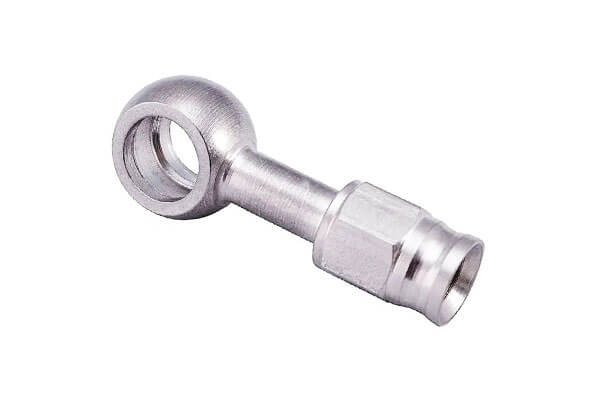
Par exemple, AISI 430 offre une résistance à la corrosion utile pour les environnements intérieurs et légèrement corrosifs, tandis que les qualités stabilisées telles que 439 et 441 sont largement utilisés dans les systèmes d’échappement automobiles.
Nuances d'alliages supérieurs telles que 444 offrent une résistance nettement meilleure aux environnements contenant des chlorures et conviennent aux applications impliquant de l'eau chaude et certains produits chimiques.
Plusieurs facteurs doivent être pris en compte lors de l’évaluation des performances en matière de corrosion:
- Teneur en chrome: Un Cr plus élevé améliore généralement la passivation et la résistance à l'oxydation.
- Teneur en molybdène: Mo améliore la résistance aux piqûres et à la corrosion caverneuse.
- Carbone et azote: Des éléments interstitiels excessifs peuvent favoriser l’épuisement du chrome lors d’une exposition thermique.
- Stabilisation: Les ajouts de titane ou de niobium aident à lier le carbone et l'azote, amélioration de la résistance à la sensibilisation après soudage.
- État des surfaces: Affûtage, polissage, décapage, et la passivation peut fortement influencer le comportement pratique à la corrosion.
- Environnement de services: Concentration de chlorure, température, pH, humidité, et le temps d'exposition affectent tous les performances de corrosion.
L'acier inoxydable ferritique est donc particulièrement intéressant lorsqu'une résistance à la corrosion est requise, mais que les performances extrêmes de corrosion de l'acier inoxydable austénitique contenant du nickel ne sont pas nécessaires..
6. Propriétés mécaniques de l'acier inoxydable ferritique
Le comportement mécanique de l'acier inoxydable ferritique est fortement influencé par la teneur en chrome, niveaux de carbone et d'azote, taille des grains, stabilisation de l'alliage, travail au froid, et température de service.
En général, les nuances ferritiques offrent une combinaison utile de résistance modérée à élevée, ductilité adéquate, Bonne résistance à la fatigue, et une bonne stabilité dimensionnelle.
Caractéristiques mécaniques typiques
| Caractéristique mécanique | Comportement typique de l'acier inoxydable ferritique | Importance technique |
| Module élastique | Environ 200 GPA | Offre une bonne rigidité élastique et une bonne stabilité dimensionnelle |
| Limite d'élasticité | Généralement environ 200 à 400 MPa pour de nombreuses qualités standards | Détermine la résistance à la déformation permanente |
| Résistance à la traction | Généralement environ 400 à 600 MPa, en fonction de la note et de l'état | Détermine la capacité de charge de traction ultime |
Élongation |
Souvent environ 15 à 30 %, mais fortement dépendant du niveau | Indique la ductilité disponible pendant le formage et la surcharge |
| Dureté | Généralement modéré en état recuit | Influence la résistance à l’usure et l’usinabilité |
| Résistance à l'impact | Très dépendant du niveau, taille des grains, température, et traitement | Important pour les applications à basse température et soumises à des chocs |
Les aciers inoxydables ferritiques présentent également généralement un renforcement limité grâce au traitement thermique conventionnel..
Contrairement aux aciers inoxydables martensitiques, ils ne peuvent normalement pas être transformés en une structure martensitique de haute dureté par trempe.
Leurs propriétés mécaniques sont plutôt contrôlées principalement par alliage, raffinement des grains, travail au froid, et traitement thermomécanique.
Le travail à froid peut augmenter la résistance et la dureté, mais une déformation excessive à froid peut réduire la ductilité et augmenter les difficultés de formage.
Pour les applications exigeantes, l'état du matériau, tel que recuit, à froid roulé, ou stabilisé - doit donc être spécifié avec la nuance d'acier inoxydable.
À basses températures, la ténacité mérite une attention particulière. Certains aciers inoxydables ferritiques peuvent présenter un transition ductile à fragile, ce qui est fondamentalement différent du comportement de nombreux aciers inoxydables austénitiques.
Le raffinement du grain et la faible teneur en carbone/azote peuvent améliorer la ténacité, mais les qualités ferritiques doivent être sélectionnées avec soin pour les applications à impact critique ou cryogéniques.
7. Soudabilité de l'acier inoxydable ferritique
La soudabilité varie considérablement selon les nuances d'acier inoxydable ferritique.
Moderne à faible émission de carbone, les nuances stabilisées ont généralement une bien meilleure soudabilité que les anciennes formulations ferritiques à haute teneur en carbone, mais les aciers inoxydables ferritiques nécessitent toujours un contrôle de soudage plus minutieux que de nombreuses nuances austénitiques courantes..
La principale préoccupation métallurgique est grossissement des grains dans la zone affectée par la chaleur (ZAT).
Parce que les aciers inoxydables ferritiques restent majoritairement ferritiques lors du soudage, un apport de chaleur élevé peut produire des grains grossiers. Les régions HAZ à gros grains peuvent présenter une ductilité et une ténacité réduites.
Une autre préoccupation est formation de carbure ou de nitrure de chrome.
Si suffisamment de carbone ou d’azote est présent, l'exposition thermique pendant le soudage peut provoquer une déplétion du chrome à proximité des joints de grains, réduisant potentiellement la résistance à la corrosion localisée.
C'est pourquoi les notes se sont stabilisées avec titane ou niobium, tel que 409, 439, 441, et 444, sont généralement sélectionnés pour les applications soudées.
Considérations importantes sur le soudage
| Facteur de soudage | Problème potentiel | Contrôle recommandé |
| Apport de chaleur excessif | Grossissement du grain et ténacité réduite | Utiliser un apport de chaleur contrôlé |
| Température entre passes élevée | Exposition thermique excessive | Contrôler la température entre les passes |
| Haute teneur en carbone/azote | Sensibilisation et sensibilité à la corrosion | Préférez les qualités à faible C/N ou stabilisées |
| Refroidissement rapide ou incontrôlé | Contraintes résiduelles et distorsion | Établir une procédure de soudage appropriée |
| Inadéquation du métal d'apport | Corrosion ou performances mécaniques réduites | Sélectionnez le remplisseur en fonction des exigences du service |
| Contamination des surfaces | Défauts de soudure et résistance réduite à la corrosion | Nettoyage minutieux avant et après soudage |
Tig, Moi / mag, soudage au laser, et le soudage par résistance peuvent tous être utilisés en fonction de la géométrie des composants, épaisseur, volume de production, et les exigences de performance.
Après le soudage, Pickling et passivation peut être nécessaire pour restaurer la résistance à la corrosion en éliminant la teinte thermique, contamination libre par le fer, et autres contaminants de surface.
Pour les composants critiques, la qualification des procédures de soudage doit porter non seulement sur la qualité visuelle de la soudure, mais également sur les propriétés de traction, comportement de corrosion, distorsion, et performances HAZ le cas échéant.
8. Formabilité et machinabilité
Formabilité
Les aciers inoxydables ferritiques présentent généralement de bonnes caractéristiques de formage à froid, surtout lorsqu'il est fourni dans un état recuit.
Leur allongement tombe généralement dans la 20–30% de portée pour de nombreuses qualités commerciales, offrant une ductilité suffisante pour la flexion, Roll Forming, estampillage, et autres opérations de tôlerie.
Cependant, les performances de formage ne dépendent pas uniquement de l’allongement.
Limite d'élasticité, anisotropie, travail en durcissant, épaisseur, structure de grains, géométrie de l'outillage, et la lubrification peuvent tous affecter le résultat final.
Pour un formage de précision, les paramètres suivants doivent être contrôlés:
- Rayon de courbure minimum
- Sens de roulement
- Dégagement de l'outil
- Lubrification
- Séquence de formation
- Compensation du retour élastique
- Protection des surfaces
Les nuances ferritiques peuvent être particulièrement intéressantes pour les composants en tôle de grande taille car elles combinent une ductilité raisonnable avec un comportement dimensionnel relativement stable..
Machinabilité
Les aciers inoxydables ferritiques conviennent généralement aux Usinage CNC.
Cependant, les paramètres d'usinage doivent être optimisés pour la nuance spécifique car le chrome, molybdène, dureté du matériau, et la conductivité thermique influencent les forces de coupe et la durée de vie de l'outil.
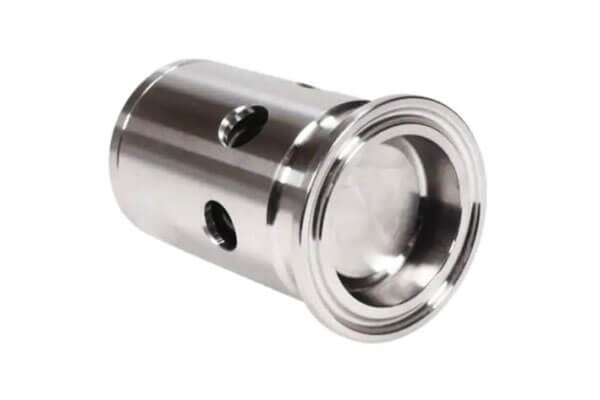
Les opérations d'usinage typiques comprennent:
Tournage CNC → fraisage → perçage → alésage → meulage → polissage
Pour les composants de précision, tolérances dimensionnelles de ±0,01 mm ou plus peut être réalisable dans des conditions d'usinage CNC contrôlées,
mais la tolérance réalisable dépend de la géométrie du composant, capacité de la machine, porte-pièce, état matériel, et stabilité thermique plutôt que sur la seule nuance d'acier inoxydable.
Pendant l'usinage, une chaleur de coupe excessive peut provoquer une dérive dimensionnelle. Ceci est particulièrement important pour les composants à paroi mince et les pièces de précision avec des tolérances de position serrées..
9. Finitions de surface pour l'acier inoxydable ferritique
La finition de surface joue un rôle important dans la résistance à la corrosion, apparence, nettoyabilité, comportement à l'usure, et performances dimensionnelles des composants en acier inoxydable ferritique.
| Finition de surface | Caractéristiques typiques | Applications typiques |
| 2B | Laminé à froid, thermique traité, millé, et légèrement la peau est passée; lisse et relativement réfléchissant | Appareils, composants industriels généraux, panneaux architecturaux |
| Ba | Surface recuite brillante avec une réflectivité élevée et un aspect lisse | Garniture automobile, appareils, composants décoratifs |
| Non. 3 | Finition grossièrement polie mécaniquement | Composants architecturaux et industriels |
| Non. 4 | Fini brossé directionnel fin, couramment produit avec des bandes abrasives | Appareils, panneaux architecturaux, équipement de cuisine |
Naissance des cheveux |
Bien, grain directionnel continu | Éléments décoratifs architecturaux et intérieurs |
| Poli miroir | Surface hautement réfléchissante obtenue grâce à un polissage progressif | Composants décoratifs et applications architecturales haut de gamme |
| Électropolié | Élimination électrochimique du matériau de surface; surface lisse et propre | Hygiénique, précision, et applications sensibles à la corrosion |
| Décapé et passivé | Supprime l'échelle, teinte de chaleur, et la contamination des surfaces et restaure une surface passive propre | Composants soudés et sensibles à la corrosion |
10. Applications de l'acier inoxydable ferritique
L'acier inoxydable ferritique est largement utilisé lorsqu'une combinaison de résistance à la corrosion, résistance à l'oxydation, comportement magnétique, stabilité thermique, résistance mécanique modérée, et la rentabilité est requise.
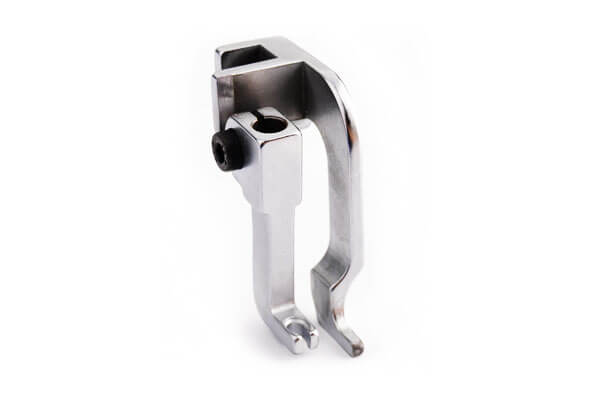
Systèmes d'échappement automobiles
Automobile les systèmes d'échappement comptent parmi les applications les plus importantes de l'acier inoxydable ferritique.
Des notes telles que 409, 439, et 441 sont généralement sélectionnés pour les collecteurs d'échappement, tuyaux, composants du convertisseur catalytique, silencieux, et pièces associées résistantes à la chaleur.
Le matériau doit résister:
- Cyclage thermique répété
- Températures élevées des gaz d'échappement
- Oxydation
- Corrosion des condensats
- Vibrations et fatigue mécanique
Le coefficient de dilatation thermique relativement faible et la bonne résistance à l'oxydation à haute température rendent les nuances ferritiques particulièrement adaptées à cet environnement..
Appareils de ménage
430 acier inoxydable est largement utilisé dans les appareils électroménagers car il combine la résistance à la corrosion, Apparence attrayante, comportement magnétique, Formabilité, et un coût relativement faible.
Les produits typiques incluent:
- Panneaux de réfrigérateur
- Composants du lave-vaisselle
- Composants du four et de la cuisinière
- Équipement de cuisine
- Garniture d'électroménager
- Composants de lave-linge
Sa nature magnétique peut également être avantageuse là où une fixation magnétique est requise.
Échangeurs de chaleur et équipements de chauffage de l'eau
Nuances ferritiques stabilisées telles que 439 et 444 peut fournir une combinaison attrayante de résistance à la corrosion et de performances thermiques.
Ils sont utilisés dans:
- Composants d'échangeur de chaleur
- Chauffe-eau
- Systèmes d'eau chaude
- Équipement d'eau de refroidissement
- Condensateurs
- Équipement de traitement thermique
La conductivité thermique relativement élevée et la faible dilatation thermique de l'acier inoxydable ferritique peuvent contribuer à améliorer la stabilité thermique..
Composants architecturaux et décoratifs
L'acier inoxydable ferritique est également utilisé pour les applications architecturales où une résistance à la corrosion et un aspect de surface modérés sont requis..
Les applications typiques incluent:
- Panneaux muraux intérieurs
- Panneaux d'ascenseur
- Garniture décorative
- Bardage architectural
- Composants de meubles
- Équipement de cuisine et intérieur commercial
Des notes telles que 430 peut fournir un bon équilibre entre l’apparence de la surface, Formabilité, résistance à la corrosion, et coûter.
Équipements industriels et chimiques
Les qualités ferritiques à plus forte teneur en chrome et en molybdène peuvent être utilisées dans certains environnements industriels où une résistance améliorée à la corrosion et à l'oxydation est requise..
Par exemple, 444 peut être envisagé pour certains environnements contenant de l’eau chaude et des chlorures, tandis que les qualités à haute teneur en chrome telles que 446 conviennent aux composants résistants à l'oxydation à haute température.
Cependant, l'acier inoxydable ferritique ne doit pas être automatiquement sélectionné pour les environnements chimiques ou marins très agressifs.
Le support exact, température, concentration de chlorure, et le mécanisme de corrosion doit être évalué avant la sélection du matériau.
11. Analyse comparative: Ferritique vs. Austénitique vs. Acier inoxydable martensitique
Ferritique, austénitique, et les aciers inoxydables martensitiques représentent trois grandes familles métallurgiques d'aciers inoxydables.
Leurs différences proviennent principalement de structure cristalline, chimie des alliages, stabilité de phase, et réponse au traitement thermique, qui à leur tour déterminent les propriétés mécaniques, résistance à la corrosion, soudabilité, comportement magnétique, et applications typiques.
| Propriété | Acier inoxydable ferritique | Acier inoxydable austénitique | Acier inoxydable martensitique |
| Notes typiques | 409, 430, 439, 441, 444 | 304, 304L, 316, 316L, 321, 310 | 410, 420, 440UN, 440B, 440C |
| Structure cristalline typique à température de service | Ferrite BCC | Austénite de la FCC | Structure martensitique BCT/BCC Après durcissement |
| Teneur typique en Cr | Environ 10.5–30% | Environ 16–26% | Environ 11.5–18% |
| Teneur typique en Ni | En général très faible ou absent | Communément 8–20%+ | En général faible, bien que certaines qualités contiennent du Ni |
| Teneur en carbone | Généralement faible, en particulier dans les classes modernes | Très faible à modéré; de nombreuses qualités à faible teneur en carbone disponibles | Généralement supérieur aux nuances ferritiques et austénitiques |
| Comportement magnétique | Magnétique | En général non magnétique à l'état recuit; le travail à froid peut induire un certain magnétisme | Magnétique |
| Traitement thermique pour durcissement | En général non durcissable par trempe conventionnelle | En général non durcissable par trempe conventionnelle | Peut être durci par trempe et revenu |
Niveau de force |
Modéré; peut être augmenté par travail à froid | Modéré en état recuit; excellente capacité d'écrouissage | Élevé à très élevé après traitement thermique |
| Dureté | Généralement modéré | Généralement modéré | Modéré à très élevé, en fonction du traitement et du traitement thermique |
| Ductilité | Modéré | Excellent | Généralement plus bas, particulièrement à l'état durci |
| Dureté | Modéré; la ténacité à basse température peut être limitée | Excellent, y compris à basse température | Modéré; fortement dépendant de la teneur en carbone et du traitement thermique |
| Résistance à la corrosion | Bon à très bon, en fonction de la teneur en Cr/Mo | Globalement excellent, spécialement pour les nuances 316/316L et les alliages supérieurs | Modéré à bon; généralement inférieur aux nuances austénitiques |
| Résistance à la corrosion par piqûres et fissures | Bon dans les qualités à haute teneur en Cr/Mo telles que 444 | Très bon à excellent dans les qualités contenant du Mo telles que le 316L | Généralement modéré |
Conductivité thermique |
Relativement élevé pour l'acier inoxydable; généralement autour 20–30 W/m·K | Inférieur; généralement autour 14–16 W/m·K pour commun 304/316 notes | Généralement autour 20–30 W/m·K, en fonction de la note |
| Coefficient de dilatation thermique | Relativement bas; généralement autour 10–11 × 10⁻⁶/K | Relativement élevé; généralement autour 16–17 × 10⁻⁶ / k pour 304/316 | Généralement autour 10–11 × 10⁻⁶/K |
| Soudabilité | Modéré à bon pour les notes à faible C/stabilisées; la croissance des grains doit être contrôlée | Globalement excellent, particulièrement pour 304L/316L | Généralement limité par rapport aux nuances austénitiques; un préchauffage et un traitement post-soudage peuvent être nécessaires |
| Formabilité | Modéré; adapté au pliage et à de nombreuses opérations de formage | Excellent, particulièrement pour l'emboutissage profond et le formage complexe | Modéré à médiocre en état durci |
| Machinabilité | Modéré; dépend fortement de la qualité et du comportement à l'écrouissage | Modéré; l'écrouissage peut augmenter la difficulté d'usinage | Généralement bon dans les qualités d'usinage libre ou recuites, mais les nuances trempées sont difficiles à usiner |
Travail en durcissant |
Relativement limité | Fort écrouissage, surtout dans les grades métastables | Limité par rapport aux nuances austénitiques |
| Performances à basse température | Limité par une éventuelle transition ductile à fragile | Excellente ténacité à basse température | Généralement limité par rapport aux nuances austénitiques |
| Résistance à l'oxydation à haute température | Bien, en particulier dans les qualités à haute teneur en Cr | Bon à excellent selon la teneur en Cr/Ni | Modéré à bon |
| Itinéraires de fabrication typiques | Roulement, estampillage, flexion, soudage, fabrication | Roulement, dessin profond, estampillage, production de tubes, soudage | Laminage/forgeage suivi d'un traitement thermique, usinage, affûtage |
| Applications typiques | Échappements automobiles, appareils, panneaux architecturaux, échangeurs de chaleur, chauffe-eau | Traitement chimique, équipement alimentaire, équipement pharmaceutique, tuyauterie, vaisseaux de pression, structures architecturales | Couteaux, instruments chirurgicaux, vannes, pompes, arbres, composants de la turbine, pièces de l'usure |
Principal avantage |
Bonne résistance à la corrosion avec un faible coût d'alliage, réponse magnétique, faible dilatation thermique | Excellente résistance à la corrosion, ductilité, dureté, et la soudabilité | Dureté élevée, force, et résistance à l'usure après traitement thermique |
| Principale limite | Ténacité et formabilité à basse température inférieures à celles des nuances austénitiques | Coût de l'alliage plus élevé, dilatation thermique plus élevée, et généralement un comportement non magnétique | Résistance à la corrosion plus faible, soudabilité, et une ténacité supérieures à la plupart des nuances austénitiques |
| Mieux adapté à | Composants résistants à la corrosion et applications thermiquement stables sensibles aux coûts | Corrosif, soudé, hautement formé, ou applications à basse température | Composants à haute résistance et résistants à l'usure nécessitant un traitement thermique |
12. Conclusion
L'acier inoxydable ferritique est une famille importante d'acier inoxydable qui combine résistance à la corrosion, propriétés magnétiques, dilatation thermique relativement faible, bonne conductivité thermique, et rentabilité.
Sa structure BCC à dominante ferritique lui confère un profil de propriétés distinctif par rapport aux aciers inoxydables austénitiques et martensitiques..
Plats clés à retenir
- Acier inoxydable ferritique est caractérisé par un cubique centré sur le corps (BCC) structure, comportement magnétique, et faible teneur en nickel.
- Résistance à la corrosion est apporté par le chrome (10.5–30%); molybdène et stabilisants (De, NB) améliorer les performances.
- Notes gamme de qualités standard (409, 430) aux qualités à haute teneur en chrome (446) et notes stabilisées (439, 441, 444).
- Propriétés clés: Bonne résistance à la corrosion, magnétique, Haute conductivité thermique, faible dilatation thermique, et bonne formabilité.
- Limites: Ductilité inférieure, DBTT, Soudabilité limitée, et risque de sensibilisation.
- Applications: Échappement automobile, appareils, architectural, échangeurs de chaleur, transformation des aliments, et traitement chimique.
- Avantages: Rentable, Résistant au SCC, magnétique, et recyclable.
- Désavantage: Ténacité limitée à basse température, problèmes de soudabilité, et une résistance à la corrosion inférieure à celle des nuances austénitiques.
Pour les applications d'ingénierie, la bonne approche consiste à évaluer l'environnement de service complet, y compris température, exposition à la corrosion, chargement mécanique, exigences de formation, conditions de soudage, exigences dimensionnelles, et durée de vie prévue.
Lorsque ces facteurs sont correctement pris en compte, L'acier inoxydable ferritique peut offrir une combinaison très efficace de performances, durabilité, et économie manufacturière.
LangHe – Votre partenaire de confiance pour les pièces de précision en acier inoxydable
Industrie de Langhe est un fabricant hautement spécialisé de composants de précision en acier inoxydable, fournir des pièces personnalisées de haute qualité à des secteurs allant de l'équipement industriel à l'automobile en passant par l'aérospatiale, dispositifs médicaux, et systèmes de traitement des fluides.
Avec des décennies d’expérience pratique dans le moulage de précision, Usinage CNC de précision, et finition de surface complète,
LangHe fournit une solution de fabrication intégrée conçue pour réduire la complexité de la chaîne d'approvisionnement et garantir une qualité de produit constante.
LangHe n'est pas qu'un simple fournisseur de casting; nous sommes un partenaire d'ingénierie à service complet.
De l'analyse DFM et du prototypage rapide à la production, traitement thermique, et assurance qualité, nous gérons l'ensemble du cycle de vie de fabrication.
Notre ISO 9001:2015 installation certifiée, capacités d'outillage internes, et des protocoles d'inspection rigoureux, y compris CMM, NDT, et tests de pression : assurez-vous que chaque composant respecte ou dépasse les normes internationales.
Contactez-nous aujourd'hui pour discuter de votre prochain projet et découvrir comment LangHe peut donner vie à vos créations avec précision, qualité, et efficacité.
FAQ
L'acier inoxydable ferritique est-il magnétique?
Oui. Les aciers inoxydables ferritiques sont généralement ferromagnétique à température ambiante en raison de leur structure ferritique BCC.
Cette caractéristique les rend adaptés aux applications où une réponse magnétique est requise.
L'acier inoxydable ferritique est-il résistant à la corrosion?
Oui, mais le niveau de résistance à la corrosion varie considérablement entre les nuances.
Grade 430 offre une bonne résistance dans de nombreux environnements atmosphériques et légèrement corrosifs,
tandis que les nuances d'alliages supérieurs contenant du molybdène, tel que 444, offrent une résistance nettement meilleure aux piqûres et aux environnements contenant des chlorures.
L'acier inoxydable ferritique est-il meilleur que l'acier austénitique?
Pas nécessairement; cela dépend de l'application.
Les qualités ferritiques sont meilleures pour les applications nécessitant des propriétés magnétiques, bonne conductivité thermique, et résistance à la fissuration de la corrosion des contraintes (SCC). Ils sont également plus rentables.
Les nuances austénitiques offrent une résistance supérieure à la corrosion, meilleure formabilité, et une ténacité plus élevée à basse température.
Quelle est la différence entre l'acier inoxydable ferritique et martensitique?
L'acier inoxydable ferritique n'est pas durcissable par traitement thermique et possède une structure BCC.
L'acier inoxydable martensitique peut être durci par traitement thermique (trempage et tempérament) et a un tétragonal centré sur le corps (BCT) structure. Les nuances martensitiques ont une teneur en carbone plus élevée et une dureté plus élevée.
Quel est le DBTT de l'acier inoxydable ferritique?
Les aciers inoxydables ferritiques présentent une température de transition ductile à fragile (DBTT) dans la plage de -50°C à +20°C.
En dessous de cette température, ils deviennent cassants et susceptibles de se briser sous l'effet d'un impact. Cela limite leur utilisation dans les applications à basse température.
Comment l'acier inoxydable ferritique se compare-t-il à l'acier au carbone?
L'acier inoxydable ferritique offre une résistance à la corrosion nettement meilleure que l'acier au carbone en raison de sa teneur en chrome. C'est aussi plus cher.
Cependant, il partage certaines caractéristiques avec l'acier au carbone, comme être magnétique et avoir une structure BCC.
L'acier inoxydable ferritique peut-il être durci?
Non, l'acier inoxydable ferritique ne peut pas être durci par traitement thermique. Il ne peut être renforcé que par un écrouissage (travail en durcissant).
Cela le distingue des nuances martensitiques, qui peut être durci par trempe et revenu.