1. Panimula
Inconel® 625 ay isang nickel-chromium-molybdenum-niobium superalloy engineered for resilience in some of the most aggressive environments known to modern industry.
First introduced by Huntington Alloys (now Special Metals Corporation) in the 1960s, it was designed for high-strength marine and aerospace applications where corrosion and temperature extremes demanded more than stainless steel could offer.
Ngayong araw, Inconel 625 is synonymous with superior kaagnasan paglaban, katatagan ng istruktura, at weldability, making it an essential material in sectors like oil & gas, pagbuo ng kapangyarihan, at pagproseso ng kemikal.
2. What Is Inconel 625?
Inconel 625 (UNS N06625; W.Nr. 2.4856) is a corrosion-resistant, mataas na pagganap nickel-based superalloy known for its excellent strength, paglaban sa pagkapagod, and structural stability over a broad temperature range.
Chemically composed primarily of nikel, kromo, molibdenum, and niobium, it belongs to the class of solid-solution-strengthened alloys, meaning its mechanical strength is derived not from heat treatment (like precipitation-hardened alloys such as Inconel 718) but from the uniform dispersion of alloying elements within the crystal lattice.

This metallurgy provides consistent mechanical and corrosion-resistant properties mula sa cryogenic temperatures (-270°C) sa elevated service temperatures (up to 1,093°C or 2,000°F), making it uniquely valuable for applications in extreme environments.
Its metallurgical simplicity also contributes to exceptional weldability, thermal fatigue resistance, and stress-corrosion resistance—key factors in industries such as aerospace, marine, pagproseso ng kemikal, and nuclear power.
Inconel 625 is commonly used in both annealed na nga ba at solution-treated conditions and meets various international standards, kasama na ang ASTM B443 (plate/sheet) at ASTM B446 (bar/rod).
3. Inconel 625 Komposisyon ng kemikal
Inconel 625’s performance stems from a precisely balanced blend of elements, each contributing to its corrosion resistance and mechanical strength.
Here is the komposisyon ng kemikal ng mga Inconel 625 (UNS N06625 / W.Nr. 2.4856) as per common standards such as ASTM B446 and B443:
| Elemento | Timbang % (Karaniwang Saklaw) | Function |
| Nikel (Ni) | 61.0 min (Balanse) | Paglaban sa kaagnasan, base matrix |
| Chromium (Cr) | 20.0 – 23.0 | Oxidation resistance, Passivation |
| Molibdenum (Mo) | 8.0 – 10.0 | Strengthening, paglaban sa paglaban |
| Niobium (Nb) + Ta | 3.15 – 4.15 | Solid-solution strengthening |
| Bakal na Bakal (Fe) | ≤5.0 | Residual/strength contributor |
| Cobalt (Co) | ≤1.0 | Minor strengthening (opsyonal) |
| Mga mangganeso (Mn) | ≤0.5 | Deoxidizer |
| Silicon (Si Si) | ≤0.5 | Improves fluidity in melting |
| Aluminyo (Al) | ≤0.4 | Pagpipino ng butil, paglaban sa oksihenasyon |
| Titanium (Ti) | ≤0.4 | Grain strengthening (minor) |
| Carbon (C) | ≤0.10 | Increases hardness, limited for weldability |
| Posporus (P) | ≤0.015 | Impurity—should be minimized |
| Sulfur (S) | ≤0.015 | Impurity—causes hot cracking if excessive |
Tala: Slight variations may occur depending on the specific form (bar, Plato, wire) or product standard.
4. Inconel 625 Mga Katangian ng Materyal
Mga Katangian ng Mekanikal (at Room Temperature unless otherwise noted)
| Pag-aari | Tipikal na Halaga | Mga Tala |
| Lakas ng Paghatak | ~ 827 MPa (120 ksi) | Solid solution strengthened |
| Yield Lakas (0.2% Offset) | ~ 414 MPa (60 ksi) | Can be increased via cold working |
| Pagpapahaba sa Break | 30–35% | Napakahusay na ductility |
| Ang katigasan ng ulo (Rockwell B) | ~92 HRB | Annealed condition |
| Lakas ng Pagkapagod | ~276 MPa (40 ksi) | At 10⁷ cycles in air |
| Paglaban sa Creep | Napakahusay | Up to ~980°C (1800°F) |
| Epekto ng tigas | Mataas na | Maintains toughness at cryogenic temperatures |
Mga Katangian ng Pisikal
| Pag-aari | Tipikal na Halaga | Units / Mga Tala |
| Densidad ng katawan | 8.44 g/cm³ | (0.305 lb/in³) |
| Saklaw ng Pagtunaw | 1290 – 1355 °C | (2354 – 2471 °F) |
| Thermal kondaktibiti | 9.8 W/m·K | Sa 21 °C (lower than stainless steel) |
| Tiyak na Kapasidad ng Init | 410 J/kg· K | Sa 20 °C |
| Electrical Resistivity | 1.31 μΩ·m | Sa 20 °C |
| Modulus ng Pagkalastiko | 207 GPa | (30 x 10⁶ psi) |
| Koepisyent ng Thermal Expansion | 13.0 ×10⁻⁶ /K | From 20°C to 100°C |
| Magnetic Permeability | ~1.0006 (Kamag-anak) | Essentially non-magnetic |
5. Corrosion Resistance of Inconel 625
Inconel 625’s corrosion resistance is unmatched in many aggressive environments, thanks to its alloying elements:

- Mataas na temperatura oksihenasyon: Forms a dense Cr₂O₃ scale that resists oxidation up to 1,093°C. At 800°C, oxidation rate is <0.02 mm / taon (mga bes. 316L: 0.15 mm / taon).
- Paglaban sa Chloride: Pitting Resistance Katumbas na Numero (PREN = Cr + 3.3Mo + 16N) of ~45—far exceeding 316L (PREN ~31) and even Inconel 718 (PREN ~30).
In seawater (35,000 ppm Cl⁻), corrosion rate is <0.01 mm/year with no pitting even after 10,000 mga oras. - Paglaban sa Acid:
-
- Sulfuric acid (5% at 60°C): Corrosion rate <0.05 mm / taon (mga bes. 316L: 1.2 mm / taon).
- Hydrochloric acid (10% at 25°C): <0.1 mm / taon (Hastelloy C-276: <0.05 mm / taon, a close rival).
- Nitric acid (20% at 50°C): <0.03 mm / taon, suitable for chemical processing.
- Sulfide Resistance: Withstands sour gas (H₂S-rich) environments per NACE MR0175, with no sulfide stress cracking (SSC) sa 60% of yield strength.
6. Manufacturing and Processing of Inconel 625
Inconel 625, a high-performance nickel-based superalloy, offers outstanding weldability and corrosion resistance, but its high alloy content—especially molybdenum and niobium—makes it challenging to machine and form.
Gayunpaman, with proper techniques and tooling, Inconel 625 can be efficiently processed into complex, high-integrity components for demanding industries such as aerospace, marine, at pagproseso ng kemikal.

Welding
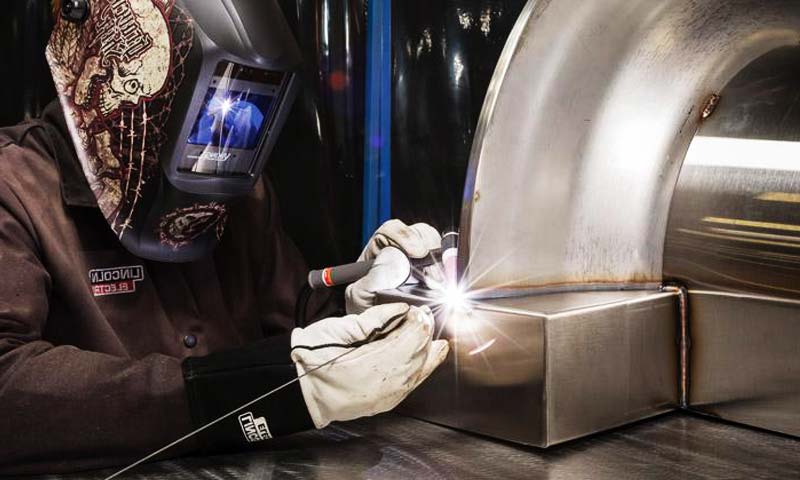
- Preferred Process: Gas Tungsten Arc Welding (GTAW/TIG), gamit ang ERNiCrMo-3 filler metal for metallurgical compatibility.
- Heat Input Management: Welding is typically performed at 100–150 A to limit grain growth in the heat-affected zone (HAZ), which preserves mechanical properties and microstructural integrity.
- Paggamot pagkatapos ng weld: Unlike precipitation-strengthened alloys (hal., Inconel 718), Inconel 625 Ginagawa ba not require post-weld heat treatment, thanks to its solid-solution strengthening mechanism.
- Integridad ng Weld: Welds retain up to 90% of the base metal’s strength and demonstrate mahusay na paglaban sa kaagnasan without sensitization—an issue commonly seen in austenitic stainless steels.
Machining
- Hamon: Inconel 625 work-hardens rapidly—surface hardness can increase by up to 50% sa panahon ng pagputol—leading to severe tool wear.
- Mga Solusyon:
-
- Gamitin ang carbide tools kasama ang TiAlN (Titanium Aluminum Nitride) mga patong na patong.
- Maintain mababang bilis ng pagputol (5–10 m/min) at Mataas na rate ng feed to reduce heat concentration.
- Mag-apply Mga Sistema ng Coolant na may mataas na presyon (≥70 bar) to assist in chip removal and thermal control.
- Economic Impact: Machining costs are 4–5 times higher than for 316L stainless steel due to slower speeds, increased tool wear, and the need for specialized cutting equipment.
Forming and Forging
- Malamig na Pagbuo:
-
- Inconel 625’s high ductility (elongation ~40%) enables operations like bending, pagulong gulong, and deep drawing.
- Due to Springback (15-20% na mas mataas kaysa sa 316L), forming dies must compensate with over-bending or tighter tolerances.
- Mainit na Pagbuo:
-
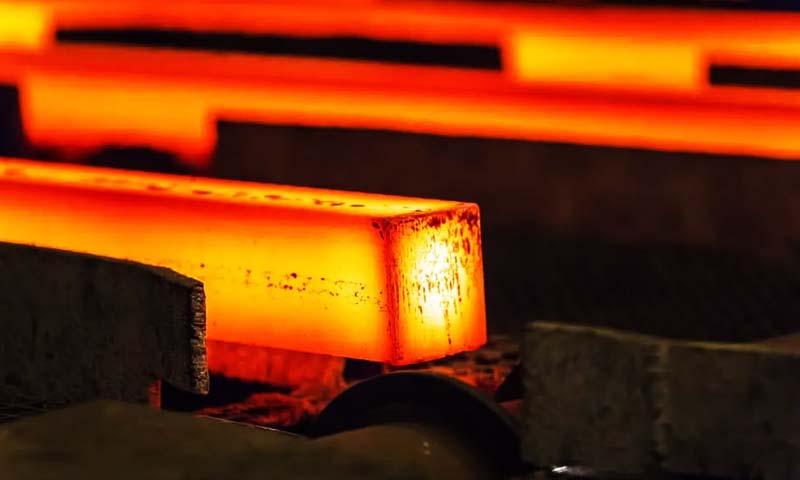
- Ginanap sa 980–1,090°C (1,800–2,000°F) to reduce yield strength and increase plasticity.
- Rapid air cooling is preferred post-forming to retain the alloy’s microstructure and avoid sensitization.
Paggawa ng Additive (AM)
- Process Compatibility: Inconel 625 ay mainam para sa Laser Powder Bed Fusion (LPBF) at Pagtunaw ng Electron Beam (EBM) due to its weldability, thermal fatigue resistance, and homogenous microstructure.


SLM 3D Metal Printer Inconel 625 Produkto - Build Parameters:
-
- Kapangyarihan ng Laser: 150–200 W
- Scan Speed: 800–1,000 mm/s
- Pagganap: AM-fabricated components can reach 95% of the strength of wrought products, making them suitable for mission-critical applications (hal., aerospace fuel nozzles, marine heat exchangers).
- Pagkatapos ng Pagproseso:
-
- Mainit na Isostatic Pagpindot (HIP): Isinasagawa sa 1,100°C / 100 MPa to close internal porosity and ensure near-full density (~99.9%).
- Solusyon pagsusubo at ibabaw ng pagtatapos may follow to optimize mechanical and corrosion properties.
7. Applications of Inconel 625
Inconel 625 is prized for its exceptional resistance to corrosion, oksihenasyon, pagkapagod, and high-temperature creep—making it indispensable in extreme environments where conventional materials fail.

Aerospace at Aviation
- Exhaust ducts
- Turbine shrouds and seals
- Thrust-reverser systems
- Fuel and hydraulic lines
Inconel 625 offers excellent oxidation resistance up to 1,093°C (2,000°F), and its ability to resist thermal fatigue makes it ideal for jet engine components and high-altitude structural systems.
Industriya ng Langis at Gas
- Downhole tubing and tools
- Flexible risers and manifolds
- Offshore platform piping
- Bellows and expansion joints
Inconel 625 is extensively used in subsea and sour gas environments due to its exceptional resistance to pitting, kaagnasan ng bitak, and stress-corrosion cracking—even in high-chloride, high-pressure conditions.
Pagproseso ng Kemikal at Petrochemical
- Heat exchangers and columns
- Reactors and scrubbers
- Piping and pressure vessels
- Flare stacks and incinerator parts
The alloy’s resistance to a broad range of acids (hal., nitric, Phosphoric, sulpuriko) and aggressive chemicals enables safe long-term operation in corrosive process streams at both ambient and elevated temperatures.
- Seawater piping systems
- Mga pabahay ng bomba at impeller
- Submarine hull fasteners and cable sheathing
Thanks to its excellent seawater resistance, Inconel 625 is used in saltwater-exposed applications such as naval vessel fittings, mga istruktura sa malayo sa pampang, and undersea cables.
Pagbuo ng Kapangyarihan
- Steam line bellows
- Turbine and boiler components
Inconel 625 resists intergranular corrosion and irradiation embrittlement, making it suitable for high-temperature nuclear reactor parts and heat exchangers in power plants.
Inhinyeriyang Pangkapaligiran
- Waste gas treatment units
- Flue gas desulfurization systems (FGD)
- Incineration components
It provides superior life in systems handling acidic gases and hot flue exhaust, especially where chlorine or sulfur compounds are present.
Additive Manufacturing and Custom Fabrication
- Turbine nozzles and combustion liners
- Biomedical implants and surgical tools (non-implant grades)
- Customized heat shields and ducts
The alloy’s weldability and resistance to cracking under rapid thermal cycles make it ideal for complex, high-performance components produced via LPBF and DMLS (Direktang Metal Laser Sintering).
8. Mga Pakinabang at Limitasyon
Advantages of Inconel 625
Exceptional Corrosion Resistance
Inconel 625 offers outstanding resistance to a wide range of corrosive environments, kasama na ang tubig dagat, acidic media (hal., nitric, Phosphoric, and sulfuric acids), and chlorides.
This makes it ideal for marine, sa malayo sa pampang, and chemical processing applications.
High Strength Without Heat Treatment
Unlike precipitation-hardened alloys like Inconel 718, Inconel 625 is strengthened by solid solution mechanisms, meaning it maintains excellent mechanical strength without requiring complex aging or hardening processes.
Mahusay na Weldability
Inconel 625 exhibits superior weldability compared to many other superalloys and stainless steels.
It resists post-weld cracking, and welded joints retain high strength and corrosion resistance, making it suitable for pressure vessels, Email Address *, at mga bahagi ng istruktura.
High Temperature Performance
It retains mechanical properties at elevated temperatures up to approximately 1,093°C (2,000°F), making it suitable for aerospace, mga heat exchanger, and furnace components.
Pagkapagod at Paglaban sa Gumapang
Good resistance to fatigue, gumagapang, and rupture under cyclic thermal and mechanical loading makes Inconel 625 a reliable material for demanding, Mga kapaligiran na may mataas na stress.
Cryogenic Capability
Inconel 625 maintains ductility and toughness at cryogenic temperatures (as low as −196 °C), making it suitable for LNG systems and other low-temperature applications.
Mga Limitasyon of Inconel 625
- Mataas na Gastos: Raw material ($60–80/kg) is 10–15× that of 316L; machining adds 40–50% to fabrication costs.
- Lower High-Temp Strength Than 718: At 650°C, Inconel 718 has 20–30% higher tensile strength, limiting 625’s use in ultra-high-stress turbine components.
- Work Hardening: Machining requires specialized tools and slower speeds, increasing production time.
9. Inconel 625 vs Other Alloys
| Tampok | Inconel 625 | Inconel 718 | Hastelloy C-276 | 316L Hindi kinakalawang na asero |
| Komposisyon | Ni-Cr-Mo-Nb; solid-solution strengthened | Ni-Cr-Fe-Nb-Ti; precipitation hardened | Ni-Mo-Cr-Fe; high Mo content | Fe-Cr-Ni-Mo; austenitic stainless |
| Primary Strength Mechanism | Solid solution strengthening (Mo, Nb) | Pagtigas ng ulan (γ’ and γ” phases) | Solid solution + carbide precipitates | Work hardening and solid solution |
| Saklaw ng Temperatura | -270°C to ~1093°C (mataas na temperatura katatagan) | Up to ~700°C | ~982°C | Up to ~870°C |
| Paglaban sa kaagnasan | Excellent resistance to pitting, bitak, and stress corrosion in chloride and oxidizing environments | Magandang paglaban sa kaagnasan, less resistant in chloride environments | Exceptional resistance to oxidizing and reducing acids | Moderate corrosion resistance, susceptible to chloride pitting |
| Lakas ng Mekanikal | Mataas na lakas, retains ductility at elevated temps | Higher strength at room and moderate temps | Magandang lakas, less than Inconel 718 | Lower strength compared to superalloys |
Weldability |
Napakahusay; minimal post-weld heat treatment needed | Good but requires precise post-weld heat treatment | Mabuti na lang, but sensitive to welding defects | Excellent and easy to weld |
| Work Hardening | Rapid work hardening during machining | Katamtaman | Katamtaman | Lower work hardening |
| Gastos | High due to alloying and machining difficulty | Mataas na, slightly more expensive due to complex heat treatment | Napakataas, due to Mo and other expensive elements | Lower cost compared to superalloys |
| Mga Aplikasyon | Aerospace, marine, kemikal na, nukleyar, mga planta ng kuryente | Aerospace, mga turbine ng gas, nuclear reactors | Pagproseso ng kemikal, pollution control, aerospace | General industrial, pagproseso ng pagkain, medikal na |
10. Internationally Equivalent grades for Inconel 625
| Standard System | Equivalent Grade/Designation | Mga Tala |
| UNS (Estados Unidos) | N06625 | Standard UNS number |
| EN (Europa) | 2.4856 | European material number |
| Hapon (Hapon) | NCF625 | Japanese Industrial Standard |
| GB (Tsina) | N06625 | Same as UNS number |
| DIN (Alemanya) | XNiCrMoNb25-20-5 | German material designation |
| ASTM | B443, B444 | Common ASTM specifications for bars and tubes |
11. Pangwakas na Salita
Inconel 625 remains one of the most versatile and reliable superalloys in engineering, offering unmatched corrosion resistance and high-temperature performance with excellent fabricability.
Though costly, its lifecycle benefits, especially in critical environments, often justify its selection over cheaper alternatives.
Mga FAQ
Is Inconel 625 a stainless steel?
Hindi, Inconel 625 is a nickel-based superalloy, not a stainless steel. It offers superior high-temperature and corrosion resistance compared to stainless steels.
What is the maximum continuous operating temperature for Inconel 625?
It performs reliably up to 1,093°C (2,000°F) for continuous service, with short-term exposure to 1,200°C (2,192°F) possible in non-critical applications.
Is Inconel 625 magnetiko?
Hindi. Its fully austenitic (FCC) microstructure remains non-magnetic in all conditions, unlike ferritic or martensitic alloys.
Can Inconel 625 be used in seawater long-term?
Oo nga. Its corrosion rate in seawater is <0.01 mm / taon, with a service life exceeding 25 years in subsea applications (hal., offshore oil manifolds).
How does Inconel 625 compare to Inconel 718?
625 offers superior corrosion resistance and broader temperature range, habang ang 718 provides higher strength at 600–650°C. 625 is better for chemical processing; 718 for high-stress aerospace components.
Why is Inconel 625 preferred for welding?
Its solid-solution strengthening avoids brittle precipitates in the HAZ, and welded joints retain 90% of base metal strength without post-weld heat treatment—unlike many superalloys.
haluang metal 625
Inconel composition
“Inconel” refers to a family of nickel-chromium-based superalloys. Common elements include Ni, Cr, Mo, Fe, Nb, Ti, and Al. Composition varies by grade (hal., 600, 625, 718).