1. Panimula
Cast Iron vs Stainless Steel is a comparison that lies at the heart of countless engineering, pagmamanupaktura, and design decisions.
These two materials, each with deep historical roots and enduring industrial relevance, continue to shape how we build, Gumawa ng Mga Produkto, and innovate.
From cookware and construction to automotive systems and precision machinery, the debate is more than technical—it’s strategic.
Understanding their fundamental differences is essential.
While cast iron offers exceptional compressive strength, napakahusay na panginginig ng boses damping, and cost-effectiveness in casting, stainless steel excels in corrosion resistance, ductility, and long-term durability.
This article examines the technical, pang-ekonomiya, and practical aspects of both materials, offering data-driven insights to inform material selection.
2. Ano ang Cast Iron?
Email Address * is a group of iron-carbon alloys with a carbon content greater than 2.0%, karaniwang mula sa 2.0% sa 4.0%, along with 1.0%–3.0% silicon and trace amounts of manganese, asupre, and phosphorus.
Unlike wrought iron or steel, cast iron is not malleable due to its high carbon content, which promotes the formation of brittle microstructures.
Gayunpaman, its exceptional pagiging castable, Paglaban sa Pagsusuot, at lakas ng compressive make it a cornerstone in structural and mechanical applications.

Microstructure and Alloying
The defining feature of cast iron is its mikroistruktura, which forms during solidification.
The morphology of carbon—whether it appears as graphite flakes, mga nodulo, or carbides—determines the material’s mechanical and thermal behavior.
Mga rate ng paglamig, Mga elemento ng haluang metal, and inoculation techniques during casting all influence the final structure.
Mga Uri ng Cast Iron
| Uri ng | Microstructure | Mga Pangunahing Katangian | Mga Karaniwang Paggamit |
| kulay abo na bakal | Flake graphite in ferrite/pearlite | Napakahusay na machinability, panginginig ng boses damping | Mga bloke ng engine, Mga kagamitan sa pagluluto |
| Ductile Iron | Nodular graphite in ferrite/pearlite | Mataas na ductility, good tensile strength | Mga tubo, mga bahagi ng automotive |
| puting bakal | Sementado (Fe₃C) and pearlite | Mahirap, malutong na, excellent abrasion resistance | Mill liners, Mga bomba ng slurry |
| Compact Graphite Iron (CGI) | Graphite in compact worm shape | Balance of strength, thermal kondaktibiti | Diesel engine blocks, Mga Tambutso |
3. Ano ang hindi kinakalawang na asero?
Hindi kinakalawang na asero is a family of iron-based alloys known primarily for their paglaban sa kaagnasan, achieved through a minimum chromium content of 10.5%.
This chromium reacts with oxygen in the environment to form a self-healing, inert layer of oksido ng kromo (Cr₂O₃) that protects the metal from oxidation and chemical attack.
Unlike carbon steel, which rusts readily in moist environments, stainless steel resists pitting, kaagnasan ng bitak, at paglamlam, making it ideal for applications requiring hygiene, tibay ng katawan, and aesthetic longevity.

Mga Pangunahing Elemento ng Alloying
| Elemento | Karaniwang Saklaw (%) | Layunin |
| Chromium (Cr) | 10.5–30 | Forms passive layer; paglaban sa kaagnasan |
| Nikel (Ni) | 0–35 | Nagpapatatag ng austenite; improves ductility and toughness |
| Molibdenum (Mo) | 0–6 | Enhances resistance to pitting/crevice corrosion |
| Carbon (C) | ≤ 1.2 | Controls hardness and strength |
| Mga mangganeso (Mn) | 0.5–2 | Improves hot-working and strength |
| Nitrogen (N) | 0–0.3 | Strengthens solid solution; improves pitting resistance |
Major Categories of Stainless Steel
| Uri ng | Mga Halimbawa | Microstructure | Mga Pangunahing Katangian | Mga Karaniwang Paggamit |
| Austenitic | 304, 316, 321 | Cubic ang Nakasentro sa Mukha (FCC) | Napakahusay na paglaban sa kaagnasan, di-magnetiko, mataas na ductility, mahusay na weldability | Kagamitan sa pagpoproseso ng pagkain, Email Address *, mga tangke, Email Address * |
| Ferritic | 409, 430, 446 | Cubic na nakasentro sa Katawan (BCC) | Magnetic, katamtamang paglaban sa kaagnasan, good oxidation resistance, low cost | Automotive exhaust systems, Mga Kagamitan, pandekorasyon trim |
| Martensitiko | 410, 420, 440C | Body-Centered Tetragonal (BCT) | High hardness and strength when heat treated, katamtamang paglaban sa kaagnasan, magnetiko | Cutlery, mga blades ng turbine, Mga tool sa kirurhiko, mga bomba |
| Duplex | 2205, 2507 | Mixed FCC + BCC | Very high strength, excellent resistance to stress corrosion cracking and pitting | Marine structures, Mga tangke ng kemikal, presyon vessels |
| Pagtigas ng ulan (PH) | 17-4 PH, 15-5 PH | Martensitic/Semi-austenitic | Very high strength after aging treatment, magandang paglaban sa kaagnasan, Init na gamutin | Mga bahagi ng aerospace, nuclear reactors, Mga tool sa katumpakan |
4. Mechanical Properties of Cast Iron vs Stainless Steel
When selecting between cast iron at hindi kinakalawang na asero, mechanical properties are among the most critical factors to evaluate.

Talahanayan ng Comparative:
| Pag-aari | Kulay-abo na Cast Iron | Ductile Cast Iron | Austenitic hindi kinakalawang na asero (E.G. 304) | Martensitic hindi kinakalawang na asero (E.G. 440C) | Duplex hindi kinakalawang na asero (E.G. 2205) |
| Lakas ng Paghatak | 150–300 MPa | 450–700 MPa | 500–750 MPa | 760–1950 MPa | 620–900 MPa |
| Yield Lakas | Not well-defined | 310–450 MPa | 200–300 MPa | 450–1600 MPa | 450–650 MPa |
| Ang katigasan ng ulo (Brinell) | 180–230 HB | 150–300 HB | 150–200 HB | 200–600 HB | 250–300 HB |
| Ductility (Pagpapahaba) | < 1% (malutong na) | 10–18% | 40–60% | 2–20% | 25–35% |
| Paglaban sa Pagkapagod | Mga Maralita | Katamtaman | Napakahusay | Mabuti na lang | Napakahusay |
| Shock Tolerance | Mga Maralita | Mabuti na lang | Napakahusay | Katamtaman | Mabuti na lang |
| Abrasive Wear Resistance | Katamtaman | Moderate–Good | Katamtaman | Napakahusay | Mabuti na lang |
| Adhesive Wear Resistance | Mabuti na lang (graphite-lubricated) | Katamtaman | Katamtaman | Katamtaman | Mabuti na lang |
| Fretting/Galling Resistance | Mga Maralita | Katamtaman | Mabuti na lang (improved with passivation) | Mabuti na lang (after hardening) | Mabuti na lang |
5. Thermal & Physical Characteristics of Cast Iron vs Stainless Steel
When selecting engineering materials for thermal systems, Mga kagamitan sa pagluluto, mga bahagi ng istruktura, or machinery,
thermal and physical behaviors such as densidad, thermal kondaktibiti, specific heat, at pagpapalawak ng thermal are pivotal.
Talahanayan ng Comparative:
| Pag-aari | Kulay-abo na Cast Iron | Ductile Cast Iron | Austenitic hindi kinakalawang na asero (304) | Martensitic hindi kinakalawang na asero (440C) | Duplex hindi kinakalawang na asero (2205) |
| Densidad ng katawan (kg/m2) | 7,100–7,300 | 7,000–7,300 | 7,900–8,000 | 7,700–7,800 | 7,800–8,000 |
| Specific Strength (MPa/(kg/m2)) | Mababa ang (≈ 0.03–0.05) | Katamtaman (≈ 0.07–0.09) | Katamtaman (≈ 0.09) | Mataas na (hanggang sa 0.25) | Mataas na (≈ 0.12–0.15) |
| Thermal kondaktibiti (W/m·K) | 45–55 (napakahusay na) | 35–50 | 14–16 (mababa ang) | 24–30 (katamtaman) | 20–30 (katamtaman) |
| Pagpapalawak ng Thermal (μm / m · K) | ~ 10–11 | ~11–12 | 16–18 (mataas na) | 10–12 | 13–15 |
| Tiyak na Kapasidad ng Init (J/kg· K) | 450–550 | 450–500 | 500–520 | 460–500 | 470–500 |
| Thermal Shock Resistance | Mabuti na lang (kulay abo na bakal) | Katamtaman | Poor–Moderate | Mga Maralita | Mabuti na lang |
| Scaling Resistance (>600°C) | Mga Maralita | Makatarungan | Napakahusay | Katamtaman | Napakahusay |
6. Corrosion & Surface Behavior
Corrosion resistance and surface characteristics profoundly influence the longevity and performance of both cast iron at hindi kinakalawang na asero in various environments.
Oxidation and Rusting Tendencies
- Cast Iron:
Email Address *, particularly gray and ductile types, contains significant iron content that readily reacts with oxygen and moisture to form iron oxides (kalawang).
The surface oxide layer formed is porous and non-protective, allowing continuous corrosion in moist or humid environments. - Hindi kinakalawang na asero:
Stainless steel owes its corrosion resistance to a thin, Tagasunod oksido ng kromo (Cr₂O₃) passive layer formed naturally on its surface.
This film acts as a barrier, preventing further oxidation. The passive layer is self-healing in the presence of oxygen, maintaining protection even after minor surface damage.
Corrosion Performance Summary:
| Tampok | Cast Iron | Hindi kinakalawang na asero |
| Pangkalahatang kaagnasan | Prone to rust | Excellent resistance |
| Paglaban sa Pagpipigil | Mababa ang | Mataas na (316 and duplex grades) |
| Kaagnasan ng bitak | High risk | Mitigated via passivation |
| Galvanic Compatibility | Mga Maralita | Better when paired properly |
Mga Paggamot sa Ibabaw & Proteksyon

| Materyal | Common Surface Treatments | Epekto & Layunin |
| Cast Iron | – Seasoning (oil curing) | Forms hydrophobic carbonized layer; cookware use |
| – Paints and coatings (Epoxy, enamel) | Prevents direct moisture contact; structural use | |
| – Galvanization (zinc coating) | Sacrificial anode protection | |
| Hindi kinakalawang na asero | – Passivation (acid treatments) | Enhances Cr oxide layer thickness and uniformity |
| – Electropolishing | Reduces surface roughness; improves corrosion resistance | |
| – Mga Coatings (PVD, nitriding) | Improves wear and corrosion resistance for specialty uses |
7. Paggawa & Fabrication of Cast Iron vs Stainless Steel
Material choice strongly influences manufacturing methods, fabrication costs, and downstream assembly challenges.
Cast iron and stainless steel each exhibit unique traits that affect their paghahagis ng mga, pagkukubli, machinability, hinang, and joining capabilities.

Casting vs Forging/Wrought Processes
| Process Aspect | Cast Iron | Hindi kinakalawang na asero |
| Typical Processes | Predominantly paghahagis ng mga; can include sand, shell, at pamumuhunan paghahagis | Mostly forging and wrought processes; casting used but less common |
| Katatagan | Excellent—graphite in cast iron improves fluidity and reduces shrinkage defects | Mabuti na lang, but stainless steel melts at higher temps (around 1400–1450°C) requiring tighter controls |
| Complex Geometry | Ideal for intricate shapes and hollow parts (mga bloke ng engine, Mga pabahay ng pump) | Forging and rolling produce high-strength, precise shapes; complex castings possible but with lower dimensional tolerance |
| Post-processing | Requires minimal forging; often machined directly from cast | Usually forged or rolled before machining to enhance mechanical properties |
Pangunahing Pananaw:
Cast iron’s superior castability makes it cost-effective for kumplikado, mabigat ang, and large components,
while stainless steel often relies on wrought processes for superior mechanical performance and tighter dimensional tolerances.
Machinability
| Materyal | Machinability | Comments |
| Kulay-abo na Cast Iron | Mataas na (excellent chip breaking and self-lubrication) | Graphite flakes act as lubricants, reducing tool wear |
| Ductile Cast Iron | Moderate—harder than gray iron | Requires tougher tooling; tool life shorter than gray iron |
| Austenitic hindi kinakalawang na asero | Poor to moderate | Work-hardens rapidly; requires sharp tools and lower speeds |
| Martensitic hindi kinakalawang na asero | Moderate to good (pagkatapos ng paggamot ng init) | Harder but more machinable in annealed state |
| Duplex hindi kinakalawang na asero | Katamtaman | Balanced toughness and machinability |
Welding, Brazing, and Assembly Challenges
| Aspeto | Cast Iron | Hindi kinakalawang na asero |
| Welding | Difficult due to high carbon content causing brittleness and cracking; special techniques like nickel-based filler metals, preheating, and post-weld heat treatment required | Excellent weldability in austenitic and duplex grades; martensitic grades require heat treatment to avoid cracking |
| Brazing/Soldering | Common for repair and assembly; graphite content helps heat distribution | Widely used in thin sections; controlled atmosphere brazing preferred for corrosion resistance |
| Assembly | Often assembled with bolts or flanges; machining needed for tight fits | Can be welded or mechanically fastened; welds provide strong, corrosion-resistant joints |
| Pagbaluktot | Minimal distortion due to low thermal expansion; risk of cracking if improperly heated | Higher thermal expansion can cause warping; requires controlled cooling |
Mga Pangunahing Hamon:
- Cast Iron welds risk cold cracking and porosity due to graphite flakes and residual stresses. Preheating (>200°C) is essential to avoid thermal shock.
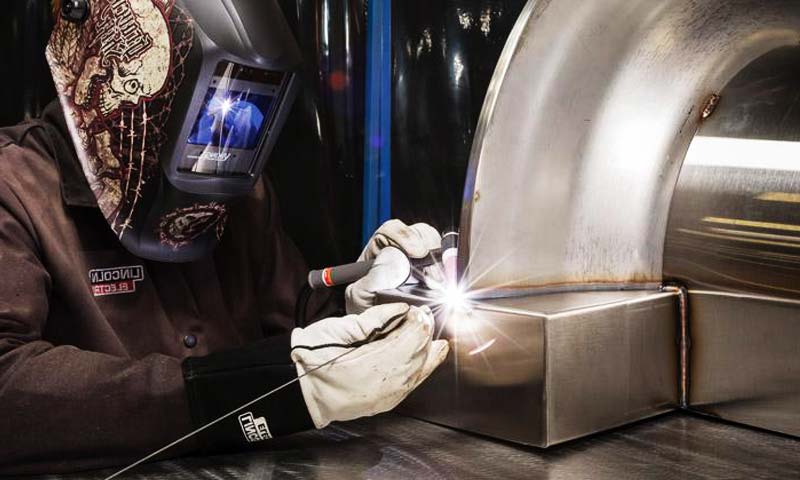
- Hindi kinakalawang na asero welds are prone to sensitization and intergranular corrosion if cooled improperly but generally easier to weld, especially in austenitic and duplex grades.
- Brazing is more common with cast iron repairs, while stainless steel often relies on fusion welding or mechanical fastening for structural integrity.
8. Applications of Cast Iron vs Stainless Steel

| Application Field | Cast Iron Typical Components | Stainless Steel Typical Components |
| Automotive | Mga bloke ng engine, mga ulo ng silindro, mga preno rotors | Mga sistema ng tambutso, catalytic converters, trim na mga bahagi |
| Konstruksyon & Imprastraktura | Manhole covers, mga tubo, drainage fittings | Mga panel ng arkitektura, Mga handrail, mga istruktura ng mga fastener |
| Foodservice & Mga kagamitan sa pagluluto | Skillets, Mga oven ng Dutch, griddles | Kitchen sinks, cutlery, bakeware, Kagamitan sa Pagpoproseso ng Pagkain |
| Makinarya & Mga Kagamitan sa Industriya | Email Address *, Mga pabahay ng gear, Mga balbula | Conveyor belts, chemical processing tanks, mga heat exchanger |
| Enerhiya & Pagbuo ng Kapangyarihan | Mga pabahay ng turbina, mga bahagi ng engine | Mga heat exchanger, Email Address *, mga reaktor |
| Marine & Malayo sa pampang | Propeller hubs, mga bahagi ng engine | Mga kagamitan sa kubyerta, corrosion-resistant fasteners |
9. Pros & Cons of Cast Iron vs Stainless Steel
Cast Iron
Pros:
- Excellent compressive strength and wear resistance
- Superior vibration damping, reducing noise in machinery
- High thermal conductivity and excellent heat retention
- Outstanding castability, enabling complex shapes and large parts
- Magandang machinability, especially in gray cast iron
- Generally lower raw material and production costs
Mga kahinaan:
- Brittle with low tensile strength, prone to cracking under impact
- Poor shock tolerance except for ductile cast iron variants
- Susceptible to rust and corrosion if not properly coated or seasoned
- Difficult to weld due to high carbon content and risk of cracking
- Heavy with relatively low strength-to-weight ratio
- Requires regular maintenance to prevent corrosion
Hindi kinakalawang na asero
Pros:
- High tensile and yield strength with excellent ductility and toughness
- Superior corrosion resistance due to protective chromium oxide layer
- Good resistance to oxidation, Email Address *, and high-temperature environments
- Napakahusay na weldability, especially in austenitic and duplex grades
- Versatile fabrication options including forging, pagulong gulong, and machining
- Better strength-to-weight ratio compared to cast iron
Mga kahinaan:
- More expensive raw material and processing costs
- Work-hardening tendency complicates machining and tool life
- Lower thermal conductivity limits heat transfer applications
- Higher thermal expansion can cause distortion during welding or heating
- Vulnerable to localized corrosion like pitting and crevice corrosion in chloride environments
- Requires controlled fabrication processes to avoid sensitization and weld defects
10. Talahanayan ng Paghahambing: Cast Iron vs Stainless Steel
| Pag-aari / Aspeto | Cast Iron | Hindi kinakalawang na asero |
| Komposisyon | Mainly iron with 2–4% carbon; graphite microstructures | Iron with 10–30% chromium plus nickel, molibdenum, iba pa |
| Microstructure Types | Kulay-abo, ductile, puti, compacted graphite iron | Austenitic, ferritic, martensitic, Duplex, pagtigas ng ulan |
| Lakas ng Mekanikal | Compressive strength: 150–300 MPa; brittle in tension | Lakas ng paghatak: 500–1000+ MPa; ductile and tough |
| Ang katigasan ng ulo | 150–400 HB (depending on type) | 150–600 HB (depending on grade and heat treatment) |
| Ductility | Mababa ang (1–3% elongation) | Mataas na (40–60% elongation in austenitic grades) |
| Paglaban sa Pagkapagod | Katamtaman; limited by brittleness | Mataas na; excellent fatigue strength |
| Thermal kondaktibiti | 40–55 W/m·K | 15–25 W/m·K |
| Pagpapalawak ng Thermal | ~10–12 × 10⁻⁶ /°C | ~16–17 × 10⁻⁶ /°C |
| Paglaban sa kaagnasan | Poor unless coated or seasoned | Napakahusay; passivation layer provides self-protection |
| Katatagan | Napakahusay | Moderate to good; higher melting temperature |
| Machinability | Mabuti na lang (especially gray iron) | Moderate to poor (pagpapatigas ng trabaho) |
| Weldability | Mahirap; requires preheating and special filler | Mabuti na lang; dependent on grade and process |
| Mga Karaniwang Aplikasyon | Mga bloke ng engine, mga tubo, Mga kagamitan sa pagluluto, Mga pabahay ng pump | Food equipment, architectural fittings, Mga tangke ng kemikal |
| Gastos | Lower raw material and production cost | Higher raw material and processing cost |
| Densidad ng katawan | ~ 7.0 g / cm³ | ~7.7–8.0 g/cm³ |
11. Pangwakas na Salita
The contrast between cast iron and stainless steel is stark yet complementary.
Email Address * excels in static, high-heat, or abrasive environments where vibration damping and cost-efficiency are critical.
Sa kabilang banda, hindi kinakalawang na asero dominates applications requiring long-term corrosion resistance, kalinisan ng katawan, or mechanical resilience under dynamic loads.
Material selection is not about superiority—it’s about suitability.
Engineers and designers must weigh environment, Mga Kondisyon ng Paglo-load, thermal cycling, and maintenance when choosing between these two time-tested materials.
As technologies advance, hybrids like clad cookware and composite assemblies increasingly bridge the gap between these material classes, delivering the best of both worlds.
Mga FAQ
Is cast iron more prone to rust than stainless steel?
Oo nga, cast iron corrodes more easily because it lacks a protective oxide layer. Stainless steel forms a self-healing chromium oxide passive film that provides superior corrosion resistance.
Are there cost differences between the two materials?
Oo nga, cast iron generally has a lower initial cost, both in raw materials and processing.
Stainless steel is more expensive upfront but may offer lower lifecycle costs due to durability and corrosion resistance.
Which is healthier, stainless steel or cast iron?
Both are safe for cooking, but stainless steel is non-reactive and won’t leach metals into food. Cast iron can add beneficial iron to your diet but may react with acidic foods.
Do chefs prefer stainless steel or cast iron?
Many chefs use both: cast iron for even heat and searing, stainless steel for versatile, easy-to-clean cookware and delicate cooking tasks.
What lasts longer, stainless steel or cast iron?
Properly maintained cast iron can last generations, but stainless steel is generally more durable with less maintenance and better corrosion resistance.
Which is better, cast iron or steel?
It depends on the use—cast iron excels in heat retention and wear resistance, while steel (especially stainless) nag aalok ng higit na mataas na lakas, paglaban sa kaagnasan, at maraming nalalaman.