1. Panimula
Annealing vs tempering are two foundational paggamot ng init processes that optimize the properties of metals, enabling them to meet the demands of diverse industrial applications.
While both involve controlled heating and cooling, their core objectives, Mga parameter ng proseso, and outcomes are fundamentally distinct:
Annealing prioritizes softening, pampawala ng stress, at pagiging formable, habang ang paghina ng loob focuses on reducing brittleness and balancing strength/toughness in previously hardened metals.
Both are essential in modern manufacturing — chosen and controlled to match alloy, geometry, and final service requirements.
2. What Is Annealing?
Annealing is a controlled heat-treatment process in which a metal is heated to a specific temperature, held at that temperature for a certain period, and then cooled slowly.
The primary purpose is to soften the metal, mapawi ang mga panloob na stress, and improve ductility and machinability.
Annealing transforms the metal’s microstructure, making it more uniform and easier to work with in subsequent manufacturing operations.
Key Features of Annealing:
- Softens hard or cold-worked metals for easier forming and machining.
- Relieves residual stresses caused by welding, paghahagis ng mga, or deformation.
- Refines grain structure and homogenizes alloy composition.
- Improves electrical conductivity for non-ferrous metals like copper and aluminum.
- Enhances dimensional stability and reduces the risk of cracking or warping.
Process Descriptions & Typical Parameters
Annealing can be performed in different ways depending on the metal type, desired mechanical properties, and subsequent use. Below is a summary of common annealing types:
| Anneal Type | Typical Temperature (°C) | Cooling Method | Layunin / Kinalabasan |
| Full Anneal | 750–920 | Furnace slow-cool | Produces soft ferrite + pearlite in steel; maximum ductility and machinability |
| Proseso / Intermediate Anneal | 450–700 | Air or slow cooling | Restores ductility to cold-worked metals; moderate stress relief |
| Spheroidize Anneal | 650–720 (long soak) | Very slow cooling | Forms spherical carbides in steels for excellent machinability |
| Stress-Relief Anneal | 350–650 | Air cool | Reduces residual stresses from forming/welding without major microstructural change |
| Normalizing (related) | 820–920 | Air cool | Refines grain for uniform mechanical properties |
Soak time guideline: ~15–60 minutes per 25 mm kapal, depending on alloy and furnace.
Pagkakatugma ng Materyal & Mga parameter
Saklaw: common ferrous and non-ferrous alloys most frequently annealed or tempered in industry (mga bakal na bakal, mga tool na bakal, cast irons, tanso, aluminyo, tanso, Ti alloys).
Values are typical shop practice ranges — always qualify with supplier data and shop trials.
| Materyal / Klase | Typical Anneal Temp (°C) | Soak Time Guidance | Cooling Method | Layunin / Practical Notes |
| Mababa ang-mga carbon steels (hal., 1010–1020) | 720–800 (full) | 15–60 min per 25 mm | Furnace slow-cool (furnace or insulated cool) | Softening, pampawala ng stress, improve ductility and machinability |
| Mga medium carbon steels (hal., 1045) | 740–820 (full) | 15–60 min per 25 mm | Furnace slow-cool | Reduce hardness, spheroidize if machinability needed |
| Mga steels na may mataas na carbon / bearing steels | 650–720 (spheroidize, long soak) | Several hours to 10+ h (long soak) | Very slow cool or hold + slow cool | Produce spherical carbides for best machining; long soak required |
| Mga bakal na haluang metal (Cr, Mo, Ni additions) | 720–900 (alloy dependent) | 20–90 min per 25 mm | Furnace slow-cool | Homogenize, relieve stresses; adjust temp for alloying additions |
| Mga tool steels (hal., A2, D2 po) | 650–800 (softening anneal or sub-critical) | Hours for D2; A2 shorter | Furnace slow-cool; sometimes normalization cycles | Prepare for machining; avoid over-heating to prevent grain growth |
Mga Cast Iron (kulay-abo, ductile) |
750–900 (pampawala ng stress / anneal) | 30–120 min | Furnace slow or air cool (depending on objective) | Reduce residual stress, improve machinability (spheroidize for high-C irons) |
| Tanso (pure, OFC) | 300–700 | 15–45 min depending on cold work | Air or furnace cool | Restore ductility and conductivity; watch oxidation |
| Aluminyo mga haluang metal (hal., 3003, 6061) | 300–410 (recrystallization/stress relief) | 15–120 min | Air cool (or controlled) | Recrystallize or stress-relief; avoid solution treatments unless specified |
| tanso / tanso | 300–500 | 10–60 min | Air or furnace slow-cool | Soften for forming; avoid dezincification risk in some brasses |
| Mga haluang metal ng titan (Ti-6Al-4V) | 650–800 (pampawala ng stress) | 30–120 min | Furnace or air cool depending on objective | Use controlled atmosphere to avoid contamination; anneal for stress relief |
Effects on Mechanical Properties
Annealing has a profound impact on the mechanical behavior of metals, transforming their structure and making them more suitable for forming, machining, and further processing.
The changes depend on the material, annealing type, and cycle parameters.
| Pag-aari | Effect of Annealing | Praktikal na Implikasyon |
| Ang katigasan ng ulo | Significantly decreases | Metals become easier to cut, makina, or form; reduces tool wear and surface finish issues |
| Ductility / Pagpapahaba | Increases markedly | Enhances ability to undergo bending, pagguhit, or shaping without cracking |
| Tigas na tigas | Generally increases | Reduces susceptibility to brittle fracture under load, especially for cold-worked or high-carbon steels |
| Residual Stress | Significantly reduced | Improves dimensional stability; minimizes warping, pagbaluktot, and stress-induced cracking in further processing |
| Yield Lakas / Lakas ng Paghatak | Typically decreases | Material becomes softer and less resistant to plastic deformation; acceptable for forming, not load-bearing applications |
| Machinability | Improved | Softer, more uniform microstructure allows faster cutting, less tool wear, and better surface finish |
Illustrative Examples:
- Cold-worked low-carbon steel: Hardness can drop from >250 HB to ~120–150 HB after a full anneal, while elongation can increase from 10–15% to 40–50%, making it much easier to form.
- Tanso (OFC): Annealing restores ductility and electrical conductivity after cold work; elongation may increase from 20% sa >60%.
- Mga haluang metal ng aluminyo (hal., 6061): Recrystallization anneal improves formability and reduces the risk of cracking during bending or stamping.
3. What Is Tempering?
Tempering is a heat-treatment process applied to metals that have already been hardened, most commonly quenched steels.
Its primary purpose is to Bawasan ang brittleness, increase toughness, and achieve a balanced combination of hardness and ductility.
Unlike annealing, tempering is performed below the critical transformation temperature, so it does not soften the metal completely but fine-tunes its mechanical properties.
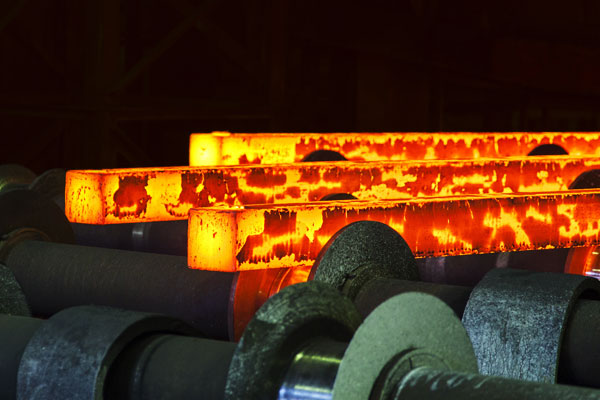
Key features of tempering:
- Reduces brittleness of hardened or quenched metals.
- Increases toughness and impact resistance.
- Adjusts hardness to meet application requirements.
- Relieves residual stresses induced during quenching.
- Stabilizes microstructure and dimensions for critical components.
Process Descriptions & Typical Parameters
Tempering is performed by heating the hardened metal to a controlled temperature, holding it for a defined time, and then cooling, usually in air.
The temperature and soak time determine the final balance between hardness and toughness.
| Tempering Range | Temperatura (°C) | Oras ng Pagbababad | Paglamig | Mechanical Effect / Gamitin ang |
| Mababang temperatura Tempering | 150–300 | 30–90 min | Air cool | Slight hardness reduction, brittleness reduced; retains wear resistance; suitable for tools and small springs |
| Medium-Temperature Tempering | 300–500 | 30–120 min | Air cool | Balanced hardness and toughness; commonly used for structural components like shafts, mga gears, and automotive parts |
| Mataas na temperatura ng Tempering | 500–650 | 30–120+ min | Air cool | Significant toughness increase, moderate hardness loss; used for heavy-load components or parts subjected to impact |
Pagkakatugma ng Materyal & Mga parameter
Tempering is primarily used for hardened steel and cast iron but may also be applied to some high-strength alloy steels. Non-ferrous metals typically use other aging processes instead of tempering.
| Materyal / Klase | Typical Temper Range (°C) | Soak Time Guidance | Cooling Method | Typical Outcome / Mga Tala |
| Low-carbon quenched steels (hardened condition) | 150–300 (low temper) | 30–90 min | Air cool | Small hardness drop; Bawasan ang brittleness; retain wear resistance |
| Medium-carbon quenched steels (hal., 4140) | 250–450 (medium temper) | 30–120 min | Air cool | Balance hardness/toughness for shafts, mga gears |
| High-carbon / alloy tool steels (hal., W-, Cr-, Mo-bearing) | 150–200 (first) → 500–600 (re-temper depending on spec) | 30–120 min per temper step; often double temper | Air cooling; sometimes inert or vacuum | Tool steels often double-temper to stabilize dimensions & mga katangian; over-tempering reduces wear life |
Mga bakal ng tagsibol (mahirap na + pag-uugali) |
200–400 (as required for spring rate) | 30–60 min | Air cool | Set spring properties (katatagan ng loob, fatigue life) |
| Mga Cast Iron (pinatay & Tempered, hal., HT cast) | 300–550 | 30–120 min | Air cool | Improve toughness after austempering/quenching |
| Stainless martensitic grades (hal., 410, 420) | 150–400 (depending on desired hardness and corrosion requirement) | 30–120 min | Air or forced air | Temper for toughness; note sensitization concerns for higher temps in some SS |
Effects on Mechanical Properties of Tempering
Tempering has a direct and predictable impact on the mechanical properties of hardened metals, primarily steels.
By carefully controlling the tempering temperature and time, manufacturers can achieve the desired balance between tigas na tigas, tigas na tigas, at ductility.
| Pag-aari | Effect of Tempering | Praktikal na Implikasyon |
| Ang katigasan ng ulo | Decreases from the as-quenched maximum | Softens overly brittle metals while retaining sufficient strength for functional use; higher temper temperatures lead to greater hardness reduction |
| Tigas na tigas / Epekto ng Lakas | Increases significantly | Reduces brittleness, making metals more resistant to cracking, epekto nito, and sudden loads |
| Ductility / Pagpapahaba | Improves moderately | Metals can deform slightly under stress without fracturing, important for springs, mga tool, at mga bahagi ng istruktura |
Residual Stress |
Partially relieved | Reduces warping or cracking during service, enhancing dimensional stability |
| Lakas ng loob / Tensile Properties | Slightly reduced compared to quenched state | Ensures a balance between hardness and toughness suitable for practical applications |
| Magsuot ng Paglaban | Retained at lower tempering temperatures; decreases with high-temperature tempering | Low-temperature tempering preserves hardness for wear-critical components like cutting tools, while higher temperatures favor toughness over wear resistance |
Illustrative Examples:
- High-carbon quenched steel: HRC 63 (as-quenched) → tempered at 200–250 °C → HRC 58–60, toughness significantly improved for springs or hand tools.
- Medium-carbon alloy steel (hal., 4140): HRC 58 → tempered at 400 °C → HRC 45–50, achieving a good balance of strength, tigas na tigas, and fatigue resistance for shafts and gears.
- Tool na bakal (hal., D2 po): Double tempering at 525 °C reduces internal stresses, stabilizes hardness (HRC 60–62), and improves impact resistance for dies and molds.
4. Mga Pang industriya na Aplikasyon: When to Use Each Process
Tempering and annealing serve distinct purposes in metalworking, and selecting the right process depends on the desired mechanical properties, subsequent manufacturing steps, at mga kinakailangan sa aplikasyon.
Annealing Applications
Annealing is primarily used to soften metals, mapawi ang mga panloob na stress, at pagbutihin ang ductility, making it ideal for metals that will undergo forming, machining, or shaping.
| Industriya ng Industriya / Paglalapat | Typical Use Case | Why Annealing is Chosen |
| Automotive | Sheet metal for body panels, mga bahagi ng istruktura | Softened metal allows stamping, pagbaluktot, and drawing without cracking |
| Aerospace | Aluminum alloy panels, copper wiring | Reduces work hardening; improves formability and electrical conductivity |
| Mga Elektronika | Copper and brass components | Enhances ductility for complex shapes and improves electrical conductivity |
| Metal Fabrication / Machining | Steel bars, mga baras, mga sheet | Softening makes subsequent machining more efficient and reduces tool wear |
| Konstruksyon / Imprastraktura | Mga beam ng bakal, rebar | Relieves residual stresses after rolling or welding; improves dimensional stability |
Tempering Applications
Tempering is used after hardening to optimize the balance between hardness and toughness, making metals suitable for Load-bearing, hindi lumalaban sa pagsusuot, or impact-prone applications.
| Industriya ng Industriya / Paglalapat | Typical Use Case | Why Tempering is Chosen |
| Toolmaking | Hand tools, namamatay na, mga suntok | Reduces brittleness of hardened steel while retaining wear resistance |
| Automotive & Aerospace | Mga Gear, mga shaft, mga bukal | Ensures toughness and impact resistance for parts subjected to cyclic loads |
| Malakas na makinarya | Cutting blades, industrial molds | Balances hardness and toughness for durability under high stress |
| Mga Bahagi ng Istruktura | Beams, pagkonekta ng mga rod, mga fastener | Increases toughness without significant loss of strength, improving safety and reliability |
| Springs & High-Load Components | Coil springs, mga bahagi ng suspensyon | Provides elasticity while maintaining strength and fatigue resistance |
5. Mga Karaniwang Maling Akala & Clarifications
“Tempering is a Type of Annealing”
Mali. Tempering is a post-hardening process that only follows quenching, while annealing is a standalone process for softening/stress relief.
They have opposite objectives (tempering retains strength; annealing reduces it).
“Higher Tempering Temperature = Better Performance”
Mali. Tempering temperature is application-dependent: low temper (200–300°C) maximizes hardness for tools; high temper (500–650°C) maximizes toughness for structural parts.
Excessive tempering (≥650°C) reduces strength to unacceptable levels.
“Annealing Works for All Metals”
Mali. Non-ferrous metals (aluminyo, tanso) do not undergo phase changes like steel—their annealing only causes recrystallization (paglambot) without microstructure transformation.
“Tempering Eliminates All Residual Stress”
Mali. Tempering relieves 70–80% of quenching residual stress—for critical applications (hal., mga bahagi ng aerospace), additional stress relief annealing may be required.
6. Key Differences — Annealing vs Tempering
The table below provides a clear, side-by-side comparison of annealing vs tempering, highlighting their objectives, mga proseso, and effects on metal properties.
| Aspeto | Annealing | Paghina ng loob |
| Layunin | Soften metal, relieve internal stress, improve ductility and machinability | Reduce brittleness, increase toughness, balance hardness after hardening |
| Heat Level | Above critical transformation temperature (austenitizing for steels) | Below critical transformation temperature |
| Typical Metals | Mga bakal na bakal, tanso, aluminyo, tanso, tanso | Hardened steels, mga tool na bakal, martensitic hindi kinakalawang na asero, cast iron |
| Cooling Method | Slow furnace cooling (sometimes controlled air for non-ferrous metals) | Air cooling (karaniwan ay), sometimes controlled or inert atmosphere |
| Effect on Hardness | Significantly decreases | Moderately decreases (from as-quenched hardness) |
| Effect on Toughness | Slightly improved, mainly by stress relief | Significantly improved, reduces brittleness |
Effect on Ductility / Pagpapahaba |
Strongly increases | Moderately increases |
| Effect on Residual Stress | Relieved | Partially relieved (after quenching-induced stress) |
| Microstructural Change | Homogenizes grains, soft phases (ferrite/pearlite in steel, recrystallized grains in non-ferrous metals) | Tempered martensite in steel; stabilizes microstructure without fully softening |
| Typical Industrial Use | Pagbuo ng, pagbaluktot, pagguhit, machining, stress-relief | Mga tool, mga gears, mga bukal, mga bahagi ng istruktura, mga bahagi na lumalaban sa pagsusuot |
| Cycle Duration | Matagal na (hours depending on thickness and alloy) | Shorter (minutes to hours, depending on temp and section size) |
7. Pangwakas na Salita
Annealing vs tempering are cornerstone processes in metalworking.
Annealing prepares metals for forming, machining and safer downstream processing by softening and stress-relieving.
Tempering refines the properties of hardened parts, converting as-quenched brittleness into serviceable toughness while retaining useful strength.
Effective use requires matching alloy chemistry, kapal ng seksyon, heating/soak times and cooling strategy — and verifying outcomes with hardness, microstructure and mechanical tests.
Mga FAQ
Can the same furnace be used for both annealing and tempering?
Yes — most heat-treatment furnaces can be programmed for different cycles and atmospheres, but process control (temperature uniformity, kapaligiran) must meet the requirements for each operation.
Which process is more energy-intensive?
Annealing is generally more time- and energy-consuming because of higher soak times and slow cooling (furnace dwell); tempering cycles are typically shorter.
How are results verified?
Common verification methods: hardness tests (Rockwell, Mga Vickers, Brinell), tensile tests, epekto nito (Charpy) Mga Pagsusulit, metallography (optical/SEM) and residual stress measurements (XRD/hole drilling).
Is tempering used on non-steel metals?
The term “tempering” is most appropriate for steels (martensite na pag temper).
Non-ferrous alloys use different heat-treatment families (age hardening, annealing, solution treatment) with analogous goals.
Typical temper temps for common outcomes?
(Tinatayang, haluang metal na nakasalalay) — 150-250 ° C retains higher hardness (tooling wear resistance), 300-450 ° C is a balanced hardness/toughness window for structural parts, 500-650 ° C maximizes toughness at cost of hardness.