1. Panimula
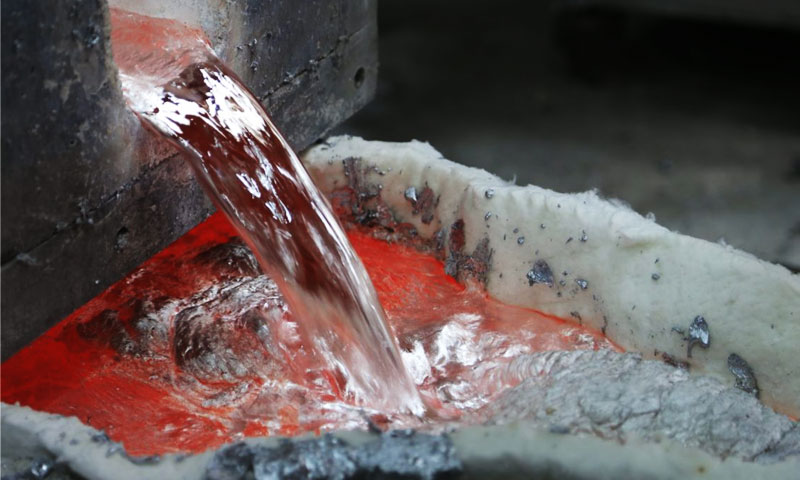
“Cast aluminum” refers to aluminum alloys shaped by liquid-metal processes (mamatay sa paghahagis, buhangin paghahagis, permanent-mold, pamumuhunan paghahagis, pisilin ang paghahagis, atbp.).
Compared with wrought or forged aluminum and with competing materials (bakal na bakal, cast iron, Magnesium alloys, zinc alloys, Mga polimer), cast aluminum occupies a broad sweet spot: good mechanical performance per unit mass, cost-effective manufacturability for complex parts, and favorable thermal and environmental attributes.
This article analyses those advantages across materials science, pagmamanupaktura, economic and sustainability perspectives.
2. Key material advantages (pisikal na & mekanikal)
Low density and high specific performance
- Low density (~2.70 g/cm³) gives cast aluminyo an immediate advantage for weight-sensitive designs (automotive, aerospace, portable equipment).
On a mass basis it often delivers equivalent stiffness or strength at a fraction of the weight of steel or cast iron. - Competitive specific strength: many cast Al–Si–Mg alloys in heat-treated condition (T6) reach tensile strengths in the ~200–350 MPa range while retaining low mass.
This makes them effective where strength-to-weight ratio is critical.
Good absolute mechanical properties for many uses
- As-cast tensile strengths span a broad range (humigit-kumulang 70–300 MPa depending on alloy and process), and heat-treatable casting alloys can be significantly strengthened by solution-quench-age cycles.
- Reasonable ductility and hardness depende sa alloy: typical elongation ranges from ~1–12% and Brinell hardness from ~30–120 HB, permitting both structural and wear-prone applications (with appropriate alloy choice).
Elastic modulus and vibration behavior
- Young’s modulus (~69 GPa) is lower than steel, but the lower weight often offsets this in stiffness-sensitive design via larger cross-sections.
Aluminum also exhibits desirable vibration behavior (less resonant energy than some high-frequency metals in certain systems).
3. Manufacturing and Design Advantages (pagiging castable & geometry)
Exceptional castability
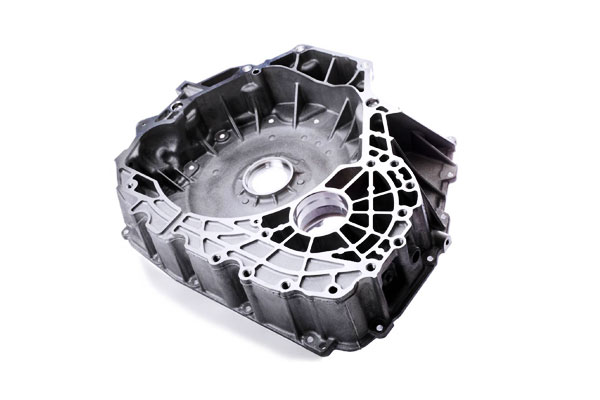
- Fluidity and low melting range (compared to ferrous metals) enable thin walls, Mga Detalye ng Fine, internal cavities and integrated features (Mga Boss, mga tadyang, passages) Sa isang solong pagbuhos.
This reduces assembly steps and eliminates joins that can be weak points or leak paths.
Complex geometry and near-net shaping
- Near-net shapes reduce machining time and scrap volume. For many parts, a single casting needs only light machining for critical surfaces, which lowers cycle time and cost per part at medium-to-high volumes.
High throughput and varied production scales
- Die casting supports very high cycle rates and consistency for large quantities; buhangin paghahagis supports low-volume, large-format or specialized shapes economically.
This flexibility reduces time-to-market and tooling cost trade-offs.
Integration of functions
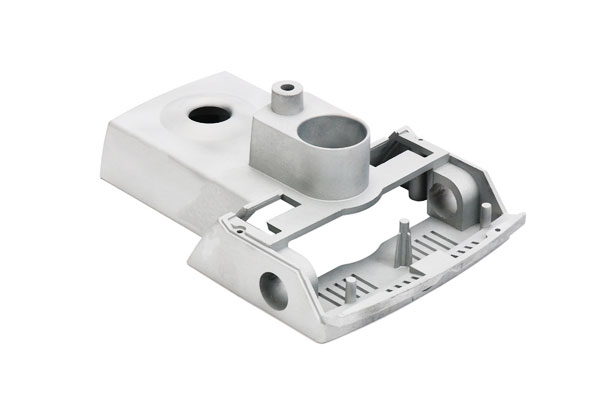
- Castings can integrate mounting, cooling channels, reinforcing ribs and bosses — consolidating assemblies and improving reliability while reducing part count, fasteners and potential leak points.
4. Strong Corrosion Resistance
Mechanism — why aluminum resists corrosion
Aluminum’s outstanding baseline corrosion resistance comes from rapid formation of a very thin, tightly adherent oxide on exposure to air: aluminium oxide (Al O).
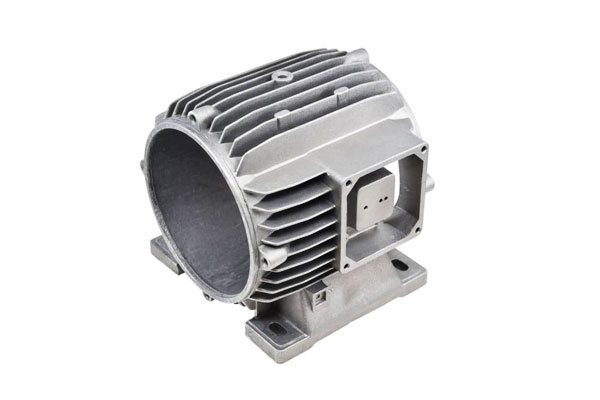
This film forms spontaneously in seconds to minutes, is only a few nanometres thick under normal conditions, and is:
- Adherent and self-healing — when scratched, fresh metal re-oxidizes and re-forms the barrier as long as oxygen is available.
- Compact at the nano-scale — it blocks ionic transport and sharply reduces the electrochemical reactions that drive metal loss.
Because the protective action is surface-driven, ang existence and condition of the oxide — not bulk chemistry alone — largely controls corrosion behaviour.
Practical performance — environments where aluminum performs well
- Atmospheric exposures: Aluminyo (and many Al alloys) show low general corrosion rates in rural and urban atmospheres.
The native oxide plus light surface patinas inhibit uniform metal loss. - Mild chemical environments: With appropriate alloying and surface finishes, aluminum resists many industrial atmospheres, indoor conditions and mildly alkaline waters.
- Applications that exploit this trait: outdoor housings, mga bahagi ng arkitektura, engine housings and many consumer products where minimal maintenance is desirable.
5. Excellent Thermal and Electrical Conductivity
Thermal conductivity — why it matters
Aluminum has high intrinsic thermal conductivity compared with common structural metals. Purong aluminyo conducts heat at around 237 W·m⁻¹·K⁻¹.
Cast alloys are lower because of alloying elements, intermetallics and porosity, but still typically fall in the range of 100–180 W·m⁻¹·K⁻¹ for many engineering casting grades.
Implications:
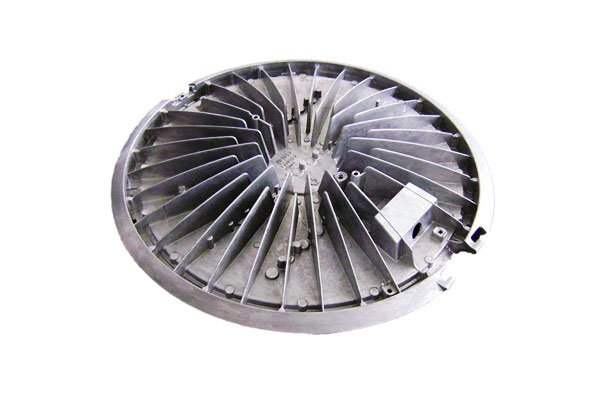
- Heat dissipation: Cast aluminum is excellent for housings, nalulubog ang init, and components where removing or spreading heat quickly is essential (power electronics enclosures, Mga pabahay ng motor, heat-exchanger end-caps).
- Integrated cooling features: Casting allows fins, channels and thin walls to be integrated—maximizing surface area and thermal path while minimizing assembly steps.
Electrical conductivity — practical values and consequences
- Purong aluminyo electrical conductivity is about 36–38 ×10⁶ S·m⁻¹ (a useful baseline).
Typical engineering cast alloys show reduced conductivity but remain conductive—commonly in the ~20–35 ×10⁶ S·m⁻¹ range depending on composition and porosity. - Mga Aplikasyon: EMI shielding housings, conductor bus housings where mass savings outweigh copper’s superior conductivity, and parts where some electrical continuity is required.
Advantages in real applications
- Weight-sensitive heat management: Because aluminum is light and thermally conductive, a given heat-dissipation requirement can often be met with less mass than copper alternatives—important in automotive/EV, aerospace and portable electronics.
- Integrated thermal designs via casting: Castings enable internal passages for coolant and cast-in fins that combine structural and thermal roles without costly machining or assembly.
- Dual thermal & electrical roles: Components that must conduct heat and act as electrical housings (hal., motor housings that are grounded) can do both with a single cast part.
6. Economic advantages (gastos, production rate, mga tooling)
Cost-effective at scale
- Die-cast production amortizes tooling cost rapidly at high volumes, delivering low part cost per unit and excellent dimensional repeatability.
- Buhangin paghahagis and permanent-mold processes lower upfront tooling for large parts or short runs, enabling economical manufacturing across scales.
Reduced assembly and secondary operations
- Fewer parts and fasteners reduce assembly labour and inventory. Near-net castings lower machining time and waste, saving material and cycle costs.
Tooling and process maturity
- The casting industry has mature process controls, standard alloys and supplier ecosystems. This reduces technical risk and procurement complexity.
7. Sustainability and lifecycle advantages
High recyclability and energy savings
- Ang aluminyo ay mataas na recyclable; re-melting scrap uses a fraction of the energy required for primary (birhen) aluminum production—commonly cited savings are up to ~90–95% of primary energy (depending on the system).
That significantly lowers embodied energy and greenhouse gas footprint for recycled-content castings.
Lightweighting benefits
- Replacing steel/iron parts with cast aluminum reduces operating energy in transport applications (fuel or battery energy saved during vehicle life), often producing a favorable lifecycle environmental profile even when accounting for production energy.
Material circularity
- Castings and machining scrap are readily collectable and re-introducible into the melt stream, supporting circular manufacturing models.
8. Mga Limitasyon & Trade-offs
No material is perfect. Cast aluminum has trade-offs that must be considered.
Lower modulus and localized fatigue sensitivity
- Lower stiffness (vs steel) means designers must sometimes increase cross-section or use ribs.
- Pagkapagod ng buhay can be limited by porosity and casting defects; mitigation: Pag-aalis ng gas, filtration, process controls, post-casting NDT, or selecting low-porosity processes (pisilin ang paghahagis, HIP).
Wear and high-temperature limits
- Aluminum softens at elevated temperatures compared with ferrous alloys; for high-wear or sustained high-temperature applications, consider surface treatments (hard anodize, Thermal Spray) or alternate alloys (high-silicon, SiC particulates) and design for replacement parts.
Galvanic corrosion risk
- Aluminum is anodic relative to many common metals; avoid direct contact with more noble metals without isolation or coatings.
Design for electrical isolation and compatible fastener selection.
Cost for specialty alloys
- High-performance microalloyed grades (Sc, Zr additions) deliver exceptional properties but at significantly higher material cost; use only where lifecycle benefits justify expense.
9. Comparative Advantage: Cast Aluminum vs. Mga alternatibo
| Pag-aari / Aspeto | Cast Aluminum — A356-T6 (typical) | Cast Magnesium — AZ-family (hal., AZ91D, typical) | Cast Hindi kinakalawang na asero — 316L (typical) |
| Densidad ng katawan | ~2.70 g/cm³ | ~1.75–1.85 g/cm³ | ~7.9–8.0 g/cm³ |
| Typical ultimate tensile strength (Mga UTS) | ~250–320 MPa | ~160–260 MPa | ~480–620 MPa |
| Typical yield strength (proof) | ~180–240 MPa | ~120–180 MPa | ~170–300 MPa |
| Elongation to failure | ~5–12% (T6 depends on section & porosity) | ~2–8% | ~ 30-50% (cast condition varies) |
| Ang katigasan ng ulo (Brinell / typical) | ~70–110 HB | ~50–90 HB | ~150–220 HB |
| Specific strength (Mga UTS / densidad) | ≈ 95–120 (MPa·cm³/g) (≈103 typical) | ≈ 90–140 (≈122 typical) | ≈ 55–80 (≈65 typical) |
| Thermal kondaktibiti | ~100–140 W·m⁻¹·K⁻¹ (cast A356 ~120) | ~60–90 W·m⁻¹·K⁻¹ | ~14–20 W·m⁻¹·K⁻¹ |
| Kondaktibiti ng kuryente | katamtaman; alloyed ~20–35 ×10⁶ S·m⁻¹ | katamtaman; lower than pure Al (≈20 ×10⁶ S·m⁻¹) | mababa ang; ≈1–2 ×10⁶ S·m⁻¹ |
| Paglaban sa kaagnasan (general) | Mabuti na lang — passive Al₂O₃; vulnerable to chloride pitting unless protected | Poor–Moderate — galvanic and pitting risk; needs coatings in many environments | Napakahusay — 316L highly corrosion resistant in many media, lalo na ang mga klorido |
| Galvanic behaviour | Anodic to many metals; isolate when coupled | Strongly anodic (will corrode rapidly near nobler metals) | Cathodic/neutral vs many metals; tends to be noble |
Katatagan & typical processes |
Napakahusay — die, permanent-mold, buhangin, investment; very good fluidity | Napakahusay — die casting, permanenteng amag; very fast solidification (special melt handling) | Mabuti na lang — sand & investment casting common; higher melting temp, slower solidification |
| Porosity sensitivity / pagkapagod | Katamtaman — fatigue sensitive to porosity; low-porosity processes improve life | Katamtaman - Mataas — fatigue limited by casting defects, surface finish important | Mas mababa — fewer casting pore issues for fatigue when properly cast and heat treated |
| Machinability | Mabuti na lang — easy to machine; tool wear moderate | Napakahusay — very easy to machine, low cutting forces | Fair–Poor — stainless work hardens; tool wear and machining force higher |
| Weldability / repair | Weldable with precautions (A356 requires pre/post-heat, special fillers) | Weldable but special precautions (flammability of dust/melt handling) | Mabuti na lang — 316L welds well (but cast condition may need post-weld heat treatment) |
| High-temperature performance | Limited above ~150–200 °C (softening/creep concerns) | Limitado; magnesium softens and oxidizes at elevated T | Napakahusay — retains strength/creep resistance to much higher temperatures |
Email Address * |
Katamtaman; enhanced by hypereutectic Si or surface treatments | Mababa–Katamtaman; improved with coatings/particle reinforcement | Mataas na (with alloying/heat treatment); good sliding wear resistance |
| Mga tipikal na aplikasyon (examples) | Engine housings, mga kaso ng transmisyon, heat-sink housings, structural housings | Lightweight structural parts, automotive interior, die-cast enclosures, aerospace secondary parts | Corrosive service valves, Mga Casing ng Bomba, chemical housings, Mga Kagamitan sa Sanitary |
| Relative material cost | Katamtaman | Katamtaman - Mataas (Mg base metals are costlier & handling adds cost) | Mataas na |
| Recyclability / Sustainability | Napakahusay; high recycled scrap value; low-energy reprocessing vs primary | Napakahusay; recyclable but alloy control needed | Napakahusay; stainless scrap highly recyclable though higher melting energy |
| Key advantages (summary) | Excellent strength-to-weight, thermal kondaktibiti, precision castability, broad alloy/processing options | Best specific strength (by mass), very low density — excellent for aggressive lightweighting | Exceptional corrosion resistance and high strength; high toughness and temperature capability |
| Key limitations (summary) | Lower modulus, fatigue sensitive to porosity, galvanic concerns with dissimilar metals | Corrosion susceptibility, flammable melt handling, mas mababang ductility, gastos & supply variability | Malakas na (high density), expensive, more complex casting/heat treatment |
11. Konklusyon
Cast aluminyo combines a unique and commercially valuable mixture of magaan ang timbang, manufacturability, thermal performance and recyclability. Its advantages span raw material properties, process capabilities and lifecycle benefits.
Successful application requires pairing the right alloy and casting method to the functional requirements: low porosity for fatigue-critical parts, heat treatment for strength, and surface finishes for corrosion or wear.
When used appropriately, cast aluminum lowers part count, cuts weight, simplifies production and supports sustainable manufacturing strategies.
Mga FAQ
Is cast aluminum always the best choice for lightweight parts?
Not always. For the lightest structural solutions, magnesium or advanced composites may win, and for the highest stiffness or heat loads, steel or titanium might be preferable.
Cast aluminum balances lightness, cost and manufacturability for many real-world applications.
How durable are cast aluminum parts in corrosive environments?
Generally good thanks to the protective oxide. For marine or chloride-rich environments, choose appropriate alloys, mga patong na patong (anodize, pintura), and design to avoid crevices or galvanic coupling.
Can cast aluminum be used for fatigue-critical components?
Yes — provided process controls minimize porosity/defects and appropriate post-casting treatments (pagbaril ng peening, HIP if needed) and designs that reduce stress concentrations are used.
Can cast aluminum replace cast iron in all applications?
No—cast iron is still preferred for high-wear, high-torque applications (hal., heavy-duty truck brake drums) due to its superior wear resistance and lower cost.
Cast aluminum excels in weight-sensitive or corrosion-prone use cases.
Is cast aluminum suitable for high-temperature applications?
Yes—heat-resistant alloys like A201 (with copper and nickel) retain 80–85% of their strength at 250°C, making them suitable for engine pistons and exhaust manifolds.
For temperatures above 300°C, cast aluminum is replaced by nickel-based superalloys.
How does cast aluminum’s cost compare to forged aluminum?
Cast aluminum is 30–40% cheaper per kg than forged aluminum, as casting requires less energy and post-processing.
For high-volume parts (100,000+ Mga Yunit), cast aluminum’s cost advantage is even greater.
Can cast aluminum be welded?
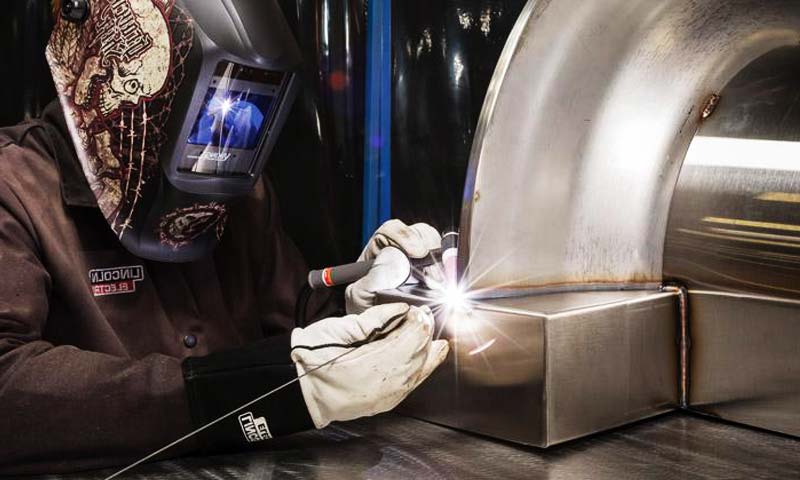
Yes—most cast aluminum alloys (hal., A356, 5052) are weldable via TIG (GTAW) or MIG (GMAW) using matching filler metals (hal., ER4043 for A356). High-copper alloys (hal., A380) require pre-heating to avoid cracking.