1. Panimula
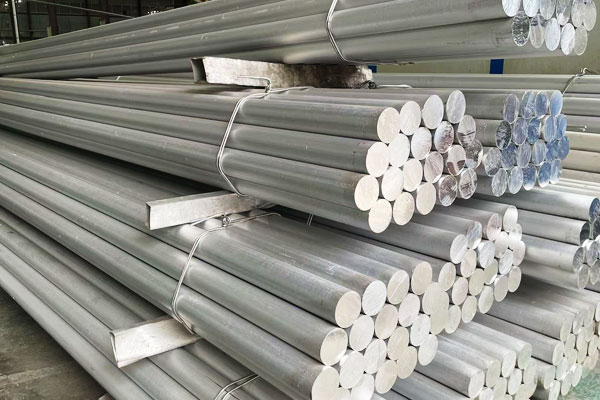
6061 T6 aluminum alloy ranks among the most versatile and widely used aluminum grades in modern manufacturing.
Its blend of excellent strength-to-weight ratio, magandang paglaban sa kaagnasan, at moderate cost makes it a ubiquitous choice for components ranging from aerospace fittings to bicycle frames.
Yet two facets often define 6061 T6’s appeal more than any other: nito forgeability—the ability to be hot- or warm-forged into near-net shapes with superior grain structure,
and its CNC processability—the ease with which it can be machined to tight tolerances and fine surface finishes.
2. Ano ang 6061 T6 Aluminum Alloy
Nominal Chemical Composition of 6061 haluang metal
6061 aluminyo is a member of the 6xxx series, characterized by magnesium and silicon as its principal alloying elements.
A representative 6061 T6 composition (weight percent) ay ang mga sumusunod:
| Elemento | Karaniwang Saklaw (wt %) | Tungkulin / Epekto |
|---|---|---|
| Silicon (Si Si) | 0.40 – 0.80 | Promotes Mg₂Si precipitation during aging, lowering melting point and improving casting/fluidity. |
| Magnesium (Mg) | 0.80 – 1.20 | Combines with Si to form Mg₂Si strengthening precipitates; primary source of age‐hardening in T6 temper. |
| Bakal na Bakal (Fe) | ≤ 0.70 | Controlled impurity; forms Al₇Fe₂ or Al₁₂Fe₃Si intermetallics if excessive, which can reduce ductility. |
| Tanso (Cu) | 0.15 – 0.40 | Provides additional solid‐solution strengthening and accelerates age‐hardening kinetics; boosts tensile strength. |
| Chromium (Cr) | 0.04 – 0.35 | Forms Al₇Cr dispersoids that inhibit grain growth during heat treatment and forging, refining grain structure and improving toughness. |
Sink (Zn) |
≤ 0.25 | Limited to prevent stress‐corrosion cracking; higher Zn would reduce corrosion resistance. |
| Titanium (Ti) | ≤ 0.15 | Acts as a grain refiner (Al₃Ti particles) during casting and solution treatment, promoting fine equiaxed grains. |
| Mga mangganeso (Mn) | ≤ 0.15 | Combines with Fe to form Mn‐rich dispersoids, reducing the negative effect of Fe intermetallics and refining grain size. |
| Other (Ni, Pb, Sn, atbp.) | ≤ 0.05 bawat | Minor elements kept low to avoid embrittlement; Ni and other trace additions have negligible effect at these levels. |
| Aluminyo (Al) | Balanse | Base matrix; carries all alloying elements, determines density and overall metallic structure. |
T6 Temper: Solution Heat Treatment and Artificial Aging
The T6 temper transforms 6061 alloy into its peak‐strength state by combining two sequential steps: solusyon init paggamot at artipisyal na pagtanda. Each step plays a critical role:
Solusyon Heat Paggamot (SHT)
- Layunin: Dissolve magnesium and silicon into a uniform, supersaturated solid solution.
- Mga Parameter ng Proseso:
-
- Temperatura: 515–535 °C, held long enough—typically 1–2 hours—to ensure full dissolution of Mg₂Si particles, Depende sa kapal ng seksyon.
- Quench: Immediately after reaching target temperature, the part undergoes rapid water quenching (water temperature below 60 °C).
This “freezes” alloying elements in place, preventing coarse precipitate formation.
Artipisyal na Pagtanda
- Layunin: Precipitate finely dispersed strengthening particles that impede dislocation motion.
- Mga Parameter ng Proseso:
-
- Temperatura: 160-180 ° C.
- Oras: 8–12 hours, adjusted to reach peak hardness without over‐aging.
3. Pisikal at mekanikal na katangian ng 6061 T6 Aluminum
6061 T6 aluminum exhibits a balanced combination of strength, ductility, and thermal behavior that make it highly suitable for both forging and CNC machining.
The “T6” condition—achieved via solution heat treatment followed by artificial aging—optimizes its microstructure (fine Mg₂Si precipitates within a recrystallized aluminum matrix).

Bilang isang resulta, 6061 T6 offers:
- High specific strength (strength‐to‐weight ratio), making it advantageous where weight savings are critical.
- Magandang paglaban sa kaagnasan, thanks to its Mg‐Si alloying and moderate Cu content.
- Predictable thermal expansion and conductivity, facilitating tight tolerance machining and heat‐affected forging operations.
- Balanced machinability, allowing high cutting speeds with carbide tooling and excellent surface finishes.
Below is a summary table of key physical and mechanical properties typical for 6061 T6 in common bar or plate stock (12–20 mm thickness):
| Pag-aari | Halaga / Saklaw | Mga Tala |
|---|---|---|
| Densidad ng katawan (ρ) | 2.70 g/cm³ | Identical in all tempers; contributes to lightweight designs |
| Ang Modulus ni Young (E) | 68.9 GPa (10 × 10³ ksi) | Provides predictable elastic deflection during machining and in‐service loading |
| Thermal kondaktibiti (20 °C) | 167 W/m·K | Aids uniform temperature distribution in forging; reduces heat‐soak during CNC cuts |
| Koepisyent ng Thermal Expansion (20-100 ° C) | 23.6 × 10⁻⁶ /°C | Important for fixture design when machining to tight tolerances |
| Tiyak na Init (cₚ) | 896 J/kg· K | Used in thermal modeling of forging and quenching processes |
tunay na lakas ng paghatak (Mga UTS) |
290–310 MPa (42–45 ksi) | Achieved after T6 aging; varies slightly with section thickness |
| Yield Lakas (0.2% Offset) | 245–265 MPa (36–38 ksi) | Consistent across typical plate/bar sections |
| Pagpapahaba sa Break (sa 50 mm gauge) | 12–17 % | Indicates good ductility for both forging and post‐machining form features |
| Brinell tigas na tigas (HBW 10/3000) | 85–95 HB | Equivalent to ~ 95–102 HRB; correlates with machinability and wear resistance |
| Limitasyon ng Pagkapagod (R = −1) | ≈ 95–105 MPa (13.8–15.2 ksi) | Unnotched, polished specimens; forging often refines grain and can raise this limit |
Fracture Toughness (K₁C) |
25–30 MPa·√m | Reflects resistance to crack propagation, important in high‐stress components |
| Lakas ng Compressive | ≈ 320–350 MPa (46–51 ksi) | Approximately 1.1–1.2× the UTS; relevant for components under compressive loading |
| Lakas ng Paggupit (τ₍u₎) | ≈ 180–200 MPa (26–29 ksi) | Relevant for fasteners, mga splines, and keyed features |
| Thermal Conductivity Change (100-200 ° C) | Slight decrease (< 10 %) | Should be considered if forging near 200 °C or machining with high heat generation |
4. Forgeability of 6061-T6 Aluminum
6061-T6 aluminum is one of the most widely used heat-treatable aluminum alloys, known for its good strength, paglaban sa kaagnasan, at weldability.
Gayunpaman, when it comes to pagkukubli, 6061-T6 is generally not considered ideal in its T6 temper condition due to its high strength and relatively low ductility at room temperature.

Ano ang Pagkukubli?
Forging is a manufacturing process where metal is shaped using localized compressive forces, often under high pressure and elevated temperatures.
It requires the material to be ductile enough to deform without cracking or fracturing.
Forging Temperature Windows
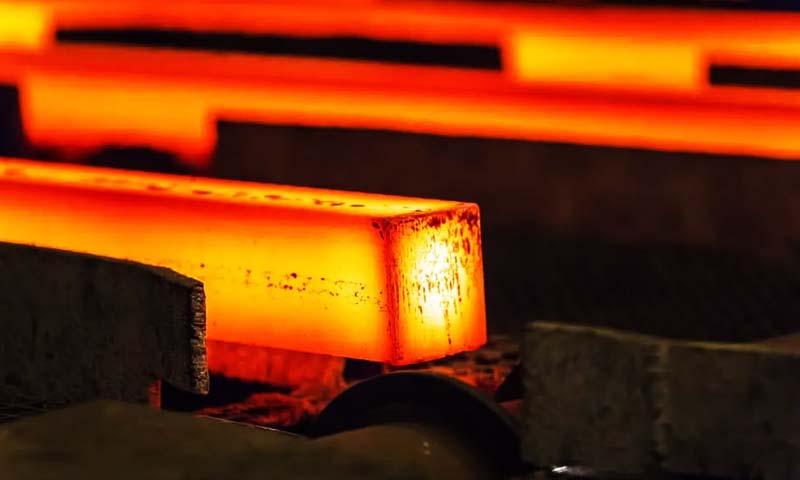
6061 T6 is best forged in the “warm-to-hot” range ng mga 350-500 ° C. Beyond ~ 480 °C, localized over-aging can diminish age-hardening potential.
Below ~ 350 °C, forming becomes difficult and risks cracking. A common practice:
- Preheat to 400–450 °C: Ensures uniform temperature for shape forming without excessive oxidation.
- Maintain Die Temperature: Dies often held at ~ 200 °C to minimize cooling rate and avoid cold cracks.
Forging Processes
- Pagpapalabas ng Open-Die:
-
- Ideal for large billets or simple shapes (hal., mga bar, mga baras).
- Repeated hammering/refining produces fine grain size and improved isotropy.
- Closed-Die (Impression-Die) Pagbubuo ng mga:
-
- Suited for near-net shapes like lever arms, flange blanks, o crank arms.
- Requires precise dies to achieve tolerances within ± 1 mm, reducing CNC machining allowances.
- Nainis sa Pag-forge:
-
- Forms heads on shafts (hal., bolt heads) or multiplies cross-sectional area in localized regions.
- Effective for generating features like bosses or splines before final machining.
Microstructural Evolution During Forging
- Dynamic Recrystallization: At forging temperatures, new equiaxed grains form, eliminating coarse as-cast or extruded grains.
This produces a refined grain size (ASTM 9–10), which improves both static and fatigue strength. - Texture Reduction: Multiple forging passes randomize crystallographic texture, enhancing isotropic mechanical behavior.
- Intermetallic Fragmentation: Al₇Cu₂Fe and AlFeSi phases break up under compressive forces, minimizing potential crack initiation sites.
Common Forging Defects and Mitigation
- Hot Cracking: Occurs if forging temperature drops below ~ 350 °C or if strain rates are too high.
-
- Pagbawas: Preheat to uniform temperature; control forging speed.
- Laps and Folds: Surface defects when metal flow folds onto itself.
-
- Pagbawas: Proper die design with adequate venting and forging allowances.
- Excessive Grain Growth: Can degrade toughness if forging and recrystallization cycles are prolonged.
-
- Pagbawas: Control temperature-time cycles; use intermediate anneals if necessary.
Post-Forging Heat Treatment
Immediately after forging, 6061’s microstructure enters a softened, partially recrystallized state.
To restore T6 mechanical properties and relieve forging‐induced stresses, components undergo full T6 heat treatment:
- Solusyon Heat Paggamot (515–525 °C, 1–2 hrs):
− Load forged parts into a furnace set to 520 ± 5 °C.
− Hold long enough for all Mg₂Si and Cu‐containing phases to dissolve.
− Quench in water below 60 °C to lock solute atoms in a supersaturated solution. - Artipisyal na Pagtanda (160-180 ° C, 8–12 hrs):
− Transfer parts to an aging furnace at 170 ± 5 °C.
− Hold until peak hardness (β″ precipitates) Mga Anyo, carefully avoiding over-aging.
− Air cool to ambient.
After T6 treatment, huwad na 6061 exhibits the same strength and hardness benchmarks as wrought bar stock—UTS of 300 MPa at yield strength of 260 MPa—but with a finer, equiaxed grain structure inherited from forging.
This refined microstructure boosts fatigue life (5–10 % improvement) at impact toughness compared to extruded or cast 6061 T6.
5. CNC Processability of 6061 T6 Aluminum
6061 T6 aluminum combines a favorable microstructure—fine, age-hardened grains containing uniform Mg₂Si precipitates—with relatively low work-hardening tendencies.
Bilang isang resulta, it machines cleanly and predictably, making it a go-to choice for components requiring tight tolerances and excellent surface finishes.

Machinability Rating
6061 T6 holds a machinability rating of ~ 70% relative to a 1212 (100%) free-machining steel standard. This translates to:
- Good Chip Control: Continuous, non-stringy chips when cutting parameters fall within recommended ranges.
- Moderate Tool Wear: Carbide tooling preferred; HSS may suffice for low-volume or prototype runs.
Why 6061-T6 is Excellent for CNC Machining
Balanced Strength and Softness
In the T6 temper, 6061 AL combines a moderate tensile strength (~300 MPa) with sufficient ductility (12–17 % pagpapahaba).
That balance means the alloy resists deflection under cutting forces but does not work-harden excessively.
Bilang isang resulta, tools cut smoothly without chattering or welding material onto the cutting edge.
Fine, Uniform Microstructure
The T6 heat treatment (solution heat treat + pagtanda) produces a homogeneous distribution of fine Mg₂Si precipitates within equiaxed aluminum grains (ASTM 8–9).
These nanoscale precipitates add strength without forming coarse intermetallics.
Dahil dito, the alloy chips predictably—short, curled swarf rather than long, stringy ribbons—simplifying chip evacuation and reducing built-up edge on tools.
Mataas na thermal kondaktibiti
With thermal conductivity around 167 W/m·K at 20 °C, 6061 T6 rapidly draws cutting heat into the chip and coolant rather than letting heat concentrate at the tool tip.
This prevents premature tool wear and built-up edge formation. Sa pagsasanay, machinists can run cutting speeds of 250–450 m/min (820–1 480 ft/min) with carbide inserts, maintaining consistent tool life.
Minimal Work Hardening
Unlike some aluminum alloys that harden quickly under strain, 6061 T6 exhibits only mild strain hardening.
Even at relatively high feed rates (0.05–0.15 mm/tooth in milling or 0.15–0.30 mm/rev in turning), the surface does not develop a hardened “skin.”
That stability allows for predictable toolpaths, masikip na mga tolerance (± 0.01–0.02 mm), at pinong pagtatapos sa ibabaw (Ra 0.4–0.8 µm) without frequent tool changes.
Wide Range of Compatible Tooling
-
- Coated Carbide Inserts (AlTiN, TiAlN): Achieve high-speed milling (hanggang sa 600 m / min) with minimal built-up edge.
- Cobalt HSS Drills: Provide good hole quality (0.05–0.15 mm/rev) in small-batch or prototype runs.
- Diamond-Like Coatings (DLC): Enable ultra-fine finishing passes, delivering mirror-like surfaces (Ra < 0.2 M) for cosmetic or functional requirements.
Excellent Dimensional Stability
6061 T6’s coefficient of thermal expansion (≈ 23.6 × 10⁻⁶ /°C) is well understood.
When combined with adequate coolant and programmed dwell times, thermal growth remains predictable.
This allows CNC machines—especially those with in-process probing or thermal compensation—to hold critical features within ± 0.005–0.010 mm, even over multi-hour runs.
Corrosion Resistance and Surface Finish
The Mg–Si matrix provides innate corrosion protection. In CNC machined parts, this reduces the need for extensive post-machining passivation or sealing.
Pagkatapos ng machining, anodizing or clear coatings adhere uniformly, yielding both functional corrosion protection and an appealing finish for aerospace, automotive, at mga aplikasyon ng mamimili.
Economical Material and Recycling
Compared to specialty aerospace alloys, 6061 T6 is relatively economical.
Scrap chips generated during CNC processes can be collected, melted, and fed back into recycling streams with minimal cost penalty.
This keeps per-part machining costs down and supports sustainable manufacturing practices.
6. Pagsusuri ng Comparative: Forged vs. Extruded vs. Cast 6061 T6
| Pamantayan | Pekeng 6061 | Extruded 6061 | Cast 6061 |
|---|---|---|---|
| Microstructure | Fine-grained, homogeneous | Elongated grain flow, Direksyon | Coarser dendritic structure, porosity |
| Lakas ng loob & Pagkapagod | Highest (due to dynamic recrystall.) | High in longitudinal direction | Lowest (casting defects, porosity) |
| Machinability | Mabuti na lang (uniform properties) | Solid-state, minimal variation | Variable, potential shrinkage porosity |
Katumpakan ng Dimensyon |
± 1 mm (rough forging) + CNC finishing | ± 0.5 mm (extrusion die tolerances) | ± 2 mm (casting shrink tolerances) |
| Paggamit ng Materyal | 80–90% (near-net shape possible) | 90–95% (standard profiles) | 60–70% (machining allowances high) |
| Cost Per kg (Raw Material Basis) | Katamtaman - Mataas (energy for forging) | Katamtaman | Mas mababa (casting economies of scale) |
| Mga Karaniwang Aplikasyon | High-stress shafts, mga angkop na bagay | Mga Frame, mga profile, mga tubo | Complex housings, artwork, Mga prototype |
- Pekeng 6061: Offers superior mechanical properties and more isotropic performance, making it preferable when fatigue life at impact toughness ay kritikal.
- Extruded 6061: Cost-effective para sa standard shapes (mga tubo, channels, mga bar). Well-suited to CNC paggiling of profiles and 3D forms, but properties are directionally dependent.
- Cast 6061: Allows carving complex internal geometries and lightweight “lattice” structures but suffers from porosity at grain coarseness, limiting strength and fatigue life.
7. Pros and Cons of 6061 T6 Aluminum Alloy
Pros of 6061-T6 Aluminum Alloy
Mahusay na ratio ng lakas-sa-timbang
With a tensile strength of roughly 290–310 MPa and a density of 2.70 g/cm³,
Aluminum 6061-T6 offers high specific strength—ideal for applications where weight savings matter without sacrificing too much load-bearing capacity.
Good Corrosion Resistance
The Mg–Si matrix and moderate copper content confer inherent resistance to oxidation and many mild chemical environments.
Sa pagsasanay, 6061-T6 aluminum components withstand indoor/outdoor exposure, light marine spray, and typical industrial atmospheres with minimal degradation.
Superior Machinability
Rated around 70 % on the machinability scale (relative to a free-cutting steel), 6061-T6 produces short, broken chips and resists built-up edge.
Shops routinely achieve cutting speeds of 250–450 m/min with carbide tooling and can hold tight tolerances (± 0.01 mm) and surface finishes as low as Ra 0.4 M.
Forgeability and Formability
In the “warm” forging range (350-500 ° C), 6061-T6 recrystallizes easily, yielding a fine, equiaxed grain structure (ASTM 9–10).
Dahil dito, closed-die or impression forging produces near-net shapes with superior fatigue life (often 10–15 % improvement over extruded/cast 6061).
Predictable Heat-Treat Response
The T6 temper (solution treat at 515–535 °C, pagpatay ng tubig, age at 160–180 °C) reliably generates fine Mg₂Si precipitates (β″ and β′ phases).
This yields consistent mechanical properties—yield ~ 250 MPa, UTS ~ 300 MPa, hardness ~ 90 HB—across various section thicknesses.
Mahusay na Weldability
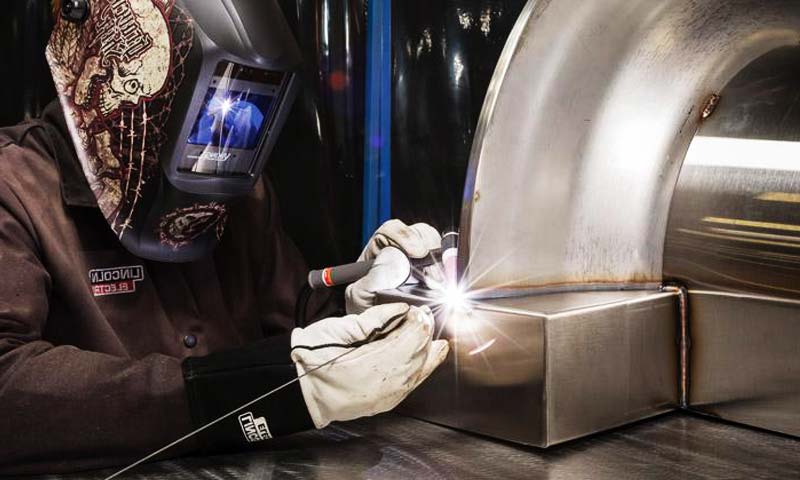
Kapag maayos na inihanda (cleaned, preheated, and with post-weld heat-treat as needed), 6061-T6 welds easily by TIG, MIG, or friction stir methods.
Although weld zones require re-aging to restore full strength, the alloy does not crack readily in common welding practices.
Cost-Effectiveness and Recycling
Readily available from most mills in bar, Plato, and extruded profiles, 6061-T6 is moderately priced compared to specialty aerospace alloys.
Its chips and scrap are 100 % pwede na ba mag recycle, reducing material costs in high-volume CNC operations.
Mahusay na Thermal Conductivity
At approximately 167 W/m·K, 6061-T6 dissipates heat quickly during machining, extending tool life, and maintains uniform temperature during forging, minimizing thermal gradients that could cause cracks.

Cons of 6061-T6 Aluminum Alloy
Lower As-Machined Strength Compared to High-Strength Alloys
Although strong for an aluminum, 6061-T6 (UTS ~ 300 MPa) cannot match the tensile strengths of alloys like 7075-T6 (~ 570 MPa) or specialty steels.
In highly stressed structural applications—especially where minimal cross-section is required—designers often need thicker sections or alternative alloys.
Limited High-Temperature Performance
Above approximately 150 °C, 6061-T6 begins to lose its peak-aged hardness and strength due to over-aging of Mg₂Si precipitates.
For continuous service above 200 °C, the alloy’s yield strength can drop by 30–50 %, making it unsuitable for high-temperature engine or exhaust components.
Moderate Fatigue Strength
In polished, unnotched specimens, the fatigue limit (~ 95–105 MPa) is lower than that of forged steels or premium aluminum alloys (hal., 7075 o 2024).
Although forging can improve fatigue life by refining grains, 6061-T6 is not ideal for highly cyclic, high-load applications without additional treatments (pagbaril ng peening, mainit na isostatic pagpindot).
Weld Heat-Affected Zone (HAZ) Softening
While 6061-T6 welds readily, the heat-affected zone loses strength (dropping to ~ 50–60 % of base‐metal hardness) and requires post-weld solution treatment and re-aging to regain T6 properties.
These extra steps add time, gastos, and potential distortion.
Susceptibility to Stress-Corrosion Cracking (SCC)
In aggressive chloride environments (seawater immersion or marine spray), especially under tensile stress, 6061-T6 can experience stress-corrosion cracking.
Designers must specify protective coatings (pag anod ng, pag plating) or choose more SCC-resistant alloys (hal., 5052, 5083) for continuous marine exposure.
Anisotropic Extrusion Properties
Extruded 6061 bars exhibit directional grain flow.
When components are machined from extrusions, directional properties can lead to slight (< 10 %) variations in tensile strength or yield strength depending on load orientation. Forging reduces anisotropy but adds cost.
Limited Wear Resistance
With a Brinell hardness of ~ 90 HB in T6, 6061‐T6 wears more quickly than harder alloys or steels.
In sliding or abrasive wear applications (mga gears, mga bushing), surface treatments or coatings (Matigas na anodizing, nickel plating) are required to extend service life.
Higher Thermal Expansion
A coefficient of thermal expansion around 23.6 × 10⁻⁶ /°C demands careful design when mating with low-expansion materials (bakal na bakal, Keramika).
Tight CNC tolerances (± 0.01 mm) can drift if heating effects—from cutting or environmental variation—are not managed via fixturing or compensation routines.
8. What Is 6061-T6 Aluminum Used For?

Aerospace
- Wing and fuselage fittings
- Drone frame components
- Landing gear pins and trunnions
Automotive & Transportasyon
- Suspension links and control arms
- Wheel rims and brackets
- Heat sink housings for electronics
Recreational & Mga Kagamitan sa Sports
- Bicycle frame tubes and crankarms
- Scuba cylinder valves and fittings
- Golf club heads and tent poles
Mga Makinarya sa Industriya
- Valve bodies and pump manifolds
- Hydraulic cylinder pistons and rod ends
- Jigs, mga fixtures, and machine bases
Marine & Malayo sa pampang
- Mast and rigging fittings
- Propeller hubs and struts
- Deck hardware and cleats
Mga Elektronika & Consumer Goods
- Laptop chassis and phone frames
- Camera bodies and lens mounts
- Heat sink assemblies and enclosures
Arkitektura & Istruktura ng istruktura
- Curtain wall mullions and frames
- Structural brackets and railings
- RV and trailer mounting hardware
9. Pangwakas na Salita
6061 T6 aluminum combines an optimized Al–Mg–Si alloy chemistry with T6 heat treatment to excel in both forging and CNC machining.
Emerging methods such as additive‐hybrid forging, cryogenic machining, and digital simulation continue to expand 6061 T6’s capabilities.
Understanding these combined strengths allows engineers to create components that optimally balance strength, bigat ng katawan, katumpakan, at gastos.
Partner with LangHe to leverage our end-to-end capability in pagkukubli, paggamot ng init, at CNC machining ng mga 6061 T6 aluminum alloy.
Whether you need a single custom prototype or a production run of complex structural parts, our experienced engineers and precision equipment deliver reliable, magaan ang timbang, and durable solutions that exceed expectations.
Makipag ugnay sa amin ngayon for a quote or engineering consultation.
Mga FAQ
What Is 6061-T6 Aluminum Equivalent To?
There is no single “drop-in” steel equivalent, but in the aluminum world, 6061-T6 parallels:
- EN AW-6061 T6 (Europe/ISO)
- AIMg1SiCu (China/JIS A6061)
- DIN 3.3211 (Alemanya)
Is 6061-T6 Aluminum Stronger Than Steel?
- In absolute terms: Most steels (including common structural grades like A36 or 1018) have higher ultimate tensile strengths (400–550 MPa) than 6061-T6 (~ 300 MPa). So, by the numbers, steel is “stronger” in a direct comparison.
- On a strength-to-weight basis: Because 6061-T6’s density is only 2.70 g/cm³ versus steel’s ~ 7.85 g/cm³, nito specific strength is very competitive.
Halimbawa na lang, a 6061-T6 bar can carry nearly as much load as a steel bar of the same dimensions but weighs roughly one-third as much. - In applications with cyclic loading or corrosion exposure: A forged 6061-T6 component may outperform certain steels because it won’t corrode as quickly and exhibits excellent fatigue resistance once forged and T6-treated.