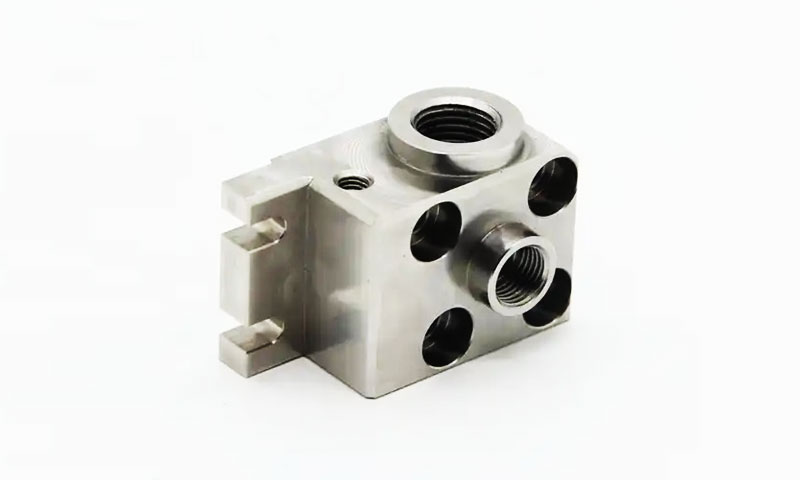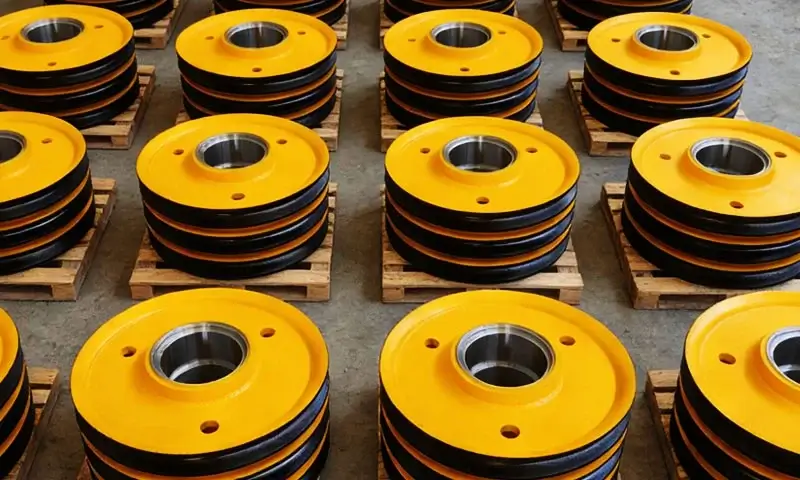
La fundición de precisión proporciona una ruta de fabricación eficaz para poleas de grúa personalizadas porque puede reproducir geometrías metálicas relativamente complejas al mismo tiempo que mantiene una consistencia dimensional controlada y proporciona un punto de partida casi neto para el mecanizado posterior..
Cuando se combina con la selección de aleación adecuada, Tratamiento térmico controlado, Mecanizado CNC, e inspección no destructiva, La fundición de precisión puede producir poleas adaptadas a sistemas de cables de acero y aplicaciones de elevación específicos..
El objetivo de la ingeniería no es simplemente producir una polea que se ajuste a un conjunto.
El objetivo es fabricar un componente cuya integridad de fundición, propiedades mecánicas, geometría de ranura, precisión dimensional, y el estado de la superficie siguen siendo adecuados durante ciclos de servicio repetidos.
Este artículo examina poleas de grúa de fundición de precisión desde la perspectiva del diseño de componentes, ingeniería de materiales, producción de fundición, mecanizado, control de calidad, y rendimiento de la aplicación.
1. ¿Qué es una polea de grúa??
A polea de grúa es una rueda ranurada que se utiliza para guiar, redirigir, apoyo, o distribuir un cable metálico dentro de una grúa u otro mecanismo de elevación.
El cable pasa alrededor de la circunferencia de la polea., mientras la polea gira alrededor de un eje, alfiler, o cubo soportado por rodamientos.
Dependiendo de la configuración de la grúa, Se pueden instalar una o más poleas en un bloque de poleas., sistema de reenvío, cabeza de auge, conjunto de carro, u otro mecanismo de elevación.
El propósito fundamental de una polea es sencillo.: Cambia la dirección del cable y permite que el cable se mueva bajo carga con fricción reducida y flexión controlada..
Su función mecánica real., sin embargo, es considerablemente más exigente.
Cuando un cable cargado pasa sobre una polea, la cuerda se dobla y desdobla repetidamente. La ranura de la polea sostiene el cable y distribuye las fuerzas de contacto en una región definida..
Al mismo tiempo, La propia polea debe resistir las fuerzas transmitidas a través del cable sin deformarse excesivamente., agrietamiento, tener puesto, o pérdida de alineación.
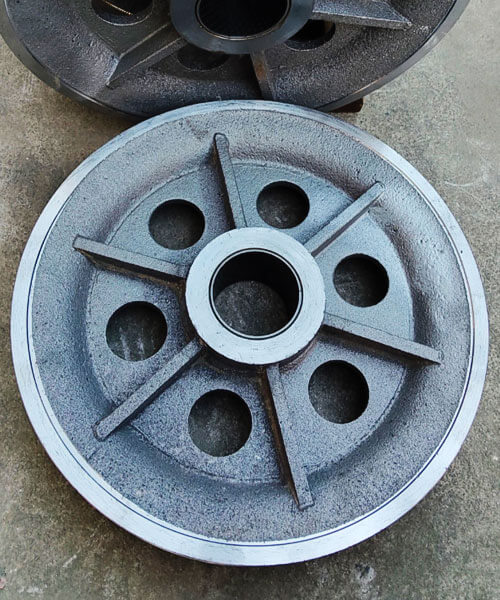
Estructura básica de polea de grúa
Una polea de grúa convencional generalmente consta de varias áreas funcionales.:
| Componente | Función principal | Consideraciones clave de ingeniería |
| Cuerpo de polea | Soporta la cuerda y transmite carga. | Fortaleza, rigidez, integridad de la fundición |
| Ranura de cuerda | Recibe y guía el cable | Radio, profundidad, perfil, acabado superficial |
| Centro | Conecta la polea al soporte giratorio. | Transmisión de carga, espesor de la pared |
| Aburrir | Se adapta a una disposición de eje o rodamiento | Diámetro, tolerancia, concentricidad |
| Bridas | Ayuda a retener el cable | Altura, rigidez, autorización |
| Asiento del cojinete | Soporta el rodamiento cuando corresponda. | Precisión dimensional, acabado superficial |
| chavetero / Características de montaje | Transfiere torque o asegura el conjunto. | Posición, geometría, alineación |
2. Materiales comunes para poleas de grúa
La selección del material es una de las decisiones más importantes en la fabricación personalizada de poleas de grúa porque el material influye en la resistencia., tenacidad, resistencia al desgaste, comportamiento de fatiga, resistencia a la corrosión, maquinabilidad, respuesta al tratamiento térmico, y rendimiento del casting.
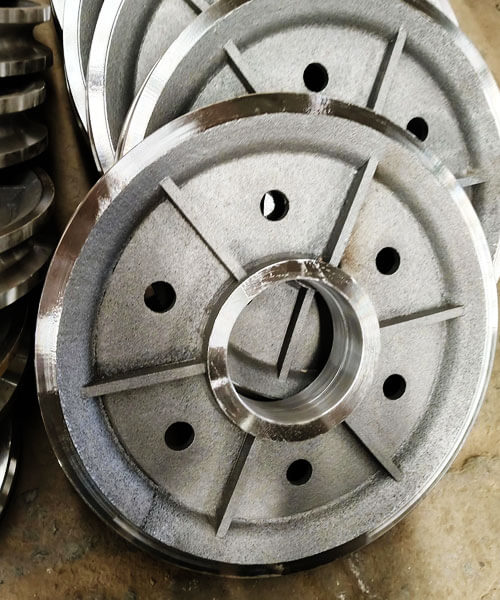
Camidas de acero al carbono
El acero al carbono es ampliamente aplicable a componentes industriales generales porque proporciona una combinación útil de resistencia., tenacidad, maquinabilidad, soldadura, y rentabilidad.
Para poleas de grúa, El acero al carbono puede ser apropiado cuando las condiciones de servicio no requieren una mayor resistencia., Endurecimiento, o resistencia a la corrosión asociada con materiales más altamente aleados.
El grado exacto de acero debe seleccionarse de acuerdo con las propiedades mecánicas requeridas., tamaño de la sección de fundición, condición de tratamiento térmico, entorno operativo, y especificación técnica aplicable.
Fundición de acero aleado
Los aceros aleados se vuelven atractivos cuando la polea se somete a cargas más exigentes o cuando aumenta la templabilidad., tenacidad, fortaleza, o se requiere resistencia al desgaste.
Elementos de aleación como el manganeso., cromo, molibdeno, y el níquel se puede utilizar en diferentes combinaciones para modificar la respuesta del material al tratamiento térmico y a la carga de servicio..
Para poleas de grúas de servicio pesado, El beneficio del acero aleado no es simplemente una mayor resistencia.. El diseño correcto de la aleación puede ayudar a lograr una combinación más equilibrada de:
Fortaleza + tenacidad + resistencia a la fatiga + Endurecimiento + resistencia al desgaste
Este equilibrio es especialmente importante cuando la polea contiene secciones relativamente gruesas donde la respuesta uniforme al tratamiento térmico puede volverse más difícil..
Acero inoxidable
Se puede considerar el uso de acero inoxidable para poleas de grúas especializadas expuestas a condiciones corrosivas., incluyendo marine, costero, costa afuera, químico, o entornos de lavado.
Sin embargo, El acero inoxidable no debe considerarse automáticamente la mejor opción simplemente porque tiene una resistencia superior a la corrosión..
La selección del material debe considerar la carga mecánica., comportamiento de desgaste, costo, requisitos de mecanizado, y la corrosividad real del medio ambiente.
Para muchas aplicaciones de elevación de servicio pesado, Un acero al carbono o aleado adecuadamente diseñado con un sistema de protección adecuado puede ser más práctico que el acero inoxidable..
Hierro dúctil
El hierro dúctil puede proporcionar características de fundición atractivas junto con una resistencia útil., tenacidad, resistencia al desgaste, amortiguación de vibración, y estabilidad dimensional.
Su aplicabilidad depende en gran medida del diseño y los requisitos de carga..
No debe seleccionarse únicamente porque su moldeabilidad sea favorable.; Se deben evaluar todas las consecuencias de carga mecánica y falla de la aplicación..
3. Proceso de fundición de precisión para poleas de grúa
La fundición de precisión es un método de fabricación eficaz para producir poleas de grúa con perfiles complejos., centros integrados, transiciones estructurales, y otras geometrías que serían costosas o ineficientes de fabricar íntegramente mediante mecanizado.
Para poleas de grúa personalizadas, casting de inversión (Casting de cera perdido) Es particularmente valioso porque el proceso puede reproducir geometrías intrincadas con tolerancias de fundición relativamente estrictas y una estructura cercana a la forma neta., mientras que el mecanizado CNC posterior establece las dimensiones funcionales críticas.
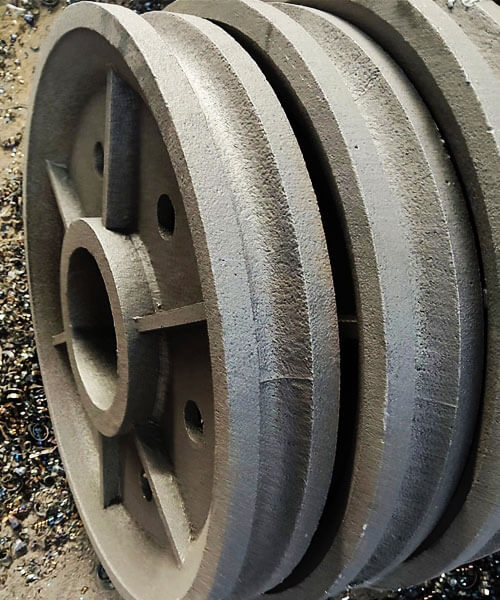
Casting de inversión (Casting de cera perdido) Proceso
| Escenario | Paso del proceso | Descripción | Controles clave |
| 1. Ingeniería & Estampación | análisis DFM | Se revisa el dibujo 2D o el modelo CAD 3D para determinar la viabilidad de la fundición., espesor de la pared, transiciones, contracción, subsidios de mecanizado, y requisitos de entrada. | simulación de fundición; requisitos dimensionales; borrador; radio de filete; margen de mecanizado |
| 2. Producción de patrones | Inyección de cera | Se inyecta cera en una herramienta de precisión para producir un patrón de sacrificio preciso que representa la geometría de la polea de la grúa.. | Temperatura de la cera; presión de inyección; presiono de sujeción; Tiempo de ciclo; dimensiones del patrón |
| Inspección de patrones | Se revisan los patrones de cera para detectar distorsiones., llenado incompleto, destello, variación dimensional, y defectos de la superficie. | Dimensiones del patrón; inspección visual; consistencia dimensional | |
| 3. Ensamblaje de patrones | Montaje del árbol | Los patrones de cera individuales están unidos a un sistema de bebedero central con canales y compuertas diseñados para proporcionar un flujo de metal controlado.. | Diseño de puerta; orientación del patrón; espaciado; dimensiones del corredor |
| 4. Edificio de conchas | Recubrimiento de lechada | El conjunto de cera se sumerge repetidamente en una mezcla de cerámica y se cubre con estuco refractario para crear una cubierta de cerámica multicapa.. | Viscosidad de lodo; espesor de capa; tiempo de secado; humedad; tamaño de partícula de estuco |
| Refuerzo de carcasa | Se aplican capas cerámicas adicionales hasta que la cubierta tenga suficiente resistencia y permeabilidad para el vertido de metal.. | Espesor de la cáscara; condiciones de secado; integridad de la cáscara | |
5. Rocío |
Autoclave / desparafinado instantáneo | La carcasa ensamblada se calienta para eliminar el patrón de cera y dejar una cavidad cerámica limpia.. | Temperatura; presión de vapor; tasa de calentamiento; tiempo de desparafinado |
| 6. Disparo de concha | Cocción de cerámica | La carcasa de cerámica se cuece a temperatura elevada para eliminar la cera residual., fortalecer el molde, y establecer estabilidad térmica. | Temperatura del horno; tasa de calentamiento; tiempo de espera; temperatura de la cáscara |
| 7. Fusión | Fusión por inducción | La aleación seleccionada se funde en un horno controlado y se lleva a la composición química y condiciones de vertido requeridas.. | Química de aleaciones; temperatura de fusión; tiempo de espera; derretir limpieza |
| 8. Verificación de metales | Análisis químico | El metal fundido se analiza para verificar que su composición cumpla con el grado de aleación especificado antes de verterlo.. | Análisis espectrométrico; control de material de carga; número de calor |
9. Torrencial |
Gravedad / vertido controlado | El metal fundido se introduce en la carcasa de cerámica precalentada a través del sistema de compuerta diseñado. | Temperatura de vertido; tasa de vertido; precalentar el molde; estabilidad de llenado |
| 10. Solidificación | Enfriamiento controlado | La pieza fundida se solidifica dentro del molde cerámico.. La alimentación y la solidificación direccional se controlan para minimizar la contracción y otras discontinuidades internas.. | gradientes térmicos; eficiencia del elevador; ritmo de enfriamiento; espesor de sección |
| 11. Knockear | Eliminación de concha | Después de un enfriamiento suficiente, La carcasa de cerámica se retira mecánicamente de la pieza metálica.. | Intensidad de vibración; método de eliminación de cáscara; protección de fundición |
| 12. Cierre | Desmontaje de puerta y contrahuella | Bebederos, corredores, puertas, y los elevadores están separados de la pieza fundida de la polea de la grúa.. | Ubicación de corte; parámetros de la sierra abrasiva; manipulación de piezas |
13. Acabado de fundición |
Molienda / disparo | Puertas residuales, aletas, destello, y la cerámica adherida se retiran y se prepara la superficie para su posterior procesamiento. | tipo abrasivo; presión de voladura; subsidio de molienda; condición de la superficie |
| 14. Tratamiento térmico | Normalización / Q&T / alivio del estrés | La fundición se trata térmicamente según la aleación y las propiedades mecánicas requeridas.. | Temperatura del horno; tiempo de remojo; ritmo de enfriamiento; dureza |
| 15. Mecanizado CNC | Torneado / aburrido / mecanizado de ranuras | Características funcionales como el orificio., centro, asiento de rodamiento, ranura de cuerda, y las superficies de montaje se mecanizan hasta las dimensiones finales. | Tolerancia dimensional; concentricidad; sin; rugosidad de la superficie |
| 16. Inspección final | Inspección dimensional y END | La polea terminada se inspecciona para verificar la geometría., propiedades mecánicas, condición de la superficie, y, donde se especifica, integridad interna. | Cmm; dureza; UT/MT/PT/RT según corresponda; inspección visual |
4. Mecanizado de ranuras de cuerdas y acabado de superficies
La ranura para cable es una de las características funcionales más importantes de una polea de grúa porque establece cómo se sostiene el cable., guiado, y doblado durante la operación.
Incluso cuando el cuerpo de fundición tiene una excelente integridad metalúrgica, una ranura mal mecanizada puede acelerar el desgaste del cable, aumentar el estrés de contacto local, promover la carga desigual, y reducir la vida útil tanto del cable como de la polea..
Mecanizado de ranuras después de la fundición
La fundición a la cera perdida u otros procesos de fundición de precisión pueden producir una polea con forma casi neta., pero la ranura final del cable normalmente requiere mecanizado cuando la geometría controlada y el acabado de la superficie son críticos.
La secuencia de mecanizado puede incluir:
Inspección de fundición → establecimiento de referencia → torneado desbaste → mecanizado de ranuras → torneado de acabado → verificación dimensional
La polea primero se ubica de manera segura utilizando puntos de referencia apropiados.. La referencia de mecanizado debe establecerse desde la línea central funcional del componente en lugar de desde una superficie arbitraria de fundición..
Esto es particularmente importante para poleas grandes o asimétricas porque, de lo contrario, la variación de fundición puede transferirse directamente a la posición final de la ranura..
Concentricidad y descentramiento de la ranura
La relación entre la ranura del cable y el orificio de la polea es crítica.
Si la ranura no es concéntrica con el orificio, El cable puede experimentar una posición radial cambiante a medida que gira la polea..
Un descentramiento excesivo puede provocar una variación cíclica en el contacto y la carga del cable y puede contribuir a la vibración o al desgaste acelerado de los componentes..
Para poleas de grúa de precisión, Por lo tanto, los fabricantes deben establecer criterios de inspección para:
- Concentricidad ranura-agujero
- Descentramiento radial
- Descentramiento axial
- Diámetro del agujero
- Diámetro de ranura
- Perfil de ranura
- Dimensiones de brida
Los valores permitidos deben provenir del plano de ingeniería o de la especificación aplicable en lugar de asignarse universalmente..
Acabado superficial de la ranura de la cuerda
El acabado de la superficie debe controlarse lo suficiente para evitar la abrasión innecesaria del cable metálico manteniendo al mismo tiempo la geometría de contacto prevista..
Un duro, rasgado, poroso, o una ranura mal rectificada puede crear asperezas localizadas que actúan como concentraciones de tensión o puntos abrasivos..
En cambio, El acabado de la superficie no debe utilizarse para compensar un perfil de ranura incorrecto..
La secuencia de preparación de la superficie puede implicar:
- Mecanizado áspero
- Mecanizado de semiacabado
- Terminar mecanizado
- Desacuerdo
- Pulido o esmerilado controlado donde se especifique
- limpieza final
La rugosidad superficial requerida debe definirse de acuerdo con las especificaciones del cable y la polea..
Un único valor numérico de Ra no debe considerarse universalmente aplicable porque diferentes construcciones de cables y condiciones de servicio pueden requerir diferentes criterios de superficie..
5. Tratamiento térmico de poleas de grúa fundidas
Tratamiento térmico Es una etapa crítica en la fabricación de poleas de grúa fundidas., particularmente cuando se utiliza acero al carbono o acero aleado.
La fundición establece la geometría básica del componente., pero la microestructura recién fundida no es necesariamente la estructura óptima para un servicio mecánico exigente..
Un proceso de tratamiento térmico adecuadamente controlado puede modificar la microestructura y mejorar la combinación requerida de fortaleza, dureza, tenacidad, resistencia a la fatiga, y estabilidad dimensional.
La ruta de tratamiento térmico adecuada depende de la química de la aleación., tamaño de la sección de fundición, propiedades mecánicas requeridas, y especificación del cliente.
Procesos comunes de tratamiento térmico
Normalización
La normalización implica calentar el acero a un rango de temperatura apropiado por encima de su temperatura de transformación., manteniéndolo durante el tiempo suficiente, y luego enfriarlo al aire.
Para aceros fundidos, La normalización puede ayudar a refinar y homogeneizar la microestructura y reducir parte de la falta de uniformidad asociada con la fundición..
Puede usarse cuando se requiere una resistencia de moderada a alta combinada con una tenacidad y estabilidad dimensional razonables..
Recocido
El recocido generalmente implica calentamiento seguido de enfriamiento controlado..
Puede reducir la dureza, mejorar la maquinabilidad, Aliviar el estrés interno, y producir un más suave, condición metalúrgica más estable.
El recocido puede ser útil como proceso intermedio donde los requisitos de mecanizado posteriores son particularmente exigentes..
Apagado y templado
Para aceros aleados y al carbono adecuados, apagar y templar (Q&T) El tratamiento se puede utilizar para obtener resistencia y dureza sustancialmente aumentadas junto con una tenacidad controlada..
El proceso básico es:
Austenitización → Templado → Templado
El paso de enfriamiento produce una microestructura más dura., mientras que el templado reduce la fragilidad excesiva y ajusta el equilibrio final de resistencia y dureza..
Para componentes de grúa muy cargados, La etapa de templado es particularmente importante porque la dureza máxima no es necesariamente equivalente a un rendimiento de servicio óptimo..
Alivio del estrés
El tratamiento térmico de alivio de tensiones se puede utilizar para reducir las tensiones residuales generadas durante la fundición., soldadura, mecanizado extenso, o procesamiento térmico previo.
Esto puede ser particularmente útil para poleas grandes donde la estabilidad dimensional es importante..
6. Defectos comunes de fundición de poleas de grúa y sus causas fundamentales
Los defectos de fundición pueden afectar significativamente la confiabilidad estructural de las poleas de las grúas.
Porque una polea es un componente cargado cíclicamente, Las discontinuidades internas que podrían tolerarse en una pieza fundida decorativa de baja tensión pueden volverse importantes cuando el componente se somete a cargas de elevación repetidas..
| Defecto | Descripción | Causa principal | Medidas preventivas |
| Porosidad de contracción | vacíos internos | Alimentación insuficiente durante la solidificación.. | Optimizar el diseño del elevador; usar escalofríos; simulación. |
| Porosidad de gas | Pequeños huecos redondeados | Atrapamiento de gas; gases disueltos en la masa fundida. | Quemar para derretir; mejorar la práctica de vertido; carga limpia. |
| Lágrimas calientes | Grietas | Esfuerzo de tracción durante la solidificación.. | Reducir la temperatura de vertido; mejorar la colapsabilidad de la carcasa. |
| Inclusiones de arena | Arena incrustada | Erosión de la cáscara cerámica.. | Mejorar la resistencia de la cáscara; reducir la turbulencia. |
Egipto |
Llenado incompleto | Baja temperatura de vertido; metal insuficiente. | Aumentar la temperatura de vertido; mejorar la entrada. |
| Cierre frío | vueltas de superficie | Dos corrientes que se encuentran sin fusión. | Aumentar la temperatura de vertido; mejorar la entrada. |
| Variación dimensional | Dimensiones fuera de tolerancia | Desgaste del patrón; expansión de la cáscara. | Mantener herramientas; controlar el proceso del shell. |
| Mal acabado superficial | Superficie rugosa | Cerámica gruesa; defectos de la cáscara. | Utilice una cáscara más fina; mejorar el proceso de cáscara. |
7. Aplicaciones de las poleas de grúa de fundición de precisión
Las poleas de grúa de fundición de precisión se utilizan en sistemas de elevación donde se deben redirigir cables metálicos., apoyado, o enrollado manteniendo el contacto controlado con la cuerda y la confiabilidad mecánica.
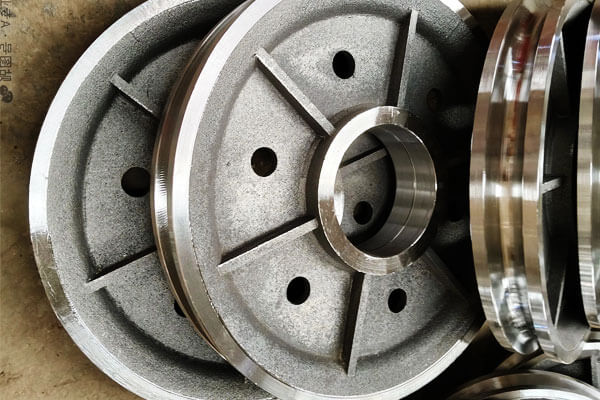
Grúas aéreas y puente grúa
Puentes grúa y puentes grúa eléctricos. (EOT) Las grúas suelen utilizar poleas en el bloque del gancho., mecanismo de elevación, y sistema de enhebrado.
Estas aplicaciones normalmente requieren:
- Alta resistencia a cargas repetidas.
- Geometría precisa de ranura de cuerda
- Buen equilibrio rotacional
- Interfaces de rodamientos fiables
- Concentricidad controlada entre el orificio y la ranura
- Adecuada resistencia a la fatiga
Para grúas de producción con ciclos frecuentes, La durabilidad de la polea puede tener una influencia directa en los intervalos de mantenimiento porque el desgaste de las ranuras y la fatiga del cable están estrechamente relacionados..
Las poleas fundidas personalizadas son particularmente útiles cuando el fabricante de la grúa necesita dimensiones optimizadas para un tambor en particular., bloque de gancho, cuerda de alambre, o sobre de instalación.
Grúas pórtico y pórtico
Las grúas pórtico y pórtico se utilizan ampliamente para la manipulación de contenedores., astilleros, patios industriales, plantas siderúrgicas, y manejo de materiales pesados.
Sus poleas pueden experimentar tensiones de cable y cargas dinámicas relativamente altas..
Además, Las instalaciones al aire libre exponen los componentes a la lluvia., humedad, polvo, Fluctuaciones de temperatura, y condiciones atmosféricas potencialmente corrosivas..
En consecuencia, la selección del material se convierte en una parte importante del diseño..
El acero fundido al carbono o aleado puede ser apropiado para aplicaciones generales de servicio pesado., mientras que las aleaciones resistentes a la corrosión o los sistemas de acabado protectores pueden volverse más relevantes en entornos marinos..
Para grúas pórtico grandes, La estabilidad dimensional y la integridad estructural de la fundición son particularmente importantes porque las dimensiones de la polea pueden volverse sustanciales..
Grúas torre
Las grúas torre utilizan poleas para elevar, carro, y mecanismos de abatimiento. Restricciones de espacio, enrutamiento de cuerda, y los ciclos operativos relativamente altos hacen que la optimización dimensional sea importante.
Es posible que una polea personalizada deba satisfacer varios requisitos competitivos:
Lo suficientemente grande como para reducir la flexión severa de la cuerda., pero lo suficientemente compacto como para caber dentro de la envoltura mecánica de la grúa.
El perfil de la ranura también debe corresponder al cable seleccionado., mientras que la disposición del cubo y el cojinete deben integrarse con los componentes existentes de la grúa.
La fundición de precisión puede proporcionar flexibilidad en el desarrollo de configuraciones complejas de cubo y brida sin necesidad de mecanizar todo el componente a partir de una palanquilla grande..
Puerto, Puerto, y grúas para contenedores
Las grúas portuarias operan bajo exigentes combinaciones de:
- Cargas elevadas
- Alta utilización
- Servicio continuo o semicontinuo
- Atmósferas cargadas de sal
- Carga dinámica
- Requisitos de mantenimiento estrictos
Por lo tanto, las poleas utilizadas en estos sistemas pueden requerir una combinación de resistencia mecánica, resistencia al desgaste, resistencia a la fatiga, protección contra la corrosión, y mecanizado preciso.
Donde la corrosión es severa, Se pueden considerar piezas fundidas de acero inoxidable o de acero inoxidable dúplex para ciertos componentes., aunque la selección debe basarse en todos los requisitos mecánicos y ambientales y no solo en la resistencia a la corrosión..
Construcción naval y grúas marinas
Las grúas marinas suelen operar en zonas húmedas., Ambientes que contienen agua salada donde la corrosión puede afectar significativamente la vida útil de los componentes..
Se pueden utilizar poleas de grúa fundidas con precisión en:
- Sistemas de elevación a bordo
- Grúas para astilleros
- Grúas de cubierta
- Sistemas de manipulación marina
- Equipos de apoyo en alta mar
Para estas aplicaciones, El fabricante debe considerar no sólo el material a granel sino también el estado de las superficies mecanizadas., sujetadores, aspectos, recubrimientos protectores, drenaje, y mantenimiento.
Corrosión localizada en la ranura., centro, o la interfaz del rodamiento puede ser particularmente indeseable porque estas áreas son funcionalmente críticas.
Grúas costa afuera
Los sistemas de elevación marinos imponen condiciones de servicio especialmente exigentes porque combinan altas cargas mecánicas con corrosión marina., movimiento inducido por el viento, vibración, y efectos dinámicos potencialmente graves.
Una polea de grúa fundida de precisión para servicio en alta mar puede requerir:
- Dustuitud de alta fractura
- Composición química controlada
- Tratamiento térmico calificado
- Material o revestimiento resistente a la corrosión.
- END extensivo
- Certificación de material trazable
- Control dimensional estricto
Para tales aplicaciones, La especificación de ingeniería debe definir en detalle los criterios de inspección y aceptación requeridos.. La calidad del material por sí sola no es suficiente para establecer la idoneidad.
Grúas Mineras e Industriales Pesadas
Instalaciones mineras, acerías, fundiciones, plantas de energía, y las operaciones de fabricación pesadas a menudo utilizan grúas en entornos caracterizados por polvo, vibración, temperaturas elevadas, alta utilización, y cargas pesadas.
Las poleas para estas aplicaciones pueden requerir una mayor resistencia a:
- Fatiga cíclica
- Impacto mecánico
- Desgaste de ranura
- Contaminación
- Temperaturas de funcionamiento elevadas
- Ambientes abrasivos
Las piezas fundidas de acero aleado con un tratamiento térmico adecuado pueden proporcionar una fuerte combinación de propiedades mecánicas donde se requiere un rendimiento de servicio pesado..
Equipos de construcción y manipulación de materiales
Grúas de construcción, polipastos, cabrestantes, y los sistemas de manipulación de materiales también utilizan poleas para redirigir el cable y mantener el enhebrado controlado..
Los requisitos varían considerablemente.. Una polea de polipasto relativamente pequeña puede priorizar el costo y la compacidad, mientras que una grúa de construcción de alta capacidad puede requerir interfaces de rodamientos y ranuras de alta ingeniería.
Esta diversidad de aplicaciones es una de las razones por las que un fabricante personalizado capaz debería poder admitir múltiples rutas de fabricación y materiales en lugar de forzar cada aplicación a un diseño estándar..
8. Ventajas de la fundición de precisión para poleas de grúa
| Ventaja | Valor de ingeniería |
| Capacidad de forma casi neta | Reduce el mecanizado innecesario |
| Geometría compleja | Soporta hub optimizado, brida, y características estructurales |
| Flexibilidad de material | Permite la selección de aleaciones específicas para la aplicación. |
| Producción integrada | La fundición y el mecanizado CNC se pueden diseñar juntos |
| Repetibilidad | Útil para OEM y producción de piezas de repuesto. |
| Desechos de material reducido | Menos remoción que el mecanizado de grandes existencias |
| Personalización del diseño | Admite geometría específica de la aplicación |
| Producción escalable | Adecuado para repetición de producción cuando se justifica el uso de herramientas. |
9. Poleas de grúa fundidas de precisión vs.. Poleas Forjadas y Fabricadas
La elección entre casting de precisión, forja, y fabricación debe basarse en los requisitos de ingeniería reales de la polea de la grúa en lugar de asumir que un proceso de fabricación es universalmente superior.
Cada método crea un equilibrio diferente de geometría., utilización de materiales, propiedades mecánicas, flexibilidad de producción, requisitos de mecanizado, y costo.
Para poleas de grúa personalizadas, Por lo tanto, la cuestión central no es simplemente “¿Qué proceso es más fuerte??" sino más bien:
¿Qué proceso de fabricación puede ofrecer de manera más eficiente la capacidad de carga requerida?, rendimiento de fatiga, precisión de ranura de cuerda, integridad estructural, dimensiones, volumen de producción, y confiabilidad del servicio?
La siguiente comparación se centra en las principales diferencias de ingeniería que importan al seleccionar una ruta de fabricación para poleas de grúa..
| Diferencia clave | Poleas de grúa de fundición de precisión | Poleas de grúa forjadas | fabricado / Poleas soldadas |
| Mejor ajuste | Complejo, poleas personalizadas que requieren una geometría cercana a la forma neta y producción repetida | Aplicaciones de alta resistencia y críticas para la fatiga | Muy grande, de bajo volumen, o poleas altamente personalizadas |
| Geometría & Libertad de diseño | Excelente para centros complejos, bridas, costillas, y transiciones | Moderado; La geometría debe ser compatible con la forja. | Excelente a través de la construcción de varias partes |
| Rendimiento mecánico | Excelente cuando la calidad de la fundición y el tratamiento térmico se controlan adecuadamente | Excelente, particularmente para aplicaciones de alta resistencia y fatiga | Bien, pero depende en gran medida del diseño y la calidad de la soldadura. |
| Eficiencia de material | Alto, con relativamente poco exceso de material | Moderado; generalmente se requiere un margen de mecanizado | Variable; depende del plato, anillo, y diseño de componentes |
| Requisito de mecanizado | Moderado; superficies funcionales principalmente críticas | Moderado a alto | Moderado a alto |
| Capacidad de gran diámetro | Bien, pero depende del equipo y proceso de fundición. | Limitado por la capacidad de forjado y las herramientas. | Excelente para estructuras muy grandes. |
Volumen de producción |
Muy adecuado para repetir la producción OEM | Más adecuado para repetir la producción donde se justifica el uso de herramientas. | Muy adecuado para producción de bajo volumen o basada en proyectos. |
| Costo de herramientas | Moderado | Alto | Relativamente bajo |
| Principal preocupación por la calidad | Defectos de fundición como la contracción., porosidad, e inclusiones | Calidad de los materiales, forjando integridad, y control del tratamiento térmico | Defectos de soldadura, estrés residual, y distorsión |
| Ventaja principal | Geometría compleja + personalización + forma cercana a la red | Alto rendimiento mecánico | tamaño grande + flexibilidad estructural |
| Limitación principal | Requiere un estricto control de fundición y END | Mayor costo de herramientas y procesamiento. | Más desafíos de soldadura y control dimensional |
10. ¿Por qué elegir LangHe Industry para poleas de grúa de fundición de precisión personalizadas??
La selección de un proveedor de poleas para grúa debería ir más allá de comparar los precios de las piezas fundidas..
Porque el componente combina fundición estructural., tratamiento térmico, mecanizado de precisión, geometría de contacto con la cuerda, e inspección, La capacidad del proveedor para controlar toda la cadena de fabricación es a menudo más importante que el proceso de fundición nominal en sí..
Industria de Langhe Puede abordar las poleas de grúa fundidas con precisión y personalizadas como un proyecto de fabricación integrado., revisión de ingeniería de conexión, desarrollo de casting, mecanizado, refinamiento, e inspección de calidad.
| Capacidad | Detalles |
| Materiales | Acero carbono (WCB), acero fundido, hierro dúctil (60-40-18, 65-45-12, 80-55-06), acero inoxidable (CF-8, CF-8M, 17-4Ph), acero aleado (4140, 4340) |
| proceso de fundición | Fundición a la cera perdida, fundición de arena. |
| Peso de la pieza | 0.5 kg a 500 kg. |
| Tolerancias | ± 0.1–0.3 mm (CT5-CT7 según ISO 8062). |
| Calidad | ISO 9001:2015 certificado; 100% inspección; Cmm; perfilómetro de superficie; NDT (radiografía, penetrante de tinte). |
| Tiempo de entrega | 6–12 semanas para herramientas; 2–4 semanas para pedidos repetidos. |
11. Conclusión
Una polea de grúa es un componente de apariencia relativamente simple con una función mecánica exigente.. Debe guiar y doblar el cable repetidamente mientras transmite la carga a través del cubo., aspectos, y estructura de soporte.
Como consecuencia, geometría de ranura, integridad material, condición de tratamiento térmico, precisión de mecanizado, concentricidad, y la calidad de la superficie contribuyen al rendimiento de la polea en el mundo real..
La fundición de precisión ofrece una ruta de fabricación convincente para poleas de grúa personalizadas cuando la geometría es compleja., producción casi en forma neta, flexibilidad de material, y la repetibilidad son importantes.
Puede reducir el mecanizado innecesario y al mismo tiempo permitir a los ingenieros integrar concentradores., bridas, costillas, transiciones, y otras características estructurales en la fundición..
LangHe Industry ofrece un enfoque de fabricación personalizado para poleas de grúa fundidas con precisión, combinando ingeniería de fundición, selección de material, Mecanizado CNC, tratamiento térmico, refinamiento, e inspección para respaldar los requisitos OEM específicos de la aplicación.
Preguntas frecuentes
¿Qué es una polea de grúa de fundición de precisión??
Una polea de grúa de fundición de precisión es una polea de cable fabricada mediante un proceso de fundición controlado., comúnmente inversión u otro método de fundición orientado a la precisión, seguido del mecanizado de superficies funcionales críticas.
La fundición crea la geometría primaria., mientras que el mecanizado CNC establece características como la ranura del cable, aburrir, y asientos de rodamientos.
¿Por qué utilizar fundición de precisión en lugar de mecanizar una polea de grúa a partir de acero sólido??
La fundición de precisión puede producir gran parte de la geometría final antes del mecanizado..
Esto puede reducir la eliminación de material., tiempo de mecanizado, y desperdicio de material, al tiempo que permite una mayor libertad para centros complejos, bridas, costillas, y transiciones estructurales.
¿Es una polea de grúa fundida tan fuerte como una polea forjada??
No hay una respuesta universal. Una polea de acero fundido diseñada y procesada adecuadamente puede proporcionar un excelente rendimiento mecánico.,
pero la forja puede ofrecer ventajas en aplicaciones donde se requiere una estructura forjada altamente consolidada y propiedades de fatiga específicas..
La idoneidad depende del material., geometría, tamaño de sección, tratamiento térmico, cargando, y requisitos de inspección.
¿Cuál es el factor de calidad más importante para una polea de grúa??
No existe un único parámetro que determine la calidad. Integridad de la fundición, propiedades mecánicas, geometría de ranura, alineación del orificio, condición de la superficie, y la precisión dimensional deben trabajar juntas.
Para aplicaciones críticas para la seguridad, Estas características deben verificarse con las especificaciones de ingeniería y el plan de inspección aprobados..
¿Cómo se puede mejorar la vida útil de las poleas de la grúa??
La vida útil se puede mejorar mediante el dimensionamiento correcto de la polea al cable., geometría de ranura adecuada, selección de material adecuado, lubricación y mantenimiento adecuados,
alineación precisa, calidad de fabricación controlada, y reemplazo oportuno cuando el desgaste de la ranura u otros daños exceden el límite especificado.