En la fabricación moderna, Las piezas de un solo material rara vez satisfacen todas las demandas de rendimiento., estética, y funcionalidad.
Los productos actuales deben ser duraderos pero cómodos, impermeable pero transpirable, y complejo pero fácil de montar.
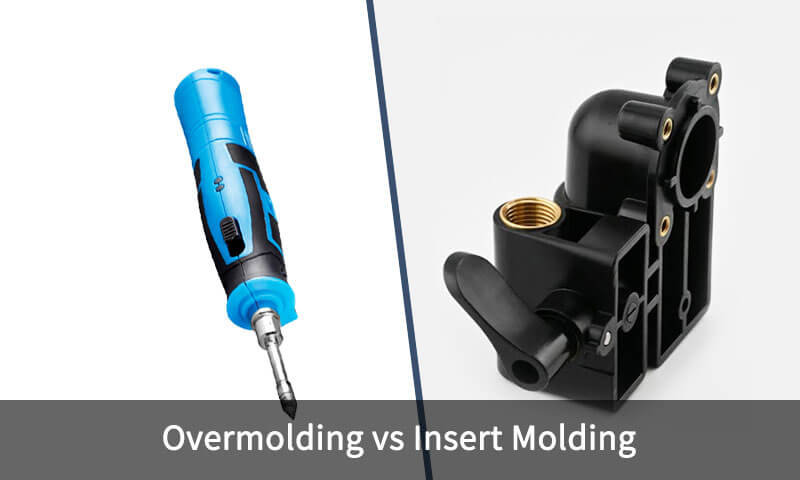
Esto ha impulsado la adopción generalizada de procesos de fabricación de múltiples materiales.. Entre estos, El sobremoldeo y el moldeado por inserción son dos de las técnicas más importantes y frecuentemente comparadas..
Aunque los dos términos a veces se usan indistintamente, Describen diferentes enfoques de fabricación y resuelven diferentes problemas de ingeniería..
El sobremoldeo generalmente implica moldear un segundo material sobre un sustrato existente para crear un componente multimaterial..
Insertar moldura, en contraste, coloca un inserto preformado, a menudo de metal, dentro de un molde de inyección y lo encapsula o lo rodea parcialmente con plástico..
Este artículo proporciona un integral, Comparación lado a lado de sobremoldeo y moldeo por inserción.
1. ¿Qué es el sobremoldeo??
Sobremoldeo Es un proceso de moldeo por inyección en el que un material se moldea sobre un sustrato existente o un componente previamente moldeado para crear una pieza integrada de múltiples materiales..
El primer componente se conoce comúnmente como sustrato, mientras que el material aplicado durante la operación de moldeo secundario es el material sobremoldeado.
Dependiendo del diseño del producto., el sustrato puede ser un termoplástico rígido, elastómero, componente metálico, u otra pieza preformada adecuada.
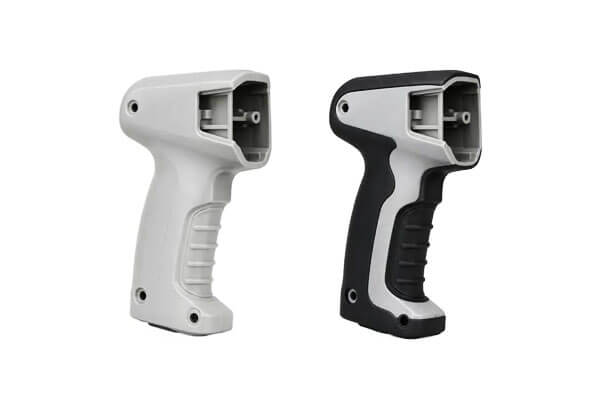
Un componente sobremoldeado típico puede combinar un material estructural rígido con un material más blando..
Por ejemplo, una carcasa rígida de ABS puede recibir un sobremolde de TPE para proporcionar un agarre cómodo, mejorar el sellado, o crear una superficie exterior protectora.
El objetivo no es simplemente colocar un material encima de otro. La interfaz entre los dos materiales debe proporcionar una adhesión adecuada., retención mecánica, o una combinación de ambos para resistir las condiciones mecánicas esperadas del producto., térmico, químico, y condiciones ambientales.
Cómo funciona el sobremoldeo
El proceso de sobremoldeo generalmente comienza con la producción del sustrato..
Esto puede implicar una operación de moldeo por inyección separada., proceso de mecanizado, operación de estampado, Proceso de casting de die, u otro método de fabricación.
Después de inspeccionar el sustrato, se coloca dentro de un segundo molde. El molde está diseñado para exponer las áreas que necesitan recibir el material de sobremolde mientras ubica y soporta con precisión el sustrato..
Luego, el material secundario se calienta a la temperatura de procesamiento adecuada y se inyecta en la cavidad del molde..
Fluye alrededor de las superficies del sustrato designadas y forma la geometría exterior requerida..
Después del llenado y embalaje, El material se enfría y solidifica antes de que se expulse el componente completo..
Un flujo de trabajo típico es:
Producción de sustrato → inspección de sustrato → carga de moldes → posicionamiento → inyección de material secundario → embalaje → enfriamiento → expulsión → inspección
La calidad del producto final depende en gran medida del diseño de la interfaz.. Si se requiere adhesión química, El sustrato y el material de sobremolde deben tener suficiente compatibilidad..
Si la retención mecánica es el mecanismo principal, el sustrato puede requerir ranuras, costillas, agujeros, subvenciones, u otras características que permitan que el segundo material se bloquee en su posición.
La contaminación de la superficie es otra consideración importante. Aceite, polvo, agentes de liberación, oxidación, humedad, u otros contaminantes pueden interferir con la adhesión y provocar delaminación o separación prematura..
Materiales comunes de sobremoldeo
El sobremoldeo puede utilizar una amplia gama de termoplásticos y materiales elastoméricos., pero no todas las combinaciones de materiales son inherentemente compatibles.
La selección del material debe considerar la temperatura de fusión, compatibilidad química, contracción, coeficiente de expansión térmica, dureza, flexibilidad, características de la superficie, y condiciones de servicio esperadas.
Las combinaciones comunes incluyen:
| Material de sustrato | Material sobremoldeado | Propósito típico |
| Abdominales | TPE | Carcasas y empuñaduras suaves al tacto |
| ordenador personal | TPE | Productos resistentes a impactos con superficies ergonómicas |
| Nylon | TPE/TPU | Empuñaduras industriales e interfaces flexibles |
| PÁGINAS | TPE | Productos de consumo y sellos. |
| PC/ABS | TPU | Superficies protectoras y ergonómicas |
| Termoplástico rígido | LSR | Sellado y componentes flexibles especializados. |
Aplicaciones típicas de sobremoldeo
El sobremoldeado es particularmente útil cuando el producto debe combinar rendimiento estructural con suavidad., flexibilidad, caza de focas, aislamiento, o ergonomía mejorada.
El sobremoldeo se utiliza comúnmente para:
- Empuñaduras para herramientas manuales
- Interruptores y controles automotrices
- Carcasas para electrónica de consumo
- Componentes de dispositivos médicos
- Dispositivos portátiles
- Protección de cables y alambres
- Componentes de sellado
- Asas e interfaces ergonómicas.
- Fundas protectoras
- Controles de equipos industriales
2. ¿Qué es la moldura por inserción??
Insertar moldura Es un proceso de moldeo por inyección en el que un componente preformado, conocido como un insertar, Se coloca dentro de un molde de inyección y luego se encapsula parcial o completamente con plástico fundido..
El inserto suele estar hecho de metal., aunque de plastico, cerámico, electrónico, y también se pueden utilizar otros componentes preformados.
A diferencia del moldeo por inyección convencional de un solo material, El moldeado por inserción combina un componente fabricado de forma independiente con plástico inyectado durante una operación de moldeado..
El plástico se solidifica alrededor del inserto., producir una pieza integrada que pueda eliminar operaciones de ensamblaje posteriores.
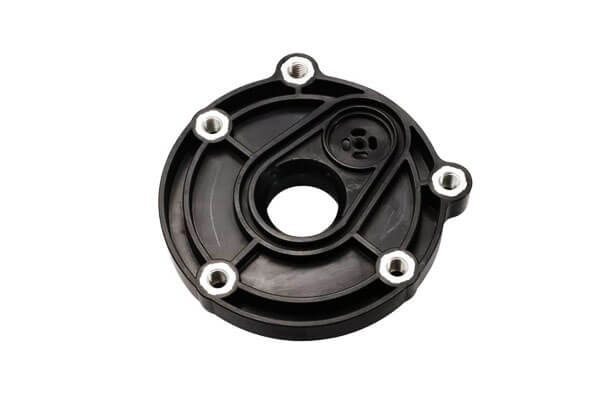
Por ejemplo, Se puede colocar un inserto roscado de latón dentro de un molde y rodearlo con nailon..
Después del moldeado, el componente resultante contiene una interfaz metálica roscada permanente sin necesidad de instalar el inserto roscado posteriormente.
Cómo funciona la moldura por inserción
El moldeado por inserción comienza con la fabricación y la inspección del inserto.. La precisión dimensional es particularmente importante porque el inserto debe encajar correctamente dentro del molde y mantener su posición especificada durante toda la inyección..
Luego el inserto se coloca manualmente en el molde., semiautomáticamente, o mediante un sistema de carga automatizado.
Accesorios dedicados, patas, cavidades, o se pueden utilizar elementos de retención para evitar el movimiento.
Una vez cerrado el molde, Se inyecta plástico fundido alrededor del inserto.. La presión de inyección puede ser sustancial, por lo que el molde debe proporcionar suficiente soporte para evitar que el inserto se mueva, deformando, o desalinearse.
Luego, el plástico se enfría y solidifica alrededor del inserto.. Después de la expulsión, El componente terminado se inspecciona para determinar la precisión dimensional., posición de inserción, destello, vacío, grietas, y otros defectos.
La secuencia básica es:
Fabricación de insertos → inspección de insertos → carga de insertos → posicionamiento y retención → cierre de molde → inyección de plástico → enfriamiento → expulsión → inspección
Para fabricación de gran volumen, La carga automatizada de insertos se puede integrar en la celda de moldeo.. Esto puede mejorar la consistencia del ciclo y al mismo tiempo reducir la manipulación manual..
Materiales de inserción comunes
El metal es el material de inserción más reconocido porque proporciona propiedades que los plásticos generalmente no pueden reproducir., como alta conductividad eléctrica, durabilidad del hilo, rigidez, resistencia al desgaste, o resistencia mecánica localizada.
Los materiales de inserción comunes incluyen:
- Latón
- Acero inoxidable
- Acero carbono
- Aluminio
- Cobre y aleaciones de cobre.
- Plásticos de ingeniería
- Cerámica
- Componentes electrónicos
Aplicaciones típicas de moldeo por inserción
El moldeado por inserción se utiliza comúnmente cuando un producto requiere que un metal u otro componente preformado se integre permanentemente en un cuerpo de plástico..
Las aplicaciones típicas incluyen:
- Jefes roscados
- Conectores eléctricos
- Terminales automotrices
- Carcasa del sensor
- Cambiar componentes
- Instrumentos médicos
- Componentes de refuerzo estructural
- Conectores de cables
- ensamblajes electronicos
- Componentes mecánicos de precisión.
3. Sobremoldeo versus moldeado por inserción: ¿Cuál es la diferencia??
Aunque ambas tecnologías integran múltiples materiales o componentes, su lógica de fabricación es diferente.
La distinción más simple es:
El sobremoldeo agrega un nuevo material sobre un sustrato existente, mientras que la moldura de inserción encapsula o rodea un inserto preformado con plástico moldeado por inyección.
Sin embargo, la terminología puede superponerse. En algunos contextos de fabricación, El moldeado por inserción puede considerarse una forma más amplia de sobremoldeo porque ambos implican moldear material alrededor de un componente preexistente..
Para comunicación de ingeniería., sin embargo, Es útil distinguirlos según el papel del componente preexistente..
Comparación de sobremoldeado y moldeado por inserción
| Factor | Sobremoldeo | Insertar moldura |
| Propósito principal | Combina diferentes propiedades de materiales | Integrar un inserto preformado en plástico |
| Componente preexistente | sustrato | Insertar |
| Sustrato/inserto común | Plástico, elastómero, metal | Metal, plástico, cerámico, componente electrónico |
| combinación típica | Plástico rígido + elastómero | Plástico + metal |
| Mecanismo de interfaz principal | Adhesión, enclavamiento mecánico, o ambos | Encapsulación, retención mecánica, adherencia en algunos casos |
| Preocupación clave por el diseño | Compatibilidad de material | Posicionamiento y retención de insertos. |
| Aplicación típica | Agarre suave al tacto | Inserto metálico roscado |
| Función de superficie | Agarre, sello, almohadón, protección | Eléctrico, mecánico, estructural, fijación |
| Automatización | Altamente automatizable | Altamente automatizable, pero la carga de inserción es crítica |
| Riesgo mayor | Delaminación o mala unión | Insertar movimiento o desalineación |
4. Sobremoldeo versus moldeado por inserción: Consideraciones de diseño
Los requisitos de diseño para el sobremoldeo y el moldeo por inserción difieren principalmente porque los dos procesos manejan interfaces diferentes..
El sobremoldeo se centra en crear una interfaz confiable entre el sustrato y el material sobremoldeado., mientras que el moldeado por inserción se centra en posicionar con precisión y encapsular de forma segura un inserto preformado..
| Consideración del diseño | Sobremoldeo | Insertar moldura |
| Compatibilidad de material | Seleccione sustratos compatibles y materiales de sobremoldeo según la adhesión., temperatura de fusión, contracción, dureza, y expansión térmica. | Asegúrese de que el inserto pueda soportar la temperatura y presión del moldeo sin deformación ni inestabilidad dimensional.. |
| Geometría & Espesor de la pared | Mantenga un espesor uniforme del sobremolde y proporcione suficiente área de unión. Evite cambios bruscos de espesor que puedan provocar encogimiento., deformación, o vínculo débil. | Proporcione suficiente espesor de plástico alrededor del inserto para mayor resistencia y use ranuras., gruñidos, agujeros, u hombros cuando se requiere retención adicional. |
| Vinculación & Retención | Diseñar la interfaz para la adhesión química., enclavamiento mecánico, o ambos, dependiendo de la compatibilidad del material. | Diseñe características mecánicas de retención y encapsulación para resistir la extracción y la rotación.. |
| Puerta & Flujo de materiales | Coloque las compuertas para lograr un llenado equilibrado y minimizar las líneas de soldadura., atrapamiento de aire, y tensión excesiva en la interfaz. | Controle cuidadosamente el flujo de material para evitar el desplazamiento del inserto., encapsulación incompleta, o presión excesiva sobre el inserto. |
Insertar / Posicionamiento del sustrato |
El sustrato debe ubicarse con precisión y sujetarse de forma segura durante la inyección.. | El posicionamiento preciso de la plaquita es fundamental; pasadores de localización, bolsillos, accesorios, o puede ser necesaria la colocación automatizada. |
| Contracción & Expansión térmica | Considere las diferencias en contracción y expansión térmica entre el sustrato y el sobremolde para evitar deformaciones., estrés residual, y delaminación. | Considere las diferencias de expansión térmica entre el inserto y el polímero., particularmente en aplicaciones de metal a plástico, Para evitar variaciones dimensionales y tensiones internas.. |
| Borrador & Expulsión | Proporcionar un tiro adecuado y eyectores colocados correctamente para liberar la pieza sin dañar el sobremolde o la interfaz.. | Diseñe el tiro y la expulsión con cuidado para evitar el movimiento del inserto., deformación, o aflojamiento durante el desmoldeo. |
Tolerancias |
Tener en cuenta las dimensiones del sustrato, espesor de sobremolde, contracción material, y posible movimiento de la interfaz. | Cuenta para dimensiones de inserción, precisión de posicionamiento, contracción del polímero, y ubicación final de inserción. |
| DFM & Flujo del molde | Evaluar el área de unión, flujo de materiales, espesor de la pared, ubicación de la puerta, y contracción diferencial antes del mecanizado. | Evaluar la retención del inserto, colocación, flujo de polímero, comportamiento térmico, y posible desplazamiento de la plaquita antes del mecanizado. |
| Control de calidad | Centrarse en la fuerza de unión, espesor de sobremolde, destello, delaminación, deformación, y precisión dimensional. | Centrarse en la posición de inserción, fuerza de retención, encapsulación, destello, vacío, y precisión dimensional. |
5. Servicios personalizados de sobremoldeo y moldeo por inserción de LangHe Industry
Industria de Langhe Proporciona soluciones de moldeo por inyección personalizadas para aplicaciones que requieren sobremoldeo., insertar moldura, y otras tecnologías de moldeo integradas.
Nuestro enfoque de fabricación puede respaldar proyectos desde el desarrollo inicial del producto y las herramientas hasta la producción y la inspección de calidad..
| Capacidad | Detalles |
| Tipos de sobremoldeo | dos tiros (2K) sobrecarga, sobremoldeado pick-and-place. |
| Insertar moldura | Inserciones metálicas (latón, acero, cobre), inserciones de cerámica, insertos electrónicos (PCBS, sensores). |
| Materiales (sustrato) | Abdominales, ordenador personal, Nylon (PA6, PA66), PÁGINAS, PBT. |
| Materiales (sobremoldear) | TPE, TPU, LSR, TINA, silicona. |
| Estampación | Diseño y fabricación de herramientas internas.. |
| Calidad | ISO 9001:2015 certificado; 100% inspección. |
| Tiempo de entrega | 2–4 semanas para prototipos; 4–8 semanas para herramientas de producción. |
6. Conclusión
Sobremoldeo versus moldeado por inserción No se trata de determinar qué proceso es universalmente mejor.. Ambas son tecnologías de moldeo por inyección altamente efectivas., pero abordan diferentes requisitos de desarrollo de productos.
El sobremoldeo es adecuado principalmente para productos que necesitan combinar diferentes características de materiales dentro de un componente integrado..
Es particularmente valioso para superficies suaves al tacto., empuñaduras ergonómicas, sellos flexibles, amortiguación, aislamiento, y capas protectoras.
Su éxito depende en gran medida de la compatibilidad del material., diseño de interfaz, adhesión, enclavamiento mecánico, y control diferencial de contracción.
Insertar moldura, en contraste, Es especialmente eficaz cuando un componente preformado, a menudo un inserto de metal, debe integrarse permanentemente en una estructura de plástico..
Es muy adecuado para interfaces roscadas., terminales eléctricas, componentes de refuerzo, sensores, conectores, y otras aplicaciones donde el plástico y otro material realizan funciones complementarias.
Al final, La selección del proceso debe basarse en todo el sistema de fabricación., incluyendo el comportamiento material, geometría del producto, estampación, estrategia de vinculación o retención, volumen de producción, automatización, inspección, y costo del ciclo de vida.
Preguntas frecuentes
¿Cuál es la diferencia entre moldura por inserción y moldura de dos disparos??
La moldura de inserción utiliza un inserto preformado que se coloca en el molde antes de la inyección de plástico.
El moldeo de dos disparos normalmente produce dos materiales de forma secuencial utilizando herramientas especializadas y múltiples etapas de inyección., a menudo sin cargar manualmente un sustrato fabricado por separado entre tomas.
¿Qué proceso es más rápido?: sobremoldeado o moldeado por inserción?
El moldeado por inserción es generalmente más rápido porque utiliza un solo disparo de inyección.. El sobremoldeo requiere dos disparos o un proceso de varios pasos.
¿Qué proceso tiene menores costos de herramientas??
El moldeado por inserción tiene menores costos de herramientas porque solo requiere una única cavidad de molde.. El sobremoldeo requiere dos moldes separados o un molde complejo de dos disparos..
¿Cuándo debo utilizar el sobremoldeo??
Utilice sobremoldeo cuando necesite agarres suaves al tacto, sellado impermeable, amortiguación de vibración, o estética mejorada.
¿Cuándo debo utilizar molduras de inserción??
Utilice molduras de inserción cuando necesite conexiones roscadas de alta resistencia, conductividad eléctrica, o refuerzo estructural en piezas plásticas.
¿Se pueden utilizar juntos el sobremoldeado y el moldeado por inserción??
Sí. Algunas partes complejas combinan ambos procesos, por ejemplo, una rosca de metal moldeada por inserción con un agarre suave al tacto sobremoldeado en el mismo componente.
¿El moldeado por inserción es un tipo de sobremoldeo??
La terminología puede superponerse porque ambos procesos moldean el material alrededor de un componente preexistente..
Sin embargo, en terminología práctica de fabricación, sobrecarga generalmente enfatiza agregar otra capa de material o sistema de materiales, mientras insertar moldura enfatiza específicamente incrustar un inserto preformado en el componente moldeado.
¿Se puede utilizar metal en sobremoldeo??
Sí. Los sustratos metálicos se pueden sobremoldear con plásticos o elastómeros adecuados..
Sin embargo, El proceso debe tener en cuenta la preparación de la superficie., expansión térmica, adhesión, retención mecánica, y contracción diferencial.