

1. Einführung
Kupfer Die CNC-Bearbeitung nimmt in der Fertigung einen besonderen Platz ein, da Kupfer eine außergewöhnliche elektrische und thermische Leitfähigkeit mit einem breiten industriellen Nutzen verbindet.
Kupfer wird häufig in elektrischen Kontakten verwendet, Verdrahtung, Wärmeübertragungsteile, Rohre, Ventile, Armaturen, Heizkörper, und andere Komponenten, die Strom oder Wärme effizient bewegen müssen.
In der Praxis, Bei der „CNC-Bearbeitung von Kupfer“ geht es nicht nur um das Schneiden eines weichen Metalls; Es geht darum, den Spanfluss zu kontrollieren, Werkzeuggeometrie, Hitze, und Oberflächenbeschaffenheit in einer Materialfamilie, deren Verhalten sich von Sorte zu Sorte erheblich ändert.
2. Was ist Kupfer-CNC-Bearbeitung??
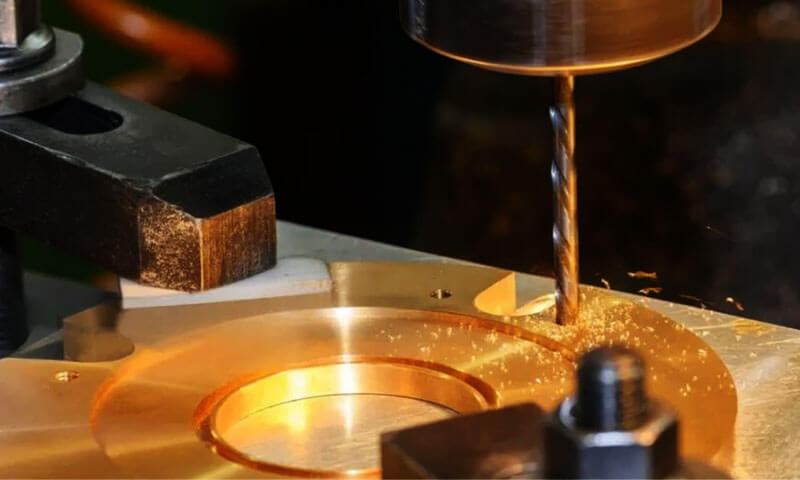
Kupfer CNC-Bearbeitung ist die kontrollierte subtraktive Formung von Kupfer und Kupferlegierungen zu Präzisionsbauteilen mithilfe computergestützter numerischer Steuerungsgeräte wie Fräsmaschinen, Drehmaschine, Bohrzentren, Zapfanlagen, und Endbearbeitungswerkzeuge.
In der praktischen Fertigung, Der Prozess beginnt mit Kupfermaterial – normalerweise Barren, Platte, Stange, oder vorgeformte Rohlinge – und entfernt Material mit programmierten Werkzeugwegen, bis das Teil seine endgültige Geometrie erreicht, Toleranz, und Oberflächenzustand.
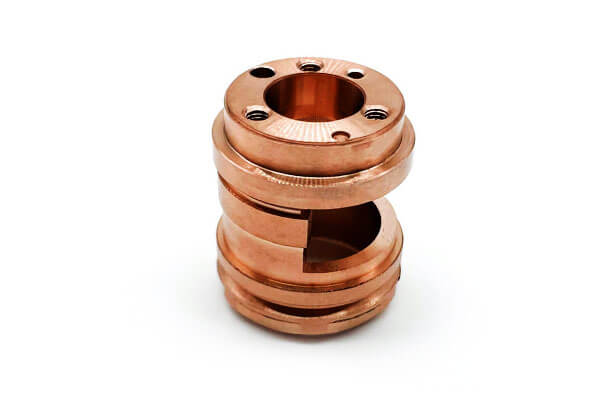
Das Besondere an der Kupferbearbeitung ist, dass Kupfer nicht einfach nur „weiches Metall“ ist.
Es ist sehr duktil, hochleitfähiges Material, dessen Schneidverhalten stark von der Legierungsart abhängt, Werkzeuggeometrie, Chipbildung, und Wärmekontrolle.
Reines Kupfer verhält sich ganz anders als zerspanbares Kupfer, Bronzen, Messinglegierungen, oder Kupfer-Nickel-Legierungen.
Infolge, Bei der Kupfer-CNC-Bearbeitung geht es weniger um rohes Schneiden als vielmehr um die Steuerung der Interaktion zwischen den Werkzeugen, Material, Hitze, und Spanfluss.
In der industriellen Praxis, CNC-Bearbeitungskupfer wird verwendet, wenn eine Komponente kombiniert werden muss Präzision, elektrische oder thermische Leitfähigkeit, Korrosionsbeständigkeit, Und Wiederholbarkeit.
Deshalb ist es in elektrischen Systemen besonders wichtig, Wärmemanagementteile, Meereshardware, Komponenten für die Flüssigkeitshandhabung, und spezialisierte Industriebaugruppen.
3. Gemeinsame Kupfermaterialfamilien und Bearbeitungsverhalten
| Materialfamilie | Gemeinsame Noten / Beispiele | Bearbeitungsverhalten | Typische Anwendungsfälle |
| Kupfer mit hoher Leitfähigkeit | C11000 ETP-Kupfer, C10100 OF Kupfer | Sehr duktil und hochleitfähig, aber aufgrund der schlechten Spanbildung schwierig sauber zu bearbeiten, Gefahr von Aufbauschneidenbildung, und Neigung zum Verschmieren, wenn der Schnitt nicht kontrolliert wird. | Elektrischer Draht, Kussbarren, Kontakte, Hochvakuum- und Elektrokomponenten, stromführende Teile. |
| Freibearbeitbares Kupfer | C14500 Tellurhaltiges Kupfer, C14700 schwefelhaltiges Kupfer | Viel einfacher zu bearbeiten als reines Kupfer, da spanbrechende Zusätze die Bearbeitbarkeit erheblich erhöhen und die Schnittstabilität verbessern. | Bearbeitete elektrische Komponenten, Gasschweißdüsen, Taschenlampenspitzen, Lötkolbenspitzen. |
| Desoxidiertes Kupfer | C12200 und ähnliche desoxidierte Qualitäten | Besser geeignet zum Schweißen und Löten; Bearbeitbarkeit ist akzeptabel, Diese Sorten werden jedoch häufig eher für die Herstellung und Verbindung als für maximale Schneidfreundlichkeit ausgewählt. | Sanitärsysteme, Gas- und Wasserversorgung, Architekturanwendungen für Bleche und Rohre. |
Kupfer-Nickel-Legierungen |
90-10, 70-30 Kupfer-Nickel | Leichter zu bearbeiten als rostfreier Stahl und wegen seiner ausgewogenen Korrosionsbeständigkeit und Verarbeitbarkeit geschätzt, allerdings nicht so leicht zu bearbeiten wie Automatenmessing. | Meerwasserleitungen, Wärmetauscher, Kondensatoren, Hydraulikschläuche, Meeresbeschläge. |
| Bronzen und Messingfamilien | Zinnbronze, Aluminiumbronze, bleihaltiges Messing, Gunmetal | Die Bearbeitbarkeit variiert stark. Bleihaltiges Messing lässt sich am einfachsten bearbeiten, während Bronzen und Aluminiumbronzen zäher sein können und eine sorgfältigere Werkzeuggeometrie und Kühlmittelkontrolle erfordern. | Lager, Armaturen, Meereskomponenten, Tragenresistente Teile, Maschinenhardware. |
4. Wichtige CNC-Prozesse für Kupfer
Die CNC-Bearbeitung von Kupfer ist kein einzelner Vorgang, sondern eine Familie von Prozessen, jedes mit seinen eigenen technischen Anforderungen und Leistungslogik.
CNC-Fräsen von Kupfer
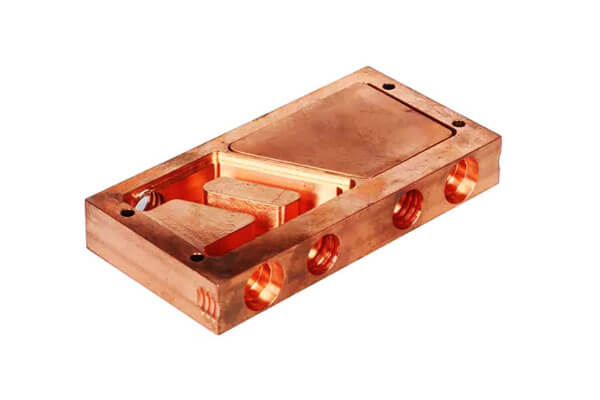
Mahlen ist eines der gebräuchlichsten Verfahren für Kupferteile mit ebenen Oberflächen, Taschen, Hohlräume, Kontaktblöcke, Wärmeübertragungsfunktionen, und komplexe Außengeometrie.
Dies ist besonders wichtig, wenn das Teil Leitfähigkeit mit präziser Formgebung kombinieren muss, Denn durch Fräsen lassen sich exakte Ebenen formen, Slots, Nutzung, und Schnittstellen kontrolliert verwalten.
Das Kupferfräsen ist technisch anders anspruchsvoll als das Stahlfräsen.
Das Material ist weich genug, um sich zu verformen, anstatt sauber zu brechen, wenn der Schnitt nicht gut gehandhabt wird, was zu Verschmierungen führen kann, Aufbaukante, oder schlechte Oberflächendefinition.
Der Prozess profitiert daher von scharfen Schnittkanten, stabile Werkzeugwege, und eine Schneidstrategie, die eine saubere Spanentfernung statt Reiben fördert.
Für hochwertige Kupferkomponenten, Fräsen ist oft das primäre Formgebungsverfahren, da es in einem kontrollierten Arbeitsgang sowohl eine funktionale Geometrie als auch eine hochwertige Oberfläche erzeugen kann.
CNC-Drehen von Kupfer
Drehen ist das bevorzugte Verfahren für zylindrische Kupferteile wie Buchsen, Ärmel, Ringe, Anschlüsse, Präzisionskontaktkörper, und rohrförmige Komponenten.
Dies ist besonders nützlich, wenn das Teil rotationssymmetrisch ist und ein sauberes Außenprofil oder ein konzentrisches Innenmerkmal erfordert.
Kupferdrehen ist im Allgemeinen produktiv, es erfordert jedoch eine sorgfältige Kontrolle des Chipverhaltens.
Reines Kupfer und andere Weichkupfersorten können lange Späne bilden, die schwer zu entfernen sind, insbesondere wenn die Schnittbedingungen eher zum Verschmieren als zum Bruch führen.
Eine gut konzipierte Drehoperation hängt daher von der Werkzeuggeometrie ab, Schnittgeschwindigkeit, Futterbilanz, und Spanbruchleistung.
Bei richtiger Ausführung, Durch Drehen kann eine hervorragende Rundheit erzielt werden, Oberflächenqualität, und Maßwiederholbarkeit.
Aus diesem Grund wird es so häufig für elektrische und thermische Komponenten verwendet, bei denen die äußere Form und die Kontaktqualität entscheidend sind.
Bohren, Reihenfolge, und Anzapfen von Kupfer
Das Bohren von Löchern ist bei der Kupferbearbeitung unerlässlich, da viele Teile Gewindelöcher benötigen, Befestigungsschnittstellen, Flüssigkeitsdurchgänge, oder Ausrichtungsmerkmale.
Durch Bohren wird das erste Loch erstellt, Reiben dient der Verfeinerung von Größe und Finish, und Gewindeschneiden wird verwendet, um Innengewinde zu erzeugen.
Kupfer lässt sich relativ leicht entfernen, Das Lochen kann jedoch immer noch problematisch werden, wenn die Späne nicht effizient abgeführt werden.
Lang, duktile Späne können sich im Loch festsetzen, an der Wand reiben, oder die Genauigkeit der Funktion beeinträchtigen.
Das bedeutet, dass Bohren und Gewindeschneiden in Kupfer eine sorgfältige Werkzeugauswahl erfordern, gleichmäßiges Futter, und effektive Kühl- oder Schmierstoffzufuhr.
Das Reiben ist besonders nützlich, wenn das Loch eine engere Toleranz oder eine glattere Oberfläche haben muss, als es durch Bohren allein möglich wäre.
Tippen, in der Zwischenzeit, ist am erfolgreichsten, wenn das Pilotloch sauber ist, Der Spanweg ist stabil, und das Werkzeug kann durch das Material schneiden, statt sich seinen Weg zu bahnen.
Gewindeschneiden und Gewindeformen
Das Gewindeschneiden in Kupfer kann durch Gewindeschneiden erfolgen, Gewindefräsen, oder Einzelpunkt-Gewindeschneiden, je nach Teilegeometrie und Produktionsstrategie.
Aufgrund der Duktilität von Kupfer kann die Gewindequalität empfindlich auf die Werkzeugschärfe und die Spanabfuhr reagieren, Daher sollte die Gewindeschneidmethode entsprechend der erforderlichen Präzision und der Wahrscheinlichkeit einer Spanansammlung ausgewählt werden.
Gewindefräsen ist oft dann attraktiv, wenn es auf Gewindegenauigkeit und Flexibilität ankommt, während das Klopfen für einfachere, sich wiederholende Arbeiten effizient sein kann.
In jedem Fall, Das Ziel besteht darin, eine saubere Form zu bilden, wiederholbares Gewindeprofil, ohne dass das Material reißt oder Grate an den Ein- und Austrittspunkten entstehen.
Weil Kupfer häufig in elektrischen und flüssigkeitsbezogenen Baugruppen verwendet wird, Die Qualität des Gewindes ist nicht nur eine Frage der Abmessungen.
Es beeinflusst auch die Kontaktstabilität, Auslaufsicherheit, und langfristige Serviceleistung.
Oberflächenveredelung und Sekundäroperationen
Kupferteile werden häufig nach der Bearbeitung bearbeitet, da der Oberflächenzustand ebenso wichtig sein kann wie die Geometrie.
Polieren und Polieren sind üblich, wenn das Teil optisch glatt aussehen soll, eine verfeinerte Kontaktfläche, oder reduzierte Reibung.
Für eher technische Anwendungen, Die Endbearbeitung kann auch zur Verbesserung der Schnittstellenqualität elektrischer oder thermischer Kontaktbereiche eingesetzt werden.
Einige Kupferkomponenten sollen in einem hochglanzpolierten Zustand bleiben, während andere möglicherweise eine funktionale matte oder texturierte Oberfläche erfordern.
Die Endbearbeitungsroute sollte daher zusammen mit dem Bearbeitungsprozess definiert werden, nicht, nachdem das Teil bereits fertig ist.
5. Vorteile der CNC-Bearbeitung von Kupfer
Hervorragende leitfähigkeitsgesteuerte Leistung
Die wertvollste Eigenschaft von Kupfer bleibt seine thermische und elektrische Leitfähigkeit.
Aus diesem Grund sind CNC-bearbeitete Kupferteile in der Elektrotechnik und Wärmeübertragungshardware so verbreitet:
Der Bearbeitungsprozess wird verwendet, um die präzise Geometrie zu erzeugen, die für ein Material erforderlich ist, dessen Aufgabe es ist, effizient zu funktionieren.
Starke Passform für präzise Schnittstellen
Kupferlegierungen können präzise und mit guten Toleranzen bearbeitet werden, was für elektrische Kontakte wertvoll ist, Passflächen, Dichtungsmerkmale, und flüssigkeitsführende Teile.
Der Bearbeitungsweg ermöglicht die Herstellung präziser Formen aus Legierungen, die sonst nur schwer einzupassen oder zuverlässig zu montieren wären.
Große Materialauswahl
Die Bearbeitung von Kupfer ist nicht auf eine Legierung beschränkt.
Ingenieure können zwischen hochleitfähigem Kupfer wählen, desoxidierte Qualitäten, frei zerspanbares Kupfer, Bronzen, Messing, und Kupfer-Nickel, je nachdem, ob die Leitfähigkeit im Vordergrund steht, Verarbeitbarkeit, Korrosionsbeständigkeit, oder Stärke.
Diese Flexibilität verleiht Kupfer ein breiteres industrielles Einsatzgebiet, als viele Anwender zunächst annehmen.
Gute Nachbearbeitungsmöglichkeit
Kupfer lässt sich effektiv polieren und polieren, und viele Kupferlegierungen reagieren gut auf das Fügen, Löschen, und andere sekundäre Operationen.
Dadurch sind CNC-bearbeitete Kupferteile nicht nur als eigenständige Komponenten praktisch, aber auch als Teil größerer Baugruppen oder Präzisionssubsysteme.
Breite industrielle Relevanz
Denn Kupfer dient der Elektrizität, Thermal-, Marine, und chemische Rollen, CNC-Bearbeitung wird in vielen Branchen eingesetzt.
Der Prozess ist keine Nische; Es handelt sich um eine zentrale Fertigungsroute für Teile, bei denen Leitfähigkeit und Zuverlässigkeit ebenso wichtig sind wie die Geometrie.
6. Grundlegende technische Herausforderungen bei der CNC-Bearbeitung von Kupfer
Aufbaukante auf weich, duktiles Kupfer
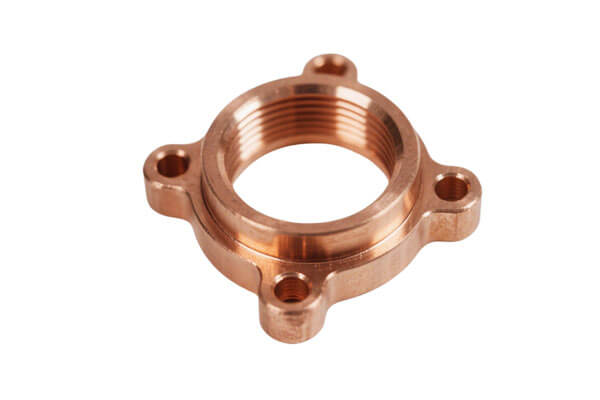
Reines Kupfer ist aufgrund seiner hohen Duktilität und Kaltumformbarkeit schwierig zu bearbeiten.
Der Bearbeitungsleitfaden weist darauf hin, dass der Werkzeugverschleiß hoch sein kann, Die Spanbildung ist schlecht, Beim Schneiden kann es zu einer Aufbauschneide kommen, Dies verringert die Oberflächenqualität und die Dimensionsstabilität.
Lang, schwierige Chips
Bei der Kupferbearbeitung entstehen oft lange röhrenförmige oder bandförmige Späne, die schwer abzutransportieren sind.
Dadurch kann es zu Verwicklungen kommen, Nachschneiden, und inkonsistente Oberflächenqualität, wenn die Spanbruchstrategie schwach ist.
Der Bearbeitungsleitfaden weist ausdrücklich darauf hin, dass die Spanabwicklung ein großes Problem bei reinem Kupfer darstellt.
Werkzeugverschleiß und Kantenbelastung
Denn der Schnittdruck bleibt bei reinem Kupfer einigermaßen gleichmäßig, Rattermarken stellen möglicherweise weniger ein Problem dar als bei einigen härteren Legierungen.
Jedoch, das gleiche weich, Das duktile Verhalten kann zu hohen mechanischen Belastungen der Schneidkante führen und den Verschleiß beschleunigen.
Sauerstoffhaltige Kupfersorten können auch harte Einschlüsse enthalten, die die Schneide beschädigen und die Standzeit des Werkzeugs verkürzen.
Variabilität von Legierung zu Legierung
Nicht alle Kupferlegierungen verhalten sich gleich.
Ein zunehmender Zinngehalt in Kupfer-Zinn-Legierungen verringert die Schnittgeschwindigkeit bei gegebener Werkzeugstandzeit, während Aluminium und größere Mengen Eisen und Nickel ebenfalls die Bearbeitbarkeit beeinträchtigen können.
In der Praxis, Einige Kupfer-Aluminium-Legierungen ähneln einem stahlähnlichen Bearbeitungsverhalten, Das bedeutet, dass die Werkstatt die Kupferfamilie als Spektrum und nicht als einzelnes Material behandeln muss.
Kompromiss zwischen Oberflächenqualität und Werkzeugstandzeit
Im Bearbeitungsleitfaden wird darauf hingewiesen, dass ein zunehmender Spanwinkel die Qualität der Arbeitsoberfläche verbessert, und dass hohe Schnittgeschwindigkeiten im Allgemeinen die Oberflächenqualität in Kupfer und Kupferlegierungen verbessern.
Es wird aber auch darauf hingewiesen, dass größere Spanwinkel den Keilwinkel und damit die Werkzeugstandzeit verringern. Dieser Kompromiss ist für die Wirtschaftlichkeit der Kupferbearbeitung von zentraler Bedeutung.
7. Prozessstrategien für eine bessere Bearbeitbarkeit
Passen Sie die Legierung an die Anwendung an
Die erste Entscheidung hinsichtlich der Bearbeitbarkeit ist die Materialauswahl.
Wenn das Teil maximale Leitfähigkeit benötigt, Kupfer mit hoher Leitfähigkeit oder sauerstofffreies Kupfer kann geeignet sein, Sie lassen sich aber relativ schwer sauber bearbeiten.
Wenn das Teil eine bessere Bearbeitbarkeit erfordert, Ein tellurhaltiges Automatenkupfer wie C14500 oder schwefelhaltiges C14700 ist weitaus einfacher zu verarbeiten.
Verwenden Sie eine kupferspezifische Werkzeuggeometrie
In den Leitlinien zur Kupferbearbeitung wird betont, dass die Werkzeuggeometrie an das tatsächliche Arbeitsmaterial angepasst werden muss.
Große Spanwinkel reduzieren die Schnittenergie und verbessern den Spanfluss, insbesondere für weichere Kupfersorten,
während kleinere Spanwinkel erforderlich sein können, wenn Kantenstabilität wichtiger ist als maximale Schnittfreundlichkeit.
Geschwindigkeit und Vorschub in Richtung einer stabilen Spanbildung steigern
Eine Aufbauschneide wird weniger wahrscheinlich, wenn Schnittgeschwindigkeit und Vorschub in einem geeigneten Bereich erhöht werden.
Mit anderen Worten, Kupfer lässt sich oft besser bearbeiten, wenn der Schnitt präzise genug ist, um ein Reiben zu vermeiden.
Sehr leicht, Zögernde Schnitte neigen eher dazu, die Oberfläche zu verschmieren und die Haftung an der Werkzeugkante zu fördern.
Design zur Spanabfuhr
Kupferteile sollten unter Berücksichtigung des Spanflusses konstruiert werden, vor allem bei tiefen Taschen, Blindlöcher, und Gewindefunktionen beteiligt sind.
Die primäre Frage ist nicht, ob sich Späne bilden – das wird passieren –, sondern ob der Vorgang genügend Platz und Kühlmittelzugang lässt, damit sie den Schnitt sauber verlassen können.
Verwenden Sie die richtige Legierung für die richtige Bearbeitungsklasse
Sofern der Antrag es zulässt, Frei zerspanbare Kupfersorten können Kosten und Prozessrisiken drastisch reduzieren.
Wenn die Anwendung eine hohe Leitfähigkeit und ultrareine Reinheit erfordert, Dann kann sich die Bearbeitungsschwierigkeit bei reinem Kupfer immer noch lohnen.
Die richtige Antwort hängt davon ab, ob das Teil hinsichtlich der Leitfähigkeit optimiert wird, Beitrittsfähigkeit, Präzisionsbearbeitung, oder Produktionseffizienz.
8. Anwendungen von CNC-Bearbeitungsteilen aus Kupfer
Überall kommen CNC-bearbeitete Kupferteile zum Einsatz elektrische Leitfähigkeit, Wärmeleitfähigkeit, Korrosionsbeständigkeit, und Präzision müssen in einer einzigen Komponente koexistieren.
Im Gegensatz zu Allzweck-Strukturmetallen, Kupfer wird üblicherweise aus funktionellen Gründen ausgewählt: es muss Strom führen, Wärme übertragen, widerstehen Oxidation, oder unter anspruchsvollen Servicebedingungen einen zuverlässigen Kontakt aufrechtzuerhalten.
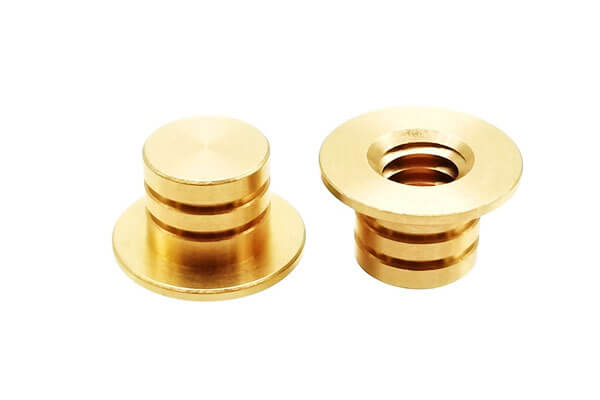
Elektro- und Energietechnik
Typische Teile in dieser Kategorie sind elektrische Kontakte, Steckverbinderkörper, Klemmenblöcke, Kussbarren, Kontakthalter, Elektrodenkomponenten, und präzise leitfähige Schnittstellen.
In diesen Anwendungen, Durch CNC-Bearbeitung werden saubere Passflächen geschaffen, genaue Löcher, Präzise Schlitze, und stabile Verbindungsfunktionen.
Die Qualität der bearbeiteten Oberfläche hat direkten Einfluss auf den elektrischen Widerstand, Wärmeerzeugung, und langfristige Kontaktsicherheit.
Wärmemanagement und Wärmeübertragung
Zu den üblichen Anwendungen gehören Kühlkörper, Wärmeverteiler, kalte Teller, Thermoblöcke, Kühlverteiler, und präzise thermische Schnittstellen.
In diesen Teilen, Durch maschinelle Bearbeitung werden ebene Flächen erzeugt, Kanalnetzwerke, und Kontaktzonen, die die Wärmeübertragungseffizienz maximieren.
Je besser die Oberflächenqualität und geometrische Genauigkeit, desto besser ist die thermische Leistung.
Marine- und Meerwasserservice
Zu den typischen Marineanwendungen gehören Armaturen, Ventilteile, Pumpkomponenten, Wärmetauscherteile, Hardware für Meerwasserleitungen, und korrosionsbeständige Steckverbinder.
In diesen Systemen, Die Bearbeitungsqualität beeinflusst die Abdichtung, Verschleißverhalten, und die Fähigkeit des Teils, in einer Salzwasserumgebung stabil zu bleiben.
Sanitär, Flüssigkeitshandhabung, und Prozessausrüstung
CNC-bearbeitete Kupferteile kommen auch häufig in Sanitär- und Prozesssystemen vor, in denen Flüssigkeiten fließen, Versiegelung, und Korrosionsbeständigkeit.
Bearbeitete Kupferteile werden in Ventilen verwendet, Anschlüsse, Kupplungen, Düsen, Armaturen, Verteiler, Adapter, und Bedienelemente.
Vakuum, Labor, und hochreine Systeme
Zu den Anwendungen gehören Vakuumflansche, Kammerbeschläge, Elektrodenteile, Präzisionsdichtungen, und Laborgerätekomponenten.
In diesen Umgebungen, Oberflächenverschmutzung, Burrs, und schlechte Dichtflächen können zu ernsthaften Leistungsproblemen führen, Daher muss der Bearbeitungsprozess streng kontrolliert werden.
Schweißen, Löschen, und Wärmewerkzeuganwendungen
CNC-bearbeitete Kupferteile werden häufig in Werkzeugen und Verbrauchsmaterialien für das Schweißen und die thermische Verarbeitung verwendet.
Beispiele hierfür sind Taschenlampenspitzen, Gasschweißdüsen, Lötkolbenspitzen, Elektrodenhalter, und thermische Werkzeugeinsätze.
Industriemaschinen und Präzisionshardware
Kupfer-CNC-Teile werden auch in Industriemaschinen verwendet, wo Leitfähigkeit besteht, Verschleißverhalten, oder Korrosionsbeständigkeit verleiht dem Bauteil einen funktionalen Vorteil.
Hierzu zählen auch Buchsen, Ärmel, Präzisionseinsätze, leitfähige Maschinenelemente, und spezielle Hardware, die in Fertigungssystemen verwendet wird.
Dekorative und architektonische Komponenten
Obwohl Kupfer oft aus technischen Gründen gewählt wird, es hat auch einen hohen ästhetischen Wert.
Bearbeitete Kupferteile können in architektonischen Details verwendet werden, Dekorative Panels, benutzerdefinierte Vorrichtungen, und High-End-Designanwendungen, bei denen das Aussehen genauso wichtig ist wie die Funktion.
9. CNC -Bearbeitung vs. Präzisionsgusskupfer
| Vergleichsaspekt | CNC-Bearbeitung von Kupfer | Präzisionsguss Kupfer |
| Herstellungsprinzip | Kupferteile werden durch Materialabtrag von der Stange hergestellt, Platte, Stange, oder Rohling durch Fräsen, drehen, Bohren, Reihenfolge, Tippen, und Gewindeschneiden. | Eine geschmolzene Kupferlegierung wird in eine Form gegossen, um ein nahezu endkonturnahes Teil zu erzeugen, Reduzierung der Materialmenge, die später entfernt werden muss. |
| Dimensionsgenauigkeit | Bestens geeignet für enge Toleranzen, Präzisionspassflächen, Gewindefunktionen, und elektrische Kontaktflächen. Kupferteile können präzise bearbeitet werden, Die Prozesskontrolle ist jedoch unerlässlich, da Werkzeugverschleiß und Aufbauschneiden schnell die Qualität beeinträchtigen können. | Gut geeignet, um die Gesamtform nahezu endabmessungen zu erzeugen, Kritische Funktionsflächen erfordern jedoch oft noch eine Nachbearbeitung. |
| Oberflächenbeschaffung | Kann bei der Werkzeuggeometrie eine hervorragende Oberflächenqualität erzielen, füttern, und Schnittgeschwindigkeit richtig kontrolliert werden. | Gussoberflächen sind in der Regel rauer als präzisionsgefertigte Oberflächen und müssen möglicherweise vor Ort nachbearbeitet oder bearbeitet werden. Jedoch, Durch endkonturnahes Gießen kann der Umfang der erforderlichen Endbearbeitung erheblich reduziert werden. |
Geometrische Freiheit |
Am besten geeignet für Funktionen, die über ein Tool zugänglich sind: Bohrungen, Wohnungen, Taschen, Slots, Themen, und präzise Schnittstellen. Tiefe Innenformen werden durch den Zugang zum Fräser und die Spanabfuhr eingeschränkt. | Besser für komplexe Außengeometrien und Teile, bei denen komplexe Formen einfacher in der Form zu erzeugen sind als durch die Bearbeitung aus Vollmaterial. |
| Materialnutzung | Niedriger bei komplexen Teilen, da mehr Material in Form von Spänen entfernt wird. Dies gilt insbesondere für Kupfer mit hoher Leitfähigkeit, Das ist wertvoll und wird oft aus Vollmaterial gefertigt. | Höher bei Teilen mit komplexer Geometrie, da das Bauteil nahezu in seiner endgültigen Form geformt wird, Minimierung des Materialabtrags. |
| Typische technische Risiken | Aufgebaute Kante, Chip-Verschmierung, lange, faserige Chips, und Oberflächenverschlechterung sind die Hauptrisiken. | Die Gießrisiken konzentrieren sich auf das Füllen der Form, Erstarrungsqualität, und lokale Mängel, Der Vorteil liegt in der endkonturnahen Wirtschaftlichkeit. |
Am besten geeignet für |
Elektrische Kontakte, Kussbarren, Wärmeübertragungsblöcke, Präzisionssteckverbinder, Gewindeteile, und Komponenten, die sehr genaue Schnittstellen oder eine streng kontrollierte Oberflächenqualität erfordern. | Komplexe Kupferlegierungsteile für die Schifffahrt, Meerwasser, Chemikalie, Stromerzeugung, und verschleißbedingte Anwendungen, Insbesondere wenn eine endkonturnahe oder nahezu endkonturnahe Produktion die nachgelagerte Bearbeitung reduzieren kann. |
| Wirtschaftsprofil | Normalerweise am stärksten für präzisionsgetriebene Teile, Prototypen, und Arbeiten mit geringerem Volumen, bei denen Flexibilität wichtiger ist als Investitionen in Formen. Die Prozesskosten hängen von der Bearbeitungszeit ab, Werkzeugkleidung, und Spänehandling. | Normalerweise stärker für geometrisch komplexe, Stabile Konstruktionen, bei denen die Investition in Werkzeuge gerechtfertigt ist und eine endkonturnahe Produktion die Kosten für die Endbearbeitung senkt. |
| Ingenieursurteil | Die bessere Wahl, wenn es um Präzision geht, beenden, und funktionale Schnittstellenqualität dominieren die Anforderung. Die Kupferbearbeitung ist ein steuerungsintensiver Präzisionsprozess. | Die bessere Wahl, wenn Geometriekomplexität und endkonturnahe Effizienz dominieren. Präzisionsguss ist der formeffiziente Weg für Kupferlegierungen. |
10. Abschluss
Die Kupfer-CNC-Bearbeitung ist eine ausgereifte und hochpräzise subtraktive Fertigungstechnologie, die auf leitfähige Materialien zugeschnitten ist, wärmeableitende und korrosionsbeständige Komponenten.
Reines Kupfer zeichnet sich durch eine hervorragende Leitfähigkeit, aber eine schwierige Spankontrolle aus; Bleihaltiges Messing lässt sich optimal für die Massenproduktion verarbeiten; Bronze und Kupfernickel werden für hochfeste und korrosionsbeständige Industrieszenarien eingesetzt.
Im Vergleich zu Aluminium und Stahl, Kupfer hat unersetzliche Vorteile bei der elektrischen Leitung und Wärmeableitung, während seine hohe Dichte und die Rohstoffkosten großflächige strukturelle Anwendungen einschränken.
In der Zukunft, mit der Modernisierung neuer Energieversorgungssysteme und der Halbleiterindustrie, Die Marktnachfrage nach hochpräzisen CNC-Kupferkomponenten wird weiter wachsen.
Eine angemessene Auswahl der Kupferqualität und eine optimierte Verarbeitungstechnologie maximieren die thermischen und elektrischen Vorteile von Kupfermaterialien, Bereitstellung zuverlässiger Kernkomponenten für hochwertige Industrieanlagen.
FAQs
Welche Kupfersorte eignet sich am besten für die CNC-Bearbeitung??
Bleihaltiges Automatenmessing C36000 bietet die beste Bearbeitbarkeit mit automatischer Spanbrechung, geringste Gratbildung und geringste Verarbeitungsschwierigkeiten.
Warum entstehen bei reinem Kupfer nach dem Schneiden starke Grate??
Reines Kupfer weist eine extrem hohe Duktilität auf; das Material kann beim Scheren nicht sauber brechen, Dies führt zu länglichen Kantengraten, die poliert und entgratet werden müssen.
Ist ein beschichtetes Schneidwerkzeug, das für die Kupferverarbeitung geeignet ist?
NEIN. Beschichtete Werkzeuge erhöhen die Reibung und Haftung; Unbeschichtete, polierte Hartmetallwerkzeuge sind die optimale Wahl für Kupfer.
Benötigt bearbeitetes Kupfer eine Antioxidationsbehandlung??
Ja. Frische Kupferoberflächen oxidieren und verdunkeln sich an der Luft schnell; Passivierungs- oder Anlaufschutzöl ist erforderlich, um den metallischen Glanz und die Leitfähigkeit aufrechtzuerhalten.
Wie groß ist die Toleranz herkömmlicher CNC-Kupferteile??
Die standardmäßige Industrietoleranz beträgt ±0,01 mm; Hochpräzise kupferleitende Komponenten können eine Toleranz von ±0,005 mm erreichen.

