编辑翻译
经过 Transposh - translation plugin for wordpress
熔模铸造不锈钢机械零件

熔模铸造合金: 为定制零件选择合适的金属

内容表 展示

介绍

熔模铸造 is an industrial precision-casting process that uses a melt-out pattern to create an undivided ceramic mold, and it is used for metals and alloys based on 铁, 铝, 镍, 钴, 钛, 和铜.

Castings made by this route are characterized by high dimensional accuracy and high surface quality, which is why alloy selection is such a decisive part of the engineering process.

That broad material reach is what makes investment casting strategically powerful: the process is not tied to one metal family, but to a design problem.

The right alloy can turn the same process into a lightweight aerospace part, a corrosion-resistant valve body, a high-temperature turbine component, or a wear-resistant industrial bracket.

实践, the alloy is not just a material choice; it is the mechanism that converts the casting process into the final performance envelope.

1. What Makes an Alloy Suitable for Investment Casting

可铸性: the starting point

An alloy is suitable for investment casting when it can fill the ceramic cavity cleanly, reproduce fine detail, and solidify into a sound part without excessive defects.

In foundry terms, this is usually described as 可铸性—the ease with which a material can be cast while still meeting quality requirements.

A key part of castability is 流动性, meaning the ability of the molten metal to keep flowing long enough to fill thin sections, sharp features, and intricate passages before freezing.

Investment casting is specifically valued because it can produce complex or finely detailed parts and reduce machining effort, but that only works well when the alloy’s melting and freezing behavior matches the shell process.

Alloys with poor fluidity, excessive shrinkage sensitivity, or unstable solidification behavior are much harder to run successfully in a precision shell mold.

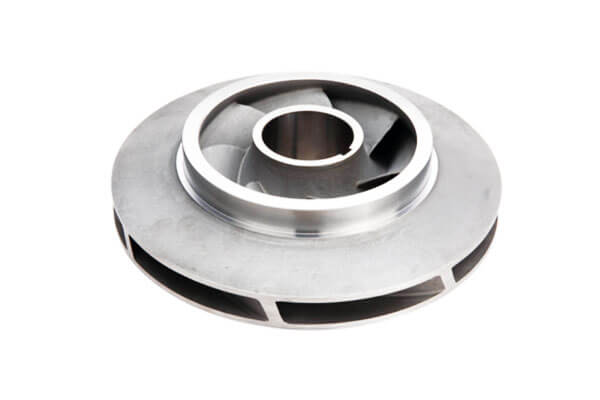
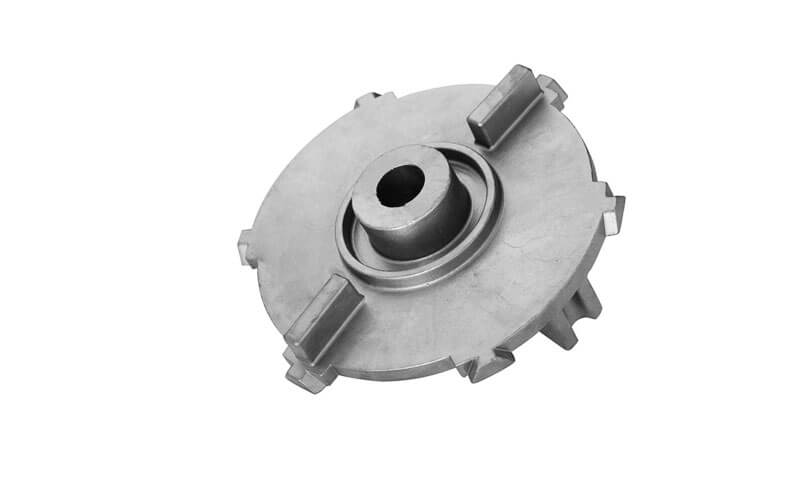
Investment Casting Alloys Impeller

Solidification behavior and defect control

A suitable investment-casting alloy must solidify in a controlled way.

If the alloy shrinks too aggressively, freezes too early, or develops strong hot spots, the casting is more likely to show porosity, 埃及, 收缩腔, 或扭曲.

That is why alloy selection is always tied to section thickness, 门控设计, and the intended part geometry rather than to chemistry alone.

This is especially important in thin-wall or detail-rich castings, where the melt must stay fluid just long enough to complete filling.

Experimental work on small metallic structures by investment casting shows that casting temperature and mold temperature strongly affect infiltration and fill quality, reinforcing the point that alloy and process must be matched as a system.

Compatibility with the casting atmosphere

Not every alloy behaves the same way during melting and pouring.

Some alloy families are stable in conventional air-melt investment casting, while others are highly reactive and require vacuum or tightly controlled inert processing.

Titanium alloys are the clearest example: they are prized for low density and high specific strength,

but they must be cast under vacuum or highly purified inert gas because they readily absorb or react with oxygen, 氮, and hydrogen at high temperature.

Nickel-base superalloys often follow similar controlled-atmosphere requirements.

相比之下, 不锈钢, 碳钢, 铝合金, 铜合金, and many bronze families are widely used in investment casting

because they can be poured successfully with conventional foundry controls, provided the alloy and process are properly matched.

This material flexibility is one of the process’s defining strengths.

Property response after casting

A good investment-casting alloy is not only easy to pour; it must also develop the right properties after casting.

Many alloy families used in investment casting are selected because they respond well to 热处理, 老化, or post-cast stabilization.

Stainless steels such as 17-4PH gain much of their performance through aging, while aluminum casting alloys such as 356, A356, and A357 are widely used because their final properties depend strongly on heat treatment and microstructural control.

That means the alloy should be evaluated across the full process chain: melt behavior, shell filling, 凝固, 热处理, 加工, and final service environment.

An alloy that looks attractive on paper but cannot be stabilized into the required property window after casting is not a good investment-casting candidate.

Dimensional accuracy and machining allowance

Alloy suitability also depends on whether the foundry can achieve the required tolerance and surface quality for that material family.

Casting systems for iron, 镍, 钴, 铜, 铝, 镁, and titanium do not all deliver the same accuracy envelope, and alloy choice affects contraction behavior, shell interaction, and the amount of machining allowance that must be reserved.

实际上, the alloy must cooperate with the tolerance strategy, 不对抗它.

This is one reason investment casting is so valuable for complex parts: the process can reduce machining and near-net shape waste, but only if the alloy’s flow and solidification characteristics are compatible with the target geometry.

Economic and application fit

最后, an alloy is suitable for investment casting when the process makes economic sense for the application.

Investment casting is used because it can produce complex shapes, save machining time, and reduce part count, but the selected alloy must justify the process cost through performance or geometry benefits.

例如, stainless steels are chosen for corrosion resistance and strength, aluminum alloys for low weight, nickel-base alloys for high-temperature capability,

titanium for high specific strength and corrosion resistance, and copper-base alloys for conductivity or wear-related performance.

2. Main Alloy Families and Representative Grades

Investment casting supports a broad alloy spectrum, but the alloys are not interchangeable.

Each family brings a different balance of castability, 力量, 耐腐蚀性, 温度能力, 可加工性, and atmosphere requirement.

Carbon and low-alloy steels

Carbon and low-alloy steels are the structural baseline of investment casting.

They are widely used because they combine 良好的铸造性, strong mechanical performance, and comparatively low material cost.

碳钢 are generally easier to cast than 合金钢, while low-alloy grades such as 4130 和 4140 are selected when higher strength, 坚固性, or toughness is needed.

普通等级包括 1020, 1045, 4130, 4140, 4340, 和 8620, along with standard steel casting grades used across the industry.

A216 WCB碳钢膨胀栅极
A216 WCB扩展的门阀

Typical use cases include structural brackets, industrial hardware, 机械组件, and pressure-related parts where strength and cost control matter more than corrosion resistance.

These alloys usually depend on heat treatment to reach final property targets.

奥氏体不锈钢

奥氏体 不锈钢 are the most common corrosion-resistant investment-casting family.

They are valued for 优异的耐腐蚀性, 良好的可焊性, and broad industrial availability.

Representative grades include 304 / CF-8, 316 / CF-8M, 316l / CF-3M, 304l, 和316L.

These grades are widely used when the casting must resist moisture, 化学物质, food-service environments, 海洋暴露, or general atmospheric corrosion.

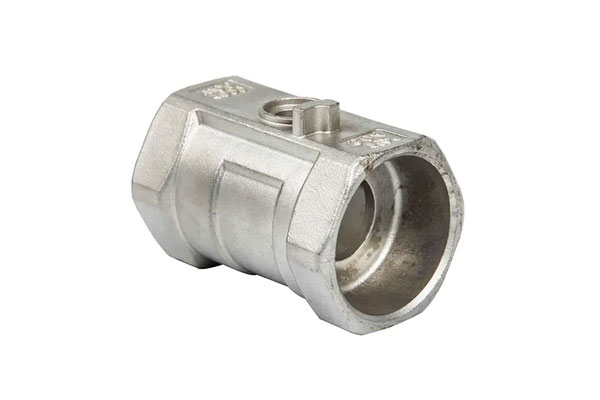
CF8M不锈钢管配件
CF8M不锈钢管配件

The low-carbon variants, 尤其 304L and 316L, are particularly useful where welding or post-cast thermal exposure might otherwise reduce corrosion resistance.

That is why austenitic stainless steels are a default choice for valves, 泵主体, 配件, 住房, and many industrial components.

沉淀硬化不锈钢

Precipitation-hardening stainless steels are selected when stainless corrosion resistance must be combined with substantially higher strength.

The most common investment-casting grades in this family include 17-4ph15-5ph.

These alloys gain much of their final performance from aging heat treatment, which makes them especially attractive for parts that must be strong, 尺寸稳定, and still corrosion resistant.

失去蜡1.4542/17-4ph不锈钢
17-4pH Stainless Steel

PH stainless steels are widely used in aerospace, 液压, 防御, and precision industrial components because they offer a very useful strength-to-corrosion-resistance balance.

In many programs, they are the strongest practical option within the stainless family.

双相不锈钢

Duplex stainless steels combine ferrite and austenite in a mixed microstructure,

and that gives them higher strength and improved resistance to chloride stress corrosion cracking compared with ordinary austenitic stainless steels.

Common cast grades include 2205-based duplex grades and related duplex casting grades used in aggressive service environments.

This family is especially useful for offshore, 化学, and chloride-bearing service where 316L may be acceptable but not ideal.

The duplex structure makes the alloy attractive when a part must handle both pressure and corrosion exposure with better strength than standard austenitic steel.

铝合金

铝铸件 alloys are used when 低密度, 良好的铸造性, and heat-treatable strength development are the priorities.

The most recognized investment-casting aluminum grades include 356, A356, A357, C355, A354, A201, and A206.

These alloys are widely used in lightweight engineering components, especially when the geometry is too complex or costly to machine from solid stock.

ASTM A3560铝砂铸件
ASTM A356 Aluminium Castings

他们之中, 356, A356, and A357 are especially important benchmark families.

They are favored because they combine castability with practical heat-treatment response and a strong balance of weight and performance.

This makes them common in aerospace, 汽车, 和精密工业部件.

Nickel-base superalloys

Nickel-base superalloys are the premium choice when 高温强度, 氧化抗性, 和耐腐蚀性 dominate the requirement set.

普通等级包括 inconel 600, 625, 713, 718, 617, 690, 海恩斯 230, 瑞恩 41, Mar-M-247, and Nickel X.

These alloys are often associated with demanding investment-casting applications such as turbine hardware and hot-section components.

镍合金铸造阀体零件
镍合金铸造阀体零件

Many nickel-base castings are produced in vacuum systems because the alloy family is used in environments where contamination control and high-temperature integrity are critical.

为此原因, nickel alloys occupy one of the most specialized positions in the investment-casting landscape.

Cobalt-base alloys

Cobalt-base alloys are selected when the part must withstand 穿, 磨损, 热硬度, 和氧化 under severe service conditions.

Representative grades include CB3, CB6, CB12, CB21, CB93, as well as Stellite-type alloys and biomedical CoCrMo variants such as ASTM F75 / L605-related families.

This family is important in valve wear surfaces, 高温元件, and other parts where tribological performance matters as much as corrosion resistance.

Compared with stainless steel, cobalt alloys are much more specialized and usually much more expensive, but they solve problems that standard stainless grades cannot.

钛合金

钛熔模铸造 is used when the design demands 低密度, 高特异性强度, and outstanding corrosion resistance, but it also requires very strict atmosphere control.

普通等级包括 年级 2Ti-6Al-4V Grade 5, the latter being the best-known titanium alloy in engineering and medical applications.


钛铸造投资零件
钛铸造投资零件

Titanium castings must be produced under vacuum or highly purified inert gas because titanium readily reacts with oxygen, 氮, and hydrogen at elevated temperature.

That requirement makes titanium one of the most technically demanding but also one of the most strategically valuable alloy families in investment casting.

Copper-base alloys

Copper-base alloys are used when the application needs 电导率, 耐腐蚀性, 磨损行为, or decorative appearance.

常见的 copper investment-casting grades include 黄铜 C87500, silicon bronze C87200, C87300, C87600, and aluminum bronze C95200, C95300.

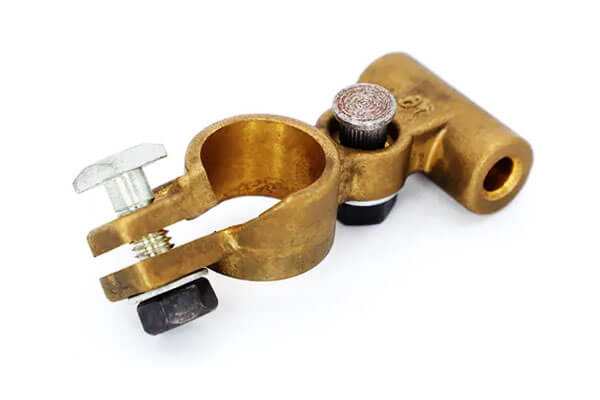
Copper Investment Casting Parts

This family is often chosen for fittings, 硬件, and specialty components where thermal or electrical conductivity may be part of the functional requirement.

青铜 families are also attractive when corrosion resistance or wear resistance is more important than low mass.

3. Inherent Matching Mechanism Between Alloy Metallurgy and the Two Core Investment Casting Shell Technologies

The real boundary between 水杯二氧化硅溶胶 investment casting is set by metallurgy, not by marketing language.

The alloy’s melting behavior, oxidation sensitivity, solidification range, and surface-reaction tendency must match the shell’s thermal strength, 渗透性, 和化学稳定性.

换句话说, the shell is not just a mold; it is the alloy’s thermal and chemical operating environment.

水杯 (硅酸钠) Shell Alloy Adaptation Logic

Water glass shells are the practical, cost-oriented solution.

They cure quickly, support fast batch turnover, and are widely described as lower-cost than silica sol systems, but they also deliver a rougher surface and less dimensional precision.

That makes them a better fit for alloys and parts that do not require premium shell reproduction, especially medium-precision structural castings with thicker sections.

From an alloy-selection standpoint, water glass shells are most naturally aligned with 碳钢, 低合金钢, many brass and bronze systems, and other conventional industrial alloys.

These materials are generally stable enough to work within the process window of a sodium-silicate shell, and they do not usually demand the level of atmosphere protection required by titanium or the most reactive high-temperature superalloys.

The mechanism is straightforward: the process favors alloys whose pouring and solidification behavior can tolerate a shell system with good structural strength but moderate surface fidelity.

That is why water glass casting remains attractive for brackets, heavy-wall industrial parts, and cost-sensitive production runs where the casting blank can be finish-machined later if needed.

Silica Sol Colloidal Shell Alloy Adaptation Logic

Silica sol shells are the precision route. They are repeatedly described as delivering 更好的维度准确性, lower surface roughness, and a longer shell-making cycle with higher cost than water glass systems.

That extra investment pays off when the alloy or the geometry demands finer detail, 墙壁较薄, or tighter surface and tolerance control.

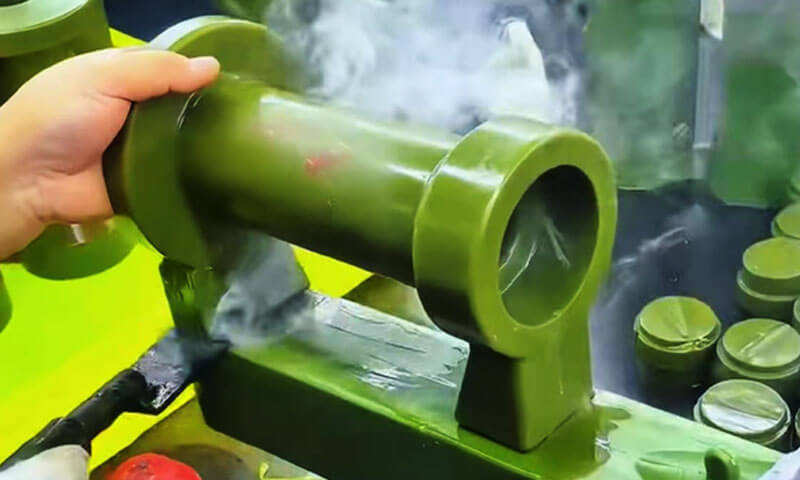
制壳硅溶胶
制壳硅溶胶

This is why silica sol is the better match for 奥氏体不锈钢, PH stainless steels, 双工不锈钢, 铝合金, 铜碱合金, 镍碱超级合金, and titanium alloys when those materials are being used in precision or high-performance castings.

The shell’s finer structure and better surface reproduction preserve the value of those alloy systems instead of degrading them with a rougher mold interface.

For reactive alloys, silica sol is especially important.

Titanium and many nickel-base systems require highly controlled processing atmospheres,

and titanium investment casting in particular is tied to vacuum or highly purified inert-gas protection because of the metal’s reactivity with oxygen, 氮, 和氢.

In those cases, the shell choice is part of the metallurgy, not merely part of the tooling.

Alloy Solidification Characteristics Governing Gating and Riser Design

The alloy’s solidification behavior should determine the feeding system, not the other way around.

Alloys with broader freezing ranges or more difficult feeding behavior need more deliberate directional-solidification control,

while alloys with narrower solidification behavior can often be fed more simply if the hot spot is properly placed.

That is why alloy metallurgy directly governs gating, riser layout, and hot-spot management in investment casting.

Alloys with wider solidification ranges

Nickel-base superalloys, 双工不锈钢, and some other complex alloys are more demanding in feeding

because their solidification behavior can promote dispersed shrinkage or microporosity if the thermal path is not well controlled.

These alloys often benefit from denser riser logic and more careful sequential-solidification design.

Alloys with narrower freezing ranges

Carbon steels and some copper-base alloys usually concentrate shrinkage toward the final solidification hot spots,

which means a more centralized feeding strategy may be sufficient if the part geometry is well designed.

在这种情况下, the gating system should still be smooth and clean, but the riser network can often be less elaborate than for highly sensitive alloys.

High-oxidation-sensitivity alloys

Aluminum and titanium alloys are especially sensitive to oxide formation and gas entrapment,

so the gating system must minimize turbulence and preserve melt cleanliness.

For those alloys, the shell system and pouring practice must work together to avoid oxide folding, 夹带气体, and surface-quality loss.

4. How to Select the Right Investment Casting Alloy

Start from the service environment

The first selection filter is the part’s operating environment.

If the component will live in ambient indoor service, a broad range of steel and aluminum alloys may work. If it will face seawater, 氯化物, 化学物质, or heat, the acceptable alloy window narrows quickly.

In practical alloy-selection guides, 腐蚀环境, operating temperature, 机械负载, 重量, 可加工性, and cost are the main decision variables, not alloy name alone.

Match the alloy family to the dominant requirement

A good rule is to let the dominant requirement drive the family choice.

使用 carbon and low-alloy steels when strength and cost balance are most important; 奥氏体不锈钢 when corrosion resistance and weldability are the main goals;

铝合金 when weight reduction matters; 镍碱超级合金 when temperature and oxidation resistance dominate;

cobalt-base alloys when wear and hot hardness matter; 和 钛合金 when low density and high specific strength must be combined with corrosion resistance.

These are the recurring family-level patterns across investment-casting references.

Check the casting atmosphere before you check the price

Some alloys can be investment cast in conventional foundry conditions, while others need vacuum or highly controlled inert processing.

Titanium is the clearest example: titanium casting must be done under vacuum or inert gas protection because the metal readily reacts with oxygen, 氮, and hydrogen at high temperature.

Nickel-base superalloys also often move into vacuum investment casting when the application is extreme-temperature or contamination-sensitive.

Treat heat treatment as part of the alloy choice

For many alloys, the as-cast condition is only the starting point.

Aluminum casting alloys such as 356, A356, and A357 are selected in part because they develop useful strength after heat treatment,

while precipitation-hardening stainless steels such as 17-4PH and 15-5PH derive much of their performance from aging.

If the post-cast thermal cycle is not practical for the alloy family, the alloy is not a good process fit even if the chemistry looks attractive on paper.

Balance property targets against lifecycle cost

The best alloy is not the strongest or the cheapest in isolation. It is the alloy that meets the service requirement with the least total cost over the part’s life.

A 316L stainless casting may be the right answer for a welded, corrosion-resistant industrial part; a duplex grade may be justified when chloride stress-corrosion resistance must be improved;

a nickel or cobalt alloy may be justified when heat or wear failure would be more expensive than the alloy itself.

That is the real investment-casting decision: service performance first, process cost second, purchase price third.

5. Process Implications by Alloy Family

Investment casting is one process, but the process settings are not the same for every alloy family.

The foundry must adjust atmosphere, 外壳行为, 浇注练习, 热处理, and inspection strategy to suit the alloy.

The table below summarizes the main process consequences by family.

合金族 Main process implication What the foundry must control Typical practical consequence
碳 / 低合金钢 Conventional investment-casting route with strong dependence on heat treatment. 凝固行为, shrinkage feeding, and post-cast normalization / quench-and-temper response. Good structural value, broad use in machinery and industrial hardware.
奥氏体不锈钢 Good all-around castability, 耐腐蚀性, and welding behavior. Carbon control in low-carbon grades, surface cleanliness, and weld-sensitive corrosion performance. Widely used for valves, 泵主体, 配件, and general corrosion service.
PH stainless steels
Stronger stainless route, but aging heat treatment is part of the property package. 解决方案处理, aging response, and dimensional stability during thermal processing. Preferred where stainless parts need much higher strength than 316L.
双相不锈钢 Microstructure balance is critical; strength and SCC resistance depend on phase control. Chemistry balance, cooling practice, and avoidance of phase imbalance. Better choice than standard austenitic steels in chloride-heavy service.
铝合金 Lightweight near-net-shape casting with strong dependence on heat treatment. 孔隙度控制, 固化率, and aging response of families such as 356 / A356 / A357. Best for weight-sensitive parts where geometry and machining reduction matter.
Nickel-base superalloys
Often need vacuum investment casting because of high-temperature contamination sensitivity. 氧 / nitrogen control, 熔体清洁度, and process stability under vacuum or inert atmosphere. Used for turbine and hot-section parts where strength at temperature matters.
Cobalt-base alloys Chosen for hot hardness and wear service, so defect tolerance is low. Wear-sensitive geometry, hot-section integrity, and finish around abrasion-critical surfaces. Used where wear and oxidation resistance justify the higher process burden.
钛合金 Must be melted and poured in vacuum or highly purified inert gas. Absolute contamination control, 气氛纯度, and careful shell/material selection. High-specific-strength parts for aerospace, 海洋, 化学, 和医疗应用.
Copper-base alloys Generally easier to cast than titanium or nickel alloys, but still chemistry-sensitive. Conductivity-driven quality, oxide control, and surface integrity where contact or decorative finish matters. Common for fittings, conductive parts, and wear or decorative components.

6. Full Lifecycle Economic Cost Analysis of Different Investment Casting Alloys

Total component cost consists of three core segments: raw material purchase cost,

融化 & casting processing cost and long-term in-service maintenance cost, determining cost-oriented alloy selection boundary.

Raw Material Cost Hierarchy:

碳钢 < common aluminum alloy < 传统的 304 不锈钢 < 316L不锈钢 < 铜合金 < 双工不锈钢 < precipitation hardening stainless steel < nickel superalloy < TC4 titanium alloy;

titanium raw material unit price reaches 7~11 times of 304 stainless steel due to complex Kroll smelting process and high energy consumption.

Foundry Processing Cost:

Water glass cast alloys (碳钢, common brass/aluminum) own lowest processing cost with mature low-investment equipment and high production yield;

silica sol high-end alloys (superalloy, 钛) generate extra expenditure from vacuum melting,

high-grade refractory and strict atmosphere control, processing cost rises sharply.

Long-Term Lifecycle Comprehensive Cost:

Low-cost carbon/stainless steel require regular anti-corrosion maintenance and periodic replacement under marine/chemical corrosive environment accumulating high post-service expense;

titanium and nickel superalloy castings realize decades maintenance-free service under harsh working condition,

offsetting high initial investment via prolonged service life for large-scale long-cycle engineering projects.

7. 典型的应用

合金族 Typical application logic
Carbon and low-alloy steels 结构部件, 压力相关组件, general industrial hardware.
奥氏体不锈钢 阀, 泵主体, 食物, 化学, 海洋, and general corrosion-resistant parts.
PH stainless steels Hydraulic parts, 航空航天零件, 医疗器械, and high-strength hardware.
双相不锈钢 Chloride-exposed industrial systems, chemical and marine service.
铝合金
Lightweight aerospace, 防御, 汽车, 和工业硬件.
镍超合金 涡轮机, 燃烧系统, marine diesel, hot-section and corrosion-critical parts.
Cobalt alloys 穿, 磨损, high-temperature oxidation, and implant-related applications.
钛合金 航天, 海洋, 化学, and implant applications.
Copper-base alloys Conductive hardware, bronze fittings, 耐磨零件, and decorative components.

8. 结论

Investment casting alloys constitute a multi-grade, multi-performance complementary material system covering low-cost iron-based structural materials to ultra-high-performance special titanium and superalloy,

whose core application logic hinges on the trade-off among metallurgical inherent property, process adaptability and comprehensive lifecycle economic benefit.

In modern precision foundry design, rational graded alloy matching and composite material structural layout gradually replace blind single-material full-component design,

maximizing respective material advantages of different investment casting alloys and striking optimal balance among component forming quality, processing yield and long-term service economic benefit.


常见问题解答

Why does titanium investment casting avoid ordinary silica-based ceramic shells?

Molten titanium violently reacts with SiO₂ inside silica refractory at high pouring temperature generating brittle titanium oxide contamination layer (α-case), deteriorating surface mechanical property;

calcium oxide neutral refractory serves exclusive shell material for titanium investment casting.

What alloy leads to most severe dispersed microporosity during investment casting?

Nickel-based superalloy with extra-wide solidification temperature range is most prone to interdendritic microporosity,

which can be effectively controlled via boron microalloying and optimized riser sequential feeding design.

Can investment casting replace forging for superalloy components?

Near-net-shape investment casting realizes complex inner cavity structure impossible via forging, suitable for intricate superalloy static components;

high-cycle dynamic load turbine rotating parts still adopt forging plus subsequent precision investment casting compound forming process.

发表评论

您的邮箱地址不会被公开。 必填项已用 * 标注

滚动至顶部

获取即时报价

请填写您的信息,我们会及时与您联系.