编辑翻译
经过 Transposh - translation plugin for wordpress
定制钛熔模铸造零件

钛投资铸造

内容表 展示

1. 介绍

Titanium investment casting occupies a unique position in advanced manufacturing.

它不仅仅是金属成型工艺; it is a precision engineering solution for components that must combine low weight, 高力量, 耐腐蚀性, and complex geometry.

Yet it is also one of the most demanding casting routes in industrial practice.

Titanium’s metallurgical advantages are matched by severe processing sensitivities: it reacts readily with oxygen, 氮, 氢, 碳, and many mold materials at elevated temperature.

This means that successful titanium casting depends on more than simply melting and pouring metal.

It requires control of atmosphere, 壳牌化学, 热梯度, 污染, 固化行为, and post-cast surface integrity.

由于这个原因, titanium investment casting is best understood as a systems technology.

Its value comes from the interaction of alloy selection, process design, 质量保证, 和申请要求.

2. What Is Titanium Investment Casting?

Titanium investment casting is a precision casting method used to produce near-net-shape titanium alloy components through the lost-wax process.

A sacrificial pattern is created first, typically from wax or a polymer substitute.

That pattern is coated repeatedly with ceramic slurry and refractory stucco to build a rigid shell mold.

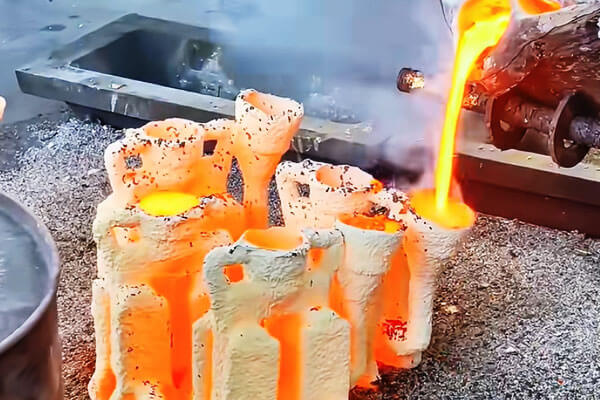
一旦图案被移除, molten titanium is introduced into the cavity under tightly controlled conditions, usually in vacuum or inert atmosphere.

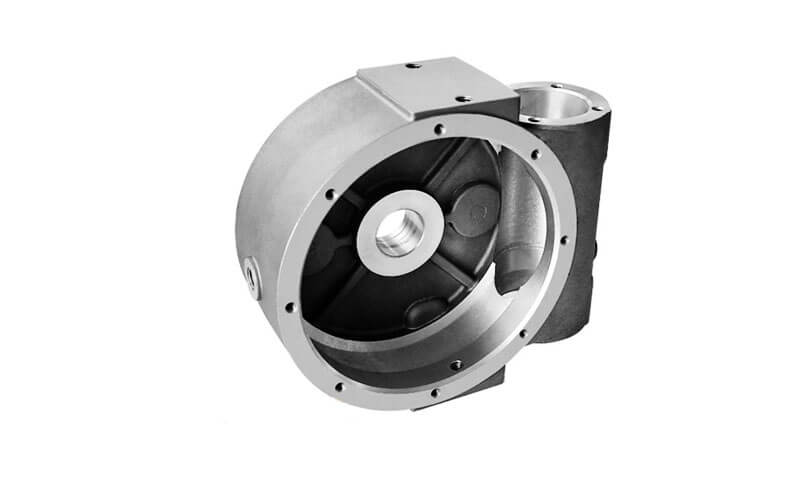
钛投资铸造
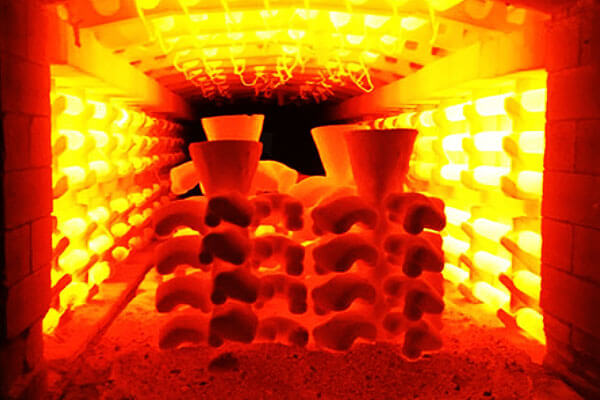
钛投资铸造

The core advantage of the process lies in its ability to reproduce complex geometry with relatively little machining.

薄壁, organic contours, intricate internal features, and consolidated part designs can often be cast directly rather than assembled or machined from solid stock.

That makes the process especially attractive when titanium material cost is high and design complexity is nontrivial.

实际上, titanium investment casting serves three strategic goals:

  • Shape complexity that would be expensive or impossible to machine efficiently.
  • 物质效率 through near-net-shape production.
  • Performance retention by preserving the intrinsic advantages of titanium alloys.

3. Why Titanium Is Different

stands apart from many conventional engineering metals because it combines an unusually favorable performance profile with a highly demanding processing window.

Its low density, excellent specific strength, strong corrosion resistance, and biocompatibility make it attractive for high-end applications.

同时, its elevated melting point, significant solidification shrinkage, 低导热率, and high chemical reactivity at casting temperature create serious manufacturing challenges.

Core Property 典型的价值 / 行为 Casting Implication
熔点 ~1668 °C (pure titanium) Demands ultra-high-temperature melting and pouring systems, with strict furnace and refractory control
密度 4.51 g/cm³ Enables lightweight structural design and improved weight efficiency in critical components
强度与重量比 很高 Makes titanium ideal for aerospace, 医疗的, and high-performance industrial parts
耐腐蚀性 出色的 in many oxidizing, 海洋, 和化学环境 Supports long-service-life components, but only if surface cleanliness and integrity are preserved
生物相容性
出色的 for selected grades Requires exceptionally clean processing and surface quality to maintain medical usability
Solidification Shrinkage Rate Up to ~2.2% Raises the risk of shrinkage cavities, 微孔隙度, and feeding-related defects
导热率 相对较低 Can lead to slower cooling, 更粗糙的谷物, and greater sensitivity to thermal gradients
High-Temperature Reactivity 强的 Requires vacuum or inert-atmosphere casting and highly compatible shell materials

4. What Investment Casting Means for Titanium

熔模铸造, 也称为失去蜡铸, is especially attractive for titanium because it can produce intricate shapes with excellent dimensional fidelity and relatively low machining allowance.

For titanium, the principal advantage is not only shape complexity.

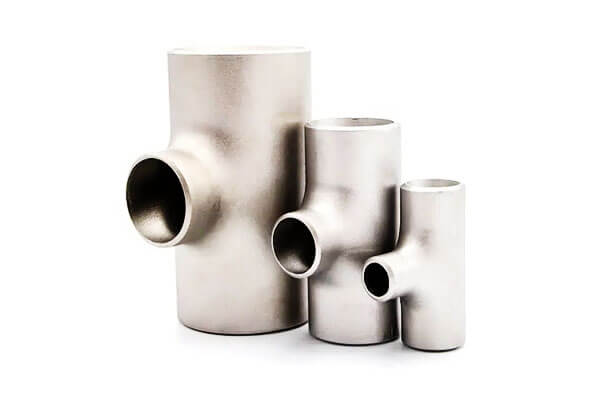
Titanium Investment Casting industrial fittings

It is the ability to create near-net-shape components that reduce machining time, preserve expensive material, and minimize waste.

This matters because titanium feedstock is costly and machining losses are expensive.

A process that can reduce buy-to-fly ratio is strategically important in aerospace, 医疗的, 和高端工业应用.

Investment casting is also suitable for thin sections, 内部段落, organic contours, and complex transition zones that would be difficult or uneconomical to machine from billet.

简而言之, it allows engineering intent to be translated into metal with less compromise.

For titanium, the process is valuable because it provides:

  • Near-net-shape capability
  • Geometric complexity without excessive assembly
  • Lower buy-to-fly ratios
  • 减少次级加工
  • Design consolidation
  • 提高材料利用率

5. The Titanium Investment Casting Process

Although the process resembles conventional investment casting at a high level, titanium requires tighter discipline at every stage.

Titanium Investment Casting Process

图案创建

The process starts with a wax or polymer pattern. Pattern quality is crucial because defects at this stage are faithfully transferred into the mold and then into the final cast part.

尺寸稳定性, 表面饰面, and assembly integrity all matter.

模具组件

Individual patterns may be assembled into a tree or cluster to improve casting efficiency.

Gating and risering must be designed to promote complete filling, 受控的固化, and minimal defect formation.

陶瓷外壳建筑

The pattern assembly is dipped into ceramic slurry and coated with refractory particles in multiple layers until a sufficiently strong shell is formed.

For titanium, shell material selection is especially important because the mold must withstand high temperature while resisting chemical reaction with the melt.

Dewaxing and Firing

The wax is removed, typically by autoclave or thermal dewaxing, and the shell is fired to remove residual contaminants and strengthen the mold. Firing also stabilizes the mold before pouring.

融化和倾倒

Titanium is usually melted and poured under vacuum or inert gas conditions. This is one of the most critical aspects of the process.

Exposure to oxygen or other reactive gases must be minimized because contamination can severely impair mechanical performance.

凝固

Solidification behavior determines grain structure, 收缩孔隙度, segregation tendencies, 和尺寸准确性.

Controlled heat extraction and sound feeding design are necessary to reduce internal defects.

拆除外壳和整理

固化后, the ceramic shell is removed mechanically or chemically.

Remaining gating material is cut away, surfaces are cleaned, and finishing operations are performed as required.

Heat Treatment and Inspection

Titanium castings often undergo heat treatment to optimize microstructure and mechanical properties.

This is followed by rigorous inspection, including dimensional checks, surface evaluation, 和非破坏性测试.

6. Mainstream Castable Titanium Alloy Grades & 过程适应性

Not every titanium alloy is equally suitable for casting. Some are more fluid, more crack-sensitive, or more demanding in terms of atmosphere and post-processing.

Titanium Alloy Grade 类型 Typical Characteristics 可铸性 / 过程适应性
ti-6al-4V (TC4) Alpha-beta alloy 平衡力量, broad industrial use, widely known standard alloy Excellent to good
ti-6al-4v eli Extra-low interstitial variant Improved toughness and ductility, favored in medical use 良好
商业上纯净的钛 (CP TI) Unalloyed titanium Excellent corrosion resistance and biocompatibility, lower strength than alloyed grades 良好
TI-6AL-2SN-4ZR-2MO Alpha-beta alloy Higher-temperature capability, used in demanding aerospace service 一般
TI-5AL-2.5SN Alpha alloy Good elevated-temperature performance, 稳定的微观结构 一般
Beta titanium alloys Beta or near-beta systems 高强度潜力, more composition-sensitive 更困难

7. Technical Challenges of Titanium Investment Casting

Titanium investment casting is technically demanding because the material’s advantages are inseparable from its processing sensitivity.

实践, the main challenge is not simply producing a sound casting, but doing so while preserving the alloy’s mechanical integrity, 表面质量, and corrosion performance.

Several failure mechanisms tend to overlap, which makes process discipline essential.

High Chemical Reactivity at Casting Temperature

Molten titanium reacts readily with oxygen, 氮, 氢, 碳, and even trace contaminants in the surrounding environment.

This reactivity can lead to embrittlement, surface contamination, and reduced fatigue performance.

In severe cases, the cast part may appear geometrically acceptable while already being metallurgically compromised.

This is why titanium casting is typically carried out under vacuum or inert atmosphere conditions. Any lapse in environmental control can quickly degrade quality.

Mold-Metal Interaction

Titanium is highly sensitive to the chemistry of the ceramic shell.

If the shell material is not properly selected, the molten alloy may react with the mold surface, causing roughness, 包含, chemical contamination, or localized bonding defects.

Compared with many other metals, titanium has a much narrower compatibility window with refractory systems.

This makes shell formulation a core metallurgical issue, not merely a tooling choice.

孔隙率, 收缩, and Feeding Difficulty

Titanium alloys often exhibit significant solidification shrinkage and are sensitive to feeding design.

If metal flow, 上升, and thermal gradients are not properly engineered, shrinkage cavities or micro-porosity can form in thick sections, junctions, or isolated hot spots.

Gas porosity may also occur if the vacuum system is insufficient, the melt is contaminated, or gases are released from the shell during pouring.

Dimensional Distortion and Stability

Titanium’s thermal behavior, combined with the stiffness and expansion characteristics of the ceramic shell, can make dimensional control difficult.

复杂的几何形状, 薄壁, and non-uniform section thicknesses are especially vulnerable to warping or unpredictable shrinkage.

This is a major challenge because titanium investment casting is often chosen precisely for complex geometry, where dimensional stability matters most.

Surface Integrity and Alpha-Case Formation

Surface condition is one of the most critical quality indicators in titanium casting.

Exposure to oxygen-rich environments at high temperature can produce an oxygen-enriched surface layer commonly referred to as alpha case.

This layer is hard, 脆, and detrimental to fatigue and long-term reliability.

Even when the casting shape is correct, an unacceptable surface layer can render the part unusable for demanding applications such as aerospace or medical service.

Microstructural Sensitivity

Titanium’s properties are strongly tied to its microstructure, which is influenced by cooling rate, 合金化学, and post-cast heat treatment.

Uncontrolled solidification can produce coarse grains, 隔离, or undesirable phase distribution.

These features may not be obvious from visual inspection but can strongly affect tensile strength, 延性, 和疲劳生活.

Yield Sensitivity and Scrap Cost

Titanium feedstock is expensive, and the production chain for titanium castings is technically intensive.

A small defect can destroy significant value, especially for large or highly engineered parts.

Compared with many conventional cast metals, titanium casting has a lower tolerance for trial-and-error manufacturing.

Inspection Burden

Because titanium castings are often used in critical service, the inspection burden is high.

维度检查, surface evaluation, chemical verification, 影像学测试, penetrant inspection, and in some cases microstructural or mechanical validation are all necessary.

8. Key Process Control Factors of Titanium Investment Casting

Successful titanium investment casting depends on controlling a limited number of variables with exceptional rigor.

The process is unforgiving, so each stage must be designed to reduce contamination risk, stabilize solidification, and preserve surface integrity.

Atmosphere Control

Atmosphere control is the most fundamental requirement.

Titanium should be melted and poured under vacuum or in a highly purified inert gas environment to prevent reaction with oxygen, 氮, 和氢.

The atmosphere must remain stable not only during melting, but also throughout pouring and early solidification.

A momentary exposure to reactive gases can leave lasting metallurgical damage.

Cleanliness of Feedstock and Equipment

Titanium is highly sensitive to contamination from charge material, furnace residues, 工具, handling fixtures, and even surface dust.

Every contact surface must be clean and compatible with titanium service.

这包括:

  • verified raw material composition,
  • contamination-free handling and storage,
  • clean crucibles or melting systems,
  • dedicated tools and fixtures where possible.

In titanium casting, cleanliness is not a housekeeping issue; it is a process variable.

Ceramic Shell Selection

The shell mold must meet several requirements at once: 热稳定性, 渗透性, 力量, 和化学兼容性.

It must endure the casting temperature while minimizing reaction with the molten alloy.

Key shell considerations include:

  • refractory chemistry,
  • binder system,
  • 抗热震性,
  • residual gas release behavior,
  • surface finish capability.

An incompatible shell can degrade surface integrity even if all other process variables are well controlled.

Pouring Temperature Control

Pour temperature must strike a balance between fluidity and reactivity.

如果温度太低, the metal may misrun or fail to fill thin sections. If it is too high, reaction risk increases and the shell may be overstressed.

The optimal window depends on:

  • 合金等级,
  • 零件几何,
  • shell design,
  • mold preheat temperature,
  • vacuum and atmosphere stability.

Mold Preheat Management

Preheating influences metal flow, 固化率, and thermal gradient. Proper preheat supports complete filling and reduces premature freezing.

Excessive preheat, 然而, can raise reaction risk and encourage undesirable grain growth or surface degradation.

The preheat schedule must therefore be tailored to part geometry and alloy behavior.

门控, 立管, and Solidification Design

Solidification design is one of the main determinants of casting quality.

Titanium alloys can be highly sensitive to local hot spots and feeding deficiency, so gating and risering must be engineered to encourage directional solidification and compensate for shrinkage.

Good design reduces:

  • 湍流,
  • 气体夹带,
  • 收缩腔,
  • isolated hot sections,
  • 微孔隙度.

在许多情况下, simulation-assisted design is essential.

Cooling Rate Control

Cooling rate affects grain structure, phase development, 和残余应力.

Too rapid a cooling rate may increase thermal stress or distortion, while too slow a rate may encourage coarse microstructure or segregation.

The goal is controlled solidification, not merely rapid solidification.

Post-Cast Heat Treatment

Heat treatment is used to stabilize microstructure and optimize mechanical properties, but it cannot correct fundamental casting defects.

It should be viewed as a refinement step, not a rescue operation.

The heat treatment cycle must be matched to:

  • 合金类型,
  • 截面厚度,
  • required strength/ductility balance,
  • intended service environment.

9. Advantages and Limitations of Titanium Investment Casting

优点

  • 生产 complex near-net-shape geometry
  • 还原 machining time and material waste
  • 支持 零件合并
  • Preserves 轻的, corrosion-resistant performance
  • 适合 high-value sectors where precision matters
  • Can support thin-walled and intricately shaped components

限制

  • 高生产成本
  • 需要 specialized equipment and expertise
  • Sensitive to contamination and process drift
  • Can suffer from porosity or surface reaction issues
  • Inspection and qualification can be resource-intensive
  • Not always economical for simple geometries

10. Applications of Titanium Investment Castings

Titanium investment castings are used where 重量, 耐腐蚀性, geometric complexity, 和长期可靠性 must be optimized at the same time.

The process is not typically chosen for ordinary mass-market parts; it is selected for components whose performance justifies the higher manufacturing sophistication.

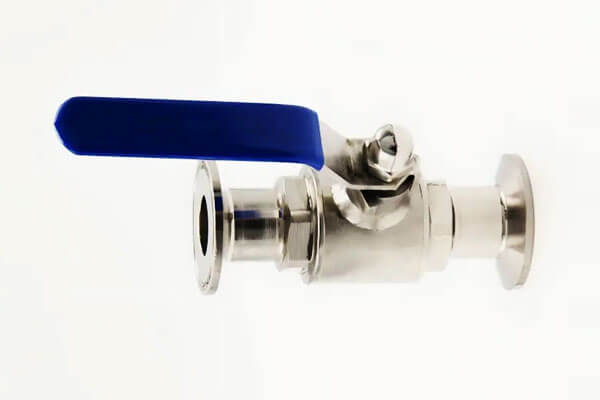
Titanium Investment Casting Valves

航空航天和防御

Aerospace remains one of the most important application areas for titanium investment castings.

Aircraft and defense platforms demand components that are light enough to reduce fuel consumption and payload penalties, yet strong enough to withstand severe mechanical and thermal loading.

Titanium’s high specific strength and corrosion resistance make it highly suitable for such service.

Typical aerospace applications include:

  • Structural brackets and support hardware
  • Airframe fittings and connector components
  • Engine-adjacent hardware and housings
  • Control system parts
  • Accessory mounts and complex transition components

Medical Devices and Implants

Titanium is one of the most widely accepted metals in the medical field because of its excellent 生物相容性, 耐腐蚀性, and low allergenic potential.

Investment casting is especially useful when a component must combine anatomical complexity with surface and dimensional precision.

Common medical applications include:

  • Orthopedic support components
  • Implant-adjacent structures
  • Surgical instrument parts
  • Dental and maxillofacial components
  • Custom-shaped medical hardware

海洋和海上工程

Titanium performs exceptionally well in marine environments because it resists seawater corrosion, chloride attack, and many forms of localized degradation that affect conventional alloys.

For offshore and marine systems, this can translate into longer service life, lower maintenance frequency, and reduced replacement cost.

Applications in this area include:

  • Pump and 阀门 身体
  • Impellers and flow components
  • Seawater-exposed fittings
  • 热交换器零件
  • Specialized submerged hardware

Chemical Processing and Industrial Equipment

Chemical processing environments often expose components to acids, 氯化物, oxidizing media, and temperature fluctuations.

Titanium’s corrosion resistance makes it a strong candidate in systems where material failure would lead to downtime, 污染, or safety issues.

Representative applications include:

  • Valve parts and flow control components
  • Pump internals
  • Process housings
  • Corrosion-resistant connectors
  • Specialty fittings and manifolds

发电

In energy systems, titanium castings may be used where fluids are corrosive, temperatures are elevated, or lightweight and durable components are needed.

While not as universally used as in aerospace or medical sectors, titanium still has an important niche in specialized power and utility applications.

Typical uses can include:

  • Corrosion-resistant flow hardware
  • Condensate and utility system parts
  • Specialized heat transfer components
  • High-reliability attachments and fittings

High-Performance Automotive and Motorsport

Titanium is also used in high-performance automotive and motorsport applications, though usually in lower volumes and for premium or specialized systems.

The main drivers are mass reduction, 耐腐蚀性, and performance under dynamic loading.

Possible applications include:

  • 轻量级托架
  • Suspension-related hardware
  • Performance connectors and fittings
  • Engine-adjacent support parts
  • Custom racing components

Consumer Premium and Industrial Specialty Products

Titanium investment casting is sometimes used in premium consumer products and specialized industrial hardware where appearance, 耐用性, and engineering sophistication are part of the product value proposition.

示例包括:

  • High-end sporting equipment components
  • Luxury hardware
  • 精密连接器
  • Custom industrial fittings
  • Performance-oriented specialty parts

11. Process Comparison: Titanium Investment Casting vs. Titanium Forging & 3数码印刷

A meaningful evaluation of titanium investment casting must place it in context with two other major manufacturing routes: 锻造增材制造 (3D打印).

Titanium Investment Casting vs. Titanium Forging

Forging is traditionally the benchmark for structural titanium performance.

It shapes metal under high compressive force, which refines grain flow, improves density, and often produces superior fatigue resistance.

When the application is highly safety-critical and the geometry is relatively simple, forging is often the preferred route.

Forging Advantages

  • Excellent mechanical integrity
  • Superior fatigue performance in many cases
  • 稠密, refined microstructure
  • Strong qualification history in aerospace and defense

Forging Limitations

  • Limited ability to produce complex geometry
  • High machining allowance may be required
  • Material waste can be significant
  • Die cost and setup can be substantial

Titanium investment casting, 相比之下, is attractive when the component is too geometrically complex to forge efficiently.

It can create integrated shapes, 薄壁, and detailed transitions with far less machining. 然而, it generally cannot match the grain flow advantages of forging.

Titanium Investment Casting vs. Titanium 3D Printing

Additive manufacturing has changed the conversation by allowing titanium parts to be built layer by layer from digital data. Its greatest advantage is unprecedented design freedom.

Internal channels, 晶格结构, topology-optimized forms, and highly customized components can be created without conventional tooling constraints.

3D Printing Advantages

  • Extremely high geometric freedom
  • Excellent for prototypes and customized parts
  • No traditional mold required
  • Fast design iteration
  • Enables structures impossible by conventional methods

3D Printing Limitations

  • Surface finish is often rough
  • Internal porosity and anisotropy can be concerns
  • Post-processing is usually necessary
  • Qualification and repeatability may be demanding
  • Cost can be high for larger production volumes

Titanium investment casting offers a more mature and often more economical solution for repeatable production of complex parts, especially when the geometry can be established in a mold-based workflow.

It usually provides better throughput and more established industrial consistency than additive manufacturing for many serial applications.

Functional Comparison by Engineering Objective

Engineering Objective Best Fit 为什么
Maximum fatigue strength 锻造 Refined microstructure and superior defect resistance
Complex geometry with good economy 熔模铸造 Near-net-shape capability reduces machining and waste
Rapid prototype development 3D打印 No tooling and fast iteration
Lightweight internal lattice structures 3D打印 Enables forms impossible by casting or forging
Large-volume production of moderately complex parts 熔模铸造 Better scalability than printing, less machining than forging
Highest structural reliability in simple shapes 锻造 Strongest conventional process route
Design consolidation Investment casting or 3D printing Both can reduce part count; casting is often better for production scale

12. Future Trends of Titanium Investment Casting

Several trends are reshaping titanium investment casting.

3D‑Printed Wax Patterns and Shells

Additive manufacturing eliminates the need for metal pattern tooling for low‑volume production.

Direct printing of ceramic shells (through binder jetting) is also emerging, cutting lead times from months to days.

Automation of Shell Building

Robotic dipping and stuccoing improve consistency and reduce labor.

Automated lines can produce shells with minimal human intervention, reducing variability in shell thickness and permeability.

Simulation‑Driven Process Design

CFD and FEM simulation now predict filling, 凝固, 孔隙率, 和残余应力.

This reduces trial‑and‑error and allows engineers to optimise gating and shell design virtually.

热等静止 (时髦的) becoming Standard

For high‑integrity applications (航天, 医疗的), HIP is increasingly mandatory.

New cost‑effective HIP cycles (shorter times, 降低温度) are making the process more accessible.

Development of New Castable Alloys

Research focuses on alloys with lower reactivity (reduced aluminum content) and better fluidity.

Beta‑rich alloys that cast with finer grains are gaining attention.

Sustainability and Scrap Reclamation

Titanium sponge production is energy‑intensive (~80 kWh/kg).

Re‑melting scrap returns from castings and machining is now standard; some foundries achieve >50% recycled content without property loss.

13. 结论

Titanium investment casting is a high-barrier, high-precision advanced manufacturing technology developed targeting the extreme metallurgical activity of titanium alloys.

Different from ordinary lost-wax casting, it relies on inert ceramic shell protection and full vacuum melting technology to solve the core problems of titanium oxidation, refractory reaction, and shrinkage defects.

Through standardized wax pattern replication, professional shell manufacturing, vacuum pouring, and precise post-treatment, it produces high-precision, high-density, high-toughness complex titanium alloy components.

将来, with the iteration of new refractory materials and intelligent process control technology, titanium investment casting will further break precision and cost bottlenecks,

becoming the core supporting process for advanced lightweight high-end equipment manufacturing, and continuously driving the upgrading of global titanium alloy industrial application technology.


常见问题解答

What is titanium investment casting used for?

It is used to produce complex titanium components with high strength, 重量低, 和良好的耐腐蚀性, 特别是在航空航天中, 医疗的, 海洋, 和化学应用.

Which titanium alloy is most common for casting?

Ti-6Al-4V is the most widely used cast titanium alloy because it offers a strong balance of strength, 耐腐蚀性, and process adaptability.

Is titanium investment casting better than forging?

不普遍. Forging is usually better for maximum mechanical performance, while investment casting is better for complex geometry and near-net-shape efficiency.

Why is vacuum casting often required?

Vacuum casting reduces exposure to reactive gases and helps prevent contamination, 互惠, and surface degradation during melting and pouring.

What makes titanium investment casting cost-effective?

Titanium investment casting can be highly cost-effective because it enables intricate, near-net-shape components to be produced in a single manufacturing sequence.

Parts that would otherwise require extensive machining, 焊接, or multi-piece assembly can often be cast as one integrated structure.

This reduces total process steps, 缩短交货时间, lowers labor and setup costs, and improves consistency by eliminating many assembly-related risks such as misalignment, joint weakness, and weld defects.

发表评论

您的邮箱地址不会被公开。 必填项已用 * 标注

滚动至顶部

获取即时报价

请填写您的信息,我们会及时与您联系.