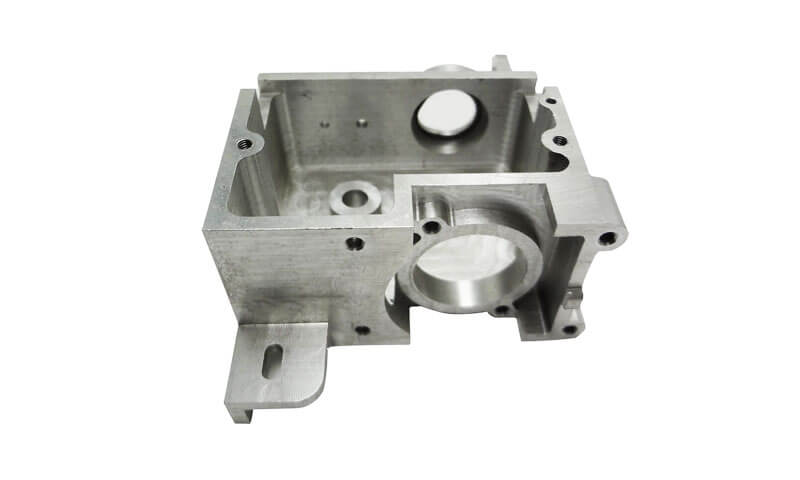
1. 介绍
Manufacturing has always been the driving force behind industrial progress, but in today’s era of advanced engineering, simply producing parts is no longer sufficient.
Modern industries demand components that are not only functional but also exceptionally accurate, highly consistent, and capable of performing reliably under increasingly demanding operating conditions.
Whether manufacturing a jet engine turbine blade, a surgical implant, a semiconductor wafer, or a high-pressure valve body, even microscopic dimensional deviations can compromise product performance, reduce service life, or lead to catastrophic system failure.
This demand for increasingly tighter tolerances has given rise to 精确制造—a highly specialized manufacturing discipline
that integrates advanced machine tools, intelligent automation, sophisticated measurement technologies, 材料科学, and rigorous quality management to produce components with exceptional dimensional accuracy and repeatability.
Unlike conventional manufacturing, which primarily focuses on producing parts that meet basic functional requirements, precision manufacturing emphasizes controlling every variable throughout the production process.
From material selection and process planning to machining, 检查, 和最终组装, each step is optimized to minimize variation and ensure every component conforms precisely to engineering specifications.
2. 什么是精密制造?
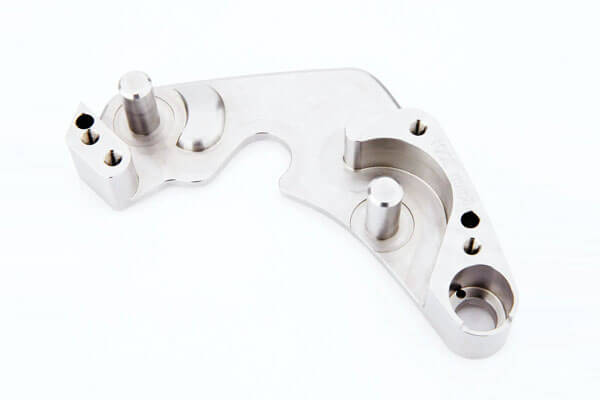
Precision manufacturing is the discipline of designing and producing components with exceptionally high levels of dimensional accuracy, geometric consistency, and surface integrity through tightly controlled manufacturing processes.
It combines advanced machinery, digital technologies, skilled engineering, and rigorous quality assurance to ensure that every manufactured part conforms precisely to its intended design specifications.
从工程角度来看, precision manufacturing is not defined by a single production process.
反而, it is characterized by the ability to repeatedly manufacture components within extremely narrow tolerances while maintaining consistent quality across low-volume prototypes and high-volume production alike.
Unlike conventional manufacturing, where deviations within relatively broad tolerance limits may be acceptable, precision manufacturing seeks to minimize variation at every stage of production.
Every factor—including machine rigidity, 热稳定性, tooling condition, fixture accuracy, 材料特性, 切割参数, and environmental conditions—is carefully controlled to achieve predictable and repeatable results.

Core Characteristics of Precision Manufacturing
Precision manufacturing is distinguished by several defining characteristics that collectively ensure superior product quality and process reliability.
卓越的维度精度
The primary objective of precision manufacturing is to produce components that closely match their nominal dimensions.
High-precision machine tools, advanced tooling systems, and sophisticated measurement equipment are used to minimize dimensional deviations.
Tight Geometric Tolerances
In addition to size, precision manufacturing controls geometric features such as:
- 平坦
- 圆度
- Cylindricity
- 同心
- 垂直性
- Parallelism
- Position accuracy
- Surface profile
Maintaining these characteristics is critical for assemblies requiring perfect alignment and smooth mechanical motion.
上表面饰面
Many precision components require exceptionally smooth surfaces to reduce friction, improve sealing performance, enhance fatigue resistance, or satisfy optical requirements.
Typical surface roughness values range from:
- RA 1.6 μm for general precision machining
- RA 0.8 μm for sealing surfaces
- RA 0.2 μm or lower for optical and medical applications
Advanced finishing processes such as grinding, 磨练, 拍打, 抛光, and superfinishing are frequently employed to achieve these requirements.
Excellent Repeatability
Precision manufacturing emphasizes process consistency rather than isolated accuracy.
Every part produced should exhibit nearly identical dimensions and properties regardless of production batch or manufacturing date.
Repeatability is essential for automated assembly systems and interchangeable components.
Stable Process Capability
High process capability is achieved through:
- Machine calibration
- Thermal compensation
- Tool condition monitoring
- 流程优化
- Statistical quality control
Manufacturers often monitor process capability indices such as Cp and Cpk to ensure production remains within specified tolerance limits.
Complete Traceability
Modern precision manufacturing integrates comprehensive production traceability.
Every component may be linked to:
- 材料证书
- Heat treatment records
- Machining parameters
- Inspection reports
- Tooling history
- Operator information
- Quality documentation
Such traceability is particularly important in aerospace, 医疗的, 和汽车行业.
3. Fundamental Principles of Precision Manufacturing
Precision manufacturing is founded on a set of engineering principles that govern how dimensional accuracy, 工艺稳定性, and product quality are achieved.
These principles ensure that manufacturing systems consistently produce components meeting stringent performance requirements while minimizing variation and defects.
Accuracy vs. 精确
Although often used interchangeably in everyday language, 准确性 和 精确 have distinct meanings in manufacturing engineering.
准确性 refers to how closely a manufactured dimension matches its intended design value.
A highly accurate process produces parts that are very close to the target specification.
精确, 相比之下, describes the consistency or repeatability of the manufacturing process.
A highly precise process produces nearly identical parts repeatedly, even if there is a slight systematic deviation from the nominal dimension.
An ideal manufacturing process is both accurate and precise, consistently producing components that meet design specifications with minimal variation.
Achieving this balance requires rigorous calibration, 过程控制, and continuous monitoring.
Engineering Tolerances
No manufacturing process can produce absolutely perfect dimensions. 反而, engineers specify acceptable limits of variation known as 公差.
Precision manufacturing is characterized by its ability to operate within extremely tight tolerance windows.
Tolerance control extends far beyond simple linear dimensions and includes:
- 尺寸公差
- Geometric Dimensioning and Tolerancing (GD&t)
- Surface profile tolerances
- Position tolerances
- Form tolerances
- Orientation tolerances
- Runout tolerances
Proper tolerance allocation ensures components assemble correctly while avoiding unnecessarily expensive manufacturing processes.
表面完整性
Precision manufacturing focuses not only on dimensions but also on preserving the functional quality of the manufactured surface.
Surface integrity encompasses multiple characteristics, 包括:
- 表面粗糙度
- Surface waviness
- 残余应力
- Microhardness
- Microstructural alterations
- 表面缺陷
High-quality surface integrity contributes to:
- 改善疲劳抗性
- Better sealing performance
- Reduced friction
- 增强的耐磨性
- Increased corrosion resistance
Advanced finishing processes are often employed to optimize surface characteristics for demanding applications.
工艺稳定性
Long-term manufacturing precision depends on maintaining stable production conditions.
Critical factors influencing process stability include:
- Machine tool rigidity
- Thermal expansion control
- Vibration suppression
- Cutting tool wear
- Workholding accuracy
- Environmental temperature
- Coolant performance
- Machine calibration
Rather than correcting defects after they occur, modern precision manufacturing emphasizes preventing variation through proactive process control and continuous improvement.
Stable processes ultimately deliver higher quality, 降低成本, and greater manufacturing efficiency while meeting the increasingly stringent demands of advanced engineering industries.
4. Key Precision Manufacturing Processes
CNC Precision Machining
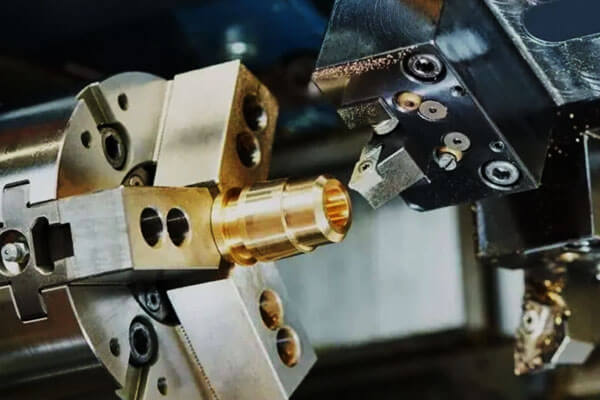
计算机数值控制 (CNC) precision machining is one of the most widely used and versatile manufacturing processes in modern industry.
It removes material from a solid workpiece using computer-controlled cutting tools to produce highly accurate and geometrically complex components.
数控加工 supports a wide variety of operations—including milling, 转动, 钻孔, 无聊的, 窃听, and multi-axis contouring—and is capable of manufacturing everything from simple mechanical parts to highly intricate aerospace and medical components.

Unlike conventional manual machining, CNC systems execute programmed toolpaths with exceptional accuracy and consistency, minimizing human error and enabling repeatable production across small and large production batches.
| CNC machining type | 能力 | 宽容 | 表面饰面 (RA) |
| 数控铣削 (3‑axis, 5‑axis) | Complex 3D surfaces, 口袋, 轮廓 | ±0.005‑0.02 mm | 0.8‑1.6 µm |
| 数控车削 | 圆柱零件, 线程, 龙头 | ±0.005‑0.02 mm | 0.8‑1.6 µm |
| CNC研磨 | Hard materials; 精细的饰面 | ±0.001‑0.005 mm | 0.1‑0.4 µm |
| Swiss‑type (转动 + 铣削) | 小的, 复杂零件 (±0.01 mm) | ±0.005‑0.01 mm | 0.8‑1.6 µm |
| Multi‑axis EDM | Complex cavities, hardened materials | ±0.005‑0.02 mm | 0.4‑1.6 µm |
精密研磨
Precision grinding is a finishing process that uses abrasive grinding wheels to remove extremely small amounts of material from a workpiece, producing exceptional dimensional accuracy and superior surface integrity.
It is typically performed after machining and heat treatment to achieve final dimensions, improve geometric accuracy, and refine surface finishes.

Because abrasive particles are considerably harder than conventional cutting tools, grinding is capable of machining hardened steels, 陶瓷, 碳化物, and other difficult-to-machine materials with remarkable precision.
| Grinding type | 应用 | 宽容 | RA |
| 表面研磨 | 平面, parallel faces | ±0.001‑0.003 mm | 0.1‑0.4 µm |
| Cylindrical grinding | 轴, rolls, 轴承轴颈 | ±0.001‑0.003 mm | 0.1‑0.4 µm |
| Centreless grinding | High‑volume cylindrical parts | ±0.002‑0.005 mm | 0.2‑0.8 µm |
| Internal grinding | Inner diameters | ±0.002‑0.005 mm | 0.2‑0.8 µm |
| Jig grinding | Precision holes, 轮廓 | ±0.001‑0.002 mm | 0.1‑0.2 µm |
电气加工 (EDM)
电气加工 (EDM) is a non-contact manufacturing process that removes electrically conductive material through controlled electrical discharges between an electrode and the workpiece.
Instead of relying on mechanical cutting forces, EDM uses thermal energy generated by high-frequency sparks to erode material with exceptional precision.

This process is particularly valuable for producing intricate cavities, sharp internal corners, 狭窄的插槽, micro-features, and complex geometries in extremely hard materials that are difficult or impossible to machine conventionally.
| EDM type | 应用 | 宽容 | RA |
| 沉降器EDM | 模具, 死亡, 腔 | ±0.005‑0.02 mm | 0.4‑1.6 µm |
| 电线EDM | Contours, 龙头, 小孔 | ±0.002‑0.01 mm | 0.4‑1.6 µm |
| Small‑hole EDM | Cooling holes, starting holes | ±0.005‑0.02 mm | 1.6‑3.2 µm |
Laser Manufacturing
Laser manufacturing employs highly concentrated laser beams to process materials through localized heating, 融化, 汽化, or ablation.
取决于申请, lasers can be used for cutting, 钻孔, 焊接, 雕刻, surface texturing, 微机械加工, and precision marking.

Modern fiber lasers, ultrafast femtosecond lasers, and picosecond lasers have dramatically expanded the capabilities of laser processing, enabling extremely fine features with minimal thermal damage.
| Laser process | 应用 | Feature size | 宽容 |
| 激光切割 | 钣金, 管 | Kerf 0.1‑0.3 mm | ±0.02‑0.05 mm |
| 激光钻探 | Small holes in hard materials | 0.02‑1 mm | ±0.005‑0.02 mm |
| Laser marking / 雕刻 | Identification, 装饰 | 0.01‑0.05 mm | ±0.01‑0.02 mm |
| Laser micromachining | Fine features on small parts | 0.001‑0.05 mm | ±0.001‑0.005 mm |
| 激光焊接 | Precision joining | 0.1‑1 mm weld | ±0.02‑0.05 mm |
精密铸造
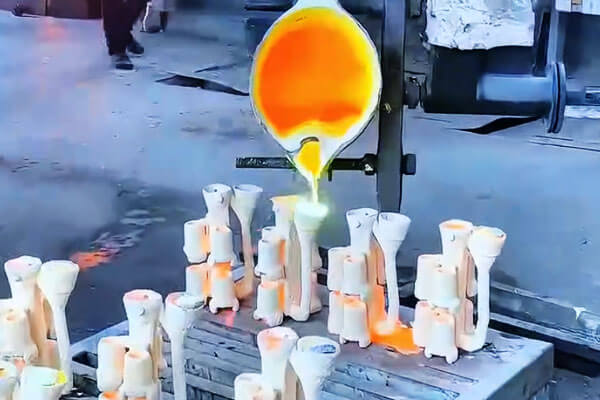
精密铸造 encompasses advanced casting technologies capable of producing near-net-shape metal components with high dimensional accuracy, 出色的表面饰面, 和复杂的几何形状.
Unlike conventional sand casting, precision casting minimizes machining allowances and significantly reduces subsequent material removal.

熔模铸造, 壳模, 丢失的泡沫铸件, and precision sand casting are among the most widely used precision casting processes.
| Precision Casting Process | 典型的应用 | Typical Dimensional Tolerance* | 典型的表面饰面 (RA) |
| 熔模铸造 (迷失的蜡像) | 航空航天组件, butterfly valve bodies, 泵零件, 医疗植入物, 涡轮刀片 | ±0.10–0.30 mm per 25 毫米 | 1.6–6.3μm |
| 陶瓷模具铸造 | 汽车组件, 机械零件, 精密住房, 叶轮 | ±0.20–0.50 mm per 25 毫米 | 3.2–12.5μm |
| 壳模 | 阀体, 齿轮外壳, 泵外壳, 液压成分, 汽车零部件 | ±0.20–0.50 mm per 25 毫米 | 3.2–6.3μm |
| Precision Sand Casting | Large industrial valves, 泵外壳, 采矿设备, 重型机械 | ±0.30–0.80 mm per 25 毫米 | 6.3–25μm |
| 消失模铸造 (Full-Mold Casting) | 发动机块, 气缸盖, complex pump housings, automotive structural parts | ±0.30–0.80 mm per 25 毫米 | 6.3–12.5μm |
| 永久模具铸件 (重力铸造) | Aluminum valve components, 汽车零部件, 电气外壳 | ±0.15–0.50 mm per 25 毫米 | 1.6–6.3μm |
| 低压铸造 | 汽车车轮, aluminum housings, 航空航天结构件 | ±0.15–0.40 mm per 25 毫米 | 1.6–3.2μm |
| Vacuum Investment Casting | 航空航天涡轮机组件, 医疗植入物, high-performance stainless steel and titanium parts | ±0.10–0.20 mm per 25 毫米 | 0.8–3.2μm |
精确锻造
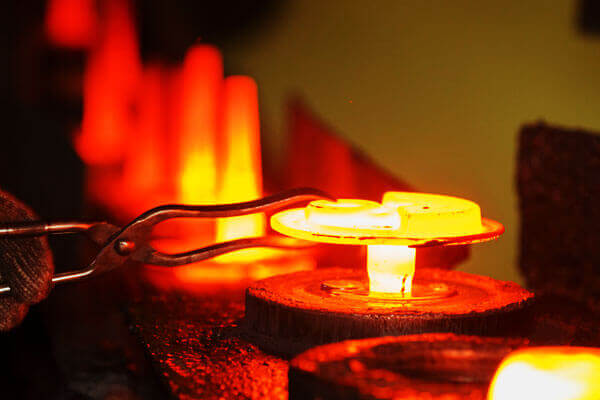
Precision forging is a metal forming process in which carefully controlled compressive forces shape heated or cold metal into near-net-shape components with exceptional mechanical properties and dimensional consistency.
与铸造不同, forging refines the material’s grain structure through plastic deformation, significantly enhancing its strength and fatigue resistance.

Modern precision forging combines advanced die design, computer simulation, and automated production systems to minimize material waste while maximizing component performance.
| Forging type | 宽容 | 表面饰面 | Typical products |
| Warm/hot precision forging | ±0.1‑0.3 mm | 1.6‑6.3 µm | 齿轮, 轴, 连杆 |
| Cold precision forging | ±0.05‑0.1 mm | 0.8‑3.2 µm | 紧固件, 花键, 轴承比赛 |
增材制造
增材制造, 通常称为 3D打印, is an advanced manufacturing technology that builds components layer by layer directly from digital three-dimensional models.
与减法制造不同, which removes material from a solid workpiece, additive manufacturing creates parts by depositing or selectively melting material only where needed.

Metal additive manufacturing technologies—including Selective Laser Melting (SLM), 电子束熔化 (EBM), 定向能量沉积 (ded), and Binder Jetting—have become increasingly important in precision manufacturing.
| Additive process | 材料 | Feature size | 宽容 |
| 选择性激光烧结 (SLS) | 聚合物, 金属 | 0.1‑0.2 mm | ±0.1‑0.2 mm |
| 直接金属激光烧结 (DML) | 防锈的, 钛, 超级合金 | 0.05‑0.1 mm | ±0.05‑0.1 mm |
| 电子束熔化 (EBM) | 钛合金 | 0.1‑0.2 mm | ±0.1‑0.2 mm |
| 立体光刻 (SLA) | 光聚合物 | 0.02‑0.05 mm | ±0.02‑0.05 mm |
5. Materials Used in Precision Manufacturing
金属
| 材料 | 应用领域 | 主要特性 |
| 碳钢 | 轴, 齿轮, 螺栓, 固定装置 | 良好的强度和可加工性; 经济. |
| 合金钢 | 齿轮, 轴, 连杆, 航空紧固件 | 高力量, 韧性, 坚固性. |
| 不锈钢 (304, 316, 17-4ph) | 医疗仪器, 食品设备, 航天, 海洋 | 耐腐蚀性, 力量. |
| 铝合金 (6061, 7075) | 航天, 汽车, 电子外壳 | 轻的, 良好的可加工性, 中等力量. |
| 钛合金 (年级 5 ti -6al -4V) | 航天, 医疗植入物, high‑performance automotive | Exceptional strength‑to‑weight ratio, 生物相容性, 耐腐蚀性. |
| 铜合金 (黄铜, 青铜) | 电触点, 轴承, 管道配件 | 电导率, 耐腐蚀性, 可加工性. |
| 镁合金 | 航天, automotive lightweight components | 最轻的结构金属 (1.74 g/cm³). |
| Nickel‑based superalloys (inconel, Hastelloy) | 喷气发动机, 涡轮刀片, 化学处理 | High‑temperature strength, 氧化抗性. |
工程塑料
| 塑料 | 应用领域 | 主要特性 |
| 窥视 | 医疗植入物, 航天, 半导体 | 高温, 耐化学性, 戴阻力. |
| ptfe (特氟龙) | 密封, 轴承, 电绝缘 | 低摩擦, non‑stick, 耐化学性. |
| 尼龙 | 齿轮, 衬套, mechanical components | 优势, 戴阻力, self‑lubricating. |
| 嗝 (pom) | 精密齿轮, 阀, 紧固件 | 高刚度, 低摩擦, 维稳定性. |
| UHMW‑PE | Conveyor components, 耐磨条, 食品加工 | Very high wear resistance, 低摩擦. |
陶瓷
| 陶瓷制品 | 应用领域 | 主要特性 |
| 氧化铝 (al₂o₃) | Electrical insulators, 切割工具, 穿零件 | 高硬度, 电绝缘, 导热率. |
| 氧化锆 (Zro₂) | 牙科植入物, 轴承, oxygen sensors | 高断裂韧性, 戴阻力. |
| Silicon nitride (si₃n₄) | 轴承, 切割工具, 涡轮组件 | 高力量, 断裂韧性, 抗热震性. |
复合材料
| 合成的 | 应用领域 | 主要特性 |
| Carbon Fiber Reinforced Plastic (CFRP) | 航天, 汽车, 体育用品 | High strength‑to‑weight, 刚性. |
| Glass Fiber Reinforced Plastic (GFRP) | 海军陆战队, 汽车, 建造 | Lower cost than CFRP, 良好的机械性能. |
| Carbon‑carbon composites | 航天 (brakes, nose cones), fusion reactors | Excellent high‑temperature properties, 低密度. |
6. Precision Measurement and Quality Control
Measurement is the foundation of precision manufacturing. Without accurate measurement, precision cannot be verified.
维度检查
| Instrument | 能力 | Typical accuracy | 应用 |
| 协调测量机 (CMM) | 3D measurement of complex parts | ±0.001‑0.005 mm | Prismatic parts, mold and die verification. |
| Optical CMM / Vision system | 快速地, non‑contact measurement of flat parts | ±0.001‑0.005 mm | 电子产品, 医疗器械, delicate components. |
| Laser interferometer | High‑accuracy length measurement | ±0.0005 mm | Calibration of machine tools, large‑scale measurement. |
| Laser scanner | 3D surface mapping of free‑form parts | ±0.01‑0.05 mm | Reverse engineering, comparison to CAD model. |
| Profile projector (光学比较器) | 2D measurement of simple geometries | ±0.001‑0.005 mm | Small parts, 线程, 齿轮. |
| 千分尺 / 卡尺 | Manual length measurement | ±0.001‑0.01 mm | Shop floor inspection. |
Surface Roughness Testing
| 范围 | 描述 | 典型范围 |
| RA (平均粗糙度) | Arithmetic average of absolute values | 0.01‑3.2 µm |
| RZ (mean roughness depth) | Average of the highest peak + lowest valley | 0.05‑10 µm |
| RT (total roughness) | Maximum peak‑to‑valley height | 0.1‑15 µm |
硬度测试
| 方法 | 规模 | 应用 | 典型范围 |
| 罗克韦尔 | HRC, HRB | 金属 | 20‑70 HRC |
| 布里尔 | HB | 铸件, 宽恕 | 100‑600 HB |
| 维克斯 | HV | Small parts, 涂料 | 50‑1,000 HV |
| Microhardness | HV (small loads) | 薄部分, 涂料 | 10‑3,000 HV |
Material Composition Analysis
| 方法 | 应用 | 能力 |
| Optical Emission Spectrometry (OES) | Metal composition | Quantitative analysis of elements. |
| X‑Ray Fluorescence (XRF) | Metal composition, 涂料 | Non‑destructive analysis. |
| Energy‑Dispersive X‑ray Spectroscopy (eds) | Localised analysis, 包含 | Elemental analysis on microscope. |
Non‑Destructive Testing (NDT)
| NDT method | Detects | 应用 |
| 超声测试 | Internal defects (空隙, 裂缝, 包含) | 宽恕, 铸件, 焊缝. |
| X -Ray / CT扫描 | Internal voids, 裂缝, 孔隙率 | 铸件, 焊缝, 复杂的组件. |
| 染料渗透剂 | Surface cracks, 孔隙率 | 所有金属; 铸件, 焊缝. |
| Magnetic particle | Surface cracks in ferromagnetic materials | Steel parts, 焊缝. |
| 涡流 | Surface cracks, conductivity changes | 管道, inspection of conductive materials. |
7. Advantages of Precision Manufacturing
Precision manufacturing has become an indispensable capability for modern industry because it enables the production of components that combine exceptional dimensional accuracy with outstanding mechanical performance, 可靠性, 和一致性.
较高的维度准确性
Precision manufacturing consistently achieves tight tolerances that ensure perfect fit, 结盟, 和功能.
This level of accuracy is critical for aerospace engines, 医疗植入物, semiconductor equipment, and precision valve assemblies, where even microscopic deviations can compromise performance.
Outstanding Repeatability
Once an optimized process is established, thousands—or even millions—of identical components can be produced with minimal variation.
High repeatability supports interchangeable parts, automated assembly, and consistent product quality.
Excellent Surface Integrity
Advanced machining and finishing techniques produce smooth, defect-free surfaces that reduce friction, improve sealing, enhance fatigue resistance, and increase wear and corrosion resistance.
Enhanced Product Performance
Accurate geometry and superior surface quality translate directly into improved operational performance, including smoother motion, lower vibration, better fluid flow, reduced energy consumption, and higher efficiency.
服务寿命更长
Precision-manufactured components experience more uniform stress distribution, minimizing localized wear, 疲劳, 和过早失败.
This leads to extended equipment lifespan and reduced maintenance requirements.
减少材料废物
Near-net-shape processes, optimized toolpaths, and precise material removal minimize scrap and improve material utilization.
This is especially valuable when working with expensive materials such as titanium or nickel-based superalloys.
Improved Manufacturing Efficiency
Accurate components require less fitting, adjustment, and rework during assembly.
Automated inspection and digital process control further streamline production, increasing throughput while maintaining quality.
Lower Total Cost of Ownership
Although precision manufacturing may involve higher initial investment in equipment and expertise, it reduces lifecycle costs by lowering defect rates, warranty claims, 停机时间, and maintenance expenses.
The result is a more economical and reliable product over its entire service life.
Greater Flexibility and Innovation
Modern precision manufacturing enables the production of increasingly complex geometries that would be impossible or prohibitively expensive using conventional methods.
This capability supports innovation in industries such as aerospace, 医疗技术, 机器人技术, 和电子产品.
8. Challenges and Limitations of Precision Manufacturing
尽管有很多优势, precision manufacturing also presents significant technical, 经济的, and operational challenges.
Achieving and maintaining micron-level accuracy requires substantial investment, rigorous process control, and specialized expertise.
高资本投资
Precision manufacturing relies on advanced CNC machines, multi-axis machining centers, precision grinders, CMM, optical measurement systems, and automation equipment.
These technologies require significant upfront investment, as well as ongoing costs for maintenance, 校准, and software upgrades.
Skilled Workforce Requirements
Operating precision equipment demands highly trained engineers, programmers, 机械师, and quality specialists.
Expertise in CAD/CAM, GD&t, metrology, 材料科学, and process optimization is essential, making talent acquisition and development a critical challenge.
处理复杂性
Producing high-precision components often involves multiple sequential operations—including machining, 热处理, 磨削, 精加工, and inspection—each introducing potential sources of variation.
Coordinating these processes while maintaining dimensional stability requires meticulous planning.
工具磨损和维护
Precision tools gradually wear during operation, affecting dimensional accuracy and surface finish.
Effective tool monitoring, 预测性维护, and timely replacement are necessary to prevent quality issues and unplanned downtime.
环境敏感性
Temperature fluctuations, 振动, 湿度, 灰尘, and unstable power supplies can all influence machining accuracy.
Maintaining controlled production environments increases both operational complexity and cost.
Inspection and Quality Assurance Costs
Verifying micron-level tolerances requires sophisticated metrology equipment and skilled personnel.
Comprehensive inspection, while essential, adds time and expense to the manufacturing process.
Material Challenges
Advanced materials such as titanium alloys, 基于镍的超级合金, technical ceramics, and composite materials are often difficult to machine due to high hardness, poor thermal conductivity, or abrasive characteristics.
These materials require specialized tooling and optimized machining strategies.
供应链和可持续性
Precision manufacturing increasingly depends on global supply chains for high-quality raw materials, 切割工具, and electronic components.
同时, manufacturers face growing pressure to improve energy efficiency, 减少浪费, and adopt more sustainable production practices.
9. Industrial Applications of Precision Manufacturing
The ability to produce components with exceptional accuracy and consistency has made precision manufacturing a foundational technology across virtually every high-performance industry.
航空航天和航空
Few industries demand higher levels of precision than aerospace. Components must withstand extreme temperatures, 压力, and mechanical loads while maintaining absolute reliability.
典型的应用包括:
- 涡轮刀片
- 发动机外壳
- 起落架组件
- Flight control systems
- Structural airframe parts
- 燃油系统组件
Precision manufacturing ensures aerodynamic accuracy, 疲劳性抗性, and compliance with stringent aerospace standards.
Automotive and Electric Vehicles
Modern vehicles incorporate thousands of precision-engineered components, from internal combustion engines to advanced electric drivetrains.
申请包括:
- 发动机块
- 气缸盖
- Transmission gears
- 制动系统组件
- Electric motor housings
- Battery cooling plates
- Steering and suspension systems
High precision improves efficiency, 安全, 耐用性, and manufacturing consistency.
医疗设备
Medical technology relies on precision manufacturing to produce components that meet strict biocompatibility and dimensional requirements.
示例包括:
- 手术器械
- 骨科植入物
- 牙科植入物
- Spinal fixation devices
- Endoscopic equipment
- Diagnostic instruments
Micron-level accuracy is essential to ensure proper fit, patient safety, 和法规合规性.
Semiconductor and Electronics
The electronics industry demands ultra-precision manufacturing for increasingly miniaturized and high-performance devices.
典型组件包括:
- Semiconductor processing equipment
- Precision molds
- 连接器
- 散热器
- Microelectromechanical systems (mems)
- Printed circuit board tooling
Advanced manufacturing processes enable the production of intricate features at micro- and nanometer scales.
发电
Precision manufacturing supports both conventional and renewable energy systems by producing reliable components capable of operating under harsh conditions.
申请包括:
- Gas and steam turbine components
- Nuclear reactor equipment
- Wind turbine gearboxes
- Hydrogen fuel system parts
- Oil and gas valves
- 热交换器组件
Accurate manufacturing enhances efficiency, 安全, 和运营寿命.
Industrial Equipment and Fluid Control
Industrial machinery depends on precision components to ensure smooth operation and reliable performance.
Common products include:
- 泵
- 压缩机
- 轴承
- 液压缸
- Butterfly valve bodies
- 球阀
- 精密齿轮
Tight tolerances improve sealing, reduce leakage, and extend equipment service life.
机器人技术和自动化
Robotic systems require lightweight, high-precision components to achieve accurate positioning and repeatable motion.
Precision manufacturing enables:
- 机器人的武器
- Precision gearboxes
- Harmonic drive components
- Motion control systems
- End-effectors
- Linear guide assemblies
10. Emerging Technologies Shaping Precision Manufacturing
| 技术 | 描述 | Impact on precision manufacturing |
| AI and Machine Learning | 预测性维护, process optimisation, defect detection. | Reduces downtime; improves yield; enables real‑time quality control. |
| 数字双胞胎 | Virtual replicas of physical processes/machines. | Allows simulation and optimisation without physical prototypes; 减少废物. |
| Industrial Internet of Things (IIOT) | Sensors and connectivity for data collection and analysis. | Enables real‑time monitoring, 预测性维护, 可追溯性. |
| 增材制造 (3数码印刷) | Layer‑by‑layer part production from digital design. | Enables complex geometries, 减少材料废物, 快速原型制作. |
| 混合制造 | Combining additive and subtractive processes (例如。, 3D‑printing + CNC完成). | Offers design freedom with surface finish; reduces lead times. |
高级材料 |
Nanostructured materials, high‑entropy alloys, 智能材料. | Enables new performance capabilities; improved properties. |
| Nanomanufacturing | Manufacturing at the atomic/molecular scale. | Enables ultra‑precise devices; new applications in electronics, 药品, 材料. |
| Autonomous Manufacturing | Self‑optimising processes, automated material handling, robotic assembly. | Reduces human error; increases throughput; enables 24/7 生产. |
| Intelligent Process Control | Real‑time monitoring and adaptive control of manufacturing variables. | Improves quality; reduces variability; enables closed‑loop manufacturing. |
11. 结论
Precision manufacturing has evolved from traditional craftsmanship into one of the most sophisticated and strategically important pillars of modern industry.
It is far more than the ability to produce parts with tight tolerances; it represents a comprehensive engineering philosophy centered on accuracy, 一致性, 工艺稳定性, 和不断改进.
By integrating advanced machinery, intelligent automation, 高性能材料, digital technologies, and rigorous quality management,
precision manufacturing enables the production of components that meet the increasingly demanding requirements of today’s high-technology industries.
最终, organizations that invest in precision manufacturing are investing in product excellence, operational efficiency, and technological leadership.
By combining engineering expertise with cutting-edge manufacturing capabilities and robust quality systems, precision manufacturing not only delivers components of exceptional accuracy but also drives innovation, reduces lifecycle costs, enhances customer satisfaction, and supports the continued advancement of modern industry.
常见问题解答
What is the difference between precision manufacturing and general manufacturing?
Precision manufacturing focuses on tight tolerances (±0.001‑0.1 mm), superior surface finishes (RA <1.6 µm), and consistent repeatability.
General manufacturing may tolerate looser tolerances (±0.1‑1.0 mm) and rougher finishes for less critical applications.
How do I know if a part requires precision manufacturing?
Consider the function, 公差, 表面饰面, 材料, 和音量.
If the part interacts with other components, has tight fit requirements, or must withstand high stress, precision manufacturing is typically required.
What are the most common defects in precision manufacturing?
Dimensional errors (machining to wrong size), 表面缺陷 (划痕, 毛刺, 工具痕迹), geometric errors (平坦, 圆度, 同心), 和材料缺陷 (孔隙率, 包含, 裂缝).
These are detected and prevented through inspection, 过程控制, 和NDT.
Why Is Surface Finish Important?
Surface finish directly influences friction, 戴阻力, 密封性能, 疲劳生活, 耐腐蚀性, and aesthetic quality.
Precision finishing processes such as grinding, 磨练, 拍打, and polishing are often used to achieve the required surface integrity.