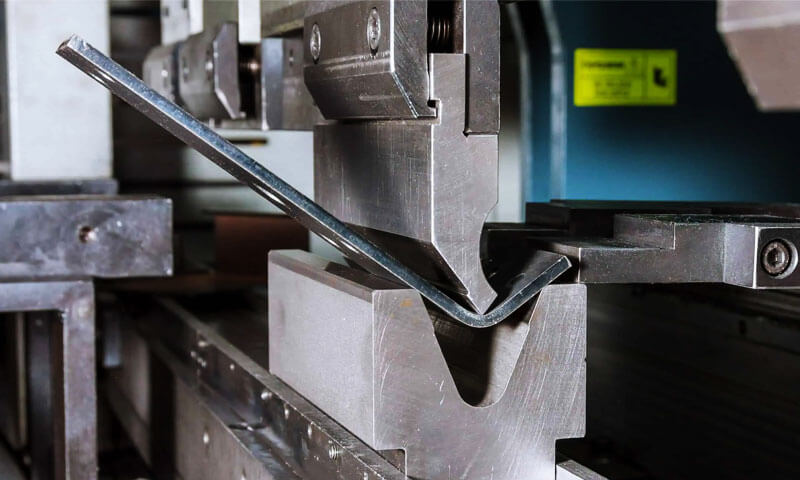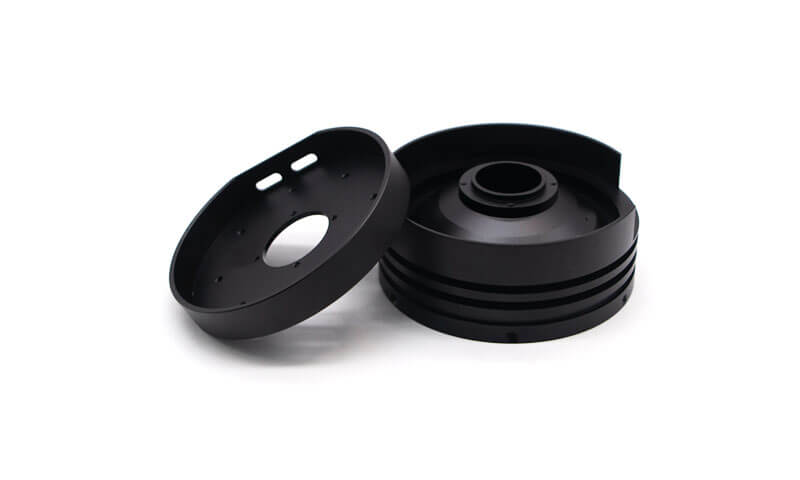
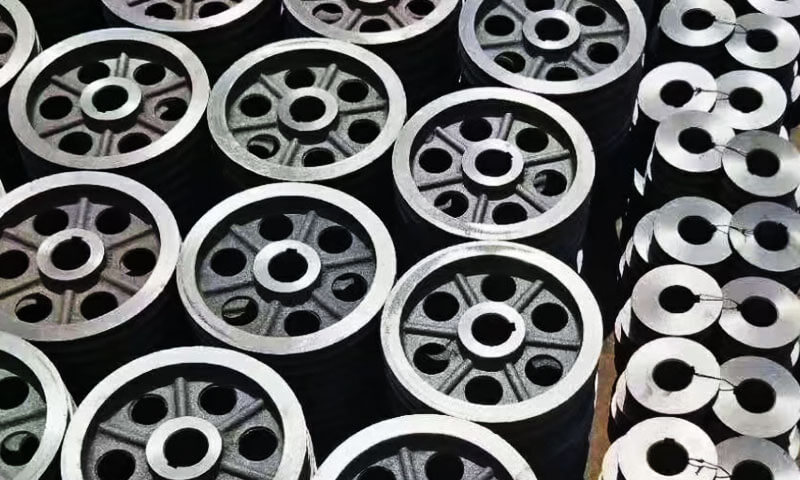
工业皮带轮是机械动力传输系统的重要组成部分.
它们通过皮带驱动机构传递运动, 帮助调节转速, guide belt movement, and support the reliable operation of industrial equipment.
Their dimensional accuracy, 材料特性, and surface quality directly influence belt alignment, transmission efficiency, component wear, and overall machine performance.
在Langhe行业, we understand that an industrial pulley must do more than match a drawing. It must meet the operating requirements of the equipment in which it is installed.
From bore dimensions and groove geometry to material selection and surface finishing, every specification can affect the fit, 表现, and service life of the finished component.
Our approach focuses on manufacturing solutions tailored to application requirements, 工程图纸, and quality expectations.
1. What Is a Custom Industrial Pulley?
A custom industrial pulley is a pulley designed and manufactured to meet specific equipment requirements rather than relying entirely on standard catalog dimensions.
It may feature a non-standard outside diameter, belt groove profile, bore size, hub configuration, keyway, mounting interface, or material specification.
Industrial pulleys transmit power, guide belts, and support rotational motion in machinery.
Their geometry and material properties influence belt engagement, shaft fit, 振动, 穿, 和操作可靠性.
When standard pulleys cannot meet the required dimensions or operating conditions, custom manufacturing provides greater flexibility in both design and material selection.
2. Our Pulley Manufacturing Capabilities
在 Langhe行业, we manufacture industrial pulleys for power transmission, 传送带系统, and material-handling equipment.
Our manufacturing capabilities combine 精密铸造, 数控加工, 平衡, and surface finishing to meet different application requirements.
From standard pulley designs to custom components manufactured according to customer drawings, we focus on dimensional accuracy, 合适的材料选择, and consistent production quality.
Each manufacturing route is determined by the pulley’s geometry, operating speed, transmitted load, installation requirements, 和工作环境.
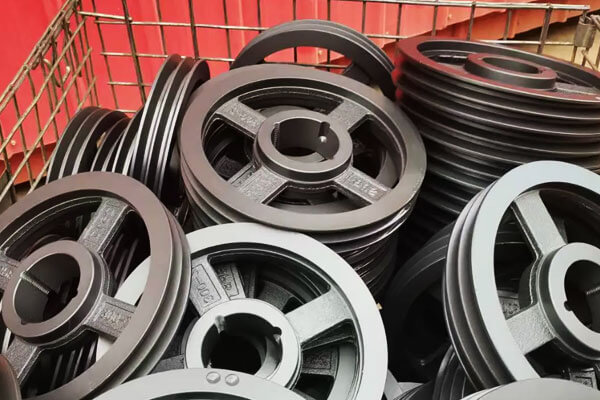
Product Range
LangHe Industry offers a range of industrial pulley solutions for different belt-drive and lifting applications.
- V-Belt Sheaves: Available in single-groove and multi-groove configurations, with groove profiles selected according to the specified belt type and drive requirements.
- Timing Belt Pulleys: Designed for synchronous belt drives, with metric or imperial tooth pitches and customized dimensions to suit the transmission system.
- Conveyor Pulleys: Including drive, tail, snub, and bend pulleys for conveyor systems and bulk material handling.
- Crowned and Flat-Face Pulleys: Available for applications requiring different face geometries and belt-tracking characteristics. The appropriate design depends on the belt type and system configuration.
- Wire Rope Sheaves: Designed for cranes, 提升机, and lifting equipment, with groove dimensions and materials selected according to the wire rope and service requirements.
- Custom-Bored Pulleys: Machined to specified shaft dimensions, including custom bores, 键盘, set-screw holes, and taper-bushing interfaces where required.
For custom pulley projects, customers should provide the relevant drawings, belt or wire rope specifications, shaft dimensions, operating speed, load conditions, and installation requirements.
This information helps establish the appropriate design, 材料, 加工公差, and inspection criteria before production.
Materials We Use
Material selection directly affects a pulley’s strength, 戴阻力, 可加工性, 重量, 和服务寿命.
LangHe Industry works with different cast irons, 钢, 不锈钢, 和铝合金, depending on the design and intended operating conditions.
| 材料类别 | International Grade Designations | 典型的应用 | 关键特征 |
| 公爵 铁 | EN-GJS-450-10, EN-GJS-500-7; commonly cross-referenced with selected ASTM A536 grades | General industrial sheaves and conveyor pulleys | 良好的铸造性, 振动阻尼, 和磨损性能 |
| 投掷 碳 钢 | ASTM A216 Grade WCB; EN GP240GH / 1.0619 as a commonly referenced comparison | Heavy-duty pulley components requiring a cast-steel construction | 强度和韧性, subject to the specified grade and casting requirements |
Carbon and alloy steel |
AISI 1045 / EN C45 (1.0503); AISI 5140 is commonly cross-referenced with EN 41Cr4 (1.7035) | Machined sheaves, 集线器, and timing pulleys | 良好的可加工性; alloy and heat-treatment options can provide higher mechanical performance |
| 防锈的 钢 | AISI 304 / 在 1.4301; AISI 316 / 在 1.4401 | Applications requiring corrosion resistance, including selected washdown environments | 耐腐蚀性, depending on the grade and operating environment |
| 铝 合金 | Aluminum Association 6061-T6 / EN AW-6061-T6 | Lightweight pulleys and applications where lower rotating mass is beneficial | 低密度, 良好的可加工性, and potential for precision balancing |
The appropriate material also depends on the production method. Cast materials are often suitable for pulley designs with relatively complex geometry, while bar or forged stock may be preferred for certain machined components.
Heat treatment and surface protection can be specified where required, taking into account dimensional stability, wear conditions, and the intended service environment.
制造过程
Each pulley follows a controlled manufacturing sequence based on its design, 材料, and technical requirements.
Material Review and DFM Engineering
Before production, we review the drawing and relevant operating parameters, including bore dimensions, belt type, groove profile, rotational speed, transmitted load, 和环境条件.
This review helps identify manufacturing constraints and establish the critical dimensions and tolerances.
Casting or Raw Material Preparation
Depending on the pulley design, production may begin with casting or with suitable bar or forged stock. Incoming material is checked against the specified grade and applicable requirements.
The selected manufacturing route considers part geometry, 所需的机械性能, production quantity, and machining allowance.
CNC Turning and Boring
CNC machining produces the required groove profiles, 孔, hub dimensions, 面孔, 和安装特点.
键盘, set-screw holes, and other interfaces are machined according to the approved drawing. Critical dimensions should be verified to ensure correct shaft fit and belt engagement.
Static or Dynamic Balancing
Balancing requirements are determined by the pulley’s operating speed, mass, 几何学, 和应用.
Static balancing may be sufficient for certain designs, while dynamic balancing is required where the operating conditions and specified balance criteria demand it.
校正方法, such as controlled material removal, are selected according to the component design and applicable requirements.
表面处理
Depending on the material and application, surface treatments may include phosphating, 粉末涂料, 镀锌, 或绘画.
The treatment is selected according to corrosion exposure, 磨损要求, 外貌, and customer specifications.
Coating thickness must also be considered where it may affect bores, fits, or other critical dimensions.
最终检查
Before shipment, finished pulleys are inspected against the approved specifications.
Checks may include overall dimensions, bore size, 凹槽几何形状, keyway dimensions, 同心, 跳动, 表面状况, and balancing verification where required.
The inspection scope depends on the drawing and the pulley’s intended operating conditions.
By coordinating material preparation, 加工, 平衡, 和表面饰面, LangHe Industry provides industrial pulley manufacturing solutions tailored to different equipment and operating requirements.
A clearly defined drawing, appropriate material specification, and agreed inspection criteria help ensure that the finished pulley is suitable for its intended application.
3. Custom Industrial Pulleys Designed Around Your Requirements
Standard pulleys are suitable for many common applications, but specialized machinery often requires dimensions or features that are not available off the shelf.
A custom pulley can be developed around the equipment’s drive arrangement, 负载要求, 安装空间, 和维护需求.
Langhe行业 supports application-specific manufacturing based on customer drawings, technical specifications, and project requirements.
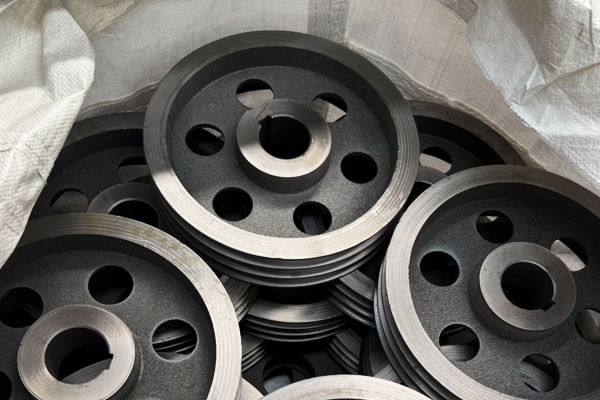
取决于设计, customized features may include:
- Bore and shaft interfaces: Custom bore diameters, 键盘, and other specified mounting features to achieve the required shaft fit.
- Groove geometry: V-belt grooves or other belt-contact profiles designed for the intended belt type and transmission arrangement.
- Hub and overall dimensions: Customized hub lengths, outside diameters, 宽度, and mounting configurations to suit the available installation space.
- 材料选择: Materials chosen according to mechanical loads, 磨损要求, 腐蚀暴露, 工作条件, and manufacturing feasibility.
- 表面饰面: Appropriate finishing or protective treatments specified according to the application and the required surface condition.
Custom manufacturing begins with a clear understanding of how the pulley will operate.
Providing the relevant drawing, belt type, shaft dimensions, operating speed, load conditions, and installation constraints helps establish a more reliable manufacturing specification before production begins.
4. Manufacturing Accuracy and Quality Control
A pulley’s performance depends on more than its external diameter. Bore accuracy, groove dimensions, 同心, 跳动, and the relationship between mounting features all influence how the component operates after installation.
例如, an incorrect bore fit can make assembly difficult or create unwanted movement at the shaft interface.
Excessive runout may contribute to vibration, while unsuitable groove geometry can affect belt contact and accelerate wear.
For pulleys operating at higher speeds, balancing requirements should also be evaluated according to the equipment design and applicable operating conditions.
在Langhe行业, manufacturing requirements should be established around the function of each component rather than applying the same tolerances to every feature.
Critical dimensions can be identified from the drawing, and appropriate inspection methods selected to verify that the finished pulley meets the agreed specifications.
如有需要, inspection planning can address dimensional conformity, 安装接口, 凹槽几何形状, 表面状况, and other application-specific criteria.
Clear specifications and consistent verification help reduce the risk of assembly problems and unexpected variation between production batches.
5. 铸铁与. Cast Steel Pulleys: Which Is Right for Your Application?
| 比较因素 | Cast Iron Pulleys | Cast Steel Pulleys |
| Material characteristics | Includes gray iron and ductile iron, which have different mechanical properties. Gray iron offers good vibration damping, while ductile iron provides greater ductility and toughness. | Steel castings offer a combination of strength, 延性, and toughness determined by the specified grade and heat treatment. |
| Load-bearing performance | Suitable for many general industrial applications when the selected grade and pulley geometry meet the required loads. | Often preferred when the design requires higher toughness or must withstand demanding mechanical loads, 取决于等级. |
| Shock and impact resistance | Gray iron is relatively brittle and may be less suitable for severe impact loading. Ductile iron is more resistant to impact than typical gray iron. | Often offers better impact tolerance and plastic deformation capacity than gray iron, subject to material specification and casting quality. |
振动阻尼 |
Generally a strong advantage of gray iron, particularly for applications where vibration reduction is beneficial. | Generally lower than gray iron, although actual behavior depends on the component design and material. |
| Wear and surface performance | Can provide good wear performance in appropriately selected grades and operating conditions. | Wear resistance depends on steel grade, 硬度, 热处理, 和表面状况; additional treatment may be required. |
| Casting and machining | Often economical for complex pulley geometries and production runs where casting cost is a key consideration. Machining requirements depend on the grade and design. | Suitable for demanding cast components but may involve different casting, 加工, and heat-treatment costs. |
典型的应用 |
General industrial sheaves, belt drives, and conveyor pulleys where damping, 成本, and adequate mechanical performance are priorities. | Heavy-duty pulley components where strength, 韧性, or resistance to impact loading is a significant design consideration. |
| Main selection consideration | Confirm whether gray iron or ductile iron is required, and verify that its properties meet the actual service conditions. | Specify the exact steel grade, 所需的机械性能, 热处理条件, 及检验要求. |
| When to choose it | Choose cast iron when its properties satisfy the design requirements and its cost and damping characteristics provide practical advantages. | Choose cast steel when the application justifies its mechanical characteristics and the selected grade meets the required performance criteria. |
6. Industrial Pulley Solutions for Multiple Industries
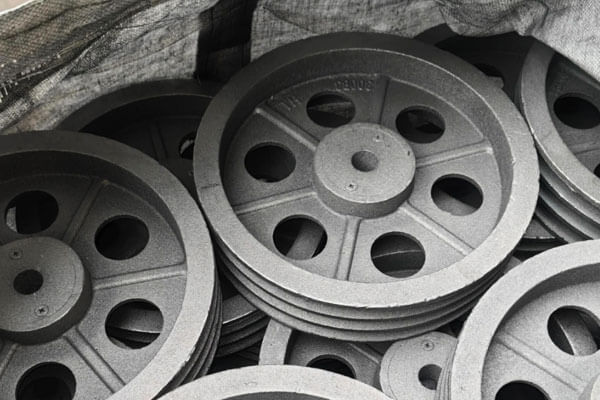
Industrial pulleys are used across a wide range of sectors, each presenting different mechanical demands, 环境条件, 和性能期望.
Manufacturing and Industrial Automation
In manufacturing plants, pulleys support belt-driven conveyors, 自动生产线, packaging equipment, and various machine-drive systems.
Their accuracy helps maintain consistent belt tracking and stable power transmission.
In precision equipment, correct pulley dimensions and alignment are particularly important because excessive runout, 不平衡, or an unsuitable groove profile can affect vibration, 定位精度, and component life.
石油和天然气设备
Industrial drive systems in oil and gas operations may require pulleys designed to handle demanding loads, 连续操作, and challenging environmental conditions.
Depending on the equipment, pulley design may need to account for mechanical stress, 腐蚀暴露, 振动, 和工作温度.
Material specifications, 加工精度, and any applicable balancing or inspection requirements should be defined according to the actual service conditions.
农业机械
结合, balers, harvesters, and other agricultural machines rely on pulleys to transmit power to rotating and reciprocating mechanisms.
These components may operate under fluctuating loads and exposure to dust, 水分, mud, and outdoor temperature changes.
材料选择, 表面保护, 结构强度, and resistance to wear must therefore reflect the working environment and duty cycle.
Logistics and Material Handling
Conveyors, sorting systems, warehouse automation equipment, and material-handling machinery use pulleys to keep products moving through production and distribution processes.
在这些应用中, the pulley must fit the drive system correctly and maintain reliable belt engagement during repeated operation.
Appropriate dimensions, 表面状况, and manufacturing consistency help reduce interruptions caused by belt tracking problems, premature wear, or component mismatch.
HVAC and Refrigeration Systems
Pulleys are commonly used in belt-driven ventilation fans, air-handling units, and industrial cooling equipment.
Correct groove geometry and bore dimensions help maintain reliable belt engagement, while proper alignment reduces unnecessary belt tension and bearing loads.
对于这些应用, dimensional consistency and suitable material selection contribute to quieter operation, efficient power transmission, and reduced maintenance requirements.
7. A Practical Approach to Custom Manufacturing and Cost Efficiency
The initial purchase price is only one part of the total cost of an industrial pulley.
Replacement frequency, machine downtime, maintenance labor, belt wear, and the consequences of drive-system failure can have a much greater effect on long-term operating expenses.
A pulley that is poorly matched to its application may lead to repeated adjustments, 过度振动, premature wear, or unplanned maintenance.
反过来, a well-specified component can help maintain stable operation and reduce avoidable costs over its service life.
This does not mean that every application requires the most expensive material or the tightest possible tolerance.
The more effective approach is to establish which features directly affect performance and then specify the manufacturing requirements accordingly.
This may include optimizing the pulley geometry, selecting a suitable material, defining critical tolerances, and avoiding unnecessary machining or finishing operations.
For custom and repeat-order projects, reviewing the drawing at an early stage can also identify opportunities to simplify manufacturing without compromising function.
The result is a more balanced solution that considers component performance, production feasibility, and total ownership cost.
8. Why Work with LangHe Industry?
Choosing an industrial pulley manufacturer involves evaluating more than price and delivery.
A reliable manufacturing partner should understand how the component interfaces with the wider drive system, translate technical requirements into an executable specification, and maintain clear communication throughout the project.
LangHe Industry works with customers to clarify drawings, 方面, 材料要求, machining details, and quality expectations before manufacturing begins.
This technical coordination helps identify potential issues early and reduces the likelihood of costly changes after production has started.
Whether a project involves a replacement pulley, a customized component for specialized machinery, or a repeat production requirement, the manufacturing approach should be matched to the actual application.
Clear engineering information, suitable process planning, and defined inspection criteria provide the foundation for consistent results.
Looking for an industrial pulley manufacturer for your next project?
联系Langhe to discuss your drawings, operating requirements, and customization needs.
By defining the critical specifications at the outset, we can help establish a practical manufacturing solution aligned with your equipment and production objectives.