

Na indústria manufatureira, compreender todo o espectro de métodos de usinagem é essencial para engenheiros de processo, maquinistas, e planejadores de produção.
Durante anos, os recém-chegados ao campo têm lutado para distinguir entre os vários processos de corte - quando virar, quando moer, quando moer, e quando abandonar totalmente os métodos tradicionais em favor de processos elétricos ou baseados em laser.
Essa confusão é compreensível. O cenário da usinagem se expandiu dramaticamente no último século, evoluindo de um simples torno manual para um sofisticado ecossistema de Usinagem CNC centros, máquinas de descarga elétrica, cortadores a laser, e sistemas de jato de água.
Cada processo tem seus próprios pontos fortes, limitações, e aplicações ideais - e selecionar a errada pode levar ao descarte de peças, ferramentas danificadas, e custos desnecessários.
Este artigo explica sistematicamente 13 métodos de usinagem comuns, incluindo 8 processos de usinagem tradicionais e 5 tecnologias de usinagem especiais, ajudando engenheiros a entender seus princípios, vantagens, limitações, e aplicações típicas.
1. Os três princípios fundamentais da formação de peças
Cada componente mecânico, de uma simples arruela a uma complexa lâmina de turbina, é produzido através de um dos três princípios fundamentais de fabricação.
Esses princípios definem como o material é transformado de matéria-prima em peça acabada – e servem como a principal distinção entre diferentes métodos de processamento..
Princípio 1: Formação de Materiais (Δm ≈ 0)
Em processos de formação de materiais, a massa total da peça permanece quase inalterada antes e depois do processamento.
Em vez de remover ou adicionar material, o material existente é remodelado através deformação plástica, transformação de fase, ou solidificação.
Esses processos são usados principalmente para fabricar os formatos iniciais dos componentes, comumente referido como espaços em branco, pré-formas, ou peças em formato quase líquido.
As peças formadas podem então passar por operações de usinagem secundária para atingir dimensões precisas e requisitos de superfície.
Os processos de formação de materiais são especialmente importantes porque determinam a estrutura básica do material., propriedades mecânicas, e eficiência de fabricação do componente final.
| Processo | Mecanismo de Fabricação | Aplicações típicas | Principais vantagens |
| Elenco | O metal fundido é derramado em uma cavidade do molde e solidifica na forma desejada. | Altas da bomba, corpos da válvula, Blocos do motor, bases de máquinas, componentes estruturais complexos. | Produz geometrias altamente complexas, passagens internas, e componentes grandes com desperdício de material relativamente baixo. |
| Forjamento | O metal aquecido é moldado através de forças de compressão usando matrizes, prensas, ou martelos. | Eixos, engrenagens, bielas de conexão, componentes de pressão, estruturas aeroespaciais. | Melhora as propriedades mecânicas através do fluxo refinado de grãos, maior força, e resistência superior à fadiga. |
Metalurgia em pó |
Pós metálicos são compactados sob pressão e sinterizados em temperaturas elevadas para formar componentes sólidos. | Rolamentos, filtros, engrenagens, componentes resistentes ao desgaste, peças de precisão. | Utilização de material extremamente alta, porosidade controlada, e capacidade de produzir composições de materiais especiais. |
Insight principal: Embora esses processos não sejam “usinagem” no sentido tradicional, eles fornecem o material inicial – a peça bruta – que a maioria dos componentes de precisão exige.
Princípio 2: Remoção do material (Δm < 0)
Remoção do material, Também conhecido como fabricação subtrativa, é o princípio fundamental por trás da usinagem convencional.
Nestes processos, o excesso de material é removido de uma peça inicial - como uma peça fundida, forjamento, estoque de barras, ou placa — para criar a geometria final com dimensões precisas, tolerâncias, e acabamentos superficiais.
Esta categoria inclui os métodos de usinagem mais utilizados:
- Virando.
- Moagem.
- Perfuração.
- Tedioso.
- Moagem.
- Usinagem de engrenagens.
- Usinagem por descarga elétrica (Música eletrônica).
A remoção de material continua sendo a abordagem de fabricação dominante para componentes mecânicos de precisão porque proporciona excelente controle sobre a qualidade final da peça.
Características principais:
- O material é removido, produzindo lascas ou limalhas.
- Alcança a mais alta precisão dimensional e acabamento superficial.
- O método mais amplamente utilizado para produzir componentes de precisão.
Insight principal
A remoção de material é a base da fabricação de precisão porque converte peças brutas quase perfeitas em componentes de engenharia funcionais.
Uma rota típica de fabricação industrial geralmente segue esse padrão:
Elenco / Forjamento → Usinagem de Desbaste → Tratamento Térmico → Usinagem de Precisão → Acabamento de Superfície
Esta combinação equilibra a eficiência do material, desempenho mecânico, e precisão dimensional.
Princípio 3: Adição de materiais (Δm > 0)
Os processos de adição de materiais criam componentes adicionando, depositando, ou juntar materiais.
Ao contrário da fabricação subtrativa, que remove o excesso de material, processos aditivos aumentam a quantidade de material durante a produção.
Esta categoria inclui tecnologias de união tradicionais e métodos modernos de fabricação aditiva.
| Processo | Mecanismo de Fabricação | Aplicações típicas | Principais vantagens |
| Soldagem | Os materiais são unidos através do calor, pressão, ou uma combinação de ambos para criar um vínculo permanente. | Estruturas estruturais, Pipelines, vasos de pressão, tanques, equipamento pesado. | Produz juntas fortes e permanentes e permite que grandes estruturas sejam fabricadas com eficiência. |
| Brasagem / De solda | Um metal de adição é derretido e distribuído entre os componentes sem derreter os materiais de base. | Trocadores de calor, componentes eletrônicos, montagens de precisão. | Permite a união de materiais diferentes com mínima distorção térmica. |
3D impressão (Fabricação aditiva) |
O material é depositado camada por camada de acordo com um modelo digital. | Protótipos, estruturas leves, peças médicas personalizadas, geometrias complexas. | Oferece excepcional liberdade de design e permite a produção rápida de formas complexas. |
Insight principal: A manufatura aditiva é particularmente valiosa para prototipagem, peças personalizadas, e geometrias que são impossíveis ou extremamente difíceis de alcançar através de métodos subtrativos.
2. O 8 Processos de Usinagem Tradicionais: A espinha dorsal da manufatura
A usinagem tradicional depende de ferramentas de corte mecânico para remover material de uma peça de trabalho.
Esses processos são o carro-chefe da indústria de manufatura, capaz de produzir tudo, desde eixos simples até moldes e matrizes complexos. Aqui estão os 8 processos tradicionais mais comuns, seus princípios de trabalho, e suas aplicações ideais.
Virando: O processo para peças rotacionais
Princípio de trabalho:
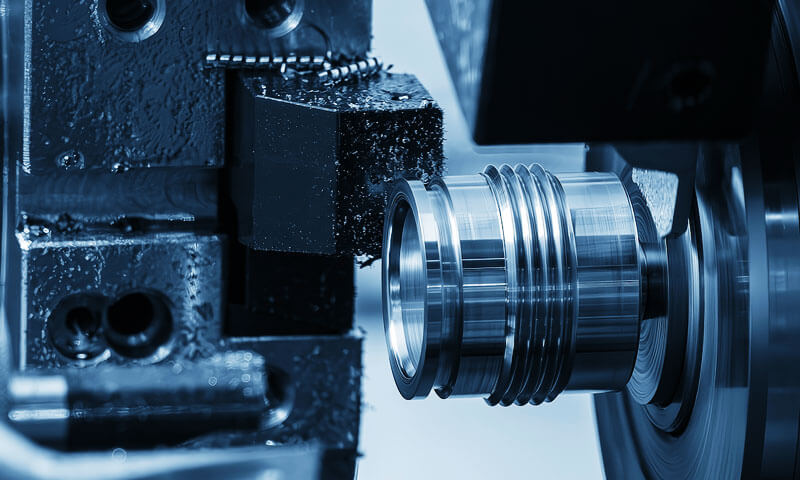
CNC virando é um processo de usinagem no qual a peça gira (o movimento primário) e uma ferramenta de corte de ponto único se move linearmente (o movimento de alimentação).
O torno é a máquina-ferramenta utilizada para operações de torneamento. À medida que a peça gira, a ferramenta remove material para criar perfis cilíndricos, rostos, afastados, tópicos, e outros recursos rotacionais.

Por que transformar Excels:
O torneamento oferece precisão excepcional para peças rotativas devido à estabilidade inerente do processo.
A peça rotativa garante que todos os recursos sejam concêntricos no mesmo eixo, facilitando a obtenção de excelente coaxialidade e perpendicularidade entre faces.
O processo de corte é contínuo (sem interrupções), permitindo altas velocidades de corte, Excelente acabamento superficial, e longa vida útil da ferramenta.
| Parâmetro | Faixa típica | Notas |
| Rugosidade da superfície | Ra 0.1 - 3.2 µm | O torneamento diamantado de metais não ferrosos pode atingir Ra <0.1 µm. |
| Precisão dimensional | ±0,01 – 0.05 mm | Tornos de precisão podem atingir ±0,005 mm. |
| Materiais típicos | Metais, plásticos, compósitos | Não é adequado para materiais muito duros (>HRC 60) sem ferramentas especiais. |
Aplicações:
- Partes cilíndricas: eixos, pinos, rolos
- Peças em forma de disco: flanges, engrenagens, volantes
- Componentes rosqueados: parafusos, parafusos, nozes
- Peças excêntricas e não redondas (em tornos cam)
Tipos de máquinas:
- Tornos horizontais: O tipo mais comum; lida com uma ampla variedade de tamanhos de peças.
- Tornos verticais: Usado para grandes, componentes pesados em forma de disco (Por exemplo, Tambores de freio, engrenagens grandes).
- Tipo suíço (automático) torneiras: Ideal para pequeno, longo, e partes complexas (Por exemplo, assistir componentes, dispositivos médicos).
- Centros de torneamento CNC: Máquinas multieixos capazes de operações complexas (girando, moagem, perfuração) em uma configuração.
Dica Prática: O torneamento é o processo de escolha para qualquer peça com eixo de rotação dominante. Para produção de alto volume, Tornos CNC com alimentadores de barras podem funcionar sem supervisão por horas.
Moagem: O versátil versátil
Princípio de trabalho:
CNC Milling usa um cortador rotativo multidente (o movimento primário) para remover material de uma peça estacionária ou móvel.
O eixo da fresa é normalmente perpendicular à superfície da peça (fresamento final) ou paralelo a ele (fresagem periférica).
A fresagem pode produzir superfícies planas, slots, bolsos, contornos, e formas 3D complexas.

Por que o fresamento é excelente:
O fresamento é o processo de usinagem mais versátil. Com o cortador e configuração certos, ele pode usinar quase qualquer recurso em uma peça de trabalho: superfícies planas, sulcos, perfis, cáries, e até mesmo superfícies 3D complexas.
A ação de corte intermitente, enquanto gera alguma vibração, permite altas taxas de remoção de metal.
Distinção -chave: Fresamento ascendente vs.. Fresamento descendente:
| Tipo de fresagem | Ação de corte | Melhor para | Vida da ferramenta |
| Fresamento ascendente (Convencional) | A espessura dos cavacos aumenta de zero ao máximo. | Máquinas mais antigas com folga; peças fundidas e forjadas com pele dura. | Mais curto (devido a fricção na entrada). |
| Fresamento descendente (Escalar) | A espessura dos cavacos diminui do máximo para zero. | Máquinas CNC com compensação de folga; Melhor acabamento superficial. | Mais longo (entrada mais limpa; menos fricção). |
Métodos de corte:
- Fresamento final: Eixo da fresa perpendicular à peça de trabalho; usado para slots, bolsos, e perfis.
- Fresamento periférico: Eixo da fresa paralelo à peça de trabalho; usado para superfícies planas.
- Fresamento frontal: Fresa de face plana com pastilhas; usado para grandes superfícies planas.
- Corte de mosca: Ferramenta de ponta única para grandes superfícies planas; baixa taxa de produção, mas bom acabamento.
Aplicações:
- Superfícies planas: rostos superiores, almofadas de montagem
- Slots e ranhuras: Slots em T, Keyways, encaixa
- Perfis complexos: engrenagens, cames, Impellers
- 3Contornos D: cavidades de molde, superfícies de matriz, Componentes aeroespaciais
- Fresamento de rosca: roscas de alta qualidade em materiais duros
Tolerâncias e acabamento superficial:
| Parâmetro | Faixa típica |
| Rugosidade da superfície | Ra 0.8 - 6.3 µm |
| Precisão dimensional | ±0,02 – 0.10 mm |
| Fresamento de precisão | ±0,005 – 0.01 mm (com equipamentos de última geração) |
Dica Prática: Ao fresar, sempre considere a rigidez da configuração. Longo, cortadores finos irão desviar, levando a um acabamento superficial ruim e imprecisão. Use curto, ferramentas rígidas sempre que possível.
Planejando: A solução de superfície plana de baixo custo
Princípio de trabalho:
O aplainamento é um processo de usinagem no qual uma ferramenta de corte de ponto único se move em linha reta (o movimento primário), cortando uma peça de trabalho que é mantida em uma mesa alternativa.
A peça de trabalho passa pela ferramenta estacionária, que remove uma camada de material em cada passagem. A ferramenta retorna ao início sem cortar (curso ocioso).
Por que o planejamento é excelente:
O aplainamento é uma solução de baixo custo para usinagem de grandes dimensões, superfícies planas, especialmente para peças individuais ou pequenos lotes.
As máquinas são relativamente simples e baratas, e o ferramental é básico (Ferramentas HSS).
O longo, os cursos retos são ideais para usinar superfícies retas, como bases de máquinas, guias, e grandes placas de base.
| Parâmetro | Faixa típica | Notas |
| Rugosidade da superfície | Ra 1.6 - 6.3 µm | Bom, mas mais áspero que fresamento. |
| Precisão dimensional | ±0,05 – 0.20 mm | Menos preciso que fresamento. |
| Taxa de produção | Baixo | O curso ocioso desperdiça tempo. |
Aplicações:
- Grande, superfícies planas: bases de máquinas, camas, e mesas
- Ranhuras retas: V-Grooves, encaixa, Keyways
- Peças únicas e trabalhos em pequenos lotes: trabalhos de reparação e manutenção
- Aplicações em sala de ferramentas e fabricação de matrizes
Limitações:
- Baixa produtividade: o curso ocioso limita as taxas de produção.
- Baixa precisão: não é tão preciso quanto o fresamento.
- Formas limitadas: só pode produzir recursos planos ou em linha reta.
Dica Prática: O aplainamento é mais adequado para trabalhos onde o custo de uma fresadora ou configuração é proibitivo. Raramente é usado na produção de alto volume.
Perfuração: A base da fabricação de furos
Princípio de trabalho:
A perfuração é o processo de criação de um furo redondo em uma peça de trabalho usando uma ferramenta de corte rotativa multiponto chamada broca. (ou broca helicoidal).
A furadeira gira (movimento primário) e é alimentado na peça de trabalho (movimento de alimentação). As arestas de corte na ponta removem material, enquanto as flautas evacuam cavacos.
Por que a perfuração é excelente:
A perfuração é a maneira mais simples e econômica de criar furos em metal.
Pode ser executado em uma ampla gama de máquinas-ferramentas: furadeiras, máquinas de moagem, e até furadeiras manuais. A perfuração é normalmente a primeira etapa de uma sequência de operações de perfuração.
| Parâmetro | Faixa típica | Notas |
| Faixa de tamanho do furo | 0.1 - 100+ mm | Pequenos furos requerem micro-brocas especiais. |
| Profundidade do furo | Até 10× diâmetro (padrão) | Furos profundos requerem ferramentas especializadas (perfuração de arma). |
| Precisão dimensional | ±0,05 – 0.2 mm | A perfuração é uma operação de desbaste; os buracos podem ser superdimensionados. |
| Acabamento superficial | Ra 3.2 - 12.5 µm | Relativamente pobre em comparação com o alargamento. |
Operações Comuns Relacionadas à Perfuração:
| Operação | Descrição | Propósito |
| Gerando | Amplia e finaliza um furo existente com um diâmetro preciso. | Dimensionamento de furos de precisão; melhor circularidade e acabamento superficial. |
| Rebaixamento | Amplia a parte superior de um furo para um diâmetro maior. | Cria um ombro para uma cabeça de parafuso (parafuso de cabeça cilíndrica). |
| Escareamento | Cria um cone cônico no topo de um furo. | Para parafusos de cabeça chata e rebarbação. |
| Tocando | Corta roscas internas em um furo. | Para fixadores roscados. |
Problemas comuns de perfuração:
| Problema | Causa | Solução |
| Buraco grande | Oscilação da broca; broca gasta; alimentação inadequada. | Use uma broca central; verifique o alinhamento da broca; reduzir a alimentação. |
| Erro de localização do furo | Movimento da peça; layout ruim. | Peça segura; use um gabarito de perfuração. |
| Formação de rebarbas | Parâmetros de perfuração inadequados. | Use uma operação de rebarbação; reduzir a alimentação na saída. |
Dica Prática: Para fazer furos de precisão, sempre comece com uma broca central para criar um ponto de partida preciso, depois perfure no tamanho, e finalmente alargar para a dimensão final.
Tedioso: O Processo de Ampliação de Precisão
Princípio de trabalho:
Mandrilamento é o processo de ampliar e refinar um furo existente para atingir um tamanho preciso, redondeza, e acabamento superficial.
A perfuração é realizada em um torno (usando uma barra chata) ou em uma furadeira.
Uma ferramenta de ponto único é alimentada no furo ao longo do eixo, removendo uma fina camada de material.
Por que o chato é excelente:
A mandrilamento é o processo preferido para obter alta precisão nos diâmetros dos furos, concentricidade, e alinhamento.
Pode corrigir erros de posição de operações anteriores (Por exemplo, perfuração) e é essencial para furos grandes e profundos que não podem ser escareados ou perfurados com precisão.
| Parâmetro | Faixa típica | Notas |
| Diâmetro do furo | 5 - 500+ mm | Limitado pelo diâmetro da barra de mandrilar. |
| Profundidade | Limitado pela rigidez da ferramenta. | Furos profundos requerem uma rigidez, barra de mandrilar bem suportada. |
| Precisão dimensional | ±0,01 – 0.05 mm | O mandrilamento de precisão é muito preciso. |
| Acabamento superficial | Ra 0.4 - 3.2 µm | Muito bom. |
Aplicações:
- Furos precisos: Molas de rolamento, cilindros do motor, componentes hidráulicos
- Alinhando furos: onde vários furos exigem coaxialidade precisa
- Furos de grande diâmetro: furos muito grandes para alargadores padrão
- Correção de furos existentes: consertando furos danificados ou desalinhados
Dica Prática: As barras de mandrilar devem ser rígidas; mesmo uma ligeira deflexão pode causar vibração e imprecisão. Use o balanço de ferramenta mais curto possível.
Corte de engrenagens e usinagem de perfil de dente
Princípio de trabalho:
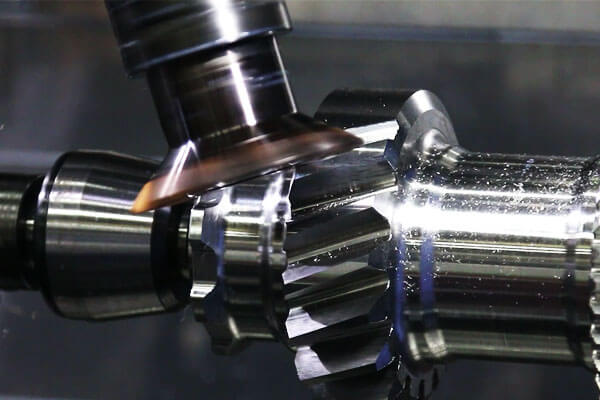
Engrenagem O corte abrange uma gama de processos usados para produzir os dentes das engrenagens, splines, e outros componentes dentados. Os dois métodos mais comuns são fresagem e modelagem de engrenagens.
- Hobbing: Um cortador rotativo (o fogão) é alimentado através da peça rotativa, gerando os dentes da engrenagem por uma ação de corte contínua. A fresagem é altamente produtiva e amplamente utilizada para engrenagens de dentes retos e helicoidais.
- Modelagem de engrenagem: Uma fresa alternativa com o mesmo perfil de dente da engrenagem é pressionada na peça de trabalho, gerando dentes um de cada vez. A modelagem é mais lenta, mas pode produzir engrenagens internas e alguns perfis complexos.
Por que o corte de engrenagens é excelente:
Os processos de corte de engrenagens são projetados especificamente para produzir, forte, e dentes de engrenagem silenciosos. Eles são o método padrão para fabricar a maioria das engrenagens e estrias.
Faixa típica de desempenho de usinagem de engrenagens
| Parâmetro | Faixa típica | Notas |
| Módulo / Passo diametral | Módulo 0,5–20+ | Abrange desde pequenas engrenagens de precisão até grandes engrenagens industriais. |
| Diâmetro da engrenagem | 10–1000+ milímetros | Limitado principalmente pela capacidade da máquina. |
| Precisão dentária | ISO Grau 5–8 | Classes mais altas são usadas para aplicações de precisão. |
| Rugosidade da superfície | RA 0,8-3,2 μm | As superfícies lisas dos dentes reduzem o atrito e o ruído operacional. |
| Materiais típicos | Aço carbono, liga de aço, aço inoxidável, ferro fundido, bronze | A seleção do material depende da carga, velocidade, e meio ambiente. |
Métodos comuns de corte de engrenagens e usinagem de perfil de dente
| Método | Princípio de trabalho | Melhores aplicativos |
| Fresagem de engrenagens | Uma fresa rotativa gera continuamente dentes de engrenagem enquanto a peça gira em sincronização. | Produção em alto volume de engrenagens retas, engrenagens helicoidais, e engrenagens de transmissão industriais. |
| Modelagem de engrenagem | Um cortador alternativo gera dentes por meio de movimento de corte sincronizado. | Engrenagens internas, splines, engrenagens de ombro, e perfis de engrenagens complexos. |
Broaching |
Uma brocha multidentes remove o material em uma única passagem progressiva. | Produção em alto volume de engrenagens internas, Keyways, e estrias. |
| Fresamento de Formas | Uma fresa formada corta espaços dentais individuais de acordo com o perfil necessário. | Engrenagens grandes, pequenos lotes, trabalho de reparo, e designs de equipamentos personalizados. |
| Moagem de engrenagem | Um processo de acabamento abrasivo remove pequenas quantidades de material após o tratamento térmico. | Engrenagens temperadas de alta precisão usadas na indústria automotiva, Aeroespacial, e máquinas de alto desempenho. |
Dica Prática: A fresagem de engrenagens é o método mais econômico para a produção de engrenagens em grandes volumes. A modelagem é usada para engrenagens internas e formas complexas.
Moagem: O processo de acabamento de precisão
Princípio de trabalho:
Moagem usa uma roda abrasiva rotativa (composto por milhares de duros, grãos afiados) para remover material por uma combinação de corte, arar, e esfregando.
A roda abrasiva atua como uma ferramenta de corte com vários dentes, mas com um ângulo de inclinação negativo, resultando em um resultado muito suave, superfície de alta precisão.
Por que retificar Excels:
A retificação é o processo preferido para obter o mais alto acabamento superficial e precisão dimensional, especialmente em materiais endurecidos (HRC > 45).
Pode corrigir distorções do tratamento térmico e produzir superfícies planas, superfícies paralelas.
| Parâmetro | Faixa típica | Notas |
| Rugosidade da superfície | Ra 0.05 - 0.8 µm | A retificação de precisão pode atingir Ra <0.05 µm. |
| Precisão dimensional | ±0,001 – 0.005 mm | A retificação é o processo de usinagem mais preciso. |
| Dureza do material | Até 70 HRC | Pode moer aços endurecidos, carbonetos. |
| Materiais típicos | Aços endurecidos, Aços da ferramenta, carbonetos, cerâmica | Tudo difícil, materiais quebradiços. |
Processos Comuns de Moagem:
| Tipo | Descrição | Aplicações |
| Moagem de superfície | Desbaste de superfícies planas. | Placas de molde, mesas de máquinas, ferramentas. |
| Moagem cilíndrica | Retificação de superfícies cilíndricas externas. | Eixos, pinos, diários de rolamento. |
| Moagem interna | Retificação de superfícies cilíndricas internas. | Caixas de rolamento, furos de cilindro. |
| Retificação sem centro | Retificação cilíndrica sem centros. | Produção de eixos em alto volume. |
| Retificação de ferramentas e cortadores | Retificação de ferramentas de corte. | Brocas de afiação, fresas finais, Amerizadores. |
| Moagem de alimentação lenta | Profundo, moagem de alimentação lenta. | Perfis complexos em materiais duros. |
Dica Prática: A moagem gera calor significativo, que pode causar danos térmicos (queimadura de moagem) e estresse residual. Use bastante líquido refrigerante e parâmetros de retificação apropriados.
Retorção de forma: A Especialização do Perfil
Princípio de trabalho:
A retificação de formas usa um rebolo moldado ou um processo controlado por CNC para retificar complexos, perfis não lineares.
A roda é revestida com um contorno específico, que é então retificado na peça de trabalho.
Esta é uma extensão da retificação para aplicações especializadas onde é necessário um formato ou perfil específico.
Por que a retificação de formas é excelente:
A retificação de formas pode produzir resultados muito precisos, perfis complexos em materiais endurecidos, com excelente acabamento superficial e precisão dimensional.
É o processo de escolha para conformação de matrizes, socos, e moldes.
Aplicações:
- Cavidades de molde
- Perfis de matriz
- Contornos complexos na fabricação de ferramentas e matrizes
- Perfis de precisão em componentes aeroespaciais
Dica Prática: A retificação de formas é especializada, processo de alto custo, justificado apenas onde são necessários extrema precisão e excelente acabamento superficial.
3. O 5 Processos Especiais: Usinagem Não Tradicional
As ferramentas de corte tradicionais enfrentam dificuldades – ou falham totalmente – quando confrontadas com materiais muito duros (Aços da ferramenta, carbonetos, cerâmica), geometrias complexas (cavidades profundas, micro-recursos), ou quando danos térmicos ou mecânicos devem ser minimizados.
Processos especiais utilizam outras formas de energia além do corte mecânico para remover material, oferecendo soluções para esses desafios.
Usinagem de Descarga Elétrica (Música eletrônica)
Princípio de trabalho:
Música eletrônica—também conhecida como erosão por faísca—remove o material por meio de uma série de descargas elétricas rapidamente recorrentes (faíscas) entre um eletrodo (ferramenta) e a peça de trabalho.
As faíscas corroem pequenas quantidades de material tanto do eletrodo quanto da peça de trabalho.
A peça de trabalho está submersa em um fluido dielétrico (Por exemplo, água desionizada ou óleo) para controlar a descarga e eliminar partículas erodidas.

Tipos de EDM:
| Tipo | Descrição | Aplicações |
| Chumbada EDM (Ram EDM) | O eletrodo é moldado no negativo da cavidade desejada. | Cavidades de molde, morrer afundando, cavidades 3D complexas. |
| Fio EDM (WEDM) | Um fino, fio em movimento contínuo atua como eletrodo. | Perfis, contornos, peças de precisão; espaços em branco para matrizes de estampagem. |
| EDM de furo pequeno | Um eletrodo de pequeno diâmetro para perfuração fina, buracos profundos. | Furos de resfriamento, bicos de injeção de combustível. |
Por que o EDM é excelente:
EDM pode usinar qualquer material condutor, independentemente da sua dureza. Pode produzir complexos, formas complexas (incluindo cantos afiados) com alta precisão e excelente acabamento superficial.
O processo não aplica nenhuma força mecânica, para que peças delicadas e de paredes finas possam ser usinadas sem distorção.
| Parâmetro | Faixa típica | Notas |
| Rugosidade da superfície | Ra 0.2 - 3.2 µm | Depende do acabamento; excelente para acabamento. |
| Precisão dimensional | ±0,005 – 0.02 mm | Alta precisão, especialmente em fio EDM. |
| Dureza do material | Até 70 HRC | Praticamente ilimitado para materiais condutores. |
| Condutividade material | Deve ser eletricamente condutor. | Não é adequado para cerâmica, plásticos, ou vidro. |
Aplicações:
- Cavidades e matrizes de molde
- Moldes de injeção para plásticos
- Componentes de motores de aeronaves
- Dispositivos médicos
- Contornos e perfis complexos
Dica Prática: EDM é um processo lento, por isso é normalmente usado para operações de acabamento, não para desbaste.
Usinagem eletroquímica (ECM)
Princípio de trabalho:
ECM é um processo de usinagem não tradicional que remove material por dissolução anódica. A peça de trabalho (ânodo) e uma ferramenta moldada (cátodo) estão imersos em um eletrólito.
Uma alta corrente DC passa entre eles, e íons metálicos são dissolvidos da peça de trabalho, que são então levados pelo fluxo de eletrólito.
Por que o ECM é excelente:
O ECM pode usinar materiais duros e difíceis de usinar sem desgaste da ferramenta e sem zona afetada pelo calor.
O processo é capaz de altas taxas de remoção de material e pode produzir formas complexas com bom acabamento superficial. É particularmente adequado para remoção de material a granel.
| Parâmetro | Faixa típica | Notas |
| Rugosidade da superfície | Ra 0.2 - 0.8 µm | Muito bom acabamento. |
| Precisão dimensional | ±0,05 – 0.2 mm | Menor precisão que EDM. |
| Dureza do material | Até 70 HRC | Praticamente ilimitado; o material deve ser condutor. |
| Taxa de remoção de material | Alto | Adequado para remoção em massa. |
Aplicações:
- Lâminas e palhetas de motores a jato
- Canos de armas (espingarda)
- Implantes médicos
- Moldes para plásticos
- Duro, componentes aeroespaciais complexos
Dica Prática: ECM é um processo especializado que requer investimento significativo em equipamentos e manuseio de eletrólitos. Justifica-se pelos elevados volumes de produção ou pela dificuldade de métodos alternativos.
Usinagem a Laser
Princípio de trabalho:
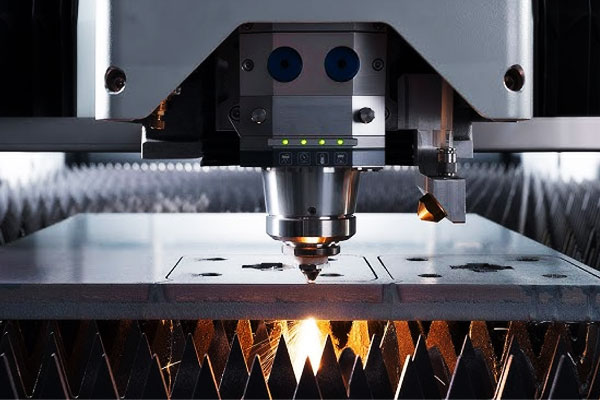
Usinagem a laser usa um feixe altamente focado de luz coerente (laser) derreter, vaporizar, ou material de ablação da peça de trabalho.
O ponto do laser é movido pela superfície usando espelhos controlados por computador ou estágios de movimento.
Por que a usinagem a laser é excelente:
A usinagem a laser é rápida, preciso, e processo sem contato. Pode ser realizado em qualquer material (metais, plásticos, cerâmica, vidro, compósitos) e pode alcançar recursos extremamente finos (até alguns mícrons).
O processo não gera forças mecânicas, peças tão finas e delicadas podem ser processadas.
| Parâmetro | Faixa típica | Notas |
| Largura do corte | 0.02 - 0.2 mm | Cortes muito estreitos. |
| Velocidade de corte | Até 50 m/meu | Alto para materiais em folha. |
| Tamanho do recurso | Até 10 µm | Para microusinagem. |
| Material | Praticamente qualquer material | Metais, plásticos, cerâmica, vidro. |
| Precisão | ±0,01 – 0.05 mm | Alta precisão. |
Aplicações:
- Corte: chapa metálica, perfis, tubos
- Perfuração: furos de precisão, furos de resfriamento
- Gravação e marcação: números de peça, Logos
- Microusinagem: stents médicos, Microeletronics
- Texturização de superfície: criando micro-rugosidade
Dica Prática: A usinagem a laser gera uma zona afetada pelo calor (HAZ). Para materiais sensíveis a danos térmicos, considere usar pulso curto (picossegundo/femtossegundo) laser.
Usinagem Ultrassônica (USM)
Princípio de trabalho:
A usinagem ultrassônica usa uma ferramenta vibrando em alta frequência (20-40 KHZ) e amplitude (10-50 µm).
Uma pasta abrasiva (Por exemplo, carboneto de boro ou carboneto de silício em água) é introduzido entre a ferramenta e a peça.
A ferramenta vibratória impacta as partículas abrasivas contra a peça de trabalho, remoção de material por microlascamento e erosão.
Por que o USM é excelente:
USM é o processo preferido para usinagem de materiais duros e quebradiços que são difíceis ou impossíveis de usinar por métodos tradicionais.
É particularmente eficaz para materiais não condutores (cerâmica, vidro, pedras) e materiais com baixa condutividade elétrica.
| Parâmetro | Faixa típica | Notas |
| Rugosidade da superfície | Ra 0.2 - 1.6 µm | Bom acabamento. |
| Precisão dimensional | ±0,005 – 0.02 mm | Alta precisão. |
| Material | Duro, frágil, materiais não condutores | Cerâmica, vidro, pedras, carbonetos. |
| Desgaste da ferramenta | Moderado | As ferramentas são desgastadas pelas partículas abrasivas. |
Aplicações:
- Fazer furos em cerâmica e vidro
- Usinagem de compósitos avançados
- Morre afundando em materiais duros
- Componentes semicondutores e eletrônicos
Dica Prática: USM é um processo lento, portanto, normalmente é limitado a peças de alto valor ou difíceis de usinar.
Usinagem por jato de água
Princípio de trabalho:
A usinagem por jato de água usa um fluxo de água de alta pressão (com ou sem partículas abrasivas) para erodir e cortar material. As pressões podem variar de 2,000 para 6,000 bar (30,000 para 90,000 psi).
A água é forçada através de um orifício de pequeno diâmetro, criando um jato supersônico que impacta a peça de trabalho.
Por que o Waterjet é excelente:
A usinagem por jato de água é um processo de corte a frio – não há zona afetada pelo calor, sem distorção térmica, e sem alterações metalúrgicas.
Pode cortar uma ampla variedade de materiais, incluindo metais, plásticos, vidro, compósitos, e até comida.
O processo é muito flexível, pode começar em qualquer lugar (não é necessário furo piloto), e produz um suave, borda precisa.
| Parâmetro | Faixa típica | Notas |
| Espessura de corte | Até 200+ mm | Dependendo do material e do abrasivo. |
| Largura do corte | 0.5 - 1.5 mm | Estreito. |
| Tolerância de corte | ±0,05 – 0.2 mm | Boa precisão. |
| Acabamento superficial | Ra 0.8 - 6.3 µm | Bom acabamento. |
| Nenhuma zona afetada pelo calor | Sim | Sem danos térmicos. |
Aplicações:
- Placas de metal grossas: alumínio, aço inoxidável, titânio
- Materiais frágeis: pedra, vidro, cerâmica
- Compósitos: materiais laminados (sem delaminação)
- Processamento de alimentos: cortando produtos alimentícios
- Componentes aeroespaciais: formas complexas em materiais avançados
Dica Prática: A usinagem por jato de água é um processo poderoso e flexível, mas é relativamente lento e gera uma grande quantidade de ruído e resíduos de lama.
É mais adequado para materiais espessos ou difíceis de cortar, onde outros processos causariam danos térmicos.
4. Diretrizes de engenharia para seleção de métodos de usinagem
Não existe um processo de usinagem universalmente perfeito. A escolha ideal depende:
- Propriedades dos materiais.
- Geometria da peça.
- Volume de produção.
- Requisitos de precisão.
- Requisitos de acabamento de superfície.
- Custo de fabricação.
| Aplicativo | Processo recomendado | Por que? |
| Peças rotacionais (eixos, pinos) | Virando | Excelente para formas cilíndricas; bom acabamento superficial e precisão. |
| Superfícies planas, slots, bolsos | Moagem | Altamente versátil; pode produzir uma ampla gama de formas. |
| Grande, superfícies planas (peças únicas) | Planejando | Baixo custo para peças simples; bom para reparo e manutenção. |
| Furos precisos | Perfuração + Alargamento ou Chato | Perfuração para furo bruto; alargamento/mandrilamento para tamanho e precisão finais. |
| Dentes de engrenagem | Hobbing, Modelagem | Produção de alto volume; processos padronizados. |
Materiais endurecidos (HRC > 45) |
Moagem ou EDM | Desbaste para superfícies planas; EDM para formas complexas. |
| Cavidades 3D complexas | EDM ou Fresagem (5-eixo) | EDM para profundidade, formas complexas; 5-fresamento de eixo para peças maiores. |
| Muito difícil, materiais não condutores | Usinagem Ultrassônica | Cerâmica, vidro, pedras. |
| Materiais termicamente sensíveis | Usinagem por jato de água | Nenhuma zona afetada pelo calor; distorção mínima. |
| Alta precisão, pequenos recursos | Usinagem a Laser | Recursos muito bons, rápido, sem contato. |
5. Conclusão
O mundo da usinagem é vasto e complexo, mas em sua essência, é construído sobre três princípios fundamentais de transformação material - formação, remoção, e adição – e um conjunto de processos bem definidos que podem ser combinados com requisitos específicos de peças.
O 8 processos tradicionais - torneamento, moagem, planejamento, perfuração, tedioso, corte de engrenagem, moagem, e retificação de formas - formam a espinha dorsal da indústria de manufatura.
Eles são os burros de carga que produzem a grande maioria dos componentes de precisão, desde simples pinos até moldes e matrizes complexos. A sua força reside na sua versatilidade, precisão, e confiabilidade.
O 5 processos especiais - EDM, ECM, usinagem a laser, usinagem ultrassônica, e usinagem com jato de água — oferecem alternativas poderosas quando as ferramentas de corte tradicionais atingem seus limites.
Eles permitem a usinagem de peças muito duras, frágil, ou materiais complexos, e podem alcançar características que seriam impossíveis por métodos convencionais.
A chave para uma seleção bem-sucedida do processo reside na compreensão do material, a geometria, o volume de produção, e a tolerância necessária.
Ao dominar as características e aplicações de cada processo, engenheiros de produção podem otimizar a eficiência da produção, reduzir custos, e alcançar qualidade superior.

