

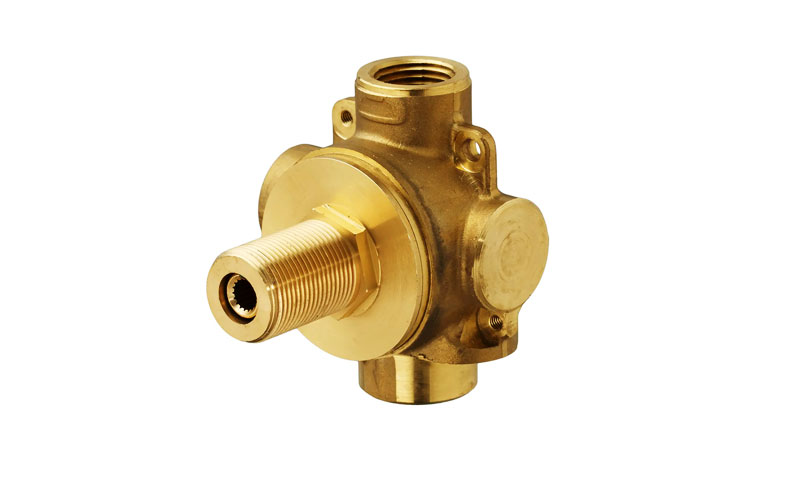
As válvulas desviadoras são componentes essenciais em sistemas de manuseio de fluidos, permitindo o redirecionamento do fluxo de um caminho para outro.
Estas válvulas são amplamente utilizadas em encanamento, aquecimento, ventilação, ar condicionado (Hvac), tratamento de água, e processamento industrial.
Entre os diversos materiais utilizados para válvulas desviadoras, o latão se destaca como a escolha preferida devido à sua excelente usinabilidade, Resistência à corrosão, propriedades antimicrobianas, e apelo estético.
A fabricação de válvulas desviadoras de latão de alta qualidade requer uma combinação de fundição de precisão e usinagem CNC avançada.
Elenco de cera perdida (elenco de investimento) é o método ideal para produzir passagens internas complexas e geometrias intrincadas de corpos de válvulas desviadoras.
Quando combinado com usinagem CNC de precisão, este processo fornece válvulas com precisão dimensional excepcional, Acabamentos superficiais suaves, e desempenho confiável.
1. O que é uma válvula desviadora de latão?
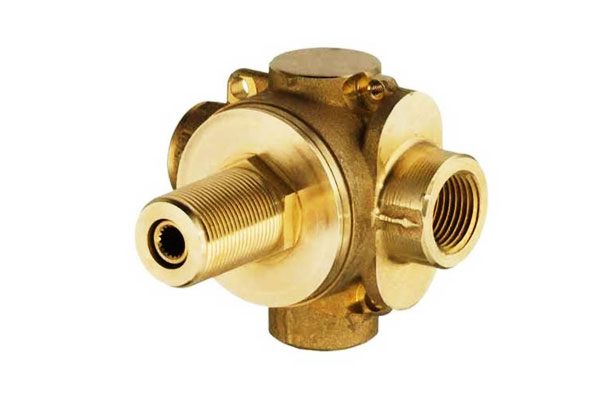
UM válvula desviadora de latão é um dispositivo de controle de fluidos multiportas projetado para redirecionar, Selecione, ou distribuir o fluxo de fluido entre diferentes caminhos de fluxo.
Ao contrário de uma válvula de corte convencional de duas portas, uma válvula desviadora usa múltiplas portas e um elemento móvel interno para determinar quais passagens estão conectadas em uma determinada posição de operação.
O corpo da válvula é normalmente o componente que contém pressão. Incorpora as portas de entrada e saída, passagens de fluxo interno, câmara de válvula, interfaces de vedação, e recursos de conexão.
Um elemento interno – geralmente uma bola, plugue, cartucho, ou mecanismo operado por fuso - altera o caminho do fluxo quando a válvula é girada ou acionada.
Uma válvula desviadora típica de três portas, por exemplo, pode operar em duas posições básicas:
Posição A: Entrada → Saída A
Posição B: Entrada → Saída B
Configurações mais sofisticadas podem combinar ou isolar caminhos de fluxo dependendo dos requisitos do processo.
O desempenho de uma válvula desviadora de latão depende de mais do que sua capacidade de mudar o fluxo.
A válvula deve manter a integridade da pressão, resistência de fluxo controlada, desligamento confiável, estabilidade dimensional, e vedação repetível durante toda a vida útil pretendida.
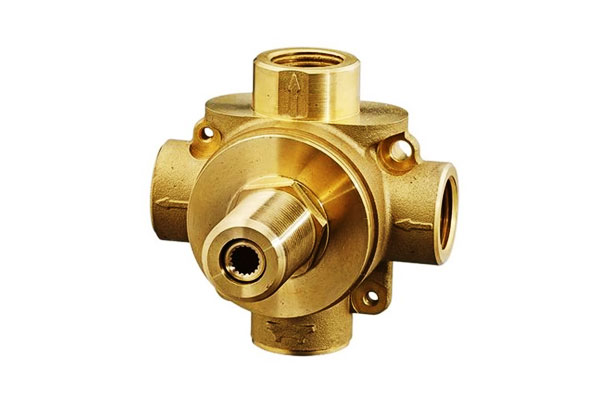
Tipos de válvulas desviadoras
| Tipo | Descrição | Aplicações típicas |
| 3-Válvula Desviadora de Maneira | Uma entrada, duas saídas (ou vice -versa). | Sistemas de chuveiro, válvulas misturadoras, Hvac, Controle de processo. |
| 4-Válvula Desviadora de Maneira | Duas entradas, duas saídas. | Sistemas de aquecimento, bombas de calor, aplicações de fluxo reverso. |
| Válvula Desviadora Rotativa | Um elemento rotativo desvia o fluxo entre as portas. | Transporte pneumático, manuseio de pó, processamento industrial. |
| Válvula Desviadora Deslizante | Uma placa deslizante redireciona o fluxo. | Manuseio de materiais a granel, coleta de poeira. |
| Válvula desviadora de esfera | Uma bola com múltiplas passagens gira para direcionar o fluxo. | Encanamento, Processamento químico, distribuição de gás. |
2. Ligas de latão comuns para fundição de válvula desviadora
Selecionando o correto latão liga é fundamental para a integridade da pressão, Resistência à corrosão, MACHINABILIDADE, estabilidade dimensional, e vida útil de uma válvula desviadora.
O latão não é um material único, mas uma ampla família de ligas à base de cobre com composições e características de desempenho substancialmente diferentes..
Para uma válvula desviadora fundida com precisão, a seleção da liga deve considerar mais do que a resistência mecânica.
O fabricante também deve avaliar o comportamento da fundição, requisitos de pressão interna, química de fluidos, resistência à dezincificação, requisitos de usinagem, temperatura, exposição ambiental, e restrições regulatórias sobre constituintes de liga.
Em particular, válvulas destinadas a água potável ou outras aplicações reguladas de contato com fluidos podem exigir ligas com baixo ou sem chumbo especificamente qualificadas para esse serviço.
Portanto, a “melhor” liga de latão depende da aplicação e não é universal.
Ligas de latão comumente usadas para fundição de válvula desviadora
| Liga (NÓS) | Propriedades -chave | Aplicações típicas de válvulas |
| C84400 | Boa moldabilidade e usinabilidade; latão semi-vermelho com chumbo tradicional | Corpos de válvula fundidos, acessórios de encanamento, componentes gerais de controle de fluidos |
| C85700 | Latão naval com chumbo; boa usinabilidade e resistência à corrosão | Componentes fundidos contendo pressão, acessórios orientados para a marinha |
| C87610 | Liga de cobre-silício com boa resistência e resistência à corrosão; chumbo baixo | Componentes para serviços de água e peças fundidas resistentes à corrosão, quando especificado |
| C87800 | Latão silício; Boa castabilidade, força, Resistência à corrosão, e características de baixo chumbo | Corpos de válvulas para serviço de água, acessórios de encanamento, componentes industriais |
C87850 |
Latão silício com boa usinabilidade, estanqueidade à pressão, e resistência à corrosão | Corpos da válvula, torneiras, caixas de medidores de água, componentes de encanamento e marítimos |
| C89833 | Liga contendo bismuto sem chumbo; boa usinabilidade e resistência à corrosão | Componentes contendo pressão sem chumbo, aplicações de válvulas e encanamentos voltadas para água potável, quando especificado |
| C36000 | Excelentes características de usinagem livre | Componentes de válvula usinados, caules, acessórios, adaptadores, Pequenas peças de precisão |
3. Processo de fundição por cera perdida da válvula desviadora de latão
O processo de fundição por cera perdida para válvulas desviadoras de latão foi projetado para converter uma geometria complexa do corpo da válvula em uma peça fundida de metal com formato quase final, com consistência dimensional controlada e integridade estrutural sólida.
Revisão e ferramentas de CAD
O processo começa com o desenho da válvula ou modelo CAD 3D. Antes do ferramental ser produzido, a geometria é revisada para viabilidade de fundição e estabilidade de produção.
O fabricante estabelece a tolerância de encolhimento necessária, subsídio de usinagem, transições de parede, filetes, locais de portão, e orientação de fundição.
Para uma válvula desviadora, atenção especial é dada às regiões ao redor das passagens de fluxo que se cruzam porque mudanças repentinas na espessura da seção podem influenciar a alimentação e a solidificação do metal.
O ferramental é então fabricado para reproduzir a geometria do padrão de cera necessária.
Produção de padrões de cera
A cera derretida é injetada na matriz de precisão para criar o padrão de sacrifício do corpo da válvula.
A qualidade do padrão determina a base dimensional da peça fundida. Temperatura de injeção, pressão, tempo de espera, resfriamento, e a condição da matriz deve ser controlada para minimizar o flash, distorção, preenchimento incompleto, e variação dimensional.
O padrão de cera concluído é inspecionado antes de prosseguir para a montagem.
Montagem e vedação de cera
Padrões de cera individuais são conectados a um sistema de canal central para formar uma árvore de fundição.
Nesta fase, o sistema de passagem é estabelecido de modo que o latão fundido possa preencher a cavidade da válvula de maneira controlada.
A posição do portão e as dimensões do corredor influenciam o tempo de enchimento, turbulência, gradientes térmicos, e comportamento alimentar.
Para válvulas desviadoras complexas, O portão é projetado em torno do geometria do corpo inteiro, em vez de simplesmente maximizar a velocidade de enchimento.
Construção de conchas de cerâmica
A árvore de cera é mergulhada repetidamente em pasta cerâmica e revestida com estuque refratário. Camadas sucessivas constroem uma casca cerâmica rígida em torno do padrão.
A carcaça deve fornecer resistência suficiente para desparafinagem e vazamento de metal, reproduzindo ao mesmo tempo os detalhes de superfície necessários.
Os principais controles do processo são:
Viscosidade de chorume + tamanho de partícula refratária + espessura da camada + condições de secagem + força da casca
A preparação inconsistente da casca pode causar rachaduras, variação dimensional, má qualidade da superfície, ou falha da casca durante o vazamento.
Deswaxing e disparo de concha
O invólucro de cerâmica é aquecido para remover o padrão de cera e criar a cavidade negativa do corpo da válvula.
Após o deswaxing, o invólucro é queimado para remover material orgânico residual e desenvolver a resistência refratária e a estabilidade térmica necessárias.
O molde cerâmico resultante deve estar limpo, seco, e estruturalmente sólidos antes da introdução do latão fundido.
Fusão de latão e controle de liga
A liga de latão selecionada é fundida sob condições controladas.
O principal objetivo é garantir que o metal fundido atenda aos requisitos especificados. composição química e requisitos de limpeza antes de derramar.
Isto é particularmente importante para válvulas personalizadas, onde as propriedades do material e os requisitos regulamentares podem depender de um tipo de liga específico..
O controle de processo normalmente inclui:
- Materiais de cobrança verificados
- Monitoramento da temperatura de fusão
- Análise química
- Controle de escória e óxido
- Identificação e rastreabilidade de calor
Derramamento Controlado
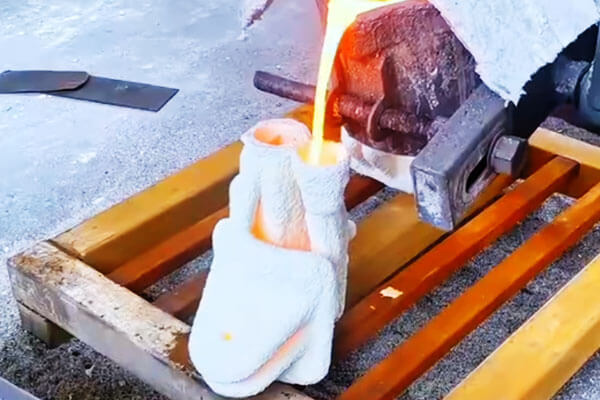
O invólucro cerâmico pré-aquecido é preenchido com latão fundido através do sistema de comporta projetado.
A temperatura de vazamento e a taxa de enchimento devem corresponder à liga e à geometria da válvula.
O metal deve permanecer suficientemente fluido para preencher seções finas e passagens complexas sem turbulência excessiva ou solidificação prematura..
Uma operação de vazamento bem controlada busca alcançar:
Preenchimento completo + fluxo estável + arrastamento mínimo + condições térmicas controladas
Solidificação e Alimentação
Depois de preencher, o latão começa a solidificar. Porque o corpo da válvula pode conter diferentes espessuras de parede, chefes, e cruzamentos de passagem, diferentes áreas podem esfriar em taxas diferentes.
O projeto de fundição, portanto, deve suportar a solidificação controlada e a alimentação adequada do metal retraído..
O mau controle da solidificação pode produzir defeitos como:
- Porosidade de encolhimento
- Cavidades de contração
- Descontinuidades relacionadas ao gás
- Rachadura quente
Para corpos de válvula complexos, a simulação de fundição pode ser usada para prever o comportamento de enchimento e solidificação e otimizar o sistema de passagem e alimentação antes da produção.
Suprimir
Uma vez que a peça fundida tenha esfriado o suficiente, o invólucro cerâmico é removido mecanicamente.
Vibração, separação mecânica, ou outros métodos adequados podem ser usados dependendo do componente e do sistema de produção.
Deve-se ter cuidado durante o nocaute porque a força mecânica excessiva pode danificar seções finas, recursos de porta, ou superfícies fundidas.
Remoção de portão e riser
O jito, corredores, Portões, e risers são cortados da fundição da válvula.
Os locais de corte são selecionados de forma que a remoção não danifique áreas funcionais ou deixe material excessivo que complicaria a usinagem subsequente.
Este estágio converte a árvore fundida em uma peça fundida individual do corpo da válvula.
Acabamento de Fundição
A peça fundida limpa é submetida a moagem, explodindo, ou outras operações de acabamento apropriadas para remover resíduos de cerâmica, barbatanas, clarão, e restos de portão.
O objetivo é produzir uma peça fundida limpa e estável, adequada para inspeção e usinagem subsequente..
Importante, o acabamento não deve ser usado para ocultar descontinuidades de fundição inaceitáveis. Áreas que se tornarão limites de pressão, superfícies de vedação, ou dados de usinagem críticos requerem atenção especial.
4. Usinagem CNC de peças fundidas de válvulas desviadoras de latão
A fundição por cera perdida estabelece a geometria principal de uma válvula desviadora de latão, mas normalmente não fornece a precisão final necessária para interfaces críticas.
Usinagem CNC é, portanto, a ponte entre uma peça fundida quase perfeita e uma válvula de precisão funcional.
O processo de usinagem não deve apenas atingir dimensões individuais; deve manter a relação geométrica entre os portos, passagens de fluxo, assentos da válvula, superfícies de vedação, caules, e interfaces de atuador.
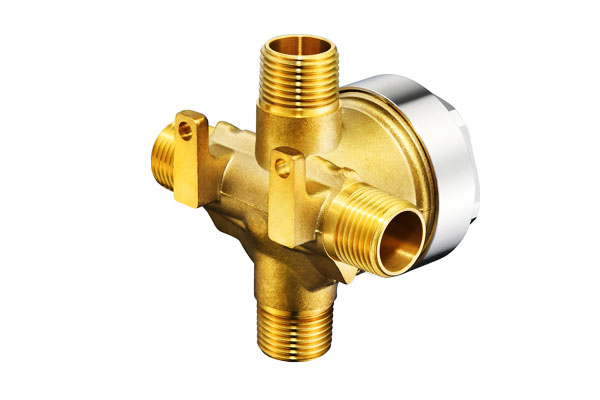
Uma sequência de produção típica é:
Inspeção de fundição → Estabelecimento de referência → Usinagem de desbaste → Usinagem de furo/porta → Usinagem de rosca → Usinagem de sede e ranhura de vedação → Usinagem de interface do atuador → Rebarbação → Inspeção dimensional
A sequência exata depende da arquitetura da válvula.
Usinagem das portas da válvula e furos internos
As portas de entrada e saída estabelecem a conexão da válvula com o sistema de fluido externo. Dependendo do projeto da válvula, essas interfaces podem usar:
- NPT ou outras roscas de tubo cônico
- Roscas BSP ou BSPP/BSPT
- Threads métricos ou personalizados
- Interfaces de compressão
- Conexões flangeadas
- Brasagem ou geometrias de conexão especializadas
A operação de usinagem portuária deve controlar tanto a dimensão quanto a posição.
Uma rosca usinada corretamente ainda pode criar problemas de montagem se o eixo da porta estiver posicionado incorretamente em relação ao corpo da válvula ou portas adjacentes.
Para cruzar passagens internas, a usinagem pode envolver perfuração, tedioso, perfuração cruzada, ou uma combinação de recursos fundidos e usinados.
A transição entre essas passagens deve ser examinada cuidadosamente porque a brusquidão excessiva pode aumentar a perda de pressão e a turbulência.
Em designs personalizados, a fundição pode produzir a maior parte da arquitetura do fluxo enquanto a usinagem CNC finaliza as aberturas e interfaces funcionais.
Usinagem de precisão de sedes de válvulas
A sede da válvula está entre as características mais críticas de uma válvula desviadora porque forma a interface que limita o vazamento indesejado de fluido.
O desempenho do assento depende de diversas características trabalhando juntas:
Concentricidade + Geometria de contato + Acabamento superficial + Planicidade/redondeza + Compatibilidade do material
Uma sede de válvula que atenda ao seu diâmetro nominal, mas não seja concêntrica com o elemento da válvula, pode produzir contato desigual.
De forma similar, uma superfície excessivamente áspera pode interferir na vedação, enquanto uma geometria de superfície incorreta pode aumentar o torque operacional.
A tolerância apropriada da sede e o acabamento superficial devem, portanto, ser especificados de acordo com o projeto específico da válvula., elemento de vedação, Classificação de pressão, e exigência de vazamento.
Usinagem de rosca
As roscas são comuns em válvulas desviadoras de latão porque fornecem conexões compactas e econômicas.
A usinagem CNC pode ser usada para roscas internas e externas. Parâmetros críticos incluem:
- Diâmetro maior
- Diâmetro menor
- Tom
- Perfil do tópico
- Diâmetro efetivo
- Profundidade da rosca
- Concentricidade
- Acabamento superficial
Medidores de rosca são frequentemente usados para verificação de produção, enquanto a inspeção dimensional pode confirmar a geometria subjacente.
Porque o latão é relativamente usinável, suporta produção eficiente de threads, mas a estratégia de corte ainda precisa ser adaptada à liga específica.
Algumas ligas de latão sem chumbo podem se comportar de maneira diferente das classes tradicionais de usinagem livre e podem exigir ferramentas e parâmetros de corte otimizados.
Usinagem de O-Ring e Ranhura de Vedação
Onde vedações elastoméricas são usadas, a ranhura do O-ring é um recurso de precisão e não um simples recesso.
Suas dimensões determinam a compressão da vedação e, portanto, influenciam o desempenho do vazamento. Largura incorreta da ranhura, profundidade, geometria de canto, ou a condição da superfície pode causar:
- Vedação insuficiente
- Compressão excessiva
- Extrusão de vedação
- Dificuldade de montagem
- Desgaste prematuro da vedação
O processo de usinagem deve, conseqüentemente, manter a geometria especificada da ranhura, protegendo ao mesmo tempo a superfície de vedação circundante..
5. Opções de acabamento de superfície para válvulas desviadoras de latão
Para componentes de válvula personalizados, o acabamento superficial deve ser selecionado junto com a liga, processo de usinagem, tolerâncias dimensionais, e ambiente operacional.
Nem todo processo de acabamento é adequado para todas as superfícies.
Em particular, assentos da válvula, tópicos, interfaces de vedação, e passagens molhadas podem exigir condições de acabamento rigorosamente controladas para evitar alterações em suas dimensões funcionais.
Polimento mecânico
O polimento mecânico utiliza meios abrasivos progressivamente mais finos para remover marcas de usinagem, pequenas irregularidades superficiais, e imperfeições superficiais relacionadas à fundição da superfície de latão.
Dependendo da aparência necessária, o processo pode variar desde o acabamento abrasivo básico até o polimento de alto brilho.
Vantagens:
- Produz uma superfície de latão lisa e atraente
- Melhora a aparência visual
- Reduz marcas visíveis de usinagem e fundição
- Fornece um substrato eficaz para revestimento subsequente
- Pode melhorar a uniformidade da superfície nas superfícies externas da válvula
Níquel revestimento
O revestimento de níquel deposita uma camada controlada de níquel na superfície de latão preparada, normalmente através de um processo de galvanoplastia.
O pré-tratamento adequado é essencial para garantir uma boa adesão entre o substrato de latão e o revestimento.
Vantagens:
- Melhora a resistência à corrosão
- Fornece maior dureza superficial do que o latão não tratado
- Melhora a resistência ao desgaste
- Produz uma aparência metálica uniforme
- Adequado para componentes expostos à umidade e ao manuseio
- Pode fornecer uma camada base para sistemas de acabamento decorativos ou funcionais
Cromo
A cromagem aplica uma camada superficial à base de cromo sobre um substrato adequadamente preparado, muitas vezes sobre niquelagem.
O processo produz uma dura, superfície brilhante com boa resistência ao desgaste e manchas.
Vantagens:
- Excelente aparência decorativa
- Alta dureza superficial
- Boa resistência ao desgaste
- Boa resistência ao embaciamento e à exposição atmosférica
- Adequado para componentes de válvulas expostos e acessórios de encanamento decorativos
Plaada de níquel com eletricidade
O revestimento de níquel sem eletrólito deposita um revestimento de níquel-fósforo ou liga de níquel relacionado por meio de uma reação química autocatalítica, em vez de depender de corrente elétrica externa direta.
Isto permite uma espessura de revestimento relativamente uniforme em geometrias complexas.
Vantagens:
- Espessura de revestimento mais uniforme em superfícies complexas
- Boa resistência à corrosão
- Boa resistência ao desgaste e à abrasão
- Adequado para geometrias rebaixadas e irregulares
- Fornece proteção de superfície controlada com acúmulo dimensional relativamente previsível
- Útil para componentes de válvulas industriais que exigem proteção e consistência dimensional
Acabamento de superfície usinado com precisão
Para superfícies funcionais, como sedes de válvulas, Bores, tópicos, e interfaces de vedação, o acabamento necessário geralmente é produzido diretamente por meio de usinagem CNC controlada, torneamento fino, tedioso, moagem, ou outras operações de precisão, em vez de um revestimento decorativo.
Vantagens:
- Mantém controle dimensional preciso
- Permite geometria de vedação precisa
- Suporta rugosidade superficial controlada
- Evita acúmulo desnecessário de revestimento em interfaces críticas
- Fornece montagem previsível e desempenho funcional
- Particularmente adequado para sedes de válvulas, Bores, tópicos, e superfícies de contato de vedação
6. Vantagens da fundição por cera perdida para válvulas desviadoras de latão
A fundição por cera perdida oferece vantagens exclusivas para a fabricação de válvulas desviadoras que não podem ser igualadas por métodos alternativos de fundição ou formação.
Precisão Dimensional Inigualável & Repetibilidade
A fundição de precisão atinge ±0,05–0,1 mm por 25 mm tolerância como fundido, com repetibilidade consistente em altos volumes de produção.
Isso reduz o estoque de usinagem, minimiza o acúmulo de tolerância, e garante montagem intercambiável.
Geometria Interna Complexa & Otimização de Fluxo
A cera perdida pode produzir geometrias de portas internas complexas, transições de fluxo suave, e passagens contornadas que seriam impossíveis com fundição em areia ou antieconômicas para usinar.
Caminhos de fluxo internos otimizados reduzem a turbulência, queda de pressão, e ruído de fluxo.
Acabamento superior de superfície fundida
O revestimento facial de cerâmica fina produz acabamento de superfície fundida Ra 1,6–3,2 μm, reduzindo o tempo de usinagem e melhorando o desempenho da superfície de vedação.
Superfícies fundidas lisas também reduzem a erosão induzida pelo fluxo dentro das passagens de fluido.
Estoque Mínimo de Usinagem & Eficiência do material
A fundição quase perfeita requer apenas 0,8–1,5 mm de material de usinagem por lado, em comparação com 3–6 mm para fundição em areia.
Isso reduz o desperdício de material em 40–60% e reduz significativamente o tempo de usinagem.
Flexibilidade de liga & Formulação Personalizada
A fundição por cera perdida funciona com praticamente qualquer liga de latão, permitindo formulação de liga personalizada para corresponder à corrosão específica, força, ou requisitos regulamentares sem grandes alterações de ferramentas.
Integridade de Pressão Consistente & Resistência a vazamentos
Corpos fundidos de peça única eliminam caminhos de vazamento nas juntas montadas. A solidificação controlada minimiza a porosidade interna, garantindo um desempenho à prova de pressão que passa no teste de vazamento de pressão de trabalho 1,5x.
7. Fundição com cera perdida vs.. Válvulas desviadoras de latão forjado
Tanto a fundição quanto o forjamento produzem componentes de válvula de latão, mas eles atendem a cenários distintos de design e desempenho.
| Dimensão de Desempenho | Válvulas de latão fundido com cera perdida | Válvulas de latão forjado |
| Precisão dimensional | ±0,05 – ±0,1 mm/25 mm como fundido; mais apertado após a usinagem | ±0,02 – ±0,05 mm; muito consistente |
| Complexidade da geometria interna | Muito alto — portos complexos, passagens contornadas, projetos multiportas | Limitado - apenas formas axiais simples; recursos internos profundos não são viáveis |
| Pressão & Resistência à fadiga | Bom para pressão padrão; dependente da porosidade | Excelente; maior resistência à fadiga e pressão de ruptura |
| Adequação do volume de produção | 500 - 50,000 PCs/ano | 10,000 - 500,000+ PCs/ano |
| Custo de ferramentas & Tempo de espera | Custo moderado de ferramentas; 4– Prazo de entrega de 6 semanas | Alto custo de ferramentas; 6– Prazo de entrega de 10 semanas |
| Custo unitário total | Médio-alto para volume baixo; competitivo em volume médio | Alto em volume baixo; mais baixo em volume muito alto |
| Cenários de aplicação ideais | Corpos multiportas complexos, caminhos de fluxo contornados, volume médio | Projetos axiais simples, alta pressão, fadiga de alto ciclo, volume muito alto |
8. Aplicações de válvulas desviadoras de latão
Encanamento e distribuição de água
As válvulas desviadoras de latão são amplamente utilizadas em sistemas de encanamento para redirecionar a água entre diferentes saídas, circuitos, ou luminárias.
Seu design compacto, Resistência à corrosão, e boa usinabilidade os tornam adequados para equipamentos de controle de água residenciais e comerciais.
As aplicações típicas incluem:
- Sistemas de chuveiro
- Conjuntos de torneira
- Equipamento de distribuição de água
- Sistemas de mixagem e roteamento
- Equipamento de encanamento doméstico
Sistemas HVAC e Aquecimento
As válvulas desviadoras de latão são comumente usadas em sistemas HVAC e de aquecimento hidrônico para controlar a direção da circulação de água e outros fluidos compatíveis.
A válvula pode alternar o fluxo entre circuitos de aquecimento, linhas de desvio, ou loops secundários.
As aplicações típicas incluem:
- Sistemas de aquecimento de radiador
- Sistemas de aquecimento por piso radiante
- Circuitos de circulação HVAC
- Sistemas de bomba de calor
- Caldeira e equipamento de aquecimento
Sistemas de irrigação
Em equipamentos de irrigação, válvulas desviadoras de latão podem ser usadas para direcionar a água entre diferentes ramais ou zonas.
Sua resistência à corrosão e construção robusta os tornam adequados para comutação repetida de fluxo em ambientes externos.
As aplicações típicas incluem:
- Sistemas de irrigação agrícola
- Equipamento de irrigação de jardim
- Sistemas de sprinklers
- Irrigação de estufa
- Coletores de distribuição de água
Equipamento de tratamento de água
As válvulas desviadoras de latão podem ser integradas em sistemas compactos de tratamento de água onde diferentes caminhos de fluxo precisam ser selecionados ou isolados.
A fundição de precisão é particularmente útil quando o corpo da válvula requer passagens internas personalizadas.
As aplicações típicas incluem:
- Sistemas de filtragem de água
- Equipamento de purificação de água
- Sistemas de amaciamento
- Conjuntos de bomba e filtragem
- Unidades de controle de tratamento de água
Eletrodomésticos e Equipamentos Residenciais
As válvulas desviadoras compactas de latão também são usadas em aparelhos onde a água ou outro fluido compatível deve ser redirecionado entre diferentes circuitos internos.
As aplicações típicas incluem:
- Equipamentos para café e bebidas
- Aparelhos de lavagem
- Aquecedores de água
- Equipamento de limpeza
- Dispositivos residenciais de controle de água
Equipamento de controle de fluidos industriais
Equipamentos industriais podem usar válvulas desviadoras de latão para direcionar água, óleo, ar, ou outros fluidos compatíveis onde a pressão, temperatura, e o ambiente químico estão dentro dos limites do material e do projeto da válvula.
As aplicações típicas incluem:
- Sistemas de bomba
- Compressores e equipamentos auxiliares
- Máquinas de processamento de fluidos
- Sistemas de refrigeração industrial
- Conjuntos de equipamentos personalizados
Sistemas Comerciais e Especializados
As válvulas desviadoras de latão personalizadas também são adequadas para fabricantes de equipamentos que exigem um componente compacto de controle de fluxo multiportas projetado em torno de um conjunto específico ou circuito de fluido.
As aplicações típicas incluem:
- Equipamento de encanamento comercial
- Sistemas de circulação de água
- Coletores de equipamentos
- Conjuntos de controle de fluido OEM
- Máquinas personalizadas e equipamentos de processo
9. Por que escolher a indústria LangHe para fundição de cera perdida de válvula desviadora de latão & Usinagem?
Para válvulas desviadoras de latão personalizadas, selecionar um fabricante não é simplesmente uma questão de encontrar um fornecedor que possa fundir latão.
A componente final depende da coordenação da engenharia de fundição, Seleção de ligas, Usinagem CNC, acabamento superficial, Controle dimensional, e testes funcionais.
Indústria de Langhe aborda a produção de válvulas desviadoras de latão personalizadas como um projeto de fabricação integrado, permitindo que as etapas de fundição e usinagem sejam desenvolvidas em conjunto em torno dos requisitos funcionais do cliente.
| Capacidade | Detalhes |
| Materiais | C84400, C85700, C87610, C87800, C87850, C89833, C36000. |
| Processo de fundição | Elenco de cera perdida (elenco de investimento). |
| Tolerâncias | ± 0,1-0,3 mm (CT5-CT7 por ISO 8062). |
| Usinagem CNC | CNC virando, moagem, perfuração, tocando, tedioso, Gerando, rosqueamento. |
| Qualidade | ISO 9001:2015 certificado; 100% Inspeção; Cmm. |
| Tempo de espera | 6–12 semanas para ferramentas; 2–4 semanas para pedidos repetidos. |
10. Conclusão
Uma válvula desviadora de latão é um componente compacto, mas seus requisitos de fabricação estão altamente interligados.
O corpo da válvula deve conter pressão, fornecer caminhos de fluxo precisos, acomodar o elemento interno da válvula, manter interfaces de vedação, e conecte-se de forma confiável com tubulação ou equipamento externo.
Para projetos personalizados complexos, a fundição por cera perdida fornece uma maneira eficiente de estabelecer a geometria principal do corpo da válvula, incluindo portas personalizadas, chefes, transições, e arquitetura interna adequada.
A usinagem CNC então traz roscas, Bores, assentos da válvula, ranhuras de vedação, e interfaces de atuador com a precisão necessária.
A seleção do material é igualmente importante. Diferentes ligas de latão oferecem diferentes combinações de moldabilidade, MACHINABILIDADE, força mecânica, Resistência à corrosão, e adequação regulatória.
A escolha correta deve, portanto, ser baseada no fluido real e no ambiente operacional.
A LangHe Industry combina fundição de precisão de latão e usinagem CNC para apoiar a produção de válvulas desviadoras personalizadas, desde a revisão inicial do projeto até a inspeção de componentes acabados, ajudando clientes OEM a converter conceitos complexos de válvulas em produtos fabricáveis e repetíveis.
Perguntas frequentes
O que é uma válvula desviadora de latão?
Uma válvula desviadora de latão é um dispositivo de controle de fluido multiportas usado para redirecionar ou distribuir seletivamente fluido entre diferentes caminhos de fluxo.
Seu elemento de válvula interno determina quais portas estão conectadas em cada posição de operação.
Por que o latão é comumente usado em válvulas desviadoras?
O latão fornece uma combinação útil de resistência à corrosão, MACHINABILIDADE, força mecânica, castabilidade, e eficiência de custos.
Estas propriedades tornam-no adequado para muitas águas, Hvac, encanamento, Appliance, e aplicações de controle de fluidos industriais.
Por que usar fundição por cera perdida para uma válvula desviadora de latão?
A fundição por cera perdida é particularmente útil quando o corpo da válvula contém geometria complexa, múltiplas portas, chefes integrados, ou passagens de fluxo personalizadas.
Produz um corpo com formato quase final que pode posteriormente ser usinado CNC.
As válvulas desviadoras de latão podem ser usadas para água potável?
Eles podem ser, desde que a construção completa da válvula atenda aos requisitos aplicáveis para serviço de água potável.
A liga de latão, conteúdo principal, componentes molhados, processo de fabricação, e a conformidade exigida do produto precisam ser consideradas.

