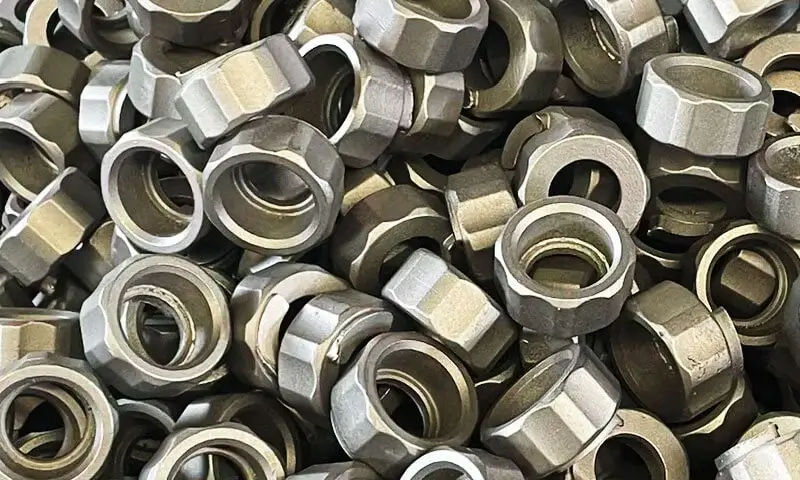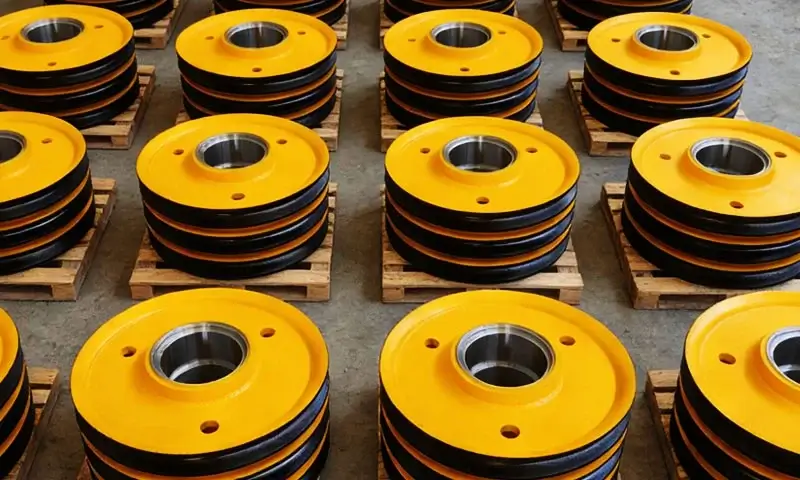
A fundição de precisão fornece uma rota de fabricação eficaz para roldanas de guindaste personalizadas porque pode reproduzir geometrias metálicas relativamente complexas, mantendo a consistência dimensional controlada e fornecendo um ponto de partida próximo ao formato final para usinagem subsequente.
Quando combinado com seleção de liga apropriada, tratamento térmico controlado, Usinagem CNC, e inspeção não destrutiva, a fundição de precisão pode produzir roldanas adaptadas a sistemas de cabos de aço e aplicações de elevação específicas.
O objetivo da engenharia não é simplesmente produzir uma roldana que se ajuste a um conjunto.
O objetivo é fabricar um componente cuja integridade de fundição, propriedades mecânicas, geometria da ranhura, precisão dimensional, e a condição da superfície permanecem adequadas durante repetidos ciclos de serviço.
Este artigo examina polias de guindaste de fundição de precisão da perspectiva do design de componentes, engenharia de materiais, produção de fundição, usinagem, controle de qualidade, e desempenho do aplicativo.
1. O que é uma polia de guindaste?
UM polia de guindaste é uma roda ranhurada usada para guiar, redirecionar, apoiar, ou distribuir um cabo de aço dentro de um guindaste ou outro mecanismo de elevação.
O cabo de aço percorre a circunferência da roldana, enquanto a polia gira em torno de um eixo, alfinete, ou cubo suportado por rolamento.
Dependendo da configuração do guindaste, uma ou mais roldanas podem ser instaladas em um bloco de roldana, sistema de reeving, cabeça de lança, montagem de carrinho, ou outro mecanismo de elevação.
O propósito fundamental de uma polia é simples: muda a direção do cabo de aço e permite que o cabo se mova sob carga com atrito reduzido e flexão controlada.
Sua função mecânica real, no entanto, é consideravelmente mais exigente.
Quando um cabo carregado passa por uma roldana, a corda é repetidamente dobrada e não dobrada. A ranhura da roldana suporta o cabo e distribui as forças de contato sobre uma região definida.
Ao mesmo tempo, a própria roldana deve suportar as forças transmitidas através do cabo sem deformação excessiva, rachadura, vestir, ou perda de alinhamento.
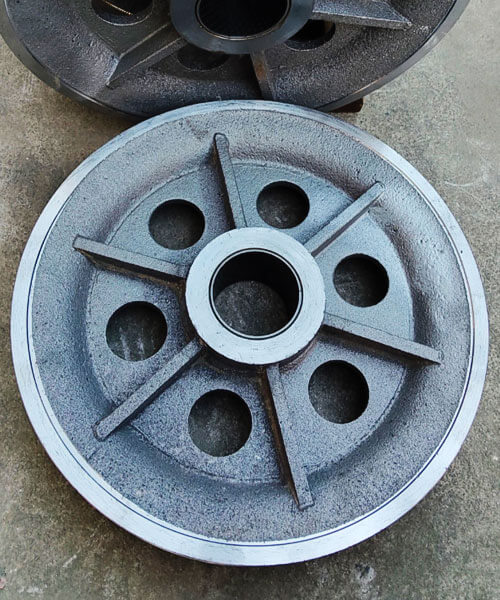
Estrutura básica da polia do guindaste
Uma roldana de guindaste convencional geralmente consiste em diversas áreas funcionais:
| Componente | Função primária | Principais considerações de engenharia |
| Corpo da polia | Suporta a corda e transmite carga | Força, rigidez, integridade de fundição |
| Ranhura de corda | Recebe e guia o cabo de aço | Raio, profundidade, perfil, acabamento superficial |
| Eixo | Conecta a polia ao suporte giratório | Transmissão de carga, espessura da parede |
| Furo | Acomoda eixo ou arranjo de rolamento | Diâmetro, tolerância, concentricidade |
| Flanges | Ajuda a reter o cabo de aço | Altura, rigidez, liberação |
| Assento do Rolamento | Suporta o rolamento quando aplicável | Precisão dimensional, acabamento superficial |
| Chaveta / Recursos de montagem | Transfere o torque ou protege a montagem | Posição, geometria, alinhamento |
2. Materiais Comuns para Polias de Guindaste
A seleção do material é uma das decisões mais importantes na fabricação de roldanas personalizadas para guindastes porque o material influencia a resistência, resistência, resistência ao desgaste, comportamento de fadiga, Resistência à corrosão, MACHINABILIDADE, resposta ao tratamento térmico, e desempenho de fundição.
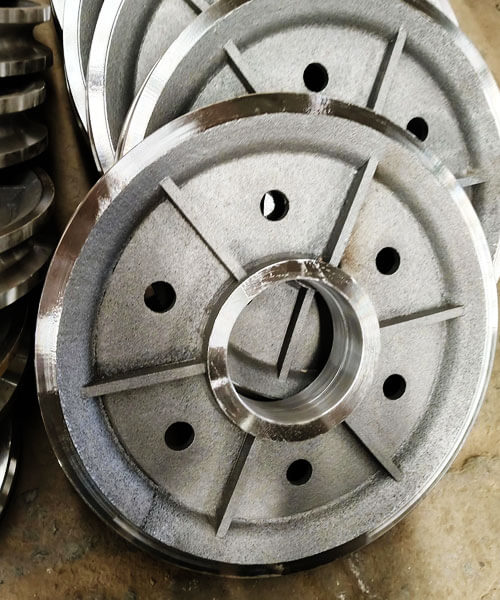
Peças fundidas de aço carbono
O aço carbono é amplamente aplicável a componentes industriais em geral porque fornece uma combinação útil de resistência, resistência, MACHINABILIDADE, soldabilidade, e eficiência de custos.
Para roldanas de guindaste, o aço carbono pode ser apropriado quando as condições de serviço não exigem maior resistência, Hardenabilidade, ou resistência à corrosão associada a materiais mais altamente ligados.
O tipo exato de aço deve ser selecionado de acordo com as propriedades mecânicas exigidas, tamanho da seção de fundição, condição de tratamento térmico, ambiente operacional, e especificação técnica aplicável.
Fundições de liga de aço
Os aços-liga tornam-se atraentes quando a roldana é submetida a cargas mais exigentes ou quando aumenta a temperabilidade, resistência, força, ou resistência ao desgaste é necessária.
Elementos de liga como manganês, cromo, molibdênio, e o níquel podem ser usados em diferentes combinações para modificar a resposta do material ao tratamento térmico e à carga de serviço.
Para roldanas de guindaste para serviço pesado, o benefício da liga de aço não é simplesmente maior resistência. O design correto da liga pode ajudar a obter uma combinação mais equilibrada de:
Força + resistência + Resistência à fadiga + Hardenabilidade + resistência ao desgaste
Este equilíbrio é especialmente importante quando a roldana contém seções relativamente espessas onde a resposta uniforme ao tratamento térmico pode se tornar mais difícil.
Aço inoxidável
O aço inoxidável pode ser considerado para roldanas de guindastes especializadas expostas a condições corrosivas, incluindo Marine, costeiro, offshore, químico, ou ambientes de lavagem.
No entanto, o aço inoxidável não deve ser automaticamente considerado a melhor opção simplesmente porque possui resistência superior à corrosão.
A seleção do material deve considerar o carregamento mecânico, comportamento de desgaste, custo, requisitos de usinagem, e a corrosividade real do ambiente.
Para muitas aplicações de elevação pesada, um aço carbono ou liga adequadamente projetado com um sistema de proteção apropriado pode ser mais prático do que o aço inoxidável.
Ferro dúctil
O ferro dúctil pode fornecer características de fundição atraentes juntamente com resistência útil, resistência, resistência ao desgaste, amortecimento da vibração, e estabilidade dimensional.
Sua aplicabilidade depende fortemente dos requisitos de projeto e carga.
Não deve ser selecionado apenas porque sua moldabilidade é favorável; a carga mecânica completa e as consequências da falha da aplicação devem ser avaliadas.
3. Processo de fundição de precisão para roldanas de guindaste
A fundição de precisão é um método de fabricação eficaz para produzir roldanas de guindaste com perfis complexos, centros integrados, transições estruturais, e outras geometrias que seriam caras ou ineficientes para serem fabricadas inteiramente por usinagem.
Para roldanas de guindaste personalizadas, elenco de investimento (fundição de cera perdida) é particularmente valioso porque o processo pode reproduzir geometrias complexas com tolerâncias de fundição relativamente restritas e uma estrutura com formato quase final, enquanto a usinagem CNC subsequente estabelece as dimensões funcionais críticas.
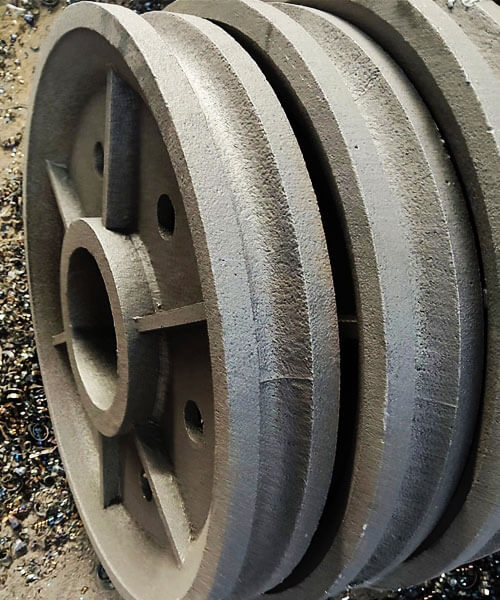
Elenco de investimento (Fundição de cera perdida) Processo
| Estágio | Etapa do processo | Descrição | Controles principais |
| 1. Engenharia & Ferramentas | Análise DFM | O desenho 2D ou modelo CAD 3D é revisado para viabilidade de fundição, espessura da parede, transições, encolhimento, usinagem de subsídios, e requisitos de bloqueio. | Simulação de elenco; Requisitos dimensionais; rascunho; raio de filete; subsídio de usinagem |
| 2. Produção de padrões | Injeção de cera | A cera é injetada em uma ferramenta de precisão para produzir um padrão de sacrifício preciso que representa a geometria da roldana do guindaste. | Temperatura da cera; pressão de injeção; pressão de retenção; tempo de ciclo; dimensões do padrão |
| Inspeção de padrão | Os padrões de cera são verificados quanto a distorção, preenchimento incompleto, clarão, variação dimensional, e defeitos superficiais. | Dimensões do padrão; inspeção visual; consistência dimensional | |
| 3. Montagem de padrões | Montagem de árvore | Padrões de cera individuais são fixados a um sistema de canal central com canais e comportas projetados para fornecer fluxo de metal controlado. | Layout de portão; orientação do padrão; espaçamento; dimensões do corredor |
| 4. Construção da concha | Revestimento de pasta | O conjunto de cera é repetidamente mergulhado em pasta cerâmica e coberto com estuque refratário para criar uma concha cerâmica multicamadas. | Viscosidade de chorume; espessura da camada; tempo de secagem; umidade; tamanho de partícula de estuque |
| Reforço de casca | Camadas cerâmicas adicionais são aplicadas até que o invólucro tenha resistência e permeabilidade suficientes para vazamento de metal. | Espessura da concha; condições de secagem; integridade do shell | |
5. DeWaxing |
Autoclave / desparafinação instantânea | A carcaça montada é aquecida para remover o padrão de cera e deixar uma cavidade cerâmica limpa. | Temperatura; pressão de vapor; taxa de aquecimento; tempo de desparafinação |
| 6. Disparo de concha | Queima de cerâmica | O invólucro cerâmico é queimado em temperatura elevada para remover cera residual, fortalecer o molde, e estabelecer estabilidade térmica. | Temperatura do forno; taxa de aquecimento; tempo de espera; temperatura da casca |
| 7. Fusão | Fusão por indução | A liga selecionada é fundida em um forno controlado e levada à composição química e condição de vazamento exigidas.. | Química da liga; temperatura de fusão; tempo de espera; derreter limpeza |
| 8. Verificação de Metais | Análise química | O metal fundido é analisado para verificar se sua composição atende ao grau de liga especificado antes do vazamento. | Análise espectrométrica; controle de material de carga; número de calor |
9. Derramando |
Gravidade / vazamento controlado | O metal fundido é introduzido no revestimento cerâmico pré-aquecido através do sistema de comporta projetado. | Temperatura de derramamento; taxa de vazamento; pré-aquecimento do molde; estabilidade de enchimento |
| 10. Solidificação | Resfriamento controlado | A peça fundida solidifica dentro do molde cerâmico. A alimentação e a solidificação direcional são controladas para minimizar o encolhimento e outras descontinuidades internas. | Gradientes térmicos; eficiência do riser; taxa de refrigeração; espessura da seção |
| 11. Suprimir | Remoção da concha | Após resfriamento suficiente, o invólucro cerâmico é removido mecanicamente da peça fundida de metal. | Intensidade de vibração; método de remoção de casca; proteção de fundição |
| 12. Cortar | Remoção de portão e riser | Sprues, corredores, Portões, e os risers são separados da fundição da roldana do guindaste. | Local de corte; parâmetros de serra abrasiva; manuseio de peças |
13. Acabamento de Fundição |
Moagem / tiro jateando | Portões residuais, barbatanas, clarão, e a cerâmica aderente são removidas e a superfície é preparada para processamento posterior. | Tipo abrasivo; pressão de explosão; subsídio de moagem; condição da superfície |
| 14. Tratamento térmico | Normalização / Q&T / alívio do estresse | A peça fundida é tratada termicamente de acordo com a liga e as propriedades mecânicas exigidas. | Temperatura do forno; tempo de imersão; taxa de refrigeração; dureza |
| 15. Usinagem CNC | Virando / tedioso / usinagem de ranhura | Recursos funcionais, como o furo, eixo, assento do rolamento, ranhura de corda, e as superfícies de montagem são usinadas nas dimensões finais. | Tolerância dimensional; concentricidade; acabar; rugosidade superficial |
| 16. Inspeção final | Inspeção dimensional e END | A polia acabada é inspecionada para verificar a geometria, propriedades mecânicas, condição da superfície, e, onde especificado, integridade interna. | Cmm; dureza; UT/MT/PT/RT conforme aplicável; inspeção visual |
4. Usinagem de ranhuras em corda e acabamento superficial
A ranhura do cabo é uma das características funcionais mais importantes de uma roldana de guindaste porque estabelece como o cabo de aço é suportado, guiado, e dobrado durante a operação.
Mesmo quando o corpo fundido possui excelente integridade metalúrgica, uma ranhura usinada incorretamente pode acelerar o desgaste do cabo, aumentar o estresse de contato local, promover carregamento desigual, e reduzir a vida útil do cabo e da roldana.
Usinagem de canais após fundição
A fundição de precisão ou outros processos de fundição de precisão podem produzir uma polia com formato quase final, mas a ranhura final do cabo normalmente requer usinagem quando a geometria controlada e o acabamento superficial são críticos.
A sequência de usinagem pode incluir:
Inspeção de fundição → estabelecimento de referência → torneamento em desbaste → usinagem de canais → torneamento de acabamento → verificação dimensional
A polia é primeiro localizada com segurança usando referências apropriadas. A referência de usinagem deve ser estabelecida a partir da linha central funcional do componente, e não a partir de uma superfície arbitrária fundida..
Isto é particularmente importante para roldanas grandes ou assimétricas porque a variação de fundição pode ser transferida diretamente para a posição final da ranhura.
Concentricidade e desvio do sulco
A relação entre a ranhura do cabo e o furo da roldana é crítica.
Se a ranhura não for concêntrica com o furo, o cabo pode sofrer uma mudança de posição radial à medida que a roldana gira.
O desvio excessivo pode resultar em variação cíclica no contato e carregamento do cabo e pode contribuir para vibração ou desgaste acelerado dos componentes.
Para roldanas de guindaste de precisão, os fabricantes devem, portanto, estabelecer critérios de inspeção para:
- Concentricidade da ranhura ao furo
- Excentricidade radial
- Excentricidade axial
- Diâmetro do furo
- Diâmetro da ranhura
- Perfil de ranhura
- Dimensões do flange
Os valores permitidos devem vir do desenho de engenharia ou da especificação aplicável, em vez de serem atribuídos universalmente.
Acabamento superficial da ranhura do cabo
O acabamento superficial deve ser suficientemente controlado para evitar abrasão desnecessária do cabo de aço, mantendo a geometria de contato pretendida.
Um áspero, rasgado, poroso, ou ranhuras inadequadamente retificadas podem criar asperezas localizadas que atuam como concentrações de tensão ou pontos abrasivos.
Por outro lado, o acabamento superficial não deve ser usado para compensar um perfil de canal incorreto.
A sequência de preparação da superfície pode envolver:
- Usinagem áspera
- Usinagem de semiacabamento
- Acabar com a usinagem
- Deburrendo
- Polimento ou lixamento controlado quando especificado
- Limpeza final
A rugosidade superficial necessária deve ser definida de acordo com a especificação do cabo e da roldana.
Um único valor numérico de Ra não deve ser tratado como aplicável universalmente porque diferentes construções de cabos e condições de serviço podem exigir diferentes critérios de superfície.
5. Tratamento térmico de polias fundidas de guindaste
Tratamento térmico é uma etapa crítica na fabricação de roldanas fundidas para guindastes, particularmente quando aço carbono ou liga de aço são usados.
A fundição estabelece a geometria básica do componente, mas a microestrutura fundida não é necessariamente a estrutura ideal para serviços mecânicos exigentes.
Um processo de tratamento térmico adequadamente controlado pode modificar a microestrutura e melhorar a combinação necessária de força, dureza, resistência, Resistência à fadiga, e estabilidade dimensional.
A rota apropriada de tratamento térmico depende da química da liga, tamanho da seção de fundição, propriedades mecânicas necessárias, e especificação do cliente.
Processos Comuns de Tratamento Térmico
Normalização
A normalização envolve o aquecimento do aço a uma faixa de temperatura apropriada acima de sua temperatura de transformação., segurando-o por tempo suficiente, e depois resfriá-lo ao ar.
Para aços fundidos, a normalização pode ajudar a refinar e homogeneizar a microestrutura e reduzir parte da não uniformidade associada à fundição.
Pode ser usado quando é necessária resistência moderada a alta combinada com tenacidade e estabilidade dimensional razoáveis..
Recozimento
O recozimento geralmente envolve aquecimento seguido de resfriamento controlado.
Pode reduzir a dureza, melhorar a usinabilidade, aliviar as tensões internas, e produzir um aspecto mais suave, condição metalúrgica mais estável.
O recozimento pode ser útil como um processo intermediário onde os requisitos de usinagem subsequentes são particularmente exigentes.
Tireização e temperamento
Para ligas e aços carbono adequados, temperar e temperar (Q&T) O tratamento pode ser usado para obter resistência e dureza substancialmente aumentadas, juntamente com tenacidade controlada.
O processo básico é:
Austenitização → Têmpera → Revenimento
A etapa de têmpera produz uma microestrutura mais dura, enquanto o revenido reduz a fragilidade excessiva e ajusta o equilíbrio final entre resistência e tenacidade.
Para componentes de guindastes com cargas pesadas, o estágio de revenido é particularmente importante porque a dureza máxima não é necessariamente equivalente ao desempenho ideal em serviço.
Alívio do estresse
O tratamento térmico de alívio de tensões pode ser usado para reduzir as tensões residuais geradas durante a fundição, soldagem, usinagem extensiva, ou processamento térmico anterior.
Isto pode ser particularmente útil para roldanas grandes onde a estabilidade dimensional é importante.
6. Defeitos comuns na fundição da polia do guindaste e suas causas raízes
Defeitos de fundição podem afetar significativamente a confiabilidade estrutural das roldanas de guindastes.
Porque uma polia é um componente carregado ciclicamente, descontinuidades internas que podem ser toleradas em uma peça fundida decorativa de baixa tensão podem se tornar importantes quando o componente é submetido a repetidas cargas de elevação.
| Defeito | Descrição | Causa raiz | Medidas Preventivas |
| Porosidade de encolhimento | Vazios internos | Alimentação insuficiente durante a solidificação. | Otimize o projeto do riser; usar calafrios; simulação. |
| Porosidade do gás | Pequenos vazios arredondados | Aprisionamento de gás; gases dissolvidos no fundido. | Queime para derreter; melhorar a prática de vazamento; carga limpa. |
| Lágrimas quentes | Rachaduras | Tensão de tração durante a solidificação. | Reduza a temperatura de vazamento; melhorar a colapsabilidade do shell. |
| Inclusões de areia | Areia embutida | Erosão da casca cerâmica. | Melhorar a resistência da casca; reduzir a turbulência. |
Egito |
Preenchimento incompleto | Baixa temperatura de vazamento; metal insuficiente. | Aumentar a temperatura de vazamento; melhorar o portão. |
| Cold Fechs | Voltas de superfície | Duas correntes se encontrando sem fusão. | Aumentar a temperatura de vazamento; melhorar o portão. |
| Variação dimensional | Dimensões fora da tolerância | Desgaste padrão; expansão de casca. | Manter ferramentas; controlar o processo shell. |
| Mau acabamento superficial | Superfície áspera | Cerâmica grossa; defeitos de casca. | Use casca mais fina; melhorar o processo de shell. |
7. Aplicações de roldanas de guindaste de fundição de precisão
As roldanas de guindaste fundidas de precisão são usadas em sistemas de elevação onde os cabos de aço devem ser redirecionados, suportado, ou enrolado, mantendo o contato controlado do cabo e a confiabilidade mecânica.
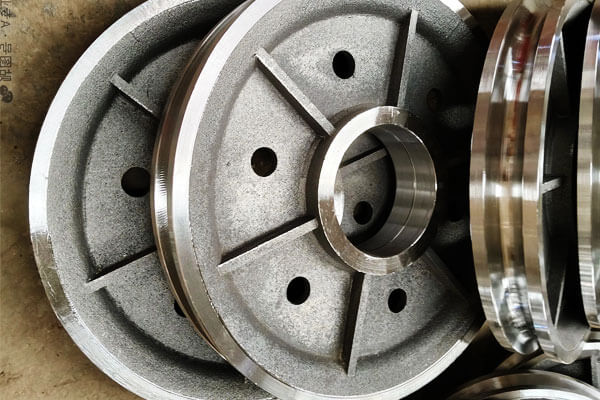
Guindastes aéreos e EOT
Pontes rolantes e viagens aéreas elétricas (EOT) guindastes geralmente usam roldanas no bloco de gancho, mecanismo de elevação, e sistema de reeving.
Estas aplicações normalmente requerem:
- Alta resistência a carregamentos repetidos
- Geometria precisa da ranhura do cabo
- Bom equilíbrio rotacional
- Interfaces de rolamento confiáveis
- Concentricidade controlada entre furo e ranhura
- Resistência adequada à fadiga
Para guindastes de produção com ciclos frequentes, a durabilidade da roldana pode ter uma influência direta nos intervalos de manutenção porque o desgaste da ranhura e a fadiga do cabo estão intimamente relacionados.
As roldanas fundidas personalizadas são particularmente úteis quando o fabricante de guindastes precisa de dimensões otimizadas para um tambor específico, bloco de gancho, cabo de aço, ou envelope de instalação.
Guindastes de pórtico e portal
Guindastes pórticos e pórticos são amplamente utilizados para movimentação de contêineres, estaleiros, pátios industriais, usinas siderúrgicas, e movimentação de materiais pesados.
Suas roldanas podem sofrer tensões de cabo relativamente altas e carregamento dinâmico.
Além disso, instalações externas expõem componentes à chuva, umidade, pó, flutuações de temperatura, e condições atmosféricas potencialmente corrosivas.
A seleção de materiais, consequentemente, torna-se uma parte importante do projeto.
Aço fundido de carbono ou liga pode ser apropriado para aplicações pesadas em geral, enquanto ligas resistentes à corrosão ou sistemas de acabamento protetor podem se tornar mais relevantes em ambientes marinhos.
Para grandes guindastes de pórtico, a estabilidade dimensional e a integridade estrutural da fundição são particularmente importantes porque as dimensões da roldana podem se tornar substanciais.
Guindastes de torre
Guindastes de torre usam roldanas para içamento, carrinho, e mecanismos de orçar. Restrições de espaço, roteamento de corda, e ciclos operacionais relativamente altos tornam a otimização dimensional importante.
Uma polia personalizada pode precisar satisfazer vários requisitos concorrentes:
Grande o suficiente para reduzir a flexão severa da corda, mas compacto o suficiente para caber no envelope mecânico do guindaste.
O perfil da ranhura também deve corresponder ao cabo de aço selecionado, enquanto o cubo e o arranjo de rolamentos devem integrar-se aos componentes existentes do guindaste.
A fundição de precisão pode fornecer flexibilidade no desenvolvimento de configurações complexas de cubos e flanges sem exigir que todo o componente seja usinado a partir de um tarugo grande.
Porta, Porto, e guindastes de contêineres
Os guindastes portuários operam sob exigentes combinações de:
- Cargas de elevação elevadas
- Alta utilização
- Serviço contínuo ou semi-contínuo
- Atmosferas carregadas de sal
- Carregamento dinâmico
- Requisitos rigorosos de manutenção
As roldanas usadas nesses sistemas podem, portanto, exigir uma combinação de resistência mecânica, resistência ao desgaste, Resistência à fadiga, Proteção à corrosão, e usinagem precisa.
Onde a corrosão é severa, fundições inoxidáveis ou duplex podem ser consideradas para determinados componentes, embora a seleção deva ser baseada em todos os requisitos mecânicos e ambientais, e não apenas na resistência à corrosão.
Construção naval e guindastes marítimos
Guindastes marítimos geralmente operam em ambientes úmidos, ambientes contendo água salgada onde a corrosão pode afetar significativamente a vida útil dos componentes.
Polias de guindaste fundidas com precisão podem ser usadas em:
- Sistemas de elevação a bordo
- Guindastes para estaleiros
- Guindastes de convés
- Sistemas de manuseio marítimo
- Equipamento de apoio offshore
Para essas aplicações, o fabricante deve considerar não apenas o material a granel, mas também a condição das superfícies usinadas, prendedores, rolamentos, Revestimentos de proteção, drenagem, e manutenção.
Corrosão localizada na ranhura, eixo, ou interface de rolamento pode ser particularmente indesejável porque essas áreas são funcionalmente críticas.
Guindastes Offshore
Os sistemas de elevação offshore impõem condições de serviço especialmente exigentes porque combinam altas cargas mecânicas com corrosão marítima, movimento induzido pelo vento, vibração, e efeitos dinâmicos potencialmente graves.
Uma roldana fundida de precisão para serviço offshore pode exigir:
- Alta resistência à fratura
- Composição química controlada
- Tratamento térmico qualificado
- Material ou revestimento resistente à corrosão
- Extenso END
- Certificação de material rastreável
- Controle dimensional rígido
Para tais aplicações, a especificação de engenharia deve definir detalhadamente os critérios de inspeção e aceitação exigidos. A qualidade do material por si só não é suficiente para estabelecer a adequação.
Guindastes de mineração e industriais pesados
Instalações de mineração, siderúrgicas, fundições, usinas de energia, e operações de fabricação pesada costumam usar guindastes em ambientes caracterizados por poeira, vibração, temperaturas elevadas, alta utilização, e cargas pesadas.
Polias para essas aplicações podem exigir maior resistência a:
- Fadiga cíclica
- Impacto mecânico
- Desgaste da ranhura
- Contaminação
- Temperaturas operacionais elevadas
- Ambientes abrasivos
Fundições de liga de aço com tratamento térmico adequado podem fornecer uma forte combinação de propriedades mecânicas onde o desempenho em serviços pesados é necessário.
Equipamentos de construção e manuseio de materiais
Guindastes de construção, guinchos, guinchos, e os sistemas de manuseio de materiais também usam roldanas para redirecionar o cabo de aço e manter o enrolamento controlado.
Os requisitos variam consideravelmente. Uma roldana de elevação relativamente pequena pode priorizar o custo e a compactação, enquanto um guindaste de construção de alta capacidade pode exigir interfaces de rolamento e ranhuras altamente projetadas.
Essa diversidade de aplicações é um dos motivos pelos quais um fabricante personalizado capaz deve ser capaz de suportar vários materiais e rotas de fabricação, em vez de forçar cada aplicação em um projeto padrão..
8. Vantagens da fundição de precisão para roldanas de guindaste
| Vantagem | Valor de engenharia |
| Capacidade de formato quase líquido | Reduz usinagem desnecessária |
| Geometria complexa | Suporta hub otimizado, flange, e características estruturais |
| Flexibilidade do material | Permite a seleção de ligas específicas da aplicação |
| Produção integrada | Fundição e usinagem CNC podem ser projetadas juntas |
| Repetibilidade | Útil para OEM e produção de peças de reposição |
| Resíduos de material reduzido | Menos remoção do que usinagem em material grande |
| Personalização de design | Suporta geometria específica da aplicação |
| Produção escalável | Adequado para produção repetida quando o ferramental é justificado |
9. Polias de guindaste fundidas de precisão vs.. Polias Forjadas e Fabricadas
A escolha entre fundição de precisão, forjamento, e fabricação deve basear-se nos requisitos reais de engenharia da roldana do guindaste, em vez da suposição de que um processo de fabricação é universalmente superior.
Cada método cria um equilíbrio diferente de geometria, utilização de materiais, propriedades mecânicas, flexibilidade de produção, requisitos de usinagem, e custo.
Para roldanas de guindaste personalizadas, a questão central não é, portanto, simplesmente “Qual processo é mais forte?” mas sim:
Qual processo de fabricação pode fornecer com mais eficiência a capacidade de carga necessária, desempenho de fadiga, precisão da ranhura da corda, Integridade estrutural, dimensões, volume de produção, e confiabilidade do serviço?
A comparação a seguir concentra-se nas principais diferenças de engenharia que importam ao selecionar uma rota de fabricação para roldanas de guindaste.
| Diferença Chave | Polias de guindaste fundidas de precisão | Polias de guindaste forjadas | Fabricado / Polias Soldadas |
| Melhor ajuste | Complexo, roldanas personalizadas que exigem geometria quase perfeita e produção repetida | Aplicações de alta resistência e críticas à fadiga | Muito grande, baixo volume, ou roldanas altamente personalizadas |
| Geometria & Liberdade de design | Excelente para hubs complexos, flanges, costelas, e transições | Moderado; a geometria deve ser compatível com o forjamento | Excelente através da construção de várias partes |
| Desempenho mecânico | Excelente quando a qualidade da fundição e o tratamento térmico são devidamente controlados | Excelente, especialmente para aplicações de alta resistência e que exigem fadiga | Bom, mas fortemente dependente do projeto e da qualidade da solda |
| Eficiência do material | Alto, com relativamente pouco excesso de material | Moderado; tolerância de usinagem geralmente é necessária | Variável; depende da placa, anel, e layout de componentes |
| Requisito de usinagem | Moderado; principalmente superfícies funcionais críticas | Moderado a alto | Moderado a alto |
| Capacidade de Grande Diâmetro | Bom, mas depende do equipamento e do processo de fundição | Limitado pela capacidade de forjamento e ferramentas | Excelente para estruturas muito grandes |
Volume de produção |
Bem adequado para repetir a produção OEM | Mais adequado para repetir a produção onde o ferramental é justificado | Adequado para produção de baixo volume ou baseada em projetos |
| Custo de ferramentas | Moderado | Alto | Relativamente baixo |
| Principal preocupação com a qualidade | Defeitos de fundição, como encolhimento, porosidade, e inclusões | Qualidade dos materiais, forjando integridade, e controle de tratamento térmico | Defeitos de solda, estresse residual, e distorção |
| Principal vantagem | Geometria complexa + personalização + forma próxima da rede | Alto desempenho mecânico | Tamanho grande + flexibilidade estrutural |
| Limitação Principal | Requer rigoroso controle de fundição e END | Maior custo de ferramentas e processamento | Mais desafios de soldagem e controle dimensional |
10. Por que escolher a LangHe Industry para polias de guindaste de fundição de precisão personalizadas?
A seleção de um fornecedor de roldanas para guindastes deve ir além da comparação de preços de fundição.
Porque o componente combina fundição estrutural, tratamento térmico, usinagem de precisão, geometria de contato de corda, e inspeção, a capacidade do fornecedor de controlar toda a cadeia de produção é muitas vezes mais importante do que o próprio processo de fundição nominal.
Indústria de Langhe pode abordar polias de guindaste fundidas com precisão personalizadas como um projeto de fabricação integrado, revisão de engenharia de conexão, desenvolvimento de elenco, usinagem, acabamento, e inspeção de qualidade.
| Capacidade | Detalhes |
| Materiais | Aço carbono (WCB), Aço fundido, Ferro dúctil (60-40-18, 65-45-12, 80-55-06), aço inoxidável (CF-8, CF-8m, 17-4Ph), liga de aço (4140, 4340) |
| Processo de fundição | Fundição de investimento, fundição de areia. |
| Peso da peça | 0.5 kg para 500 kg. |
| Tolerâncias | ± 0,1-0,3 mm (CT5-CT7 por ISO 8062). |
| Qualidade | ISO 9001:2015 certificado; 100% Inspeção; Cmm; perfilômetro de superfície; Ndt (raio X, penetrante de corante). |
| Tempo de espera | 6–12 semanas para ferramentas; 2–4 semanas para pedidos repetidos. |
11. Conclusão
Uma polia de guindaste é um componente de aparência relativamente simples com uma função mecânica exigente. Ele deve guiar e dobrar o cabo de aço repetidamente enquanto transmite carga através do cubo, rolamentos, e estrutura de suporte.
Consequentemente, geometria da ranhura, Integridade do material, condição de tratamento térmico, precisão de usinagem, concentricidade, e a qualidade da superfície contribuem para o desempenho da roldana no mundo real.
A fundição de precisão oferece uma rota de fabricação atraente para roldanas de guindaste personalizadas quando a geometria complexa, produção quase líquida, flexibilidade do material, e repetibilidade são importantes.
Ele pode reduzir a usinagem desnecessária e, ao mesmo tempo, permitir que os engenheiros integrem hubs, flanges, costelas, transições, e outras características estruturais na peça fundida.
A LangHe Industry oferece uma abordagem de fabricação personalizada para roldanas de guindaste fundidas com precisão, combinando engenharia de fundição, Seleção de material, Usinagem CNC, tratamento térmico, acabamento, e inspeção para dar suporte aos requisitos OEM específicos da aplicação.
Perguntas frequentes
O que é uma roldana de guindaste de fundição de precisão?
Uma roldana de guindaste de fundição de precisão é uma roldana de cabo de aço fabricada usando um processo de fundição controlado, geralmente investimento ou outro método de fundição orientado à precisão, seguido pela usinagem de superfícies funcionais críticas.
A fundição cria a geometria primária, enquanto a usinagem CNC estabelece recursos como a ranhura do cabo, chato, e assentos de rolamento.
Por que usar fundição de precisão em vez de usinar uma polia de guindaste em aço sólido?
A fundição de precisão pode produzir grande parte da geometria final antes da usinagem.
Isso pode reduzir a remoção de material, tempo de usinagem, e desperdício de materiais, ao mesmo tempo que permite maior liberdade para hubs complexos, flanges, costelas, e transições estruturais.
Uma roldana fundida para guindaste é tão forte quanto uma roldana forjada??
Não existe uma resposta universal. Uma polia de aço fundido adequadamente projetada e processada pode proporcionar excelente desempenho mecânico,
mas o forjamento pode oferecer vantagens em aplicações onde uma estrutura forjada altamente consolidada e propriedades específicas de fadiga são necessárias.
A adequação depende do material, geometria, Tamanho da seção, tratamento térmico, carregando, e requisitos de inspeção.
Qual é o fator de qualidade mais importante para uma polia de guindaste?
Não existe um parâmetro único que determine a qualidade. Integridade de fundição, propriedades mecânicas, geometria da ranhura, alinhamento do furo, condição da superfície, e a precisão dimensional devem trabalhar juntas.
Para aplicações críticas de segurança, essas características devem ser verificadas em relação às especificações de engenharia aprovadas e ao plano de inspeção.
Como a vida útil da polia do guindaste pode ser melhorada?
A vida útil pode ser melhorada através do dimensionamento correto da polia ao cabo, geometria apropriada da ranhura, seleção de materiais adequados, lubrificação e manutenção adequadas,
alinhamento preciso, qualidade de fabricação controlada, e substituição oportuna quando o desgaste da ranhura ou outros danos excederem o limite especificado.